


Processing
Likes
Comments
Share


@blasterw32
Follow
Hello gardeners!
This is my second grow ever, using an slightly improved setup. In my first attempt I was able to harvest 40 + 20 + 20 = 80 grams under not optimal conditions (limited time mostly). Now, with proper time and with a new LED panel for flowering, my goal is to reach 3x40g = 120g total.
SET UP --------------------------------
Grow tent 2 x 3 x 6" hidden on a closet
LED Panel VIPARSPECTRA 450w (200w real)
Extra LED Panel VIPARSPECTRA 450w (200w real) after 3rd week of flowering.
Air filtration VivoSun 4" exhausting outside the closet
Air circulation: 120mm 5v desk fan
GROWING PROTOCOL ---------------------------------------------------------------
1st Stage: Week 1-2
------------------------------------------------
Container: Red Solo cups
Medium: 75% Pro Mix Organic Seedling Starter Mix + 25% Perlite
Water: Mostly sprayed every day.
Nuts: No
Ph: 6.5
Temp(day/night): 24/17
Humidity: ~60
Light distance: 20"
2nd Stage: Week 3-5
------------------------------------------------
Container: Smart Pot VivoSun 1 G
Medium: 75% Pro Mix Organic Vegetable & Herbs Moisture + 25% Perlite
Water: Roughly every 5 days with a little runoff
Nuts: CalMag + Flora Trio + Floralicious plus following 'Simple Drain to Waste' schedule. Frequency: roughly 1 time per week, with a little runoff
Ph: 6.0
Temp(day/night): 24/17
Humidity: ~55
Light distance: 20"
3rd Stage: Week 6-9 (Early Flowering)
------------------------------------------------
Container: Smart Pot VivoSun 3 G
Medium: 75% Pro Mix Organic Vegetable & Herbs Moisture + 25% Perlite
Water: Roughly every 4 feedings
Nuts: Nuts: 5 ml CalMag + Flora Trio + Floralicious plus following 'Simple Drain to Waste' schedule. Frequency: roughly every 4 days, with a little runoff
Ph: 6.0
Temp(day/night): 26/17
Humidity: ~40
Light distance: 18"
4th Stage: Week 10-12 (Mid Flowering)
------------------------------------------------
Container: Smart Pot VivoSun 3 G
Medium: 75% Pro Mix Organic Vegetable & Herbs Moisture + 25% Perlite
Water: Roughly every 4 feedings
Nuts: Nuts: 4ml CalMag + Flora Trio + Floralicious plus following 'Simple Drain to Waste' schedule + extra 2ml Flora Bloom. Frequency: roughly every 3 days, with a little runoff
Ph: 6.0
Temp(day/night): 26/17
Humidity: ~40
Light distance: 16"
5th Stage: Week 13-14 (Late Flowering)
------------------------------------------------
Container: Smart Pot VivoSun 3 G
Medium: 75% Pro Mix Organic Vegetable & Herbs Moisture + 25% Perlite
Water: Roughly every 3 days with small runoff
Flush: 1 Flush when entering the last 2 weeks + 1 Flush in the very last end (~3 days before harvesting)
Nuts: Floralicious plus with watering
Ph: 5.8
Temp(day/night): 26/17
Humidity: ~40
Light distance: 16"


Likes
12
Share


@Victusaa
Follow
All 3 plants get transplanted into their new pots (12+12+7.5), applied topping technique to all of them.
On the transplantation day, they were looking unhappy with their leaves drooping but day by day they're getting better.
I've positioned the pots to get approximately 750-820 μmol per plant.
Likes
12
Share


@Dankybongtoker69
Follow
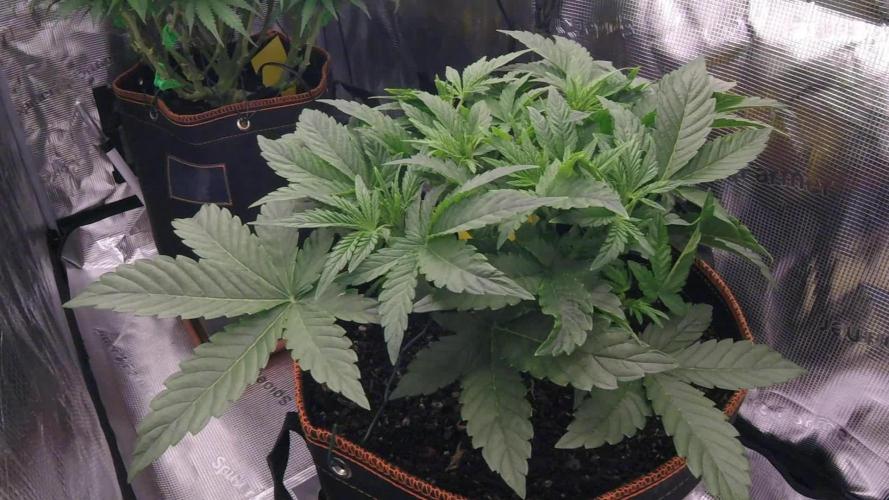
Some issues with the leaves. Buds are getting big and filling out. Some neglect on my part again this week.
Likes
3
Share

@hinterhofgrower
Follow
.
🌱 :
💧 : 3l day 35, 3l day 37, 3l day 40
💡 : Dli: 40 mol/m²/d
🤔 :


Likes
142
Share


@MadeInGermany
Follow
Hi everyone 🤗
This week the two Kosher Tangie Kush were harvested by Amsterdam Genetics 😍.
extremely good phenotypes. The blue cheese pheno 2 and 3 were placed in the darkroom according to the video.
These were harvested yesterday, from which the pictures will come in the next update :-).
All others need 2-3 weeks.
I wish you lots of fun with the diary, stay healthy 🙏🏻 and let it grow 🌱


Likes
6
Share


@Headies
Follow
I topped and trained them two more times. I also lolipopped them, that is cut the bottom 2 sets of leaves and branches.
Likes
13
Share


@Skinnytalls420
Follow
Day 1- 08/04/22 14:30pm Germination Time!!!!! Here we have 21 wonderful seeds from the amazing fastbuds!!!! Placed in a glass of water for 18-20hours!!! So excited!!!!
-
Day 2-09/04/22 seeds have been placed on a wet paper towel!!!!!
-
Day 3-10/04/22 getting the pots filled with soil ready for planting tonight or tomorrow!!!!!
-
Day 4-11/04/22 most of the seeds had popped last night so I planted most of them and the rest I planted this morning!!! 1 seed out of the 21 didn’t pop so germinating another to make it back up to 21!!!! So there all in the tent except 1!!!!
-
Day 5-12/04/22 one has come through so far and should be planting the last seed tonight!!!! A few more should pop out by tomorrow!!!!
-
Day 6-13/04/22 14 out of the 21 have come out so far!!!!
-
Day 7-14/04/22. 19 of the 21 have come through!! I think one isn’t going to come through so I’m germinating another seed to replace it and if the other one doesn’t come through tomorrow I’ll germinating another one to replace that Aswell!!!.
Likes
8
Share


@smoothbutter07
Follow
5/30 update: both plants have been jarred for curing! A little disappointed with the over all yield but a lot to learn from this first grow! Expert seeds gg#4 comin next 👌0

Likes
7
Share


@Meksi2790
Follow
nice and clean down below so the energy can focus on the top maintaining the same temperatures will start lowering next week to start bringing out the purple
Likes
64
Share

@Natrona
Follow
Auto Purple Hulk Auto by MSNL Outside
👉Sponsored Grow👈
W5F1
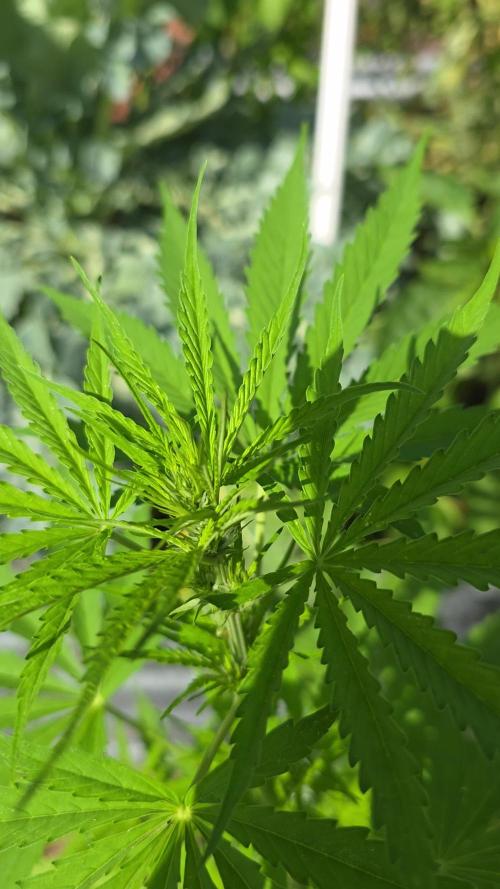
The weather was rainy with thunderstorms early in the week becoming hot, humid and overcast. I only got to fertilize once this week but with the super soil she doesn’t show any deficiencies. I fertilized with I49 grow 1 tbsp/gal & 2 tbsp I49 Flower. I added this more as a preventive measure since I’m seeing issues with AK-47xl also outside in super soil. With the extreme heat and rain, my purple hulk is a HULK. She almost doubled height (grew 15 inches) this week and is now 33 inches tall and starting flower. She demonstrates resistance to fungal diseases and bug damage.
In the background noise on the video is Cicadas. When they hatch, they crawl onto a tree or plant and molt. The adult has wings. This is the empty body casing. This year there are some but not a lot as in many years of their 17-year cycle.
As always, thank you all for stopping by, for the likes and most of all growers’ love and support.
Stay green, growers love 💚🌿
💫Natrona💫

Likes
4
Share


@direx
Follow
Die Drizl Pickl Auto War unser Favorit in dem Grow. Geruch, Geschmack und Wirkung einfach nur geil.. wird direkt wieder angebaut.

Likes
23
Share


@Gram_Solo
Follow
Well Everyone!!
Here we are! 😁
Nearly at the end of the Eternity Grow Cup journey! 🙌🔥👽🙌🔥
Just want to first say a massive Thankyou to Zamnesia & Plagron for letting me compete in this contest. Would not be here without you! absolute legends😎
I had an absolute blast making the videos every week and showcasing the Grow
Huge Thankyouuu to everyone who liked, followed and commented on the diary! I have been hooked for weeks on this! and its thanks to all you guys! haha Much love!! 💚💚
I Appreciate it soo much. 💚💚💚
I have Harvested 2 of the Runtz first which were darked out for 3 days in a 3x3.
We have 3 more in flower for another week or 2 as they are little behind schedule!
There are 2 plants which I will be flushing next week as they have really packed out now.
We got 1 straggler but looks like she's fattening up good! and will follow suit very soon! 😎
🌳Plant 1 Harvested and Drying now
The size of this momma Runtz is mad!
After loosing one of the main stems in early flower, she powered through and made 2 massive fat colas!
Hardly ran into any problems with this plant other than loosing a main stem which turned out to be glorious in the end! 💥
She is now drying in the 3x3. I'm aiming for 10 days drying. Smell is absolutely unreal!
I would normally do longer but as I have took most of the main fan leaves off I think it will be a bit quicker this harvest.
🌳Plant 2 Harvested and Drying now - Another whopper! super sticky colas all over it!
I decided to leave a few more fan leaves on this one for now but may take more this week
aiming for 10 days again! couldn't' be happier with the results, Hardly ran into any nutrient problems throughout.
We had a few pale leaves early flower due to overwatering but she soon recovered and powered through! Smells like victory!
Could not be happier with the Results so far! 2 down 3 to go! cant wait to get a weigh on them fat colas! I will take some more snaps over the next few weeks
and show the dried and final trimmed bud of the 2 harvested and hopefully get them uploaded before the contest time expires.
First time using the Green Sensation from Plagron! I will 100% be investing in some more or maybe win some lmao!
I can see a dramatic difference in Weight and health of the Autos grown! Green stems and healthy leaves , PHAT BUDS!!! 😜😜😜
3 more Plants to go not long now!!!! I Will add another flowering week in next 2 days and show the other 3 still in action!
Going to Update this harvest page in the next 2 weeks with dry weigh results and Smoke review to follow!!
Update 25/05/25
3 remaining Plants 🌳🌳🌳 have now been harvested and curing in the grove bags.
there are 2 plants that have a very minty fresh smell, smells well good when u open the bags! hits your nostrils hard!
The other is very lemony earthy fresh stuff , some big fat nuggies and popcorns on all 3 . smells so good!
FINAL WEIGH 10.89 Ounce from 5 plants! - Jackpot! 🥇🥇🥇🥇🥇
💥💥💥💥💥
Well that's it! its been emotional! All 5 harvested 😎 this is the ennnnnnnd! my only friennddd!
Good luck to everyone in the contest! 👍
Peace Out!
Gram_Solo 👽


Processing
Likes
25
Share


@GACiNATI
Follow
Genectics are Malawi X (95' Northern Lights 5 X Haze) X Dosidos, Growing fantastically well and short for a sativa dominant hybrid may top the top two again but may also let it just recover and flip to flower I am not sure yet , either way I feel this will end up a solid yield so I may just flip it .
Likes
13
Share


@bobo66
Follow
this is the end guys, I last watered with much colder water,I could have harvested one in as little as a week, but I waited for the others to come to an end.very stinky tribe.don't grow it without a carbon filter, unfortunately it didn't completely catch the odors for me either.and there is a new carbon filter in both tents.so pay close attention.!they didn't require a lot of nutrients at all, I followed what I could learn about feeding here, water water feed water water ..the plants produced flowers of much the same size, one of which is a little different.I’m going to harvest it all tomorrow, we’ll wait for it to dry out, and then I’ll report on its weight and impact.
the plants vegetated for 4 weeks anyway and flowered for 8 weeks.
thank you for everything everyone did throughout my work and lectures.
<font style="vertical-align: inherit;"><font style="vertical-align: inherit;">💤</font></font>

Processing
Likes
15
Share


@MG2009
Follow
05/19/2020
All going well, have to grow in containers this season, I might be moving before harvest so only veggies in the ground.
But all are adjusting well 😊
I will give more details on individual plants shortly
#1 is10" tall new growth looks good getting thick.
#2 is 11.5" tall
#4 is 7" tall but healthy
#5 is 16"
Likes
14
Share
@Arcadium
Follow
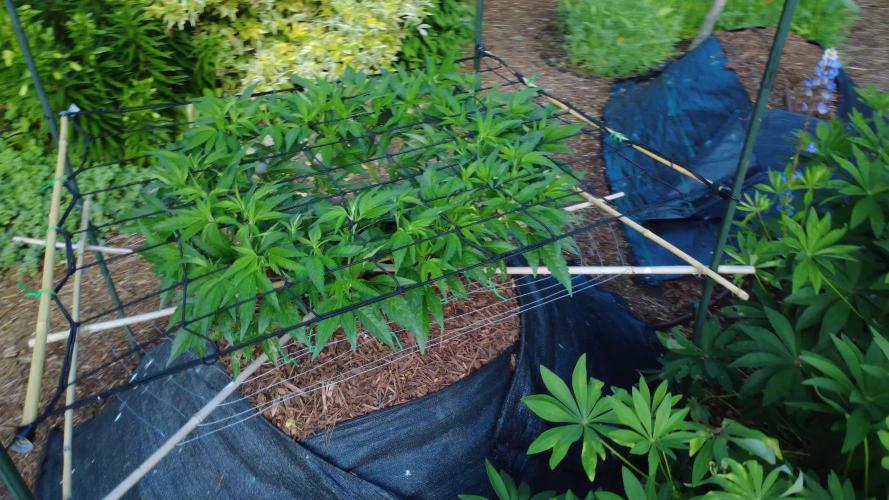
Hot, dry, couldn't of asked for better weather all week. 10g airpot started to flower, earlier then last year, should be excellent finishing weather. Super crop abuse from last week is recovering, height hasn't moved which is great, she'll be stackin in no time.
Canopy on the large one is developing nicely, super flat. I pulled the net out which helps to gently guide and redirect the canopy as it gets to max height, and adds some epic support in the later season when size and winds are a factor.
Just a shot of Monster Maxx, silica, 90min drip and weekly LCPT spray this week, smooth sailing.

Likes
17
Share


@ArtisticGrown
Follow
We are in week 6 of bloom on a 7 to 8 week flowering time! I am LOVE LOVEING this strain!
Within this last week its gotten a Bit hotter later in May! We sare doping grereat tho, She is showing some signs of heat stress in my eyes causde of the burnt tips, I dont think nutrients caused this cause I have not been giving here many nutrients, the top feed and one tiime I gave her some Tastey Terpenes from advanced nutrients.
This living soil has been amaazing I honestly dont think I needed to give the plant the Nirvana, I do think it helped.
I am light watering with irrated ph balanced for the next few days, might gvive her some sugars molasses yummm.
much love looooking to harvest soon, This strain is blowinig my mind, so is this soil. With everything I put into the soil and learning how to build a soil has beeen a journey and im on it! Hoping this plant swells up some in the next weeek put some weight on, now that all the pistols are brown ill check thrichomes soon!!

Likes
5
Share
@lolasher
Follow
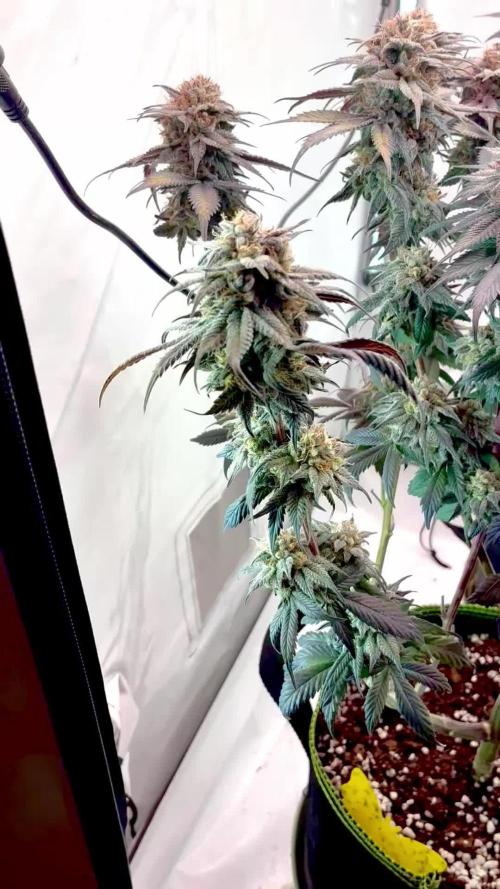
Alle Pflanzen wurden gestern geerntet und zum Trocknen, bei 16-18 Grad und rund 55-60% rlf aufgehängt.
Die Buds sind steinhart und es gab absolut kein Popcorn. Selbst die kleinsten Buds sind absolut brauchbar.
