


Likes
Comments
Share

@Shivashamboom1
Follow
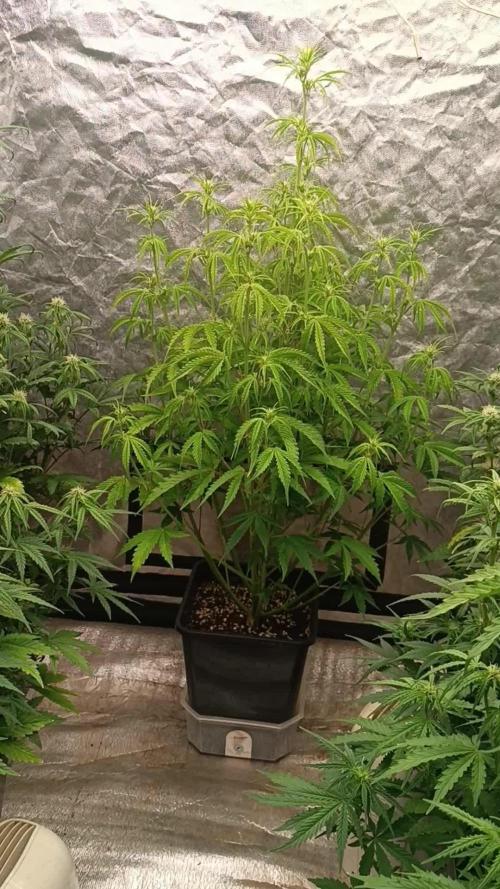
questa creamzilla cresce Super bene robusta spero che anche i fiori vengano Super grandi 😂😉

Likes
29
Share


@Cheeba_Inu
Follow
At day 21, the plant is growing extremely bushy with lots of branching. I like a healthy, compact plant, but it is definitely making the LST tricky as there is so much foliage in such a dense space. I am planning on defoliating in the future, but with my LED set up the bottom fan leafs are getting plenty of light so I am going to start slow.
Over week 4 my plan is to really flatten the plant out, and get more room for all the branches coming in. If this kind of growth continues for another week or so, there will be a ton of bud sites when it switches to flowering.
Day 27: upgraded to new tent.

Likes
15
Share


@tribe4tix
Follow
flowering day 35 (last day of flowering week #5) since 12/12 switch: ... yesterday they got 100% feeding of advanced nutrients plan in 15L again with overdrive [new] (AN Sensi Bloom A+B each 60ml, AN Overdrive 30ml [new] + Canna Cannazyme 37ml + AN B52 30ml) water. Everything works like a charm now.. but i am a little bit unsure if there ist still a light leak.. am not 100% sure but i saw first signs of hermie on one plant.. i will check this out in the next days 😎

Likes
9
Share


@DrewbieDoobieNoobie
Follow
I cant fix the damage that was done but they are putting on a little weight and the Trichomes are starting to amber up say 15%-20% i think i can push it one more week. I will give 2 days of dark on Wednesday and chop at week 10-11 as i put them into flower on 3/20


Likes
11
Share

@Mortelinos
Follow
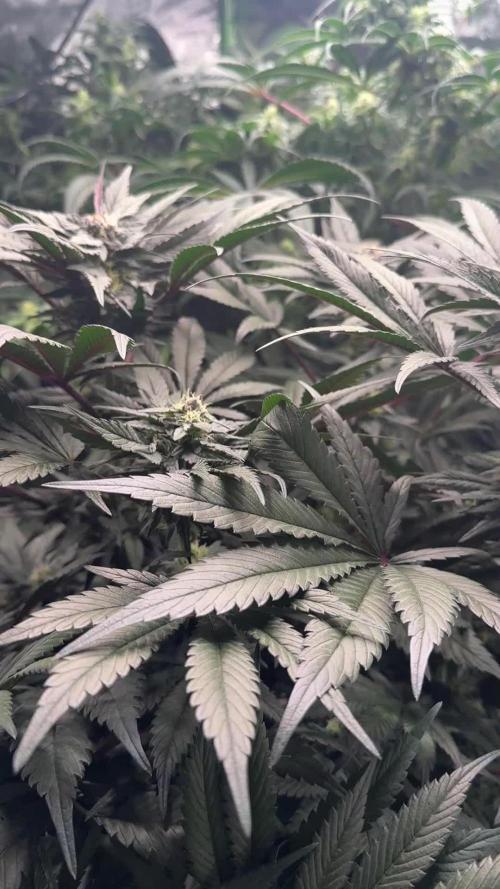
Zdar bando nic moc se nezměnilo jen Fat catz zlomíš kolikrát chceš a furt se táhne dál a dál za světlem zajímavý fenotyp 😀 hidden vice krásně kyne a barví se všemi barvami je to radost sledovat…😇 Zitra začínám dávat klíčit auťáky ven tak bude outdoor diář 😇
Bongu zdar ?😎
Likes
6
Share


@Eaegifts
Follow
Not much to say, just collected the seeds fresh from the dried mom as I trim her to begin curing. Happy growing to all and thanks for checking out my grows 👍🏾👍🏾
Likes
13
Share


@caliboyyy22
Follow
what's up people I'm back whit another grow sorry it took so long but I am officially back with the weekly updates in this video the girls are a day old. but thanks for stopping by and stay tuned for the next update✌️


Processing
Likes
30
Share


@Dunk_Junk
Follow
So this week she grew 32cm..... That is over 12 inches!!! Incredible!! Every so often I will cut a few leaves off to allow light to penetrate the lower flower sites.

Likes
9
Share


@shabazz411
Follow
Final month of veg left all are still healthy and bug free ,another 2 weeks and will start flush them and reduce feeds to 1/2 dose then none the last few weeks

Likes
42
Share


@cheetah844
Follow
We have a runner. She's growing to the sun 🌞 can't wait to get her outside. The male I grew was extremely tall I'm going to keep her short and bushy, hopefully. One of my favorite daytime strains for an uplifting mood that I've had so far.

Likes
39
Share


@Silverback_Guerilla
Follow
10/5:
Comparing photos from the beginning of last week and today, it was pretty decent growth. If they were stunted from being in the temporary grow bags for too long, it wasn't too badly.
--Blackberry I (I call her Halle), is really purpling up well, and looking like she'll be a single uber-phat cola...no branching at all..whereas her sister is all about the branches.
--Wedding Cheesecakes are consistently big and vigorous. They'll probably be the best producers of the crop.
--Orange Sherbets look like clones they are so consistent in shape and leaf structures. Kinda short compared to the other varieties, but nice and bushy.
--Gorilla Cookies are also identical in plant shape, but two of them are a few days ahead of the other as far as pistil production goes. Also not a very tall cultivar, but many branches.
--The late/stunted Lemon Pie is praying to the sun at all times and starting to look like she belongs in the same crop. The bigger LP is gorgeous..perfect structure, the other one is catching up, but my cat keeps defoliating her.😏
---Strawberry Pies have massive sun-blocking fan leaves that require constant tucking, but they are branching well, and a couple of them are pretty beefy. The other SP is doing fine considering her crooked trunk and slow start.
10/6:
Today I noticed 9 "lone" nanners on the nodes of the crooked trunk-Strawberry Pie!😧
No clusters.. just single pollen sacs here and there.🤨
These plants have experienced no major stress at all...I'm keeping it like late-August upper-peninsula Michigan in the closet. 80f/50%RH 👌
Damnit...this is a new, stable strain, right??👈 I've seen no other SP diaries with hermaphrodites...just my fukt luck I guess.😖
I plucked them and will watch for more..and I guess I'd better keep a close eye on the other two SPs as well...
I just got my wife a new 16 x 7 x 7 greenhouse frame with the green semi-translucent cover for her 4' x 12' raised bed...if i see any more sneaky nanners appear, I'll probably remove the plant(s) and move them outdoors to finish in there.
I swore I'd not do any training this run, but while removing the pollen sacs I couldn't resist opening up and tieing down some branches on the hermie.🤷
10/9:
I fed them.
Likes
8
Share

@Rangaku
Follow
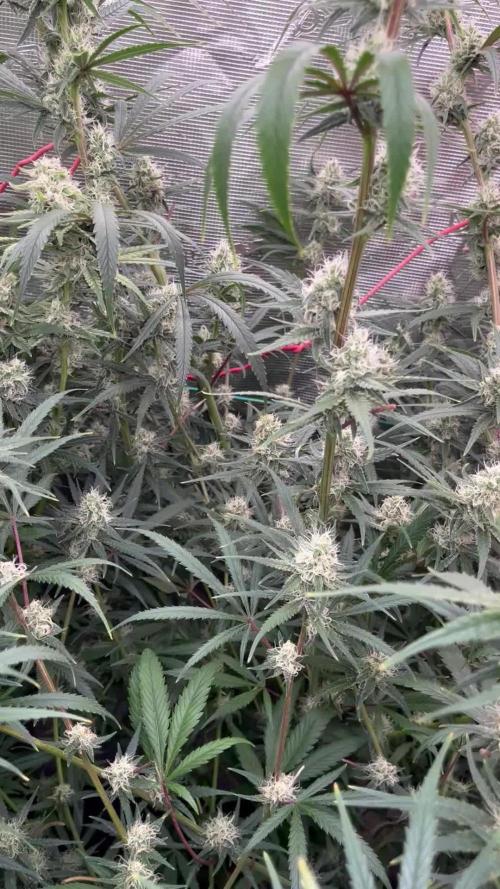
Future is coming on fast , filling out nicely. Fighting 40c ambient temps here and she’s handling like a champ . Solid

Likes
9
Share


@TheGreenGroomer
Follow
Week 5 of veg honestly do not have a clue how I’ve managed to get this far with her looking half happy have come across a few slight issues along the way but seems to have cleared up I think, ppms haven’t been reading what I exactly except feeding with 600ppms ph 5.5 all the time as it rises a few points I should be in the safe zone and the run off when measured is way lower (180ppms) and I’m sure my ec pen is fine so I’m so confused I don’t bother testing the ph run off as it fluctuates all the time aslong as it’s ideal what got put in I should be fine I heard i just done get why I can’t seem to get

Processing
Likes
2
Share


@HappyStoney
Follow
Instagram:happy_stoney ~~ 3rd week for
Guava Dawg x Tangie aka *Clifford*
By DNA Genetics and Crockett Family Farms.
Just recently transplanted with mykos and these girls are responding just beautiful. They are all in 3g pots. Veg,veg, for these ladies. Havent been giving alot of water probably a liter per plant.


Likes
44
Share


@Ukfarmer420
Follow
Its been growing strong I will be tieing it down more later.
I feed folllowing the week 3 bio bizz schedule so far so good, the plant seems to have responded well to topping 1 more week I think she will flower tho.
As you can see in the pic there is 2 more new arrivals.
So in the room now is,
2 x 420 fast bud orange sherbert, nearly done now.
1x barneys watermelon zkittles, day 24
1 x 420 fast bud purplelemonade day 1
1x barneys runtz day 1
There all autos, last lot of my seeds.
After these I will be running some ethos photo periods.
More pics to come
Day 27, the watermelon zkittles is throwing out white pisstils now and is going into flower, I will start a new week tomorrow on day 28 as week 1 of flower.
I will do a little defoloation today on it and get rid of all the inward facing and big fan leaves so she is ready for the next half of her journey.
The orange sherberts are doing really well, stink of orange ice lollies, getting some purple coming thru now on them too.
I have started feeding the plants 3 x a week like the biobizz schedule says, I make 4 litres to last the plant the week.


Likes
7
Share


@Geili_Seili_fireinfireout
Follow
Haben sich gut gefangen soweit. Wuchs bleibt eher klein und rund. Aber sehr robust soweit.


Likes
Comments
Share

@nastyy
Follow
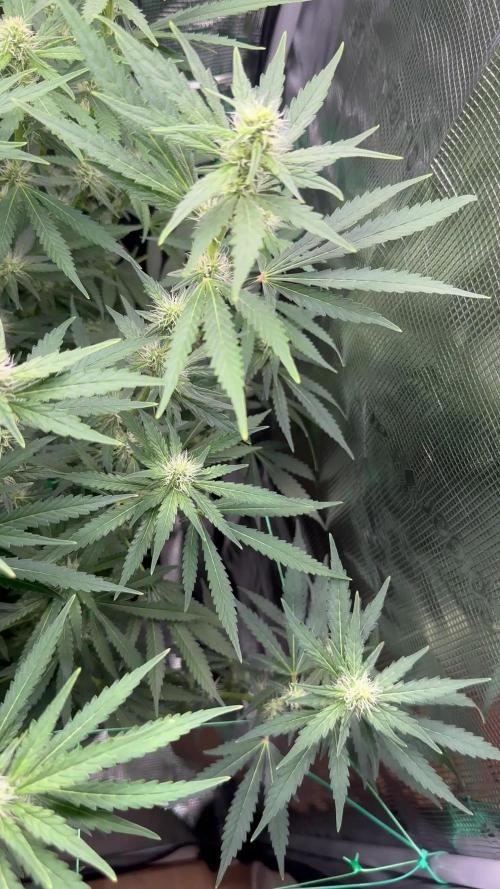
Today is start week 5. So this is from week 4. The cookies haze was a bit behind on flip. So I’m not giving pk13/14 to that one yet. I’m counting that one as week 2 flower
And I also just seen that I messed everything up with the nutrients here. I was counting it as 10l and not 1l. So I just fixed it now. I’m sorry about that too. Any questions, please just ask


Likes
13
Share

@SkunkyDog420
Follow
Hallo zusammen 🤙.
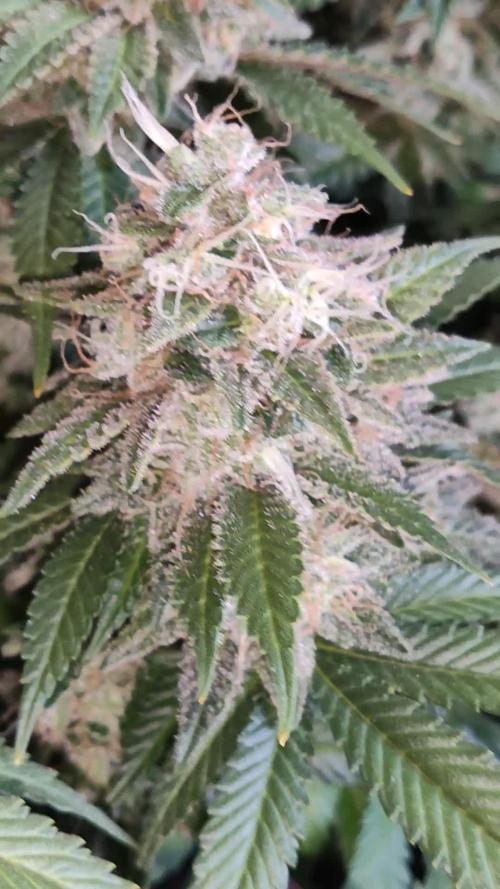
Sie wächst sehr schön und macht keine Probleme.
Rabattcode für den BIOTABS-Webshop https://biotabs.nl/en/shop/ GDBT420, damit erhalten Sie 15 Prozent