




Likes
39
Share


@Silverback_Guerilla
Follow
11/2:
I fed them yesterday except for the 3 x SP's, the short OS(c), and the last Blackberry (a). Those 5 plants were each flushed with 8 gallons of warm water and Liquidsoil.
11/5:
I watered the ones that will be harvested tomorrow so hey will be turgid for a rough trim.
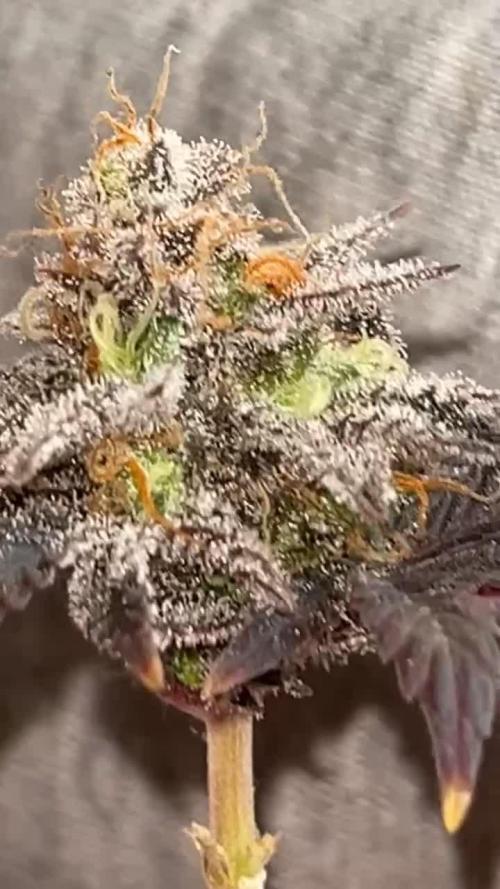
Took photos of the ones slated for execution. They'll be in the dark til tomorrow night.
11/6:
Harvested and washed the 3 x SPs, the last Blackberry, and one of the OS's.
Hanging to dry -
My closet looks so empty now with only 11 plants in there...
11/7:
I flushed all 3 of the Lemon Pies, and the purple Wedding Cheesecake with 8 gallons of warm water each, including Liquidsoil. Everybody else got fed for probably the last time.

Likes
25
Share


@Trippychef
Follow
Red gorilla auto/left back-7 weeks
Red gorilla auto/right back-6 weeks
Purple punch og/ front-4 weeks

Likes
5
Share


@Staffedition
Follow
Всем привет друзья!
Был в отпуске, ни до репортов было.
Что могу сказать, разочервался я Fast buds. генетика попадается плохая, при чём беру разные сорта.
Fast Buds Zkittlez был первый мой куст, когда только начинал гровить. Снял я тогда 120 сухого. Отложилось у меня положительное впечатление.
И вот я снова решил поднять этот прекрасный сорт, в итоге получил мини куст.
Всем добра и мира!
Likes
11
Share

@Itashish
Follow
Graine germée 26mai.
La chèvre a été rempoter dans son pot final, il a enfin la tête à l'envers !
J'ai mis des photos des étapes à la suite, ça a été plus simple que je pensais pour y arriver.
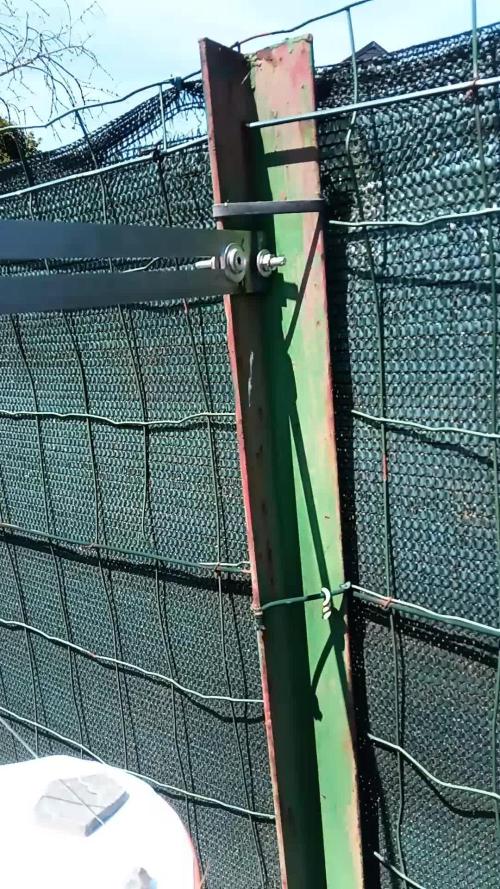
Tout d'abord j'ai fixer une règle en inox sur un poteau
J'ai mis des billes d'argile sur la surface du pot en géotextile
J'ai emballé le chèvre dans du cellophane
Je l'ai passer dans le trou de drainage et retiré le cellophane
J'ai découpé le géotextile pour le retirer
J'ai complété le pot de terreau
J'ai mis tous les ingrédients (photo6) en top dress (sauf levure qui a servi arrosage) et j'ai complété pas du foin en Paillage
J'ai découpé une feuille en papier blanc au diamètre du pot pour couvrir le paillage comme une bâche meme si je sais que ça sera pas aussi efficace que la bâche mais ça permettra de garder le tout un maximum humide et accélérer la décomposition du top dress
J'ai fixer le chèvre a son guide
Et je l'ai posé à son emplacement final
Maintenant plus qu'à laisser pousser en espérant que ça fonctionne bien, en faisant ça j'espère forcer la ramifications. The Goat est un peu à l'ombre vu qu'il a la tête à l'envers mais c'est pas plus mal vu la puissance du soleil actuelle (+45 degrés celsius)
Hate de voir la suite de l'aventure ! Let's grow🌱🍀

Likes
4
Share


@THcHunteR23
Follow
Première signe que sa va moin bien… j’ai enlevé les feuilles atteinte de taches au maximum .j’ai attendu que le substrat soit bien sec et donner un dose d’engrais plus élevé. J’espère que ça va se reg

Likes
62
Share


@Wicked_Stix
Follow
The gutter hoe grow show powered by the viparspectra XS2000 is moving along. A couple of the plants started showing some nitrogen deficiency early in the week after the water change so I gave them a little maxigro. I'm not sure if the roots are running out of room or what is going on but the nutrient does aren't as efficient in this gutter compared to the dutch buckets. I suprecropped the crescendo to keep it even with the other plants. The cookies has strange looking buds on top. Not many pistils popping on it. Other than that the show will go on.....


Likes
93
Share


@Astroboy
Follow
It's was time to cut and Damm it was a mission...
It Took all day for a wet trim💪🙏😎
Hang for 9 days then I did a retrim
Lots of picture to come of final Bruce Banner
C+J=A

Likes
11
Share


@Coughy
Follow
Trichs seem to be further along then last grows, I can only assume the extra light and/or higher heat has cause them to finish a bit faster. Right now we are sitting on a majority of 70% cloudy, literally only a couple ambers through out. Wanting to harvest a little earlier this grow, hopefully day 59 or 60. Sooooo, 10-11 more days till chop.
Day 51
Starting a flush, drained and filled with tap water, 2mL/L of flushing agent to help dissolve/bind salts. 3 hour cycle runtime with flushing agent. Drain/fill with high quality ROH2O, pH’d, H202 for disinfection.


Likes
2
Share


@Mitenslite
Follow
Muy satisfecho con la genética ya que el olor era lo que estaba buscando, el efecto es bastante relajante y me pareció muy agradable para pasar con amigos y trabajar.

Likes
3
Share


Likes
5
Share


@Willy_Balls
Follow
#43 clones are maturing too fast I feel. Especially that a mother is ripening normally. I would guess it’s because of poor rooting. It’s the only difference.
I keep runoff at around 3 max.
Around week 5 the runoff ph started to drop below 6. Even towards 5.5. Both in rockwool and coco.

Likes
8
Share

@Growfather1
Follow
Hello everyone,
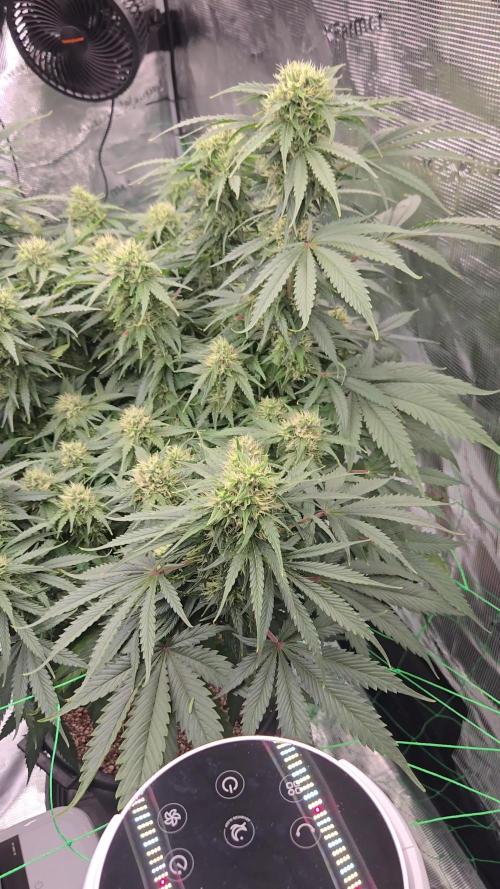
The growers nightmare occurred the small amnesia haze plant of expert seeds hermied on me, i wanted to take some pictures for the diary when i noticed the pollen sacks this is clearly my mistake as they were easy to spot if i just opened the tent door especially when i know i stressed her big time by defoliating her in the previous weeks.
I removed about 20 buds and trimmed her, the other 2 plants didn't produce any bananas and can't spot any seeds but time will tell.
Today i started with the heavy feed that raised to 910ppm i switched to canna pk13/14 and put 150ml in the 50 liter reservoir.
I hope to have better news next week.
Thanks for stopping by and have a nice week.


Likes
14
Share


@BLAZED
Follow
Week 12 (3-10 to 9-10)
3-10
Temperature: 27.5 degrees (lights on) 20 degrees (lights off)
Humidity: 86% (highest) 60% (lowest)
Watering: 1200 ml. PH 6.4 EC: 1.8 (with Hybrids & PK+)
4-10
Temperature: 27.3 degrees (lights on) 19.8 degrees (lights off)
Humidity: 72% (highest) 55% (lowest)
Watering: None.
5-10
Temperature: 25.8 degrees (lights on) 19.5 degrees (lights off)
Humidity: 80% (highest) 82% (lowest)
Watering: 700 ml. PH 6.5 EC: 0.6 (without Hybrids & PK+)
Last night i accidentally let the light at 20% strength, so the whole day the light was on the lowest wattage.
6-10
Temperature: 28.6 degrees (lights on) 21.1 degrees (lights off)
Humidity: 81% (highest) 56% (lowest)
Watering: 1000 ml. PH 6.5 EC: 0.6 (without Hybrids & PK+)
7-10
Watering: None.
8-10
Temperature: 27.4 degrees (lights on) 18.4 degrees (lights off)
Humidity: 85% (highest) 53% (lowest)
Watering: 1300 ml. PH 6.4 EC: 0.6 (without Hybrids & PK+)
9-10
Temperature: 27.9 degrees (lights on) 19.4 degrees (lights off)
Humidity: 80% (highest) 52% (lowest)
Watering: 1000 ml. PH 6.4 EC: 0.6 (without Hybrids & PK+)


