Likes
Comments
Share
@Foxtail89
Follow
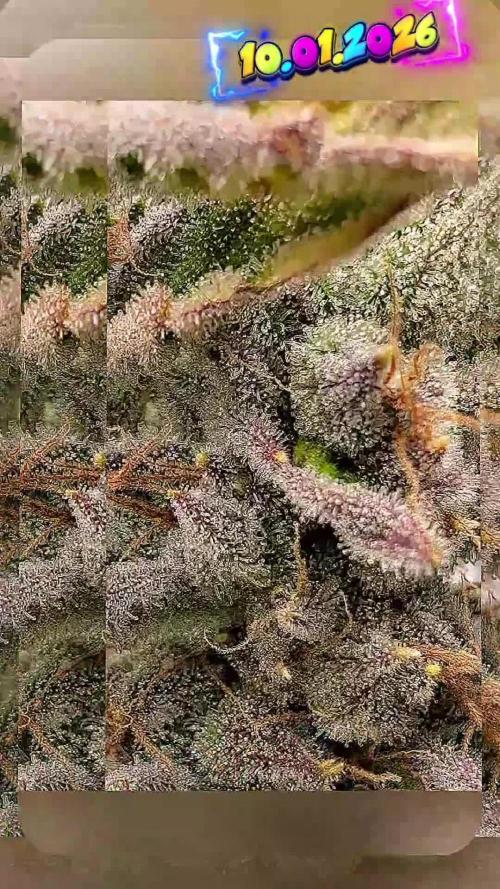
BT32...Zum Glück sehe ich nach wie vor keine Bananen, aber ein paar Pistillen sind braun geworden, könnte eine erfolgte Bestäubung sein, könnte aber auch eine normale Alterserscheinung sein nach 4 Wochen Blüte. Buds könnten schneller wachsen, aber legen doch deutlich zu. Hatte vor ein paar Tagen etwas Lichtstress, nachdem ich etwas hochgedreht habe (ca. 75%). Gelbe Spitzen und beetende Blätter. Wieder runtergedreht auf ca. 60% Leistung und die Symptome waren am nächsten Tag weg. Habe ein letztes Mal etwas organischen Topdress gemacht mit Guano, Eierschalen, Urgesteinsmehl in etwas magerer Erde gemischt. Mulch wurde mit neuen Blättern und etwas Rasenschnitt aufgefüllt (Grün:Braun/"N:C" 1:3). Morgen gibt es einen Komposttee (Kompost, Melasse). Die untersten Blätter sind gestern abgefallen, waren aber nicht komplett gelb leergesaugt, sondern sind vertrocknet. Habe die oberste Schicht recht feucht gehalten, aber den ganzen Topf zu trocken gehalten. Ist ein schmaler Grat zwischen durchgehend feucht (rein organischer Grow mit viel Leben) und übergossen. Hoffe, die Nährstoffe kommen relativ schnell an. Ab Woche 7 gibt's nur noch Wasser.
Likes
6
Share
Haven't posted in a bit been busy with life, I am harvesting the Grape God tonight, I am going to push my other plant another week. Have 2 going in the new Autopots system. New larger tent and new Mammoth light are going up after the holiday. Will be posting more soon as I will be running some more testers. Threw up the other plant as when I post video it rejects any pictures..?
Likes
10
Share
This will be the last week in veg! You can already see some coots forming and their height is upwards of 18 inches. I will switch their light schedule on Sunday and start the bloom. Can’t wait!!
Likes
48
Share
@Theia
Follow
I am very happy with the Chiquita Bananas in the end. Clones were total seed factories but I think we may have a go at making some hash with those as the foot long buggers are caked in crystal.. 62g and 63g . Plant 1 is just a monster for me 365g wet. Long dense buds thick dank smell of tropical sweets. Not as much seed as I thought there would be so glad I was convinced to push her a bit more. Plant 2 is smaller but has taken a pure turn in the last week.i don't think she was stressed at Al. I did switch to just water for last 10 days but apart from that I dunno. I don't think she has any thing with pure in her genetics but either way she looks beautiful. 169g wet from her. Everything is drying for the next 10 days when I shall report back. Happy grows.🌿🌱👊 Stay safe.😷
Likes
12
Share
@L_Choppa
Follow
i feed with nutes last watering about two days ago my idea is to feed one more time before the two week flush not really sure yet i have at lease a week to figure it out being the end of the plants life cycle is soposed to end in another week idk master growers were yall at?????😅
Likes
6
Share
Burnt the shit out off all 6 clones of the blueberry Transplanted to ocean forest to early
Likes
71
Share
@Krisis
Follow
04/04/24. Going into week 3. The little ladies seem to be doing well. For a few days I dimmed the light to about 20-25% as I thought it was too much for 2 other babies (zoap) I have under it. Prior to that the node spacing was looking perfect. Now the orchids grew several inches taller and the node spacing looks huge. I’ve increased to 50% again. The stems have thickened up quite a bit since last week. I’ve tried to show it in video. I haven’t given anything but the tea, which I will be giving again with their next watering. They have been getting about 500 ml dechlorinated every 3 days. #1 has just been topped today at 5th node. I will do the same with #2 when she is there. Other than that, just watching them grow and do their thing. 😍
Likes
13
Share
@Drawer
Follow
A sad week, I found bud rot and had to take my plants out and do a big check and remove all dense underdeveloped growth. It will be a pretty big hit on the yield I guess but the most important thing is learning and that I did. The bud rot could spread due to my RH being 65/70 at nights and it used to be +80 before, + bad airflow. I got new fans in the tent and my dehumidifier was ordered already but its not in yet. On the other side, the plants are looking pretty damn good, they smell amazing and 3 of the 4 plants is getting a very dense nug structure.
Likes
9
Share
@Chubbs
Follow
Weekly update on these couple. One got the chop for some fresh frozen bubble wash and these two still have another week for the one and only a couple days for the other. They smell like a bakery and are covered in frost. All in in an easy one to grow and produces amazing flowers and yields.
Likes
32
Share
Likes
8
Share
Cc#1 wet = 14.62oz Trimmed=1.92oz Cc#2 wet =22.22oz Cc#3 wet =26.39oz. The last four crystal candies are getting an ice bath for 48 hrs then cut down to dry. I will re update my weeks when further weight is taken and I’ll re update the final product. She’s got lots of fruity notes with a little gas and earthy smell. First plant was cut down early and has cured for a week now and is more of an energetic high as flavors still continue to flourish as curing continues. Definitely a happy moment for me seeing as this is my first grow
Likes
1
Share
@Tri_Op
Follow
Began flushing her midway through week 8, buds aren't as full as I had liked but have struggled with rising EC levels during the whole grow which I will put down to being caused by an excessive defoliation at week 4 of flower that took too long to recover from.
Likes
1
Share
@Blucha
Follow
Did 2 flushes now. They have only one more week to go and they're finally ready.
Likes
19
Share
Yellow butterfly came to see me the other day; that was nice. Starting to show signs of stress on the odd leaf, localized isolated blips, blemishes, who said growing up was going to be easy! Smaller leaves have less surface area for stomata to occupy, so the stomata are packed more densely to maintain adequate gas exchange. Smaller leaves might have higher stomatal density to compensate for their smaller size, potentially maximizing carbon uptake and minimizing water loss. Environmental conditions like light intensity and water availability can influence stomatal density, and these factors can affect leaf size as well. Leaf development involves cell division and expansion, and stomatal differentiation is sensitive to these processes. In essence, the smaller leaf size can lead to a higher stomatal density due to the constraints of available space and the need to optimize gas exchange for photosynthesis and transpiration. In the long term, UV-B radiation can lead to more complex changes in stomatal morphology, including effects on both stomatal density and size, potentially impacting carbon sequestration and water use. In essence, UV-B can be a double-edged sword for stomata: It can induce stomatal closure and potentially reduce stomatal size, but it may also trigger an increase in stomatal density as a compensatory mechanism. It is generally more efficient for gas exchange to have smaller leaves with a higher stomatal density, rather than large leaves with lower stomatal density. This is because smaller stomata can facilitate faster gas exchange due to shorter diffusion pathways, even though they may have the same total pore area as fewer, larger stomata. Leaf size tends to decrease in colder climates to reduce heat loss, while larger leaves are more common in warmer, humid environments. Plants in arid regions often develop smaller leaves with a thicker cuticle and/or hairs to minimize water loss through transpiration. Conversely, plants in wet environments may have larger leaves and drip tips to facilitate water runoff. Leaf size and shape can vary based on light availability. For example, leaves in shaded areas may be larger and thinner to maximize light absorption. Leaf mass per area (LMA) can be higher in stressful environments with limited nutrients, indicating a greater investment in structural components for protection and critical resource conservation. Wind speed, humidity, and soil conditions can also influence leaf morphology, leading to variations in leaf shape, size, and surface characteristics. Small leaves: Reduce water loss in arid or cold climates. Environmental conditions significantly affect gene expression in plants. Plants are sessile organisms, meaning they cannot move to escape unfavorable conditions, so they rely on gene expression to adapt to their surroundings. Environmental factors like light, temperature, water, and nutrient availability can trigger changes in gene expression, allowing plants to respond to and survive in diverse environments. Depending on the environment a young seedling encounters, the developmental program following seed germination could be skotomorphogenesis in the dark or photomorphogenesis in the light. Light signals are interpreted by a repertoire of photoreceptors followed by sophisticated gene expression networks, eventually resulting in developmental changes. The expression and functions of photoreceptors and key signaling molecules are highly coordinated and regulated at multiple levels of the central dogma in molecular biology. Light activates gene expression through the actions of positive transcriptional regulators and the relaxation of chromatin by histone acetylation. Small regulatory RNAs help attenuate the expression of light-responsive genes. Alternative splicing, protein phosphorylation/dephosphorylation, the formation of diverse transcriptional complexes, and selective protein degradation all contribute to proteome diversity and change the functions of individual proteins. Photomorphogenesis, the light-driven developmental changes in plants, significantly impacts gene expression. It involves a cascade of events where light signals, perceived by photoreceptors, trigger changes in gene expression patterns, ultimately leading to the development of a plant in response to its light environment. Genes are expressed, not dictated! While having the potential to encode proteins, genes are not automatically and constantly active. Instead, their expression (the process of turning them into proteins) is carefully regulated by the cell, responding to internal and external signals. This means that genes can be "turned on" or "turned off," and the level of expression can be adjusted, depending on the cell's needs and the surrounding environment. In plants, genes are not simply "on" or "off" but rather their expression is carefully regulated based on various factors, including the cell type, developmental stage, and environmental conditions. This means that while all cells in a plant contain the same genetic information (the same genes), different cells will express different subsets of those genes at different times. This regulation is crucial for the proper functioning and development of the plant. When a green plant is exposed to red light, much of the red light is absorbed, but some is also reflected back. The reflected red light, along with any blue light reflected from other parts of the plant, can be perceived by our eyes as purple. Carotenoids absorb light in blue-green region of the visible spectrum, complementing chlorophyll's absorption in the red region. They safeguard the photosynthetic machinery from excessive light by activating singlet oxygen, an oxidant formed during photosynthesis. Carotenoids also quench triplet chlorophyll, which can negatively affect photosynthesis, and scavenge reactive oxygen species (ROS) that can damage cellular proteins. Additionally, carotenoid derivatives signal plant development and responses to environmental cues. They serve as precursors for the biosynthesis of phytohormones such as abscisic acid () and strigolactones (SLs). These pigments are responsible for the orange, red, and yellow hues of fruits and vegetables, while acting as free scavengers to protect plants during photosynthesis. Singlet oxygen (¹O₂) is an electronically excited state of molecular oxygen (O₂). Singlet oxygen is produced as a byproduct during photosynthesis, primarily within the photosystem II (PSII) reaction center and light-harvesting antenna complex. This occurs when excess energy from excited chlorophyll molecules is transferred to molecular oxygen. While singlet oxygen can cause oxidative damage, plants have mechanisms to manage its production and mitigate its harmful effects. Singlet oxygen (¹O₂) is considered a reactive oxygen species (ROS). It's a form of oxygen with higher energy and reactivity compared to the more common triplet oxygen found in its ground state. Singlet oxygen is generated both in biological systems, such as during photosynthesis in plants, and in cellular processes, and through chemical and photochemical reactions. While singlet oxygen is a ROS, it's important to note that it differs from other ROS like superoxide (O₂⁻), hydrogen peroxide (H₂O₂), and hydroxyl radicals (OH) in its formation, reactivity, and specific biological roles. Non-photochemical quenching (NPQ) protects plants from damage caused by reactive oxygen species (ROS) by dissipating excess light energy as heat. This process reduces the overexcitation of photosynthetic pigments, which can lead to the production of ROS, thus mitigating the potential for photodamage. Zeaxanthin, a carotenoid pigment, plays a crucial role in photoprotection in plants by both enhancing non-photochemical quenching (NPQ) and scavenging reactive oxygen species (ROS). In high-light conditions, zeaxanthin is synthesized from violaxanthin through the xanthophyll cycle, and this zeaxanthin then facilitates heat dissipation of excess light energy (NPQ) and quenches harmful ROS. The Issue of Singlet Oxygen!! ROS Formation: Blue light, with its higher energy photons, can promote the formation of reactive oxygen species (ROS), including singlet oxygen, within the plant. Potential Damage: High levels of ROS can damage cellular components, including proteins, lipids, and DNA, potentially impacting plant health and productivity. Balancing Act: A balanced spectrum of light, including both blue and red light, is crucial for mitigating the harmful effects of excessive blue light and promoting optimal plant growth and stress tolerance. The Importance of Red Light: Red light (especially far-red) can help to mitigate the negative effects of excessive blue light by: Balancing the Photoreceptor Response: Red light can influence the activity of photoreceptors like phytochrome, which are involved in regulating plant responses to different light wavelengths. Enhancing Antioxidant Production: Red and blue light can stimulate the production of antioxidants, which help to neutralize ROS and protect the plant from oxidative damage. Optimizing Photosynthesis: Red light is efficiently used in photosynthesis, and its combination with blue light can lead to increased photosynthetic efficiency and biomass production. In controlled environments like greenhouses and vertical farms, optimizing the ratio of blue and red light is a key strategy for promoting healthy plant growth and yield. Understanding the interplay between blue light signaling, ROS production, and antioxidant defense mechanisms can inform breeding programs and biotechnological interventions aimed at improving plant stress resistance. In summary, while blue light is essential for plant development and photosynthesis, it's crucial to balance it with other light wavelengths, particularly red light, to prevent excessive ROS formation and promote overall plant health. Oxidative damage in plants occurs when there's an imbalance between the production of reactive oxygen species (ROS) and the plant's ability to neutralize them, leading to cellular damage. This imbalance, known as oxidative stress, can result from various environmental stressors, affecting plant growth, development, and overall productivity. Causes of Oxidative Damage: Abiotic stresses: These include extreme temperatures (heat and cold), drought, salinity, heavy metal toxicity, and excessive light. Biotic stresses: Pathogen attacks and insect infestations can also trigger oxidative stress. Metabolic processes: Normal cellular activities, particularly in chloroplasts, mitochondria, and peroxisomes, can generate ROS as byproducts. Certain chlorophyll biosynthesis intermediates can produce singlet oxygen (1O2), a potent ROS, leading to oxidative damage. ROS can damage lipids (lipid peroxidation), proteins, carbohydrates, and nucleic acids (DNA). Oxidative stress can compromise the integrity of cell membranes, affecting their function and permeability. Oxidative damage can interfere with essential cellular functions, including photosynthesis, respiration, and signal transduction. In severe cases, oxidative stress can trigger programmed cell death (apoptosis). Oxidative damage can lead to stunted growth, reduced biomass, and lower crop yields. Plants have evolved intricate antioxidant defense systems to counteract oxidative stress. These include: Enzymes like superoxide dismutase (SOD), catalase (CAT), and various peroxidases scavenge ROS and neutralize their damaging effects. Antioxidant molecules like glutathione, ascorbic acid (vitamin C), C60 fullerene, and carotenoids directly neutralize ROS. Developing plant varieties with gene expression focused on enhanced antioxidant capacity and stress tolerance is crucial. Optimizing irrigation, fertilization, and other management practices can help minimize stress and oxidative damage. Applying antioxidant compounds or elicitors can help plants cope with oxidative stress. Introducing genes for enhanced antioxidant enzymes or stress-related proteins over generations. Phytohormones, also known as plant hormones, are a group of naturally occurring organic compounds that regulate plant growth, development, and various physiological processes. The five major classes of phytohormones are: auxins, gibberellins, cytokinins, ethylene, and abscisic acid. In addition to these, other phytohormones like brassinosteroids, jasmonates, and salicylates also play significant roles. Here's a breakdown of the key phytohormones: Auxins: Primarily involved in cell elongation, root initiation, and apical dominance. Gibberellins: Promote stem elongation, seed germination, and flowering. Cytokinins: Stimulate cell division and differentiation, and delay leaf senescence. Ethylene: Regulates fruit ripening, leaf abscission, and senescence. Abscisic acid (ABA): Plays a role in seed dormancy, stomatal closure, and stress responses. Brassinosteroids: Involved in cell elongation, division, and stress responses. Jasmonates: Regulate plant defense against pathogens and herbivores, as well as other processes. Salicylic acid: Plays a role in plant defense against pathogens. 1. Red and Far-Red Light (Phytochromes): Red light: Primarily activates the phytochrome system, converting it to its active form (Pfr), which promotes processes like stem elongation and flowering. Far-red light: Inhibits the phytochrome system by converting the active Pfr form back to the inactive Pr form. This can trigger shade avoidance responses and inhibit germination. Phytohormones: Red and far-red light regulate phytohormones like auxin and gibberellins, which are involved in stem elongation and other growth processes. 2. Blue Light (Cryptochromes and Phototropins): Blue light: Activates cryptochromes and phototropins, which are involved in various processes like stomatal opening, seedling de-etiolation, and phototropism (growth towards light). Phytohormones: Blue light affects auxin levels, influencing stem growth, and also impacts other phytohormones involved in these processes. Example: Blue light can promote vegetative growth and can interact with red light to promote flowering. 3. UV-B Light (UV-B Receptors): UV-B light: Perceived by UVR8 receptors, it can affect plant growth and development and has roles in stress responses, like UV protection. Phytohormones: UV-B light can influence phytohormones involved in stress responses, potentially affecting growth and development. 4. Other Colors: Green light: Plants are generally less sensitive to green light, as chlorophyll reflects it. Other wavelengths: While less studied, other wavelengths can also influence plant growth and development through interactions with different photoreceptors and phytohormones. Key Points: Cross-Signaling: Plants often experience a mix of light wavelengths, leading to complex interactions between different photoreceptors and phytohormones. Species Variability: The precise effects of light color on phytohormones can vary between different plant species. Hormonal Interactions: Phytohormones don't act in isolation; their interactions and interplay with other phytohormones and environmental signals are critical for plant responses. The spectral ratio of light (the composition of different colors of light) significantly influences a plant's hormonal balance. Different wavelengths of light are perceived by specific photoreceptors in plants, which in turn regulate the production and activity of various plant hormones (phytohormones). These hormones then control a wide range of developmental processes.
Likes
89
Share
@BioBuds
Follow
This strain is a dream to grow, if you haven't tried it yet, it's amazing, it's easy, it's lush and vibrant, full of energy from seed to smoke. Great for organic grow styles and a fun plant to grow. The smoke I will update in the smoke review! I do not have words for the quality of this strain. In everything. Grow this and be absolutely amazed by its performance. I had won the seeds with the Halloween give-away but they are a sure winner and a keeper. @SweetSeeds congratulations on a champion auto-strain. I've grown auto's before, only outdoors, but nothing like this, nothing this big in such a short time, and this resilient for not only mistakes but everything. This plant will perform even if you were to mess it all up. Keep to 20 liters grow bags for best performance as you could see with my two plants. One as more developed, although everyone says over 15 ltr makes no difference, with organic coco hybrid super soil, it does. It is the difference in buffering of nutes, PH, heat, and moisture. Way less hassle in the bigger pot and this was an excellent learning curve. This grow started out as a match between Forbidden Runtz by Fastbuds and XL Runts by Sweetseeds. But since the playing field was uneven (pot wise but also heat and fresh air wise), the results do not count in my opinion. But my guess is (since I haven't weighed the Forbiddens) that the XLs for now won. But as I said it would not be fair. We will do the contest again when said playing field is level. For now thank you again for checking my diaries, if you have any questions or comments, always welcome my friend. Big Hug Bud
Likes
10
Share
Day 58 : She is fattening her buds very much. CO2 stopped for all ladies. As you can see trichomes still are in cloudy period. So she needs couple weeks for sure. Edit (Day 62) : I watered again with nutrients. She is the most stinky lady in room and the most heavy. Looking forward for her.
Likes
3
Share
Likes
24
Share
Still a Mystery… Or Maybe Not? 🤔🌿 Alright, growmies—this “Mystery Autoflower” is keeping me on my toes. The more I observe her, the more convinced I am that she’s no auto at all. At this point, there should be pistils everywhere... but nope, still no sign of preflowers. That’s definitely not typical for an autoflower this far in, and I’m starting to think I might’ve accidentally popped a Red Hot Cookies seed instead. 😅 Well… turns out my so-called "Mistery Autoflower Magic" from Sweet Seeds wasn’t quite what I thought she was. After week after week of no pistils and a stretch that just wouldn’t stop, I had my suspicions—and now it’s confirmed: She’s not an auto at all, but a photoperiodic Red Hot Cookies! 😅 Honestly, I’m not even mad. She’s been growing beautifully, showing strong structure and healthy vigor all along. She did stretch nicely over the past days, which had me thinking bloom was kicking in—but so far, it’s just veg vibes. Still, she’s looking healthy and happy, so I’m not complaining. 💧 Feeding Routine this Week: 🔸 BioBizz Grow, Bloom and Top Max 🔸 CalMag 🔸 Alg-a-Mic 🔸 Silica spray (every 3 days for strong leaves) 🔸 Homebrewed compost tea (2 days after feeding) 🔸 Effective Microorganisms (2 days after that) 🌡️ pH: 6.5 📈 EC: 1200 Let’s see what the next week brings—maybe she’s just fashionably late. Either way, she’s looking bushy, balanced, and ready for whatever’s next. Stay tuned! 🌱💫
Likes
17
Share
@Dunk_Junk
Follow
She's doing well! Not long left. Maybe a week or so. Trichomes are still all clear, pistils are 80% brown.
Likes
37
Share
Lets start off with the Gas lantern lighting technique, this was invented in the 1800's I believe, by hemp farmers. if you give the cannabis light for 1 hour in the middle of the night, then you will keep it from going into flower. So if you leave the lights on for 12 hours, then darkness for 5.5 hours then 1 hour of light then 5.5 more hours of darkness. This will give you the growth of a 18 hour light day but you will only use 13 hours of electricity. Plants are more rested, faster growth and tighter node spacing. Overall very advantageous. It generally shortens veg by 2 weeks. the Jobes organics 4-4-4 is 17g per gallon, Above measurement system would not allow this. Will start LST and FIMing once plants have settled from transplant. Added extra Silica to boost available Si until microbes can catch up and degrade the vermiculite properly.