


Likes
Comments
Share

@GermGrowFox
Follow
19. März
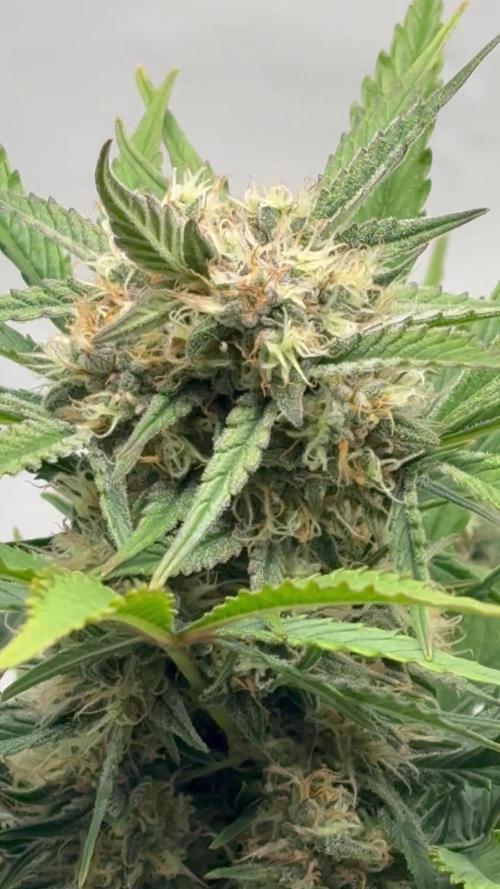
Es riecht sehr wild sobald man das Zelt aufmacht:)
Wir kommen voran. Meiner Ak geht es wieder gut. Ich Idiot hab vergessen seit der Sämlingsphase einen der Ventilatoren immer weiter nach oben zu schieben.
Die Dame hatte einfach Hitze oben x) hätte ich früher von selber drauf kommen können 😅 aber jetzt ist es halt so.
Die Purple Punch sieht trotz Nanners wunderschön aus und reift unglaublich gut kann mich weiterhin kein Stück beklagen weitergemacht zu haben :)
Des Weiteren habe ich ein kleines Upgrade vor:
Hab mir von Ac Infinity die S16 Lampen gekauft. Ich warte noch bis der Postbote meine Zusatzstsngen für das Zelt liefert u d dann kann ich es installieren. Ich bin sehr gespannt ob das was bringt :D

Likes
13
Share


Likes
10
Share


@Sadhus
Follow
Rempotage en 13 litres après quelques signes de feuilles jaunes sur certaines , plante charnue trapue a feuilles large , ormi quelque feuilles cramé sur certaines les 7 sont jolies bientôt la floraison et j'ai hâte de voir sa! 100% organic et au naturel zero stress no topping no lst
#kannabia
#madamegrow
#trolmaster

Likes
21
Share


@JeyGanesha
Follow
4° sett.di fioritura. Tutto va benissimo.. con fast buds non si sbaglia mai 🤣😂. Forza fast buds,💪✌️👍.. anche la papaia cookie profuma che è una delizia,🤤🤤🤤

Likes
141
Share

@Mr_und_Ms_Lue_Roots
Follow
Hallo zusammen,
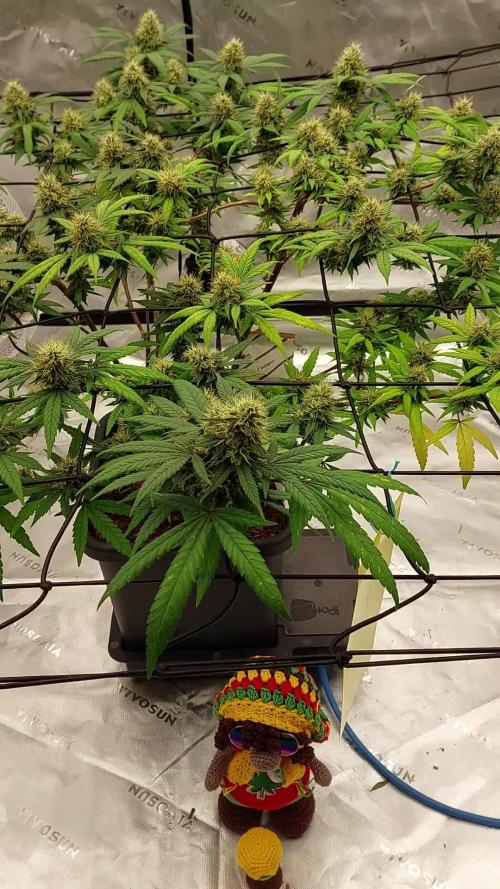
Wir befinden uns inzwischen in Woche 6 der Blütephase.
Es ist sichtlich festzustellen, dass sie identisch wie die erste Purple Coockie Kush, während der Blütephase vereinzelt Versorgungsprobleme aufzeigt. Es liegt zumindest durch den eigen Versuch mit identischen Pflanzengut sehr nah, dass es wirklich weiter vererbt wurde. Dahingehend ein toller eigenversuch mit eher negativen Ausgang aber zugleich, wertvollen Erfahrungen für uns. Aus diesem Grund, sehen wir davon ab, die P.C.K die sich z.Zt im Re veg befindet, weiter zu führen. Am Wochenende werden wir uns noch mal die Blätter die Kraft nehmen, kleinstblüten und wahrscheinlich den einen Unterversorgten Trieb entfernen. Ansonsten schwellen die Blüten die versorgt werden schön an und Baldchin bauen breitgefächert aufeinander auf.
So bis nächste Woche liebe Gartenfreunde und vielen Dank für das vorbeischauen!
VG ✌️ 😎


Likes
7
Share


@Canna96
Follow
Hey now, I hope everyone is having a great week. It was a good week again for the 5 mainlines, I did some final LST to try and keep the mains level, and I also defoliated the lower leaves to improve the air flow. I am still feeding the same veg nutrients which is just amor si, cal mag, and maxi grow. I will start transitioning to flower nutrients tomorrow and I will gradually switch over to all over flower nutrients by the end of the week.
The ladies are about 24" inches tall, but I do anticipate them growing some more before the stretch ends. I am pretty much done with LST at this point, I will just continue to defoliate as necessary and make sure they are enjoying their environment.
Still very happy with the Spectrum X from Medic Grow. I am running her at 69% and the plants seem very happy and healthy. The heat and humidity are finally letting up in my region so it is nice to be able to open some windows and drop the temp outside the grow tent.
I hope everyone has a great weekend, Thanks for stopping by, Stay Safe and Blaze On!!! 💪
Website: https://medicgrow.com/
https://growdiaries.com/grower/medicgrowled

Likes
4
Share


@eYo4Terpz
Follow
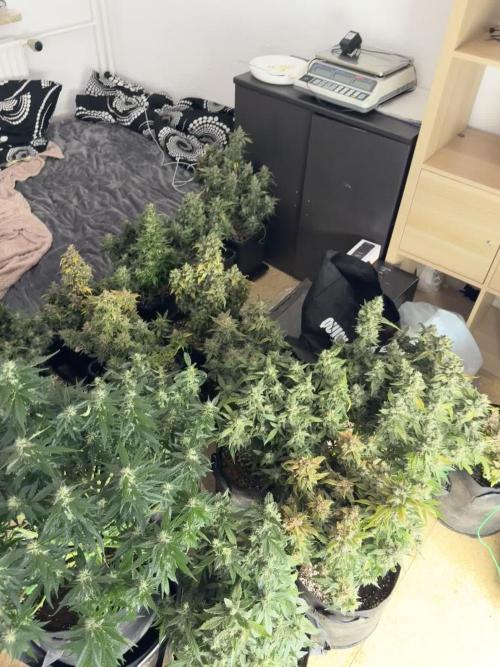
Lollipopp und Entlaubung beendet
Nicht wundern bei der Menge an Laub habe 3 von 4 entlaubt.
2 speedruns hab ich euch nämlich noch garnicht vorgestellt!!!

Likes
1
Share

Likes
23
Share


@WolverineGreens
Follow
The stretch is either over or just about. Baby buds just startin to show but already given off a nice odor😁.
The amnesia haze will b the tallest plant once again. Will probably have the biggest buds also. That damn mutant ap is driven me crazy.
Bring on the buds🔥🔥🔥


Likes
18
Share


@Sti_Cazz
Follow
Another week of Veg gone and trying to understand feeding.... My last grow (the one on the balcony) i overwatered at the start so I made sure this time I would not make the same mistake. I dgave a bit more root booster and found some organic Molasses that i added to the 1st feeding. I know its now considered 'food' but more as an activator of microbes in the earth but I'm sure it can't hurt right?
Quite some growth this week, so tried to LST it down a bit... Buuuuut I'm not happy with it, I can forsee spacing problems (should have maybe planted the seeds off-set to one side of the pot to get a better growth going....I'll probably undo the tie-down and just let it grow.
Likes
46
Share


@Chubbs
Follow
420 Fastbuds Week 8
Gorilla Punch Auto
What up GrowFam. Hopefully everyone had an amazing Thanksgiving. This week has been exciting after leaving for a camping trip and returning to super smelly tent. Low and behold they made it fine I think I was more worried I'd come back to soggy plants from my drip system over watering. Everything worked as it should and the plants are thriving. I'd say probably another week or two left is all before they'll get the chop. All in all
Happy Growing
Likes
48
Share


@Professor_Chaos
Follow
Beginning of week...
She is doing her thing.. Slowly but surely lol.. Healthy as far as I can tell.. Maybe the reused coco is too reused? Idk. There is a bit of coco/perlite from my first grow in there lol.. Some others too.. But she is still truckin along.. Went up on the Armor Si (Silica) and a little on the FloraGro.. She does look like she is gonna beginning flowering very soon tho.. Pistils are forming slowly.. Much like the rest of this grow.. But she is starting.. I'm not going to start counting flower till I actually see that she is flowering.. Stretching and all.. That's how I like to count flower.. Always seems to line up perfectly when you count flower that way.. Even with photoperiods.. Not from the 12/12 flip because there is still 2 weeks of transition. Anyways.. Another week in the making...
Next day...
So my Mars Hydro is crapping out. I have to drop it down to 20 inches from the canopy and run it at 75%.. So pissed.. It glows when it is powered off and still plugged in.. And if I turn it on while the power is set to 100%.. It just blinks until I turn it down to 75%.. I can have it set to 75% and it will turn on like normal.. But I need to use 100% power.. And Mars Hydro sucks with responding to emails apparently.. I'm gonna have to buy a new one and return this POS.. Then hopefully buy a new stronger light for my 2x2.. I am so pissed.. Mars Hydro sucks.. The build is amazing.. The components are awesome when they are not flawed.. But damn this is the 3rd light to crap out on me in 2 years.. I do nothing but run them 18/6 or 12/12.. Run 1 fan on top at the driver and heatsink and 1 under toward the diodes.. Nothing different.. I think I'm gonna buy the Wakyme J-2000.. It comes with 2 fans blowing on the heatsink.. Honestly, noise is not an issue to me.. Heat is.. I sleep with all my fans running already lol.. Its actually hard to sleep without them now hahah.. But yeah. It has a Meanwell driver.. Samsung diodes.. Dimmer.. And the fans.. I think it's my best bet at this point.. Fuck Mars Hydro.. They had 3 chances with me.. My Sunraise 1000 (blurple) is like 4 years old and still running strong.. Smh.. Mars Hydro is crap. How did they even get so popular??? I'm sure more people will realize how crappy they really are.. No name brand everything.. Runs hot as ass.. Craps out after 3 - 4 months.. So so pissed...
Almost mid week..
I went ahead and pulled a couple branches down a bit.. The canopy is perfectly even.. It looks AwEsOmE! Lol
Mid week..
Well, she seems to be doing a bit better than before, I'd say. Normally, my previous autos would be flowering and probably almost finished stretching by now.. Live and learn.. I hope all the Zkittlez Autoflower seeds aren't like this.. And hopefully this strain turns out pretty dank to be wasting a few extra weeks on growth but not getting much growth at the same time.. And I hope harvest doesn't come quicker than the swelling of the calyxes.. But shit happens.. I have Mars Hydro sending me a new driver/dimmer. I sure hope it's just "plug-in" because if I'm going to take this light apart, I'm just going to go with the Meanwell HLG-240H-54B.. From what I was told from LEDSupplier dot com.. The 240W would be better due to the different current. We are still trying to figure out if the dimmer is 0-10V to see if I can just keep using the Mars Hydro dimmer along with the MeanWell HLG-240H-54B.. That would be cool.. Sorry but Mars Hydro sucks.. I bet running a different driver would help alot of issues.. Maybe even run cooler. Anyways.. About the plant lol.. She is doing great.. The stiples are still showing some weird colors on the tips.. Doesn't seem like an issue.. Some plants have the stems change colors.. Some have pistils change colors.. Some have leaves change colors.. Maybe that is just in her genetics.. The pics that ILGM shows, it should be a pretty colorful strain.. Guess we shall see! But she is happy and healthy.. I think I'm going to stop using Hydroguard next week.. Just doesn't seem like it's doing much of anything.. I really only bought it to fight root rot when I attempt DWC which I am going to attempt again very soon.. Maybe after this grow... We shall see...
Almost end of week..
Went ahead and defoliated/lollipopped a bit. She was getting too bunched together.. She is nice and opened up now.. 2 side branches stayed pretty short.. Not sure what that is all about.. Flowers are slowly forming at this point. Next week will be week 1 of flower and stretching should begin! She is still getting good light even with the power only being at 75%.. Just have it down lower.. Which I could get away with till harvest.. But fuck that. I ordered a new Mars Hydro TS 1000.. And Mars Hydro is also sending me a new driver/dimmer box to replace the old one.. Going to return the light and I still want to replace the stock driver with the MeanWell.. Trying to get more professional opinions before I attempt that tho.. So far, I am hearing to get the HLG-240H-54B.. The 150H (150W) doesnt have the correct current so I'd have to go with the 240H (240W) due to the output current and voltage to match correctly. Can't wait to try it out!
End of week..
So I got a new Mars Hydro TS 1000 in.. It comes with a Moso driver instead of the old Juson driver.. Hmm.. Ok.. Seems to not heat up as much.. The diodes still get hot, but the lack of the driver heat should help keep things cool.. Nice... I am able to raise the light back up and run her at 100% power.. I went ahead and tied the branches down a little more.. There are 2 that are still staying a little short.. But I think it's the way I started the whole LST process.. I should have tied down a different 90° angle instead of the angle I used.. But live and learn.. Wont use that way again lol.. Other than that, the flowers are forming nicely.. Happy happy happy.. Next week will begin flower! Niceeee.. On to the next!!!...

Likes
33
Share

@GrowBro1981
Follow
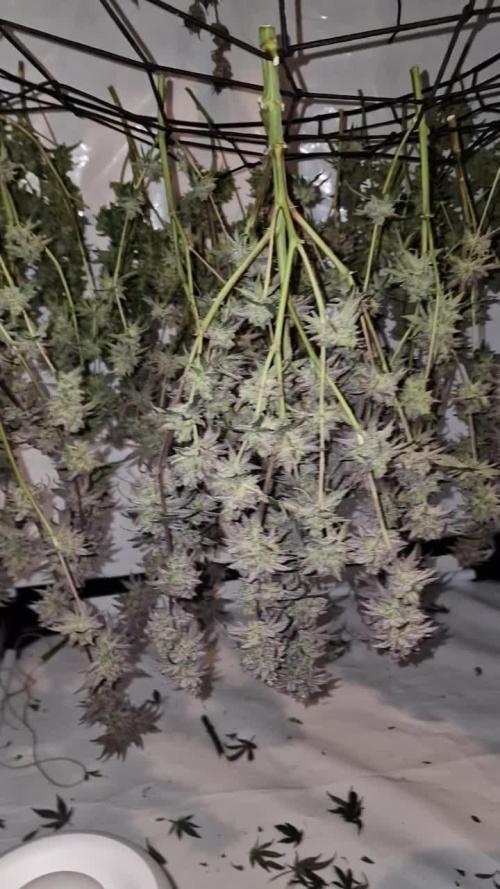
Beeindruckende Pflanze!! Von oben bis unten feste Buds 💪 ein Traum für jeden Grower 😎
Dunkel lila, schon fast schwarze Blätter, ein Hingucker sag ich euch 🤗😉
Wie immer, für mehr Infos, Bilder und Videos auf meine Facebook Seite kommen 😁🤗
"Green Room Anbau und Austausch"
Ich erwarte euch dort und freu mich auf euch

Likes
3
Share


@Ieiogrow94
Follow
Eccoci qui...
Tutto va per il meglio, questa settimana non ho applicato stress alla piccola, ma ho guardato l'evoluzione che ha avuto dando i nutrienti.
Ora ha un odore davvero intenso ed uno strato di resina pauroso, vediamo come si riprende dalla defogliazione che ho fatto settimana scorsa.
Seguiranno aggiornamenti, grazie a tutti per il supporto🔥🌲❤️

Likes
11
Share


@GorillaZativus
Follow
Videos:
10 días despertando , transplante 12 días , algunos sistemas radiculares y despertando post transplante .
🌱Solución de riego a micorrizas :
Mycochum y luego riego completo cuando despierten .
Ocupamos granular y great white en polvo para transplante , mitad y mitad.
Ph: 6,0
Ec: 0,7
🌱Solución riego a foleo 1 hora antes que despierten :
1 litro : proactive 5,0 ml y knactive 2 ml.
Ec : 0,5
Ph: 6,0
🌱Sumamos alfalfa alrededor de los tréboles
👑Actualización Jardin 18-19 días .
⌛️Videos :
🎥18 días , con hambre y sueño.
🎥19 días antes de dormir
🎥19 días despertando post foleo y post preventivo de tierra de diatomeas , listas para transplante en 1 semana .
🌱Solución foleo 2 litros :
knactive + proactive (4,0 ml ) y ( 0,8 de proactive ( melazas , quitina , etc ) Y sumamos preventivo después que se secó el foleo.
Ec : 0,4
Ph: 6,1
🌱metimos amarres al central y full lst .

Likes
21
Share


@hydro_newb42
Follow
It has been very difficult keeping the temperatures down due to the hot summer weather. It has been over 90 degrees 3 weeks in a row here and I'm running lights during the day... bad combination. These plants haven't slowed down though...
Likes
18
Share


@Rinna
Follow
As said before, I'm incredibly happy that I got to harvest a little bit. Never expected her to make it, but she kind off did! The smell was pungent and sweet like an amnesia haze should be, hoping that will be even better after drying and curing!


Likes
9
Share


@Susquihanna
Follow
It rained a lot this week and I did not give my plants any nutrients because they were too wet. I let nature take over for the week and we are looking good!
One thing I really like about this plant is its two colas. My friend helped me pinch it correctly --this is a new technique for me and I was a little scared I wouldn't pinch in the right place.lol
I am curious to see what each cola produces.
Likes
3
Share

@RakonGrow
Follow
+
data online : rakongrow.lima.zone/growme-godfeather-og-f1-auto-016.html
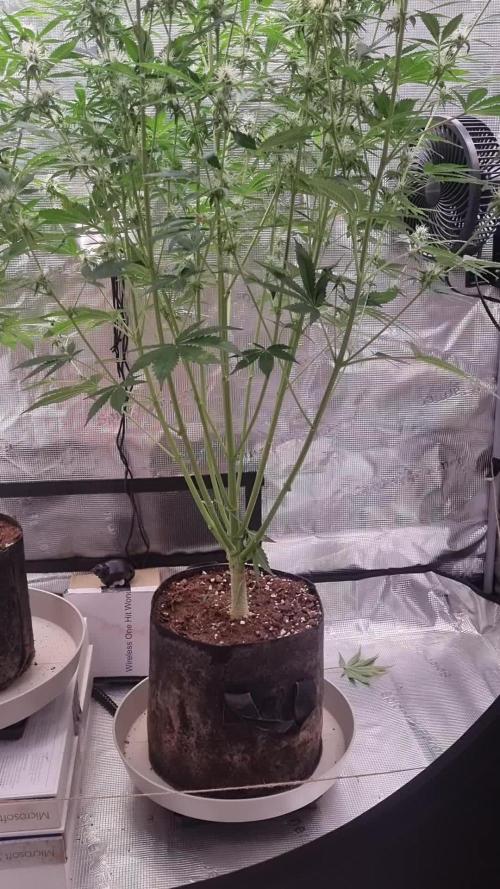
Day 61 : defoliate : 211g
+