


Likes
Comments
Share


Processing
Likes
29
Share


@Grey_Wolf
Follow
Ginger Nut Cookies & Aussie Music Videos
4 weeks of flowering completed
26th March 2020
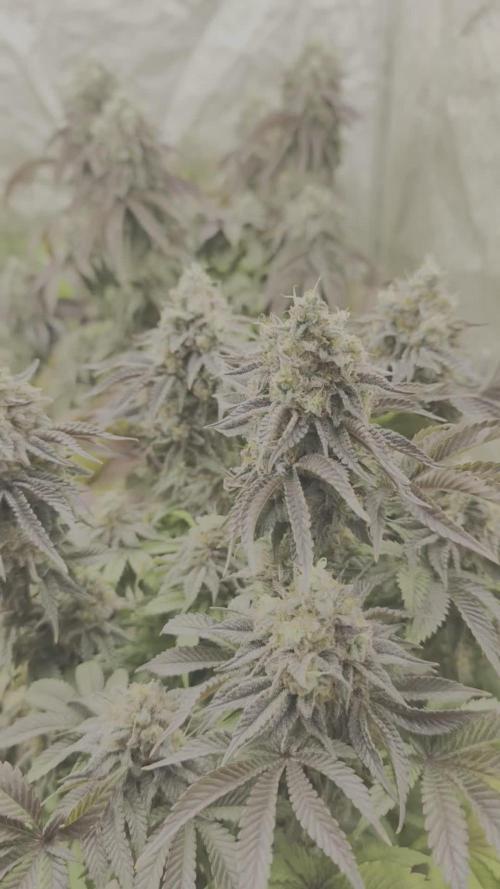
Hi Everyone I hope you are well , This Plant is starting to get some frosting happening and the smell has elvolved a little once again 😏
It's still got the tropical fruit like aroma but has got an underlying smell almost like honey.
I had to get up Early this morning as an impending thunderstorm threatened to drench my plants which I wasn't going to let happen 😡 bloody rain 😆
It's all good now they are under cover and protected from any more showers we may have .
She had a good feed yesterday of some Liquid potasium, Seaweed solution , Epsom salts and Mollasses so she should be content until the sun returns .
Ph is still keeping stable at 6.4 so that's about it for the plant update Now It's time for the Weekly Aussie Music Videos 🙌
Last Week was jimmy Barnes and his song Working class Man
This week I am playing The Angels as requested from @Lovemabud .
The Angels are an Australian rock band that formed in Taperoo, a small beachside suburb in Adelaide South australia in 1974
There biggest hit "Am I ever gonna see you face again?" became iconic because of the pub chant that followed which was "No Way , Get Fucked! Fuck Off!" 😆
If you watch the 2nd vid preview you will understand what I'm on about .
Sadly the lead singer Bernard "DOC" Neeson Passed away in 2014 from a Brain tumor.
First link is to the original version of "Am I ever gonna see your face again"
and the 2nd link is to one of the final performences before Docs death with the full Pub chant
Link 1
https://www.youtube.com/watch?v=xj_QkLrW3qc
Link 2
https://www.youtube.com/watch?v=3-VZP1pCIL8
I hope you enjoy this weeks Aussie Music Video and I'll be back next week with another one .
Take care 👍👊 Stay positive 👍
Likes
8
Share


@TorvicKofran
Follow
ESPAÑOL:
Hola chicos, espero se encuentren muy bien!
Esta semana las chicas han mejorado un poco, se detuvo el amarillamiento, descubri que Cal-Max de Grotek interfiere en la composicion de la linea hesi por lo que las chicas sufren un bloqueo de nutrientes, dejé de utilizarlo y las chicas han continuado con su desarrollo relativamente normal.
ya estan en su 5ta semana de floracion, Tutankhamon ha producido una cantidad gigantesca de resina, Lennon esta engordando a toda velocidad y aun le quedan 6 semanas aprox.
Anubis a pesar de su color intenso amarillo palido esta engordando bastante bien y su produccion de resina es inimaginable y ya solo que quedan 2 semanas y media aprox.
espero que a partir de ahora ya no surjan mas problemas y que las chicas terminen su floracion de la mejor manera.
esto es todo por esta semana chicos, espero que se encuentren muy bien !
INGLES:
Hello guys, I hope you are very well!
This week the girls have improved a little, the yellowing stopped, I discovered that Cal-Max from Grotek interferes with the composition of the hesi line so the girls suffer a nutrient lock, I stopped using it and the girls have continued with their relatively normal development.
They are already in their 5th week of flowering, Tutankhamun has produced a gigantic amount of resin, Lennon is gaining weight at full speed and he still has about 6 weeks left.
Anubis, despite its intense pale yellow color, is gaining weight quite well and its resin production is unimaginable and there are only about 2 and a half weeks left.
I hope that from now on no more problems arise and that the girls finish their flowering in the best way.
This is it for this week guys, I hope you are doing well!

Likes
2
Share

@Budhunter
Follow
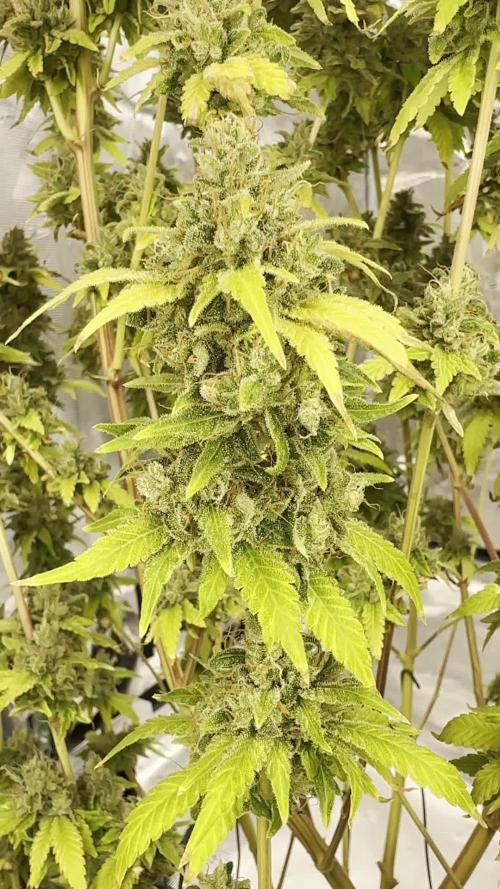
Week 11 flower - day 82 flw - day 140 of cycle
End of week 11 flower and plant could not be more ready. I postponed the harvesting day because I will be traveling so it can dry in my time away. Still trichomes are around 15-20 amber.

Likes
59
Share


@Salokin
Follow
These ladies continue to develop very nicely and lucky stopped stretching pretty much in the beginning of this week and the buds are forming super nicely. Since I also don’t observe a stretch in flower anymore, I decided to feed pk13/14 for the next week. It continues to surprise me how hungry these autos are, much hungrier than my glookies fro example. Unfortunately I realized that the plant on the very right of the box produces much smaller buds than the other two. I am pinning that on the fan right above her, so have pointed it slightly higher, but I guess the damage is done:(.


Likes
11
Share


@CocoLogic
Follow
Sept 27th: (F41)
Fertigation once a day with NEW recipe (1300 EC 6.1 PH) watered until 10-20% run-off
Sept 28th: (F42)
Fertigation once a day with same recipe (1300 EC 6.1 PH) watered until 10-20% run-off
Sept 29th: (F43)
Fertigation once a day with NEW recipe (1300 EC 6.1 PH) watered until 10-20% run-off
Sept 30th: (F44)
Fertigation once a day with same recipe (1300 EC 6.1 PH) watered until 10-20% run-off
Oct 1st: (F45)
Fertigation once a day with same recipe (1300 EC 6.1 PH) watered until 10-20% run-off
Oct 2nd: (F46)
Fertigation once a day with same recipe (1300 EC 6.1 PH) watered until 10-20% run-off
Oct 3rd: (F47)
Fertigation once a day with same recipe (1300 EC 6.1 PH) watered until 10-20% run-off
Note: The TUT bud are getting quite heavy :) Some branches are bending, will have to tight some of those :)

Processing
Likes
12
Share


@DD1FORTY8
Follow
**** WEEK 10 ****
both hulks shaping up to be some real beasts. just can’t beat good ol sunlight
Likes
114
Share


@Tropicannibis_Todd
Follow
💩Alrighty Then Growmies We Are Back At it 💩
Well folks we just finished up the last run and so we are back to do it all over again 😁
So what do you say we have some fun 👈 We got some Gorilla Punch 👊 👊 👊
Redue 👉 I just had to do this one again 😛 ( Love the smoke, terps, and effects, ) Definitely Would Recommend 👌
Seed soaked for 24 then placed in a tub with paper towels , once it cracked and rooted , placed into its main pot 👌
FC4800 from MarsHydro Lights being readjusted and chart updated .........👍
www.marshydro.ca
👉I used NutriNPK for nutrients for my grows and welcome anyone to give them a try .👈
👉 www.nutrinpk.com 👈
NutriNPK Cal MAG 14-0-14
NutriNPK Grow 28-14-14
NutriNPK Bloom 8-20-30
NutriNPK Bloom Booster 0-52-34
I GOT MULTIPLE DIARIES ON THE GO 😱 please check them out 😎
👉THANKS FOR TAKING THE TIME TO GO OVER MY DIARIES 👈


Likes
8
Share


@YourStonedBuddy
Follow
She is fattening up very nicely! pistils are darkening so the end is near! Another two weeks or so.
While watering i spotted some mold on the main cola :(( buds were just stacked against each other and the close proximity just caused mold. I played it safe and took off the entire cola


Likes
12
Share


@2Stones1Bird
Follow
Checkout my Instagram @smallbudz to see the Small budget grow setup for indoor use, low watt, low heat, low noise, step by step.
01/11/2019 -
Started using BioBizz Alg-a-Mic on spray, using it once per day at lights off, 1 or 2 puffs to create a light mist, only on non feed days,
I mixed 0.1ml on 100ml water 6.4 PH.
03/11/2019 - Gave her 250ml plain water with 6.4PH
05/11/2019 - Gave her 0,15ml of each BioBizz Grow, Max and Bloom on 300ml water 6 PH didn't manage to get it higher to 6.3 at least.
06/11/2019 - She started to show some pistols, probably entering pre-flower.
07/11/2019 - Soil was to dry due to 2930c temps gave her 0,500ml of 6.5PH water with 0,25ml Grow, 0,25ml Max, and 0,45ml Bloom BioBizz.

Likes
2
Share

@The_Doctor_Green
Follow
Hola a todos!!
Esta semana
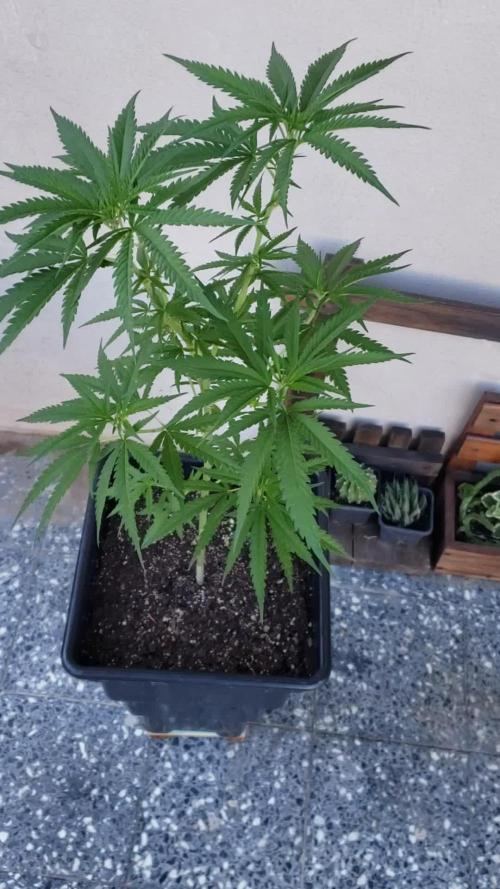
he regado solo con top veg 2ml x litro de agua.
La verdad no he tenido mucho tiempo para dedicarle, pero viene creciendo bien, en cuanto a tamaño no he registrado cambios, ya que poco a poco se va expandiendo hacia los laterales.
La próxima semana estaré más atento.
Saludos a todos!😃🙋♂️🤩

Likes
48
Share


@GERGrowDesigns
Follow
A Special Project from Germany and Welcome to Flower Week 4 of GoodTimesGenetix Blue Cream Haze
I'm excited to share my grow journey with you from my
GoodTimeGenetix Seeds .Im the First Person outside my Friends Company who got hands on this Strain .
He Managed over a long time to Cross these Strains:
-Blue Dream (Blueberry x Super Silver Haze - Female)
-Ice Cream Haze (Gelato x Wedding Cake x Crockets Haze - Male)
They Done a lot of Tests for a Nearly Perfect Stabilisation of this Genetic and Feminized them aswell .
This one is Professionell Created In Germany , Growed in Germany and presented To the World on Grow Diaries.
Here’s what I’m working with:
• 🌱 Tent: 120x60x80
• 🧑🌾 Breeder Company: GoodTimesGenetix
• 💧 Humidity Range: 60
• ⏳ Flowering Time: 8-9 Weeks
• Strain Info: 23%THC
• 🌡️ Temperature: 26
• 🍵 Pot Size: 20
• Nutrient Brand: Hy-Pro
• ⚡ Lights : 600W x 2
I would truly appreciate every bit of feedback, help, questions, or discussions – and of course, your likes and interactions mean the world to me as I try to stand out in this exciting competition!
Let’s grow together – and don’t forget to stop by again to see the latest updates!
Happy growing!
Stay lifted and stay curious!
Peace & Buds!
Likes
4
Share


@Ryno1990
Follow
The Rhino Ryder from @fastbuds is coming along really nice starting to get some buds popping up all over the Strawberry gorilla from @fastbuds is starting to come back from it being stunted for some reason think it mite of been locked out because she definitely doesn't need nutrients that much had to cut her feedings in half to stop nutrient burn
Likes
32
Share

@Growbody
Follow
Hallo und herzlich willkommen zu meinem Growbericht Outdoor 2025 mit den Sorten Power Flower Feminized, Royal Medic Feminized und Special Kush #1 Feminized, alle 3 von Royal Queen Seeds. Es ist das erste Mal, das ich Töpfe für den Outdoor grow verwende, bisher waren alle Gorilla grows und direkt in die Erde gepflanzt.
Die URL der Power Flower Feminized: https://www.royalqueenseeds.de/feminisierte-hanfsamen/120-power-flower.html
Die URL der Royal Medic Feminized: https://www.royalqueenseeds.de/cbd-samen/148-royal-medic.html
Die URL der Special Kush #1 Feminized: https://www.royalqueenseeds.de/feminisierte-hanfsamen/138-special-kush-1.html
Die Planung für den Grow ist, die Samen in easyplug Anzuchtwürfeln keimen zu lassen und danach in 0,6L und 2,2L Plastiktöpfen, dann letztlich in die neuen komplett doppellagigen ROOTIES 15 Liter Wide Version Stofftöpfe umzutopfen. Sobald die Witterung es zuläßt, sollen die Pflanzen an die frische Luft.
Es ist schon eine Weile her, das der Grow losging, die Bilder sind jetzt aktuell.
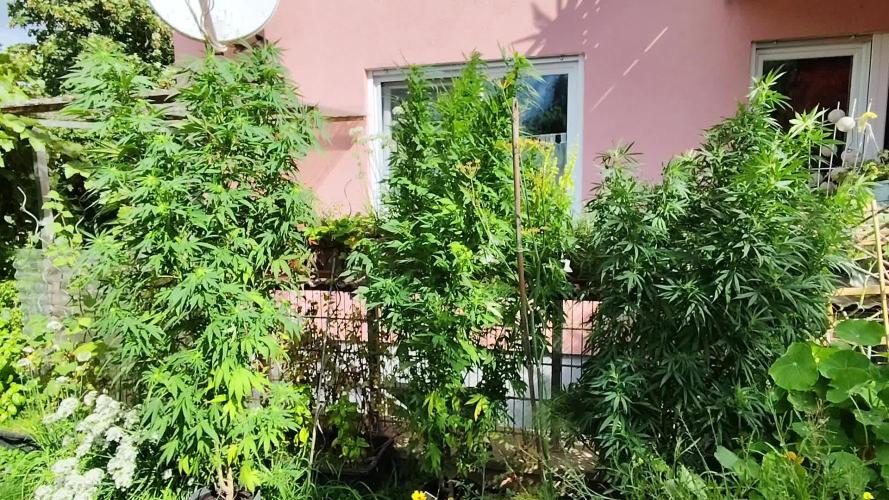
Tag 187: Die drei Ladies haben sich unter der Obhut meiner Nachbarin sehr schön entwickelt. Es hatte sehr viel geregnet, hinterm Rückhaltebecken war ein See und der Bach war voll bis zum Rand. Der Brunnen ist auch wieder offen. Die drei großen stehen jetzt wieder in der Sonne, heute hat's nur ein paar Wölkchen. Die Power Flower fem. ist jetzt 215 cm hoch, die Special Kush #1 fem. 205cm und die Royal Medic fem. 175 cm. Der Blütenzuwachs ist jetzt endlich deutlich zu erkennen.
Tag 188: Heute ist es sehr windig und stark bewölkt. Die drei Großen sind jetzt doppelt am Zaun festgemacht, nur eine Befestigung hat nicht mehr gereicht.
Wenn's dir gefallen hat, schau wieder vorbei ✌️😎
Likes
13
Share


@Grownewgenetics
Follow
I do. One week 1 ml /l biobizz and the other week megacrop 25 ml / l . And these Lady's are getting also a TnB naturals co2enhancer bottle in both Grow rooms 125 and 250 watt And i do mix a coconut, ans granulated torn

Likes
1
Share

@rommyu
Follow
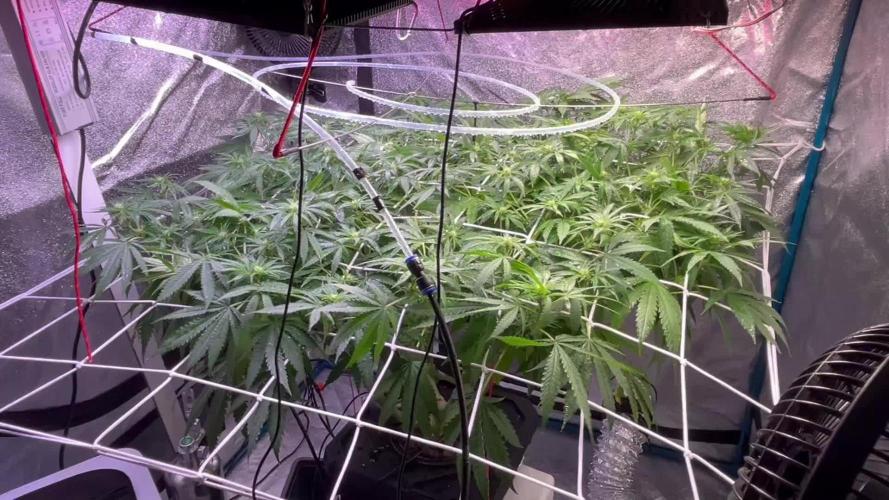
Lots of cannibalizing from lower leaves. Had a light leak and it was still a bit in veg and wanted nitrogen and took it where it could, since I had already switched to bloom fertilizers.

Likes
15
Share


@ssjmatix
Follow
Nuevos brotes siguen apareciendo y el lst empieza a dar resultado, largó los primeros pelos, no sé si es pq se estresó y quiere florecer o si solamente sexó
