


Likes
Comments
Share

@Gorillagrower
Follow
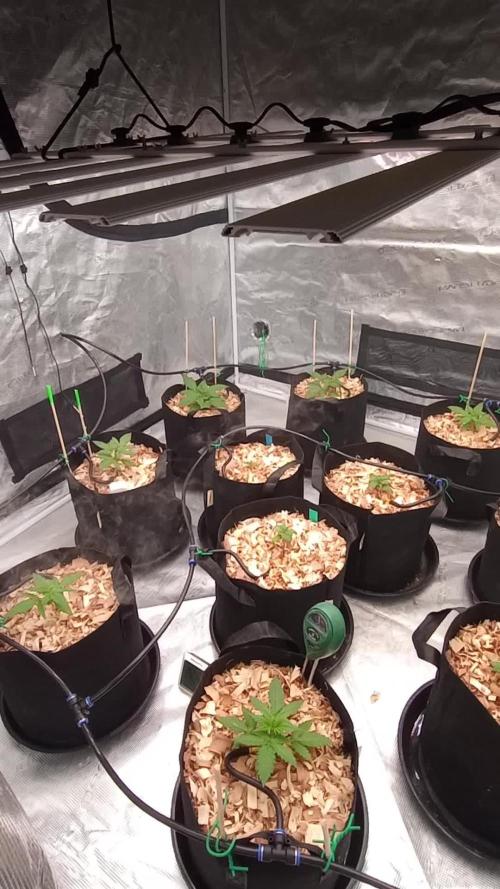
Week 3 and they are starting to take off. I used some Recharge by Real Growers. Instant compost soil amendment ingredients. Great stuff.


Processing
Likes
42
Share


@Dunk_Junk
Follow
This bush is a beast.
Take a look at her stem. Monster.
So many leaves!! 😲
On she goes!

Likes
10
Share


@Cocogrow1234
Follow
3rd week of flower , I’ve started the boost at 1.5ml per litre , both my lights are about 6-7” away from the tops of the plants and are not causing any issues .
I’ve lowered my humidity to 45% in the day and about 55% at night , had to purchase a decent dehumidifier and put it outside the tent .
Gave them there last lollipop and defoliation on end of week 3 .Will only take some fans leaves off when needed from now

Likes
2
Share

@UDUDUDUDU
Follow
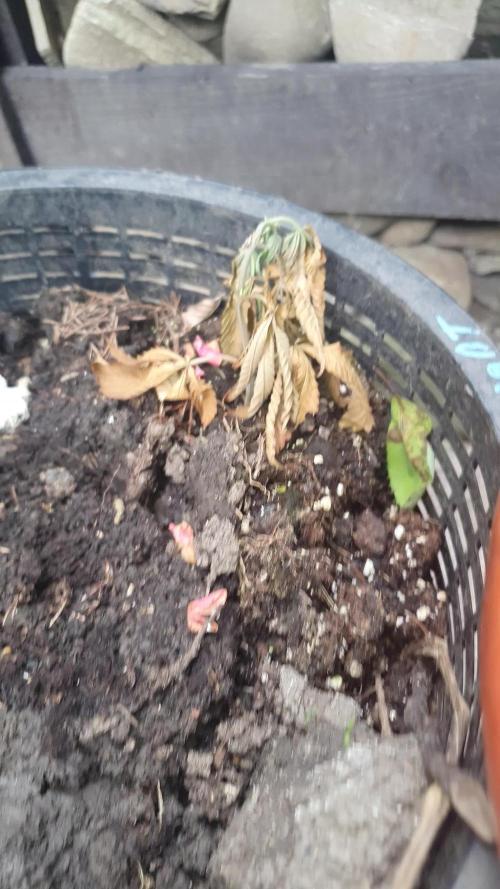
Again, Grown outside - free from lights on 2 acers..what do I put for room size ?


Likes
7
Share

@Dalepeno58
Follow
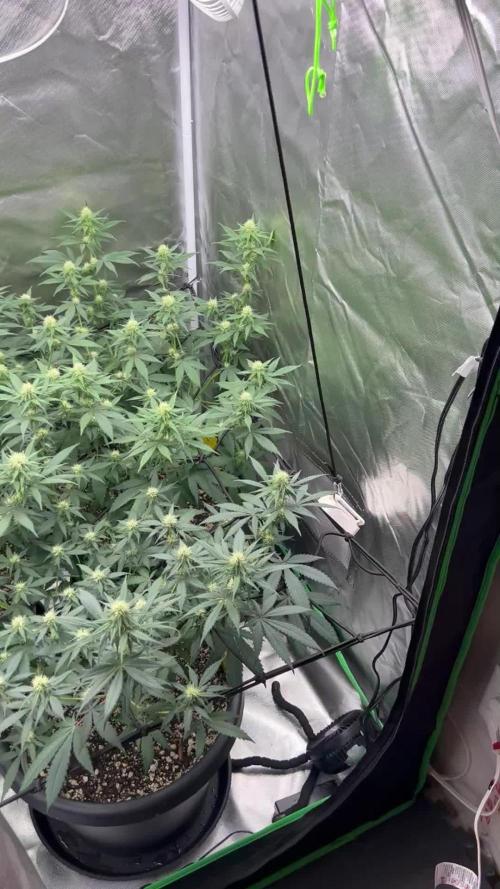
Nothing different this week. Plants are still changing fast and looking healthy. Will probably top dress this coming week.


Likes
5
Share


@Mr_nugs_lover_David
Follow
She has a nice structure, hope to get many buds from this lady, it's a strain I'm very excited to work with, hope to have a nice jar full of this diesel in a few months, stay here with me to see her performance! 💚❤️👨🌾


Likes
2
Share


@NocturnalGardner44
Follow
Adding this awhile after the fact... but me setup, bed is filled with small logs, sticks, leaves, hay, green grass, alfalfa, then redbud living soil on top 5lbs of worms added as well. Organic feeding, mainly lactic and baccilus, Kashi, knf inputs, fish shit, orca, king crab

Likes
5
Share


@DarkRaven420
Follow
Welcome back to Colorado Gnome Grown. This week the gnome’s have been busy with the irrigation system. The water is stored in a 5g container and I mix the feed in it and it gets feed every time I water, which is twice a day for 1 minute, or until the plants drip. The plants are setting on a rack so that the water can drain away from the plant and into a tray. The plan is to buy Big Buds the first of the month to keep on hand to finish up in 4 weeks. Cookie Monster is 4in today and Noel is 2in, and both are starting to grow their bud site. Next week I will Top and defoliate for the first time. Well that’s all this time, tune next week for more information on; Colorado Gnome Grown!!!😎

Likes
22
Share

@Pierrougarou21
Follow
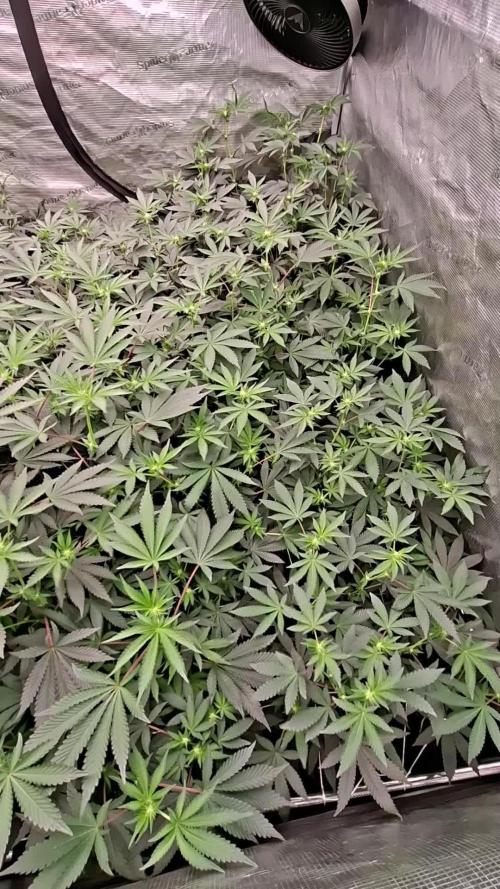
salut les growmies, deuxieme semaine de floraison, le spectre rouge profond et rouge intense permet d aider les filles a passer en mode nuit , comme un couché et un levé de soleil il permet aussi un développement des terpenes.

Likes
11
Share

@GoodTimesOrganics
Follow
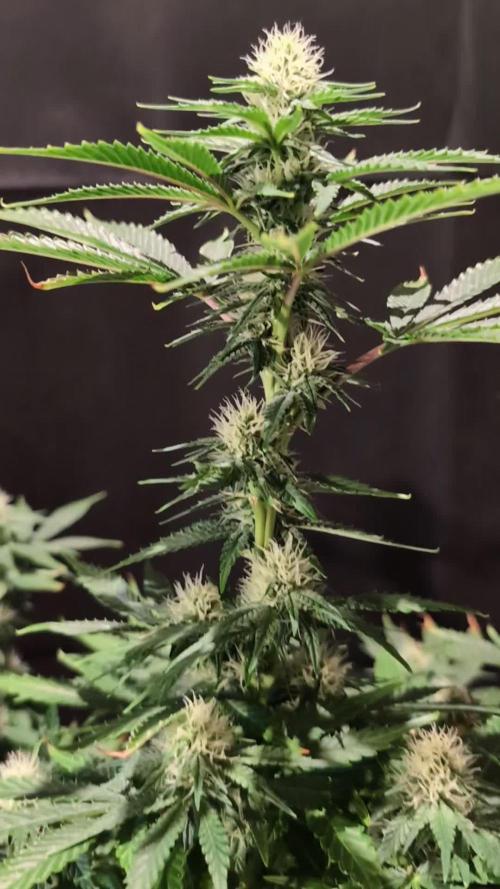
Hi liebe Community and Welcome Back! 💚🌱
Nach der dritten Blütewoche entwickelt sich die Aficianado Pflanze richtig gut!
Das Problem mit dem Lichtstress hat sich nun relativiert und die Pflanze hat sich erholt.
Die verbrannten Blätter habe ich natürlich rausgenommen.
Sie hat meiner Meinung nach ein richtig schönes Wuchsbild mit einer sehr schätzenswerten Internioden/Höhen Relation.
Sehr gut abstehende Seitentriebe und kaum ein Stretch.
Daher dürfte sie einen hohen Indica Anteil bringen bzw. Bei ca. 100% liegen.
Die Umgebungsgegebenheiten sind aktuell hoch für das Stadium, aber die Pflanze hat sich angepasst:
—————
🌞 Temp: 27
🌚 Temp: 18°C bis 19°C
💨 RH: 49%
VPD: 1,42 kPa 🏜️
💡ppfd: 830 mpm
—————
Viele Grüße 👋
Likes
12
Share

@SugarandTerps
Follow
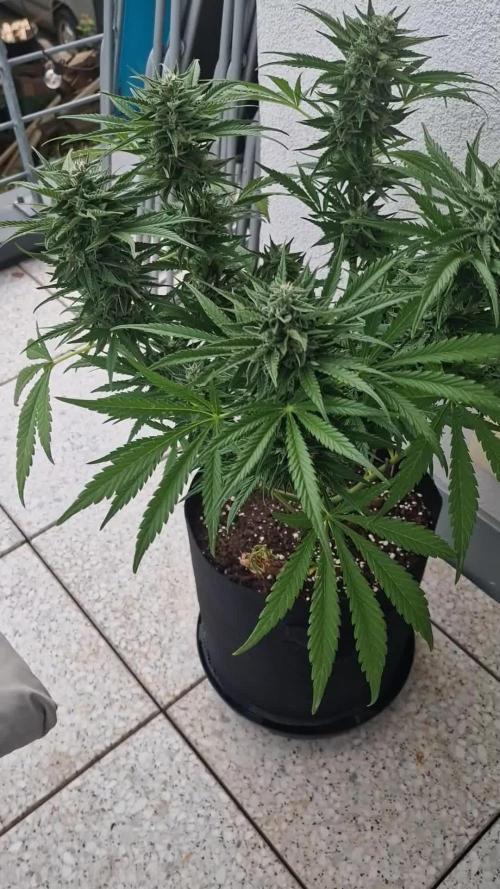
Bloom W5 Mendo Frost ❄️❄️
2.7
Heute gab 3L Nährlösung Ph-Wert auf 6,6, Plagron Silic Rock, Power Roots, Royal Sugar, Power Buds, Green Sensation und Alfa Boost All-in-One.
Temperaturen haben heute 27°C
4.7
Der Himmel ist heute öfters bewölkt und könnte abends noch mal regnen. Die Blätter sehen gut aus und die Düngerverbrennung ist nicht weiter fortgeschritten.
5.7
3L Nährlösung Ph-Wert auf 6,6, Plagron Silic Rock, Power Roots, Royal Sugar, Power Buds, Green Sensation und Alfa Boost All-in-One

Likes
49
Share


@DeepWaterGrower
Follow
[DAY 78] - 12/12/2022
- TS1000 30 cm distance - 100% dimmer: 144 watt;
- Light cycle 20/4;
- Height: 83 cm from clay (the other one is 74 cm from clay);
- 24° C - 60% RH during light - 19° C - 70% RH during night;
- EC 1.4- PH 5.7.
[DAY 79] - 13/12/2022
- 24° C - 60% RH during light - 19° C - 70% RH during night;
- EC 1.6- PH 5.7
- Resin everywhere!
[DAY 80] - 14/12/2022
- 24° C - 65% RH during light - 19° C - 80% RH during night;
- EC 1.2 - PH 6.
[DAY 81] - 15/12/2022
- 22.5° C - 73% RH during light - 19° C - 80% RH during night;
- EC 1.3 - PH 5.7;
- Defoliation;
- I've never seen such beautiful buds, it's awesome.
[DAY 82] - 16/12/2022
- 22.5° C - 70% RH during light - 20° C - 80% RH during night;
- EC 1.5 - PH 5.5.
[DAY 83] - 17/12/2022
- 22.5° C - 70% RH during light - 20° C - 80% RH during night;
- EC 1.6 - PH 5.7.
[DAY 84] - 18/12/2022
- 22.5° C - 70% RH during light - 20° C - 80% RH during night;
- EC 1.6 - PH 5.5;
- Buds becoming huge.


Likes
45
Share


@Ultraviolet
Follow
2nd net is up. Early bud formations are promising. holding up to the extremes pretty well, some leaves taking minor damage, but overall, she is holding up, gave her 1 night at 50F see how she would react, stressful. Not advised as it messes with her metabolism, but I want to see if it triggers any anthocyanin response. Love to see her purp up but no signs yet.
My homework.
Rubisco regeneration is intrinsically linked to nitrogen supply because Rubisco is a major sink for nitrogen in plants, typically accounting for 15% to over 25% of total leaf nitrogen. The regeneration phase itself consumes nitrogen through the synthesis of the Rubisco enzyme and associated proteins (like Rubisco activase), and overall nitrogen status heavily influences the efficiency of RuBP regeneration.Structural Component: Nitrogen is an essential building block for all proteins, and the sheer abundance of the Rubisco protein makes it the single largest storage of nitrogen in the leaf.
Synthesis and Activity: Adequate nitrogen supply is crucial for the synthesis and maintenance of sufficient Rubisco enzyme and Rubisco activase (Rca), the regulatory protein responsible for maintaining Rubisco's active state. Nitrogen deficiency leads to a decrease in the content and activity of both Rubisco and Rca, which in turn limits the maximum carboxylation rate, Vmax, and the rate of RuBP regeneration Jmax, thus reducing overall photosynthetic capacity.
Nitrogen Storage and Remobilization: Rubisco can act as a temporary nitrogen storage protein, which is degraded to remobilize nitrogen to other growing parts of the plant, especially under conditions of nitrogen deficiency or senescence.
Nitrogen Use Efficiency (NUE): The allocation of nitrogen to Rubisco is a key determinant of a plant's photosynthetic nitrogen use efficiency (PNUE). In high-nitrogen conditions, plants may accumulate a surplus of Rubisco, which may not be fully activated, leading to a lower PNUE. Optimizing the amount and activity of Rubisco relative to nitrogen availability is a target for improving crop NUE.
Photorespiration and Nitrogen Metabolism: Nitrogen metabolism is also linked to the photorespiration pathway (which competes with carboxylation at the Rubisco active site), particularly in the reassimilation of ammonia released during the process.
To increase RuBisCO regeneration, which refers to the process of forming the CO2 acceptor molecule Ribulose-1,5-bisphosphate (RuBP) during photosynthesis, the primary methods involve optimizing the levels and activity of Rubisco activase (Rca) and enhancing the performance of other Calvin-Benson-Bassham (CBB) cycle enzymes.
Biochemical and Environmental Approaches:
Optimize Rubisco Activase (Rca) activity: Rca is a crucial chaperone protein that removes inhibitory sugar phosphates, such as CA1P (2-carboxy-D-arabinitol 1-phosphate), from the Rubisco active site, thus maintaining its catalytic competence.
•Ensure optimal light conditions: Rca is light-activated via the chloroplast's redox status. Adequate light intensity ensures Rca can effectively maintain Rubisco in its active, carbamylated state.
•Maintain optimal temperature: Rca is highly temperature-sensitive and can become unstable at moderately high temperatures (e.g., above 35°C/95F° in many C3 plants), which decreases its ability to activate Rubisco. Maintaining temperatures within the optimal range for a specific plant species is important.
•Optimize Mg2+ concentration: Mg2+ is a key cofactor for both Rubisco carbamylation and Rca activity. In the light, Mg2+ concentration in the chloroplast stroma increases, promoting activation.
•Manage ATP/ADP ratio: Rca activity depends on ATP hydrolysis and is inhibited by ADP. Conditions that maintain a high ATP/ADP ratio in the chloroplast stroma favor Rca activity.
Enhance Calvin-Benson-Bassham (CBB) cycle enzyme activity: The overall rate of RuBP regeneration can be limited by other enzymes in the cycle.
•Increase SBPase activity: Sedoheptulose-1,7-bisphosphatase (SBPase) is a key regulatory enzyme in the regeneration pathway, and increasing its activity can enhance RuBP regeneration and overall photosynthesis.
•Optimize other enzymes: Overexpression of other CBB cycle enzymes such as fructose-1,6-bisphosphate aldolase (FBA) and triose phosphate isomerase (TPI) can also help to balance the metabolic flux and improve RuBP regeneration capacity.
Magnesium ions, Mg2+, are specifically required for Rubisco activation because the cation plays a critical structural and chemical role in forming the active site: A specific lysine residue in the active site must be carbamylated by a CO2 molecule to activate the enzyme. The resulting negatively charged carbamyl group then facilitates the binding of the positively charged Mg2+ion. While other divalent metal ions like Mn2+ can bind to Rubisco, they alter the enzyme's substrate specificity and lead to dramatically lower activity or a higher rate of the non-productive oxygenation reaction compared to Mg2+, making them biologically unfavorable in the context of efficient carbon fixation. The concentration of Mg2+ in the chloroplast stroma naturally increases in the light due to ion potential balancing during ATP synthesis, providing a physiological mechanism to ensure the enzyme is activated when photosynthesis is possible. At the center of the porphyrin ring, nestled within its nitrogen atoms, is a Magnesium ion (Mg2+). This magnesium ion is crucial for the function of chlorophyll, and without it, the pigment cannot effectively capture and transfer light energy.
Mg acts as a cofactor: Mg2+ binds to Rubisco after an activator CO2 molecule, forming a catalytically competent complex (Enzyme-CO2-Mg2+). High light + CO2) increases demand: Under high light (60 DLI is a very high intensity, potentially saturating) and high CO2, the plant's capacity for photosynthesis is high, and thus the demand for activated Rubisco and the necessary Mg2+ cofactor increases. Mg deficiency becomes limiting: If Mg2+ is deficient under these conditions, the higher levels of Rubisco and Rubisco activase produced cannot be fully activated, leading to lower photosynthetic rates and potential photo-oxidative damage.
Optimal range: Studies show that adequate Mg2+ application can enhance Rubisco activation and stabilize net photosynthetic rates under stress conditions, but the required concentration is specific to the experimental setup.
Monitoring is key: The most effective approach in a controlled environment is to monitor the plant's physiological responses e.g., leaf Mg2+ concentration, photosynthetic rate, Rubisco activation state, and adjust the nutrient solution/fertilizer to maintain adequate levels, rather than supplementing a fixed "extra" amount.
In practice, this means ensuring that Mg2+ is not a limiting factor in the plant's standard nutrient solution when pushing the limits with high light and CO2.
Applying Mg2+ through foliar spray is beneficial to Rubisco regeneration, particularly in alleviating the negative effects of magnesium (Mg) deficiency and high-temperature stress (HTS). While Mg can be leached from soil, within the plant it is considered a mobile nutrient, particularly in the phloem. Foliar-applied Mg is quickly absorbed by the leaves and can be translocate to other plant parts, including new growth and sink organs.
Foliar application of: NATURES VERY OWN MgSO4 @ 15.0g L-1 in a spray bottle.
Foliar sprays are often recommended as a rapid rescue measure for existing deficiencies or as a supplement during critical growth stages, when demand for Mg is high. Application in the early morning or late evening can improve absorption and prevent leaf burn.
The starting point [of creativity] is curiosity: pondering why the default exists in the first place. We’re driven to question defaults when we experience vuja de, the opposite of déjà vu. Déjà vu occurs when we encounter something new, but it feels as if we’ve seen it before. Vuja de is the reverse—we face something familiar, but we see it with a fresh perspective that enables us to gain new insights into old problems. Come walk in the enchanted forest.
Likes
13
Share


@Canadian
Follow
Today They have pop in my new room is completely ready for a New girls season I am going to use a rosin press for a large quantity off all the flowers That we produce And I will be reviewing that brand ones it arrive

Likes
16
Share


@Andres
Follow
I would believe this variety again ... I think it could be better ... and do not make some mistakes in it ... I recommend it to all growers ...

Likes
3
Share


@Meisterwulle
Follow
Hi!
I‘m very happy with the result, After I did a wet trim of the plant, I let her dry for About 1 week @ 20 Degree, 60 RH .
The Diele is quite good, I like the density of the Bud. The size is quite small, But they are Heavy. I‘m excited for a tasting and smoke Review ;)
