Likes
Comments
Share
@Miketama
Follow
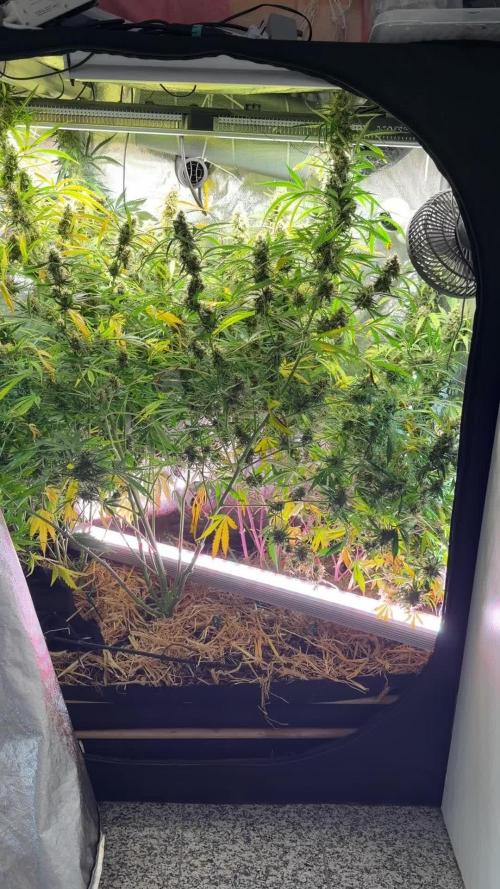
This week I went for a staggered harvest to protect the buds that were starting to get damaged. The cycle ended on day 76, with trichomes at the perfect amber point and a yield of over 300g wet, despite a few mistakes along the way.
Likes
7
Share
Processing
Likes
16
Share
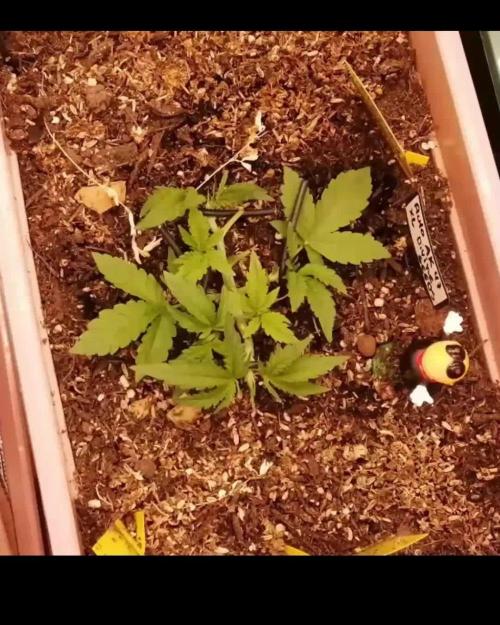
This was a freebie seed from their black Friday sale. I am flowering 2 og kush plants with my leds. As of right now i only a 28w 2' t5 light left to grow with. Transplanted directly into Azos in fox farms coco loko. The pictures are day 4 above the ground
Processing
Likes
37
Share
@MG2009
Follow
9/27/2018 Been a rainy damp week,cooler nights, no moulds as of yesterday and will update photos shortly if weather permits. Speak of the Devil, this am #2 has two spots of mould,cut ✂️ out,and trashed. All others no mould, #4 is covered with sand it keeps getting blown over!.#2 fading, #1 still Growing nice green very little fade just lower leaves lots of new pistils,#3 all hairs gone brown, and smells like Real old school Skunk!👍not much bud but still have couple weeks of flowering to fatten up and taste of Skunk getting me excited😁 10/02/2018 Week 7, day 5. Rainy days still very little mould just #3 so far. #1 looking fantastic.#2 pistils brownish,#3 pistils all brownish red dont see any New pistils but branches drooping from their weight #4 is still popping New flowers but lots brown all over, hope 2 weeks to finish! But cold is coming soon. #1 no signs of slowing down putting out lots of fresh flowers! Does not mind the cooler weather. Last bit of molasses to super charge microbes in the soil. Hope she comes in at 8-10 weeks👍 53-70 days flowering.
Likes
5
Share
@RunWithIt
Follow
Hit these girls with a topping at the end of their 3rd week. Also started them on liquid seaweed for added support. Update day 23: Transplant Update day 25: Defoliation
Likes
Comments
Share
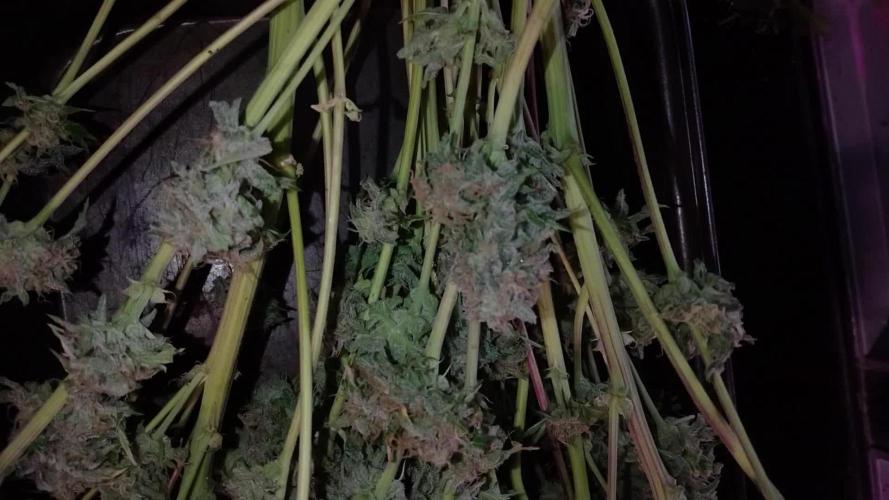
Branch broke off, but I actually decided later to put the rest of the plant back for ripening. When I pull the rest I'll update the diary with a new week. Then when I press rosin I'll see if ripening made the yield better or terps improved, etc.
Likes
2
Share
---11/23/24--- Day 18 from germination I noticed that the plants are picking up growth again, seemingly accelerating each day. The new growth seems healthy, and the main stems are thickening and becoming stronger each day! Unfortunately, my soil revealed itself to be under spider mite attack. I tried to remedy the issue by spraying some Captain Jack Neem Oil - will keep monitoring and re-applying as needed. Still feeding the plants plain, Ph balanced water. --11/20/24--- Day 15 from germination I transplanted the babies into a 5 gallon AC Infinity fabric pots, each filled with: * Moistened Fox Farms Ocean Forest soil * Several handfuls of perlite * Several handfuls of vermiculite * 1 tsp of Mycorrhizae towards the top 25% of the soil I watered the top of the soil around the plants with ~250ml of plain, 6.3 Ph water. Before the transplantation, I noticed some yellowing of the bottom leaves on 2 of the plants, paired with slowed growth the past couple of days. I suspect this was either due to a nitrogen deficiency (notice how the the roots look rootbound) or slight overwatering. Either way, the issue should resolve itself, as the new soil will provide breathing room + more nutrients. ---11/19/24--- Day 14 from germination I was going to transplant them into their 5 gallon fabric pots, however, I'm probably going to give them a couple more days to establish a more robust root system. I noticed a weak skunky smell coming from the Mamasita strain. It started around day 10 -ish. Water: Plain 6.5ph balanced water every 2 days. Light: 18/6 light cycle. Vivosun VS4000 @ 50% most of the time, sometimes increasing to 75%. Air: Clip-on fan set to 3/10 speed to constantly blow at the plants.
Likes
42
Share
Thank you. Gave her a cocktail to help with stress. Added 1st net for lateral support, not so much now, but for later. Blue light is absorbed by photoreceptor proteins called phototropins, which trigger a hormonal response that causes cells on the shaded side to elongate, making the plant bend toward the light. Try and fill this side a little. She is quite big already, just needs to find her stride again after the undue torture. The mind is constantly working and producing, just like a factory. It's not just a passive recipient of information but an active producer of ideas, attitudes, and beliefs. The "ingredients" in this factory are the information you consume, such as books, conversations, and the media you engage with. The "products" are your thoughts, beliefs, and actions. The quality of the ingredients directly influences the quality of the output. To guard the door of your mind means to be selective about what you allow in. It involves actively choosing to consume positive and constructive information while filtering out negativity and harmful influences. If you don't guard your mind, others can "dump" whatever they want into it, leading to undesirable results in your life. You must take responsibility for the inputs to ensure you produce the outcomes you desire. 5 apex stems with 20-30 mini cola, let them develop a little, with the apical dominance shattered, all those 20-30 will all compete with each other as soon as that stretch is initiated. Key to a good stretch is making sure the plant is cycling efficiently, with large ATP conversions occurring lights out. For now, I'm keeping light intensity high. A plant will slow its vertical growth in very high light intensities, leading to a more compact form with thicker stems and leaves. This response is a protective mechanism against light stress, which can damage the photosynthetic apparatus and lead to symptoms like leaf scorching, yellowing, and brittleness. Instead of growing taller, the plant invests its energy into creating a more robust, stress-tolerant structure. Providing plants with necessary antioxidants helps protect the photosynthetic apparatus by scavenging reactive oxygen species (ROS) that cause damage from excess light. UV light exposure can impact the xanthophyll cycle by either enhancing its photoprotective role or causing damage, depending on the intensity and type of UV radiation. UV exposure can trigger the synthesis of more xanthophyll cycle pigments to increase the plant's capacity to dissipate excess energy, but it can also cause direct damage, particularly to Photosystem II, and may lead to a decrease in the de-epoxidation state (DEPS ratio) which indicates a reduced capacity to dissipate excess energy. Plants can respond to UV stress by increasing the synthesis of xanthophyll cycle pigments, such as violaxanthin and zeaxanthin, to improve their photoprotective capacity. UV-induced changes in xanthophyll cycle pigments can be linked to a plant's overall tolerance to high radiation stress. The xanthophyll cycle helps protect against photoinhibition, which is especially important when the plant is exposed to high levels of both UV and visible light. High doses of UV radiation can directly damage photosynthetic components, including the proteins, lipids, and pigments in the thylakoid membranes. Exposure to UV radiation can have a mixed effect on the de-epoxidation state (DEPS ratio) of the xanthophyll cycle pigments. In some cases, UV can inhibit the conversion of violaxanthin to zeaxanthin, resulting in a lower DEPS ratio and a reduced capacity for energy dissipation. However, the total pool of xanthophyll cycle pigments may increase, and this enhanced pool size could provide a greater potential for photoprotection despite a lower DEPS ratio. The xanthophyll cycle works alongside other mechanisms, such as the accumulation of flavonoids (UV screens), to protect the plant from UV-induced damage. Blue light repairs 100% UV-induced damage in plants through a process called photoreactivation, which uses a light-dependent enzyme called photolyase. This enzyme uses energy from blue and UV-A light to directly reverse the damaging pyrimidine dimers in the DNA caused by UV-B radiation, a key mechanism for maintaining the plant's genetic integrity. After carbon, light, water, temperature, and nutrients, the limiting factor of a plant's growth is often its own internal factors or the amount of a key ingredient. Chlorophyll concentration is one such factor, as the amount of this pigment limits how much light can be captured for photosynthesis. Other factors include chloroplast number, respiration rate, and the concentration of carbon dioxide in the atmosphere, as plants are often in a CO2-deficient condition. 60x60x18=64800seconds x 700 = 45,360,000moles. 45DLI Exposure to 165 µW/cm² of ultraviolet-B (UV-B) light for 3600 seconds = 1 hour, a extremely high, acute dose triggering stress responses and protective mechanisms. . The plant's photoreceptor protein, UVR8, senses the UV-B radiation. This triggers a signaling cascade that activates specific genes to protect the plant from damage. In response to the UV-B signal, the plant ramps up the biosynthesis of protective compounds like flavonoids, phenolic acids, and anthocyanins. These compounds absorb UV radiation and accumulate in the epidermal layers of leaves to shield inner photosynthetic tissues. The plant may increase leaf thickness or deposit more cuticular wax, creating a physical barrier to the radiation. The plant will produce more enzymatic and non-enzymatic antioxidants to neutralize the reactive oxygen species (ROS) produced by the UV-B radiation. The plant activates enzymes, including photolyases, to repair DNA damage caused by the UV-B. These repair mechanisms are critical for preventing permanent genetic mutations. While protective measures are activated, a high dose delivered over a short period can cause stress that overwhelms the plant's defenses. Photosynthesis is highly sensitive to UV-B. A high dose can inactivate Photosystem II (PSII), damage thylakoid membranes within the chloroplasts, and reduce chlorophyll content, which lowers the plant's overall photosynthetic capacity. Despite repair mechanisms, high UV-B doses can inflict persistent damage on the plant's DNA. The overproduction of reactive oxygen species can cause oxidative stress, leading to the oxidation of lipids and proteins and disrupting cellular function. I am playing in the enchanted forest.
Likes
4
Share
Learned a lot from this grow and am very happy with the results. Pulled 2.8 Oz and 1.1 Oz of trim/popcorn buds in a one gallon pot. Definitely wont be doing that again, but had a lot of fun throughout the entire process. Going to be starting another grow soon! Very excited for that.
Likes
5
Share
This amnesia pro has peformed amazing, both phenos #1 and #2 have produced beautiful hard dense colas, full of citric lemony terps, ideal to use for daytime, very nice cerebral buzz. Hope you guys have enjoyed my work! Peace 💚💛❤️👨‍🌾
Likes
23
Share
Week 4 Still no good weather. Rain and some sun +-15 Celsius . In the end of week 5 25 Celsius good weather
Likes
20
Share
I closed a light 2 days. It gonna be flower but this week I'll re-veg a plant. I change a pot to 10 gallons and use great white(mycorhizae) and Mag Xtra from Sensi cal(cal-mag).
Likes
1
Share
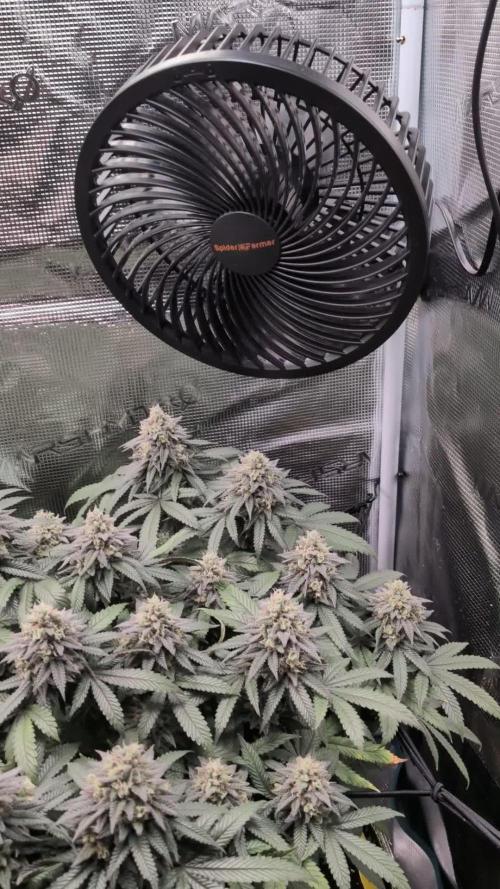
Nice and frosty, buds are finally looking like they’re getting dense and putting on some weight. Start flushing in a couple weeks when all the pistils get that orange color. So far about 50-70% are orange.
Likes
6
Share
8/5/2023 - Day 32 Veg: This is officially the start to week 5. She has been in the earthbox for one week now and I can definitely tell the difference. She has finally started to pick up speed, and it looks like she has grown out of the minor deficiencies I started to notice last week. It was nothing too serious, but the leaf in between the veins was looking a bit light. The foiler feed and compost tea seems to have helped. I'm sure the larger bed of soil is helping too. So far she seems to be looking more indica leaning, with the fatter leaves and she's a little squatty, so I haven't had to do any training yet. I will still probably top her at least once, but I haven't decided yet. 8/9/2023 - Day 35 Veg: did a light watering today with plane water at a ph of 6. 8/10/2023 - Decided to top her today
Processing
Likes
10
Share
@TrimQueen
Follow
So, guys.. This is her first month blooming. 4 complete weeks has passed. Here we are for 2 more. Gave Her a super powerful egg shell fert (all powdered - Phosforium Whelthy.) 07/10/20 - We are in the middle of week 5. Thats the way they look like. For me a good number of buds and they are as dense as I thought they would be by this time. I think everything is under control despite some foxtails cuz the heat. Loving the experience.
Likes
8
Share
@Kindbudz
Follow
Flowers started to form. Gonna be absent for a little while. Just got a new job. Will definitely give an end result.
Likes
12
Share
@Alvareas
Follow
Die Hitze der letzten Wochen macht sich nun doch bemerkbar. Die Buds beginnen wieder zu foxtailen, und einige Blätter zeigen vertrocknete Spitzen und Ränder. Vermutlich liegt die Ursache bei mir, da ich die LED-Leistung früher an die Temperaturen hätte anpassen müssen. Wahrscheinlich konnte die Pflanze bei diesen Temperaturen und der Lichtleistung Wasser und Nährstoffe nicht mehr schnell genug transportieren. Die LED habe ich vorerst wieder auf 50 % reduziert und senke sie nächste Woche wahrscheinlich um weitere 10 %. Die Buds sehen dennoch gut aus, und einige ordentliche Kolben sind dabei. Jetzt gilt es, die Luftfeuchtigkeit im Blick zu behalten und für ausreichend Umluft zu sorgen. Beides liegt aktuell im grünen Bereich: Umluft ist ausreichend vorhanden, und die Luftfeuchtigkeit wird nur bei Regen kritisch. Für den Notfall steht ein Luftentfeuchter bereit. Die Parameter in Woche 14: Controller Einstellung Tag: Temperatur und Luftfeuchtigkeit 24C°-26C°, 45% - 55% Controller Einstellung Nacht: Temperatur und Luftfeuchtigkeit 24C°-26C°, 50% - 60% Durchschnittliche Tagestemperatur: 28,8C° Durchschnittliche Nachttemperatur: 25,3C° Durchschnittliche Luftfeuchtigkeit Tag: 48,9% Durchschnittliche Luftfeuchtigkeit Nacht: 52% Durchschnittlicher VPD Tag: 1,6 Durchschnittlicher VPD Nacht: 1,2 Durchschnittliche Bodenfeuchtigkeit in Mbar: 92 LED Leistung: 50% = 150 Watt Beleuchtungsdauer: 12 Stunden Umluft: Stufe 2 oszillierend
Likes
6
Share
HI community ! 8 week color goes well. With the help of a variety of fungicides, I try to slow down the growth of plants to light. By nutrition, all excellent plants drink 4 liters of solution all the time.
Likes
9
Share
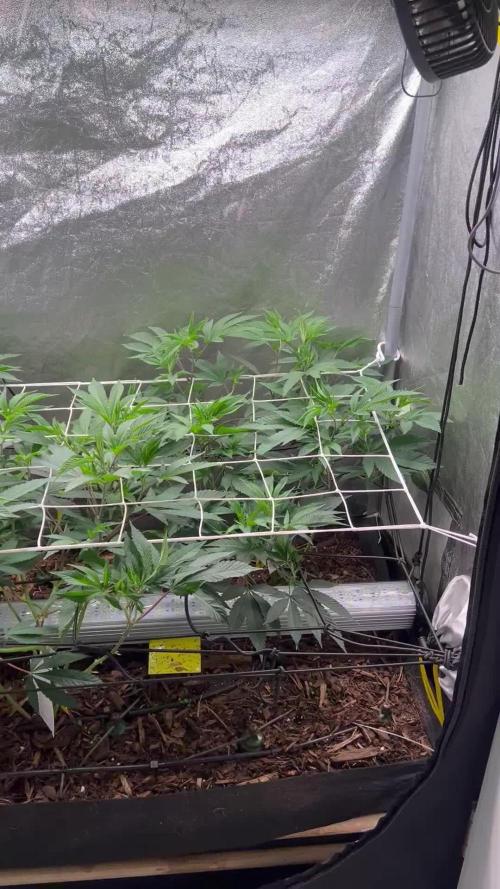
A nice bit of growth this week, one girl is shorter than the other 2, and slightly behind in terms of growth. Hoping to see a good spurt now with the first application of Evo 2.0 spray on day 25, abit more nutrients added and lights turned up to 400w. Onwards and upwards 🌱💯