Likes
Comments
Share

@DeepRootsGrowTrees
Follow
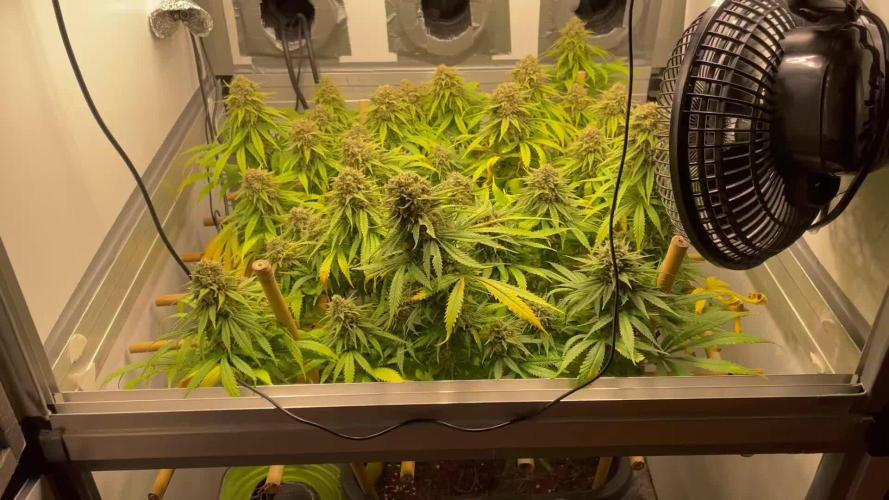
GRANDPA ZOMBIE 🧟♂️ / IZI SEEDS
WEEK #9 OVERALL
WEEK #3 FLOWER
She's doing great as we end week #3 FLOWER she's stacking and starting to get trichomes. She's vibrant green 💚 and looking amazing!! STAY GROWING MY FRIENDS!!
THANK YOU 😊 FOR STOPPING BY AND TAKING A 👀!! IT'S MUCH APPRECIATED!!
THANK YOU 😊 IZI SEEDS!!
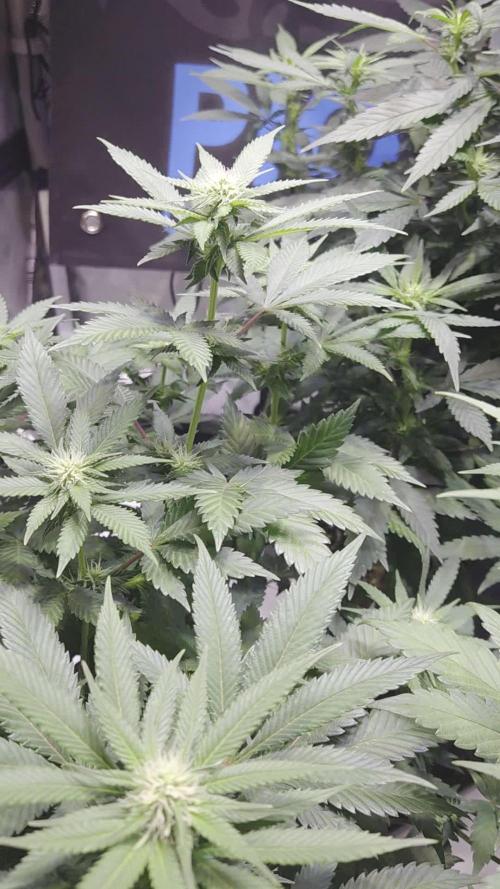
GRANDPA ZOMBIE 🧟♂️ / IZI SEEDS


Likes
Comments
Share


@Budhamster
Follow
Die Damen sind sehr stark gewachsen und habe einen schönen Stiel ausgebildet.😁
Ich besprühe die Blätter jeden Tag mit Wasser, was die Wasseraufnahme fördert.
Likes
6
Share


@DrBud420
Follow
23.05.
today is the end of the fourth week for the plants, they haven't progressed much since last week, they grew a few cm and gained a little weight, but they are healthy, which is the most important thing... in a few days I will transplant them and top them because some of them have already developed the sixth pair of leaves, so I simply have to top them. turned out...
I thought of transplanting them into 10-liter pots and after two to three weeks into 50-liter holes, however, the weather didn't cooperate, and I was already late anyway because of the bad weather, and because of the same, my plants in the fourth week were the same as they should have been in the second, and because of the same, I couldn't even transplant earlier... now that nothing went according to the "plan", of course, I don't know how smart it is to transplant them into 10 L and then into 50 with the fact that it is with me the longest day of the year is June 22, so that actually a week after that it can start flowering (it usually starts at the end of July or at the end of August, but it can be late and start even in September, and it also knows how to plow and start already at the end of June)...now I think that it is better to buy smart pots of 50-60 liters and immediately transplant into them and then just bury them...another problem with that is that the soil that I took for vegetation has food in it for a month days, if I transplant twice, it may happen that it enters flowering, and the food for the vegetation has not yet been used up, and that would be a problem...advices are welcome
Stay high!!!

Likes
Comments
Share


@Sn3ak92
Follow
Jan 7: Beginning of the week
Light @ 150w (raised it from 24 to 32 inch)
Jan 8: began a brew of compost tea and will feed tomorrow.
Jan 10: Topped the two C&C
Jan 13: Began training the plants (LST) and cut all the big leaves for better light exposure
Slight discoloration on some leaves I removed... Not sure what it is...
Compost tea recipe:
2 gal dechlorinated tap water
1 tbsp Wholesome Molasses
2 tbsp GaiaGreen Kelp meal
2 tbsp GaiaGreen Alfalfa meal
1 tbsp GaiaGreen 444
2 tbsp Bat guano 842


Likes
5
Share


@MyloGrow2019
Follow
Last week on nutrients , going on flush next sun , the 8 ball kush seems to be the happier strain with the 5 part salt nutrients , the blue OG is doing ok but the 8 ball is the chunkiest


Likes
5
Share


@CannaBossBizz
Follow
Yesterday i took off some Leafs down there.
Looks Like a Bouquet now 😄
She's responding great to the Training i have her. I'm pretty exited how she'll do in the Future weeks 🤙🏽

Likes
3
Share

@Mrs_Larimar
Follow
2025-10-16
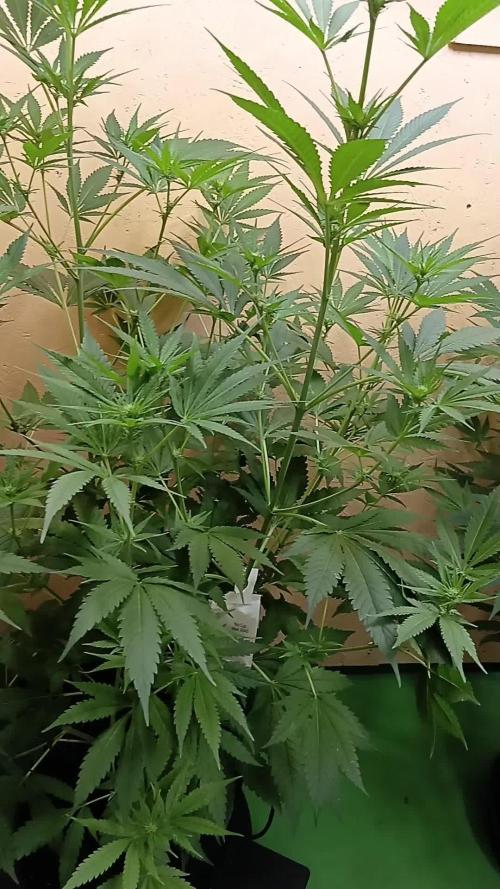
The kush´n Cookies plant does really well,
i was tucking some leaves and shoots- she spreads like she gets it paid.
RH was lowered,
Predaors were added for pestprevetion
watertank was filled
The fun can start.
Container: 35L Smart Pots
Growing Method: Autopot System with "Water-Only" strategy
🌿 Soil Preparation
Base Mix Recipe:
5g per liter soil - Startrex
5g per liter soil - Silicium Flash
Mixed thoroughly for optimal distribution
5x Fertilizer Tabs - strategically placed near bottom (20cm height) for autopot compatibility
1 tsp Mycotrex - applied directly in planting holes
Bactrex solution - used for initial watering
🏗️ Layer Construction
Bottom Layer (10cm): Drainage material (clay + perlite)
Air Circulation: Airdomes positioned
Growing Medium: Pre-mixed soil with embedded fertilizer tabs
Root Zone: Mycotrex application + seedling placement
Initial Watering: Bactrex solution
⚙️ System Activation
✅ Setup Complete - Autopot system now delivering automated water-only feeding
From this point forward: Pure water automation via Autopot system
🙏 Acknowledgments & Partnerships
Special Thanks:
Biotabs - Premium nutrient solutions
🏭 Puraplants - Autopot system provider
💰 Exclusive Discount Codes
🌐 Puraplants (Hamburg, Germany)
www.puraplants.de
Code: GrowBigger → 10% OFF
Biotabs Webshop
biotabs.nl/en/shop
Code: GDBT420 → 15% OFF


Likes
1
Share

@Mrdub
Follow
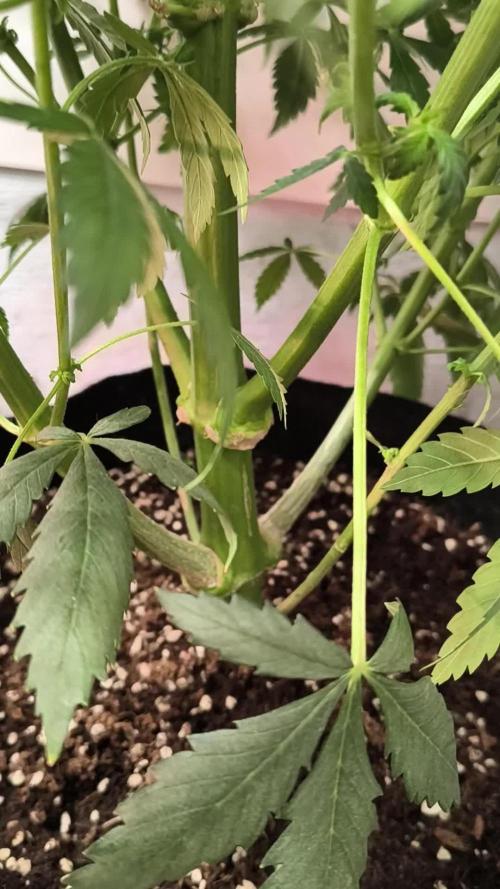
This girl stretch is pretty much done now on to stacking colas trichomes starting to develop and get heavy started adding plagron green sensation still working the recharge and bloom city followed by a carboload running lights at 75 percent under canopy rockin doing a 2 day 24 hr light cycle and then 8 hrs off I been doing some heavy defoliating and looks like she's ready for another round running 6.2 pH she drinks up a half gallon of water every other day so here's to another week of growing

Likes
4
Share


@adam_pawloski87
Follow
@twenty20mendocino Ateam R&D Update ~ Let’s Go day 18 of 🌸almost 3 weeks in an we are looking great! Gave em another aggressive trim up some lollipops this week hopefully wasn’t too early but hey it’s we learn as growers, but they are bouncing back super nice, praying a looking happy y’all! Can’t wait to see what these girls do over the next few weeks, y’all have to keep them eyes peeled for next weeks update. Y’all have an amazing productive rest of your day as well as great rest of your week! Hope y’all enjoy, peace love an positive vibes to all y’all Cheers an blaze on 😶🌫️💨💨💨💨
Processing
Likes
22
Share


@Yiyis_Grow
Follow
Semana tranquila. Algunas hojas inferiores se están poniendo amarillas por falta de luz. Este cultivo decidí no quitar hojas y dejar que las plantas tuvieran el mínimo de estrés, por lo tanto las hojas inferiores no reciben luz.
Las flores han aumentado bastante de tamaño y ya comienza a oler bastante rico el cuarto.
Están consumiendo prácticamente dos litros de líquido al día.
Buenos humos para todos!


Likes
4
Share

@eldruida_lamota
Follow
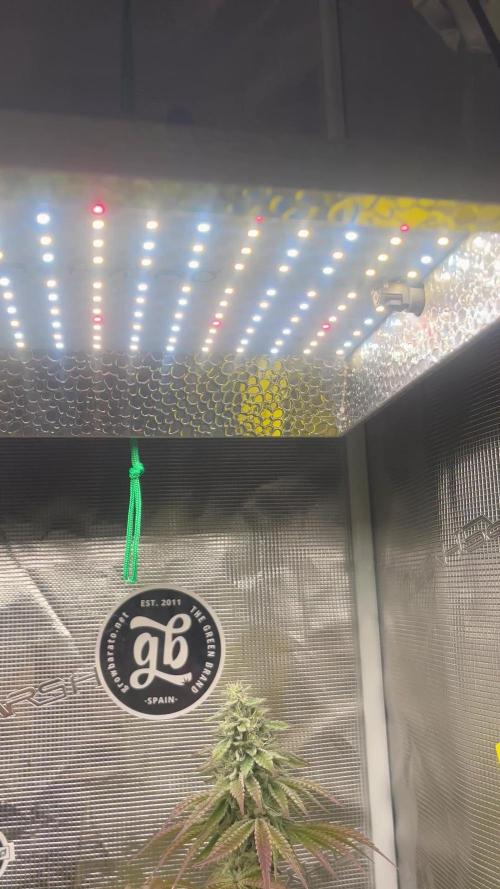
Que pasa familia, vamos con la octava semana de floración de estas Kiwi x Papaya feminizadas de Mavericks .
Vamos al lío ,se trasplantaron en macetas de 7 litros definitivamente.
El ph se controla en 6.0 , la temperatura la tenemos entre 24/20 grados y la humedad ronda el 50%.
El ciclo de crecimiento puse 12h de luz, el foco está al 100% de potencia.
De momento van creciendo a buen ritmo y tienen un buen color.
La flor está cogiendo forma y engordando, ya empezó a tricomar.
Gracias a Agrobeta de nuevo por el kit para esta temporada, unos grandes 🙌.
- os dejo por aquí un CÓDIGO: Eldruida
Descuento para la tienda de MARS HYDRO.
https://www.mars-hydro.com
Hasta aquí todo, Buenos humos 💨💨💨

Likes
28
Share


@cheetah844
Follow
Definitely one of the taller ones out of the 12. I need a few good daytime strains with energy & no anxious paranoia. I'm working on finding more of them for daytime motivation.


Likes
21
Share


@PeterSage
Follow
wonderfull colours and smell, plant is looking fine, i see another 2/3 weeks from now, for a full development of the buds.
heavy and frequent rain occurring, didn't have to water so much, hope it get better from here to the cut.
i am gonna decrease on the nutrients, to make them disappear in 10-15 days and a have a full week on just pure water.
the quality of the smell is incredible, very sugar-candy like, not so citric.

Likes
110
Share


@420DeepGrow
Follow
ACTUALIZACIONES A DIARIO!!
Miles de gracias al equipo de Royal Queen Seeds y a @James por proponerme esta aventura tan trepidante y poder conocer de cerca las nuevas F1 y sobre todo a la gran Titan F1. Espero que lo disfruteis y os sirva como referencia.
¿Qué piensas cuando lees la palabra “Titán”? Hay quienes la asocian con los hijos de Urano de la mitología griega. Otros saben que Titán es la luna más grande de Saturno. ¿Y entre los cultivadores de hierba? Estas personas reconocen a la Titan F1 como una variedad de marihuana con una genética de vanguardia. Se trata de uno de los primeros híbridos F1 autoflorecientes, y es una variedad pionera que ofrece productividad, resistencia y algo completamente nuevo.
La Titan F1 deleitará tu olfato durante la fase de floración y más allá. Esta variedad autofloreciente ofrece un potente perfil de terpenos compuesto principalmente por mirceno, farneseno, ocimeno, pineno, bisabolol y limoneno.
Gracias a MarsHydro 😊🙏 por darme la mejor luz que hay en el mercado.
La marca numero uno en focos 💡, carpas de cultivo ⛺️, extractores 🌬️ y demás aparatos que necesitas para tu cultivo.
Para esta aventura arrancaremos con 💡Mars Hydro TS 1000 Full Spectrum LED Grow Light 150W Regulable y 1 semilla autofloreciente a un ciclo de 20/4.
Verdaderos 150w con este TS1000, la mejor luz de cultivo LED para principiantes.
Ofrece una luz adecuada para 2-4 plantas 🌱. Su precio razonable, la marcada mejora del rendimiento y el control variable de la producción la hacen amigable para los nuevos cultivadores. Todo un tesoro para cualquier cultivador que este comenzando.
Usaremos para esta aventura una carpa de 60x60x90, MarsHydro una carpa para los más exigentes.Con una solapa de cremallera mejorada, dobles cremalleras de metal con forro,reflectante diamante tipo Mylar, postes de metal para una estructura mas solida, no se puede pedir nada mas.
Garantizando una respuesta en solo 24 horas tanto si has usado antes la marca como si no.
🌻🚀 Consigue tus semillas aqui:
https://www.royalqueenseeds.es/semillas-de-marihuana-hibridas-f1/624-titan-f1.html
💡 MarsHydro TS1000:
https://www.amazon.com/gp/product/B07PLY1WKK
⛺️ 60 x 60 x 90 MarsHydro:
https://www.amazon.com/dp/B081PN2QDN/
Sexta semana de floracion, las planta ha terminado de estirar, las ramas laterales han estirando junto con la cola central y se muestran los futuros cogollos, es una planta muy compacta y he tenido que quitar alguna hoja baja para evitar la aparicion de algun hongo.
Se muestra una gran cola principal.
Es la genetica que mejor ha respondido, por no decir la mejor. Felicidades Royal Queen Seeds y MarsHydro 😁.
Los cogollos han estirado muy rápido y se ha formado una larga cola principal con muchos cogollos en las ramas laterales, continua cargandose de resina.
Las flores empiezan a engordar.
📆 Día 56 : Riego con nutrientes EC 1050
📆 Día 57: Riego con nutrientes EC 1150
📆 Día 58: Riego con nutrientes EC 1150
📆 Día 59: Riego con nutrientes EC 1150
📆 Día 60: Riego con nutrientes EC 850, se aproxima el lavado de raíces, esta Titán es realmente rápida, con largos cogollos densos y llenos de resina .
📆 Día 61:
📆 Día 62:
Likes
10
Share


@Kinghaze
Follow
The first week of flowering went well, no defects or anything.
I put up a second trellis with small compartments.
And a dehumidifier to keep the humidity between 50% and 60%
I have also started the flowering nutrition , including the New 'powerbuds' from plagron.
Does anyone happen to have any experience with that?
Now it is waiting for the plant to stop stretching.
Around day 20 I will defoliate the plants one more time
Likes
3
Share


@Kelly420
Follow
She's filling in nicely , I'm having trouble deciding on when to start my flush as the buds are not quite like rocks yet. Maybe in a week, flush for two with AN flawless finish. We'll see. She looks frosty as hell though. I'm cutting the moab out this week. Blackstrap molasses this week too.