Likes
Comments
Share

@GERGrowDesigns
Follow
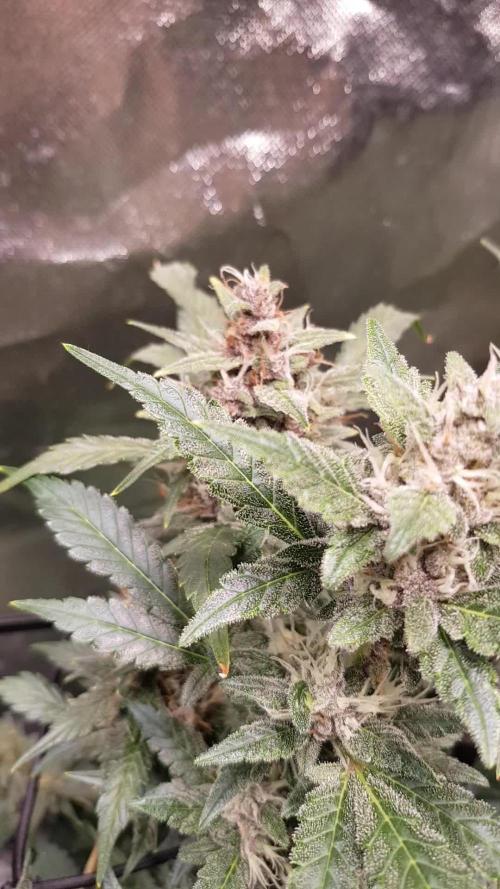
Welcome to Flower Week 4 of Fast Buds Blackberry Auto
I'm excited to share my grow journey with you from my
FastBuds Project . It's going to be an incredible ride, full of learning, growing, and connecting with fellow growers from all around the world!
For this Project , I’ve chosen the Feminized Auto strain Blackberry :
Here’s what I’m working with:
• 🌱 Tent: 120x60x80
• 🧑🌾 Breeder Company: Fast buds
• 💧 Humidity Range: 60
• ⏳ Flowering Time: 9-10 Weeks
• Strain Info: 23%THC
• 🌡️ Temperature: 26
• 🍵 Pot Size: 12
• Nutrient Brand: Hy-Pro
• ⚡ Lights : 600W x 2
A huge thank you to Fast Buds for allowing me to try my Best with this amazing collection from Automatic and Photo Strains they managed to Sponsore . Big thanks for supporting the grower community worldwide! Your genetics and passion speak for themselves!
I would truly appreciate every bit of feedback, help, questions, or discussions – and of course, your likes and interactions mean the world to me as I try to stand out in this exciting competition!
Let’s grow together – and don’t forget to stop by again to see the latest updates!
Happy growing!
Stay lifted and stay curious!
Peace & Buds!

Likes
2
Share


@Rntz420
Follow
Week12. Going purple . 1 more week to Harvest.blue cheese need longer bad genetic.

Processing
Likes
18
Share


@Silverback_Guerilla
Follow
11/30:
I harvested the first 6 today, flushed 5 more for the second time, and fed everybody else for the last time.
I washed all the branches using the 4-step method ascribed by Doc Bud at High Times/420magazine and many other notable cannabis connoisseurs, with slight modifications:
4 x big plastic totes/bins
8 x ounces of 12% hydrogen peroxide (or 32 ounces of 3%)
2 x cups of concentrated lemon juice
2 x cups of baking soda
10 x gallons of water in each bin
Unless your tap water stinks, you're safe to use tap water for the procedure, but I used an inline carbon hose filter to fill my buckets.
Bin #1 - 10 gallons of water mixed with the hydrogen peroxide
Bin #2 - 10 gallons of water mixed with the lemon juice and baking soda
Bin #3 - 10 gallons of water as hot tap water
Bin #4 - 10 gallons of cold tap water
I was mainly concerned about removing as much lint and cat/dog hair as possible, but also rinsing off any residue left from all the various foliar applications of humic/fulvic acid, kelp, axiom, big bloom, and tiger bloom I did. First, I put my leaf blower on low speed and blasted my plants thoroughly, one at a time, replicating 50-60mph winds for about 10 seconds and watched as a whirlwind of debris and hair flew out the back door.
Bud-washing:
Pluck any necrotic plant material and any old fan leaves off while they're still on the plant. Then, take a handful of branches and submerge them in Bin #1 for about 30 seconds, agitating it, removing from water, submerging again, agitating, etc...then remove it and let it drip out for a few seconds...then repeat the process with Bins #2-4. Let it drip dry overnight with a little bit of airflow, then dry as you normally would...baskets, boxes, etc..
I hadn't watered these plants in a few days, so they were almost in draught, but after doing this procedure, they were fully hydrated(turgid) and seemed to have brighter colors than before. Nice!😍
12/1:
The bottom part of the closet seems empty with only 9 plants in there.. 😟
I cut the harvested plants up and put them into drying baskets in the top of my closet with a small oscillating fan on. I've got the temperature fluctuating between 68f and 75f and the RH is staying between 48% and 52%.
To do that, I had to take down the small light in the top of the closet to fit the drying baskets up there. So, I moved the 3 shorter plants still up there down to the bottom and put them on top of buckets. Now the bottom of the closet looks full again!😃
I'm anxious to finish up this grow so I can get busy growing the Fastbuds Fast Flowering Photo Testers!!! When I harvest the next 5, I'll flush the remaining plants really well and that will be all the flushing they'll get..I'll let them dry back out for a few days and harvest them. I've got to make some minor improvements to the garden (adding UV, blue and red/far red booster panels and intake fans) That should put me on track to start germinating them by mid-December if all goes well.
12/3:
...early a.m...
The harvested plants are already dry!?!?? And have excellent texture??? Wow..bud washing is for real..roughly 48 hours after I hung them to drip dry, and 40 hours after I put them in baskets in 50% RH/70f conditions with moderate airflow...usually takes 4 or 5 days to get a good slow-dry in the same conditions, so I'm convinced that this must be attributed to the bud-washing procedure. I'm sold!
Here's the talley so far:
plant #1 - 115g (plus 13g larf) - Candy Cane [F2]
plant #2 - 108g (plus 18g larf) - Candy Cane [F2]
plant #3 - 119g (plus 15g larf) - C4ndycaine [Candy Cane x C4]
plant #4 - 92g (plus 6g larf) - Candy Cane [F2] - the smallest plant in the main area
plant #5 - 112g (plus 22g larf) - Candesia [Candy Cane x Amnesia]
plant #6 - 75g (no larf) - Candesia [Candy Cane x Amnesia] - grown in upper area under 200w
...afternoon:
I flushed 6 of the last 7 plants for the first time today and harvested 4 more of them. I washed them and hung them to dry.....my dripping wet bathing beauties!😍
Processing
Likes
12
Share

@Silverback_Guerilla
Follow
1/14:
This morning, I did a foliar application of big bloom and fulvic acid, then about 5 hours later I watered them with about a half-gallon of rainwater each and added armor si, humic acid, endoboost myco/tricho, liquid molasses, and a bunch of cal-mag. Today, I also I wired up and mounted my new samsung sun board strips (660nm/730nm) and my Solacure FlowerPower UVB fixture.
I'm running the deep red/far red bud boosters a few hours per day right now, but will run them for the entire photoperiod once I start flowering them. I'll run the UVB for 4 * 15-minute sessions a day for the full flowering cycle, and if they don't protest too much I'll increase each session by 5 minutes and evaluate again. Some strains are more forgiving than others and I've got 5 different strains in this space...so really not sure much time I'll get away with exposing them to the deadly rays without damaging them too much...😈
1/15:
I received one of the rapid led/growmau far red initiator pucks today. With the placement of my UVB light, I'm realizing I'll need another far red puck to have even and intense far red coverage, so I'm ordering another with Prime delivery and waiting to start flowering until I receive it.
I sprayed them down really well with ph adjusted rainwater tonight to rinse off nutrient build-up from foliar applications.
1/16:
I'm really excited to try flowering under 14/10. I grew photos indoors on an off for 15 years before I semi-retired. If I added up all the additional flowering time I could have done through the years if LED technology existed, I'd have had an extra truckload of bud to smoke.
I did another application of Axiom Harpin a|b Proteins this evening, right before dark. I'm expecting a big growth burst this week, leading up to the flower stretch. I really need them to trigger under 14/10 within 4 or 5 days🙏
...if not, I'll switch to 13/11 and wait a few more days🙏😟..if still no pistils are poppin, I'll go to 12/12 and chalk it up as bad luck or varietal indifference to Pr and Pfr manipulation.
1/17:
I fed each of them about 3/4 gallon of full strength veg nutes. This will be the last. I'll go with half-strength veg and half-strength bloom for a week, then go with full strength bloom nutrients until I start flushing them in 6-8 weeks.
1/18:
I installed the second far-red flowering initiator today and got all my timers configured for flowering:
=========================================
timer#1 - power strip with qb's and red boosters
10:00am -12:00am
timer#2 - (dual/independent setting)
sideA- 3-way cube with uva bars
10am - 3pm
7pm - 11pm
sideB- flowerpower uvb
1pm - 1:15pm
4pm - 4:15pm
7pm - 7:15pm
11pm - 11:15pm
timer#3 - far red pucks
11:00pm - 12:15am
timer#4 - sub-canopy tube
10am - 1pm
3pm - 6pm
8pm - 11pm
========================================
I also did some testing on the timers and sealed myself into the closet to check for any light leaks. All good.👌
1/19:
Tonight is their first long night. It's ON!👍
1/20:
I watered them today with about a half gallon each. I'm seeing calcium and magnesium deficiences here and there, so added some boomerang and heavy cal-mag-Fe along with liquid molasses, humic acid, and endoboost myco. I also foliar fed with big bloom and fulvic acid.
That's it for week 4-

Likes
65
Share


@bypado_farm
Follow
Day 71:
Watered the plants 0.5L with nuts
757 ppm, 1604 us/cm, PH 6.4
One gorilla cookies not looking healthy at all.
Day 74:
Watered the plants 0.5L with nuts
800 ppm, 1720 us/cm, PH 6.4

Likes
142
Share


@MadeInGermany
Follow
Hey everyone :-)
This week a lot has happened 🤗🍀.
The 5 that are already in the 12/12 cycle explode day after day 😍😅.
All others have been repotted, and will remain in the vegi phase for 1-2 weeks.
Otherwise there is not much to say 😃.
I wish you all a good start into the week, let it grow and stay healthy 🙏🏻🍀🌱


Likes
13
Share

@BlaKX
Follow
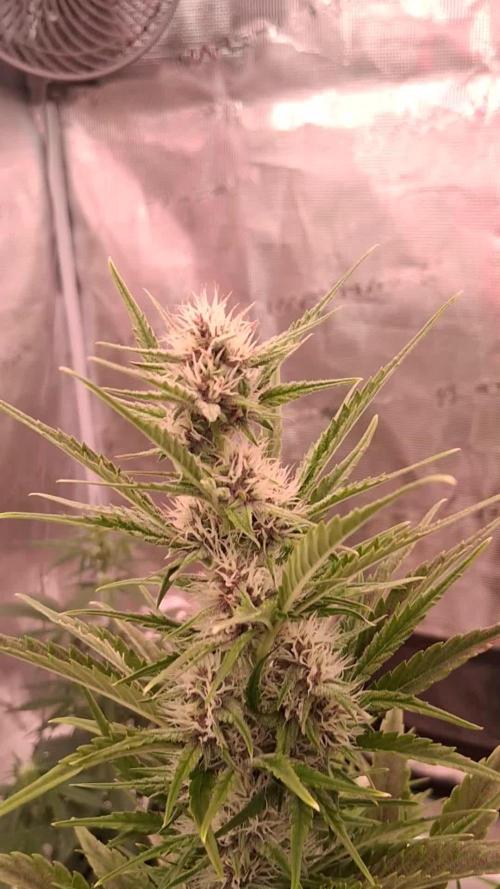
High Growmies der Herbst ist da.... Viel früher als erwartet färbt sich das Laub schon bunt.... Mich hat die Grippe schwer erwischt dass ich hauptsächlich nur gegossen und werte angepasst wie erhöhte Luftfeuchtigkeit das die Raubmilben für eine Woche optimale Bedingungen hatten.
Ebenfalls natürlich die Werte für die Pflanze leider kann ich nicht viel machen außer Gießen mir ist das Risiko zu hoch zusätzlich Dünger dazugeben gegen den so sichtbaren PK Mangel.
Sie ist definitiv einer der schnellen Phenos in 21 Tagen dürfte er reif sein werde ihn so lange stehen lassen wie es geht.
PPFD: 650 DLI:42 UV:90min
Likes
1
Share


@Marmotaaaas
Follow
Vamos súper las veo sanas y sin problema e pegado una poda a la que me faltaba y que sigan creciendo

Likes
9
Share


@Canadian
Follow
Day 71 from seed the plant seems to be growing beautifully and now they are starting to develop beautiful flowers and they are entirely covered with white snow trichomes it is a very strong and powerful plant to grow what a beauty . I also I defoliate some of the lower branches that will not going to develop well enough because lack of light so they can use that energy on the upper buds instead of the lower ones.
thank you for reading I will continue to update have a happy grow.

Likes
4
Share

@Ensign420
Follow
|»» LOG DISCLAIMER: Not intended as a grow guide. Grow log entries are usually posted 3 weeks later and are for my learning reference. ««|
Introduction - Week 13 Summary -
Ensign's log, stardate 17529.7,
Ooo yea! Summer is definitely here! Been a hot and humid week! But wow growth has been thriving and vibing in the garden!
Feels like the tropics in the lung room, but the higher humidity seems to be perfect for vegging plants!
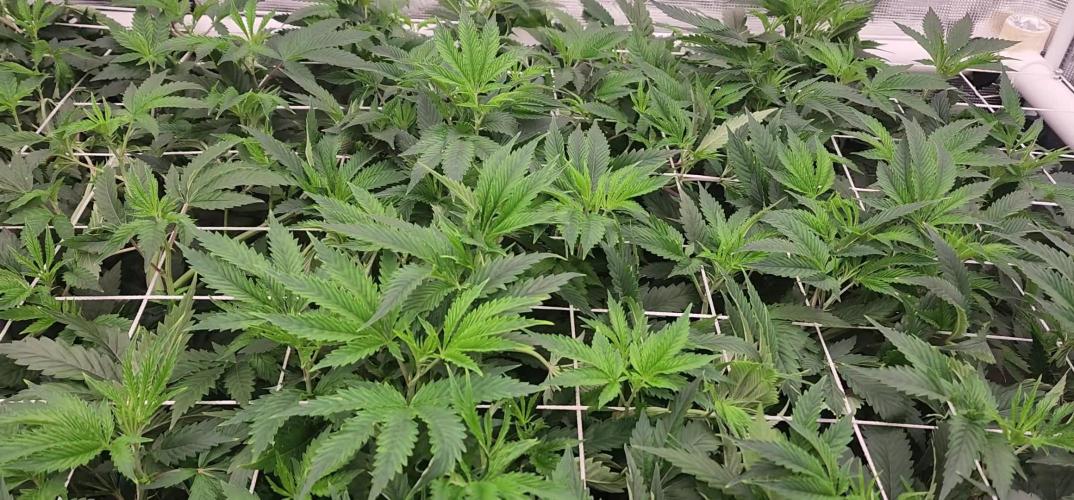
By the end of the week, the canopy is almost full, so decided to flip to flower in 7 days! To prep for flower, slightly increased the VPD levels which are also helping to lower the humidity down a bit.
Defoliated both ladies and been tucking and training the top growth. To preserve these genetics, started the cloning process and took cuttings. By the end of the week, the cuttings were transplanted into Coco Coins for rooting!
Topped and defoliated all mother plants in the veg tent which lowered the canopy by a good 5-6 inches. But by the end of the week, the canopy is stretching upwards again and growth is looking beautiful!
For this grow cycle, instead of a top dress, been researching about fungal dominant compost teas and plan to stew and brew up my first batch soon which will probably be in a week or so.
Anyways, one more week until the big flip to flower! Let’s go!
Onwards to next week Ensign!
[START OF WEEK 13]
==========================================================
---------- [ 4x4 MAIN TENT ] ----------
Heady OG BX1 #1 [Round4 ~Wk6] - WEEK 13 - Full Veg
TKO [Round2 ~Wk11] - WEEK 13 - Full Veg
----------- [ 3x3 VEG TENT ] ------------
Garlic Budder OG#1 - WEEK 05 - Full Veg
Garlic Budder OG#2 - WEEK 05 - Full Veg
Gorilla Goat #1 - WEEK 05 - Full Veg
Gorilla Goat #2 - WEEK 05 - Full Veg
07/14/25 → 07/20/25
This Week's Estimated Goals
----------------------------------------------------------------------------------------------
DLI: ~19 mol/m²/d
PPFD: ~300 μmol/m²/s
VPD: ~1.0 kPa
This Week's Meter Readings & Averages
----------------------------------------------------------------------------------------------
Light On/Off: 16:00 - 10:00 | Wattage: ~326.5W [LV04]
Distance From Canopy: ~31”, 31”
DLI: ~23.39 mol/m²/d
PPFD: ~361 μmol/m²/s
VPD: ~0.80 kPa
Soil %: [49.6, 37.7, 49.4, 49.6, 42.0, 43.1, 43.0, 43.6]
==========================================================
Day 01 - Monday - 07/14/25 - Total Days: 092
-----------------------------------
Daily Averages ~[+01:00]
- Temps: 85.8°F [29.9°C]
- Humidity: 81.9%
- VPD: 0.77 kPa
- Soil %: [49, 38, 49, 50, 41, 42, 43, 43]
-----------------------------------
- [+00:07]: Night check on the 4x4 tent.
--- Ca-Caw! Ahh yea! The garden is filling in nicely!
--- Heady OG (BX1 #1) has pretty much filled in the front right corner already and is raging with new growth!
--- TKO continuing to explode with growth! She has almost filled the back quadrants. Beautiful!
At this rate, will probably be flipping to flower in a week or two. Getting hyped!
- [+00:35]: Tucked and trained the top growth.
--- Flattened and widened the canopy out a bit more.
--- Going to need to work on TKO a bit more. Growth is really dense in the middle of the canopy.
- [+00:37]: Checked the Ecowitt soil moisture sensor data:
------------------ [ 4x4 MAIN TENT ] ---------------
------ 48% - [CH01 FT » G30 - Heady OG BX1 #1]
------ 38% - [CH02 FB » G30 - Heady OG BX1 #1]
------ 50% - [CH03 BT » G20 - TKO]
------ 50% - [CH04 BB » G20 - TKO]
------------------ [ 3x3 VEG TENT ] ----------------
------ 42% - [CH05 BL » GR7 - Garlic Budder OG#1]
------ 44% - [CH06 BR » GR7 - Garlic Budder OG#2]
------ 44% - [CH07 FL » GR7 - Gorilla Goat #1]
------ 42% - [CH08 FR » GR7 - Gorilla Goat #2]
--------- Veg: 38% - 45% | Flower: 45% - 55%
--------- General: 30% [Dry] «| 45 - 60% [Moist] |» 70% [Wet]
- [+00:41]: Checked the 3x3 veg tent.
--- Looking great in the mother tent!
--- All growth is perky and wow the canopy is already getting close to the grow light.
- [+00:47]: Super-cropped and bend the top growth.
--- Lowered the canopy by a few inches.
--- Pots are looking great and no signs of gnat infestation.
- [+00:57]: Checked the humidifiers.
--- Tanks are still full and no leaks found.
Day 02 - Tuesday - 07/15/25 - Total Days: 093
-----------------------------------
Daily Averages ~[+01:00]
- Temps: 84.6°F [29.2°C]
- Humidity: 80.0%
- VPD: 0.81 kPa
- Soil %: [50, 38, 49, 50, 41, 42, 43, 44]
-----------------------------------
- [15:55]: Been researching about organic growing and am looking into fungal-dominant compost tea brewing.
--- Also got the 5-gallon bucket kit from TeaLabs (via BuildASoil) and am stoked to start stewing and brewing!
--- Been learning about the soil food web and the information is absolutely fascinating. Shout out to Dr. Elaine Ingham! Her methodology and growing concepts are very similar to that of Masanobu Fukuoka and the concepts I’ve learned about regenerative farming has helped to improve my understanding about healthy soil and compost.
--- These concepts are also applied to brewing good aerobic fungal-dominant compost teas.
--- Plan to feed straight RO this week, but may try brewing my first batch of compost tea in a week or so.
--- Anyways,
- [16:23]: Evening check on the 4x4 tent.
--- Looking beautiful my ladies!
--- Wow Heady OG is healthy and more tops have growth through the scrog netting. Great!
--- TKO is just out of control with top growth!
- [18:46]: Tucked and trained the top growth under the scrog netting.
--- Took my time and focused on TKO. Tucked the larger fan leaves and re-directed growth to fill in the back two quadrants a bit better. Tried to spread out the dense top growth in the middle.
--- Heady OG also got tucked and widened out a bit.
- [18:46]: Checked the Ecowitt soil moisture sensor data:
------------------ [ 4x4 MAIN TENT ] ---------------
------ 47% - [CH01 FT » G30 - Heady OG BX1 #1]
------ 38% - [CH02 FB » G30 - Heady OG BX1 #1]
------ 46% - [CH03 BT » G20 - TKO]
------ 50% - [CH04 BB » G20 - TKO]
------------------ [ 3x3 VEG TENT ] ----------------
------ 40% - [CH05 BL » GR7 - Garlic Budder OG#1]
------ 43% - [CH06 BR » GR7 - Garlic Budder OG#2]
------ 48% - [CH07 FL » GR7 - Gorilla Goat #1]
------ 41% - [CH08 FR » GR7 - Gorilla Goat #2]
--------- Veg: 38% - 45% | Flower: 45% - 55%
--------- General: 30% [Dry] «| 45 - 60% [Moist] |» 70% [Wet]
- [18:48]: Checked the 3x3 veg tent.
--- All mothers are vegging and looking great! Growth is perky and green!
Day 03 - Wednesday - 07/16/25 - Total Days: 094
-----------------------------------
Daily Averages ~[+01:00]
- Temps: 85.7°F [29.8°C]
- Humidity: 81.9%
- VPD: 0.76 kPa
- Soil %: [50, 38, 50, 50, 44, 48, 44, 44]
-----------------------------------
- [+00:32]: Night check on the 4x4 tent.
--- Looking great my ladies!
--- Heady OG is filling in the netting and more tops are stretching beyond the netting!
--- TKO is stretching upwards and looking beautiful!
- [+01:07]: Tucked all top growth.
--- Evened out the canopy and everything looks incredible!
- [+01:10]: Checked the Ecowitt soil moisture sensor data:
------------------ [ 4x4 MAIN TENT ] ---------------
------ 45% - [CH01 FT » G30 - Heady OG BX1 #1]
------ 38% - [CH02 FB » G30 - Heady OG BX1 #1]
------ 47% - [CH03 BT » G20 - TKO]
------ 50% - [CH04 BB » G20 - TKO]
------------------ [ 3x3 VEG TENT ] ----------------
------ 42% - [CH05 BL » GR7 - Garlic Budder OG#1]
------ 46% - [CH06 BR » GR7 - Garlic Budder OG#2]
------ 41% - [CH07 FL » GR7 - Gorilla Goat #1]
------ 42% - [CH08 FR » GR7 - Gorilla Goat #2]
--------- Veg: 38% - 45% | Flower: 45% - 55%
--------- General: 30% [Dry] «| 45 - 60% [Moist] |» 70% [Wet]
- [+01:10]: Checked the 3x3 veg tent.
--- All mothers are raging with growth! Probably could super-crop, but plan to top and defoliate tomorrow.
--- Pots look good and no gnats!
- [+01:14]: Checked the humidifiers.
--- Tanks are still full and no leaks found.
Day 04 - Thursday - 07/17/25 - Total Days: 095
-----------------------------------
Daily Averages ~[+01:00]
- Temps: 85.5°F [29.7°C]
- Humidity: 80.4%
- VPD: 0.82 kPa
- Soil %: [50, 38, 49, 50, 41, 42, 42, 43]
-----------------------------------
- [17:00]: Evening check on the 4x4 tent.
--- Wow looking beautiful my ganja gals!
--- The garden is looking incredible!
--- Heady OG is filling the canopy beautifully and growth is ramping up
--- TKO has almost completely filled the netting and growth is healthy but really dense.
--- Ca-Caw! Wow Heady OG’s under canopy is bushing out with growth!
--- Okay! Time for a bit of clean up! Let’s go!
- [17:04]: Using my hands and a pair of trimmers,
--- Defoliated Heady OG’s lower growth.
--- Also chopped and dropped the cover crop.
--- Wow! Looking good girl!
--- Could have lollipopped her more, but plan to defoliate again before flipping to flower (18/6 to 12/12).
--- Decided to also start the cloning process.
- [17:57]: Filled a measuring cup with 1.5 cups of RO water.
------ Added 1/8tsp of Horticultural Aloe
--- Mixed the solution and poured it straight into a clean solo cup.
- [17:59]: Time to take the cuttings!
--- Using a pair of trimmers (AC Infinity),
--- Gently cut a healthy clone cutting from each pheno.
--- Trimmed and cleaned most of the nodes leaving the top node or two.
--- Did not cut any leaf tips.
--- Made sure the tip of the stalk had a slanted cut (about 45-degree).
- [18:13]: Placed each cutting into the cup of aloe solution.
--- Also made sure to tag each cutting with the name and number.
- [18:15]: Placed the fresh cuttings into the tent.
--- Have the cup raised off the floor and is placed on top of the 5-gallon mulch bucket.
--- Going to let these cuttings soak for a day before refreshing with straight RO water.
--- Let the two-day soak begin!
- [19:37]: Tucked and trained the top growth under the scrog netting.
--- Also started to defoliate the top growth.
--- To increase air circulation, only removed the larger fan leaves.
--- Also continued to spread the canopy out evenly with nodal growth.
--- TKO is looking a lot better now!
--- Heady OG is also spreading out quite nicely!
--- Pretty have decide to veg for another week before flipping to flower.
--- Getting hyped!
- [19:37]: Checked the Ecowitt soil moisture sensor data:
------------------ [ 4x4 MAIN TENT ] ---------------
------ 48% - [CH01 FT » G30 - Heady OG BX1 #1]
------ 38% - [CH02 FB » G30 - Heady OG BX1 #1]
------ 54% - [CH03 BT » G20 - TKO]
------ 50% - [CH04 BB » G20 - TKO]
------------------ [ 3x3 VEG TENT ] ----------------
------ 40% - [CH05 BL » GR7 - Garlic Budder OG#1]
------ 46% - [CH06 BR » GR7 - Garlic Budder OG#2]
------ 42% - [CH07 FL » GR7 - Gorilla Goat #1]
------ 41% - [CH08 FR » GR7 - Gorilla Goat #2]
--------- Veg: 38% - 45% | Flower: 45% - 55%
--------- General: 30% [Dry] «| 45 - 60% [Moist] |» 70% [Wet]
- [19:41]: Checked the 3x3 veg tent.
--- Ooo yea! Looking good in the mamma tent!
--- Ladies are raging upwards and the canopy is bushing out!
--- Decide to thin out the canopy and top the upper growth.
- [17:45]: Using a pair of clean trimmers,
--- Topped and removed a good 5-6inches of upper growth.
--- Also defoliated some of the lower growth and removed a few of the larger fan leaves.
- [20:32]: Looking great my girls!
--- Mulched the trimmings.
--- Could have taken clones too, but going to try to veg the current clones (Heady OG and TKO) in solo cups for a bit before up potting.
--- Still hunting for mothers to keep and eventually breed.
--- Anyways,
--- Pots look great and gnat population is still under control. Nice!
- [20:44]: Checked the humidifiers.
--- Tanks are still full and no leaks found.
--- Ooo yea! What a great day in the garden!
--- Getting hyped for flower!
Day 05 - Friday - 07/18/25 - Total Days: 096
-----------------------------------
Daily Averages ~[+01:00]
- Temps: 86.4°F [30.2°C]
- Humidity: 81.6%
- VPD: 0.80 kPa
- Soil %: [49, 38, 49, 49, 42, 43, 43, 44]
-----------------------------------
- [21:59]: Night check on the 4x4 tent.
--- Wow the garden is looking healthy and growth is green and perky!
--- Ca-Caw! All I see is green! Heady OG is starting to ramp up with growth! The front quadrants of the canopy is almost full!
--- TKO has bushed out again and growth is looking incredible! She’s more than ready to be flipped to flower, but going to continue to wait for Heady to fill in the front area.
--- Clones are looking great too! Both are looking green and healthy!
--- Alright!
- [22:08]: Time to swap the aloe water out!
--- Replaced the solo cup with a clean one filled with fresh RO water (1.5cups).
--- Placed the cup back into the tent.
--- Going to let this soak for another day before transplanting into a Coco Coin for rooting.
- [22:53]: Tucked and trained the top growth under the netting.
--- Canopy is flat and looking great!
--- Surprisingly, the higher humidity levels have been helping with the heat. But going to start increasing VPD levels a bit closer to veg conditions.
- [22:56]: Within the AC Infinity App,
--- For the Main Tent [4x4] controller,
--- Adjusted the 'Vegetative [18/6]' Schedule for the humidifier.
------ Increased the VPD target value from 0.8kPa to 0.9kPa
- [22:59]: Checked the Ecowitt soil moisture sensor data:
------------------ [ 4x4 MAIN TENT ] ---------------
------ 46% - [CH01 FT » G30 - Heady OG BX1 #1]
------ 38% - [CH02 FB » G30 - Heady OG BX1 #1]
------ 51% - [CH03 BT » G20 - TKO]
------ 49% - [CH04 BB » G20 - TKO]
------------------ [ 3x3 VEG TENT ] ----------------
------ 41% - [CH05 BL » GR7 - Garlic Budder OG#1]
------ 46% - [CH06 BR » GR7 - Garlic Budder OG#2]
------ 40% - [CH07 FL » GR7 - Gorilla Goat #1]
------ 45% - [CH08 FR » GR7 - Gorilla Goat #2]
--------- Veg: 38% - 45% | Flower: 45% - 55%
--------- General: 30% [Dry] «| 45 - 60% [Moist] |» 70% [Wet]
- [23:05]: Checked the 3x3 veg tent.
--- Mothers are looking beautiful! Growth is still recovering, but most of the growth is perking up nicely!
--- Pots are gnat free and looking good!
- [23:10]: Checked the humidifiers.
--- Tanks are still full and no leaks found.
Day 06 - Saturday - 07/19/25 - Total Days: 097
-----------------------------------
Daily Averages ~[+01:00]
- Temps: 86.0°F [30.0°C]
- Humidity: 81.3%
- VPD: 0.81 kPa
- Soil %: [49, 37, 50, 49, 43, 43, 43, 43]
-----------------------------------
- [08:24]: Ca-Caw! Quick morning check on the 4x4 tent!
--- Looking great my ladies!
--- Heady OG has about 3 more rows to fill in the entire front left quadrant.
--- TKO continues to bounce back day after day! She’s already stretching upwards again and looking beautiful!
--- Both clones also looking incredible and green!
--- The Heady OG clone is a bit droopy, but she’s still green.
- [20:11]: Night check on the 4x4 tent.
--- Looking great my girls! Growth is blowing up and more squares are filling in!
--- Almost want to flip to flower next week. But will still continue to wait a week more.
--- Clones are looking healthy and green!
--- TKO is definitely a lot perkier than
- [20:14]: Okay! Need to start the rooting process! Let’s go!
--- Configured the controller on the AC Infinity Propagation dome.
--- Made sure the settings were correct for vegetative growth:
------ START/END times were set to 04:00PM/10:00AM
------ Light intensity was set to 1 (out of 10).
--- Also made sure the propagation light controller’s time was in sync with the Controller 69 Pro.
- [20:25]: Filled a measuring cup with 1.5 cups of RO water.
------ Added a pinch of Quillaja Saponaria Extract [60]
------ Added 1/64tsp of Horticultural Aloe
------ Added 1/32tsp of Mycrobe Complete
--- Mixed the solution thoroughly.
- [20:32]: Dropped 2 Coco Coins into the measuring cup.
--- The coins immediately started to expand.
--- [~10 minutes later]
--- Took each fully saturated Coco Coin and temporarily placed them in half-cut solo cups.
- [20:58]: Using a squeeze bottle filled with Clonex,
--- Gently filled each pre-made hole with Clonex rooting gel.
- [21:03]: Time to plant the cuttings!
--- Using a pair of clean trimmers, made a final 45° cut.
--- Also stripped and scrapped some of the stem’s outer membrane.
--- To help with planting, gave each Coco Coin a squeeze to loosen the coco.
--- Made sure to insert each stem straight and snug with the tip about a 1/4 inch from the bottom of the Coco Coin.
--- Also secured the stem by pinching and pressing in the top of the coco coin.
--- Once each cutting was planted,
- [21:16]: Placed each pheno into the propagation dome’s tray.
--- Made sure to keep each clone properly tagged.
- [21:19]: Added 1/2 cup of RO water to the bottom of the tray.
--- Placed the side extensions onto the tray.
- [21:21]: Misted the sides of the propagation dome with distilled water.
--- Sprayed the top of the propagation dome before covering the cuttings.
--- Vents are fully closed.
--- As far as PPFD,
--- At the current light intensity, the PPFD is around 108 μmol/m²/s which gives a DLI of 7.00 mol/m²/d
--- Will check back daily to cycle the air under the dome.
- [21:26]: Checked the 3x3 veg canopy.
--- Growth is looking healthy and perkier!
--- All mothers seem to have fully recovered from the intense topping.
--- Pots also look great and gnat population is still low. Also no signs of flooding. Great!
- [21:38]: Ca-Caw! Back to the main 4x4 tent.
--- Time start training!
- [22:47]: Tucked and trained the top growth under the scrog netting.
--- Flattened the canopy and kept spreading out the growth to fill in more squares.
- [22:52]: Quickly checked on the auto-watering system.
--- System is still charged and no leaks or kinks found in the tubing.
- [23:07]: Checked the humidifiers.
--- Tanks are still full and no leaks found.
Day 07 - Sunday - 07/20/25 - Total Days: 098
-----------------------------------
Daily Averages ~[+01:00]
- Temps: 85.9°F [29.9°C]
- Humidity: 81.0%
- VPD: 0.81 kPa
- Soil %: [50, 37, 50, 49, 42, 42, 43, 44]
-----------------------------------
- [08:07]: Quick morning check on the 4x4 tent.
--- Looking green and healthy in the garden!
--- Both Heady OG and TKO are looking great!
- [08:11]: Checked on the 3x3 veg tent.
--- Mothers are vegging along with healthy growth!
--- Quickly checked on the propagation dome.
--- Looking good! The dome is humid and growth looks green!
--- There’s slight signs of yellowing leaf tips on TKO, but growth looks great!
- [19:08]: Night check on the 4x4 tent.
--- Wow the garden is lush and green with more growth! The canopy is definitely going to be full in a week. Stoked for this flower cycle!
--- Heady OG is healthy and filling in her squares!
--- TKO is ready for flower! She’s looking beautiful and green with tops and crowns everywhere!
--- Time for more training!
- [19:57]: Tucked and trained the top growth under the netting.
--- Wow the canopy is flat and full!
--- Just a few more squares in the back right quadrant and three rows left for the front left quadrant.
- [20:05]: Checked the Ecowitt soil moisture sensor data:
------------------ [ 4x4 MAIN TENT ] ---------------
------ 54% - [CH01 FT » G30 - Heady OG BX1 #1]
------ 37% - [CH02 FB » G30 - Heady OG BX1 #1]
------ 48% - [CH03 BT » G20 - TKO]
------ 49% - [CH04 BB » G20 - TKO]
------------------ [ 3x3 VEG TENT ] ----------------
------ 42% - [CH05 BL » GR7 - Garlic Budder OG#1]
------ 44% - [CH06 BR » GR7 - Garlic Budder OG#2]
------ 43% - [CH07 FL » GR7 - Gorilla Goat #1]
------ 46% - [CH08 FR » GR7 - Gorilla Goat #2]
--------- Veg: 38% - 45% | Flower: 45% - 55%
--------- General: 30% [Dry] «| 45 - 60% [Moist] |» 70% [Wet]
- [20:12]: Checked the 3x3 veg tent.
--- Mothers are looking beautiful! Growth is perkier and starting to stretch upwards again!
- [20:13]: Checked propagation dome,
--- To refresh the air, lifted the top off for a bit.
--- Wow growth looks healthy! Both clones are looking great!
--- Heady OG seems droopy, but still green.
--- Using a spray bottle, misted the top growth with RO water.
--- Covered the propagation dome.
--- Checked the pots and no signs of flooding! Gnats are also no
- [22:57]: Oops! Forgot to take the weekly PPFD levels and measurements!
------ All phenos were around 361 μmol/m²/s which gives a DLI of 23.39 mol/m²/d under an 18/6 light cycle (at ~326.5W).
------ All phenos were about 21.5" tall.
------ All phenos were about 31" away from the grow light.
- [23:05]: Checked the humidifiers.
--- Tanks are still full and no leaks found.
--- Another week done and the garden is healthier than ever!
--- Plan to check the clones for roots next week and will transplant into solo cups as soon as roots develop a bit in the tray.
--- Oh yea,
--- One week before the big flip to flower! Ca-Caw! Let’s go!
--- Onwards Ensign to next week!
[END OF WEEK 13]
Likes
61
Share


@Dunk_Junk
Follow
Only 11cm vertical growth this week. Flowering stretch slowing down and she's bushed out so much!!!


Likes
31
Share


@RFarm21
Follow
Olá growmies!
Esta semana parei com o LST na esperança que ela ganhe mais altura nestas semanas.
Até agora não tenho tido grandes problemas.
Entre as regas tenho dado 0.5L de água com pH regulado quando as folhas começam a esmorecer.
20Nov - Alimentada com 2,25L de água. Runoff EC: 1.50 / runoff pH: 6.5
Se tiverem alguma dica para me dar, estejam à vontade!
Likes
66
Share


@spyder
Follow
Well...To Start I must say I Love the new Mars Hydro TSL2000 Complete Tent Kit, It has everything you need to do an indoor grow, all you will need is some grow medium and seeds...ready to go. I personally am adding an Inkbird ITC308 controller to maintain Temps, but not needed, just my personal preference...
This is an awesome kit,, from the light and tent to the Exhaust Fan and Charcoal Filter to humidity/temp meter, Light Timer, Flex Pipe, to the cloth grow bags and everything in between...Truly Impressed..
This will be my Wife's New Tent, and it looks like it will be for Auto's, lets see how much abuse they can take ....lol
* WSE Tangerine Dream Auto Flower Fem's
* Mars Hydro TSL 2000 Led
* Mars Hydro 2x4 Tent
* Mars Hydro 4" exhaust Fan and Charcoal Filter
* Inkbird ITC308 Temp Controller
* 5gal. Cloth Pots
* Small ceramic Heater
* 4" internal circulation Fan
* Diatomaceous Earth (food grade)
She has done such a great job with Her first outdoor, (purple urkle) and then her indoor, (pinkman goo) she deserves this bigger better system....Stay Tuned....
Please Like and/or Follow the Diary, May all your grows be plentiful and trouble free.....


Likes
6
Share


Likes
2
Share

@GoodTimesOrganics
Follow
Welcome Back!💚
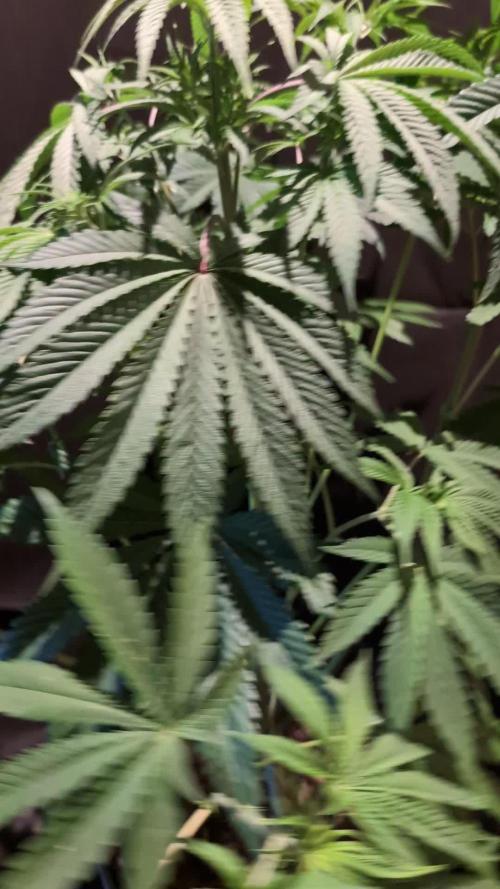
Die Pflanze hat nochmal ordentlich an Masse zugelegt und heute am 17.10.25 wurde sie in die Blüte übergeleitet.
Die Triebe sind schon homogen und Buschig, so dass sie nun bereit ist die Früchte zu tragen.
Die Umgebungsgegebenheiten sind bis jetzt optimal:
—————
🌞 Temp: 23°C bis 24°C
🌚 Temp: 18°C bis 19°C
💧RH: 68%
🌬️ VPD: 0,77 kPa👍
—————
Grüne Grüße 🥦

Likes
6
Share

@Michijardinero
Follow
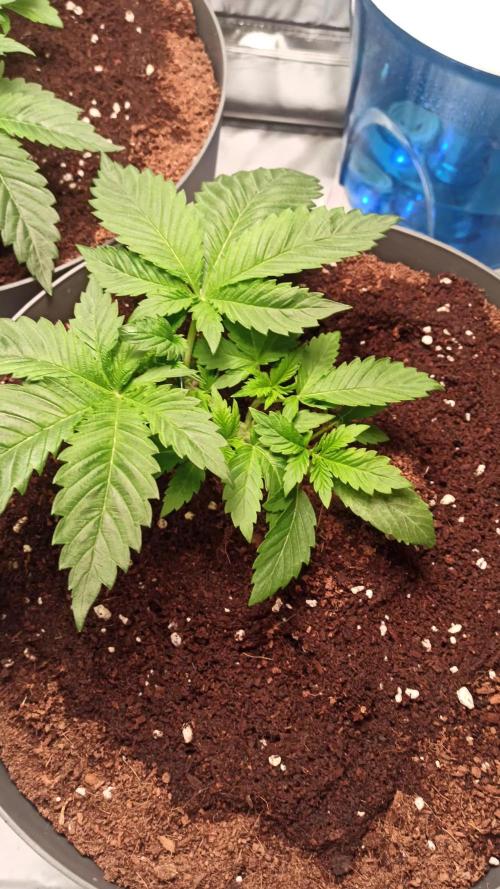
Muy buenas familia aquí estamos otra semana más de momento van creciendo muy bien tienen un color muy bonito les e echó la técnica LST mi armario es de 1.60m de alto las dejaré crecer asta unos 20 cm antes de ponerla a florecer de momento sigo con el mismo riego pH en 6 rootfast y terra leaves en este riego les eché 2L a cada maceta espero sigan así de bonitas nos vemos en 1 semana familia les mandó un saludo muy fuerte paz

Likes
27
Share


@Hawkbo
Follow
They got moved into the 4x4 with the jimmy rigged 180w quantum board light built from ceiling tile grid. The tnb co2 is newish but I gotta get the heat up and bring in a more powerful light to take full advantage.
Likes
6
Share


@Kannamar
Follow
So, they streched a lot, I had to bend severely. And so quick, like 5 cms in a day!
They touch the light, I had no more room...
I did a late FIM on 2 of them.... emergency I finally found a way to get the lamp 5 cms higher.
Lukily it has stabilized but still, top of the buds are at 5 cms from light!!!!
That's why I decided to drop the power at 50% and I lower the day light to 16 hours.
Likes
8
Share

@Phatlad187
Follow
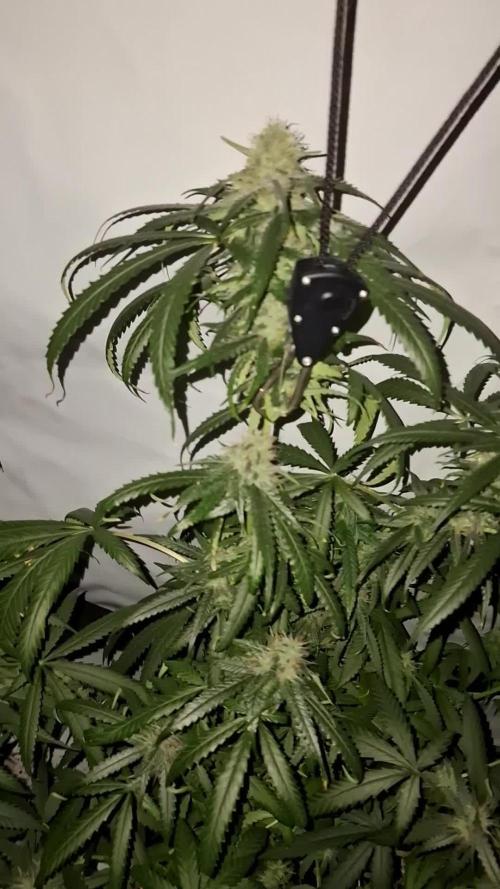
Week 7 on flush with just water 7 days to go and it will be done the smell is stonge and as cirtus notes nugets s are soild and dence