


Likes
7
Share


@THIRTYthirty
Follow
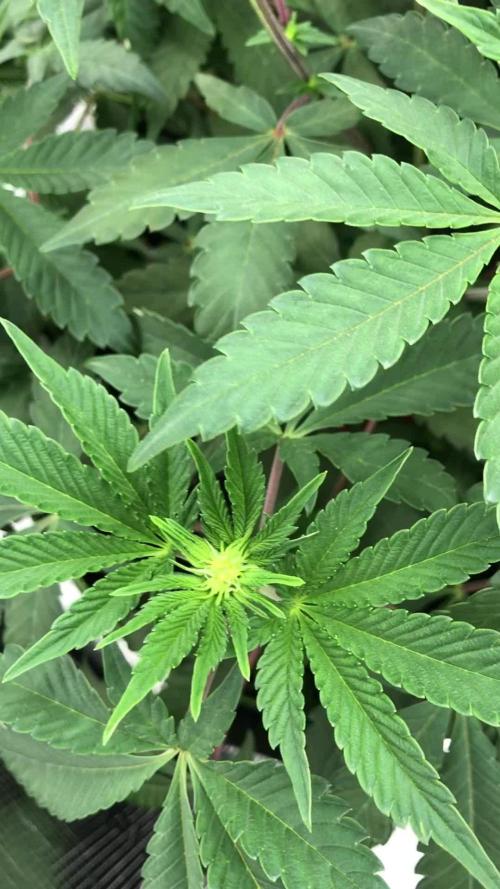
Wurden in 2 Liter Töpfe mit 50 % Bio erde 50% Cocos gepflanzt.
unter Led gestellt weil es heute wenig Sonne auf der Fenster bank gab .
Und mit Regenwasser gegossen



Likes
11
Share


@PrinceAlbert
Follow
Week went very well, never had such a good flower before.
Some leafes are getting brighter and the ones who dont catch light are falling but its okay.
Wish you all the best


Likes
6
Share


Likes
12
Share


@RoyColt
Follow
Day109 19/03
4lt ro water -12ml BloomA -12ml BloomB -8ml Nirvana -4ml FinalPart terra,
Total 1000 ppm, ph 6,2
Drain 300ml, 1580 ppm.
Day111 21/03 RinseOut Day
5lt ro water -5ml sensi cal mag extra,
Total 200 ppm, ph 6,2
Drain First measure 500 ml, 1750 ppm- Second 500 ml, 1440 ppm- Third 500 ml, 1200 ppm.
Day113 23/03 RinseOut Day
4 lt ro water -4ml sensi cal mag extra,
Total 200 ppm, ph 6,2
Drain First measure 200 ml, 1250 ppm -Second 200 ml, 1150 ppm- Third 300 ml, 950 ppm.👌

Likes
14
Share


@BOMbolenath
Follow
the weather still very hot but it is doing well.
Terpene is very strong now. Very sweet and fruity, but have some wood in it. Amazing. Keep growing.

Likes
8
Share


@Polyphemus
Follow
Seeing some initial plumping by FD 30 and even more in the current pictures.
BBxGS - going strong and similar to previous plants of this strain.
Grandpa's Stash - Loving the aromas. Except for 1 plant, definitely the fastest development rate so far
Banana Hammock - The primary cause of the massive stink throughout my house, I think. Also develioping quickly.
Overall, the plants are healthy. Some blemishes here or there. Had some trouble keeping up with RH, so I removed some leaves. I have been topping off the 3 hammocks and 2 bbxgs plants with plain water immediately following a fertigation. They were lookin too lush. I've done this 5-6 times over the last week and adding less than a 1/2 gallon to each. However, i think the night time temps dropping to 67-68F are the cause at this point and i am seeing purple creep into leaves not a toxicity.
Have had some minor tip paling on 1 of the hammocks for at least 7-10 days, but it never progressed. If i get some exotic colors in these as they progress, i don't think this is necessarily a nute-related issue at this point. I upped K ppm when i initially saw it, but only slightly. Think these plants are just on the dark side. Thinking these will have dark purple leaves like my Dinafem OG Cookies grow.
Even so, will continue to dilute just in case on the darker plants and cease doing that if i see a hint of deficiency.
While trichome production has been great from an early stage of flower, I've been a bit disappointed by it lately. The ethos plants seem to be lagging a bit, but also seeing it on stems and petioles. The bbxgs plants continue to cake it on. I don't smoke stems, petioles or leavs, so it isn't a major concern. All that matters is the aerial density of trichomes on the calyxes. I'm sure they'll be okay.
The smell is really intense for the last week. My house smells like it is harvest day, every day. Love it!
Climate pics added / update - You can see where dehum settings change at end of day. It can barely keep up when plants are trasnpiring. I had to remove leaves in order for it to maintain 50% during lights on. Temps are consistent as long as outside weather isn't unusually warm. Like I've said before, probably operating a bit too high in VPD, but concentration of fertilizer is reduced slightly and the VPD at the leaf, where it matters, is probably a bit lower than these readings. Probe is 6" under canopy and would be more accurate if placed in the middle of it.
Night time VPD used to be equal or even a bit higher before i started trackign this stuff. I've got that flipped back to normal, but no idea if that is a benefit or just my own OCD. According to what i've read, it shouldn't be more than .4 kPa below daytime VPD. At least that part has some research behind it as to why.
A week of tweaking behaviours and settings at specific points in time has lead to as consistent of an environment as i'm going to get relatiave to what i'm willing to invest (time/effort).
The night time graphs are an hour short because they are of the day of this update. Close enough for display purposes.
I will make a spreadsheet that will link to the exported date file of the probe at some point. For now the graphs in the app are good enough. I want to collect a lot more data in future. Start to figure out just how impactful some of this is or is not. Ambient weather outside, growth measured in multiple ways (height / number of nodes), incremental use of water/fertilizer electricity (already have a good guage of this) etc etc.. Gonna do a full statstilal analysis andn regression of various factors over time... come back in 10-20 years, LOL. Then again, may proclivity for laziness may be a factor too.
Likes
1
Share


@GERGrowDesigns
Follow
Welcome to veg Week 4 of Sweet Seeds Mental Rainbow F1
I'm excited to share my grow journey with you from my
Sweet Seeds Project . It's going to be an incredible ride, full of learning, growing, and connecting with fellow growers from all around the world!
For this Project , I’ve chosen the Feminized Photo strain Mental Rainbow F1 :
Here’s what I’m working with:
• 🌱 Tent: 120x60x80
• 🧑🌾 Breeder Company: Sweet Seeds
• 💧 Humidity Range: 60
• ⏳ Flowering Time: 7-8weeks
• Strain Info: 22-30%THC
• 🌡️ Temperature: 26
• 🍵 Pot Size: 0.5l
• Nutrient Brand: Narcos
• ⚡ Lights : 600W x 2
A huge thank you to Sweet Seeds for allowing me to try my Best with this amazing collection from Photo Strains they managed to Sponsore . Big thanks for supporting the grower community worldwide! Your genetics and passion speak for themselves!
I would truly appreciate every bit of feedback, help, questions, or discussions – and of course, your likes and interactions mean the world to me as I try to stand out in this exciting competition!
Let’s grow together – and don’t forget to stop by again to see the latest updates!
Happy growing!
Stay lifted and stay curious!
Peace & Buds!

Likes
48
Share


@TheCannaProphet
Follow
~ WEDDING CHEESECAKE FAST FLOWER by FastBuds ~
Well fam, here we go again with another epic strain from FastBuds Fast Flowering stable. After having such tremendous success growing their Gorilla Cookies Fast Flower outdoors last year, I've decided to run another of their fast flowering strains outdoors this year... Wedding Cheesecake Fast Flower!
The best description of this awesome cultivar comes directly from my friends at FastBuds which is as follows:
"A delight for the mind and body: Wedding Cheesecake FF (Fast-Flowering) is a delicious strain that offers XXL yields in a 7-8 weeks flowering cycle. This terpene powerhouse produces loads and loads of mouth-watering vanilla-creamy-cookie-scented terps with hints of citrus and cinnamon. In addition to its delicious aromas, this variety grows very well in both indoor and outdoor setups, yielding up to 650 g/m2 without extra maintenance, making it the ideal strain for beginners as it allows you to maximize yields while minimizing work. This super-fast feminized photoperiod version offers upbeat and energetic yet deeply relaxing effects that are perfect for consumers looking for a heavily focused, motivating, and creative high. It’s the ideal strain for those needing that extra energy boost to start a busy day on the right foot.
Wedding Cheesecake FF boasts chunky, large-sized buds with a thick layer of silvery-white resin and bright orange hairs scattered all over: that just screams ‘quality’. The lime-green flowers sparkle with an array of hues ranging from dark to light green, to magenta and purple, and reek of a delicious aroma that’ll remind you of fresh store-bought cheesecake.
This is an XXL hybrid that grows extremely tall in height, reaching up to 3m with one huge main cola and multiple long side branches that can withstand enormous yields of up to 650 g/m2 with ease. Wedding Cheesecake FF is extremely resilient to the elements and can be grown in almost every climate as long as you’ve got the space and basics covered, making her an excellent choice for those looking for large-scale harvests with a quick turnaround time without much effort."
________________________________________________________________________________________________________________________________________________________________________________________________________________________________________________________________________________________________________________________
The Setup:
This is going to be an outdoor grow, but I have started the Wedding Cheesecake FF indoors as our weather is still too cold to put her outside (nighttime temp's dipping regularly into the 30's℉).
The plan is simple... let her grow inside under a 19/5 light schedule until the nighttime temperatures stay above the mid 40's℉, at which point she'll be moved outside and transplanted into the soil which I have already setup and inoculated with beneficial microbes, and then let the fun begin!🤪💚
________________________________________________________________________________________________________________________________________________________________________________________________________________________________________________________________________________________________________________________
Weekly Updates:
6/26- Can you believe that it is now Week Thirteen since breaking ground for the FastBuds Wedding Cheesecake Fast Flower???
This lady has turned into a genuine beast of a plant and continues to remain healthy with great color and vigor!
6/28- Our weather is HOT now with heat indexes over 100℉ so I'm watering the Wedding Cheesecake FF every day with 5-8g of straight well water from the garden hose in the late afternoon once the plant is in the shade.
Other than the ever present leaf hoppers, which love the leaves but leave the flowers alone, and an occasional Japanese Beetle there aren't any serious pest issues currently. The Wedding Cheesecake FF continues to have excellent color and vigor and continues to add vertical growth!
6/30- The weather continues to be hot and humid and the daily watering continues. I also removed a few shade leaves that were below the canopy, as well as some in the middle of the plant that were blocking a lot of light to new shoots.
7/2- Thirteen weeks of veg behind her now, the FastBuds Wedding Cheesecake Fast Flower is on her way to stardom... see you next week!🤩
Thank you for checking out my diary, your positive comments and support make it all worthwhile! 💚Growers Love!💚😎🙏
Likes
25
Share

@Susquihanna
Follow
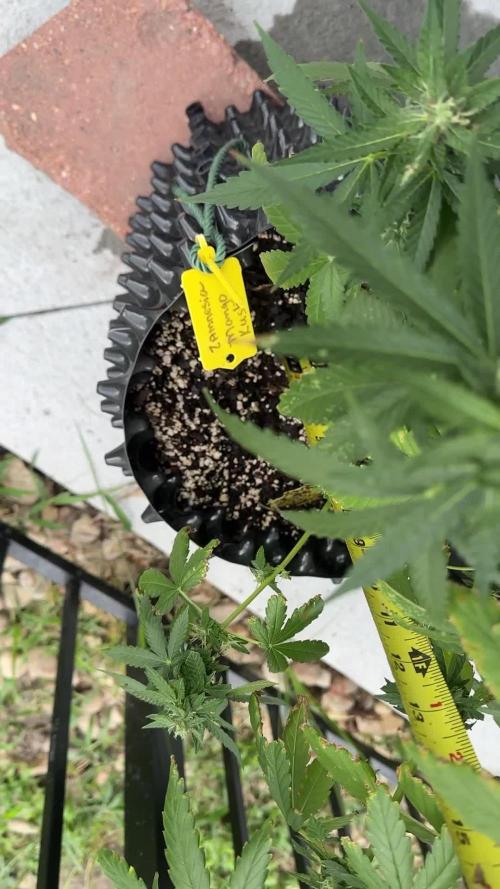
I used my Max-see magnifier to take some close up pictures of Miss Mango Kushes trichomes. She is getting closer and closer to a harvest.
It rained a little this week so I only fed her a couple of times. I am currently feeding her @AdvanceNutrients Jungle Juice.
I have not had to defoliate this grow. I just didn't need to open up any space for sunlight, so I left them all in contact.
I also had a snail that decided Miss Mango was a good home for her. I have no idea where that came from unless a bird dropped it.
All in all, it was a good week. Miss Mango Kush is concentrating on her bud growth.
As always, Let's chat it up! See ya next week.
Likes
11
Share


@DutchDudeGrow
Follow
not all the ladys are drom the same time 5 are 2 weeks ahead 1is West coast OG auro and all 10are Amnesia haze auto,
Likes
4
Share


@hinterhofgrower
Follow
🌱:
💧 : 8l, switch to 1,5ml/l Supermix and 0,3ml/l pk13-14 on day 47
💡 : Dli: 45 mol/m²/d
🤔:
Likes
13
Share


@cookingwithninja
Follow
Pretty happy with this grow. Going to either reveg 1 and pop s2 for next or do all s2. Absolute 0 herm through all flower and all plants.
Chopped them. Will try to reveg 2
I am very baked


Likes
10
Share


@HideAndFly420
Follow
Hi all beautifull growers,
Day 56 this baby is going faster than orange, also if rested a little smaller.
Bud are getting fatter and fatter.
Stopped big bud, and reduced bio grow.
Let’s see this week how much they bloom , I think I’ve got 4 weeks left. In 2 weeks I’ll start flushing.
Day 60(32 of flowering) I think this is the last week of flowering, I will do a nice flush during 2 weeks cause I see that is really charged of nutrients. Size of buds are already amazing. I should have 3 weeks left from today.
Let’s see
Any advice is welcome :)!!
Likes
6
Share


@Ninjabuds
Follow
Permant marker the one seedling I could not be more happy with. It has a distinct different look to it than any other plant in the tent with strong growth going on. I'm sad about the other seedling thou the 1st set of leaves were kinda deformed and it has like a spiral thing going on where new growth comes from. Hopefully it comes back around, I always like seeing atleast 2 phenos of a strain I feel it gives you a better idea of what a strain is.
It's looking like a good start to a week the plants are strong they are getting to the point I can let the dried dry out completely. I'm thinking by the end of this week the plants will be starting to be sold.
Last week I put all the plants into my bigger 2x4 tent with my medicgrow mini sun 2 the 500w version. Only a few of the plants were ready for that light. Seems like the only plants that really have good resistance and have a strong start are the weedseedsexpress.com seeds. Shout out to weedseedsexpress.com for the strong plants.
I ended up putting all the plants back into my 2x2 tent with the 55w amazon light it has alot more blue light in its spectrum. It's kinda weird b4 I switched the plants to the 2x4 tent they were getting 220umol under my amazon 55w led then when I put them under the 500w light 25% strength about 50in from plants and they were getting only about 195umol in that tent but it was stressing most the plants. I assume a larger light has more side lighting hitting the plants. I think when useing larger lights it's good to measure umols from the top but also coming from the sides. I think durring seedling stage they only need about 50% the umols coming from the side the plants as the top is receiving.
When I put the plants back in the small tent about the same umols as they were getting b4 the switch and they were still a little stressed. So for a few days I put the small light at the top the tent giving them 100umols for a few hrs then 130umols the rest the day.

Likes
44
Share


@TheMachinist
Follow
Feb 14, 2018:
Seems my fears were unfounded, I'm not seeing any spots of mildew and I think in 4 days I would see something if it was there. Water with plain water, just ph'd nothing else added. staked up a couple of the buds, all the other palnts are managing to hold each other up, the fan leaves seem to grow into each other so the canopy is a solid moving mass. When the oscillating fan hits the colas the whole canopy sways slightly. For future grow I plan to have more space between plants, and will need a screen/net to hold everything up.
Feb 12,13 2018:
Watered with 10ml/Gal Tiger Bloom, 10ml/Gal Big Bloom, 2tsp blackstrap molasses, 1ml Cal-Mag per gallon. Ph'd to 6.5 ish. Lost my SD card so didn't get any photos 2/12, but took some with my phone on day 73, and then found my SD card. High quality photos are back tomorrow mourning.
Feb 11, 2018:
Had a bit of a freak out, thought i had spotted a couple PM spots forming, think it was just the leaves resinous sticky. After the scare decided to do some major cleanup of old leaves and ALL dead leaves, i know it wont help fight PM, but added a small 6" fan circulating air below canopy. Humidity has been constant due to running a dehumidifier so it stays between 45-50 lights on and off.
Likes
29
Share


@Lazuli
Follow
This strain has huge fat buds everywhere there was not one popcorn bud sooo i think this is a keeper
Likes
15
Share

@GoodTimesOrganics
Follow
Hi liebe Community und Welcome Back! 💚
Slush Mint Cake von Dutch Passion!
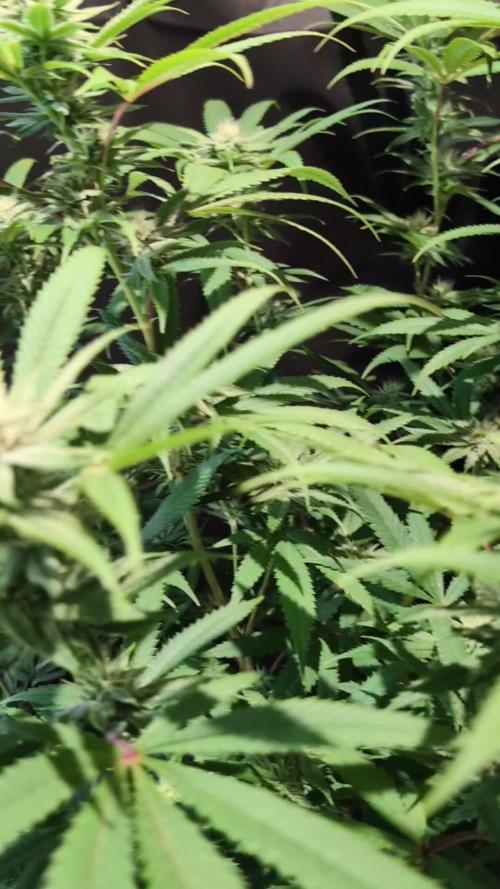
Die dritte Blütewoche ist vorbei und die Pflanze hat im Stretch bisher nochmal 4cm zugelegt, daher wird in der Höhe nun nicht mehr viel passieren.
Das heißt auch ihr Stretch ist insgesamt sehr moderat und super handelbar!
Die Pflanze hat nun eine Höhe von 115cm erreicht.
Sie hat eine wunderschöne und homogene Wuchsform.
Die Stimmen bilden sich nun langsam aus und es sind schöne und immer mehr glänzende Trichome erkennbar.
Das untere Drittel der Pflanze habe ich nochmal ein bisschen ausgedünnt und die Triebe rausgeschnitten.
Die Bedingungen im Growschrank sind für die Blütephase aktuell Top!
Die Lichtintensität wurde nun auch auf dass Maximum hochgefahren.
—————
🌞 Temp: 26
🌚 Temp: 18°C bis 19°C
💨 RH: 54%
VPD: 1,17 kPa
💡 ppfd: 830 mpm
—————

Likes
19
Share


@Divs_darkroom
Follow
This girl grew for 72 days. She shared a bed with 2 other plants and only used one of the lights in the darkroom (180 watt electric sky). She produced beautiful dark buds that smell insanely sweet. I have only vaporized 1 decent sized bowl through my mighty vaporizer and I must say it tastes pretty good even without a cure. No green earth taste and it tastes just like it smells. Doesn't produce any dry mouth or eyes so that's nice. I Vaped it right before I left for work and I didn't even get chinky eyed when I walked outside into the light. So it's a great daytime smoke. I definitely feel high, I just don't feel like other people can tell :). She grew in living soil And I am convinced that it's the way to be 💪0