


Likes
Comments
Share

@420DeepGrow
Follow
📆 Semana 11
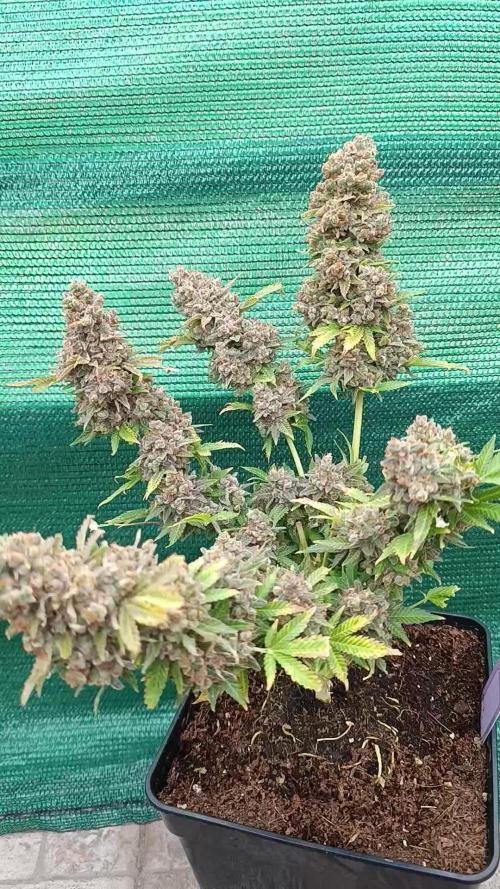
Semana de corte, cerrando el ciclo con los cogollos totalmente maduros, muy compactos y con una alta carga de resina ✂️
Los tricomas se encuentran en su punto óptimo, con equilibrio entre lechosos y presencia de ámbar, marcando una cosecha completa en potencia y perfil terpénico. La Banana Pudding expresa su carácter dulce y cremoso característico, con notas tipo plátano maduro, vainilla y fondo tipo postre muy marcado 🌿🍌
La planta ha completado su ciclo con consumo de reservas en hojas grandes, señal de maduración final correcta. Se realiza el corte en el momento ideal para preservar aroma, resina y calidad de secado.
Seguimos creciendo fuerte 💪!

Likes
Comments
Share


@GardenxManxJames
Follow
It training this week going to let he go do her thang. Light was a little to close so I raise it some


Likes
29
Share


@DreamIT
Follow
-Sponsored by:
ORIGINAL SENSIBLE SEEDS-💡VIPARSPECTRA💡-💐GREEN BUZZ LIQUIDS💐-🛠️WEDRYER🛠️
🏁18/6 hello growerz, with today I start the resumption of diaries on GD. I have 13 new genetics in germination and as many diaries. I start by putting the seeds in water for 24 hours, after a day I will put the two seeds in two different jiffies, one with humic acid from greenhouseseeds and the other with just plain water. Get comfortable and follow the updates 😉👋🦄
19/6 The seeds were divided and placed in two different jiffies, one with humic acid and one with water only.
21/6 after another 24 hours in the dark the jiffies were moved under the lamp. let's start the dances!
23/6 The seed in the humic acid jiffy has already sprouted and is about to open, the brother in the water still nothing visible
24/6 we await the release of the seed in water only
25/6 still nothing on the second suit, I'm starting to worry
30/6 the seed born goes well, the day after tomorrow it will be removed if it is not decided to sprout
__________________________________________
Personal advertising (contains affiliate links)
__________________________________________
🦄Highest quality seeds since 1992, a real guarantee! (no affiliate link)
✅https://bit.ly/Originalsensibleseeds
__________________________________________
Did you know that Green Buzz Liquids fertilizers are 100% vegan? A complete line of products ready to give the best to each of your plants! Visit the site and see my journals to see how they work 🦄
🤯 And with the code "dreami t" you will immediately receive a 15% discount on your purchases
✅https: //bit.ly/GreenBuzzLiquidsPro
__________________________________________
👀 Are you looking for a good lamp to start with? 👀
🌞Viparspectra has something more than the others, take a look at their site.
⏩ Use "GDVIP" for an extra discount or "DREAMIT3" for an extra 5 %% discount
👀 Search for it on Amazon
✅Amazon USA: https://amzn.to/30xSTVq
✅Amazon Canada: https://amzn.to/38udUVe
✅Viparspectra UE: bit.ly/ViparspectraUE
✅Viparspectra USA: bit.ly/ViparspectraUS
______________________________________________
🌈 Tired of blowing on your weed hoping it dries quickly? Check out the Wedryer website! You will find a well-made accessory that will help your weed dry in just 8-10 days without the annoying risk of finding mold or other annoyances! (no affiliate links)
✅https: //bit.ly/Wedryer_
______________________________________________
📷🥇Follow the best photos on Instagram 🥇📷
https://www.instagram.com/dreamit420/
Backup
https://www.instagram.com/dreamit4200/
🔻🔻Leave a comment with your opinion if you pass by here🔻🔻
🤟🦄💚 Thank you and good growth 💚🦄🤟


Likes
15
Share


@SweetheartOG
Follow
The girls are fully in flower this week which of course is a GREAT sight to see when opening the tent. The smell in the tent is so sweet and fruity it's already making your mouth water!! So this week I feed the girls with a little of the living soil veg so they are still getting a helping hand. They were also given the living soil bloom and some barley which I will admit is the first time using it but so far me plus the girls are very much enjoying!! I have done the necessary light de-foliating on all 4 girls over the past 2 weeks and more LST. Happy toking guys and girls!! Will keep you all posted with more videos through the week so please keep checking back 🙂


Likes
8
Share


@MaxGrowCanada
Follow
Moved the plants into their flowering space, will probably veg for another week as I am slow on the lighting.
Wondering, at this point, if I should just flower at 25w each..
End ppm and ph at 400 and 6.5 respectively, start at 720 and 5.8

Likes
7
Share


@StickyFingah420
Follow
Semana de cosecha! Al fin el tan esperado momento momento se aproxima y no puede tener una mejor pinta! Realmente he quedado maravillado con la belleza de este fenotipo muy parecido al que promociona el banco en su portal, así que muy satisfecho por eso.
Solo esperar a que se seque bien el sustrato y estaremos cosechando estos bellos frutos 🤩😍
Likes
13
Share


@Lfuego22
Follow
Still in veg nutrients.
Day 1-2 some swazzing
Day 4 flower
Ppm 1151
EC 2.2
Ph 5.7
Water temp 73.1
Room temp 71.2
Room humidity 60%
Light temp 74.7
Light humidity 52%
Day 7topped off water and nutrients
Likes
4
Share


@HighOhioAn
Follow
Rainbow melon has exploded with vibrant green branching. Seems like a new node every day beautiful plant structure going to start low stress training this week.🔥


Likes
26
Share
@aldewo
Follow
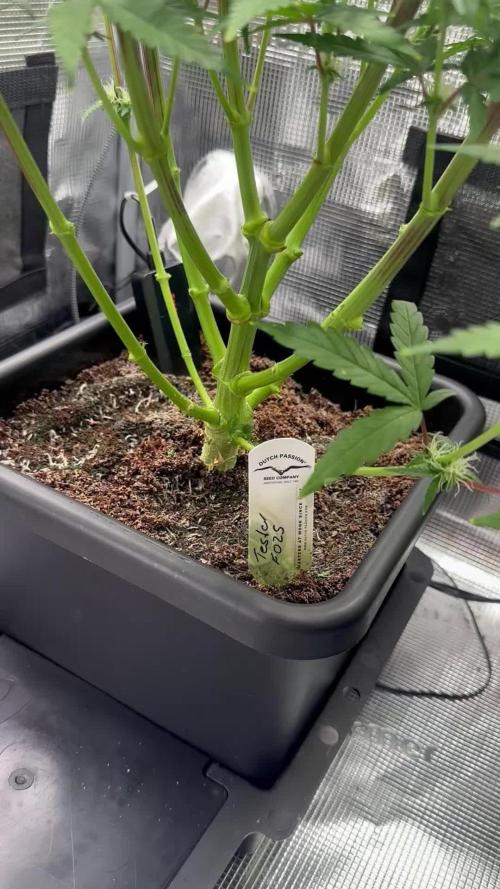
Mega Strain 🤗, danke nochmal. Wir sind jetzt an BT28 und die Blüten Bildung ist im vollen Gang und schwellen schon ganz ordentlich an. Der Stretch ist inzwischen auch zu Ende und ab nächster Woche bekommt die Lady noch Bud Candy dazu.
Likes
26
Share


@ButterfliesLittleFarm
Follow
Hello Diary.
The second week of flowering is behind us. I did a little defoliation this week, I honestly didn’t dare remove more leaves and branches, I didn’t know how they would react to it. Maybe I needed more?
The temperature is still high, sometimes rising to 29, 30 degrees, but mostly around 28. Humidity in the air is an average of about 55% but sometimes rises to 60%. The problem is frequent rains this summer which creates high humidity in the air and this affects the humidity in the box as well.
The flowers are developing nicely, and they have started to smell as well, but let the pictures speak for themselves.
The plants are big for my conditions, the 120 x 60 box size is perhaps too small for three plants (two Hulkberries and one Green Gelato), so the real jungle is in the box.
It’s already a challenge to take them out every week for a photo shoot, but I try to be as careful with them as possible.
The Hulkberry has reached a height of 113 cm which is on the verge of acceptability. If it continues another ten cm, I’ll be in trouble because the lights can’t lift more than this.
18/07/2020. - Day 30.
Defoliation. I removed the leaves at the very bottom of the plant to make it easier for me to water them, after that I watered the plants but this time I didn’t put BioBizz, I just watered them with clean water.
21/07/2020. - Day 33.
Watering. This time I gave them BioBizz, on schedule for the second week of flowering. I also added CalMag 1.5ml / L, preventively. While they don’t show they’re missing anything, I’ll keep adding CalMag.
23/07/2020. - Day 35.
Photography and height measurement.
Hulkberry Auto # 1 - Day 35. - 97cm
Hulkberry Auto # 2 - Day 35. - 113cm
That’s all for this week, see you soon.

Likes
2
Share


@patbur
Follow
The plant started stretching out a lot more as opposed to last week.
A lot more bud sights growing.
Has got a thick stem to it.
Overall really happy with it, considering the starting conditions.
Likes
9
Share


@Mr_nugs_lover_David
Follow
Another beautiful pheno of the big jeff by Gecko seeds which is the cross of: Cookies kush X Casey Jones, the plant is showing beautiful indica hybrid characteristics, it's gonna be a wonder plant for sure! Let's keep on working!! 💛💚❤️👨🌾

Likes
32
Share


@Brujha77
Follow
Starting week 9
Nothing to do, expect Trichome checking..
Still needs a few Days, but i think she will finish this week.
Day94
She's finally done 👍👍 Tomorrow morning she get chopped
Likes
13
Share

@sellem
Follow
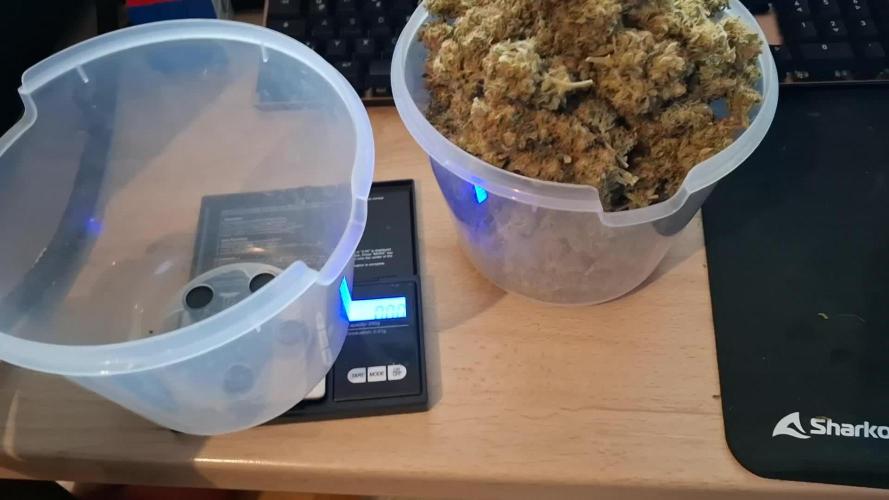
After a 7 Day dry, theyre ready for the bags. Did a final dry trim of them, was thorough but not overly. Excited on how they will smell and taste once cured!