


Likes
Comments
Share

@praven1
Follow
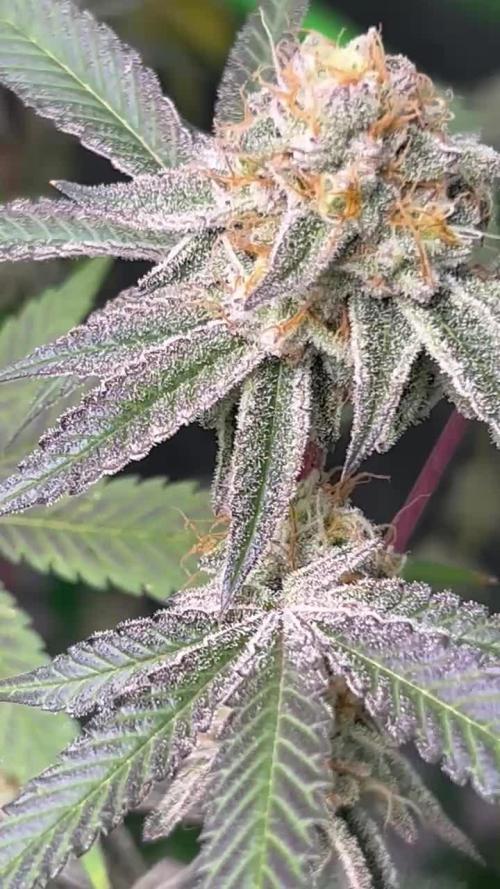
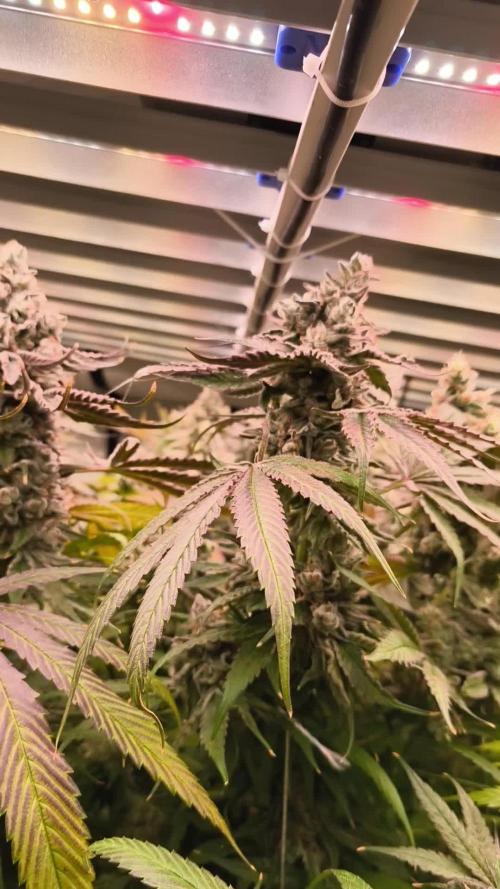
The colors👀 the smells👃it's like magic in the tent. Winding down this run. It has been very smooth so far, and I'm hoping the rest of the way goes the same.
https://www.youtube.com/@praven1


Likes
34
Share


@JUNGLE_B4RNS
Follow
Hello fellow grower
Starting directly under the Mars Hydro FC6500, seedlings are doing very well (see inputs for distance). The dimming is at maximum power. The light footprint might be a bit oversized for only 20 cups. Technically, for a commercial crop you can stick 1.2 sq. meter of seedlings without any problems.
_________________________________________________
Barney’s Farm seeds are as usual, very vigorous ! All the seeds germinated in 24h to 48h. I’m just waiting after the Vanilla Kush to come out from the soil.
_________________________________________________
Cellmax BIO Soil is perfect, you can start seedlings with it without risking to burn them.
_________________________________________________
Seedlings stage tips:
- adding a rotating fan, far enough and on first speed, blowing very gently on the seedlings, will stop them going looney and stretching a long weak stem to reach the light.
- fill up the cup with soil, give it a good watering, then plant the germinated seed in the wet soil.
_________________________________________________
24/08
Cup, Water pH 6.5, LT TB
25/08
Cup, Water pH 6.5, AG Bba K Bad Azz
26/08
Cup, Water pH 6.5, Vanilla

Likes
12
Share


@The_Good_Twin
Follow
The harvest of my dear Stella was supposed to happen on August 4th, but didn’t begin actually until August 9th. I decided to allow her to dry out a bit before beginning the harvest, but I had some other difficulties which made her dry out a whole lot before I ever even got started. You can tell how dry by looking at the pics and video. Luckily, the dryness was limited to her larger leaves.
She was already quite dry on the 9th when I started, and was more so by the 12th when I finished. Even after the advanced drying, her wet trimmed weight was still quite a bit. I’ll list the weights all together in a bit.
It took 4 days to get the whole plant trimmed, weighed, and hung up for final drying. She was hung up from August 12th till Friday, August 19th. I got busy harvesting another plant while she was hanging up, and just let her be.
On August 19th I took all of her branches down and removed the buds to get the true harvest weight of her buds alone.
Let’s get to the weight of the whole thing. The overall wet-trimmed weight of the plant was 18.329 ounces with the buds and branches combined.
I was a forgetful idiot and forgot to get the weight of the dry buds on the branches before removing the buds. So all we’re left with is the actual harvest weight of the dry buds alone.
The overall dry bud weight, or actual “true” harvest weight of the smokable bud is: 7.317 ounces. That’s a wonderful amount of freshly harvested bud to cure.
All of the buds were put into 8 quart sized jars filled roughly 3/4 full, and 1 pint sized jar, also 3/4 full.
Each jar has a hygrometer as well as 58% bóveda packs to help aid the curing process.
This is the 2nd DarkStar plant I’ve harvested, and both were very large plants. I used a scrog method the first time with a net that spread the whole plant out taking up the entire 4x4 area of the tent.
This time I wanted to let her grow more naturally. She got so large that I had to bend almost all of her taller branches over using HST methods. I had to bend 3-5 branches over more than once. By doing that, once her buds began to fatten up she got too heavy and needed to be supported just to stand upright. Toward the end she had to literally be tied up to the side of the tent.
Stella (DarkStar) was a wonder to grow, and she gave me a good amount of clones that will soon be harvested themselves.
It has been a journey with Stella, and I’m happy that the journey is now complete. Happy growing everyone!

Likes
153
Share


@DogDoctorOfficial
Follow
And it looks like they didn't mind that much going to the hairdresser as they keeps on drinking the same and evolving at the same pass. They are all becoming beautiful beast ladies and im loving them all in diferent ways , so far the mor advanced one is the somango followed by the water melon followed by the no idea what it is seed and in the end e have bruce banned, im loving t he fact that they all started same time and that they all are going to finished different, this means i will be trying me second harvest plant smoking my pervious one 😝 .
They are all drinking using the autopot system but the no idea what seed is not so im Daly giving her 2,5 liters from the autopot reservoir ,it sucks but its ok at the same time hehe eit is what it is and im not thinking on leaving anywhere, so i can easy do that every single day hehehe kind a lovit any way but dont tell anyone, its our little secret 🤫 😆💚🙏🙏🙏
As always thank you all for reading and checking out my diaries, im humbled by it all, much love to you all 💚💚💚🙏🙏🙏💚💚💚🙏
Thank you APTUSHOLLAND for having faith in my love for growing and for always being there wen my gardens need 🙏🙏🙏
Genetics :
- watermelon candy - Zamnezia Seeds https://www.zamnesia.com/
-Somango Glue - Advanced seeds https://advancedseeds.com/web/
- ?- buddah Seeds
- Bruce Banner - Fast Buds https://2fast4buds.com/
Grow tent - 4x8, but using 4x4 for this Auto Test
Ligth - LUMATEK ZEUS 465 COMPACT PRO
Food - HAPTUS HOLLAND
Filter - vanguard hydroponics Falcon Filters
Extraction - vanguard hydroponics 560 m3h
control - Trolmaster
All i grow is medicine for myself, for me and for my best friend with is me 😆 nothing to sell, so don’t even ask 😅💚💚💚
All info and full product details can be find in can find @
https://aptus-holland.com/
https://autopot.co.uk/
https://lumatek-lighting.com/
#aptus #aptusplantteck #aptusgang #aptusfamily #aptustrueplantscience #inbalancewithnature #trueplantscience #growerslove
With true love comes happiness 💚🙏 Always believe in your self and always do things expecting nothing in return and with an open heart , be a giver and the universe will give back to you in ways you could not even imagine so 💚💚💚
More info and updates @
https://growdiaries.com/grower/dogdoctor
https://instagram.com/dogdoctorofficial
https://youtube.com/channel/UCR7ta4DKLFMg2xxTMr2cpIg
💚💚💚Growers love to you all 💚💚💚


Likes
5
Share


@TheBluntBeauty
Follow
She has a Plastic Baggie over her this week to help keep her humidity up
Day 6 I added some soil to help support her Stretch
End of week thoughts 💭
Her first week of life as been great no issues and she seems happy I’m hoping to keep her that way heading into next week 💪

Likes
17
Share


@Hoodoo
Follow
2020-06-13 Going heavier on nutrients now, I went too high with my initial amount. After pH, it was a whopping EC=2200!! Too much for these ones. I had to dilute this weeks nutrition down, so I have to estimate the nutrition levels as I had to add water and pH it. I started with a whopping 7.6 mL/Liter but probably ended up with about 6.5 mL/gallonI EC=1800/ now keep calimagic constant at 3.79 mL/gallon to help buffer the solution and keep the solution stable. The additional calimagic has stopped the spread of the rust spots and new leaves are a lighter green and have stopped turning dark! Success.
2020-06-14 Thinking about doing the last topping and LST session this week and then transitioning to bloom. Thoughts on that? I have them on a 'transition feed' right now that is very nutrient dense! Started about 950 ppm for the healthier looking plant. The 2nd plant is still getting slightly less nutrients but the magnesium deficiency hasn't appeared in the newest growth.
Roots are growing crazy amounts every day! You can see that the 2nd bucket plant started making tons of roots out of the side of the bucket again. Nice to see the bounce back once given adequate nutrition. I have reduced expectations for that plant but it was definitely a lesson in how to prepare and interpret feeding schedules AND how your plant is reacting to them.
2020-06-15 Did some light defoliating today, removing a lot of the lower fan leaves and sucker branches/growth tips... Going to veg for the rest of the week and then change both over to flower.
2020-06 19 Day before nutrient change, they are growing too fast now!! ahhhh!!
2020-06-20 Day of nutrient change! Took them out of the grow tent while I swapped out the buckets.

Likes
2
Share

@TheCalyxLaboratory
Follow
Weekly Update: Dialing it back in and managing the stress! 📊
This week has been a bit of a bumpy ride, but we are back on track! 🚀
Current Setup & Metrics:
pH: 5.7 💧
EC: 1.8
PPFD: 700 💡
What happened this week?
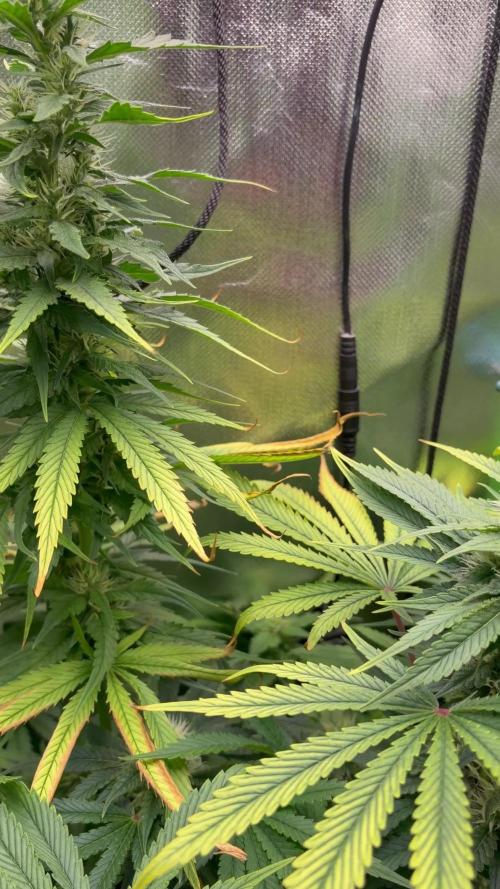
We ran into some visible stress symptoms on the leaves because my EC meter broke, which caused the nutrient strength to secretly spike up to 2.3 EC for about two days. As you can see, the girls didn't love that high-concentration shock, but we caught it, replaced the meter, and stabilized the EC right back down to 1.8. 📉
Plant Development & Bud Structure:
Despite the brief hiccup, they are pushing through the flower phase nicely, though they are showing different structures:
The first plant is forming very airy colas at the top, but looking significantly denser and tighter as you move further down the branches. 🌲
The more compact plant is developing exceptionally well overall, putting out really solid, compact, and frosty buds. ❄️
Now that the parameters are locked back in at 700 PPFD and 1.8 EC, we are ready for a smooth cruise through the rest of bloom! Let's see how they swell up. 🔥

Likes
2
Share


@Green_Peace
Follow
The plants are growing at a good rate now and drinking a litre each per day. I feed them by hand and each plant gets 2litres every other day.
Didn't do anything else this week other than install the trellis on the last day.
This plant is at the back of the timelapse video.


Likes
31
Share

@Ganjin
Follow
☀️ // Day 28 🌱
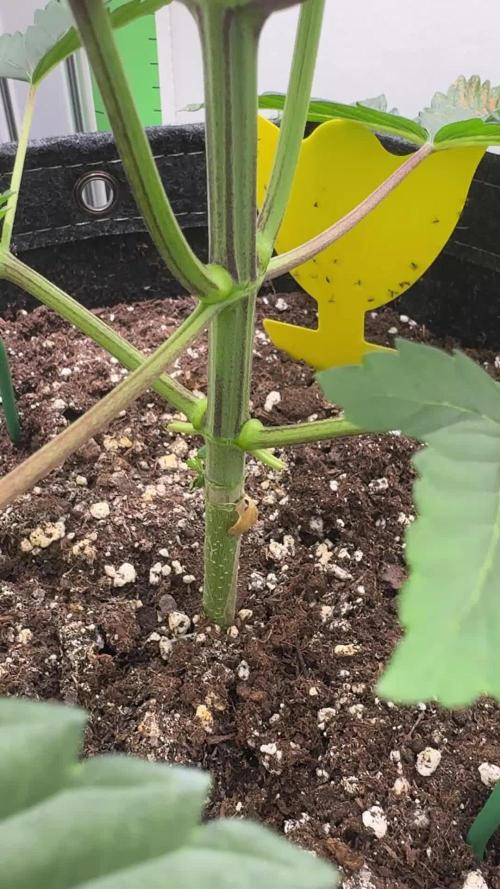
Damn, this plant made unreal progress in the last week. Kinda ridiculous, considering her rough start. I topped her last thursday, on day 24 of veg. She responded very, very well with an instant boost of the side branches. Her illness is also gone, all leafs are looking more healthy than I have ever seen in person. Now the soil seems to have stabilized itself and the BioTabs nutrients are kicking in. Beautiful to look at. Her fan leafs are also the biggest ones ever for me and with no signs of any nutrient related stress. I still removed them to boost light penetration to the side branches. This time it really broke my heart tho, because they were just the most beautiful leafs ever. Really loved the last week and I am excited again for the future of this beautiful plant.
This time, I gave her 2 more branches. So I topped one node higher and try to lollipop pretty nicely to just have 8 main branches with no more sides what so ever. Just 8 branches of big buds, that's the goal.
I watered her with another 2L on day 24, too. But she hasn't gotten anything since then because I pre-watered her on that day. The soil was not dry from the watering on day 22 but I was on vacation for 2 days. I wanted to make sure that she does not dry out. I will wait now one more day and feed her tomorrow, on day 29 with 3L. That makes a total of 5L since last weekly update.
💦 Watering: 5 L with pH = 6.5
💊 Fertilizer: Just water with epsom salt
💡 Light: 450 PPFD at 70%


Likes
Comments
Share


Likes
1
Share



Likes
22
Share


@Oggigz
Follow
Rempotage barquette a pot 20l, du grand nimp... croissance un peu lente peu etre sur arrosage les tiges etaient sombres la premoere semaine puis se sont eclaircies.
Likes
5
Share


@Reaper
Follow
next time i will veg this longer as i am very happy with the buds from top to bottom. very dense and dank. i cant explain the smell, i reccomend this strain to every pro and beginner even small plants yield very good buds and no much stretch during flower. very easy to control 🤙🏻 def one of my top 3 favorites !


