


Likes
Comments
Share


@shibbyguy
Follow
Day 50 - Decided to veg for one more week. Plants currently 70cm x 70cm wide and 33cm tall, hoping to get to 40cm at end of week.
Fixed issue with the low extration rate. Found the filter had become blocked from the humidifier. Have moved it to the opposite side of tent. Hopefully this prevents it from happening again.
Day 53 - Have been have Ph issue again due to algae. Plant hasnt been drinking much and growth seems very slow.
Day 55 - Defoliated whole plant. Roots have some slime on them. Peroxide flushed with plain water for 12hrs maintained around 150ppm. All slime appears to be gone.

Likes
24
Share


@Alpha_Green
Follow
And this is how we successfully open week 9 -
After fermenting a dose of PK compost tea at the end of last week, I poured it extensively. As always, he did them very well. They also need significantly more water again. I have now also increased the humidity a bit, because there is currently drier indoor air in the room of the cultivation area.
Let's see how long I leave my Sweet Seeds ladies. I'll decide that at short notice.
Sour Jealousy will then be able to enjoy all the space to bloom at her disposal.
Both Sweet Seeds now only get purified and aerated water and only enriched with enzymes.
It is now time to signal to both to use up their reserves. After all, their genetically pre-programmed life cycle is significantly shorter than that of sativa-dominant strains - for example, Sour Jealousy from Fast Buds.
She is only now really starting to flower, while the indica dominant strains are moving towards the glorious end.
I have also already been able to positively determine how practical and thought through to the end 2 Sanlight panels really make sense. I am not primarily concerned with more power through the lighting, but also and above all, I am concerned with the homogeneous illumination at 11 degrees inclined positioning of the solar panels. And to have the opportunity to meet the different growing conditions individually by adjusting the heights of both panels.
Of course, I will be able to strive for much higher performance in the large Homebox Ambient with CO 2 and both lamps, but area coverage is the be-all and end-all for me.
Lamps currently operate at 60% each. That's definitely enough. Because 2 x EVO 4 - 80 means to me:
Precision in the form of light - a tool that you learn to use. Everything before didn't convince and satisfy me nearly as impressively as Sanlight.
Also the advantage of being able to operate your lighting system from the outside, via Bluetooth, yes that is really very important, practical and innovative.
It makes things so much easier...
Sweet Seeds - brand new:
„Jealousy Z XL“
I can’t wait to give it a try next run…
Super noble presentation, in my opinion.
There are many reasons for an emotional attachment to a product. But one stands out in particular: the desire to design, personalize, individualize something or - in other words - the desire to own something unique and feel special as a result. Scientists have found that our buying behavior is shaped by emotions. A person does not buy a product, but an emotional feeling.
Many thanks to Sweet Seeds! 🙏
I also feel the feeling that Dark Devil gives me - as a noble high. I associate the turn with a noble, very effective and multifaceted indica dominant weed from Sweet Seeds. Creative work only works in the 1st part of the turn - haha, because then the coma phase begins with subsequent binge eating!
But even during sports I was in the vaporizer with Dark Devil and it supported me mightily during training. Maybe it depends on the activity at the time of consumption, haha
I find it very fruity in taste and smell. Very sweet terpene spectrum.
And not very top-heavy.
A wonderful body high.
Worries and fears - as if blown away…
Some here on growdiaries describe meticulously exactly how they give what, when and how much of it to the plant, etc.
I prefer to keep a diary for my passion in a different way. With passion and feeling. I feel my plants. And talk to them. They also listen to chilled music.
The Kobe beef in Japan is even massaged to classical music. ;-))
I think such information is only useful for a run to those who do it exactly the same way, under the same conditions with almost the same phenotype.
That is almost impossible. And not necessary either. I have to learn to read plants. Their signs are pointing. Become sensitive to it.
If I know why and how something happens, then I also know how to keep something like this alive. And what it takes.
And why.
So let's see what we have to do today. In any case, Lady Jealousy is being driven to the hairdresser today. Yes, we're doing beauty and wellness spa today, haha. She's so busy with branching, I'll give her a helping hand.
She has developed incredibly. And has an unusually long breath. Comparative:
She looks like a farm animal to me. In other words, what it was bred for. Very strong and healthy adult. Then bloom efficiently and productively. And that's the fascinating thing for me. The breeder creates all parameters here to perfection.
Even though I don't particularly like the marketing of Fast Buds anymore, I have to admit without envy:
"I've never experienced that before."
The phenotypes are absolute warriors, from another planet. Marketing is debatable. No problem.
But I can only marvel at these plants and their quality.
Unfortunately, too much turnover often spoils the core vision of a successful company.
…PK is on the way!
Addendum about the one, Lady Dark Devil 😈, which had to be harvested too early:
And yet:
Dark Devil gives me a deep inner satisfaction in my existence. Nothing upsets me. Nothing can disturb me, because I am one, with myself and my environment. I can only feel gratitude for that.
It gives me this broad, generous sense of inner peace.
For me, inner peace means balance, equanimity, even-mindedness, harmony, and stability.
And that's exactly what a noble special effect means to me. When a weed variety can develop medicinal qualities. When THC simply has a more complex effect on my organism, than just the usual power high.
And if, a plant that hasn't even had the opportunity to reach its full potential, can do that, it has passed all the requirements of a cannabis variation, with flying colors.
And on top of that, she seems incredibly graceful and elegantly feminine to me. It's just something very special:
She's a Sweet Seed!
Oh I see, I'm writing a real diary here... 😜
But I love that. I love grow diaries.
Look at the brave girl. She forgives me for topping, training, defoliating and in the end: that I have to kill her.
But I know then for sure, that she knows, that I really loved her.
And the fascinating homogeneity. Totally instructive.
It behaves like a photoperiod phenotype, unbelievable but true! on 14.09.2024 I moved her to the grow room with the others. So it's almost 9 weeks. I'm curious to see if she holds out. But I think so. It seems incredibly energetic and relatively relaxed to me. I'm mentally very busy with her right now. Every morning I comb through her leaf picture. Make impressions of the smallest changes.
I currently have Pk boosters or tea with her every third day, alternating. And in between only purified water with enzymes. Dark Devil and Big Devil I let slowly starve and then die of thirst. They consumed the last booster 4 days ago.
She (Sour Jealousy) currently swallows 2.5 liters per day. That's really a lot. And in the morning she wants to have something again. I think the lamps tickle out their full potential. I meticulously defoliated her and now she stands happily and despite all the exertions, like a star in the sky. My star. 🌟
Sour Jealousy is really crazy, I can say that.
And the coolest highlight will be:
Lady Jealousy will soon be able to enjoy the whole place in the sun for the "grande finale".
The smell of the two Sweet Seeds totally upsets me! I would like to bite into it.
Its killing me softly.
Very few leaves have a few dark small spots or dots at the tips of the leaves. (Sour Jealousy)
Many thanks to BerrySweetHighhat. I think the same. Will probably be calcium. She gets this from the Bio PK Booster. I keep calm and don’t panic, it’s organic. ;-))
Sour Jealousy:
Today I cleaned out small shoots again & defoliated them from below up. I think there were still too many young little shoots. Now everything should be distributed quite well. We'll see.
Tomorrow I will
probably harvest both Sweet Seeds.
Hello everybody!
Today it's Dark and Big Devil's attack. It's about time. Lady Jealousy will be allowed to use the full 0.64 sqm of cultivation area for herself from today.
Take care & bee 🐝 positive
🐝… to bee continued.


Likes
5
Share


@GermGrowFox
Follow
3. November
Alle drei Pflanzen weiterhin topfit.
Trauermücken aufgetreten. Habe das abgelaufene Päckchen nematoden für die runtz genutzt. Hoffe es bringt was
4. November
Cookies Gelato hat den harten Mainlinecut bekommen. Spitze wurde entfernt, Seitenteile wurden direkt danach abgeschnitten. Sie wird’s schon wegstecken.
Tropimango und runtz geht’s gut :)
Cookie gelato hat bereits wenige Stunden später die Blätter wieder hoch gestreckt. Stagniert.
5. November
Alles gut. Die Schnitte wurden gut verkraftet. Triebe wachsen wieder
Cookies gelato ist nun 21 Tage alt.
Tropimango ist nun 18 Tage alt.
Runtz ist nun 7 Tage Alt.
7. November
Cookies gelato wächst. Sobald die Klammern da sind wird sie runtergebunden
Tropimango hat schnitte und Lst bekommen. Topping werde ich noch abwarten.
Runtz wächst
8. November
Cookies gelato hat LST + mainlineschnitte erhalten. Wurde nicht mit gießen kombiniert da ich gestern gegossen habe.
Tropimango erneut LST.
Runtz wächst. Sieht aus als würde sie langsam ins Wachstum wechseln. Erster Triebe am einzahnblatt kommen. Dreizahnblatt erst frisch entwickelt.
9. November
Cookies gelato wurde das erste mal zusätzlich mit Sugar Royal und calmag versorgt. Hab’s davor vergessen 😅 Shit Happens.
Wurzeldünger gibt es konstant weiter.
Runtz wurde mit wurzeldünger und calmag versorgt
Tropimango hat noch sehr feuchte Erde. Keine Ahnung wieso.


Likes
80
Share


@Qlimax
Follow
All is well added some foil under plants tho,they kinda like it i think tho :)

Likes
16
Share


@Cannibalgardens
Follow
Bud production is slow and the plant has been getting hit with Nats on the leaves this last week ..she is still stinky and very sticky so I'm hoping for some decent buds for some edibles or oil ...we shall see what she does thanks for stopping by ...cheers
Likes
4
Share


@GuerillaGorilla
Follow
Sept 10th,
I visited the girls today,
So much work...reinforcing, pruning, mould checks.
In the greenhiuse things were quiet. No storm there just a crowded space with little airflow and too many buds and leaves to ripen properly.
I removed all 2nd grade branching, especially form the lower branches and mains bus.
where buds were growing jnto eachother.
No more water from now on... nothing.
Praying for a few sunny days. Ive set dates for harvest depending on mooncycle ...please ladies, hang on!
Best to all of you this fall!!

Likes
4
Share


@Mr_nugs_lover_David
Follow
She looks very healthy and strong,think she's gonna grow very good without any issues,she's being 100% organically fed by biotabs organics with bactrex,mycotrex and 2 tablets of slow release organic fertilizer by biotabs. Looks fantastic on day 14I hope to not have ant bad issues tje rest of the journey! 💚🌱🤞
Likes
7
Share


@Aleks555
Follow
We are entering the third week of growth for our FBA 2503 strain from 42Fast Buds, and everything is progressing beautifully. We've recently transplanted the plant into a 10-liter pot, giving it more room to thrive. Even though it's an autoflowering strain, we've decided to experiment with a 12/12 light cycle—12 hours of light during the day and 12 hours at night—to see how it responds.
The daytime temperature peaks at 30°C, with an average range between 27°C and 28°C, while humidity is consistently maintained at 60% to 65%. The plant has reached a height of 14-20 cm and is already showing three sets of leaves. We're preparing to start low-stress training (LST) to help guide its growth.
In addition, we've begun feeding our beauty with nutrients from Xpert Nutrients, and we’re really pleased with the results so far. The plant looks strong and vibrant, and we're excited to see how it develops over the coming weeks!
Likes
20
Share


@HisHope
Follow
11/19 Week 8
Still building, no signs of slowing down though leaves are fading.
11/20 Can anyone say rainbow sherbet? Absolutely candy here
11/22 Fed Bio-Bloom 7 ml / CaliMagic 4ml / Recharge 0.5 tsp per gallon PH 6.5
We had a oops and the room overheated for about an hour or so and may be some foxtailing due to that. Nothing for it now
Likes
28
Share


@JiggleBudz
Follow
Day 71 - Let the new week begin! Removed some fan leaves from the center of the plant today to create more air flow.
Day 72 - Good run off today of 13%. Starting to notice the buds fattening up. CalMag decreased to 0.6ml/L.
Day 73 - She looks really beautiful today. All the colas are starting to take shape.
Day 74 - All the colas are taking shape now. Humidity in my area is high again putting the tent around 58%.
Day 75 - Defoliated some of the inner fan leaves today, whilst doing so I touched some of the buds and they are smelling amazing! Fruity/Mimosa smell is already there and super sticky!
Day 76 - She's taking up less water these days. My area humidity has gone up really high but still managing around 55% in the tent. I'll be monitoring her to see how she responds to the defoliation over the last couple of days.
Day 77 - Getting really smelly now!🍊 That's the end of week 10! Pretty crazy to think! We'll be entering Week 6 of flowering tomorrow. The flowers look great and they are swelling out by the day.
Processing
Likes
7
Share


@gablmo
Follow
Another week with a lot of studing in order to understand what's going on, to then take the proper action. It hasn't been easy, most of the time I have no clue of what the plants are doing. I tried some fimming last week to help even the canopy but it didn't seem to work. Two of them are smaller than the others, I took the smaller one out of the center of the light to give the chance to the others to get more light since it wasn't growing at all due light burn, and one of them was too far from the light, so now is very stretchy. They have been growing fast, any suggestions on how to train them? I think is time to get a new light. I'm thinking about getting a HPS 600 watts, what do you think?

Likes
14
Share


@Patillac31
Follow
Made it 67 days before the chop.
•••03/21/2020 After a 6 day hang I've trimmed and started to jar cure. Had a total flower weight of 85 grams. Over all I'm pleased. Will update with a smoke report in about 3 weeks.

Likes
12
Share


@NorthernChemist
Follow
Aug 6: Harvest is about a week away I think. Some very minor aphid appearance on lower undersides of leaves suggest I can't wait too much linger to chop. Colors remains vibrant lime green and resin is thick on shaded areas with extremely fruity, floral and pineapple aromas. Tester bud selected.
Likes
1
Share


@Trinidad
Follow
7 07.25 . Day 43
She just exploded with growth over the past 2 weeks. She is so heavy she keeps falling down. She has stretched alot because she was left in a tent with 3 other plants competing for light. Today I changed out reservoir and gave her new home.
12.07.25. Day 48. Reservoir change out.
Likes
6
Share


@AutoCrazy
Follow
Week 3 of flower
Things are humming along nicely. The Red Hot Cookies (back left), Lemon Orange (back right) have really stretched out and are really throwing out bud sites. The Mimosa X Orange Punch (front right) is really starting to get into flower now. Although I flipped to 12/12 3 weeks ago she seems like she is really only in week two of flower now. She seemed to take a while to transition. But all in all I am happy. See my other diary for the small plant (Black Apple Hitchcock front left)
5.9 pH
500 ppm
65 water temp
71 tent temp
39% RH


Likes
45
Share


@Robbaus
Follow
Ciao a tutti! C'è stata un'accellerata imprevista e così mi sa che raccoglierò una settimana prima del previsto! Tra 3 o 4 giorni taglio tutto! Ho svuotato completamente i vasi e ho messo solamente acqua liscia per far sì che le radici scarichino bene tutti i nutrimenti ancora presenti. Devo registrare purtroppo un piccolo problema di muffa, dovuto sicuramente all'umidificatore (purtroppo ho dovuto tenerlo acceso per tenere bassa la temperatura) in quanto si è formata sugli 8 apicali della pianta più vicina ad esso. Ho dovuto purtroppo tagliarli e buttarli via quasi per intero, ci avrò rimesso una ventina di grammi, anche 30. Post memoria per me: l'anno prossimo a luglio non devo avere niente e iniziare il ciclo a metà agosto con le temperature più accessibili. Comunque sta andando benissimo a parte l'imprevisto, non vedo l'ora di raccogliere e fumare! Ci vediamo la prossima per l'ultima settimana 🤣🤣🍀🍀💪🏼💪🏼
Likes
2
Share

@42breeding
Follow
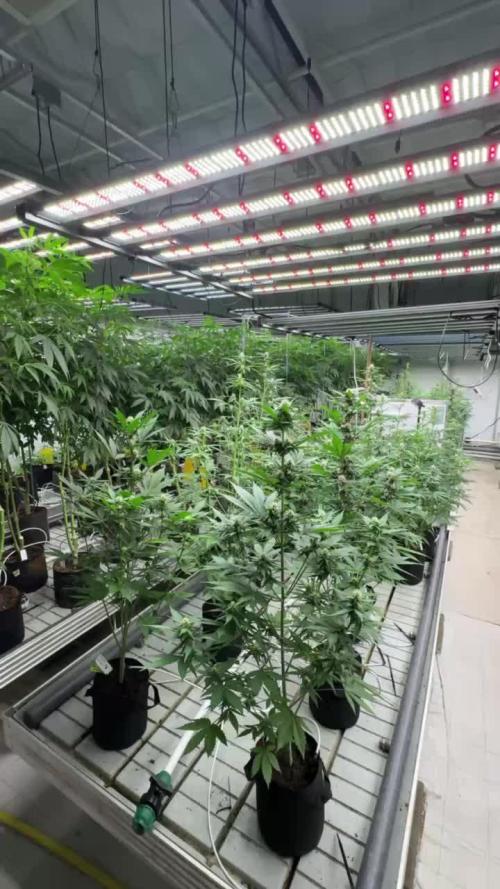
Meanwhile, our flowering cycle continues. In just one week, the plants have changed noticeably and are developing exactly as expected.


Likes
10
Share


@FrostyGardens
Follow
I really like this strain. Its hands down one of my favorites. It flowers extremely fast therefore if u are not on top of its training you will lose out on yeild. She smells amazing and tastes like dessert... My kinda lady. Will be attempting to breed her. I also took a flowered clone and have a moster crop clone of her that I just flipped... Cant wait...
Likes
8
Share


@FrostyAutoflowersTV
Follow
I harvested 2 of the 5 plants on day 71. The other 3 plants got harvested on day 80 and are in the drying process. My inline fan is running on 25% and I got a fan running on the lowest setting on the bottom of the tent, so I doesnt blow on the buds directly.
Likes
39
Share


@BigDaddyK
Follow
Testing the drill pump , remember the hose always has water in it haha 😂
The reason I use 6 inch net pots , is because it’s easy to interchange between small and big pots , some people use the 10 inch net pots , it’s too hard to start in , I want to be as quick as possible , the more lst or defoliation you do will delay flowering
The really useful boxes have a little lip that you can drill LST anchor points , you can still remove lid without any issues, only drill through lid , DO NOT DRILL WITH LID IN PLACE , I used a 5mm drill bit
Drilled the lid on the Wham Bam boxes , and dropped two purple lemonade in
have also cut the locking part of the lid off , it’s a ball ache to open otherwise 😜
RESULT - the really useful boxes are amazing , the other ones are ok , but these 35litre are the best