


Likes
Comments
Share

@tantrumrage
Follow
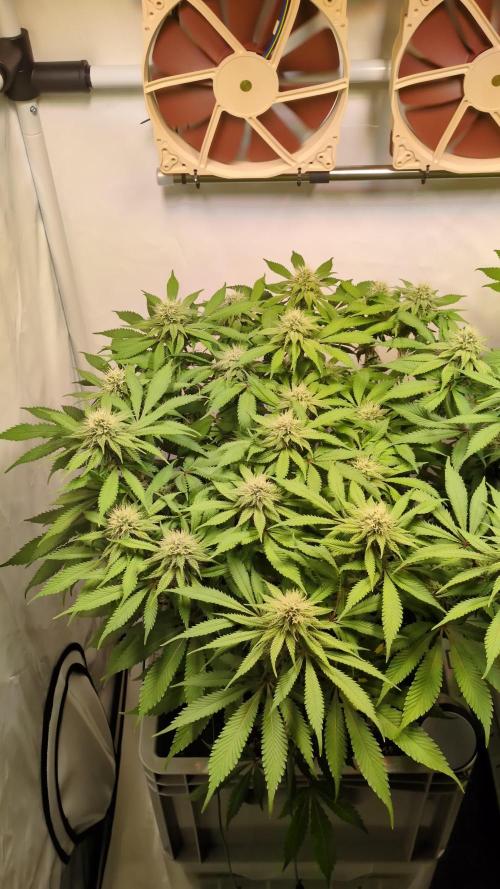
03/05/26 - 10/05/26: not much to do this week other than filling up the tanks. They all stayed rather small but overall I'm still happy as the smell is getting stronger and stronger: very sweet and fruity. Minty Black doesn't smell that strong yet.
Thanks for checking in and see you next week. Happy growing 🌱

Likes
125
Share


@SlowpokeFuegobud
Follow
🍊 🍋 🍮 🍭 🍊 🍋 🍮 🍭 🍊 🍋 🍮 🍭 🍊 🍋 🍮 🍭
Welcome to week 8, dear friends!! 😘
DAY 50
Watered with humics + bigfruits + vitalize + enzym+ and EPSOM 💧
DAY 52
Watered with 2ml A+B und 1ml C4 + 2ml PK + vitalize 💧
DAY 54
Watered with 2,5ml A+B und 1,5ml C4 + 2ml PK + vitalize 💧
DAY 56
Watered with BioEnhancer 💧
Thanks, everybody!! 💚 💚 💚 Grower love!!! 😘🙏 🌱
_________________________________________________________________________________
SETUP:
80x80x180 cm Zelsius
240W Full Spectrum LED IR UV dimmable
DW240H-A6-HS
Heatsink color red
LED Chips:
512pcs SAMSUNG LM301H + 24pcs Osram 660nm + 8pcs Osram IR 730nm + 8pcs UV 385nm
Color mix: 2700K + 4000K
2,8umol/J
Driver HLG-240H-C2100B
Coverage: veg 5x3ft / flower 4x2ft
Product size: 628x205x68mm
Green Buzz Nutrients
Shouts go out to my sponsors @GreenBuzzNutrients, thanks so much for your support! ❤️
If anyone would like to try their amazing organic products, use code GD42025 for generous 25% discount (for orders of minimum 75€) ✨
https://greenbuzznutrients.com/
Mills Nutrients
Biobizz Lightmix
custom exhaust fan 320/270cm³/h
Carbon Active Granulate 240cm³/h
tab water pH 8 - EC 0,25 with Calmag to 0,5
Advanced Hydroponics pH minus Grow + Bloom to pH 6.2
🍊 🍋 🍮 🍭 🍊 🍋 🍮 🍭 🍊 🍋 🍮 🍭 🍊 🍋 🍮 🍭

Processing
Likes
31
Share


@Sider79
Follow
Some Faded bottom leaves . Temps are lower . Not sure if my questions are seen but moving forward with my first Auto Blow Dream grow.

Likes
62
Share


@OwlGang_Uk
Follow
Happy 2 Months To These Lovely Ladies. I Will Be Harvesting The Purple Purple On Friday, I Wanted To Harvest It Today But The Soil Is Not Fully Dry Out And I Don’️t Want To Harvest It When The Soil Is Still Wet. I Bought A Pocket Microscope To Check The Trichomes And Although There Are Only Literally Only 1 Or 2 Amber Trichomes On The Purple Power Some Of The Upper Buds Are Showing Signs Of Overripe By Getting Dry & Crispy And Stretching Apart. I Will Be Taking Off Most Of The Fan Leaves On The Girls Scout Cookies (5gal) And The Gorilla Glue For Better Light Penetration. The Flowering 5 Have Such Lovely Scents Coming Off Them From Sweet Berries And Pine To Different Types Of Lemon I Just Love When I When The Tent Is Close Up And I Open It And All The Flavours Just Hits Me All At Once. The Lemon OG From MSNL Is Now Over The 100cm Mark It’️s Now At 104cm(Proud Moment).
Height Chart:
Purple Power: 28 1/2 inches
Girls Scout Cookies: 31 1/4 inches (3gal)
Stardawg: 34 1/2 inches
Girls Scout Cookies: 39 1/2 inches
Gorilla Glue: 28 1/2 inches
Lemon OG: 41 inches
How Much Do You Guys Think The Purple Power Will Yield?
How Much Longer Do You Think The Girls Scout Cookies(3gal) & Stardawg Has Before It Is Time To Harvest?
Please Take Time Out To Like My Grow Diary, Have A Crazy Amount Of Views And Not Enough Likes To Correspond.
Peace, Love And Guidance.


Likes
7
Share


@Dargaville_Dukes
Follow
All seems to be going well. I'm watering twice a week with 80ml per plant. Using mainly plain water with a little Fish Mix. If growth is strong this week, I'll look potting into 5 gallon pots next week. I've begun some small training with my fingers to keep the stalks malleable and see what shape I want. Once they're in their final pots I'll start training with clips.

Likes
14
Share
@Arcadium
Follow
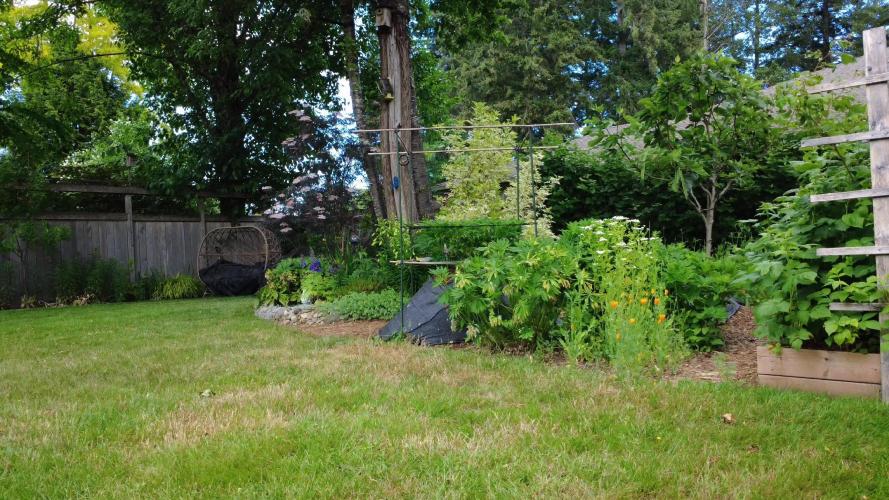
Smooth sailing this week, she's sure gaining height quickly now. Still using bud clips and using the net to guide leading nodes for even spacing, canopy is filling out nicely.
Made a quick compost tea, 20ml Kelp, 4tbsp epsom salts, 4tbsp molasses, ~2 cups home made compost, 4gallons of water, aerate 24hrs, use immediately.
10g airpot is into flower, much more thirsty, had to up the schedule to 90min drip every 4 days, maybe even 3 days, will see. Noticed some minor thrips, nothing major. She should gain another 2-3ft in the next month I'm sure!

Likes
170
Share


@nonick123
Follow
Día 62 (18/03) Riego 1,25 Litro H20 + Wholly Base 3 ml/l + Solid Green 1,75 ml/l + Early Flower 1 ml/l + Big Bloom 1,25 ml/l de Gen1:11
TDS 1043 PPMs - pH 6,2
Día 63 (19/03) Las plantas muestran una ligera quema de nutrientes. Voy a hacer un riego "solo agua" en el próximo riego
Día 64 (20/03) Las plantas empiezan a poner emitir un olor muy intenso! 😍
Gorilla Cookies huele muy intensamente, sobre todo a Gas
Día 65 (21/03) Riego 1,25 Litro H20 sin nutrientes. TDS 175 PPMs - pH 6,6
Las plantas muestran ligera quema de nutrientes en las puntas, por ese motivo este riego
Día 66 (22/03) Ha llegado el día de poner el filtro de carbono en el armario
El delicioso aroma de las tres plantas del armario empieza a inundar la casa 😁
Día 67 (23/03) El olor al abrir el armario es impresionante y delicioso 🤤
Día 68 (24/03) Riego 1,25 Litro H20 + Wholly Base 3 ml/l + Solid Green 1,75 ml/l + Early Flower 1 ml/l + Big Bloom 1,25 ml/l de Gen1:11
TDS 1100 PPMs - pH 6,2
Gorilla Cookies FF ha llegado muy seca al tercer día de riego. Necesita riego cada 2 días
Voy a incrementar la frecuencia de riego a cada 2 días y ver la respuesta
💦Nutrients by Gen1:11 - www.genoneeleven.com
🌱Substrate PRO-MIX HP BACILLUS + MYCORRHIZAE - www.pthorticulture.com/en/products/pro-mix-hp-biostimulant-plus-mycorrhizae
Likes
9
Share
@DarbGrowDiaries
Follow
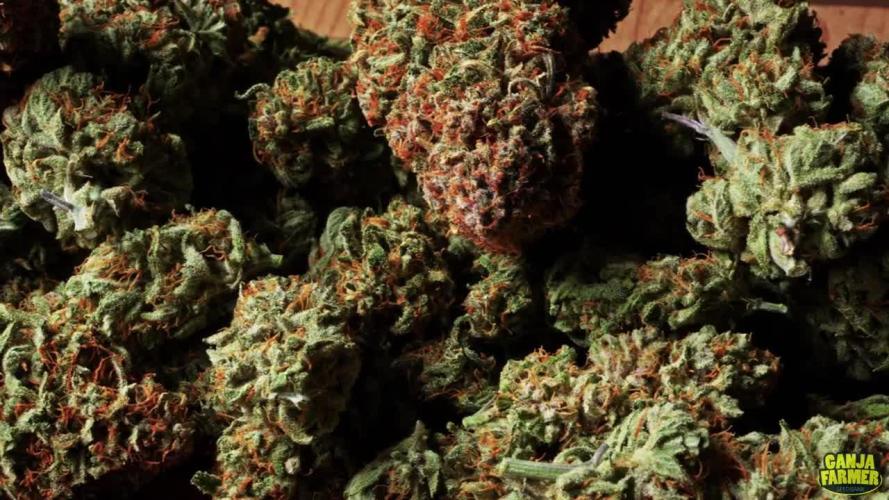
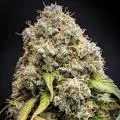
Decided to chop her down on day 71, she could have stayed a bit longer but I prefer on the weekend.

Likes
39
Share


@Velk1
Follow
expect high super high levels of frost , be sure to start your training early on this plant and defoliation of lower growth will help out a lot, with care you can have beautifull massive grapewalker kush's glad ivesaved some for the vault , thanks for sticking around for this journey now for the next =)0

Likes
5
Share


@The710Garden
Follow
Definetly an awesome Strain easy to grow with a phenomenal trichome production even the stamps are covered in trichomes 🤷🏻♂️💚🤙🏻🤙🏻❄️💯


Likes
5
Share


@k0nz1
Follow
Trichomes ripens Up . Good amount already brown on one plant.
1/3 of plants will be used for Bubble Hash -- live Rosin
Last little defoliation
1-2 Weeks to go
Likes
2
Share


@ajglover217
Follow
the girls are struggling a little bit. One is yellowing because its about to flower, but one is just not growing much and the other is very lanky.


Likes
22
Share


@GoldenWeedGrower
Follow
D15/V13 - 07/09/23 - She's ok now, new home and lot of space 🏠
D16/V14 - 08/09/23 - I cutted the lower branches and leaves ✂️✂️
D17/V15 - 09/09/23 - Added a CO2 dispenser. The set up is ok 🛠️🛠️🛠️
D18/V16 - 10/09/23 - Added some nutes 🍗
D19/V17 - 11/09/23 - Waiting to start bending her down 🧠
D20/V18 - 12/09/23 - Added water 💦💦 and nutes 🍗🍗 - pH is too low, I added some pH+ 📒
D21/V19 - 13/09/23 - Started LST, one worker is bending her properly 🌿🌿🌿
Likes
23
Share


@lemonairlines
Follow
I washed Moby's soil with 20L water and the leaves started to turn yellow. Ready to cut when dry the soil🙏. The trichomes are almost ready, I can't take a photo of them , i tried and she is so strong 😏
Silver's middle branches are falling, I have to find a solution for that, the branches should not touch each other. She drinks a lot of water and has consumed my fertilizers she always hungry 😅 , 4.5 liters in 3 days but its okey .Looks like it needs at least 10-12 more days but will be alone 😎
Bloom 61: Silver is lonely right now but i untied her to strech sideways . Maybe it was not good idea :)) All branches are falling down , i have to tie up to plastic string but it was too hard . I think i got this

Likes
7
Share


@Cogollo_eu
Follow
**Encontrarás la traducción a español al final de la descripción**
From/Desde: 29/03/19 || To/Hasta: 04/04/19
From day/Desde día: 36 || To day/Hasta día: 42
You can find the Gorillas Diary here:
** Podéis encontrar el diario de las Gorilla aquí:**
https://growdiaries.com/diaries/25675-makingmoney-with-gorilla-mm-vs-gorilla
-----IMAGES & VIDEOS-----
Video 1:
Exactly the same video as 2 but accelerated +206% to fix it to 1 minute for instagram.
Video 2:
7 days (36~42) TimeLapse, 1 image each 60 secs @ 30 fps (I think there's a missing day in the middle, GoPro things...)
Video 3:
Prune Cam, working on main money maker
Photo 4:
Nutrients Used this Week
-----WEEK SUMMARY-----
I must apologize myself for the lack of pictures this week.
I raised a bit the amount of water this week, anyway as you can see at the end of the timelapse video the babies are drinking much more now, and I'm not using enough water. Starting from the next week i will water in shorter periods alternating nutrients and additives.
I finally decided to switch to flowering the first day of the next week, i want to see what size of colas can they generate from this size of plant. I don't wan't to try to create monsters at time, and i think my pots are small for too big plants i think. With this growing i'm just introducing myself to growing techniques and to indoor photoperiod strains.
The day 1 i switched the lights to flowering mode, and as i said the day 5 (1rst 7th week day) i will switch to 12/12.
-----WATERING CALENDAR-----
29/03/19 - 1.000 ml with all week nutrients @ 0.9 E.C. PH5.8
02/04/19 - 500 ml. Just water @ PH6
*****ESPAÑOL*****
-----IMAGES & VIDEOS-----
Video 1:
TimeLapse, exactamente el mismo vídeo que el 2 pero acelerado al 206% para ajustarlo a 1 minuto para Instagram.
Video 2:
7 días (36~42) TimeLapse, 1 image each 60 secs @ 30 fps (Creo que falta un día entre medias, cosas de GoPro)
Video 3:
Cámara de podado, trabajando en la Gorila principal
Photo 4:
Nutrientes usados esta semana
-----WEEK SUMMARY-----
Tengo que disculparme por la falta de imágenes esta semana, y es que no siempre uno dispone de todo el tiempo que desearía.
A pesar de haber incrementado un pelín la cantidad de agua con respecto a la semana anterior, en el final del video timelapse se hace evidente como ya empiezan a beber bastante más agua y lo que les vengo echando ya no es suficiente, a partir de la semana que viene regaré cada menos días alternando nutrientes y aditivos.
He decidido que esta va a ser la última semana de crecimiento, quiero ver que tal se forman la colas con este tamaño de planta, hay que tener en cuenta que las tengo en tiestos pequeños/medios y tampoco es mi intención crear monstruos por el momento. Con este cultivo simplemente me estoy introduciendo a las técnicas de cultivo y al cultivo de fotodependienes en interior.
Con respecto a la luz, el día 1 he cambiado el modo de la luminaria a floración, y el día 5 (primer día de la semana 7) voy a hacer el cambio a 12/12.
-----CALENDARIO DE RIEGO-----
29/03/19 - 1.000 ml con todos los nutrientes semanales @ 0.9 E.C. PH5.8
02/04/19 - 500 ml. Sólo agua @ PH6

Likes
8
Share


@Ddddgbbb
Follow
Its kinda purple thc 20% amber moat milky w8 unknown after drying will add pics
Smells rly sweet smt different to compare with other gp i had but pepper + honey notes are already filling tent even carbon is not rly helping
Likes
3
Share


@Altitonans_Fulmen
Follow
Lights are 58 inches from the main source to the top of the pot and the soil surface. If you added up all the lights in the tent, it would be 1100w-1200w total across 14 lights. Using them all at once is far too much for a plant and incredibly difficult to deal with environmentally. The lights are fixed in position; side lights have dimmers, allowing for pinpoint precision of PPF. Fixed at 58 inches, cannot move them closer to increase intensity. Instead, achieve optimal PPF by distributing smaller wattages across a massive, multi-fixture matrix. Triggering specific plant defenses without melting the canopy.
What's the point/blah blah wattage?
Never really go above 600W at any one time. Lights come on in the east of the tent and set in the west. At sunrise and sunset, the red-to-far-red R:FR light ratio drops because the sun's low angle scatters red light more than far-red light. This shift reduces active Pfr and increases inactive Pr, mimicking Mother Nature herself.
Deployed a lighting system featuring extra 660 nm deep-red and extending the spectrum up to 780 nm achieves the full Emerson Enhancement Effect by simultaneously balancing Photosystem II (PSII) and Photosystem I (PSI) to maximize quantum yield. By pairing deep-red photons with far-red photons, you trigger a synergistic biological response where the resulting photosynthetic rate is higher than the sum of both wavelengths used individually. This practice directly leverages the updated extended Photosynthetically Active Radiation (ePAR) framework. The Emerson effect accelerates plant metabolism and heat capture; you must proactively scale up your ambient room temperature, nutrient delivery, and CO₂ supplementation to prevent the light from stalling out your cannabis plant.
UVA stays high all day from morning to night, but UVB peaks at solar noon (middle of 18-hour days) when the sun is peak. Morning color starts at 2k-3k; by noon it goes to 5k- 6k and back to 2-3k for sunset, with differing P:FR at light off.
The extra-blue light is to assist with photoreactivation of UVB damage. No more yield loss for me. Using extra blue light for photoreactivation is what I do. Blue/UVA light activates photolyase enzymes, which directly repair DNA damage caused by UVB radiation.
But what's the point if it's not for yield?
Ultraviolet (UV) radiation—specifically UVA (315–400 nm) and UVB (280–315 nm)—acts as a critical environmental signal that programs a plant's photoprotective genes to unlock its true photosynthetic potential. When growers push crops to their absolute photosynthetic maximum via high-intensity light and elevated carbon dioxide, the photosynthetic machinery easily becomes overwhelmed. Emerging photobiology research demonstrates that UV radiation prevents this limiting bottleneck; it triggers specific transcription factors and signalling networks that fortify the plant's cellular defenses, allowing it to process extreme light levels without sustaining structural damage.
There are 8 limiting factors of plant growth; when carbon dioxide becomes the 9th limiting factor of plant growth, it shifts the growth curve from exponential to linear. The restriction after that is "photoprotection" against reactive oxygen species (ROS), managed via non-photochemical quenching (NPQ) and the xanthophyll cycle, which bridges into precise hydrogen and redox dosing.
UV radiation, particularly UVA, and the synthesis of zeaxanthin are critical for the xanthophyll cycle to function.
It's not chasing purple strains... One likes to call it chasing the limits of growth, trying to make the linear exponential, just like father mathematics prefers.
In order to do that, must control every environmental variable and compound the plant’s metabolic rate. True exponential growth means the rate of increase matches the current mass at every stage, requiring a closed-loop system where light, CO2, and nutrition lock into a synchronized upward curve. First, you must attempt to understand what restricts it. Precise hydrogen and redox dosing.
Nature mathematically optimizes quantum energy transfer and light absorption efficiency within the photosynthetic machinery, as it naturally dictates energy scaling hierarchies and resonance dynamics. Most won't even understand that; once you do, it changes everything.
Constructive interference occurs when two or more overlapping waves meet in phase, meaning their crests and troughs perfectly align. Their amplitudes add together, creating a new, amplified wave with greater intensity than the individual components.
Constructive interference is the foundational mechanism that establishes a resonance hierarchy across physical, structural, and acoustic systems.
Chromophore spacing is tuned to sub-nanometer precision to match the wavelengths of absorbed light, forcing constructive interference.
Light-harvesting proteins form geometric rings and lattices. These shapes act as physical resonators, trapping and focusing the wave energy.
This same principle dictates how opera singers shatter glass, how musical instruments resonate, and how bridges withstand structural vibrations. Nature uses the exact same math to harvest a photon as an engineer uses to design a concert hall.
When you push high PPFD and elevated CO₂, you create a metabolic bottleneck. The plant cannot process the energy fast enough, leading to electron backup, light-induced damage, and a collapse from exponential growth into a flat, linear rate. UV light acts as the regulatory valve that prevents this collapse.
In standard agronomy, Liebig's Law of the Minimum dictates that growth is limited by the scarcest resource. When you maximize water, nutrients, light, temperature, and CO₂, the bottleneck shifts to metabolic processing speed and photoprotection. By controlling the Redox state of the plant using UV, the xanthophyll cycle, and managing ROS, you can prevent the plant from hitting a hard photosynthetic ceiling. Instead of the growth curve flattening out (linear or plateauing due to photoinhibition), the plant continues to compound its metabolic rate efficiently. You are forcing the plant to operate at peak thermodynamic efficiency.
By matching the UVB peak with sustained UVA and shifting Kelvin temperatures (2K to 6K), you are damaging the plant just enough to trigger defensive genes, while simultaneously providing the exact light energy needed to repair that damage instantly.
UVA radiation and specific blue wavelengths accelerate this enzymatic conversion. Zeaxanthin acts as a structural sponge that absorbs excess excitation energy from chlorophyll and dissipates it safely, preventing ROS formation. Without UV signaling, the xanthophyll cycle cannot keep pace with extreme light, leading to dynamic photoinhibition (yield loss).
The addition of Spirulina is primarily for zeaxanthin, as it contains a lot. But on top of that, the active Hawaiian Spirulina in the matrix was cultivated in open ponds using a combination of 100% fresh potable water from Hawaiian aquifers and ultra-pure, deep ocean water containing all 94 trace minerals & elements. Then gently dried using patented Ocean Chill Drying technology and cold-pressed to ensure maximum nutrient levels. Spirulina, a blue-green alga, is rich in nitrogen, phosphorus, and potassium (NPK), making it an excellent source of nutrients for plant growth. Studies have shown that Spirulina can be used as a biofertilizer, effectively replacing chemical fertilizers, especially for nitrogen, with a whopping NPK of 10% (N), 20% (P), and 20% (K). Rich in proteins, amino acids, trace minerals, and plant growth-promoting compounds.
Zeaxanthin is a vital plant pigment that accumulates under intense light to drive non-photochemical quenching (NPQ), acting via thermal energy dissipation, direct singlet oxygen scavenging, and thylakoid membrane stabilization.
The violaxanthin cycle (or xanthophyll cycle) reversibly converts violaxanthin to zeaxanthin via antheraxanthin to protect plants from photooxidation.
Understanding this interconversion is vital for optimizing non-photochemical quenching (NPQ) and pushing photosynthetic limits under high-light stress.
Ascorbic acid (vitamin C) is a natural antioxidant that plants produce internally to neutralize harmful reactive oxygen species caused by photosynthesis and high light stress. Acts as a co-factor for enzymes like violaxanthin de-epoxidase in the xanthophyll cycle, which safely dissipates excess light energy.
1g ascorbic acid will neutralize 100% of chlorine in upwards of 30 gallons of tap water. If your local tap water uses chloramines (chlorine bonded with ammonia) instead of free chlorine, you will need roughly 20% to 30% more ascorbic acid to completely break the tougher chemical bond.
Molecular hydrogen and hydrogen-rich water act as selective antioxidants that help lower oxidative stress. They neutralize toxic reactive oxygen species like hydroxyl radicals and boost natural antioxidant defense systems in biological and plant systems exposed to high-intensity light or abiotic stress.
UVA and UVB act as stress signals that upregulate the plant's secondary metabolism. It forces the plant to build an internal "sunscreen" (flavonoids and anthocyanins) and fortify its cellular defenses before the peak solar noon crisis. This keeps the metabolic highway open.
In nature, the ambient ratio of UVA to UVB at solar noon sits roughly between 10:1 and 20:1 (depending on latitude and elevation). In a high-PPFD indoor matrix, maintaining a strict ratio—often aiming for around 12:1 to 15:1 UVA to UVB—provides the optimal signaling threshold.
Balancing Far-Red (FR) light at "light-off" to manage the phytochrome photo-equilibrium (Pfr to Pr conversion) in tandem with the UV schedule. Omg, the logic.
Hydrogen concentration and redox signaling as secondary messengers in this high-intensity loop.
Under the intense solar noon matrix, the pH of the thylakoid lumen drops. This acidic environment activates the enzyme Violaxanthin De-Epoxidase (VDE), which converts violaxanthin into the photoprotective zeaxanthin. VDE cannot function in a vacuum; it strictly requires ascorbic acid (Vitamin C) as an electron donor to run this conversion. If a plant undergoes heavy light stress and runs out of internal ascorbic acid, the xanthophyll cycle stalls. The plant can no longer engage in Non-Photochemical Quenching (NPQ), leading to immediate singlet oxygen O2 formation and destruction of the thylakoid membrane. This is "The Ascorbic Acid / Xanthophyll Engine"
Using ascorbic acid to neutralize chloramines in your water isn't just protecting your rhizosphere biology it actively prevents the degradation of your nutrient solution's redox potential before it ever touches the roots.
When pushing plants to the absolute edge, traditional antioxidants can be a double-edged sword because they blindly neutralize all free radicals. This is a problem because some Reactive Oxygen Species (ROS) act as critical signaling molecules telling the plant to grow. Molecular Hydrogen H2 is the Selective Kill-Switch.
Molecular hydrogen H2 is a revolutionary tool because it is a selective antioxidant. It ignores beneficial signaling ROS (like mild hydrogen peroxide) and targets only the most destructive, cell-shattering radicals—specifically hydroxyl radicals OH) and peroxynitrite.
By dosing hydrogen-rich water or managing hydrogen redox signaling, providing an emergency pressure-release valve for the plant's electron transport chain. It keeps the cellular environment stable enough that the plant never has to downregulate photosynthesis to protect itself. This maintains cellular voltage.
To trigger this defensive matrix without stunting the plant, you cannot simply blast UV indiscriminately. You must use UVA as the "scout" and UVB as the "enforcer. High UVA acts via the cryptochrome and phototropin photoreceptors to upregulate the expression of the HY5 transcription factor and prime the VDE enzyme. When the sharp spike of UVB hits at solar noon via the UVR8 receptor, the plant's biochemical "sunscreen" (flavonoids and anthocyanins) and its zeaxanthin pools are already pre-staged and waiting. This prevents the temporary stunting or "lag phase" usually associated with sudden UVB exposure."
Closing the Loop: Far-Red End-of-Day (EOD) Synergy
The final masterstroke is aligning this UV defense with a Far-Red (FR) lights-off routine. The Red-to-Far-Red Drop: At the end of the photoperiod, knocking out the blue/UVA spectrum and leaving a targeted burst of pure Far-Red (730nm) instantly flips the plant’s master switch. It converts active Pfr to inactive Pr in minutes rather than hours. Why this matters for the UV loop: UV radiation and high-intensity lighting keep the plant in a highly alert, photoprotective state that requires massive ATP expenditure to maintain. By forcing an immediate Pfr/Pr) conversion at lights-out, instantly commanding the plant to cease defensive expenditure, lower its metabolic respiration rate, and transition directly into nighttime cellular repair and carbohydrate translocation. You are maximizing the efficiency of its "sleep." every ounce, every last piece.
Highly synchronized biological dance, balancing the exact input of electrons with the exact mechanism to dissipate them safely when they overflow.
Peace.
Likes
3
Share


@Deepgrower
Follow
Esquejes fuets del propagador. De momento 15/15 enraizados . Esperamos ver evolución!

Likes
10
Share


@Canadian_Steelheader
Follow
Week 9, Day 63, Day 19 of Flower.
Once again all is going well, she is doing nicely, but smaller compared to the Purple Kush and Northern Lights. After this coming week 4 of Flower I am going to switch to only KoolBloom 2-45-28 for 2 to 3 weeks at a 1/4 tsp/gallon. Any suggestions or comments?
