


Likes
Comments
Share

@MrIssa3x3
Follow
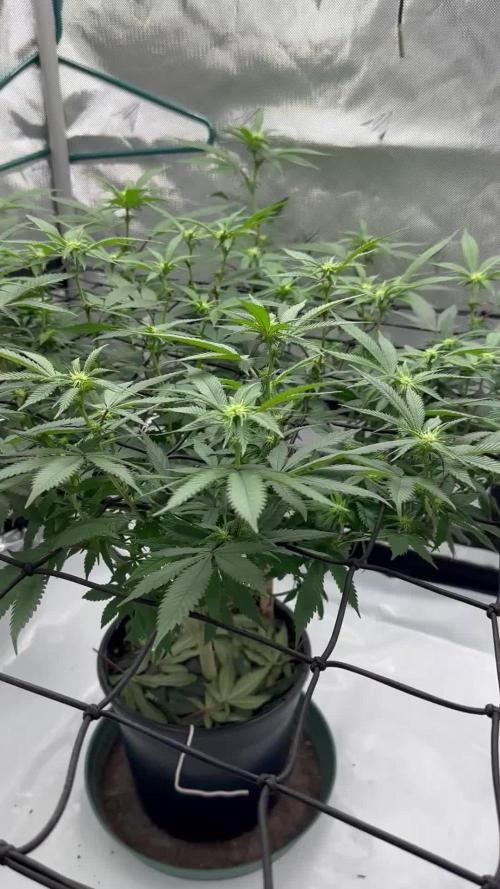
She looking healthy. Node spacing is just how I like it. No complaints at all. Doing the bigger strip next week
Processing
Likes
6
Share


@Mr_nugs_lover_David
Follow
Looks like she's not gonna have any issue so far,everything goes smoothly,let's see how she develops day by day,Hope you like my work guys! I work with passion and dedication everyday,I love my cannabis and I love to grow this amazing plant!.

Processing
Likes
8
Share


@zombikush81
Follow
beginning of the second week of flowering, the two girls are swelling a lot, the branches are growing strong ... I hope to put the other two girls in bloom soon, while they continue to grow

Likes
7
Share


@HookahCli
Follow
d33
Hoy subo fotos unos días antes de esta semana, mejor, tendremos más fotos.
Hoy me he puesto a revisar un poco las plantas y me he dado cuenta de que las Lemon Krystal son hermafroditas, la que estaba en la parte de dentro, solo tiene unos pocos sacos de polen que todavía no están maduros, se los he arrancado y cortado 2 ramas que tenían mala pinta con eso, el resto de ramas parece estar bastante bien y son flores macho, la Lemon Krystal que esta mas cerca de la puerta del armario, esta bastante mal y la tendré que desechar ya que no quiero que polinice al resto de plantas.
También una Kandy Kush, la de la derecha, le he quitado 2 flores macho, no parecía tener más, unas flores espontáneas, pero semillas a granel a veces pueden pasar estas cosas, no es lo normal, pero parece que la cepa de Lemon Krystal esta un poco jodida... Para añadir, la LK que parece que podremos sacar adelante(pero bajo supervisión) tiene una rama que tiene 4 cogollos en vez de 2, mola, pero si no se pone a sacar flores macho, la podremos continuar haciendo seguimiento.
Tenemos un cogollo de la Kandy Kush(planta del centro) que es doble.
Puede ser que tengamos algo polinizado en el Indoor, pero pues es algo que ha pasado, espero no tener muchas semillas mermara la calidad...
d35
Unas fotitos rapidas...
Parece que estan progresando las deficiencias, a final de semana añadiremos un poco m'as de abono a ver como responde
Likes
3
Share


@Passionatos
Follow
Screwing my homemade rdwc together for a quick leak test . After the roots came out the rockwool cubes I transplanted the plants into the rdwc system.

Likes
8
Share


@Froggman
Follow
The ICE is almost done; the NL doesn’t even seem close. Interesting since ICE sprouted a day later than the NL.
Likes
28
Share


@PrairieFrostGrow
Follow
*
************** Week 6 - May 16 to 22, 2020 - Days 36 to 42 from germination ****************
*
Calling this week a flower week but it is certainly more of transition week.
Been battling a busy life along with pH issues this grow. Starting to get both under control😃 Not sure what is up with the pH but running through some 5.5pH feeds to help keep it in mid to low 6 range. She started to feed more this week, her pot drying out quicker. Wanting to get the pH in line as I want to be giving her 6.1 feeds right now.
This girl has stayed in the fabric pot while two other girls were transplanted to plastic pots to help with the pH. I suspect the issue is around these fabric pots?? I have cut two large slits in the bottom of the pot to let the excess moisture run out easily and not allow it to sit in the bottom. It felt like there was some slowness in grow at the middle of the week so reviewed the fresh air and ensure circulation is flowing properly.
She is really wide in structure and slower growing vertically. By the end of the week she was looking wonderful for the end of flower. Her size is perfect and will be starting a stretch soon. She has been getting silica so its time to get her branches pulled out while they still bend easily. LST was done in the middle of the week.
Started the introduction of Rezin and Terpinator now to her feed.
Little more detail.......
May 16/20 - Day 36
- 2L feed - Velokelp, Rezin @ 2ml, Sensyzime, Liquid Weight @ 1ml, Massive @ 3ml, Dual Fuel @ 1ml
- 1000ppm and 4.5pH.
- She took all the feed today without runoff. She is getting hungry
- she is taking her time perking up.
- funny,,,,,,she looks like LST has been done to her but its just her growth
May 17/20 - Day 37
- 2L feed - Piranha, Voodoo, Dual Fuel @ 1.5ml Rezin, L. Weight, CalMag @ 1ml Massive @ 2.5ml
- 1050ppm and 5.5 pH going in.
- She seems to be forming a good root ball......it takes over two lites to get runoff now.
- still working on her buds....pistols are there.
- Pulled a couple of the large fan leaves at second node from the top....blocking too much light now.
May 18/20 - Day 38
- 3L feed - Piranha, Voodoo, Dual Fuel, Rezin, L. Weight, Vitathrive @ 1.5ml Massive @ 3ml
- 850ppm and 5.7pH
- run off numbers: 490ppm and 6.1pH ———- perfect!!
- LST done today and side branches pulled down.
May 19/20 - Day 39
- Dry out day
- standing up today and reacted well to stripping and training yesterday
May 20/20 - Day 40
- 2L feed - CalMag, Sensyzime, Rhino @ 1.5ml Dual Fuel @ 1ml = 650ppm and pH 6.1
- Pots were light today when lifted so she is eating well, also the slit in the bottom of the pot helps to dry out faster
Many 21/20 - Day 41
- 1.5L feed - Rezin and Terpinator @ 1.5ml = 160ppm and 5.7pH
- she is doing good, just not going crazy....hmmmmm
- increased fan speed to ensure good circulation
May 22/20 - Day 42
- dry out day
- she is trying to set her buds but they still are not quite there
- She’s a wide girl.....LST working
- She darker but not a big concern.
So we are at the end of week 6. I sure don’t see her being done in two weeks......suspect will be looking at 70 day range at least.
Likes
17
Share


@CanadianFillmore
Follow
Thanks for stopping by growfessors, week 4 begins. Not much to report other than I'm happy with the bud development.

Likes
52
Share


@Roberts
Follow
FBT2403 has appeared to taken to the stronger solution. It started to effect her, but she seems to bounced right out of the issue. Hopefully it stays this way, and she does well. Nothing else to report at the moment. Thank you Fast Buds, Agrogardens, and Medic Grow. 🤜🏻🤛🏻🌱🌱🌱
Thank you grow diaries community for the 👇likes👇, follows, comments, and subscriptions on my YouTube channel👇. ❄️🌱🍻
Happy Growing 🌱🌱🌱
https://youtube.com/channel/UCAhN7yRzWLpcaRHhMIQ7X4g
If anyone needs to purchase fastbuds here is a link for my affiliate program
https://myfastbuds.com/?a_aid=60910eaff2419

Likes
42
Share


@1Right_Angle
Follow
Sept 23rd
- could be the last week for Thai 1, checking on Thai 2, tomorrow morning
28th
- THAI #1 has been harvested, trichome shots showed that web are there, and THAI #2 probably gets Chopped today as well. Pictures being finished tomorrow morning, then out to see #2
29th
- Thai #1 weighs 4.6lbs in a single piece and that is how she hangs for a week
- Thai #2 was chopped 15:00 will be hanging shortly

Likes
42
Share


@MadeInGermany
Follow
Info:
Unfortunately, I had to find out that my account is used for fake pages in social media.
I am only active here on growdiaries.
I am not on facebook instagram twitter etc All accounts except this one are fake.
Hi everyone :-) .
It develops really strong and beautiful from week to week :-).
In the next 10 - 14 days I will put them in the flower chamber :-).
Until then, I will train you with topping for the last time today 👍.
Otherwise the tent was cleaned and everything checked 👍.
Have fun and stay healthy 🙏🏻
You can buy This Strain at :
www.Zamnesia.com
☝️🏼☝️🏼☝️🏼☝️🏼☝️🏼☝️🏼
Strain
Gelato clone from mother (Zamnesia )
☝️
Genetics: Wedding Cake x Gelato x Gelato 33
Vega lamp:
2 x Todogrow Led
Quantum Board 100 W
💡
Bloom Lamp :
2 x Todogrow Led
Cxb 3590 COB 3500 K 205W
💡💡☝️🏼
Soil :
Canna Coco Professional +
☝️🏼
Fertilizer:
Green House Powder Feeding
☝️🏼🌱
Water:
Osmosis water mixed with normal water (24 hours stale that the chlorine evaporates) to 0.2 EC. Add Cal / Mag to 0.4 Ec Ph with Organic Ph - to 5.5 - 5.8 .
Like
0

Likes
2
Share

@The_Doctor_Green
Follow
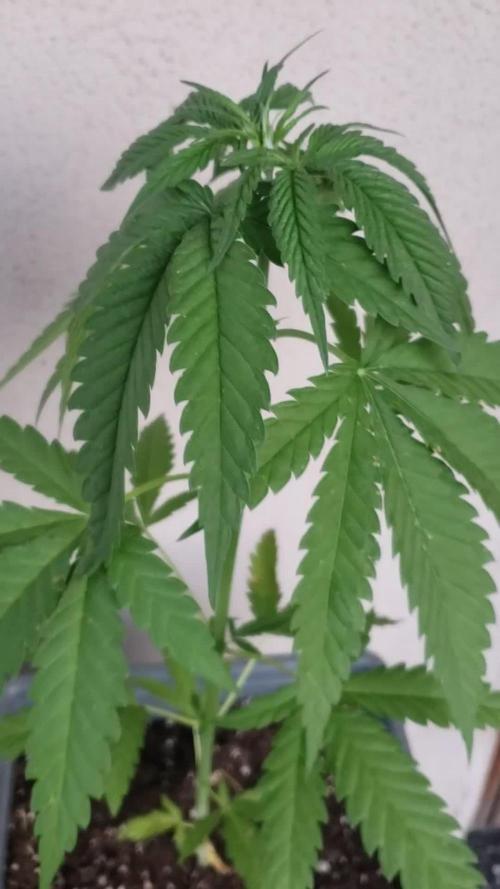
Hola a todos!!.
Esta semana he regado con top veg 2ml x litro se agua y el resto de los días solo agua.
Viene creciendo bien, a pesar de no tratarla como corresponde. 😅🙏

Processing
Likes
4
Share


@Therbalist
Follow
Very happy thought I'd ruined the buds with a homemade spider mite spray. Brought contaminated top up soil into the grow room without sterilising, lesson learned. Spray worked perfectly though and washes off fine with no bad residue or taste. My spray bottle is going to forever smell like garlic I think 🙈😂
Likes
10
Share


@jermainemorris2011
Follow
Noticed that four out of the five plants have began to pre-flower at week five so I’m beginning to switch my nutrients from grow to bloom and soon after that I’ll be adding my bloom booster..I’m wondering if I should Switch from my grow nutrients to my bloom nutrients as soon as I seen those pistols or should I give it another week
Likes
3
Share


@Ieiogrow94
Follow
Eccoci qui...
Tutto va per il meglio, questa settimana si inizia a vedere la resina e ora si inizieranno a formare le cime, per questo aggiungo Sugar Shot di @xpertnutrients vedremo l'evoluzione settimana prossima.
Odore intenso, sta recuperando dalla carenza presentata è davvero molto bella e sembra anche pesante.
Grazie a tutti per il supporto🔥🌲❤️

Processing
Likes
12
Share


@Nighttripper
Follow
OK, we’re getting pretty damn close. I definitely toasted a couple of the taller spears with a new lightbulb. The damage seems to be to the fan leaves and some of the sugar leaves, the buds seem to be spared of any damage. I reduce the nutrients to zero to flush yesterday. I’m hoping they’ll be ready to harvest in a couple three days. The tricombs are still Mostly white and clear, very little if any brown yet. I figure I’ll wack them at 50-50 brown
Here is a question for some more experienced growers that might read this. I have read that when buds are light stressed they will make a bud on a bud. I’ll put a couple pictures of this here. Is this what they are talking about?
Peace,Take care of each other, and give me the patience to last another week.


Likes
6
Share


@IslandTerps
Follow
Strain: Fast Buds – FBA2505
Grow Type: Indoor
Pot Size: 5 Gallon
Medium: Coco and Perlite
Nutrient Line: Athena
Week 11 – Chop Day!
The queen of this run is officially down! That massive main cola was something else chunky, colorful, and the smell? Unreal. Easily one of my top favorites from this grow. She stayed consistent the whole way through and made the tent smell like candy. She’s now hanging and beginning the dry, and I’m really looking forward to seeing how she cures up.
Dry update coming soon and don’t forget to use my code ISLANDT for 15% off your next Fast Buds order!
Likes
9
Share

@Turtleinweed
Follow
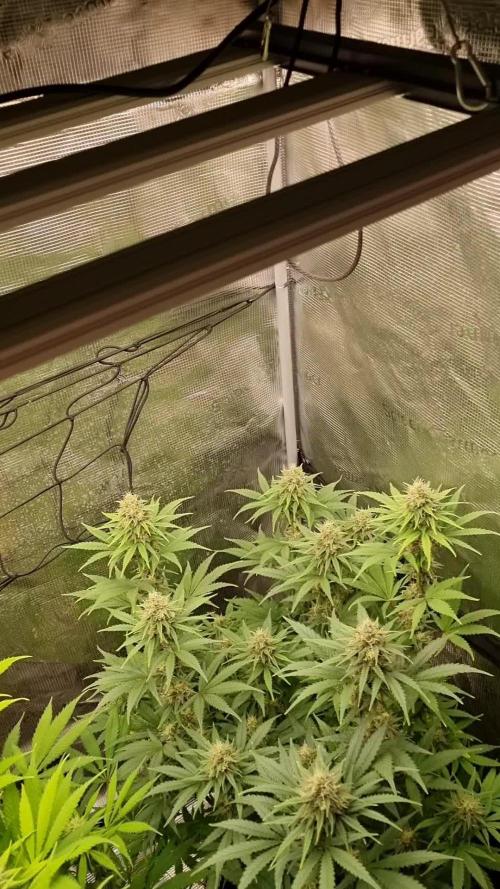
Woche 14 – Blüte Woche 8–9 – Endspurt, Trichome fast ready!
Tag 99–105 / Blüte Tag 44–50
Höhen: Sunset Sherbet 110 cm · Amnesia Mac Ganja 110 cm · Gush Mintz 90 cm
Licht: Mars Hydro FC-4000 Evo @ 78%, Abstand GM 60 cm, die anderen ~40 cm
Feed: Tag 99 1L Compost Tea pro Topf (48h gelüftet + PK Boost) → sonst nur entchlortes Wasser
Umwelt:
Tag: 22–23 °C / RH 44–48 %
Nacht: 18 °C / RH 48–50 % → super für Harzproduktion & Farben
Gesundheit: Ruhige Woche, leichter Light Burn (verbrannte Tips) bei Gush Mintz + Sunset Sherbet
Trichome-Check: Fast alle milky (~70 %), noch keine Bernsteinfarbenen entdeckt
Ernte-Schätzung: Gush Mintz & Sunset Sherbet ~noch 7–10 Tage (je nach Amber-Entwicklung) · AMG wahrscheinlich 10–14 Tage länger

Likes
5
Share


@LockDownGrow
Follow
The little genetic fuck up still going ,
And actually smells pretty good too , still feeding for now but keeping a close eye on those milky mushrooms ,
As soon as they are 💯 milky and say 10% amber I will start too flush ,


