


Likes
Comments
Share


@DogDoctorOfficial
Follow
# Pink Rosay Auto by Zamnesia | Pheno B 🌱🌸🍷
## Germination Week | Another Story Begins
Hello GrowDiaries family! 👋🌱
Welcome to another new journey.
As some of you may have noticed, I've recently adjusted the way I document my grows. With the current photo limitations on GrowDiaries, each phenotype now receives its own dedicated diary rather than sharing a single journal with its sisters.
This allows me to continue documenting every stage of development while selecting the best photographs from each week and keeping everything organized from seed to harvest.
The goal remains exactly the same as always:
To create an honest, educational, and complete record while sharing observations, successes, lessons learned, and everything in between.
Today, we begin following Pink Rosay Auto Pheno B.
A sister to the previous phenotype, sharing the same genetic foundation while carrying her own unique potential and personality.
---
## Same Genetics, Different Possibilities
One of the reasons I enjoy documenting phenotypes individually is because plants have a remarkable way of surprising us.
Two seeds from the same pack.
The same environment.
The same soil.
The same water.
The same grower.
And yet they often develop into noticeably different individuals.
That is one of the most fascinating parts of cultivation.
At this stage both sisters are beginning life in very similar ways.
Healthy.
Vigorous.
Strong.
But every phenotype eventually starts writing its own story.
And that story is what we're here to document.
For this run, we're following Pink Rosay Auto from Zamnesia Seeds, cultivated under a 12/12 from seed schedule from the very first day of life.
A method that is a little different from what most growers choose, but one that has become part of my own cultivation style over time.
Throughout this diary, I'll explain not only what I'm doing, but also why I'm doing it, allowing anyone interested to follow the process from beginning to end.
---
## Germination Using the Cannakan System
To begin this run, I once again used the Cannakan germination system.
For organizational purposes, the autoflower section of the project was germinated using my second Cannakan unit, while the photoperiod section used the first.
The methodology itself remained exactly the same.
Simple.
Organized.
Reliable.
The seed was placed inside using only plain water.
No nutrients.
No additives.
No stimulants.
Just water.
Within approximately 24 hours a healthy taproot had emerged and the seed was ready for planting.
Exactly what we hope to see from healthy genetics.
---
## Why Only Water?
One question that often appears during germination is:
"Why not feed the seed immediately?"
The answer remains simple.
The seed already contains everything required for its first stage of life.
Inside that shell are the energy reserves needed to establish roots and begin development.
At this stage, I prefer allowing the seed to use those natural reserves exactly as intended.
The objective is not to feed the plant.
The objective is simply to wake it up.
Water is enough.
Nature already prepared the rest.
---
## Coco Starter Plugs
Like the rest of this project, the seed began life inside a coco starter plug.
The plug was fully hydrated and then gently squeezed to remove excess moisture while maintaining a healthy balance between water retention and oxygen availability.
Once germinated, the seed was carefully inserted into the plug and placed inside a humidity dome.
The dome remained useful for only a short period.
Within less than 24 hours the seedling had already emerged and was ready for the next step.
At that point, she was transplanted directly into a small container filled with Plagron Lightmix.
---
## Environmental Conditions
Environmental conditions remained intentionally simple and stable.
Temperatures stayed around 26–27°C.
Humidity was maintained between approximately 65–70% using a Spider Farmer humidifier.
Rather than keeping seedlings inside extremely humid conditions for extended periods, I prefer introducing them relatively early to the environment they will actually experience throughout their life cycle.
The objective is adaptation.
Not dependence.
Airflow remained extremely gentle.
Just enough movement to keep fresh air circulating without creating unnecessary stress.
---
## Lighting
Lighting during germination remained intentionally soft.
Young seedlings simply do not require intense light levels at this stage.
The goal is healthy establishment rather than rapid growth.
Once properly established, this girl will move under the Future Of Grow Black Series 600W full-spectrum LED system where the next stage of development begins.
For now, healthy roots and healthy growth remain the priorities.
---
## First Observations
Everything has progressed exactly as hoped so far.
Fast germination.
Healthy taproot.
Strong emergence.
Healthy color.
Good vigor.
And perhaps most importantly:
A healthy beginning.
At this stage every seedling remains an unwritten chapter waiting to reveal itself.
And that mystery is one of the things that keeps cultivation endlessly fascinating.
---
## Looking Ahead
Over the coming weeks we'll follow Pink Rosay Auto Pheno B through every stage of development.
We'll document:
- Root establishment
- Early growth
- Environmental management
- Watering practices
- Structural development
- Flowering progression
- And whatever unique characteristics this phenotype chooses to reveal
Because every seed deserves the opportunity to tell its own story.
Huge thanks to Zamnesia Seeds for the genetics, Plagron for the substrate and nutrition, Future Of Grow for the lighting, and everyone following along for another seed-to-harvest adventure.
Grower's Love everyone. 🌱💚

Likes
3
Share


@4F1M6
Follow
Made the flip to flower to start this week. Did a bunch of lst to get the side branches booming for the Scrog. Put a second net right above her to start things off spacing and structre wise. Second she starts to stretch its scrog game on!
Got her on a well balanced diet to support her transition period. Can't wait to see her explode and take off! Start rowing me out some colas! Treated her with lost coast as a preventative. Next up us dr zhymes in 5 days. Until next update. Happy growing and stay lit fam.

Likes
2
Share


@Sunshine_Boutique
Follow
First attempt at attending the Eternity Grow Cup was a major fail.
2 seeds did not sprout.
I planted two new seeds and they came to life.
Lost a lot of time. I think my chances to get this run finished within the deadline is almost zero.
Now it's a passion project and my training for next years collab between Zamnesia and Plagron.
Likes
21
Share


@BigBudWolf
Follow
First grow. Blueberry Auto-flowers from Quebec Cannabis Seeds.
14 days from sprout. Started from seed.
- 32” x 32” x 53” tent.
- Viparspectra 450w LED.
- 6” vivosun fan/carbon filter system.
- Hydrometer, digital light timer, digital PH meter, soil moisture meter, 8” oscillating fan.
- One 5 gallon and two 3 gallon soft pots.
- Distilled water, pro-mix organic soil, perlite, dolomitic lime.


Likes
2
Share


@EyeMKing
Follow
Started the first top dressing of Gaia Green All Purpose and Power Bloom at a 50/50 ratio of 1tbsp/gal each.

Likes
90
Share


@CRiSPrGrow
Follow
Ran out of Smart protein end of the first week, so it's plain water from here on out ! C99 chugging along, you can tell that any sort of exposure to the smart protein has lasting effects and the effects are proportional to the amount of smart protein available... it's not a nutrient so no nute burn no lock out ! witness the next generation of plant science ! witness it !! 🚀

Likes
28
Share


@PEAKYPLANTERS
Follow
Guys, welcome back to our gardens
We apologize for the short absence to have participated in one of the most beautiful organizations in the world....the spannabis
We immediately went back to getting our hands dirty with the soil!🤗😉

Likes
9
Share

@GERGrowDesigns
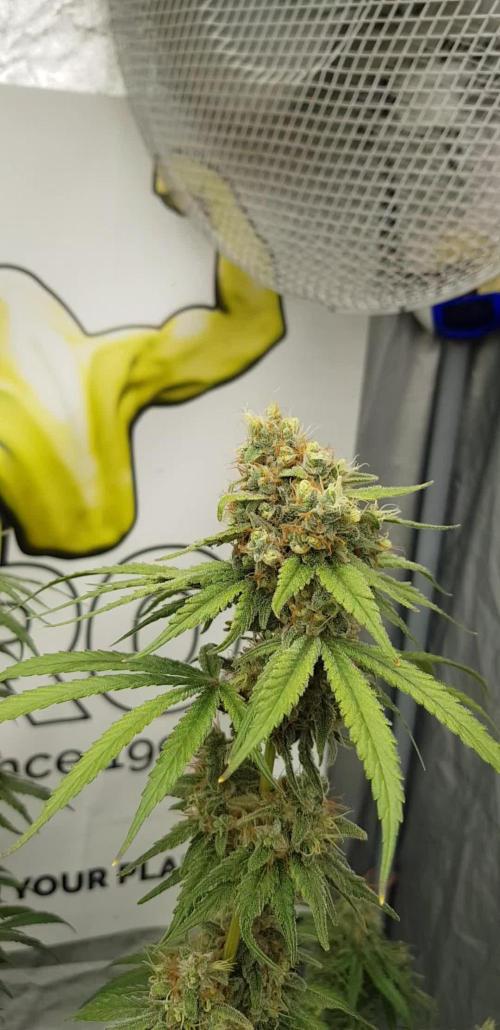
Follow
Welcome to Flower week 9 of Zamnesia Kalini Asia
I'm excited to share my grow journey with you from my
Zamnesia Project . It's going to be an incredible ride, full of learning, growing, and connecting with fellow growers from all around the world!
For this Project , I’ve chosen the Feminized Photo Strain Kalini Asia :
Here’s what I’m working with:
• 🌱 Tent: 120x60x80
• 🧑🌾 Breeder Company: Zamnesia
• 💧 Humidity Range: 35
• ⏳ Flowering Time: 7-8weeks
• Strain Info: 22%THC
• 🌡️ Temperature: 26
• 🍵 Pot Size: 16
• Nutrient Brand: Narcos
• ⚡ Lights : 600W x 2
I would truly appreciate every bit of feedback, help, questions, or discussions – and of course, your likes and interactions mean the world to me as I try to stand out in this exciting competition!
Let’s grow together – and don’t forget to stop by again to see the latest updates!
Happy growing!
Stay lifted and stay curious!
Peace & Buds!
Likes
Comments
Share


@MrEarlyBird
Follow
Started only using water, waiting game at this point. Leaves starting to really fade to a purple/black. While the buds take on a pink/purple hue
Likes
7
Share


@Bread_n_Buds
Follow
White Truffle is a very promising new strain from Zamnesia, let's see how it goes.
** Remember that we are growing a plant worked with the techniques indicated and another left to grow without pruning to preserve its speed; in the previous/next diary you will find the other plant of the same variety.
In this diary we find the plant worked with the Main Lining and here we immediately noticed that it is a plant with irregular internodes, that is, the mini branches are not parallel on the main branch and are in spurious numbers and strangely positioned, a big gamble to decide what to keep and what to leave. I hope I have not cleaned too much, because I have done it but it seems wise to me to try to leave everything that can see the light better.
We are in a 100% organic configuration, the soil is recycled Promix + 1/3 fresh soil + 10% Perlite + RQS Mycorrhizae Mix (4 g in the mix, 1 g under the small fiber pot).
We have switched to the early flowering program We feed with // 1 ml/l Power Roots - 1 ml/l Pure Zym - 1 ml/l Sugar Royal - 3 ml/l Alga Bloom - 1 ml/l Power Buds
We spray 5 ml/l Vita Race Foliare once a week.
For all the information: https://plagron.com/
All nutrients are available from Zamnesia: https://www.zamnesia.io/it/531-growshop/476-fertilizers
We always have the excellent mycorrhizae from RQS flowing in the soil. https://www.zamnesia.io/5778-mix-micorrhiza-easy-roots.html
Try this strain, it's an autumnal delight ---- // https://www.zamnesia.io/11184-zamnesia-white-truffle-seeds.html
Zamnesia Brief Description // The product of crossing GG with Peanut Butter Breath, White Truffle boasts a first-class genetic line, taking the best from some of the best American cultivars. And as you'd expect, it has a lot to offer: a high THC content, an irresistible flavour and a relaxing, carefree effect. Oh, and let's not forget that it's incredibly easy to grow too! Buy your seeds today and enjoy easy harvests of delicious, US-grown bud.
And as you'd expect, it has a lot to offer: a high THC content, an irresistible flavour and a relaxing, carefree effect. Oh, and let's not forget that it's incredibly easy to grow too! Buy your seeds today and enjoy easy harvests of delicious, USA-grown bud.
The whole world of growing and more is here at Zamnesia - check out the site for "nature's best" in all shapes and colors.
The new strains are amazing and the old ones are no exception...
-- // www.zamnesia.com
Likes
29
Share


@HAPPY91
Follow
Week 17 3/9/2021-3/15/2021:
Day 112 3/9:
Played Mexican Radio Happy Taco Tuesday. Drank 1 gallon plain water=66 ppm 6.5 ph 69 f. 66.9-74.5 43%-53%
Day 113 3/10:
Played Hip Hop Radio. 65.7-72.1 40%-60%
Day 114 3/11:
Played Santana Radio. 66.6-73.9 39%-57%
Day 115 3/12:
Played Classic Rock Radio. Drank 0.75 gallons plain water=36 ppm 6.8 ph 70 f. 65.7-72.5 40%-57%
Day 116 3/13:
Played RAIGN Radio. 64.0-72.9 35%-56%
Day 117 3/14:
Played Reggae Radio. 65.8-72.7 41%-56%
Day 118 3/15:
Played Classic Rock Radio. She spent a couple hours under the lights then I put her into the dry tent staying dark and cool.
Final Weekly Notes:
This girl has come to an end and is now inside my dry tent for 48 hours before the chop and trim. This week was very much difficult only because I really wanted to finish this weeks ago. Always learning something new everyday. Thanks for stopping by and checking out my grows. As always feel free to leave a like comment question or even give that old follow button a tickle. Good luck stay safe happy growing cheers!!!!!!

Likes
17
Share


@StickyFingah420
Follow
Planta de crecimiento no muy exigente, no demanda grandes cantidades de agua y nutrientes.
En este caso solo apliqué LST y respondió bastante bien. Formó un buen tallo principal y una estructura ramificada y firme.
Lo mejor de todo viene en la floración, adivina porque?... COLORES!, alrededor de la 3era semana comienzan a aflorar tonalidades rojizas, púrpura, rosas que deslumbrarán a cualquiera.
Sus cogollos son más bien aireados y desprenden un fuerte olor cítrico como a cáscara de naranja intensamente dulce.
En fin, una genética de calidad y con una visual hermosa y aromas asombrosos!. En lo personal prefiero los brotes más densos y compactos, pero me encantó todo el proceso de esta hermosa planta, totalmente recomendada!


Processing
Likes
19
Share


@MadeInGermany
Follow
Hi everyone :-)
This week she was repotted, just like the other Wonder Pie Phenotype from the GHSC Cup in the other diary :-).
I am excited to see how it will develop with canna bio in contrast to Grennhouse Feeding 😊👏🏻.
I wish you all a nice weekend, stay healthy 🙏🏻 and let it grow 👏🏻😎

Likes
26
Share


@Cultivomedellin
Follow
Así van las niñas 42 días de vida todas están drenando de EC 1,2-1,4 y pH 6,5-7,0
Así como vamos. 2 quedarán de color 🍇

Likes
11
Share


@Jays_Not_Here_Man
Follow
Another good week for this lady. Temps were high, but she handled it like a champ. Because she is so beastly and only in a 4 gallon pot, I’m watering about 1 gallon of water every 3 1/2 days. The dry back seems to be better if I don’t wait till the 4 th day.
Buds are developing nicely, and stacking really well. I’m going to have some decent sized colas. Frost is coming along nicely too. She has a Kush smell with some sandalwood at the moment…
Temps were floating around 82 degrees this week, with RH around 55-58%. Plucked a few more fan leaves, but otherwise just a slight turn each time I check on the tent. Happy Gardening

Likes
Comments
Share


Likes
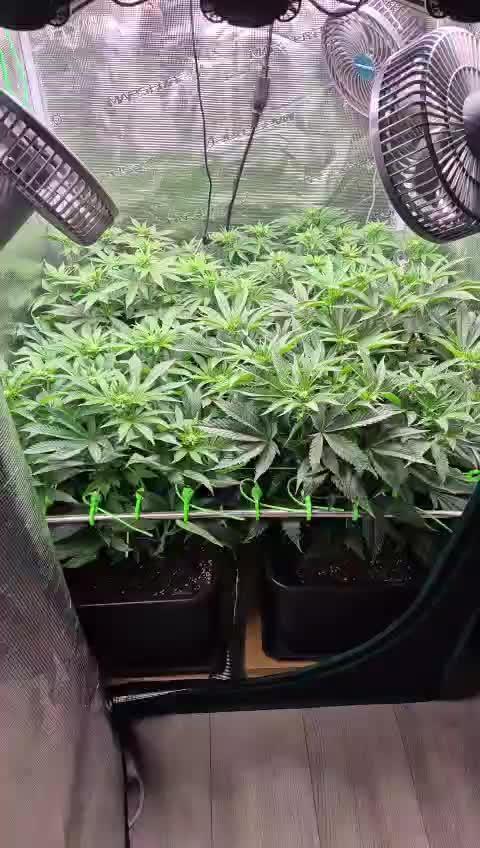
167
Share


@PapaNugs
Follow
Here we go! This should be an epic run! Hella Jelly by Humboldt. A rare sativa strain nowadays with a 45 day flowering cycle. If you know me, I'm in love with the Orange Creamsicle x Hella Jelly cross. I've run it twice now so I know I'm gonna love the parent genetics.
This is under the Medic Grow Mini-Sun-2. This 150w light is built for the 2x2. I've got it up high but will lower slightly accordingly.
I've been spraying the tops with water twice a day and will do that until one week.
Dimmed to 40%
Here are the lights details:
Medic Grow Mini Sun-2 150W LED
Model: MN150-022
Spectrum mode: V1
Efficacy: 2.8 umol/J
Thanks for stopping by!
You can find the light on Grow Diaries:
https://growdiaries.com/grow-lights/medic-grow/mini-sun-2-150-watts
You can find the light on Medic Grow's website:
https://medicgrow.com/

Likes
73
Share


@guerilla
Follow
No more base nutrients. Just feeding with extra Boost and a small bit of PK. I will reduce this further nearer to chop.
I think this is the last week now.
2 girls have maybe another 2 weeks to go. But the other 26 are almost done.
2 different phenos. 1 is shorter and compact. Finishing quicker. The other wants to stretch and finish a week or so after.. Both smell like grapes, black current, lemon and a touch of deisal. Very beautiful!
Reduced the light today. 11hrs light. 13hrs dark
Much love
Peace 💚
Likes
66
Share


@Hashy
Follow
Week 10 6th week of flower.
Light settings
12/12 on at 9.00am off 9.00pm
Light power= 75% 184w
Radiator settings
LIghts on
Turn on if temp drops below 22.5c
Turn off if temp goes above 22.5c
Lights off
Turn on if temp drops below 18.5c
Turn off if temp goes above 18.5c
Extractor settings
temperature 23c with 1c steps
Humidity 50% with 0% steps
Max speed 10
Min speed 4
VPD aim 0.8-1.2
DLI aim 30
Wednesday 29/3/23 Day 64 (Day 36 flower)
Nothing
Thursday 30/3/23 Day 65 (Day 37 flower)
Nothing
Friday 31/3/23 Day 66 (Day 38 flower)
Autofeed 5 15 minute runs
Normal pump
4 drops ph d
Feed 10L Ec=1.58 Ph=6.4
3L left
Roughly 3.3L each.
#1 Height= 49CM Dist= 44CM DLI=26
Went away and left on autopilot
Saturday 1/4/23 Day 67 (Day 39 flower)
Away
Sunday 2/4/23 Day 68 (Day 40 flower)
Away
Monday 3/4/23 Day 69 (Day 41 flower)
Away
Autofeed 4 15 minute runs
Normal pump
5 drops ph d
Water 30L Ec=0.22 Ph=6.3
Est. 24L left
Roughly 2L each.
Tuesday 4/4/23 Day 70 (Day 42 flower)
Away
I was only around for the 1st part of this weeks grow and most of that the tent was just running on autopilot.
#1 Wedding Cheesecake FF was still developing at a decent rate when I went away, hopefully she may stretch a bit more while I'm away.
Power used for week
Light
(2.22+2.22+2.21+2.22+2.22+2.22+2.31)=15.62Kw
Extractor
(0.58+0.58+0.57+0.58+0.58+0.58+0.67)=4.14Kw
Fans
(0.97+0.96+0.98+0.98+0.97+0.99+1.01)=6.86Kw
Dehumidifier
(++++++)=Kw
Radiator
(1.41+0.67+0.92+3.24+2.08+2.71+2.69)=13.72Kw
Water pump.
(0+0+0.01+0+0+0.01+0)=0.02Kw
Total for the week=40.36Kw
Back in a week.
Thanks for stopping by.