


Likes
Comments
Share

@Growfather2
Follow
Hello everyone,
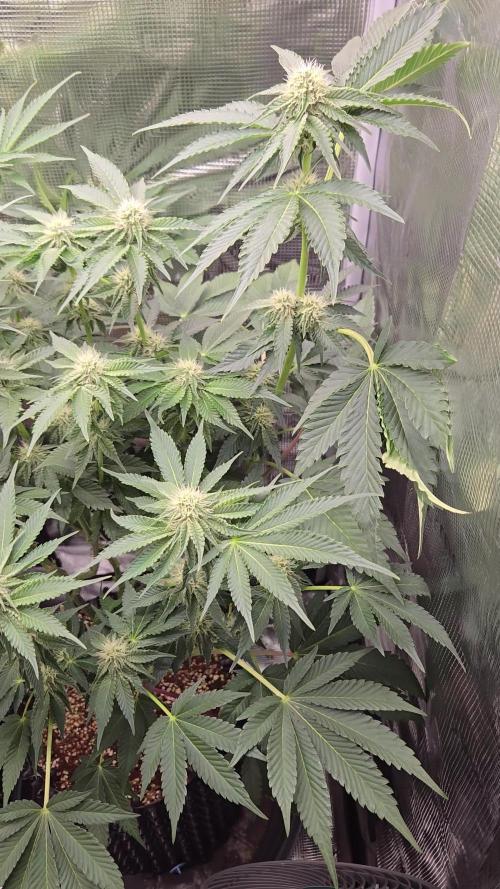
Another week has passed and noticed the plant on the right drinks the double amount of water in comparison to the one on the left.
Next week they will get their final defoliation and then it is a race to the finish.
Thanks for stopping by and have a nice week.
Best regards,
Growfather

Processing
Likes
3
Share


@Sunday_Grower
Follow
God's Vagina seedling seems to have finally established its roots and begun to thrive. The clone was yellowing I belive from being root bound. She was transplanted today 04/27. End of the week update! 05/03/2020 God's Vagina was topped at the 5th node yesterday(05/02) First time ever topping but she seems to be recovering nicely. Will begin with low stress training on the clone soon in an attempt to keep both plants at roughly the same height. Yellowing on the clone is nearly all gone. Planning on keeping them in veg for another 6 weeks.
Likes
12
Share

@gamberro
Follow
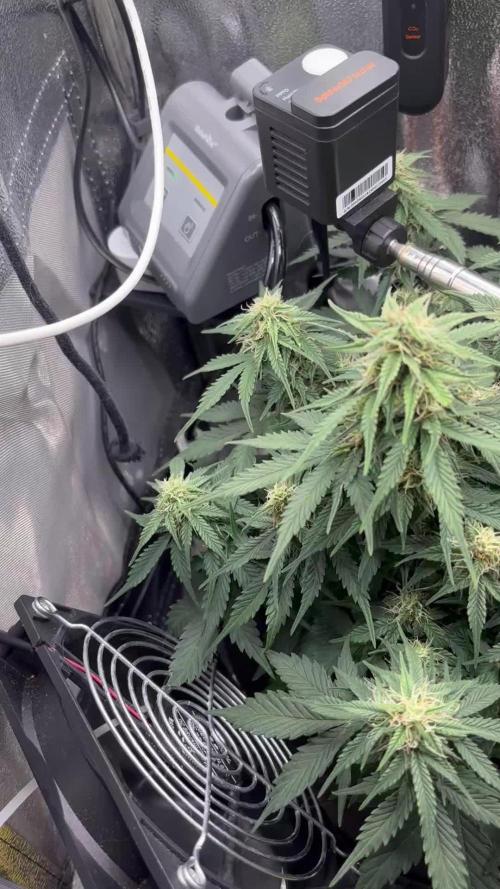
Things seem to be progressing well overall, buds are fattening up nicely and you can clearly see pistils gradually turning brown with more and more trichomes appearing. The smell situation is interesting: not much odor around the tent itself, but when I open it up you definitely get that classic Northern Lights smell, very piney and earthy. It's not overwhelming yet but it's there.
Now the bad news: as you can see in the photos, she's self-pollinated. I'm seeing the first seeds forming in some calyxes. I'm hoping it's just a few and won't impact the harvest too much, but in the worst case I'll just use the whole crop for hash. The hermie issue from previous weeks finally caught up with me.
Environment has been pretty stable this week. Temps sitting around 21-24°C during lights on, dropping to high teens at night (sometimes hitting 17°C). Not ideal but the NL genetics are handling it fine. Humidity has been bouncing between low 40s and mid 60s with one spike to 66%, probably from watering and humidifier refill. VPD has been in the 1.0-2.0 kPa range most of the week, which is acceptable for mid-late flower. PPFD stayed steady around 640 during lights on, and CO2 is just ambient as usual with the typical spikes here and there.
Feeding this week was a bit all over the place as I'm trying to find the right balance. On Mon 13th I gave her 1.5L with full bloom feed: Bio-Bloom, Bio-Grow, Top-Max, CalMag, SUPERthrive and Acti-Vera at pH 6.30 and EC 0.95 mS/cm going in. Runoff came out at EC 0.93 mS/cm and pH 6.11, so pretty clean. On Fri 16th I went lighter with just 1.5L of Alg-A-Mic (3 ml/L) and CalMag (0.3 ml/L) at pH 6.16 and EC 0.26 mS/cm, didn't get any runoff that time. Then today (Sun 19th) I ramped it back up with 1.5L of the full mix: Bio-Bloom (4 ml/L), Bio-Grow (4 ml/L), Top-Max (4 ml/L), CalMag (0.5 ml/L), SUPERthrive (0.27 ml/L), Acti-Vera and Alg-A-Mic at pH 6.20 and EC 1.60 mS/cm. Runoff came back at EC 1.70 mS/cm and pH 6.20, so the medium is holding a bit more salts than what I'm putting in but nothing crazy.
Visually she looks healthy apart from the seed situation. Leaves are a nice green with no signs of deficiencies or burn. The buds are stacking well and frost is definitely coming in on the sugar leaves and bud tops. Structure is still tight and compact with all the main tops sitting at roughly the same height.
Overall I'm cautiously optimistic. The hermie/seed issue is a bummer but as long as it doesn't get out of control I should still get a decent harvest. She's bulking up, staying healthy, and handling the cold temps without drama. Winter is here but she's not impressed, just keeps on growing.

Likes
32
Share


@MadeInGermany
Follow
COMMENTED BY
MadeInGermany MadeInGermany 5 minutes ago
Unfortunately, I had to find out that my account is used for fake pages in social media.
I am only active here on growdiaries.
I am not on facebook instagram twitter etc All accounts except this one are fake.
Flowering day 49
since time change
to 12/12 h.
Hey everyone :-).
We are slowly getting closer to the last few weeks :-)
There are still 2-3 weeks and The buds develop very well towards the end :-).
It is slowly starting to use up its nutrients.
This week it was poured 3 times with 1 l each time.
Everything was cleaned and checked.
Have fun with the update.
Stay healthy 👍
You can buy this Strain at :
www.Zamnesia.com
Type:
Runtz
☝️🏼
Genetics:
Zkittlez x Gelato
👍
Vega lamp: 2 x Todogrow Led
Quantum Board 100 W
💡
Bloom Lamp : 2 x Todogrow Led
Cxb 3590 COB 3500 K 205 W
💡💡☝️🏼
Soil : Bio Bizz Coco
☝️🏼
Nutrients : Green House Seeds Company Powder Feeding Bio
☝️🏼🌱
Water: Osmosis water mixed with normal water (24 hours stale that the chlorine evaporates) to 0.2 EC. Add Cal / Mag to 0.4 Ec Ph with Organic Ph - to 5.8

Processing
Likes
6
Share


@Mannabis
Follow
Time for the stretch! Lots of flowering growth happening now. I can see where the bud spots will be so I’m going to have to stop moving the branching around in the Scrog, also the branches are getting thick and less pliable.

Likes
3
Share


@CalGonJim
Follow
7/28 11am Going to plant Rosetta and Montel this week
7/30 12:47AM Having trouble landing on a theme tonight, full retard mode activated!!!
7/31 1:51 I FOUND A NEW COSTUM IDEA FOR THE GROW ROOM
7/31 2:35AM NO WONDER ALL MY PLANTS DIE....LOOK AT THE COOL GROW ROOM SHIT IM DOING... I MADE A DEVIL WORSHIP VIDEO FOR CHRISTIANS!!!! I AM THE LORD OF DARKNESS AND AWESOMENESS AND OTHER COOL THINGS...😂😈😈😈😈..

Likes
52
Share


@Any_Zenin
Follow
Tag 92: Blütetag 56, man sieht bereits die ersten Bernsteinfarbenen Trichome ich bin gespannt wenn die Pflanzen erntereif sind. Lichtintensität 90%.
Tag 93: Alle Pflanzen gegossen 15% Topfvolumen = 2,7L NL. Wasser PH 6.5 + 1.2ml/L CalMag + 0.25gr/L Bittersalz.
Tag 94: Die letzten Tage waren die Temperaturen leider sehr hoch aber ab morgen soll es zum Glück ein bisschen kühler werden. Heute habe ich alle Pflanzen kurz kontrolliert und sonst nur in ruhe gelassen. Lichtintensität 80%.
Tag 95: Alle Pflanzen in ruhe gelassen.
Tag 96: Ich lasse die Töpfe austrocknen und gieße nicht mehr bis ich Ernte, Lichtintensität 70%.
Tag 97: Die Pflanzen sehen gut aus und es werden immer mehr Trichome Bernsteinfarben, die nächsten Tage werde ich intensiver beobachten wie weit die Pflanzen gereift sind.
Tag 98: Heute habe ich meine beiden Cannatrol, TrimBins, Arbeitsfläche und Scheren für die Ernte vorbereitet.

Likes
59
Share


@dataTwiiix
Follow
10/21: dernière semaine de cro. Enfin je l'espère sur les trois plantes une est restée bloquée une bonne semaine elle a l'air de reprendre du poil de la bête car elle montre des signe de pre-flo. Ce que les deux autres qui sont bien grande n'ont pas encore fait. #36
10/22: cocoa+B augmenté à 3ml sauf pour la plante qui a du mal à suivre gg0. Les deux autres aimes bien leurs petites routines mais il est temp de passer en Flo. Mes chéries ! #37
10/23: j'apperçois de minuscule pistils apparraitre de ci de là. pour gg0 je vais tester le régime sec quelques ou alors elles est malade, j'attend les retours par rapport a ma question ouvetre
La plante gg2 à reçu une bonne soupe bien complète on verra dans les jours à venir la coco est buffered en plus.... #38
10/24: j'ai quand même sortie mon ph metre digital et verifié les RO de chaque plante et le probleme de la 3eme GG c'est un ph trop ellevé, 7.4 les autre flirte autour 6.4/6.6, malgrés tout cela je vais tenter de récuperer la gg qui a un ph trop haut et on dirait bien que les deux autres passent en pré-flo AMEN! #39
10/27: dernière journée de cro. On est bien passé en pré floraison. Mon RO de contrôle à tjrs un ph au dessus de 6.5 , j'ai utilisé des briques ugro de 11L que j'ai mal tamponé j'espère avoir de la chance et un joli harvest. #42


Likes
28
Share


@Esoteric_growing
Follow
Always a very pleasing on the eye strain to grow and was surprisingly easy to get a good yield with such a short veg and almost no training. Quality is pretty much 10/10
Likes
11
Share


@sweetkaya
Follow
Harvested at day 116, had some problems of high inflow pH at week 11 that has a little decreased the final harvest, in my opinion. But I'm proud of my job cause that was the ONLY little problem in the entire grow. Keep Growing and learning everyday 🙏🏻💚🤞🏼🕉️


Likes
9
Share


@TheBulldozerSicily
Follow
Niente da dire, 0 stress questa settimana non ho fatto niente, la prossima settimana aggiungeremo acqua se necessario.
Si iniziano a vedere i fiorellini,

Likes
15
Share

@420DeepGrow
Follow
📆 Semana 6
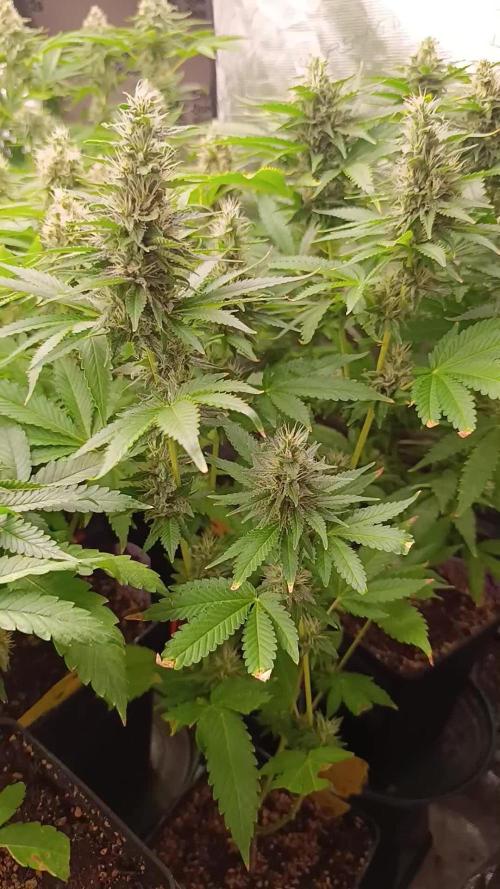
El engorde se acelera y los cogollos comienzan a ganar una densidad notable. Los cálices continúan apilándose mientras la producción de tricomas alcanza un nuevo nivel, cubriendo flores y hojas de azúcar con una gruesa capa de resina.
La planta más vigorosa mantiene un mayor consumo de agua y nutrientes, mientras que la segunda sigue desarrollándose de forma muy equilibrada. Tras un ligero ajuste en la fertilización para reducir la acumulación de sales, ambas responden con normalidad y continúan enfocadas en la formación de flores.
⚡ EC: 1.8–1.9
💧 pH: 6.2 – 6.5
🌡️ Agua: 21°C
🌫️ Humedad: 55–60%
💡 Intensidad: 1000–1100 PPFD
🔥 Nota de cultivo: La prioridad pasa a ser mantener un equilibrio nutricional que permita seguir engordando los cogollos sin excesos. La calidad de la resina y el volumen final se decidirán durante las próximas semanas.
Seguimos creciendo fuerte 💪!

Likes
4
Share

@HoneyBlunt42
Follow
Watering with CalMag and Simplex PK Boost (1 ml/L), then lowering pH to around 6.0–6.3. Adding 5 drops of Simplex pH Down – I transferred it into a 10 ml dropper bottle (from VitaS stimulator) for easier dosing without a pipette.
Three days ago, there was a heatwave, and I left for the mountains for a few days. The plant got dried out – leaves drooped. Realized I need to upgrade the 3L auto‑watering tank – it only lasts two days max. Switched to a 5L tank, but a 15L canister with a drainage tray would be better. That would easily last 3–4 days. At +29°C, the plant drinks and evaporates at least a liter per day.
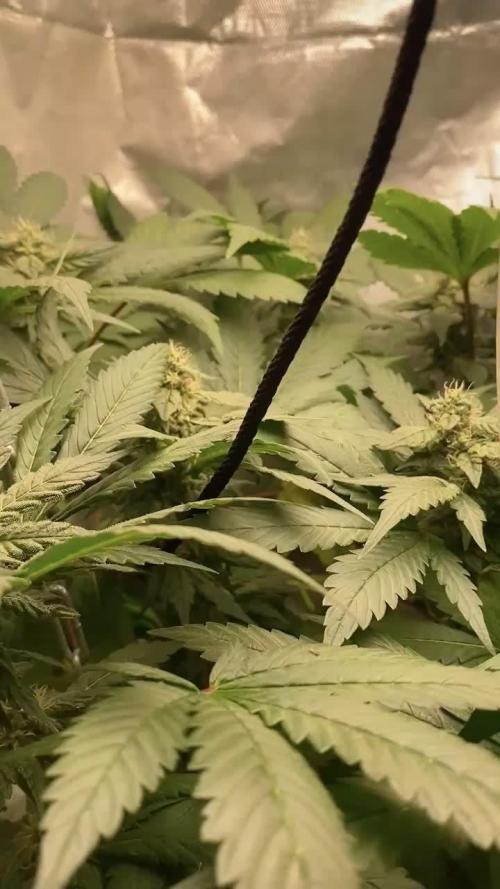
Other than that, leaves look healthy, buds are beautiful. IZI is delightfully low‑maintenance :)
Watering is done with an auto‑watering pump (1 L/min flow rate) – 5 seconds every hour. There’s also an airstone in the solution for mixing and oxygen saturation.
The plant has slowed down in vertical growth and is now bulking up the buds. I’ll continue feeding PK Boost for another 3 weeks, then a flush – and then wait for harvest.


Likes
29
Share


@JeyGanesha
Follow
Un altra settimana è passata senza problemi...grazie alla mia perseveranza nel curarla e debellare i ragnetti Rossi che bastardelli mi sono arrivati anche dentro al box... sicuramente c'è li ho portati io involontariamente quando sono andato a vedere delle piante di un amico che erano impregnate di ragnetti e ragnatele sui fiori....vabbè ora devo sbattermi un po' più ma non lascerò che mi rovinino la mia terapia 💪👍🙏🕉️🙏... Boom Shiva Shankar 🕉️ belle le mie coccinelle 🐞 che mi tengono pulita la mia terapia
Likes
35
Share


@rhodes68
Follow
9/9 Still looking for the cause of the top fading only on the light colored phenos think its P will address tomorrow, want a couple more weeks from these guys at least.
9/10 Looking better top dressed the Happy Frog 3 tbs/plant watered with Bio-Bloom 3tsp /gal and Big Bloom 3tsp/gal
9/13 D62
Just finishing the week things are pretty stable. Nuet issues resolved and buds building nicely taking on a more fuzzy appearance with straight new growth hairs.
Pics at lights out if I remember
Looking at 9/27 for a harvest date or at least its penciled in on the calendar. Next feed is full
Likes
58
Share


@Dahoola
Follow
-----------
Week 6:
-----------
Start of the 2nd week of real flowering. The slight discoloration of the lower leaves continues. Not the biggest problem in itself, but would have liked to see it differently. Her general health is good, but next time I will opt to use a biotab less. 2 pieces seem more than enough. That is why I waited an extra 10 days to give her the one-off treatment of bactrex and orgatrex. It is a solution of 1gr bactrex and 20ml orgatrex in 500ml water to boost bacterial life. She has just received this and she will only get this once. We also set up the dehumidifier to keep the humidity around 50-55%. And we have now also switched on the digital lumatek boost, for maximum light intensity. Since we also don't work with a scrog net (which we really have to consider next time), I already had to tie her in a few places to make sure her shoots do not fall over. But this is a positive 'problem'. Until next update!

Likes
2
Share


@DrPeeper
Follow
-Clones have been transplanted into 3.5" pots. The sixth plant eventually rooted however it was the smallest, was a backup, so I did not bother to transplant it.
-Megacrop amounts above are actually g/gal, not tsp/gal. I do wish Grow Diaries would add mass for us dry soluble nutrient addicts.
-Mother is doing fine, I took a second set of cuttings off her for a local buddy who would like to grow her out as well.
-The mother has also given me a good idea of what to expect later on in veg when I begin training.
-Grow will eventually be planted in 5-gal fabric pots then moved to a 4x4 tent w/ Autopots and a 650w 3000K LED Bars for further training and flowering.
-I intend on offsetting the transplants, bending the girls over for LST, and eventually train under a scrog net in the flower tent. The mother seems to support this training as that is what I did with her to reduce height yet maximize the number of cuttings I could harvest quickly.

Likes
37
Share


@nerdz
Follow
36 to 42 Tuesday
Day 36
Been seeing pistils about 4 days now. Going to let the autopots drain out and start quarter bloom nutes.
D37
Started 1/4 nutes @ 680ppm (see above)
D38
Lights from 450w to 475w at 16-20".
VPD on point.
Just keeping canopy even right now. Supercroping the main stem for the third time. Feels like plant abuse now.
D39
They are thirsty. Will start filling the res more with more water.
Lowered GROW from 100% to 50%
Increased BLOOM from 25% to 50%
Increased mix from 680ppm to 720ppm mid week.
All other ratios remain the same as above.
Solo Cup seeing slight burn @ 680ppm. I was expecting it. Dropping down to ~550 for a bit.
D40
Lights increased from 475w to 500w. Will most likely move the fixture closer and drop the wattage back down with that uniform coverage!!! #geekbeast
D42
Res is empty again.
Decreased GROW from 50% to 25% strength
Increased BLOOM, ASTRO and N.CANDY from 25% to 50%
720ppm
Happy Halloween!!