



@PapaTerps
Follow
Grand Prixx - Wizard Trees
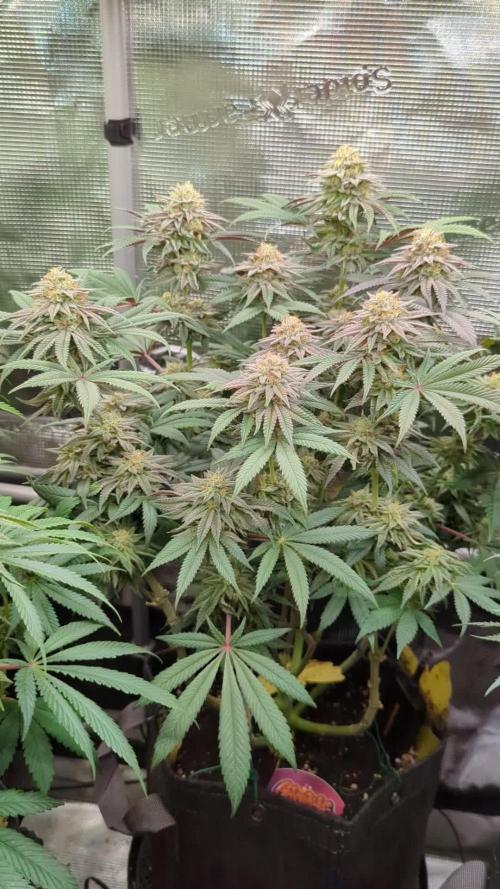
Day 106
🚿 Watered her every second day with 2L of RO tap water, with defined nutrients, mixed individually in order and then pH'd to 6.5
✂️ I removed a couple of sugar leaves from around the flower at the top canopy to improve light penetration, but other than that it's been smooth sailing 🤞🏻
🌸 She's at week 7 of bloom and she is looking absolutely spectacular with her big colourful flower with an aroma that is something out of this world!! Candy meets gas with a creamy finish 🙌🏻 We're maybe two or three weeks away from harvest and I cannot wait to get her down, dried and cured, because I can already tell that she's going to be very special!! 😍 For now she is still bulking, so she will get another week of regular feeding before I start to bring down her nutrients👍🏻


@Downunder90
Follow
## Week 7 Update: Strong Vegetative Growth 🌿💚
### 🌱 Vigorous Growth Continues 🌱
Welcome to Week 7! All of the plants—Greenhouse Super Lemon Haze, Humboldt Seed Bubba Kush, and Blueberry Muffin—are still in the vegetative stage, and they’re thriving. This extra time in veg is allowing each plant to develop a strong structure, which will be crucial for supporting heavy buds when we eventually switch to flowering.
---
### 🚀 Vegetative Progress 🚀
**Greenhouse Super Lemon Haze 🌞**
- Growing rapidly, with significant height and branch development.
- The plant is responding well to LST, creating a wider canopy for better light distribution.
**Humboldt Seed Bubba Kush 🌿**
- Compact and bushy, with strong lateral growth.
- Perfecting its structure to maximize yield in the flowering phase.
**Blueberry Muffin 🥞**
- Building a dense, sturdy frame with lush foliage.
- This extra veg time is helping it develop a robust canopy, setting it up for a productive flowering stage.
---
### 🌱 Vegetative Techniques 🌱
To make the most of this vegetative period, I've been focusing on:
- **Low-Stress Training (LST):** Continually training branches to create an even canopy and promote multiple bud sites.
- **Topping:** Topping has been applied to encourage bushier growth and increase potential yield.
- **Defoliation:** Selective defoliation to improve airflow and light penetration, ensuring the lower branches get enough light.
- **Nutrient Management:** Maintaining a balanced nutrient schedule focused on nitrogen to support healthy vegetative growth.
---
### 🌿 Looking Ahead 🌿
The plants are growing strong, and this extended vegetative stage is giving them the best possible start before we transition to flowering. In the coming weeks, we'll continue to monitor their growth and make any necessary adjustments before initiating the flowering phase.
Stay tuned for next week's update as the plants continue to prepare for a successful bloom!
Happy growing! 🌿💚


@Aedaone
Follow
The temperatures, humidity, and watering volume(if measured) in grow conditions are all averaged for the week. The pH is soil pH. Any watering done by me is well water which is 7.6 pH and 50° F. Any listed nutrients are ml/gallon of soil.
Day 1 we have temperatures in the mid to upper 70's, clear skies, and lots of sunshine. We have no rain in the forecast for a few days 🙏
Day 2 we had lots of sunshine and clear skies. Highs in the upper 70's and 49% humidity. We needed the dryness. 🙏
Day 3 we had clear skies and sunshine. Temperatures were in the mid to upper 70's.
Day 4 we had partly cloudy skies and temps in the middle 70's. I added some potassium and they seem to be responding well.
Day 5 we had temperatures in the low 70's. Sky's were cloudy and we had showers in the evening.
Day 6 we had rain the previous night and intermittently throughout the day. Temperatures were in the low 70's with cloudy skies.
Day 7 we had clear skies sunshine. Temperatures were in the low 80's.
This week was a success. There was more rain than I or the plants liked. We did have a few pistils brown up from the rain. There was zero boytritis and zero powdery mildew. These plants have not been treated with any preventative and they've flourished on their own resistance. The plants added a little more height. I expect that their stretch is over. Next week I'll add potassium to pump these buds out.


@JamaweedOPO
Follow
Everything went well, the humidity was a little high because it was in an unsuitable space, but the plant is very strong and evolved well even after defoliation.


@CanarianGrow92
Follow
This week we gave some more guanokalong nutrients, more specific for flowering the buds are starting to form and getting bigger slowly day by day! We see lot pf bud sites everywhere! Also applied a small amount of foliar bio insecticide just in case before the plant is too advanced in flowering
29 august: nothing
30 august: water
31 august: nothing
1 September: nothing
2 September: water and guanokalong nutrients ( powder, black pellets, palm tree ashes)
3 September: nothing
4 September: nothing


@CanadianFillmore
Follow
Welcome growfessors to another episode of growfessor theatre, 4x4 edition!
Flush time, just water for LSD, Green Crack and Mandarin dreams!! Do-si-dos gets another week of feed before flush.
I'm very impressed with the bud sizes, trichomes and smell of each plant, mandarin dreams is especially ooozing with resin, it's almost like liquid soap touching your skin.
The Mars-Hydro TSW2000 light has been killing it! This light delivers way more than expected!
Thanks for stopping by growfessors, tune in next time 👽🌳💚





@BudeCo
Follow
Mais uma semana de poda top e defoliação.
As plantas que revegetaram , já voltaram a floração, estão em boa recuperação.
Difícil ter que segurar a vega sem poder mudar pra flora pela falta de espaço.


@OldskoolHed
Follow
Really good week, she's almost to the finish line. Sweet berry fruit terp profile.


@BLAZED
Follow
Week 11 (10-4 to 16-4)
10-4
Temperature: 24.4 degrees (lights on) 21.1 degrees (lights off)
Humidity: 60% (highest) 52% (lowest)
No pictures.
Added 10L to the reservoir, and turned it on for a couple of minutes.
11-4
Temperature: 24.4 degrees (lights on) 21 degrees (lights off)
Humidity: 61% (highest) 52% (lowest)
12-4
Temperature: 25.5 degrees (lights on) 22 degrees (lights off)
Humidity: 65% (highest) 57% (lowest)
Turned the reservoir on for a couple of minutes.
13-4
Temperature: 26.5 degrees (lights on) 23 degrees (lights off)
Humidity: 65% (highest) 56% (lowest)
14-4
Temperature: 26.4 degrees (lights on) 22.1 degrees (lights off)
Humidity: 64% (highest) 45% (lowest)
Turned the reservoir on for a couple of minutes.
The reservoir is almost empty, there is 850 ml left.
15-4
Temperature: 24.4 degrees (lights on) 20 degrees (lights off)
Humidity: 59% (highest) 49% (lowest)
No pictures.
16-4
Temperature: 23.5 degrees (lights on) 19.5 degrees (lights off)
Humidity: 60% (highest) 53% (lowest)
Today i defoliated both plants heavily for the last time, you can say i did a method called: schwazzing.
Turned on the reservoir for a couple of minutes. (Till the AutoPots are full and the valve closes)
Rised the pots aswell, so the canopy is very even.
I let them recover from the heavy defoliation i did, and next week i will slowly increase the light's strength. (Now still at 50% 50cm)







@Ultraviolet
Follow
2nd net is up. Early bud formations are promising. holding up to the extremes pretty well, some leaves taking minor damage, but overall, she is holding up, gave her 1 night at 50F see how she would react, stressful. Not advised as it messes with her metabolism, but I want to see if it triggers any anthocyanin response. Love to see her purp up but no signs yet. Remember, For every molecule of glucose produced during photosynthesis, a plant needs to split six molecules of water. This process provides the hydrogen needed for synthesizing glucose and other organic compounds, while oxygen is released as a byproduct.
Homework.
If Rubisco activity is impaired and it cannot properly function or regenerate its substrate, the plant's leaves are likely to turn a pale green or lime green, a condition known as chlorosis. Essentially, Rubisco activity is highly regulated and susceptible to various environmental and metabolic factors that can cause it to become inhibited, leading to an apparent failure in RuBP regeneration due to a lack of consumption.
Rubisco regeneration is intrinsically linked to nitrogen supply because Rubisco is a major sink for nitrogen in plants, typically accounting for 15% to over 25% of total leaf nitrogen. The regeneration phase itself consumes nitrogen through the synthesis of the Rubisco enzyme and associated proteins (like Rubisco activase), and overall nitrogen status heavily influences the efficiency of RuBP regeneration. RuBisCO is a very large enzyme that constitutes a significant proportion (up to 50%) of leaf soluble protein and requires large investments in nitrogen. Insufficient nitrogen supply limits the plant's ability to produce adequate amounts of RuBisCO, thereby limiting the overall capacity for photosynthesis and carbon fixation. Maintaining the optimal, slightly alkaline pH is crucial for the proper function and regeneration of Rubisco. Deviations in either direction (too high or too low) disrupt the enzyme's structure, activation state, and interaction with its substrates, leading to decreased activity and impaired RuBP regeneration. (Lime/yellowing)
Structural Component: Nitrogen is an essential building block for all proteins, and the sheer abundance of the Rubisco protein makes it the single largest storage of nitrogen in the leaf.
Synthesis and Activity: Adequate nitrogen supply is crucial for the synthesis and maintenance of sufficient Rubisco enzyme and Rubisco activase (Rca), the regulatory protein responsible for maintaining Rubisco's active state. Nitrogen deficiency leads to a decrease in the content and activity of both Rubisco and Rca, which in turn limits the maximum carboxylation rate, Vmax, and the rate of RuBP regeneration Jmax, thus reducing overall photosynthetic capacity.
Nitrogen Storage and Remobilization: Rubisco can act as a temporary nitrogen storage protein, which is degraded to remobilize nitrogen to other growing parts of the plant, especially under conditions of nitrogen deficiency or senescence.
Nitrogen Use Efficiency (NUE): The allocation of nitrogen to Rubisco is a key determinant of a plant's photosynthetic nitrogen use efficiency (PNUE). In high-nitrogen conditions, plants may accumulate a surplus of Rubisco, which may not be fully activated, leading to a lower PNUE. Optimizing the amount and activity of Rubisco relative to nitrogen availability is a target for improving crop NUE.
Photorespiration and Nitrogen Metabolism: Nitrogen metabolism is also linked to the photorespiration pathway (which competes with carboxylation at the Rubisco active site), particularly in the reassimilation of ammonia released during the process.
To increase RuBisCO regeneration, which refers to the process of forming the CO2 acceptor molecule Ribulose-1,5-bisphosphate (RuBP) during photosynthesis, the primary methods involve optimizing the levels and activity of Rubisco activase (Rca) and enhancing the performance of other Calvin-Benson-Bassham (CBB) cycle enzymes.
Biochemical and Environmental Approaches:
Optimize Rubisco Activase (Rca) activity: Rca is a crucial chaperone protein that removes inhibitory sugar phosphates, such as CA1P (2-carboxy-D-arabinitol 1-phosphate), from the Rubisco active site, thus maintaining its catalytic competence.
•Ensure optimal light conditions: Rca is light-activated via the chloroplast's redox status. Adequate light intensity ensures Rca can effectively maintain Rubisco in its active, carbamylated state.
•Maintain optimal temperature: Rca is highly temperature-sensitive and can become unstable at moderately high temperatures (e.g., above 35°C/95F° in many C3 plants), which decreases its ability to activate Rubisco. Maintaining temperatures within the optimal range for a specific plant species is important.
•Optimize Mg2+ concentration: Mg2+ is a key cofactor for both Rubisco carbamylation and Rca activity. In the light, Mg2+ concentration in the chloroplast stroma increases, promoting activation.
•Manage ATP/ADP ratio: Rca activity depends on ATP hydrolysis and is inhibited by ADP. Conditions that maintain a high ATP/ADP ratio in the chloroplast stroma favor Rca activity.
Enhance Calvin-Benson-Bassham (CBB) cycle enzyme activity: The overall rate of RuBP regeneration can be limited by other enzymes in the cycle.
•Increase SBPase activity: Sedoheptulose-1,7-bisphosphatase (SBPase) is a key regulatory enzyme in the regeneration pathway, and increasing its activity can enhance RuBP regeneration and overall photosynthesis.
•Optimize other enzymes: Overexpression of other CBB cycle enzymes such as fructose-1,6-bisphosphate aldolase (FBA) and triose phosphate isomerase (TPI) can also help to balance the metabolic flux and improve RuBP regeneration capacity.
Magnesium ions, Mg2+, are specifically required for Rubisco activation because the cation plays a critical structural and chemical role in forming the active site: A specific lysine residue in the active site must be carbamylated by a CO2 molecule to activate the enzyme. The resulting negatively charged carbamyl group then facilitates the binding of the positively charged Mg2+ion. While other divalent metal ions like Mn2+ can bind to Rubisco, they alter the enzyme's substrate specificity and lead to dramatically lower activity or a higher rate of the non-productive oxygenation reaction compared to Mg2+, making them biologically unfavorable in the context of efficient carbon fixation. The concentration of Mg2+ in the chloroplast stroma naturally increases in the light due to ion potential balancing during ATP synthesis, providing a physiological mechanism to ensure the enzyme is activated when photosynthesis is possible. At the center of the porphyrin ring, nestled within its nitrogen atoms, is a Magnesium ion (Mg2+). This magnesium ion is crucial for the function of chlorophyll, and without it, the pigment cannot effectively capture and transfer light energy.
Mg acts as a cofactor: Mg2+ binds to Rubisco after an activator CO2 molecule, forming a catalytically competent complex (Enzyme-CO2-Mg2+). High light + CO2) increases demand: Under high light (60 DLI is a very high intensity, potentially saturating) and high CO2, the plant's capacity for photosynthesis is high, and thus the demand for activated Rubisco and the necessary Mg2+ cofactor increases. Mg deficiency becomes limiting: If Mg2+ is deficient under these conditions, the higher levels of Rubisco and Rubisco activase produced cannot be fully activated, leading to lower photosynthetic rates and potential photo-oxidative damage.
Optimal range: Studies show that adequate Mg2+ application can enhance Rubisco activation and stabilize net photosynthetic rates under stress conditions, but the required concentration is specific to the experimental setup.
Monitoring is key: The most effective approach in a controlled environment is to monitor the plant's physiological responses e.g., leaf Mg2+ concentration, photosynthetic rate, Rubisco activation state, and adjust the nutrient solution/fertilizer to maintain adequate levels, rather than supplementing a fixed "extra" amount.
In practice, this means ensuring that Mg2+ is not a limiting factor in the plant's standard nutrient solution when pushing the limits with high light and CO2.
Applying Mg2+ through foliar spray is beneficial to Rubisco regeneration, particularly in alleviating the negative effects of magnesium (Mg) deficiency and high-temperature stress (HTS). While Mg can be leached from soil, within the plant it is considered a mobile nutrient, particularly in the phloem. Foliar-applied Mg is quickly absorbed by the leaves and can be translocate to other plant parts, including new growth and sink organs.
Foliar application of: NATURES VERY OWN MgSO4 @ 15.0g L-1 in a spray bottle. For those high-intensity workouts when 1 meal a day is just not enough!
Foliar sprays are often recommended as a rapid rescue measure for existing deficiencies or as a supplement during critical growth stages, when demand for Mg is high. Application in the early morning or late evening can improve absorption and prevent leaf burn. The plant was getting a little limey yellow in the centre. Shortly thereafter, she was back in business, green mostly regenerated. The starting point [of creativity] is curiosity: pondering why the default exists in the first place. We’re driven to question defaults when we experience vuja de, the opposite of déjà vu. Déjà vu occurs when we encounter something new, but it feels as if we’ve seen it before. Vuja de is the reverse—we face something familiar, but we see it with a fresh perspective that enables us to gain new insights into old problems.
Confidence is evidence... nothing more. You are confident because you have driven 10,000 times, you are confident because you have spoken 10,000 times. People think confidence is a feeling, but it's not. If you want more confidence, then you need to create evidence, take more shots, collect more data, build more experiences, take more risks; fail, confidence doesn't come first; it is the reward you get for doing the work. no one else wants to do.


@Cannabis_Sativa
Follow
Late flowering smels is awesome like sweet and spiecy both on melane aroma tricome heads are coloured and ready to harvest



@JorgeNitales420
Follow
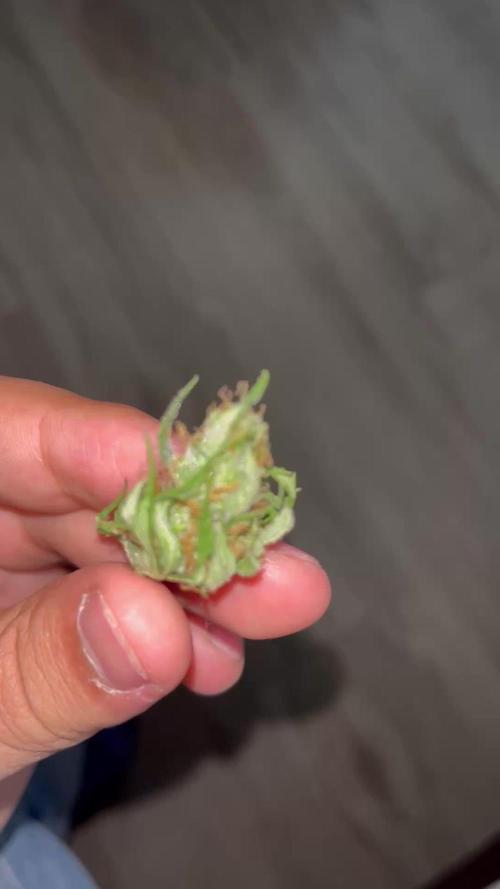
Week idk what number of flower
Last week of the mimosas, not the finish that i want, and why is that? PROBABLY A FKN TROPICANNA WAS A HERMIE, and in consequence a all the plants were partially polinated.
Things to improve:
-Buy a better timer for the light: this one was no accurate, because of this I never knew when my grow was with ligh and without, this cause to expose the plants to: not accurate 13/11, light filtration when i had to water them at night sometimes, etc
-Finally setup a water tray to prevent spills on the floor, better the space and not suffer everytime i had to look the plants runoff
-Buy a better soil: This was was a hell when dry, totally hidrophobic and waste so much water just to hidrate the first layer, it was really har to make the subtrate runoff if i didnt use 40% of pots volume as water
-Calm down with the fertilizer, had a salt accumulation problem that could increase the chances of hermaproditism
-Figure a way to control the environment, there were many cold nights lately
Last week
-0.5 ml micro
-2mll Flawless
-0.2 Calmag
Last pick a little popcorn nug that never polinized i think. Well this was fun anywas,Im preparing a Blueberry Auto run now to fight this cold temps, atay tunes





![Do-si-dos Automatic Royal Queen Seeds =]](https://bucket.growdiaries.com/static/report/photo/55911/20dafaf0e39c06aead2fb3dadc36f116_150.webp "Do-si-dos Automatic Royal Queen Seeds =]")


@NONSENSE
Follow
Good day, everyone!!
So my DO Si Dos lady flowering time going well.
I light the plant for 12 hours and feed it every day with 2L .
The smell is perfect for me - northern scent of mint, citron and some pine aromas. Serious aroma= always good High effect, less stone.
I think next week will be the last and I will prepare the plant for harvesting.
Thanks Royal Queen for the genetic :)
