


Likes
Comments
Share

@SkunkyDog420
Follow
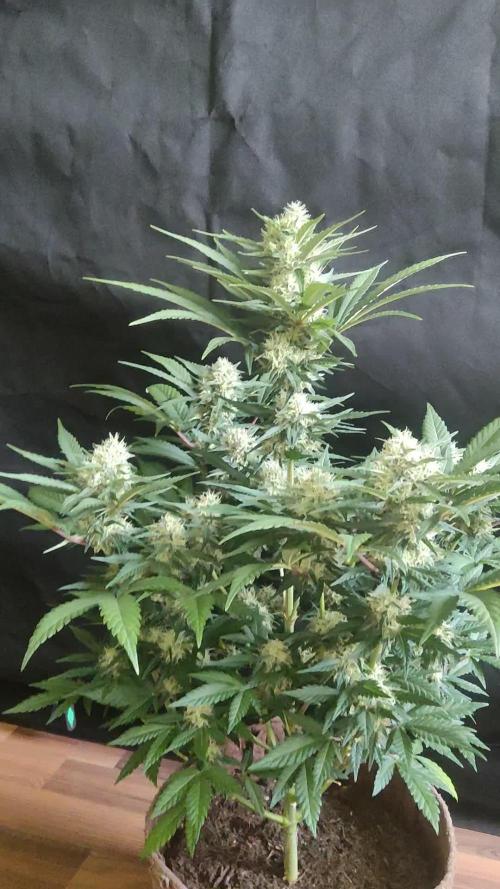
Hallo zusammen 🤙.
Sie wächst sehr schön und macht keine Umstände

Likes
3
Share


@Gahskel
Follow
Erste Woche der Blüte. Leichte Verfärbungen wirkt wie verbannt an der Spitze an einzelnen Blättern. Kann mir nicht herleiten woher diese kommen? Hat jemand Tipps?
Am 3 Tag waren die erste Anzeichen für eine Vorblüte entdeckt(Video)

Likes
29
Share


@Joni2017
Follow
Reaching the end 👏🏻👏🏻😁 control of trichomes😎😋
the rest of the days only with water 💦💦 temperature 27º C ☀️ humidity 65% 💧 and music 🎼 😉👍

Likes
10
Share


@Skinnytalls420
Follow
Day 8-19/12/21 she is looking healthy!!! Day 10-21/12/21 she is looking good!!! Day 13-24/12/21 everything is going well

Likes
15
Share

@Natrona
Follow
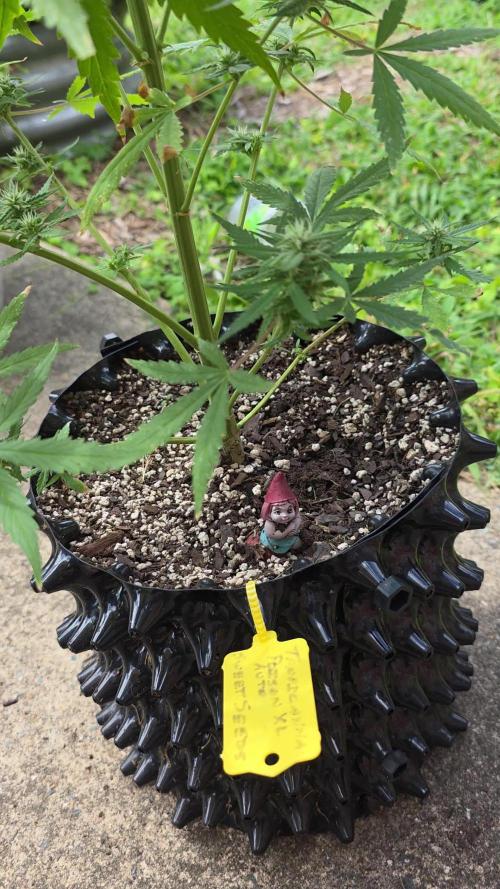
Tropicanna Ppison XL Auto- Outside
W7F5
8/10-16
This week’s weather has been a mix of rain, clouds and thunderstorms. Temperatures were mostly in the mid to upper 80s during the day and low 70s at night with humidity in 70%.
I watered 2 times with compost tea adding green sensation on the last watering.
Tropicanna Poison X auto is fattening up her buds. The structure shows minimal hairs and mostly calyxes.
Her buds have lots of sugar leaves which possibly can trap moisture causing rot. I check all my outside plants daily in the morning. If it rained that night, I give each stem a good shake to help dry them out. So far so good, no mold or other fungus or bug issues. The pics show the trichomes starting to fill out even without a magnifier. Some of her stems are pink which maybe genetics for reds and pinks. I hope I’m one of the lucky ones achieving the beautiful pinks of this Sweet Seeds Red line Strain. I am getting excited to see the full development of buds, colors and smells. Let’s go!
Thank you all for your continued support and encouragement. Your likes and comments motivate me to keep sharing my journey. Let’s continue to learn to grow together!
Stay green, growers love 💚🌿,
💫Natrona💫

Likes
3
Share


@Krautbauern
Follow
this time we got a different phenotype, the whole plant has started to turn purple, not just sporadically like in the last ztrawberriez grow. It looks beautiful and will be harvested soon
Likes
1
Share

@Skunkiest_bender39
Follow
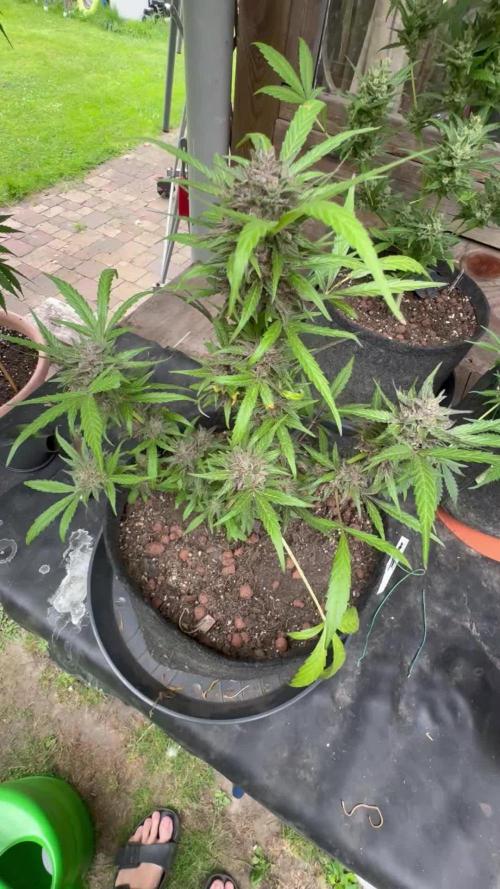
Farbfroh und terpenreich nicht viel bud Aber super harzig. Riecht nach skunkigen Bonbons und ein Hauch von dieel

Likes
33
Share


Likes
48
Share


@Wackytabacky_420
Follow
Hey fellow growers here's my update of my Blue Dream 420fastbuds grow. These ladies are doing great!! Starting to fill in with flowers and smell is getting stronger with every feeding! Speaking of which this is what the feeds looked like this past week...
1/27/2021
2ml micro
1ml gro
2ml bloom
1/4ml ph down
Ph 6.41
372ppm
Solution temp 72.3°F
2/1/2022
2ml micro
1ml gro
2ml bloom
1/4ml ph down
Ph 6.47
372ppm
Solution temp 74.1°F
This grow seems to be flying by compared to my first grow. The environment is running well and the ladies are happy!! Till next week. Happy Growing growmies!!🌱💚💪💪💪👊🏼🙏🏻🤟🏻
Likes
5
Share


@CanadianFillmore
Follow
Week 9 commence flushing. This lady is looking great, super frosty, sticky and got a sweet aroma. Removed some dying leaves and now we wait for chop in about 6-7 days.

Likes
27
Share


@Dunk_Junk
Follow
Wow. She grew 26cm this week.
Clearly likes her new 10 litre fabric pot.
From what I've seen of the pots so far I like them.
She's making loads of flower sites, also note the stem abuse I've administered this week 😂 I'm trying to stress the ol' girl out a bit. No idea if it working but its all data in the memory bank! 💪
EDIT: Light settings updated to reflect current tent lighting......

Likes
6
Share

@HandsomeTerpz
Follow
ChatGPT:
🇺🇸 Week 11
--------------------
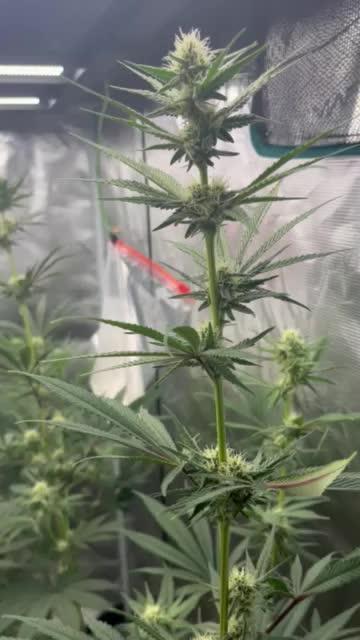
Humboldt California Haze: This week, she has adapted well to the new light, and you can tell the conditions and temperature suit her perfectly. It’s still a bit of a shame that the nodes have stretched so much, but the flowering is coming along nicely. The scent is truly pleasantly delicious.
🇩🇪 Woche 11
-------------------
Humboldt California Haze: Diese Woche hat sie sich gut an die neue Lampe angepasst, und man merkt, dass ihr die Bedingungen und die Temperatur sehr zusagen. Schade ist nach wie vor, dass die Nodien so extrem in die Höhe gegangen sind, aber die Blüte entwickelt sich wirklich gut. Der Duft ist angenehm lecker.

Likes
55
Share


@valiotoro
Follow
FBA2507 Light mix finito✔️BANG
To the guy behind this strain : THANK YOU it's a one-way to the past when I was harvesting peaches in my grandpa's garden👨🏻🌾
Once again the quality of the buds 😳!!!
In coco she s huge🚀
Same feeding + Green Sensation
RoOoOaAaaADDD I've ever been down👻
Take care 💚
Likes
Comments
Share


@AutomataClub
Follow
Parece que tenemos una verduleria en el indoor. Se siente un olor intenso a cascara de banana que dan ganas de comerse los cogollos. La alimentacion fue muy sutil.

Likes
49
Share


@Roberts
Follow
I just did a solution change yesterday. I was having a issue getting the right amount dialed in. She has shifted into flowering, and is still making progress. She is under the Medic Grow Mini Sun-2 320 watt. I have her in Athena blended line nutrition she hopefully bounces back now fast, and makes some great progress. Thank you Medic Grow, Athena, and Fast Buds. 🤜🏻🤛🏻🌱🌱🌱
Thank you grow diaries community for the 👇likes👇, follows, comments, and subscriptions on my YouTube channel👇. ❄️🌱🍻
Happy Growing 🌱🌱🌱
https://youtube.com/channel/UCAhN7yRzWLpcaRHhMIQ7X4g
If anyone needs to purchase fastbuds here is a link for my affiliate program
https://myfastbuds.com/?a_aid=60910eaff2419
Likes
25
Share


@MadeInGermany
Follow
Hey guys :-)
It's finally time for the space in the blossom tent to be free :-) .
In the coming days I will put them in the flowering tent.
Watering would be done twice this week with 1 l each (nutrients see table above)
Otherwise it was checked and everything was cleaned.
Have fun and stay healthy 💚🙏🏻
👇🏼👇🏼👇🏼👇🏼👇🏼👇🏼👇🏼👇🏼👇🏼👇🏼👇🏼👇🏼
You can buy this Nutrients at :
https://greenbuzzliquids.com/en/shop/
With the discount code: Made_in_Germany you get a discount of 15% on all products from an order value of 100 euros.
👇🏼👇🏼👇🏼👇🏼👇🏼👇🏼👇🏼👇🏼👇🏼👇🏼👇🏼👇🏼
You can buy this strain at :
www.Zamnesia.com
Water 💧 💧💧
Osmosis water mixed with normal water (24 hours stale that the chlorine evaporates) to 0.2 EC. Add Cal / Mag to 0.4 Ec Ph with Organic Ph - to 5.8 - 6.4
MadeInGermany

Likes
9
Share


@GoldenWeedGrower
Follow
22/08/22 - W04 - D22-28 : the girls are responding good to the training. So far so good. Made tranfer to another reservoir. In the last day D28 I see first sign of SOG
Likes
7
Share


@DisTentAint4Campin
Follow
She just has massive leaves shading stuff out so had to massive prune I didn't want to train her cuz I'm training every other auto out I wana see what does better trained or non trained I've been using bud clips from bud trainer to do training it's been awesome I haven't used them on this cultivar jus some garden wire tune in to the podcast on youtube @sundaesesh
Processing
Likes
7
Share


@gablmo
Follow
Another never ending vege week. I took clones and did more trellis work. The PH was up more than usual, they are still alive. I'm glad.

Likes
114
Share


@Tropicannibis_Todd
Follow
💩Alrighty Then Growmies We Are Back At it 💩
Well folks we just finished up the last run and so we are back to do it all over again 😁
So what do you say we have some fun 👈 We got some Gorilla Punch 👊 👊 👊 DAY 28
👉 Its been a really crazy week , major storm rolled in didn't have power for 4 days 😳 I had to be creative but shes doing fine 👌 I believe the stretch is on 👈
So this week I've started her nutrients regiments 👌Just need to remind myself to take it easy 🤔
FC4800 from MarsHydro Lights being readjusted and chart updated .........👍👉Added an RU45 too the mix 👍
www.marshydro.ca
👉I used NutriNPK for nutrients for my grows and welcome anyone to give them a try .👈
👉 www.nutrinpk.com 👈
NutriNPK Cal MAG 14-0-14
NutriNPK Grow 28-14-14
NutriNPK Bloom 8-20-30
NutriNPK Bloom Booster 0-52-34
I GOT MULTIPLE DIARIES ON THE GO 😱 please check them out 😎
👉THANKS FOR TAKING THE TIME TO GO OVER MY DIARIES 👈
Would you like to hang with the growdiary community 👉 https://discord.gg/gr4cHGDpdb 👈
Likes
57
Share


@LockDownGrow
Follow
ok so everything has gone fantastic , no nutrient burns at all , and have been slowly creeping up the base nutrients , i have stopped the cal mag and now adding house and gardens bud XL at full strength these girls are now in full swing of flower and i bought a new ph stick this week ,
i have found when PHing the feed bucket that its best too have air stones in the bucket , add all nuts and then ph but do not use the feed that day as if you check the next day the ph is off again so i left it 24 hours after i add more ph down , and it seems too make the measurements alot easier and stable , i have bent down the main stems " without damaging them onto my netting too A keep the canopy all the same high so my lighting is covering all plants at the same distance and also it allowed the side stems too reach up too ,
i also was sponsored another new led light by kingbo this week so have added another 600watt led too the grow , so now have two 600's and one 900watt , and temps are still fine sitting at 24c lights on and 19-20 off , so am pleased with that , this lady is by far the bushyist plant with the most branches she also didn't stretch much and is packed with bud sites ,