


Likes
Comments
Share

@GreenHobbit
Follow
Woche 19 (25.04.–01.05.)
✂️ Erntewoche!
Nach insgesamt 19 Wochen, davon etwa 7 Wochen Vegetation, war es endlich soweit. Trotz der vielen unterschiedlichen Genetiken konnten alle Pflanzen gemeinsam ihr Potenzial zeigen. Besonders spannend war es zu beobachten, wie unterschiedlich die Sorten gewachsen sind und welche Farben sie zum Ende entwickelt haben. Ein bunter Mixed Grow mit jeder Menge Charakter, der unglaublich viel Spaß gemacht hat.


Likes
3
Share


@growerplatinum
Follow
I think she is a beautiful strain, but man is it a pain in the ass to trim here and there, and to LST. Her stems were always very fragile no matter what i did, not to break but to bend. Stayed short, and grew bushy, I couldn't get them to strengthen up. But overall I would say its pretty to look at and grows densely and might be worth a try.


Likes
14
Share


@eldruida_lamota
Follow
Vamos familia quinta semana de floración de estás Tropical Zmoothie de SeedStockers.
Que ganas tengo de ver el progreso de esta variedad, las plantas están sanas, se ven con buen color.
La cantidad de agua cada 48h entre riegos.
Esta semana añadimos nutrientes de la gama Agrobeta.
Las plantas están bastante bien y eso que subió par de grados la temperatura que en mi tierra hace mucho calor.
Me pasé un poco de mano con la comida pero apañaré ahora con agua destilada.
Estas próximas semanas veremos como avanzan y progresan las flores.
Mars hydro:
Code discount: EL420
https://www.mars-hydro.com/
Agrobeta:
https://www.agrobeta.com/agrobetatiendaonline/36-abonos-canamo
Hasta aquí todo, Buenos humos 💨💨.


Likes
5
Share


@pzwags420
Follow
I had to top Cantaloupe haze and White widow as they were too close to the lights and I didn't want to loose any ppfd on my lowers. My GSC seems perfect for not topping. next time I would top those strains at least once. I have been flushing the CH and getting run off around 1200ppm which seems like the max she can take the others like it stronger so I have been flushing them every 2-3 days. CH is tough to keep happy but will continue to monitor. All plants are in week 4 of flower 12/12 from seed.


Likes
52
Share


@jmsky
Follow
Permanent Marker was the last one standing and got the chop at day 75 of flower, nearly 11 weeks. The trichomes were still not very amber anywhere except the top sugar leaves, but it was about 90% milky white, and the leaves were all drying out.
I bagged 36g of larfy buds and trimmings, 20.5g top buds, and 12g small buds. 32g smokable is not bad.
I will update with smoke report in a couple weeks, but initial tests were promising. Strong chemical taste not far off from its namesake, with a KO strength punch.


Likes
6
Share


@MaestroBud
Follow
Critical Orange Punch has closed the vegetative phase with a robust and compact development. It has a less marked stretch than Skywalker, with a stockier and denser structure. The branches were completely distributed under a 120x120 SCROG net, with controlled defoliation 48 hours before the switch.
📊 Current conditions:
EC solution: 1.35 mS/cm
pH: 6.3
Evening temperature: 19.8°C
💧 Fertilization (identical to Skywalker):
Regular integration with Cal-Mag and B-52 to support structure and management of transition stress.
🧠 Observations:
Excellent vegetative-productive balance. Uniform absorption, with regular drainage. The leaves have turgidity and good transpiration. The plant benefited from a radical treatment based on Sensizym and Voodoo in the previous phase.
🔧 Goal: to intensify the assimilation of sugars and improve the elasticity of cell fibers for the future load of buds. Rhino Skin was introduced early.

Likes
9
Share


@SSKNFbyHAZE
Follow
Throughout the week, I give compost tea, and fermented plant juice once each ^^
Hope you guys have a wonderful day today ^^v
*** Please Like, comment & share ***
Highly appreciated -----/-----<@

Likes
4
Share


@Osavv_OTGUK
Follow
Week 6 this is of flower. The trichomes are showing cloudy/ clear so now it’s just a waiting game


Processing
Likes
21
Share


@LittleBigTrees
Follow
Defoliated some leaves to let light in, chopped one down early as I run out of bud 🙄 it's good for less than 4 weeks flowering.
Have them rice water starch again this week in with there food.
A layer of frost is slowly forming 😎 hopefully they will fatten up nice and frost up really good to 🤞


Likes
10
Share

@OrganicJoe
Follow
Final Weeks Update 🌿
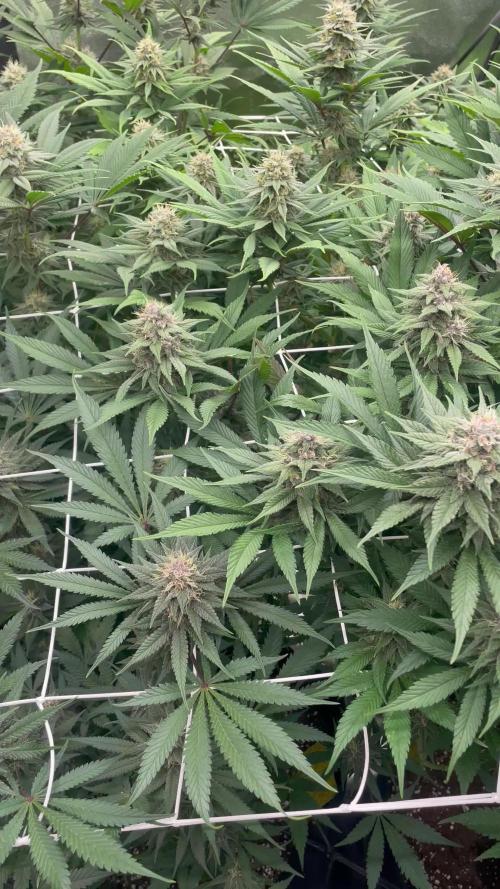
We’re heading into the final weeks, and these beauties are really showing out. The buds are getting noticeably denser and thicker by the day, stacking up beautifully and putting on that final weight.
Trichome production is on another level, absolutely incredible and well above average. The frost is insane. It might not fully translate in the photos, but in person it’s next-level work.
What makes this run even more special is that nothing was added from start to finish. This has been a fully organic grow, powered entirely by a pack of Brotanics living soil. No bottled nutrients, no extras, just letting the soil do its thing.
Easily one of the most hassle-free grows I’ve ever had. Smooth from start to finish, and the results are speaking for themselves.
Excited to see how these last weeks finish out. 🌱✨


Likes
148
Share


@CrazyHorse
Follow
Whats up brothers and sisters. We have the fourth week of flowering, my beauty has completely recovered from problems with pH. The leaves have returned to their color, the white flower hairs, as you can see, are developing wonderfully. The level of smell has increased, but the manifestation of the smell is yet to come.
This is the first time I have dealt with the AutoPot watering system. In the set I use the newest AQUA valve 5, combined with a standard 47 liter tank.
WOW !! Friends, I didn't expect it to be so easy and fun to use. I highly recommend it and don't forget to put your AirDome in to your pot ;)
Have a nice day, You Lovely Girls Growers :D


Likes
34
Share


@Ultraviolet
Follow
Yellow butterfly came to see me the other day; that was nice.
Starting to show signs of stress on the odd leaf, localized isolated blips, blemishes, who said growing up was going to be easy!
Smaller leaves have less surface area for stomata to occupy, so the stomata are packed more densely to maintain adequate gas exchange. Smaller leaves might have higher stomatal density to compensate for their smaller size, potentially maximizing carbon uptake and minimizing water loss. Environmental conditions like light intensity and water availability can influence stomatal density, and these factors can affect leaf size as well. Leaf development involves cell division and expansion, and stomatal differentiation is sensitive to these processes. In essence, the smaller leaf size can lead to a higher stomatal density due to the constraints of available space and the need to optimize gas exchange for photosynthesis and transpiration. In the long term, UV-B radiation can lead to more complex changes in stomatal morphology, including effects on both stomatal density and size, potentially impacting carbon sequestration and water use. In essence, UV-B can be a double-edged sword for stomata: It can induce stomatal closure and potentially reduce stomatal size, but it may also trigger an increase in stomatal density as a compensatory mechanism. It is generally more efficient for gas exchange to have smaller leaves with a higher stomatal density, rather than large leaves with lower stomatal density. This is because smaller stomata can facilitate faster gas exchange due to shorter diffusion pathways, even though they may have the same total pore area as fewer, larger stomata. Leaf size tends to decrease in colder climates to reduce heat loss, while larger leaves are more common in warmer, humid environments. Plants in arid regions often develop smaller leaves with a thicker cuticle and/or hairs to minimize water loss through transpiration. Conversely, plants in wet environments may have larger leaves and drip tips to facilitate water runoff. Leaf size and shape can vary based on light availability. For example, leaves in shaded areas may be larger and thinner to maximize light absorption. Leaf mass per area (LMA) can be higher in stressful environments with limited nutrients, indicating a greater investment in structural components for protection and critical resource conservation. Wind speed, humidity, and soil conditions can also influence leaf morphology, leading to variations in leaf shape, size, and surface characteristics. Small leaves: Reduce water loss in arid or cold climates.
Environmental conditions significantly affect gene expression in plants. Plants are sessile organisms, meaning they cannot move to escape unfavorable conditions, so they rely on gene expression to adapt to their surroundings. Environmental factors like light, temperature, water, and nutrient availability can trigger changes in gene expression, allowing plants to respond to and survive in diverse environments.
Depending on the environment a young seedling encounters, the developmental program following seed germination could be skotomorphogenesis in the dark or photomorphogenesis in the light. Light signals are interpreted by a repertoire of photoreceptors followed by sophisticated gene expression networks, eventually resulting in developmental changes. The expression and functions of photoreceptors and key signaling molecules are highly coordinated and regulated at multiple levels of the central dogma in molecular biology. Light activates gene expression through the actions of positive transcriptional regulators and the relaxation of chromatin by histone acetylation. Small regulatory RNAs help attenuate the expression of light-responsive genes. Alternative splicing, protein phosphorylation/dephosphorylation, the formation of diverse transcriptional complexes, and selective protein degradation all contribute to proteome diversity and change the functions of individual proteins.
Photomorphogenesis, the light-driven developmental changes in plants, significantly impacts gene expression. It involves a cascade of events where light signals, perceived by photoreceptors, trigger changes in gene expression patterns, ultimately leading to the development of a plant in response to its light environment.
Genes are expressed, not dictated! While having the potential to encode proteins, genes are not automatically and constantly active. Instead, their expression (the process of turning them into proteins) is carefully regulated by the cell, responding to internal and external signals. This means that genes can be "turned on" or "turned off," and the level of expression can be adjusted, depending on the cell's needs and the surrounding environment. In plants, genes are not simply "on" or "off" but rather their expression is carefully regulated based on various factors, including the cell type, developmental stage, and environmental conditions. This means that while all cells in a plant contain the same genetic information (the same genes), different cells will express different subsets of those genes at different times. This regulation is crucial for the proper functioning and development of the plant.
When a green plant is exposed to red light, much of the red light is absorbed, but some is also reflected back. The reflected red light, along with any blue light reflected from other parts of the plant, can be perceived by our eyes as purple.
Carotenoids absorb light in blue-green region of the visible spectrum, complementing chlorophyll's absorption in the red region. They safeguard the photosynthetic machinery from excessive light by activating singlet oxygen, an oxidant formed during photosynthesis. Carotenoids also quench triplet chlorophyll, which can negatively affect photosynthesis, and scavenge reactive oxygen species (ROS) that can damage cellular proteins. Additionally, carotenoid derivatives signal plant development and responses to environmental cues. They serve as precursors for the biosynthesis of phytohormones such as abscisic acid () and strigolactones (SLs). These pigments are responsible for the orange, red, and yellow hues of fruits and vegetables, while acting as free scavengers to protect plants during photosynthesis.
Singlet oxygen (¹O₂) is an electronically excited state of molecular oxygen (O₂). Singlet oxygen is produced as a byproduct during photosynthesis, primarily within the photosystem II (PSII) reaction center and light-harvesting antenna complex. This occurs when excess energy from excited chlorophyll molecules is transferred to molecular oxygen. While singlet oxygen can cause oxidative damage, plants have mechanisms to manage its production and mitigate its harmful effects.
Singlet oxygen (¹O₂) is considered a reactive oxygen species (ROS). It's a form of oxygen with higher energy and reactivity compared to the more common triplet oxygen found in its ground state. Singlet oxygen is generated both in biological systems, such as during photosynthesis in plants, and in cellular processes, and through chemical and photochemical reactions. While singlet oxygen is a ROS, it's important to note that it differs from other ROS like superoxide (O₂⁻), hydrogen peroxide (H₂O₂), and hydroxyl radicals (OH) in its formation, reactivity, and specific biological roles. Non-photochemical quenching (NPQ) protects plants from damage caused by reactive oxygen species (ROS) by dissipating excess light energy as heat. This process reduces the overexcitation of photosynthetic pigments, which can lead to the production of ROS, thus mitigating the potential for photodamage. Zeaxanthin, a carotenoid pigment, plays a crucial role in photoprotection in plants by both enhancing non-photochemical quenching (NPQ) and scavenging reactive oxygen species (ROS). In high-light conditions, zeaxanthin is synthesized from violaxanthin through the xanthophyll cycle, and this zeaxanthin then facilitates heat dissipation of excess light energy (NPQ) and quenches harmful ROS.
The Issue of Singlet Oxygen!!
ROS Formation: Blue light, with its higher energy photons, can promote the formation of reactive oxygen species (ROS), including singlet oxygen, within the plant.
Potential Damage: High levels of ROS can damage cellular components, including proteins, lipids, and DNA, potentially impacting plant health and productivity.
Balancing Act: A balanced spectrum of light, including both blue and red light, is crucial for mitigating the harmful effects of excessive blue light and promoting optimal plant growth and stress tolerance.
The Importance of Red Light:
Red light (especially far-red) can help to mitigate the negative effects of excessive blue light by:
Balancing the Photoreceptor Response: Red light can influence the activity of photoreceptors like phytochrome, which are involved in regulating plant responses to different light wavelengths.
Enhancing Antioxidant Production: Red and blue light can stimulate the production of antioxidants, which help to neutralize ROS and protect the plant from oxidative damage.
Optimizing Photosynthesis: Red light is efficiently used in photosynthesis, and its combination with blue light can lead to increased photosynthetic efficiency and biomass production.
In controlled environments like greenhouses and vertical farms, optimizing the ratio of blue and red light is a key strategy for promoting healthy plant growth and yield.
Understanding the interplay between blue light signaling, ROS production, and antioxidant defense mechanisms can inform breeding programs and biotechnological interventions aimed at improving plant stress resistance. In summary, while blue light is essential for plant development and photosynthesis, it's crucial to balance it with other light wavelengths, particularly red light, to prevent excessive ROS formation and promote overall plant health. Oxidative damage in plants occurs when there's an imbalance between the production of reactive oxygen species (ROS) and the plant's ability to neutralize them, leading to cellular damage. This imbalance, known as oxidative stress, can result from various environmental stressors, affecting plant growth, development, and overall productivity.
Causes of Oxidative Damage: Abiotic stresses: These include extreme temperatures (heat and cold), drought, salinity, heavy metal toxicity, and excessive light. Biotic stresses: Pathogen attacks and insect infestations can also trigger oxidative stress. Metabolic processes: Normal cellular activities, particularly in chloroplasts, mitochondria, and peroxisomes, can generate ROS as byproducts. Certain chlorophyll biosynthesis intermediates can produce singlet oxygen (1O2), a potent ROS, leading to oxidative damage. ROS can damage lipids (lipid peroxidation), proteins, carbohydrates, and nucleic acids (DNA). Oxidative stress can compromise the integrity of cell membranes, affecting their function and permeability. Oxidative damage can interfere with essential cellular functions, including photosynthesis, respiration, and signal transduction. In severe cases, oxidative stress can trigger programmed cell death (apoptosis). Oxidative damage can lead to stunted growth, reduced biomass, and lower crop yields.
Plants have evolved intricate antioxidant defense systems to counteract oxidative stress. These include: Enzymes like superoxide dismutase (SOD), catalase (CAT), and various peroxidases scavenge ROS and neutralize their damaging effects. Antioxidant molecules like glutathione, ascorbic acid (vitamin C), C60 fullerene, and carotenoids directly neutralize ROS. Developing plant varieties with gene expression focused on enhanced antioxidant capacity and stress tolerance is crucial. Optimizing irrigation, fertilization, and other management practices can help minimize stress and oxidative damage. Applying antioxidant compounds or elicitors can help plants cope with oxidative stress. Introducing genes for enhanced antioxidant enzymes or stress-related proteins over generations.
Phytohormones, also known as plant hormones, are a group of naturally occurring organic compounds that regulate plant growth, development, and various physiological processes. The five major classes of phytohormones are: auxins, gibberellins, cytokinins, ethylene, and abscisic acid. In addition to these, other phytohormones like brassinosteroids, jasmonates, and salicylates also play significant roles.
Here's a breakdown of the key phytohormones:
Auxins: Primarily involved in cell elongation, root initiation, and apical dominance.
Gibberellins: Promote stem elongation, seed germination, and flowering.
Cytokinins: Stimulate cell division and differentiation, and delay leaf senescence.
Ethylene: Regulates fruit ripening, leaf abscission, and senescence.
Abscisic acid (ABA): Plays a role in seed dormancy, stomatal closure, and stress responses.
Brassinosteroids: Involved in cell elongation, division, and stress responses.
Jasmonates: Regulate plant defense against pathogens and herbivores, as well as other processes.
Salicylic acid: Plays a role in plant defense against pathogens.
1. Red and Far-Red Light (Phytochromes):
Red light:
Primarily activates the phytochrome system, converting it to its active form (Pfr), which promotes processes like stem elongation and flowering.
Far-red light:
Inhibits the phytochrome system by converting the active Pfr form back to the inactive Pr form. This can trigger shade avoidance responses and inhibit germination.
Phytohormones:
Red and far-red light regulate phytohormones like auxin and gibberellins, which are involved in stem elongation and other growth processes.
2. Blue Light (Cryptochromes and Phototropins):
Blue light:
Activates cryptochromes and phototropins, which are involved in various processes like stomatal opening, seedling de-etiolation, and phototropism (growth towards light).
Phytohormones:
Blue light affects auxin levels, influencing stem growth, and also impacts other phytohormones involved in these processes.
Example:
Blue light can promote vegetative growth and can interact with red light to promote flowering.
3. UV-B Light (UV-B Receptors):
UV-B light:
Perceived by UVR8 receptors, it can affect plant growth and development and has roles in stress responses, like UV protection.
Phytohormones:
UV-B light can influence phytohormones involved in stress responses, potentially affecting growth and development.
4. Other Colors:
Green light:
Plants are generally less sensitive to green light, as chlorophyll reflects it.
Other wavelengths:
While less studied, other wavelengths can also influence plant growth and development through interactions with different photoreceptors and phytohormones.
Key Points:
Cross-Signaling:
Plants often experience a mix of light wavelengths, leading to complex interactions between different photoreceptors and phytohormones.
Species Variability:
The precise effects of light color on phytohormones can vary between different plant species.
Hormonal Interactions:
Phytohormones don't act in isolation; their interactions and interplay with other phytohormones and environmental signals are critical for plant responses.
The spectral ratio of light (the composition of different colors of light) significantly influences a plant's hormonal balance. Different wavelengths of light are perceived by specific photoreceptors in plants, which in turn regulate the production and activity of various plant hormones (phytohormones). These hormones then control a wide range of developmental processes.
Likes
13
Share


@Andres
Follow
a plant very resistant to everything highly recommended...uff .... a knock out plant an earthy taste and pine ... with a dense smoke ...... and of compact and abundant buds ... a 4x4 all-terrain plant ... 100% recommendable ... with their healthy roots....00
Likes
12
Share


@ScrogFreak
Follow
The SCROG net was installed on the last day of Week 6, I included a couple pics from that night, to compare with how the plant looked the next day, which was the first day of Week 7. My nerve damaged fingers caused me to be a little rougher with her while the net was going on than I like, but as you can see, she bounced back very quickly and was reaching for the light less than 24 hours after being mangled lol.
I will continue to systematically defoliate the upper canopy every night or two for the next several weeks, and will completely strip most everything below the net. Every night or two I'll tuck any branches that need tucking, and will remove any fan leaves covering bud sites.
She spread out pretty well in the net, and truth be known i probably could have gotten away with a 6 week veg after, plants are a decent size in the net with the stretch left to go. Flip happens at the end of Week 7
The manganese issue seems to be getting much better by the end of the week. Will keep my pH levels at 5.8 for the remainder of this grow, and any subsequent grows.
I also devised a fan mount to save on space in the net. Instead of standing the fan, i simply cut a piece of 1x3 to length, drilled 2 holes in each end, large enough for zip ties to pass through. then I simply zip tied it to the tent poles, took the legs off the fan, and screwed the base to the board. I placed a piece of foam on top, as the screws were a shade long and I was afraid the small protruding tip would eventually puncture the tent. Works much better than expected. No movement in the mount at all.
Processing
Likes
13
Share


@Grownewgenetics
Follow
These are the Epic Genetics Strains, we have some problem on the begging many mutants and seeds that don't came out, but we get to safe 1 epical widow and 1 Spigol Field, the second Widow on the pictures is the one how after let grow the second leaves, stop to grow up and separate in two for alone, bit know is getting the flowers directly for the stock, crazy because they smeñl fantastic and are complete frosty but they will not become to big.