


Likes
6
Share


@sanibelisl
Follow
Girls have settled into summer camp nicely. Worries about not taking the transplant diminish more each day and I am gaining more confidence in strong roots with each passing day as well. I had to build a supplemental lighting system for the greenhouse. Here at home we are experiencing a wetter than usual summer so far and with that brings clouds. So I needed to do something. So I built a new greenhouse light. It cranks out some light. Currently at canopy I’m measuring around 600 PPFD. Plants are loving it.
All three plants sexed and all are females. Didn’t think otherwise.
So the formula 707 is performing better than expected. Water retention is crazy. Watered the plants on Sunday with a gallon each , today is Thursday and no water needed. Going to try and get to Sunday for a whole week between watering.
*** update, added a short video from 7am this morning. The girls really do like the homemade light.

Likes
12
Share

@WaffleTerps
Follow
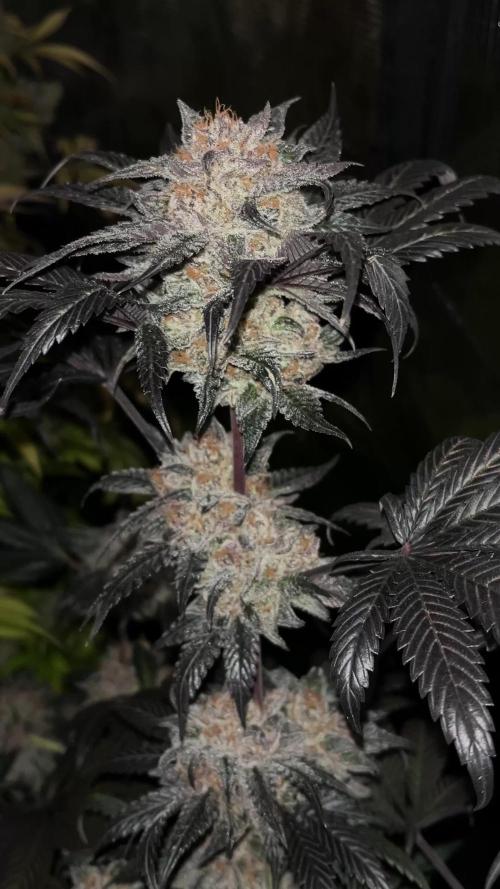
This week was fully focused on correcting salt buildup and preparing a clean, controlled finish, with quality and terpene preservation as the main priorities.
🔹 Key irrigations
– Final Flush was applied with real 30–40% runoff, successfully reducing EC levels in the root zone.
– Follow-up irrigation with plain water only (pH 6.2) confirmed a consistent EC drop across all pots.
– Plants are now in controlled senescence, with no signs of active nutrient lockout.
🔹 Runoff data
Runoff EC is now within safe ranges (≈1.5–3.0 mS depending on plant), confirming the flush worked and roots are in end-of-cycle mode rather than aggressive uptake.
🔹 Environment & light
– PPFD adjusted (~700–780 µmol/m²/s)
– Stable temperatures
– Humidity tightly controlled to protect dense colas
Everything dialed in to preserve resin and avoid unnecessary stress.
🔹 Plant status
Flowers are fully formed, trichomes mostly cloudy with early amber showing, final structure locked in. At this stage we’re no longer chasing bulk, but ripeness and internal clean-up.
📌 Plan
Final days with minimal intervention, observing real pot weight and plant response.
Harvest window is very close and right on target.
➡️ Next post will be harvest day and the start of drying.
Thanks to everyone following the project and sharing feedback — every cycle is a step forward. 🌱💪

Likes
Comments
Share


@JoeCNote
Follow
Successful germination, actually started first seeds in June, popped 4 beans but during early growth I lost two seeds to over watering so I ended up with on 2 plants to fill 3 pots. Ended up trying 4 more beans in the same method, a couple months down the road,only lost 1 to over watering this time. So now I have 5 pheno's, 3 plants for now and 2 I'm saving clones of for later.
Never had a problem with this kind of thing before so it speaks to the sensitivity of this strain.
(More evidence later) start of actual seeds on this first run was August 18th.
Processing
Likes
10
Share


@Canadian_Steelheader
Follow
Well it’s been a rough ride with this WW girl, She was veging on the side for quite a while and not in the best of conditions. Transferred her to CoCo and things went terrible. pH was good and nutes were good, but her roots weren’t the best of shape. She wasn’t growing and all her stems and main branch were turning purple, I thought not again, I foliar sprayed for a few days with epsom salt which helped a little, but I decided to Put her back to soil. I nurtured her back to health and I was able to do a little fimming and she responded very nicely after that. She now has a few friends beside her in the tent, which is my grow 3 & 4. Two Purple Kush and a northern light. Hopefully if all goes well I’ll be flipping the switch in 3 or 4 weeks. The new additions just finished their 2nd week of veg. Wish me luck, I certainly need it !


Likes
3
Share


@MicroHidroGrow
Follow
Día 22.
Las plantas van muy bien. Veo un buen tamaño de flores y buena cantidad por ahora. Espero que sigan en ese camino. Estimo que van a ser unas 9 semanas de floración en total. Así que entrando en la 4ta semana, estimo que voy a empezar a usar el overdrive desde la próxima semana. Seguramente voy a tener que hacer otra defoliación.
Día 24.
La floración viene muy bien. Las plantas van engordando parejo. Aproveché que algunas plantas están más bajas en altura y coincide en diagonal, así que puse la luz en diagonal para lograr una distancia pareja a la luz con todas las plantas. Voy a leer algunos diarios para ver cuando jan empezado a usar overdrive de advanced.
Likes
40
Share


@CampaCavallo
Follow
Buongiorno Amici della canapa🔝💚
Da domenica 26 maggio, Le condizioni atmosferiche sono nettamente migliorate... quindi noi della CampaCavallo cavallo abbiamo deciso di trasferire outdoor la ragazza.
Purtroppo sono bastate poche ore e l'abbiamo ritrovata attaccata da un po' di parassiti golosi.
Il giorno seguente siamo subito andati a recuperare cinque belle larve di coccinella!
Dobbiamo dire, come si vede in video, che hanno trovato subito pane per i loro denti !! 🐞💪🏻🐞

Likes
Comments
Share

@PropogateThePlanet
Follow
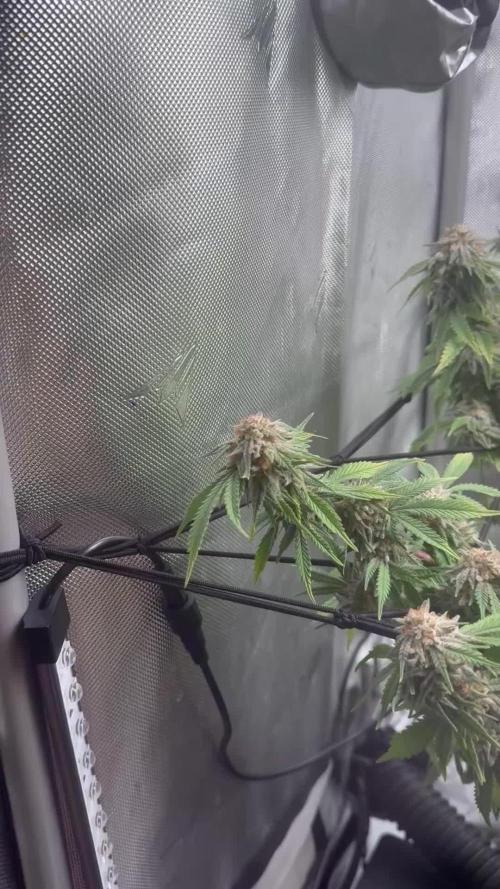
Still very few Amber trichomes. Still drinking water too. gonna keep rolling with it. Definitely starting to fade a bit.




Likes
14
Share


@DogDoctorOfficial
Follow
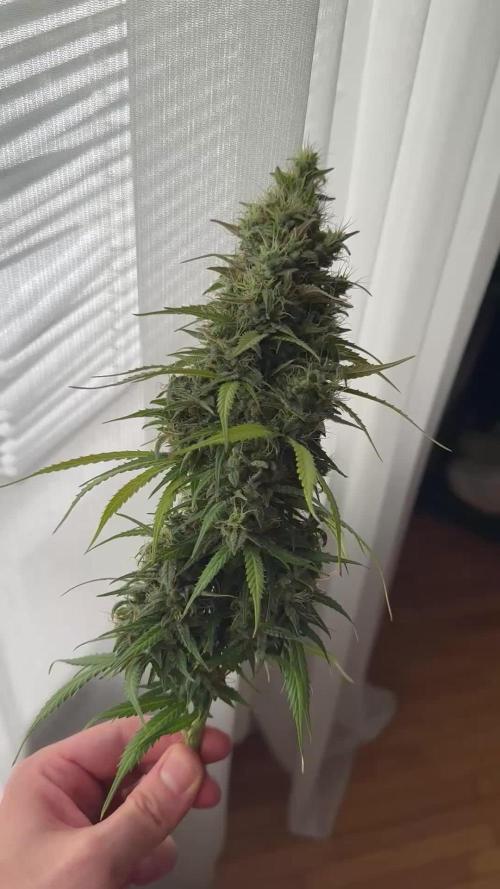
🍬🌿 8×8 Adventure – Week 14
Candy Rain Auto by Zamnesia
The Solo Survivor Is Getting Closer… But She's Not Fooling the Microscope! 😂🔬🌸💚
Welcome back to another chapter of the 8×8 Adventure! 🌱💚
And oh my goodness…
OUR CANDY RAIN! 🍬😂🌸
This girl just keeps giving us something to talk about.
She's still beautiful.
She's still developing.
She's still showing us those lovely flowers.
And she's getting closer to the end of her journey.
But, of course…
She wouldn't be Candy Rain if she didn't give us a little surprise along the way.
😂😂😂
Because just when you start thinking that a plant is approaching the finish line, she decides to throw fresh white hairs all over the place.
Everywhere!
🌸?🌸?🌸
And naturally, the first thought is:
"Girl… are you starting another round?"
😂😂😂
Not so fast!
Because although those fresh white pistils might make her look like she's trying to start something new, the trichomes are telling a different story under the microscope.
And that's precisely why we don't judge a plant's readiness by one visual clue alone.
Candy Rain is getting close.
Very close, I believe.
My current feeling is that this could be her final week, but that's an expectation, not a promise.
We'll keep looking, keep observing, and let the plant tell us when she's ready.
No rushing.
No guessing based on white hairs alone.
And definitely no letting Candy Rain fool us just because she's decided to grow a fresh set of little white flags!
😂🍬👑
So let's give our beautiful solo survivor the spotlight she deserves.
────────────────────────
🍬 WEEK 14 – THE FINISH LINE IS GETTING CLOSER
If you've been following Candy Rain from the beginning, you already know that this girl has developed her own personality throughout the 8×8 Adventure.
Our solo survivor.
Our beautiful green girl.
Our plant that seems determined to fill herself with flowers.
And now, here we are, approaching what may be the final chapter of her flowering journey.
She's still beautiful.
She's still carrying those developing flowers.
And she's still giving us new details to observe.
The most noticeable thing this week?
Those fresh white pistils.
?🌸
They're appearing across the plant, and if we were judging solely by the pistils, we might be tempted to think she still has a long way to go.
But that's exactly why I don't want to make that assumption.
Different cultivars can behave differently as they approach maturity. Some continue producing fresh pistils late in flowering, and that alone doesn't necessarily mean the entire plant has restarted its flowering journey.
We need to look at the whole picture.
The flowers.
The overall development.
The trichomes.
And how everything is progressing together.
Candy Rain is getting closer, and the microscope is helping us understand where she actually stands.
She's not quite ready yet.
But I have a feeling we're approaching the final stretch.
🍬🌿🔬
────────────────────────
? WHITE PISTILS EVERYWHERE – WHAT IS SHE TRYING TO TELL US?
Honestly, Candy Rain…
What are you doing?
😂😂😂
We're trying to work out whether you're approaching the finish line, and you decide to throw fresh white hairs all over your flowers.
?🌸?🌸?
I find this fascinating because I've seen this behaviour in some cultivars before.
As flowering progresses, certain plants continue producing new pistils even when other signs suggest they're getting close to maturity.
That doesn't automatically mean something is wrong.
It also doesn't automatically mean the plant needs several more weeks.
Fresh pistils are one observation, not the entire verdict.
And this is where experience, patience, and looking at several indicators become important.
I don't want to pretend that every cultivar follows the same visual script.
They don't.
Some plants give you a fairly straightforward progression.
Others keep surprising you.
And Candy Rain?
Well…
She's clearly decided to keep us guessing.
😂🍬👑
The white hairs are part of the story, but they're not the whole story.
────────────────────────
🔬 THE MICROSCOPE TELLS A DIFFERENT STORY
This is where things get interesting.
When I look at the trichomes under the microscope, the picture isn't quite the same as the one suggested by all those fresh white pistils.
She's not ready yet.
And that's an important distinction.
I don't want to call harvest simply because the plant looks close, because the pistils have changed, or because I'm getting impatient to finish another chapter of the 8×8 Adventure.
😂🌱
The trichomes give us another useful piece of information about flower maturity, and they need to be considered alongside the overall condition and development of the plant.
They don't magically tell the entire story on their own, either, but they help us make a much more informed assessment than judging by pistil colour alone.
So, for now, Candy Rain stays where she is.
We're observing.
We're checking.
We're comparing what we see with the progression from previous weeks.
And we're letting the evidence guide us.
My feeling is that this may be her final week.
But if she needs more time, she gets more time.
The calendar doesn't decide when a plant is ready.
The plant does.
🔬🍬🌸
────────────────────────
⏳ MY GUESS? POSSIBLY THE FINAL WEEK!
I'm going to put my expectation out there.
I think this could be Candy Rain's final week.
There.
I've said it.
😂🍬👑
But please underline the word "could" in your mind.
This isn't a fixed harvest date.
It's my current impression based on what I'm seeing as I follow her development.
The fresh pistils are one part of the picture.
The trichomes are another.
The overall progression is another.
And when I put all those observations together, I feel we're getting very close.
But we'll see.
Time will tell.
And if Candy Rain decides she needs a little more time, then we'll keep watching her.
I'm not interested in forcing a finish just because I've made a prediction in a diary.
😂
I would much rather be patient and document what actually happens than pretend I knew the exact day in advance.
That's the beauty of keeping weekly records.
We can share our expectations while staying honest about the uncertainty.
So, Candy Rain…
If this is your final week, let's make it a beautiful one.
And if you need a little longer?
We'll be here.
🍬💚🌿
────────────────────────
💚 STILL OUR BEAUTIFUL GREEN GIRL
One thing that hasn't changed is how much I enjoy looking at this plant.
She's still beautiful.
She's still got that lovely green presence.
And her flowers continue to catch my attention.
There is something satisfying about following a plant for weeks and seeing how the small changes gradually add up.
At first, you're watching the plant establish herself.
Then the structure develops.
The flowers appear.
The flowers become more substantial.
The details become more interesting.
And eventually, you reach this stage where every new observation makes you wonder how close she is to the next chapter.
That's where Candy Rain has brought us.
She's not just a photograph from Week 14.
She's the result of everything that happened before it.
And I love being able to look back at those earlier updates and compare them with what we're seeing now.
🍬🌿💚
────────────────────────
🍬 OUR SOLO SURVIVOR HAS COME A LONG WAY
Let's not forget where this story started.
Candy Rain has been our solo survivor throughout this part of the 8×8 Adventure.
And she has certainly made the most of her place in the room.
She's developed her own flowering structure.
She's filled herself with beautiful flowers.
She's shown us her own rhythm.
And she's continued to surprise me throughout the journey.
I originally called her our solo survivor because she was the one standing there on her own in this particular genetic group.
But sometimes I look at her and think she doesn't seem particularly interested in the word "solo."
😂😂😂
She's one plant, yes.
But she's given us plenty to photograph, plenty to discuss, and plenty to observe.
And now she's approaching the final stretch.
Whatever happens next, she's already given us a beautiful story to follow.
────────────────────────
💡 SAME ROOM – SAME PHOTONS – HER OWN RESPONSE
And once again, let's return to one of the foundations of the 8×8 Adventure.
Candy Rain is sharing the room with the other plants.
The same general environment.
The same 12/12 light schedule.
The same overall nutritional approach.
The same expanded lighting setup.
And yet, she continues to express herself in her own way.
🍬☀️🌿
The two additional Future of Grow Black Series 600W fixtures remain part of the room's expanded lighting setup.
We're using that additional capability with controlled output rather than simply running everything at maximum.
Our recent target has been around 1,500 PPFD across the upper canopy, with the actual intensity varying according to canopy height and position.
Lumiflora also contributes additional light deeper in the canopy.
And Candy Rain is receiving those same general lighting conditions as the rest of the room.
But her response is her own.
That's one of the things that continues to make this project interesting.
The room provides the shared stage.
The genetics provide the individual performance.
Some plants stretch.
Some stay compact.
Some develop at one pace, while others follow a different rhythm.
And even when they appear to be approaching the same stage, they can show different signs along the way.
Candy Rain is giving us another example of that.
Same room.
Same photons.
Different story.
────────────────────────
🔴 FAR-RED, DEEP-RED & OUR 15-MINUTE LIGHT ROUTINE
Now, let's talk about another part of the room's lighting routine.
We've been using far-red and deep-red lighting as part of our end-of-day approach, including a 15-minute red-light period after the main lights go off.
The idea behind this routine is to influence the plants' light signalling at the transition into the dark period and help create a consistent end-of-day transition.
But there's an important distinction here.
Red light, deep-red light, and far-red light aren't interchangeable terms.
They're different parts of the light spectrum, and plants can respond to them differently.
Red light is commonly associated with photosynthetic activity and plant light signalling.
Far-red light is particularly relevant to phytochrome signalling, which helps plants interpret changes in light conditions and the transition between day and night.
The response depends on the spectrum, intensity, duration, and the plant's wider environment.
So when we talk about our 15-minute period, we're talking about a deliberate lighting routine we're testing and using in this room.
We're not claiming that fifteen minutes is a universal magic number, or that every plant will respond in exactly the same way.
As always, we observe the plants and consider the whole environment.
🌿🔴🌙
────────────────────────
🌙 HELPING THE PLANTS TRANSITION INTO NIGHT
One of the reasons people experiment with end-of-day far-red is the way plants use light signals to interpret their surroundings.
Plants don't simply know that it's nighttime because somebody switched off a lamp.
They respond to changes in the spectrum and intensity of light, and those signals can influence different aspects of plant development.
Far-red light can shift the balance of phytochrome states, helping plants interpret the transition from light to darkness.
That's the scientific idea behind using far-red as part of an end-of-day routine.
In our setup, we're using a 15-minute period after the main lights go off as part of that transition.
I like experimenting with the lighting environment, but I also want to keep the claims realistic.
The response isn't identical across all cultivars, and the effects depend on the conditions and how the light is delivered.
So this is part of our approach and observation, not a guarantee that a particular result will happen.
And Candy Rain is still following her own path within that shared environment.
🍬🌙🌿
────────────────────────
☀️ THE EMERSON EFFECT – WHEN RED AND FAR-RED WORK TOGETHER
Now, let's bring in a fascinating piece of plant science: the Emerson effect.
The Emerson effect describes how photosynthesis can become more efficient when red light and far-red light are supplied together than would be expected from their individual effects alone under certain experimental conditions.
Why?
Because photosynthesis involves two cooperating photosystems, known as Photosystem II and Photosystem I.
They absorb light most effectively in different, overlapping parts of the spectrum.
When suitable red and far-red wavelengths are provided together, they can help balance the activity of these two photosystems.
In simple terms, they can work together more effectively than either wavelength would suggest on its own.
That's the fascinating part.
Plants don't respond to light as if every photon operates in isolation. The spectrum matters, and different wavelengths can interact with the plant's photosynthetic machinery in different ways.
☀️🔴🌿
However, we should keep the science precise.
The Emerson effect is a specific phenomenon demonstrated in photosynthesis research. It doesn't mean that adding any red or far-red light automatically increases yield, improves flower quality, or guarantees a faster finish.
The result depends on the spectrum, intensity, duration, and wider growing conditions.
And the 15-minute end-of-day routine we're using is a separate practical lighting choice. We shouldn't assume that it directly reproduces every condition used to demonstrate the Emerson effect.
I find the science fascinating, and it's one more reason I enjoy experimenting with lighting rather than thinking of every LED as simply a bright lamp.
Different wavelengths can have different roles.
The way we combine them matters.
And the plants' responses are worth observing.
💡🌿🔬
────────────────────────
💡 MORE THAN JUST SWITCHING THE LIGHTS ON
This is what I enjoy about the lighting side of the 8×8 Adventure.
We can talk about the main fixtures.
We can talk about PPFD.
We can talk about canopy position.
We can talk about red and far-red wavelengths.
We can talk about the transition between light and darkness.
And we can look at the plants and ask how they are developing under the overall conditions.
But I don't want to credit every little change to one specific light or one particular setting.
The plant is responding to the whole environment.
Genetics.
Light.
Nutrition.
Temperature.
Humidity.
Water availability.
And the way all those factors come together.
Candy Rain's fresh pistils are interesting, but I wouldn't automatically attribute them to the red-light routine.
We don't have enough evidence to make that claim.
Instead, we keep documenting what we see and avoid turning a coincidence into a conclusion.
That's how I want to approach these experiments.
Curiosity first.
Observation second.
Conclusions only when the evidence supports them.
💚🔬🌿
────────────────────────
⚗️ NUTRITION – THE SAME FOUNDATION CONTINUES
Candy Rain remains part of the same overall nutritional approach used in the room during this stage.
The recent feeding notes were:
🌱 Plagron Terra Bloom – approximately 2.3 ml/L
🌱 Power Buds – 1 ml/L
🌱 Green Sensation – 1 ml/L
🌱 Sugar Royal – 1 ml/L
⚗️ pH adjusted as required
The recent solution readings were around pH 6.02 and EC 2.14 mS/cm, although the exact values can vary with the latest mix.
These are the room's recent reference values rather than a claim that every reading has remained identical throughout the week.
As Candy Rain gets closer to the end, the important thing for this diary is to keep documenting her actual condition rather than assuming that all plants need the same final timeline.
She's her own plant.
She's shown us her own behaviour.
And we're continuing to observe her accordingly.
🍬🌿💚
────────────────────────
🌡️ RECENT ROOM CONDITIONS
For context, the room's recent reference conditions have been approximately:
🌡️ Day air temperature: 26.5°C
🌙 Night air temperature: 26°C
💧 Relative humidity: 61%
🌱 Substrate temperature: 25°C
💦 Nutrient solution temperature: 25°C
⚗️ pH: approximately 6.02
⚡ EC: approximately 2.14 mS/cm
💨 CO₂: approximately 693 ppm
💡 Light schedule: 12/12
? Pot size: 15 litres
💧 Watering: approximately 1.4–1.45 litres per plant per 24 hours
These are the recent room figures, not a claim that every parameter has been measured at exactly the same value during every moment of Week 14.
The overall environment remains shared with the other plants still in the room.
And while Candy Rain approaches her finish, the rest of the 8×8 Adventure continues.
Same room.
Different plants.
Different timelines.
🌿🍬💚
────────────────────────
👀 WHAT I'M WATCHING NOW
At this stage, I'm keeping an eye on the overall progression rather than allowing one feature to dictate the entire decision.
? The fresh white pistils.
🔬 The trichomes under the microscope.
🌸 The development and appearance of the flowers.
🌿 The overall condition of the plant.
📸 The changes compared with previous weekly photographs.
All these observations help build a more complete picture.
The fresh pistils are certainly interesting, but they don't automatically mean she has restarted flowering or that she's far from maturity.
The microscope currently suggests she's not quite ready.
And my feeling is that she's getting very close.
That's where we stand today.
No drama.
No premature conclusions.
Just watching Candy Rain as she approaches the next chapter.
────────────────────────
🔮 WHAT COMES NEXT?
My guess is that we may be looking at Candy Rain's final flowering week.
But, as always, we'll let time tell us whether that expectation is correct.
If she is ready, we'll document the next stage.
If she needs longer, we'll continue observing.
Either way, there's no reason to force a date simply because I made a prediction.
😂🍬
And while Candy Rain is approaching the finish line, the rest of the room is still doing its thing.
The 8×8 Adventure continues.
Each plant gets her own diary.
Each phenotype gets her own spotlight.
And each one gets to show us how her story unfolds.
────────────────────────
💭 FINAL THOUGHTS – CANDY RAIN, DON'T LET THOSE WHITE HAIRS FOOL US!
Week 14.
Candy Rain Auto by Zamnesia.
🍬👑🌸💚
Still beautiful.
Still developing.
Still getting closer.
And still finding ways to keep me guessing.
😂😂😂
Those fresh white pistils are appearing all over the place, but the microscope is giving us a different perspective.
She's not ready just yet.
And although I suspect this could be her final week, I'm not going to pretend that I know for certain.
The plant gets the final say.
That's the rule.
We've also been continuing our lighting experiments, including the 15-minute red-light period after the main lights go off, with far-red and deep-red wavelengths forming part of our wider lighting approach.
The science behind plant light responses is fascinating, especially when we look at phytochrome signalling and the Emerson effect.
But we're keeping our observations separate from our assumptions.
We're not claiming that the lighting routine caused her fresh pistils, nor that it guarantees a particular harvest outcome.
We're simply documenting the environment, watching the plants, and learning as we go.
And that's what the 8×8 Adventure is all about.
Twelve plants.
One shared room.
Different genetics.
Different expressions.
And individual stories that never stop being interesting.
🍬🌿💚
So, Candy Rain…
Keep doing your thing, girl.
We'll keep watching those trichomes.
We'll keep admiring those flowers.
We'll keep taking our photographs.
And we'll wait until the evidence tells us you're ready.
You might be approaching the finish line.
You might need a little more time.
Either way, you're still beautiful, and you still deserve the spotlight.
🍬?🌸🔬
Let's give our solo survivor the love she deserves.
Let's appreciate the journey.
Let's stay curious.
And let's see what next week brings.
────────────────────────
🙏 THANK YOU
As always, a massive thank you to everyone following the 8×8 Adventure. 💚🌱
Thank you to GrowDiaries for giving us the space to document these individual plant journeys and share our observations with growers around the world.
Thank you to Zamnesia for the Candy Rain genetics and for giving us this beautiful solo survivor to follow.
Thank you to Plagron for supporting the room with the growing media and nutrition used throughout this adventure.
A huge thank you to Future of Grow for supplying the additional Black Series 600W fixtures and giving us the opportunity to explore this expanded lighting setup. 💡☀️🌿
Thank you to Lumiflora for helping bring additional light into the deeper areas of the canopy.
Thank you to TrolMaster for helping us monitor and manage the room environment behind the scenes.
And thank you to everyone who reads, comments, asks questions, shares experiences, and follows these girls week after week.
It genuinely means a lot. 💚
If you'd like to join our growing community, you're more than welcome to come and say hello on Discord:
https://discord.gg/dogdoctorofficial
We have growers with different levels of experience, conversations about all kinds of growing topics, competitions, prizes, giveaways, and community discount codes.
But above all, we're building a place where people can feel welcome.
You don't need to be an expert.
You don't need to have a huge garden.
You don't need to speak every technical language.
You can ask questions, share your experience, join the conversation, or simply hang out and listen.
There's no level you need to reach before you're welcome.
Respect, curiosity, and a willingness to learn are more than enough.
We love talking about this plant, sharing what we know, learning from one another, and enjoying the journey together.
It's becoming a beautiful community, and we'd love to have you with us.
💚🌱🤝
Growers Love, my friends. 💚🌱
See you next week in the 8×8 jungle…
where the photons keep flying, the plants keep surprising us, and Candy Rain is still throwing fresh white hairs around like she hasn't heard that we're getting close to the end.
😂🍬?🌸
Keep shining, girl.
We'll let the microscope have the final word.
💚🔬✨

Likes
4
Share

@420DeepGrow
Follow
📆 Semana 5
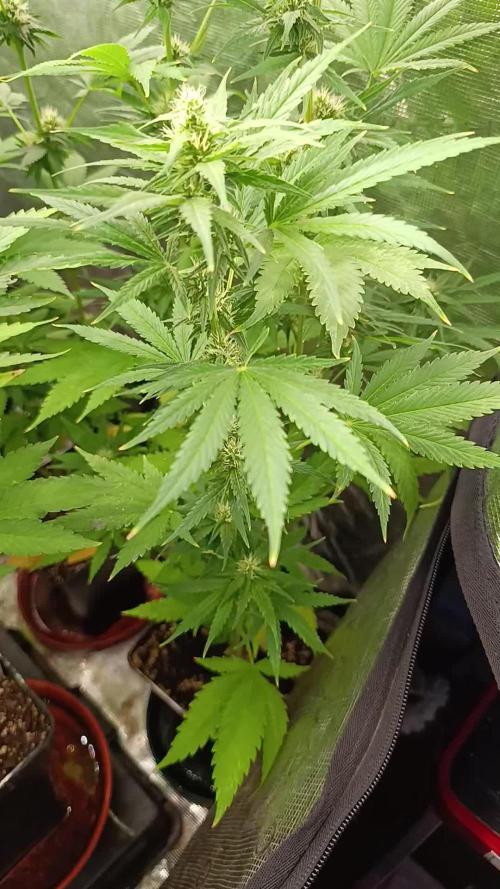
El stretch ha finalizado en la mayor parte del cultivo y la energía se concentra en el engorde de los cogollos. La genética de floración más rápida muestra ya flores más compactas y resinosas, mientras que la de dominancia sativa mantiene un desarrollo algo más progresivo, aunque continúa ganando volumen y formando nuevos sitios florales.
El consumo de agua y nutrientes alcanza uno de los puntos más altos del cultivo, por lo que mantener una nutrición estable y un clima controlado será clave para sostener el desarrollo de ambas plantas.
⚡ EC: 1.9
💧 pH: 6.2 - 6.5
🌡️ Agua: 21°C
🌫️ Humedad: 40–45%
💡 Intensidad: 1050–1100 PPFD
🔥 Nota de cultivo: Comienza la fase de engorde. Aunque cada genética avanza a su propio ritmo, mantener la estabilidad en el riego, la nutrición y el ambiente permitirá que ambas expresen todo su potencial.
Seguimos creciendo fuerte 💪!

Likes
17
Share


@Mr_nugs_lover_David
Follow
My beautiful prince's is looking even better now that she's not having to deal with those freaking fungus gnats that were eating all the roots of my plant, I've got rid of them just by watering with a nematode called steinernema feltiae if you're having or have had the same infestation just apply predator nematodes like steinernema feltiae guys!

Likes
6
Share


@Hix57
Follow
Le 42e jour ce passe très bien.
Les plantes sont au milieu de la prefloraison et ne vont pas tarder à arrêter leurs croissance pour se concentrer sur les bourgeons ainsi j'adapte l'alimentation au circonstances.
J'ai rattrapé l'erreur de pH même si cela reste précaire les plantes se portent dans l'ensemble très bien 🌱🙏
Likes
6
Share


@Nune2021
Follow
Hey Leute die strains machen sich sehr gut man kann gut unterschied Sativa indika /indika sativa sehen das unterschiedliche strain hybride sie wachsen sehr gut die machen keine Probleme bis jetz unkompliziert


Likes
17
Share


@Salgeezi
Follow
Finally got a bigger tent. They are much happier. Almost seems like it put them fully into flowering. I'm feeding around 1200 ec but the runoff keeps climbing to almost double. I will flush to about 800. Within a few days it's back up to 2000 Ec. Am I missing something here??

Likes
10
Share


@valiotoro
Follow
Photoperiod buds 🤩
The smell is absolutely divine very fruity,sweet & tropical🍋🍊🍉🍌
Solid like a diamond 💎
Bay harbor butcher’s trim to show the density
Likes
14
Share


@StoneyMelony
Follow
week 78 i woke up this morning and found my fan was fall down in my plants. My other plant had some serious damage, the glueberry OGn had also som damage, so i had to cut down a few buds. i was also started to flush last week because she is ready. So the buds i had to cut are a nice first tester. The other plant had some serious damage i head to cut down 2 branches in the end and taped some. The buds from the OG are very nice so much frost, it's a party so much glitter and glare. I tried to make some pics.
Likes
4
Share


@AmsterdamAutos
Follow
Initially ran this plant as a way to get dial in my tent and setup while coming to grasp with tent growing in general. Since its an autoflower the growing was easy. However this is a very commercial seed bank and the quality you get is in line with that. Now i'm moving, getting a larger setup, and going to run more genetics. Zamnesia will not be a part of that.
Likes
18
Share


@auto_floo
Follow
Lots of nice buds sticky and smelly :) ,412g of wet weight with stalks ,very nice outcome for first grow ,as a newbie I think I grew a nice plant with awesome buds ,looking forward when ready and cured .thanks for likes guys . Grow Diaries TOP 👍🏼 So happy guys ,thanks to you all for likes .