


Likes
Comments
Share
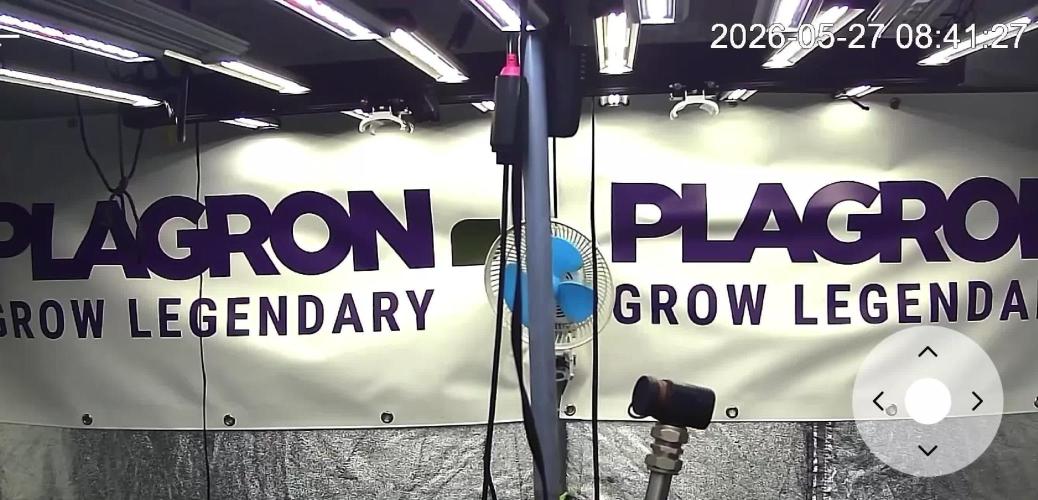

@DogDoctorOfficial
Follow
🌹 Pink Rozay Auto B - Week 4 | Early Flowers, Big Dreams 🌹
Some plants quietly follow the rhythm of the room.
Others decide to write their own timeline.
Pink Rozay Auto B is proving to be one of those special girls.
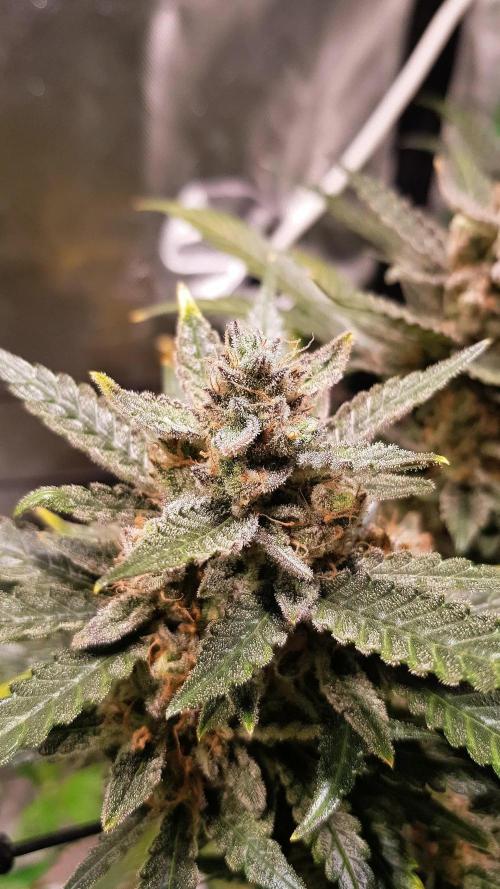
While the entire 8×8 Adventure is progressing beautifully under our 12/12 From Seed experiment, she and her sister have clearly decided they aren’t waiting for anyone. Both have entered flowering noticeably earlier than many of their neighbors, already stacking fresh white pistils and showing that unmistakable transition from vegetative growth into reproductive mode.
Whether they’ll ultimately finish well ahead of the others or simply settle back into the group’s pace remains to be seen—but that’s exactly what makes phenotype hunting so fascinating. Every day brings another lesson.
This diary is another chapter in documenting that unique journey.
⸻
🌱 Life Inside the 8×8 Adventure
The room continues to evolve into exactly what I hoped this experiment would become.
Multiple cultivars…
Multiple phenotypes…
One environment…
…all responding in their own completely unique ways despite receiving identical treatment.
Watching these differences emerge is one of the greatest rewards of this project.
Pink Rozay Auto B isn’t the tallest plant in the room, nor the widest, but she carries herself with incredible confidence. Every day the structure becomes a little more refined, with new flower sites appearing throughout the canopy while maintaining a compact and manageable shape.
She may not demand attention…
…but she certainly earns it.
⸻
🌿 Gentle Training, Better Light
Training continues to be extremely light and intentional.
Rather than forcing the plant into unnatural shapes, I’m simply guiding her architecture little by little.
Low Stress Training continues to spread the branches outward while preserving the natural growth momentum.
Combined with regular leaf tucking, more light now reaches the lower developing shoots without removing healthy foliage unnecessarily.
It’s amazing how much difference simply moving a few leaves can make.
Every exposed node becomes another opportunity for a future flower site, helping create a more balanced canopy while allowing airflow to penetrate deeper into the plant.
Sometimes the smallest adjustments deliver the biggest results.
⸻
🌸 Racing Into Flower
One thing is becoming increasingly obvious.
Pink Rozay Auto B is moving.
Fast.
The top flowers are already producing beautiful clusters of bright white pistils, and several lower branches have joined the race as well.
Compared with many of the surrounding plants, she’s clearly a step ahead in flower initiation.
Whether this means she’ll ultimately finish earlier or simply started blooming sooner is impossible to know at this stage—but that’s part of the excitement of documenting every single week.
Nature always has the final word.
⸻
🌡️ Summer Challenges Continue
Summer growing always keeps us humble.
Even with the air conditioning working around the clock, keeping temperatures under complete control during the hottest days remains one of the biggest daily challenges.
This week the environment averaged:
• 🌡️ Day Temperature: 33°C
• 🌙 Night Temperature: 25°C
• 💧 Relative Humidity: 63%
• 🌱 Root Zone Temperature: 21°C
• 💦 Nutrient Solution: 26°C
• ⚡ EC: 1.35 mS/cm
• pH: 6.1
• 🌿 CO₂: 639 ppm
Considering the outside temperatures, I’m genuinely pleased with how stable the room has remained.
The plants certainly don’t seem to mind.
Healthy color, vigorous growth and strong turgor continue to suggest they’re adapting very well.
⸻
Feeding Program
This week the feeding schedule remained simple and consistent using the Plagron Terra line:
• Terra Grow — 1.8 ml/L
• Power Roots — 1 ml/L
• Pure Zym — 1 ml/L
• Sugar Royal — 1 ml/L
The combination continues to promote vigorous vegetative growth while providing plenty of support as flowering begins.
No need to complicate things.
Healthy roots continue to build healthy flowers.
⸻
🔬 Looking Forward
Over the coming week I’ll continue monitoring her carefully.
If she keeps flowering at this pace, she could become one of the earliest finishers inside the entire 8×8 Adventure.
Or…
She might simply be an early bloomer before settling into the same finishing window as everyone else.
Either outcome is exciting.
That’s exactly why I love running multiple genetics together—every phenotype tells its own story.
Pink Rozay Auto B has definitely captured my attention.
Now it’s her turn to show us what she’s truly capable of.
⸻
💚 Thank You
As always, thank you to everyone following this adventure.
Every like, every comment, every question and every bit of encouragement makes these journals even more enjoyable to create.
A huge thank you to GrowDiaries for providing a place where growers from all over the world can share knowledge and learn together.
Massive appreciation as well to Plagron for supplying the nutrition driving this entire run, and to Zamnesia for providing the genetics that make this project possible.
Finally…
Thank you to everyone following the entire 8×8 Adventure from seed to harvest.
Every week brings us one step closer, and I can’t wait to see where Pink Rozay Auto B decides to take us next.
Growers Love and happy growing! 🌱💚

Likes
1
Share


@Ultraviolet_
Follow
Remember that, however you are played, or by whom, your soul is in your keeping alone. Even though those who presume to play you be kings or men of power, when you stand before God, you cannot say, 'But I was told by others to do thus,' or that virtue was not convenient at the time. This will not suffice. Remember that.
Day:18
84°F and 65% RH (VPD) for the vegetative stage. Approximately 1.15kPa(assuming leaf temperature is about 2°F cooler than the air), which falls right into the ideal vegetative sweet spot (0.8kPa to 1.2kPa). At 1.15kPa, plants can draw water and nutrients efficiently without risking stress or wilting. It keeps the leaf pores (stomata) open, allowing for ideal carbon dioxide intake and maximizing vegetative growth. VPD is determined by the leaf's temperature, not just the ambient air. Because leaves usually run 1° to 3°F cooler than room air under bright grow lights, my actual VPD will be slightly lower, closer to the 1.0kPa mark. As she transitions from vegetative growth to flowering, one can gradually lower the humidity (to around 45–60%) and drop temperatures slightly to prevent disease from settling inside dense buds when they appear.
Night:6
At 70°F and 60% relative humidity, Vapor Pressure Deficit (VPD) is 0.86 kPa. This is right on the cusp of whats optimal for the vegetative stage. During the nighttime, plants generally close their stomata and undergo cellular respiration rather than photosynthesis. Transpiration slows to a near stop, making VPD less critical at night than during the day. However, maintaining a nighttime VPD between 0.8 and 1.0 kPa is highly beneficial in that it ensures the air is dry enough to prevent powdery mildew or bud rot, but moist enough to keep the plant from undergoing unnecessary stress. This range keeps the environment comfortable for cellular processes and prevents large atmospheric swings. Keeping it all flowing.
(Not pushing them yet, these are photoperiods)
The optimal soil (root zone) temperature for cellular root respiration and nutrient uptake in cannabis is between 68F & 72F This narrow range balances biological energy production (cellular respiration) with the dissolved oxygen levels in the soil, maximizing plant growth and health. Warmer soils hold significantly less dissolved oxygen. When soil temperature exceeds 74F oxygen depletion occurs, inhibiting cellular respiration almost entirely, At 68-72F root cells generate optimal adenosine triphosphate (ATP) via respiration to power root-tip elongation and the active transport of water and nutrients.
Too Hot (Above 78F) Root respiration increases, demanding more oxygen, while the water's oxygen-carrying capacity drops. This creates a prime environment for anaerobic pathogens and Pythium (root rot).
Too Cold (Below 60F) Root metabolism and cellular respiration slow to a crawl. This severely impairs nutrient and water absorption, leading to yellowing, wilting, and phosphorus deficiencies.
A lot depends on whether it's automatic or photoperiod; with photoperiod, there is not as much of a need to push "hard" as the real countdown only begins once the flower is initiated. Automatics, on the other hand, the chronological "clock" begins ticking the moment the seed germinates. It is of critical importance that the seedling growth gets off to the races, understanding that early growth is like compound interest, which will pay off come harvest. This reality is why getting autoflowers "off to the races" early on yields such exponential benefits. The "compound interest" is directly related to the surface area of the leaves. Larger, faster-growing seedlings process more light and build bigger root networks early on, which translates into an explosion of vertical and lateral growth during their short vegetative window.
The margins for error are so thin with autoflowers; this early-stage momentum depends on several critical practices. Seedlings exposed to increased atmospheric CO2 levels early in life will develop at an increased rate. To effectively "extend" or optimize the capacity of Photosystem II (PSII) for increased photosynthetic efficiency. In standard oxygenic photosynthesis, Photosystem II (PSII) is naturally limited to the red-light spectrum, peaking at 680nm. Extending its light-harvesting capacity past 700nm into the far-red region requires bypassing the natural limits of standard chlorophyll a. Adding 730 nm (far-red) LEDs alongside standard red/blue lights has been shown to increase canopy photosynthesis by 20–30% in several crops by acting synergistically with shorter wavelengths. However, the limitation is that excessive, pure IR/Far-red light (without accompanying red light) can trigger the "shade avoidance response," causing plants to grow tall, weak, and spindly rather than robust. Utilizing infrared light (specifically the 700-750 nm far-red range) is a viable method to boost photosynthetic efficiency. It acts as a bridge to allow PSII to utilize a broader spectrum of light, breaking the traditional 700 nm barrier. UVR8-mediated signaling (often in conjunction with CRY proteins) triggers protective mechanisms that maintain the stability of the photosynthetic apparatus (including LHCII and reaction center proteins), thus ensuring that the efficiency of Photosystem II remains higher in UV-B-exposed plants compared to plants lacking this receptor. ΦPSII indictates the rate of electron transfer from water to plastoquinone, which drives the production of ATP and NADPH. There is a close link between ΦPSII and the true rate of CO2 fixation (Φ*co2).
ETR stands for Electron Transport Rate. It measures the speed at which electrons are moved through the thylakoid membranes in a plant's chloroplasts during the light-dependent reactions of photosynthesis. Infrared light (particularly Near-Infrared or NIR) improves cellular energy by interacting directly with the electron transport chain (ETC) in mitochondria. This process boosts adenosine triphosphate production, which acts as a metabolic coefficient multiplier by accelerating enzyme activity dramatically.
Extend then multiply.
Far-Red photons interact with plant photoreceptors to accelerate the plant’s biological "clock" or trigger a shade-avoidance response. Autoflowers don't use the plant's biological clock, although the IR will initiate a shade avoidance and make them stretchy. You can just add equal measures of 660nm-680nm to negate the shade avoidance effect. Replacing nights' "darkness" with a combination of IR+ and 660nm. Because autoflowers don't require a dark period to flower, many growers just blast them with light. 18/6 24/0. However, this ignores the plant's metabolic rhythms, where daytime photosynthesis (light reactions) must be perfectly balanced with nighttime carbon fixation and assimilation (Calvin cycle) to avoid bottlenecking plant development. Cellular respiration is a 24/7 process, but it can only function while the plant has the free oxidative capacity to do so. A 100% photosynthetically active leaf cannot perform cellular respiration. The viral trend of defoliation of every leaf that isn't "getting enough light" is of great detriment overall, putting 100% of the cellular respiratory "workload" and responsibility on the 0/4/6 hours of darkness in sub-optimal conditions for enzymatic activity. Photosynthesis captures nearly 100% of the initial energy as carbon, while cellular respiration is the process that unlocks 90% of that captured energy into usable ATP so the plant can use it. Respiration is considered roughly 30% to 40% efficient. It captures enough of the potential energy in glucose to synthesize around 30 to 38 ATP molecules per glucose molecule. The remaining 60% to 70% of the energy in the sugar is not captured in ATP; instead, it naturally escapes into the environment as heat, which helps regulate plant temperature. In plants, the primary enzymes of the Electron Transport Chain (ETC) and the ATP synthase complexes are typically adapted to function optimally in warmer temperatures (roughly 25°C to 35°C depending on the specific plant strain). As temperatures rise within this physiological range, molecular collisions increase, speeding up respiration and ATP production. The cannabis plant has a branched respiratory pathway. During heat or cold stress, plants activate Alternative Oxidase (AOX). AOX burns sugars to dissipate energy as heat rather than coupling it to ATP production. This pathway actually functions optimally at elevated temperatures to help protect the cell from the damaging build-up of Reactive Oxygen Species (ROS) during heat stress. Enzyme activity generally scales with heat; there is a strict biological limit. If canopy temperatures in a grow room exceed 40°C, the enzymes and their supporting lipid membranes lose stability. Not saying you need to go crazy, just optimize nights the same as we optimize days.
Phosphorus is the driving force behind early seedling development. It acts as the "energy hub" of the plant, directly driving cell division, robust root growth, and the creation of DNA. Without an adequate, easily accessible supply early on, the plant's overall growth potential and final yield can suffer permanently.
E=MC2 looks like a simple multiplication problem; it describes a fundamental physical truth: mass and energy are the same thing. The equation doesn't just calculate a value; it reveals that mass is effectively "congealed" energy. Energy is just numbers. Energy isn't a physical "substance" you can hold or touch. It is essentially an abstract, calculated number that we assign to a system to predict how it will change, interact, or move. A numerical label we attach to matter to track how it behaves. Because the universe runs on laws of symmetry (specifically, that the laws of physics don't change over time), a single global number must be conserved. We call that number "energy".
We don't grow; we facilitate energy conversion.
How well a seedling grows is essentially down to how much knowledge one can acquire to increase the level of conversion to occur. Applying knowledge effectively requires intuition, which comes from hands-on experience. A seasoned stoner learns to read subtle signs—like a slight change in leaf turgor (stiffness), subtle color shifts, or the specific texture of the soil—before a textbook diagnosis can be made. Ultimately, growing is the application of botanical science blended with active observation. Knowledge dictates your potential, but adaptability and attentiveness to the plant's immediate environment determine your results.
1.618 nature mathematically optimizes quantum energy transfer and light absorption efficiency within the photosynthetic machinery, as it naturally dictates energy scaling hierarchies and resonance dynamics. External vibration or electromagnetic wave that perfectly matches a plant's natural frequency directly influences plant growth. Low-frequency sound waves and targeted electromagnetic fields stimulate cellular processes and boost photosynthetic efficiency
Does it produce better yields?
How long is a piece of string? As long as you cut it. But isssss the juice worth the squeeze? The quantum framework of the IVM seems to think so. Good enough for the quantum firmware, good enough for the DNA software. Genetics are not dictated; they are expressed; the rate of that expression is dictated by the environment in which growth occurs.
Quantum Coherence in Photosynthesis occurs When a photon of sunlight strikes a leaf, the energy it carries must travel to a reaction center to be converted into chemical energy. This process operates at nearly 100% efficiency. If the energy moved in a traditional "bunching" or random hopping manner, a large portion of it would be lost as heat. Instead, plants utilize quantum superposition. The energy particle (exciton) doesn't just take one path; it exists in a wave state and explores multiple pathways simultaneously. It essentially "chooses" the most efficient route to the reaction center simultaneously. Research shows that molecular vibrations and the specific network arrangements of chlorophyll molecules (like the naturally evolved Chlorophyll A & B ratios) actively protect against energy overflow, optimizing light capture across different light intensities. Enzymes are the biological catalysts that speed up chemical reactions within a plant's cells, allowing them to grow, metabolize, and repair. Rather than relying solely on the classical kinetic energy of molecules colliding, plants use quantum tunneling. Subatomic particles like electrons and protons (hydrogen ions) can literally "teleport" through energy barriers that they normally wouldn’t have the energy to climb over. This makes vital metabolic reactions happen far faster than classical physics could ever explain.
Chloryphyll b has peak absorption at 460nm (Blue) and at 647nm(Red). If we take the blue peak wavelength 460nm and a UV-B, UVR8 peak absorption wavelength 285nm, Tryptophan-285 (W285) Sensing protein. 460/285=1.618 Φ If we take chlorypyhll b's Red absorption peak 647nm and a UV-A of 400nm, we get 647/400=1.618 Φ. "Structure of light". The cryptochrome photoreceptor (CRY) is a UV-A/blue light receptor that shares this dual sensitivity with several other biological structures and functions, including significant sequence similarity and a common evolutionary ancestor with DNA photolyase enzymes. These are light-activated enzymes that use blue/UV-A light to repair DNA damage caused by UV-B radiation in plants. Synergistic. But Shhh, it's a secret.
Effective quantum efficiency of photosystem II, often denoted as ΦPSII, represents the proportion of light absorbed by Photosystem II (ΦPSII) that is actually used in photosynthetic electron transport. It is a key indicator of how efficiently a plant is using light for photosynthesis, as opposed to losing it as heat or fluorescence. ΦPSII (effective quantum yield of photosystem II) functions primarily as a "multiplier" (a coefficient of efficiency) rather than an additive factor when estimating the overall photosynthetic electron transport rate (ETR). Multipliers are considered far more beneficial than additions because they generate exponential growth, leverage existing resources to their full potential, and create sustainable, self-multiplying capacity, rather than just incremental, linear increases. This fascinating observation is rooted in the intersection of subatomic geometry, fractal scaling, and quantum dynamics. In specific molecular arrangements—such as in conjugated polymer networks or biomolecular architectures—the Golden Ratio (PHI) naturally dictates energy scaling hierarchies and resonance dynamics. Mathematically tied to the fine-structure constant, which defines the strength of the electromagnetic interaction. The Golden Ratio can be mapped geometrically as the Golden Angle (137.5 degrees) in atomic structures, linking the charge of the electron to fundamental quantum constants like Planck's constant.
Electromagnetic.
The Golden Angle (137.5): This angle is derived from the Golden Ratio (1.618). It is the smaller of two angles created when a circle is divided such that the ratio of the arcs equals the Golden Ratio.

Likes
17
Share


@Growshh
Follow
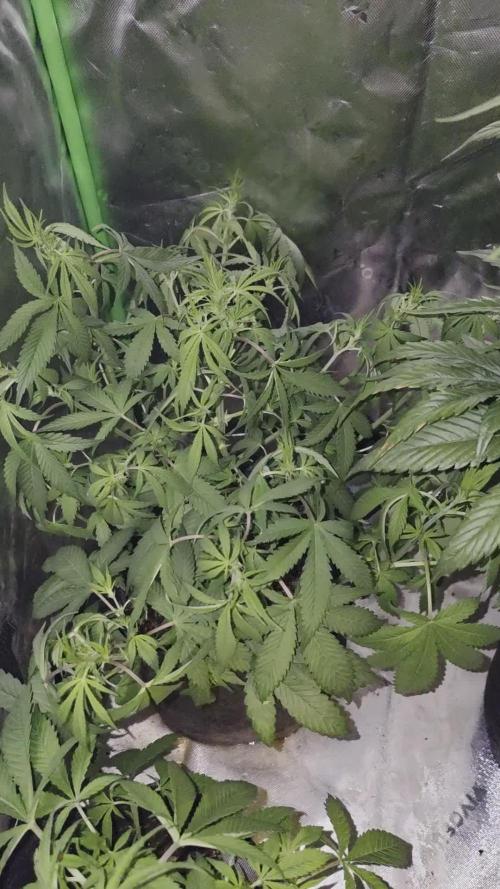
Went into 48 hours or darkness on day 66, then chop...14-21 day 60/60 dry ahead. Will report on harvest and smokes in a few weeks. Another great scrog under the belt!



Likes
8
Share


@emeraldlabs
Follow
First time running an auto. This will be last plant of current perpetual grow, hence the lower than ideal soil level - I ran out and am shutting things down and going on vacation in April so will get more around that time. Looking forward to running early lemon berry (ethos) when I start back up.
Will include plant and light height and distance details once I begin LST.
Her sister, punch berry cookies, will be moving to flower tent tomorrow. The auto will finish alone and in this tent.
Video/photos taken 7 days after breaking soil.

Likes
13
Share


@StickyFingah420
Follow
Day 38 and it is very fast as this baby has developed, it responded very well to the LST which gave it a more resistant structure with which it will support thicker flowers, it begins to fill with resin with a pleasant citrus / sweet smell.
In the next week I will start giving you an overdrive to promote fattening in all the flowers

Likes
53
Share


@DogDoctorOfficial
Follow
Ladies, gentlemen, and all the wonderful beings following this journey, I am thrilled to announce that we have reached the highly anticipated harvest week for our beautiful PCRs. This has been an incredible journey, and now it's time to reap the rewards of our hard work and dedication.
The PCRs are nothing short of perfection. Their frost-covered buds are a sight to behold, glistening like they've been kissed by winter's breath. The trichomes are abundant and sparkling, making these ladies look absolutely stunning. The aroma is intoxicating, a true testament to their strong genetics and the care they've received.
Upon taking them out of the tent, I was amazed by their strength and resilience. Despite my best efforts to make them dance, these ladies stood tall and proud, requiring no support at all. This just goes to show the exceptional quality and sturdiness of the PCR strain.
Aptus Holland's Enzym+. This product is a game-changer, breaking down dead root material and turning it into usable nutrients, ensuring our soil remains rich and fertile for future grows. Speaking of which, I do plan to reuse the soil, thanks to the amazing benefits of Enzym+. This enzyme product not only helps with nutrient uptake but also keeps the soil ecosystem healthy and thriving.
Here's the final stats for this week:
TDS: 130
PH: 6.8
Temp: 21°C
A huge shout-out to Aptus Holland for their incredible products that have consistently supported my plants' growth and health. Also, a massive thank you to Art Genetix for creating the phenomenal PCR strain that has brought so much joy to this grow.
To all my fellow growers, followers, and the entire community, your support and encouragement mean the world to me. This journey wouldn't be the same without you. As we move forward, let's continue to spread love, positivity, and the joy of cultivating these amazing plants.
Stay tuned for the final results and more updates as we dry and cure these beautiful buds. Until then, keep growing, stay positive, and never stop believing in the magic of cultivation.
Peace, love, and happy growing!
Genetics - P.C.R. @Art_Genetix_Team https://artgenetix.world/
Nutricion @aptusholland https://aptus-holland.com/
LED Power @Lumatek and @viparspectra
As always thank you all for stopping by , for the love and for it all, i fell blessed to have you all with me for one more love journey Thank you Thank you Thank you , you guys are great and have been amazing , thank you for everything !
#aptus #aptusplanttech #aptusgang #aptusfamily #aptustrueplantscience #inbalancewithnature #trueplantscience #dogdoctorofficial #growerslove
With true love comes happiness , Always believe in your self and always do things expecting nothing and with an open heart , be a giver and the universe will give back to you in ways you could not even imagine so !
Friendly reminder all you see here is pure research and for educational purposes only
Growers Love To you All
Discount Codes :
@thecannakan DOGDOCTOR 15% off
@theneutralizer PORKIT5-DOG 15% off
@kannabiaglobal DOGDOCTOR 30% off
@seedsmangenetics DOGDOCTOR 10%off
@terpyz.mutant.genetics DOCTOR 15% off
Have a fantastic week!

Likes
36
Share


@Ganjagrandaddy
Follow
Day 56 ( 16 Flowering): I am in love with their appearance in this grow. They look surreal with their black smeared leaves and the contrast against the white pistils adds a dimension I have never seen in my grows before . They have been getting on with it quite happily and as the quickest to flowering and harvest according to their info , they should finish this week !!!. l I am glad that this is not the case and they have at least 2 weeks for sure. They smell so berry now , I cannot wait to smoke the finished article.
#1 The LOS girl is short and building her stacked buds now. She doesnt lookalike she will be a huge yield but her buds are beauties. I think I could have let her go without lst for a taller girl.
#2 is trained a little but not tied up the same as other in the grow. she has a good size to her and her buds look amazing too.
#3 Was the pale rubbery girl until the Mega Crop got busy making her green again. She is now quite a big lady and has had to move moved under the TSL-2000 to keep her happy without super cropping her. She is absolutely covered in small budlets
Likes
42
Share


@MrJoint
Follow
✂️ Defoliation one more time and LST adjustment.
🥦We stay training.
✌️🎃Thank you for checking my cultivation.

Likes
25
Share


@Ganjeiro420
Follow
Eai comunidade GD, uma ótima semana pra todos!!!
Essa semana a planta já está se preparando para a tão esperada hora da colheita, a grande maioria dos tricomas já estão ficando leitosos acredito que só precisa mais dessa semana 🙏
A cor dos Buds da Banana Purple punch já estão meio roxos e açucarados, já a AK auto está com os pestilos com cores alaranjadas, os tricomas já estão bastante leitosos mais ainda quase nenhum âmbar, Irei fazer a colheita dos tricomas 30 a 50 % âmbar☘️
Iniciei o flush essa semana, agora as regas são só com água, não vejo a hora de colher esses Buds perfumados 😍
Likes
4
Share

@Piratenarm
Follow
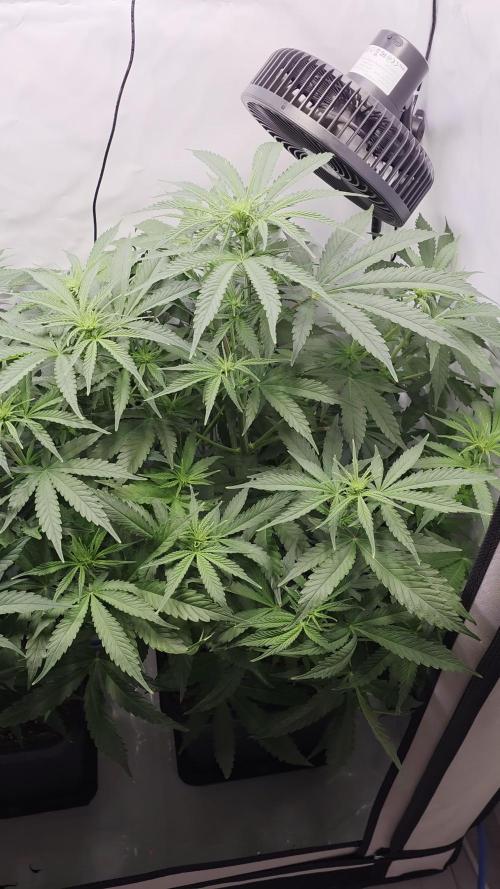
Die ladies sind gut gestretcht.
Da aber viele Triebe kein Licht bekommen und sie auch sehr buschig war habe ich mich entschieden jetzt schon richtig zu lollipoppen - hoffentlich nehmen die mir das nicht übel 😢.

Likes
15
Share


@HighOhioAn
Follow
This girl has been one of my favorites. Pineapple express is true to it name looking like a pineapple once it fades the yellow, and the green are very beautiful together smells gassy with pineapple busting out of every tone
Likes
22
Share


@Polliceverde18
Follow
Ciclo di crescita breve ma ho avuto problemi in fioritura che grazie alla formazione della pianta mi ha permesso di raccogliere
Likes
4
Share

@grimm420
Follow
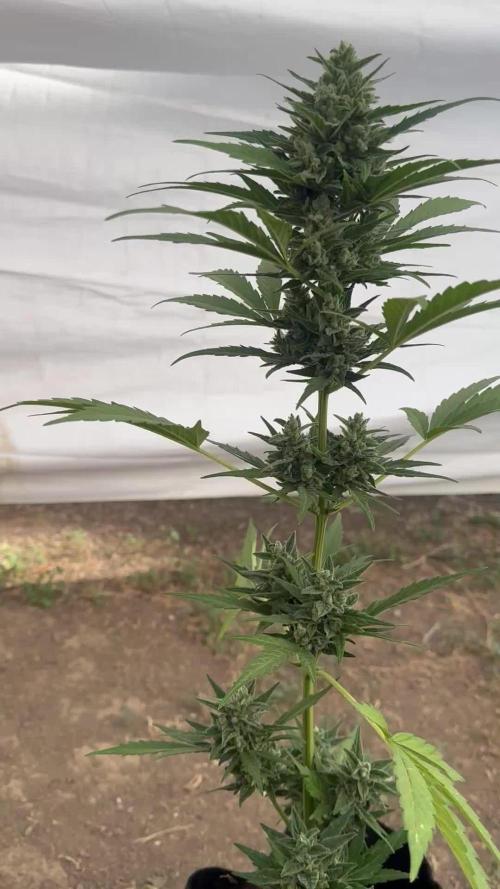
Small yield, I forget buds shrink a bit while drying even though I harvest often 😂 Overall though, beautiful strain! Next time I grow this I will lst, I loved the strong grape notes it gave during flower, a little bud fell in my trichomes! This thing is frosty as fuuck, the tiniest nugs ever but I think that was my fault, gotta reflect on what happened. I forsureee could’ve gone 2 or 3 weeks more but 11 weeks was good enough for me, almost all cloudy, few amber heads. Will update on weight and smoke report upon cure!
Dry weight stayed at 12g, dried in 5 days, 1 week curing and the sample nug came with a punch! Those trichomes are walking the talk! I feel a body and head buzz, but not couchlock-ish, could still be productive at ease. Imma cure longer and see how it smells like, dank with a slight pine smell, hoping to smell that grape note again!

Likes
120
Share


@Kitties_and_Colas
Follow
This was a effortless week 🐱👌 all plants (except 1runt) were topped and given their first feeding..new growth has already developed on most.. A few plants are distinct from all the others, there's only 2 different strains but it looks like way more at the moment. We're expecting a bunch of vegetative growth this week, will update..thank for dropping by growmies and happy harvests ❤️

Likes
8
Share


@GREENPHOENIX6262
Follow
03/22 - Night/Daytime shots - Both have grown about an inch since last week and are thriving - I will be running drip lines on them probably by the end of the week for consistency with feeds.
03/23 - They got a little funky on me last week so I fed them both to run off and realized their PPMS/PH where insane!! - Flushed them out hard last night and in less then 24hrs they are already bouncing back - Will stick to just clean water feeds for now - They will begin a low-dosage nutrient feed (Micro-dosing) in about a week.😎😎😎😎😎😎😎

Likes
11
Share



Likes
39
Share


@Silverback_Guerilla
Follow
11/9:
The first Blackberry (Halle Berry) is dry now and beginning to cure....will probably sample it tomorrow.😋
The next 5 that I harvested are drying in a dark room at 75f with 60% RH and minimal airflow.👍
The colas of the remaining 11 plants are now within 9 inches of the QB's....MAXIMUM PAR!
I've increased UVB exposure by an additional hour a day. I've got the portable AC on high and blowing across their tops, which is keeping the temp just below 80f on them...they should be just fine..👌
11/13:
I harvested the purple Wedding Cheesecake and all three Lemon Pies today.
11/15:
I flushed the last two orange sherbets for the second time, but with only a few gallons each...I flushed the last two wedding cheesecakes, and the 3 x gorilla cookies with 8 gallons each.
Likes
35
Share


@The_Bearded_Grower
Follow
Day 64 Okay so we're entering the last couple weeks things are looking good I've managed to bring the ppm's down I added three of just straight tap water waited 10 minutes and then added my 2 L of nutrients. Doing this for the last couple days has managed to bring my ppm's down a very large amount now it sits at 1973 PPM I am well on my way
Day 66 not much to say just checking the trichomes and she is coming along well this my be the last week for her then on to flushing. PPM now 1836 and the solution is 1668 PPM so i'm doing good now
Day 67 i'm happy to say that my ppm run off is now the same as the solution i'm putting in and that's a big win so now in going back to 2L of water then 2L of nute's
Day 68 she is holding steady at 1550 ppm i now know the watering that works best more knowledge for the arsenal lol
Day 69 not much to say. She is putting on weight fast now that i got the ppm's under control but at this point it may be a week 17 harvest as trichome development is still on the slow side ppm 1763
Day 70 by my estimation she had suffered a minor nute lock out that slowed growth a little bit. T he reason i think this is because now that i have the ppm's in check and at a steady 1550-1620 ppm she is ( for lack of a better word ) exploding with growth in bud size. some new growth has doubled in size in just 24 hrs and that's huge, because of this i'm going to keep her in flower for week 16 and how knows maybe 17 before flush..... side note i had a freak problem with my one Aglex light and the veg side of the light along with some bloom light diodes stopped working. with some help i found out it was 2 LED diodes were drawing on the power and in effect stopped half the light from working we bypassed the bad LED's and we are back in business 😀

Likes
9
Share

@Caertner
Follow
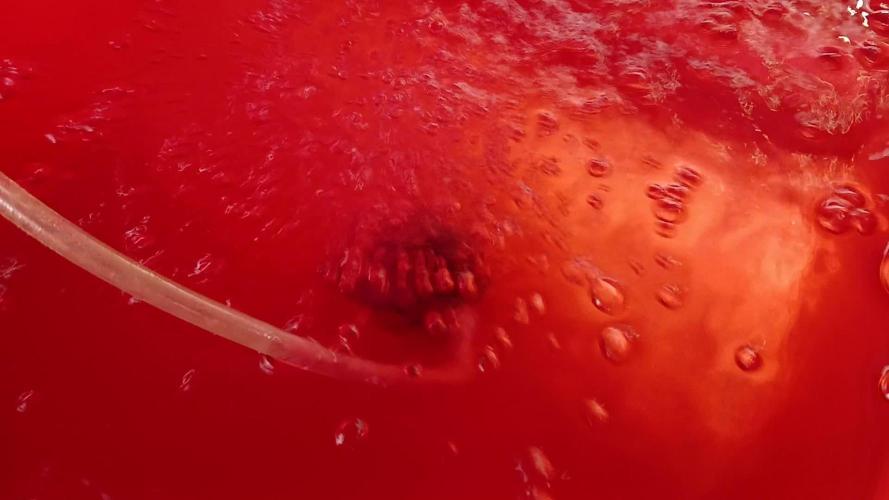
Easy Steckling... Klonkragen dran, den Rest besorgt der Sprudelstein bei richtigem Wasserstand.