



Likes
25
Share


@JonnyKush
Follow
Strain Type: Feminized
THC: 22%
CBD: Low
Yield Indoor : 450 - 550 gr/m2
Yield Outdoor: 550 - 600 gr/plant
Height Indoor: 90 - 130 cm
Height Outdoor: 140 - 200 cm
Flowering time: 9 - 10 weeks
Harvest Month: Late October
Genetic Background: AMG x Shiva
Type: Sativa 60% Indica 40%
Effect: Powerful , Stoned
Climate: Long Summers
Flavor: Herbal, Pepper
🌱🌳🌱🌳🌱🌳🌱🌳🌱🌳🌱🌳🌱🌳🌱

Likes
20
Share


@Bongman
Follow
coming soon... Harvest week.....
Cut the girls down week 8 day 5. Did a quick truim and now will hang dry. Will report back on details in a week or so.
Likes
35
Share


@madlangs
Follow
All is going ok and growing fast. Was underfeeding a bit and was a bit close to the lights and giving a bit of light stress and turning leaves pale green near the top half of the plants.
EDIT I think plants was going pale because they was underfed and not to close to the light?
3.10.21
Dg 4L
Wc. 3.5L
Gb 3.5L
Gave all 4L week 1 flower. Silica and calmag 0.3mlL ph
5.10.21
Dg. 3L
Wc 3L
Gb 3L
Chem 3.3L
Hubba3L
Cream.3.5L
Gave all half strength week one flower apart from dg and gb they got same but full strength grow and bloom. Silica 1mlL. Recharge and mammoth p calmag 0.3mlL ph6.3 apart from dg and gb ph6.1
5.10.21.
Light 110cm and 60cm
6.10.21 moved lumatek light up to 78cm and turned down to 60% gb xl leaves was taco-in and burning a bit. Was getting the crossover light from both lights
6.10.21 sprayed boom boom spray on all.
7.10.21
Dg 3L
Wc 2.5L
Gb 2.5L
Chem 2.5
Cream. 2.5
Gave all week 1 flower full strength with fish mix instead off grow. recharge calmag 0.3mlL silica 1mlL
Orange. 1 2.0
0range 2 2.5
Hubba 1.5
Gave all full strength veg calmag 0.3mlL no recharge silica 1mlL ph6.3
7.10.21 light height spectrum king 130cm. Lumatek 106cm
9.10.21
Dg 3L
Wc 3L
Gb 3.5L
Chem
3L
Cream. 3.5L
Hubba 3L
Gave all full strength week 2 fish mix instead off grow flower. Silica 1mlL
calmag 0.3ml l/L
9.10.21
Dg 57.5cm
Wc 49cm
Gb 47cm
Chem
51cm
Cream. 45cm
Hubba 33.5cm
Orange. 1 22cm
0range 2 31cm


Likes
6
Share


@Canna055
Follow
Day 7 in flower and the ladys start to strech
All 4 have the same water & livingsoil but the HerzOG at the left shows signs of stress and just dont Look good at all
water ph‘d to 6.5


Likes
11
Share


@wheedtobeus420
Follow
Day 51 omg the smells she stinks so sweet straight like bubblegum. I’m stoked for her. She really started off slower and it just goes to show you even the turtle can win the race. Just a beautiful spread of leaves and buds and nice dense frosty goodness. Really happy with her.


Likes
4
Share


Likes
Comments
Share

@DogDoctorOfficial
Follow
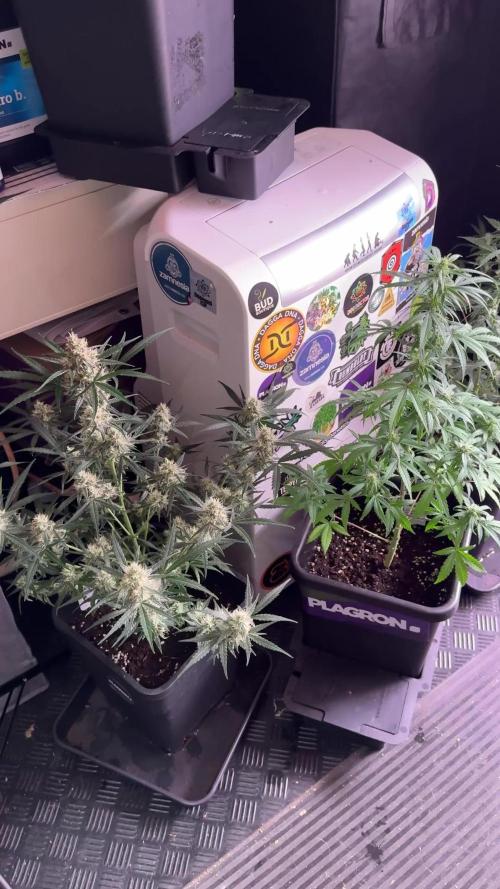
🌿 Frosted Guava Auto by Zamnesia | Pheno B | Week 8 (Flower Week 5) 🌿
Small Plant. Big Personality. And Now… A Little Less Green.
There are plants that follow the plan.
And then there are plants that write their own story.
Frosted Guava Pheno B has been doing the latter from the beginning.
She has never been the biggest plant in the room. She hasn't chased height, hasn't tried to dominate the canopy, and hasn't demanded much intervention.
Instead, she has quietly developed her own personality.
Compact.
Elegant.
Beautifully structured.
And increasingly covered in flowers.
Now, entering her fifth week of flowering, she has reached another important moment in her journey.
This week, she joined the group receiving a selective flowering defoliation.
Not because she was struggling.
Not because she was unhealthy.
And certainly not because every plant needs to be defoliated.
Quite the opposite.
She was looking fantastic.
But after looking carefully at her structure, her development, and the way light and airflow were moving through the plant, I felt that removing some unnecessary foliage was the right decision.
So we went in.
We cleaned her up.
And now we're going to see what she does with the extra space.
🌸 Week 5 Flower – Her Own Story
Frosted Guava Pheno B is currently around 108 cm tall.
That still makes her one of the more compact plants in the room.
But honestly?
I don't think she cares.
😂
She has found her own architecture and she's sticking with it.
The flowers continue developing beautifully, with increasingly visible frost and those characteristic white pistils reaching outward from the developing buds.
Her foliage has remained lush and healthy, with that beautiful deep green colour we've been following since the beginning.
The plant looks comfortable.
The flowers are developing.
And now we're starting to see more definition between the different parts of the plant.
This is exactly the kind of moment where stepping back and looking at the whole plant becomes important.
Because sometimes the question isn't:
"Can I remove this leaf?"
The better question is:
"Does this leaf still have a useful job to do here?"
And that's where this week's defoliation came from.
✂️ Defoliation – What We Actually Did
This wasn't a complete strip.
It wasn't a race to make the plant look naked.
And it wasn't about removing leaves simply because they were large.
The approach was selective.
I removed most of the fan leaves carrying their own petioles, particularly where they were contributing to unnecessary shading or creating congestion inside the plant.
I also cleaned the lower and interior portions of the plant where some flowering sites were positioned so far below the productive canopy that I didn't expect them to develop into meaningful flowers.
Those areas are what I would consider the true bottoms on a compact plant like Frosted Guava.
And that's an important distinction.
Because this plant is small.
Her lower sites really are lower.
Even with the Lumiflora under-canopy lighting helping bring additional photons into the lower canopy, the primary productive zone of the plant remains higher up.
So rather than allowing the plant to spend resources maintaining foliage and very low sites that are unlikely to contribute much, I decided to clean those areas selectively.
But I didn't remove everything.
Some lower flowering sites remain.
I want to see what they can actually do.
That's part of the experiment.
🌿 What Is Defoliation?
For anyone new to growing:
Defoliation is the intentional removal of selected leaves from a plant to alter the structure of the canopy.
The goal isn't simply to have fewer leaves.
The goal is to create a better balance between:
light penetration + airflow + canopy structure + productive flowering sites.
Leaves are extremely valuable.
They're the plant's solar panels.
So removing them should never be treated as something automatically beneficial.
Every leaf removed is a piece of photosynthetic machinery removed.
That's why I don't approach defoliation as:
"Flower started. Time to strip the plant."
Instead, I look at the plant in front of me.
Is the canopy becoming too dense?
Are leaves heavily shading developing flowers?
Are there congested areas where airflow is poor?
Are there leaves that are doing very little because they're buried underneath several layers of foliage?
Are there lower sites that realistically have very little opportunity to develop?
If the answer is yes, then selective defoliation can make sense.
If the answer is no...
Leave the plant alone.
🚫 What Defoliation Is NOT
This is probably even more important.
Defoliation is not:
❌ Removing every fan leaf
❌ Trying to expose every single flower to direct light
❌ A substitute for good plant structure
❌ A guaranteed way to increase yield
❌ Something every plant needs at the same time
❌ An excuse to strip a healthy plant simply because you can
The objective isn't to make the plant look clean for the sake of appearance.
The objective is to improve the functional canopy.
And there's a big difference.
A beautiful green leaf isn't a problem simply because it's a beautiful green leaf.
If it's healthy, receiving light, contributing to photosynthesis and helping the plant, I have no reason to remove it.
But when the canopy becomes crowded and certain leaves are contributing more obstruction than productivity, that's when selective removal becomes interesting.
✂️ How I Approach It
My approach is simple:
I observe first.
I don't start with a predetermined number of leaves that must disappear.
I start by looking at the structure.
Then I work from the outside toward the interior and from the top toward the lower portions, looking for unnecessary congestion.
Leaves that are heavily shading productive flowering sites can be candidates.
Leaves buried underneath several other leaves can be candidates.
Leaves occupying congested interior areas can be candidates.
And lower growth that is so far beneath the productive canopy that it has little realistic opportunity to develop can also be considered.
But I always keep the plant's overall health in mind.
The goal is balance, not maximum removal.
That's why Pheno B still has plenty of green.
She's not naked.
She's simply better organized.
💡 The Under-Canopy Question
This is particularly interesting with Frosted Guava Pheno B because we're running Lumiflora under-canopy lighting.
Someone might reasonably ask:
"If you have light underneath, why remove the lower growth?"
That's a very fair question.
And the answer is that under-canopy lighting doesn't magically make every lower flower equal to a top flower.
On a compact plant like this, the very lowest parts are still extremely low relative to the main productive canopy.
The under-canopy lighting is helping reinforce the lower and interior areas, but I still want to observe where the plant naturally allocates its energy.
That's why I deliberately left some lower flowering sites behind.
I don't want to assume.
I want to watch.
Will those remaining lower sites develop?
Will the extra light make a noticeable difference?
Will the upper flowers continue dominating?
That's exactly the kind of question this project allows us to explore.
And the harvest will eventually give us the answer.
☀️ More Light Where It Matters
The Future of Grow Black Series LED continues providing the primary light from above, with approximately 1,000 PPFD across the upper canopy.
Frosted Guava may be compact, but she certainly isn't short on photons.
She's been sitting underneath that light throughout flowering, converting those photons into leaves, flowers, structure and now increasingly visible resin.
And with the selective defoliation, we're changing how some of those photons move through her architecture.
We're not creating more photons.
We're simply trying to make better use of the ones already available.
That's the idea.
Don't waste energy chasing light.
Build a canopy where the available light can actually do its job.
❄️ And The Frost Is Getting Serious
The name Frosted Guava continues becoming more appropriate every week.
The flowers are developing beautifully, and the resin production is becoming increasingly visible.
Those white pistils are still everywhere, creating an incredible contrast against the deep green foliage.
And underneath all those hairs, the flowers are beginning to gain more structure and density.
This is the stage where I love looking at the same plant from week to week.
Because the change isn't always dramatic overnight.
But compare the plant to where she was a few weeks ago...
And suddenly you realize:
She's building.
She's filling out.
She's gaining flower volume.
She's becoming increasingly defined.
She's becoming Frosted Guava.
🌿 Small Plant. Big Character.
I've said this about her before, but this week makes it even more obvious.
Frosted Guava Pheno B doesn't need to be the tallest plant in the room.
She's already found something more interesting.
Character.
Her sister Pheno A has followed a different path.
And that's one of the beautiful things about running phenotypes together.
Same genetics.
Same room.
Same light.
Same nutrition.
Same philosophy.
Different personalities.
Pheno B has chosen to remain compact and elegant.
And now, as flowering progresses, she's showing us exactly what that compact structure can become.
💧 Nutrition & Hand Watering
We're continuing with hand watering throughout the room.
Current feeding remains centered around the Plagron flowering program:
Terra Bloom — 2.2 ml/L
Power Buds — 1 ml/L
Sugar Royal — 1 ml/L
Green Sensation — 1 ml/L
Lemon Kick — 0.03 ml/L
Current recorded parameters are around:
pH: 6.0
EC: approximately 2.0 mS/cm
Solution temperature: 21°C
Root-zone temperature: 21°C
Watering: approximately 1.2 L per 24 hours
Hand watering has also given me another opportunity to observe this plant closely.
Every time I water her, I get another chance to look at the flowers, inspect the leaves, check the structure and notice those tiny changes that are easy to miss when everything is automated.
It takes more work.
But it also brings you closer to the plants.
And sometimes that's where the best observations happen.
🌡️ Environment
The room continues running under stable conditions:
Day temperature: 29°C
Night temperature: 25°C
Relative humidity: approximately 72%
Solution temperature: 21°C
Root-zone temperature: 21°C
CO₂: approximately 639 ppm
With the canopy becoming increasingly dense, airflow and humidity management become even more important.
That's another reason selective defoliation can be useful at this stage.
Not because leaves are inherently bad.
But because a dense flowering canopy can create small pockets where air movement becomes less effective.
Opening selected areas gives the room a little more breathing space.
And that's particularly valuable as the flowers continue developing.
🔭 Looking Ahead
Now comes the interesting part.
We've changed the architecture.
We've removed some unnecessary foliage.
We've cleaned the lower sections.
We've opened some of the interior.
And now...
we wait and observe.
I want to see how quickly she responds.
I want to see how the flowers develop with the improved canopy structure.
I want to see what happens to those lower sites we deliberately left behind.
And most importantly, I want to see how Frosted Guava Pheno B continues writing her own story.
Because she's already made one thing very clear:
She doesn't need to follow anybody else's timetable.
❤️ Final Thoughts – Let Her Shine
Frosted Guava Pheno B has been one of those plants that quietly earns your attention.
She didn't arrive in the room demanding the spotlight.
She didn't become the tallest.
She didn't become the biggest.
She simply kept growing.
And week after week, she became more beautiful.
Now she's entered another chapter.
A little less foliage.
A little more breathing room.
A little more light moving through the canopy.
And plenty of flowers left behind to show us what she's capable of.
The important thing about this week's defoliation isn't how many leaves we removed.
It's why we removed them.
Because good cultivation isn't about following a recipe blindly.
It's about looking at the plant in front of you and making decisions based on what she's actually telling you.
And Frosted Guava Pheno B was telling me:
"I'm ready."
So we listened.
Now let's see what she does.
A huge thank you once again to Zamnesia for these beautiful genetics, Plagron for the nutrition, Future of Grow for the Black Series lighting, Lumiflora for helping illuminate the lower canopy, TrolMaster for environmental control and of course to everyone following this 8×8 Adventure on GrowDiaries.
Every week, every phenotype tells us something different.
And that's exactly why I love this project.
Until next week...
Let her shine. She has earned her spotlight. ✨🌿❄️
Growers love and happy growing! 🌱💚
Likes
49
Share


@DogDoctorOfficial
Follow
🌿 Mentha de Croco – Harvest Report | Week 19 from Seed (End of Week 8 Flower) 🌿
By Terpyz Mutant Genetics
And just like that, we close this incredible chapter in our mutant journey. 💚
After 19 weeks from seed, including a long, loving veg phase and a wild 8 weeks of flower, our girls have reached the final moment: Harvest.
Each one was chopped with gratitude and admiration, then gently hung to dry, where they will now rest for about two weeks under carefully controlled conditions:
🌡️ 18–20°C
💧 60% RH
…A slow, respectful cure to allow all those unique expressions to settle and shine.
These plants were peculiar from the start, true mutants, each with her own story, her own twist of leaf, her own rhythm. What they lacked in size or symmetry, they made up for with character, energy, and intense presence.
Let’s talk terps:
The dominant aroma is deeply chemical, like nail polish, with a gas note that grabs the senses. It’s bold, loud, unapologetically strange, and that’s what makes it so special. This isn’t your everyday garden — this is an experience.
No two flowers are alike. The phenotypes are as if sculpted by nature’s abstract brush, perfect in their imperfection, from the shape of the colas to the twist of every leaf.
📸 We’ve shared photos of their final moment standing — each one captured in her full glory before the shears came in. May they live on through memory, resin, and smoke.
⸻
Dry & Cure Notes:
They’re hanging now in a dark, clean space, and we’ll aim to maintain the 60/60 rule (60% RH / 18–20°C) for the next 10–14 days before trimming and jarring for cure.
Expectations are high. We’re hoping for smooth smoke, complex flavors, and some deep mutant magic in the effects.
⸻
🌱 Shout-outs to the dream team:
@terpyz_mutant_genetics – creators of this beautiful madness
💧 @aptus_holland – for the cleanest mineral recipe in the game
💡 @futureofgrow – lighting the path forward
📊 @trolmaster.agro – keeping every condition dialed in
💚 And always, the Grow Diaries community – friends, followers, lurkers, lovers & haters alike. You’re part of this journey.
📲 Follow us on IG & YouTube for more madness, inspiration, and behind-the-scenes freak shows.
⸻
This isn’t just a harvest… it’s a celebration of weirdness, patience, and beauty.
Until the next round — thank you for growing with us.
Growers love. Always
DD 💚
Genetics - Mentha De Croco
Nutrition - @aptusholland
https://aptus-holland.com/
Led Power @ F.O.G. Future Of Grow
https://www.thefuturofgrow.com/en/online-store/BLACK-SERIES-600-p489093171
Controls @ TrolMaster
https://www.trolmaster.eu/tent-x
Let’s see what next week brings! 🚀
As always thank you all for stopping by, for the love and for it all , this journey of mine wold just not be the same without you guys, the love and support is very much appreciloved and i fell honored with you all in my life
With true love comes happiness Always believe in your self and always do things expecting nothing and with an open heart , be a giver and the universe will give back to you in ways you could not even imagine so
As always, this is shared for educational purposes, aiming to spread understanding and appreciation for this plant. The journey with nature is one of discovery, creativity, and respect. Let’s celebrate it responsibly and continue to learn and grow together!
Growers Love To you All 💚

Likes
30
Share


@CanadianFillmore
Follow
Another week begins for the ladies, the weather has been decent, not to hot, not to humid. Not much else to report this week.
Thanks for stopping by growfessors 👽🌳💚


Likes
1
Share

@XoticGROW666
Follow
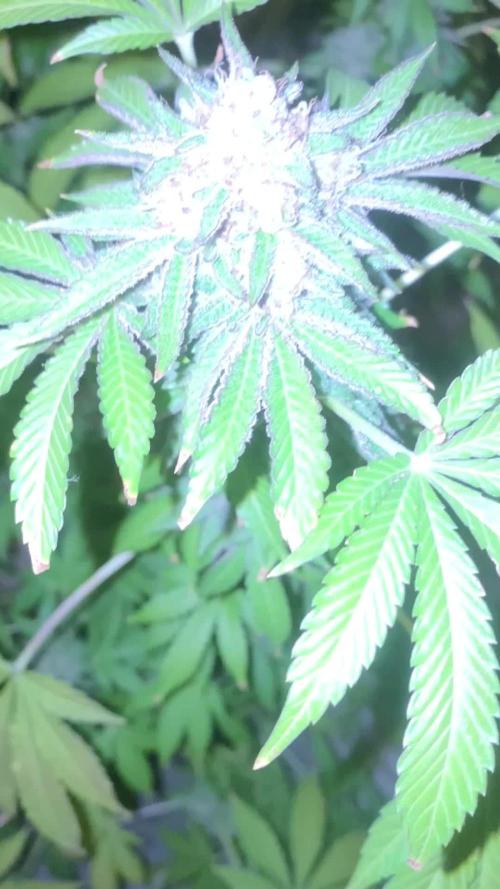
More Pink hues Purple buds with intense Candy terps kickin inn more 🍭🍬💜
Likes
9
Share


@Scissorhands_Guy
Follow
Buds are getting bigger, the hardest is done, now the plant just need a little intention. The setup is now perfect and I don't have any issues !
Likes
12
Share


@MadeInGermany
Follow
Flowering day 50
Hey guys 😀
Today there is also a nice video for the week.
It was the last time the fertilizer was increased to 1250 ppm. After that, it is slowly driven down again to mature.
Enjoy the update
👇🏼👇🏼👇🏼👇🏼👇🏼👇🏼👇🏼👇🏼👇🏼👇🏼👇🏼👇🏼
‘Powered by GreenHouse Feeding’
Copy the link for 10% off all Nutrients 👇🏼
http://shop.greenhousefeeding.com/
affiliate/madelngermany_passiongrower/
👇🏼👇🏼👇🏼👇🏼👇🏼👇🏼👇🏼👇🏼👇🏼👇🏼👇🏼👇🏼
Water 💧 💧💧
Osmosis water mixed with Cal/Mag (24 hours stale that the chlorine evaporates) to 290 ppm and Ph with Ph- to 5.8 - 6.4
MadeInGermany


Likes
Comments
Share


@Yiyis_Grow
Follow
Semana con nutriente de floración al 100%, se inició control biológico preventivo para la botritis, C4 de Mills y Bio Bud de GH.
- Luz: Bestva Pro 1000W / 18 h/d
-FloraNova Bloom G.Hydroponics: 0.7ml/l
- Bio Bud G. Hydroponics 2.5ml/l
- Armour SI G. Hydroponics 0.4ml/l
- C4 Mills 1ml/l
- Everest: 0.5 ml/l
Control biológico:
-Solution (bioinsecticida generalista: Beauveria, Metarhizium, Lecanicillium y Cladosporium + esencia de ajo y chile).
-Acaridox (bioacaricida: Metarhizium e Hirsutella + esencia de canela)
- Scamin (control escama y cochinilla) Cladosporium Herbarum
-Bioprotection BD Plus (microorganismos bioestimulantes y bioprotectores: Trichoderma + actinomicetos + Lactobacillus)
- Bioprotection TR + BSLIN
(biofungicida generalista: Bacillus subtilis + Trichoderma y metabolitos).

Likes
20
Share


@SecretTreasures
Follow
Again all plants are alright.
LED runs at 600w, the climate is constant.
Plants getting really sticky and smelling more and more.

Likes
155
Share


@deFharo
Follow
Bienvenidos cultivadores de marihuana clandestinos y también a los que tienen la fortuna de no serlo!🖐️👨🌾👍
Este es un diario semanal de técnicas de cultivo y Bio preparados orgánicos caseros, los cuales llevo experimentando dos años en cultivos de marihuana interior.
Esta semana dos en uno:
1) ELABORACIÓN DE AUXINAS EN POLVO EXTRAIDAS DE ALUBIAS NEGRAS GERMINADAS.
La primera vez que hice este preparado y lo publiqué en GD fue en Octubre de 2019, lo volví a hacer en Junio de 2020 y llevo dos años usándolo, me ha costado el precio de 2kg de alubias negras.
INGREDIENTES:
- 1kg de alubias o frijoles negros, porque son las semillas que más concentración de auxinas contienen, comparándolas por ejemplo, con lentejas o cualquier otro tipo de leguminosas, también se puede usar granos de maíz.
Preferentemente, se deben usar semillas de alubias nuevas y cultivadas cerca de tu zona.
- Agua pura.
PROCEDIMIENTO:
- Se cubren las alubias con agua y se dejan a remojo durante una noche.
- Al día siguiente se separa el agua. Esta agua la puedes usar para riegos, contienen varios minerales.
- Se mantiene la humedad en el recipiente de las alubias por unos días, hasta que germinen. Se pueden cubrir con un paño húmedo y compensar la perdida de humedad rociando agua. Se debe observar que la mayoría de las semillas hayan germinado.
- Cuando las alubias, en su mayoría estén germinadas, se añade unos dos litros agua pura y se bate todo.
- Ahora filtramos con malla y escurrimos los restos sólidos. (Reservamos esta materia para un segundo lavado)
- Dejamos reposar el líquido durante dos días, hasta que se vea acumulación de materia en el fondo.
- Retirar la mayor cantidad posible de agua clara.
- Dejar al sol cubierto con una malla, hasta la completa deshidratación del producto.
- Moler y guardar en un sitio seco y oscuro, en estas condiciones puede ser efectivo durante años.
-- A los residuos sólidos recuperados del primer filtrado, les añado agua, los bato y los filtro con doble malla, lo embotello y guardo en el frigorífico (no más de 15 días, pues fermenta), lo uso para mezclas de riego. Los residuos finales se aprovechan, para aquellos que tengan tierra en exterior o hagan compost.
QUE SON LAS AUXINAS Y USOS:
- Las auxinas son un grupo de hormonas vegetales naturales, que regulan varios aspectos del desarrollo y crecimiento de las plantas, en la marihuana sobre todo en el periodo de crecimiento vegetativo y en el comienzo de la floración, después no hacen falta.
- Uno de los aspecto más característicos es el efecto que causan en el desarrollo del crecimiento radicular, promoviendo sobre todo la formación de raíces secundarias y adventicias gracias a la estimulación celular que provocan las hormonas.
- Otro aspecto de las auxinas es que distribuye su energía principalmente al ápice primario, reprimiendo el desarrollo de las ramas laterales, lo que provoca dominancia apical, pero esto es en el caso de plantas de marihuana sin corte apical y donde se quiere conseguir un cogollo principal monstruoso, su uso puede dar muy buenos resultados en cultivos SOG... pero ¿Qué pasa si hacemos un corte apical para promover el crecimiento de ramas laterales y que por ende, de buenos cogollos en cada una de ellas? Cuando se hace un corte apical al ápice principal las hormonas se reorganizan por la planta, ahora para mandar energía a todas las ramas y sus ápices, promoviendo el crecimiento!.. es un buen momento, después de un corte apical, aplicar auxinas para potenciar el proceso.
- Finalmente os dejo un gráfico de la actuación de las auxinas en las diferentes etapas de un cultivo, también se ve la importante relación con otras hormonas (Citoquininas o Ácido Giberélico) y los nutrientes claves que no deben faltar para finalizar todo el proceso hormonal. Las Citoquininas y el ácido Giberélico naturales se encuentra en el agua de coco, y es muy interesante conocer como actúan, en la quinta semana de este diario hablo sobre las propiedades del agua de coco.
Bien, una vez dicho lo anterior, yo uso las auxinas en polvo de las siguientes formas.
- Como mezcla del sustrato donde germino las semillas y donde mantengo las plántulas hasta el trasplante a la maceta definitiva, para potenciar el enraizamiento.
- Por la misma razón, lo espolvoreo sobre el cepellón de raíces de la plántula, en el momento del trasplante a la maceta final.
- Lo uso como enraizante de esquejes, impregnando el tallo de polvo antes de enterrarlo.
- 10 días después de realizar el producto, todavía tenía en la nevera un litro de auxinas líquidas, provenientes del segundo lavado de los restos de las alubias molidas... y entonces pensé que sería buena idea incorporarlo a un fermentado, y de aquí vienen esta segunda parte...
2) LACTO FERMENTO DE AUXINAS ENRIQUECIDO CON NUTRIENTES Y MINERALES
En esta ocasión, para la fermentación anaeróbica, elegí hacerlo con suero de leche como base de microorganismos (Ácido láctico, Bacterias Acidolácticas BAL y Lactobacillus) que harán el trabajo de solubilizar los nutrientes y quelatar los minerales, es un preparado muy eficiente para riegos y aplicaciones foliares, en este caso lo hice enriquecido, mezclando diversos materiales orgánicos con otros minerales. Puedes ver la lista arriba.
Sobre esto tengo que decir que después de dos años haciendo diferentes lacto fermentos, ahora los hago más específicos, sin mezclar tantos nutrientes, por ejemplo, si quiero solubilizar guanos, harina de huesos o algas, lo que hago es crear un lacto fermento con cada uno de ellos, en el caso de lacto fermentos con minerales, sigo preparándolo mezclando varios, este preparado es muy eficiente en quelatar minerales, y sobre todo en solubilizar fósforo.
PROCEDIMIENTO:
A veces consigo suero de oveja de un vecino que hace quesos, a veces hago suero de leche cruda de vaca y cuando no tengo ninguna de estas fuentes, hago suero a partir de leche pasteurizada, como el caso de este.
- Mezclo el suero (1l) con la melaza y la miel, lo caliento a unos 30°C.
- Peso los ingredientes. Como regla general, en el caso de componentes orgánicos usar del 8 al 10% como máximo, respecto a la cantidad de líquido. En el caso de minerales del 4 al 5%.
- Añado la levadura al suero con la melaza y la miel.
- Añado los componentes secos al barril.
- Añado el suero con la melaza y la levadura al barril y agito.
- Añado el litro de auxinas líquidas y agito bien.
- Lo cierro hermético con válvula de gases.
- Guardo el barril a oscuras al menos durante 30 días, pero cuanto más tiempo lo mantengas cerrado antes de abrirlo por primera vez el resultado será mejor.
La fermentación comienza violentamente a los pocos minutos dura varios días así y después se hace más lenta.
USOS:
Este es un preparado que uso como complemento a las auxinas en polvo, lo uso para hacer riegos o aplicaciones foliares de disponibilidad inmediata.
- Hago aplicaciones foliares en plántulas, en las primeras semanas de vida.
- Lo uso al comienzo de la etapa de crecimiento vegetativo en conjunto con agua de coco.
- Riego con este preparado después de hacer cortes apicales.
- Lo vuelvo a usar en riego en conjunto con el agua de coco al comienzo de la floración, y esta es la última vez que lo uso en un cultivo.
Una señal inequívoca de la actuación de las hormonas, es que las plantas son más susceptibles al fototropismo, esto se traduce en una respuesta mayor a la incidencia lumínica, las plantas, sus hojas y brotes se inclinan y se dirigen hacia la mayor fuente de luz. Yo lo he visto muchas veces después de aplicar auxinas.
y esto es todo por hoy... 😅
Hasta la próxima semana...
GRACIAS POR ESTAR AHÍ, CULTIVADORES!!🖐️👨🌾💧💦🌞💡
=================================
Likes
104
Share


@SmokingTiki
Follow
I think the plants finished their stretch this week. The buds are now getting bigger and some trichomes have appeared on the leaves next to the buds 😎 The smell is also stronger than last week.
I have some small issues with the plants. Yellow/brown tips for the Blackberry Cake and the Cashew Kush and yellowing leaves for the Jack Herer. The BioBloom seems to slow down the issues so I hope it will be alright.
The previously broken branch of the Cashew Kush was not flowering so I removed it. On the other hand, the Blackberry Cake nicely recovered from the LST strings marks 💪
Plants heights at the end of the week :
-------------------------------------------
Blackberry Cake : 80 cm
Jack Herer : 59 cm
Cashew Kush : 83 cm


