


Likes
Comments
Share


Likes
58
Share


@AsNoriu
Follow
Day 15 since seed touched soil.
Ducks are very very very slow to develop. Maybe slowest strain i ever grew. Most look nitrogen overfed , dont want to grow at all ...
Will be forced to leave them for one more week at home. Other strain goes out this friday .
Autumn not far ... Not a big hope with this one ;)))
Day 19. They went out !!! Hope summer is long ....
Happy Growing !!!

Likes
46
Share


@Chubbs
Follow
420 Fastbuds Week 9
Gorilla Punch Auto
Week 9 for these two ladies. I decided to give them some added nutes a few feedings back and boy did they not like it. Over all the flower are still maturing nice and no other apparent issues besides the burnt leaves. Almost finished for the one but still a couple weeks on the other. All in all Happy Growing.

Likes
2
Share


@MOSS_FIGURE
Follow
(Hope you like and enjoy my diary)
🙏🏾Thank you so much for checking out my grows. Feel free to leave a comment, push the like or give the follow.

Likes
Comments
Share


@Laylowandgrow
Follow
Today is start of week 4. Not much to report except , all plants got defoliated on day 19 for the last time.
Also little buds is starting to form on all the short zkittlez plant the tall plants looks to be 3 or 4 days behind the short plants.
(12 clones vegg for 1 week in 16 oz cups transplanted into 1 gallon grow bag and into flower this week.)

Likes
11
Share


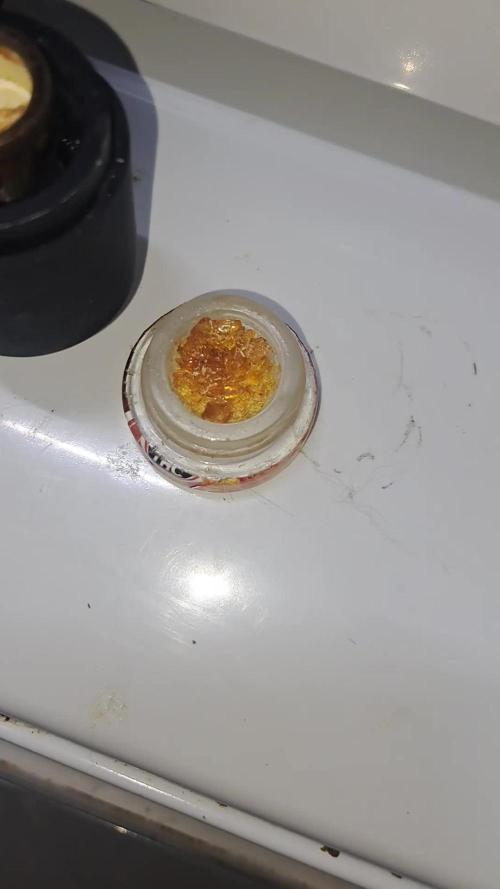



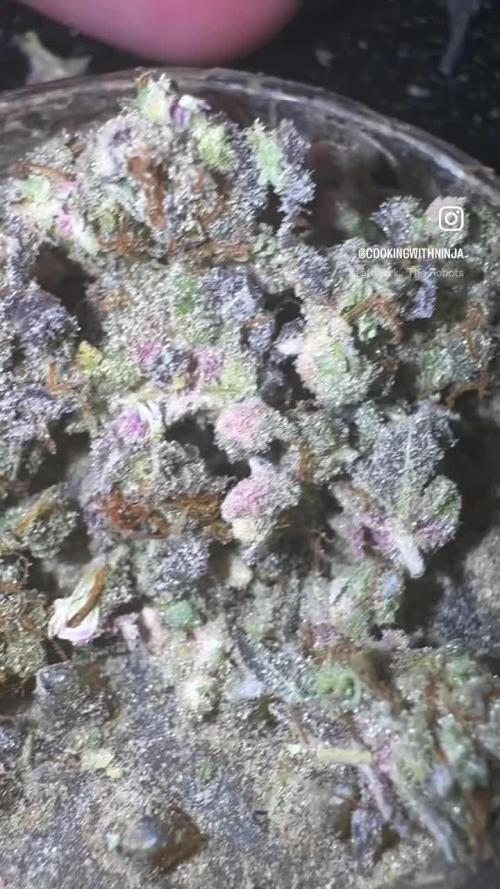

Processing
Likes
2
Share


@krst97
Follow
Started today second week (20/05).
Very pleased with how it grew the first week.
The plant appears healthy despite the excessive lengthening that caused its release due to the too much weight of the leaves.
Although it has a fan pointing at it, I still expect it to reinforce the stem to remove the support.
Update: Very strong stem.
20/05: Root Complex (3.5ml/700ml) + TNT Complex (3.5ml/700ml) --> Final EC 625
24/05: Root Complex (3.5ml/700ml) + TNT Complex (1ml/700ml) --> Final EC 325
27/05: Coming home after two days i found my baby plant that now isn't just a baby! Beautiful and strong!
I've noticed only a small spot in a leaf, highlighted in the video; and a strange skin around the stem, highlighted in the other video.
Likes
65
Share


@Roberts
Follow
I have not done much to her this week beside a solution change. Will change to flowering light schedule next update. She is in a New Level Hydro bucket, under a Spider Farmer SE5000 light at 50 percent.
Thank you New Level Hydro, Spider Farmer, and Quebec Seeds. 🌱🤜🤛🌱
Thank you grow diaries community for the 👇likes👇, follows, comments, and subscriptions on my YouTube channel👇. ❄️🌱🍻 Happy Growing 🌱🌱🌱
https://youtube.com/channel/UCAhN7yRzWLpcaRHhMIQ7X4g
SE5000
https://amzn.to/3qFpAML
Spider Farmer Official Website Links:
US&Worldwide: https://www.spider-farmer.com
UK: https://spiderfarmer.co.uk
CA: https://spiderfarmer.ca
EU: https://spiderfarmer.eu
AU: https://spiderfarmer.com.au
Coupon Code: saveurcash
Www.newlevelhydro.com
Www.hygrozyme.com

Likes
42
Share


@Dr_Boom
Follow
I flipped her to 12/12 and am hoping for a good stretch so she sends branches up through the netting. So far, I haven't been disappointed. She is showing good growth, and starting to drink a bit more. I added bloom nutrients to the mix and should see good results. Time will tell.
Likes
8
Share


@Goldenbags
Follow
29/3 the grapefruit is coming along nicely, buds actually smell like grapefruit! Lsd is so impressive! it’s on fire! The west coast ogs are still quite a bit behind..looking online, a lot of people seem to get these buds growing huge! Hopefully they get there.. BCN critical xxl popped 1 day after the LSD but has been the slowest to flower..It's just going into flower now.
Light has been at 75% for the last week or so and is at around 23inches above. Have been feeding all plants alternating water/feed/water/feed 1 litre every 2-3 days. So far so good!
4/4 bcn critical xxl isn’t looking very happy at all..she’s fully flowering now but all of her new growth has been loooking droopy for the last week…not too sure what’s up there..

Likes
2
Share

@OB-GYN-Kenobi
Follow
Chapter 18: The end.
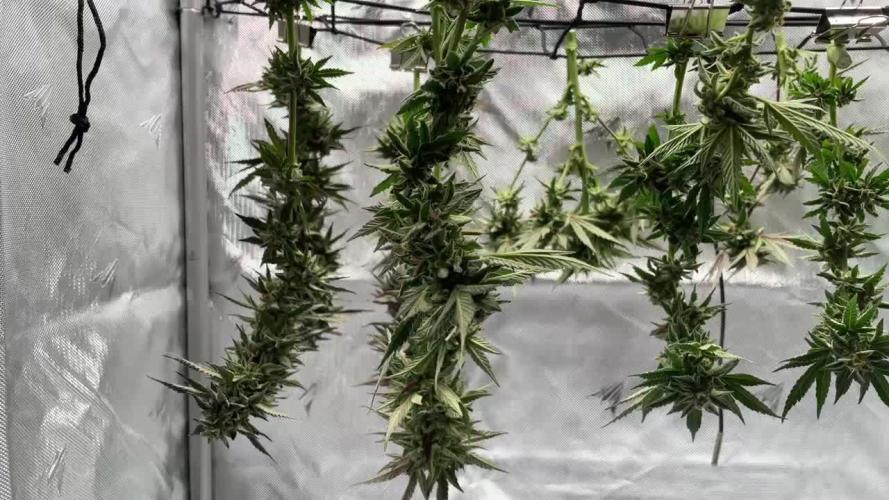
Cannabonsai was really starting to run out of juice, the tips of her larger sugar leaves were starting to show the same likely Ca / P deficiency as her fans, so I knew it was time. Duckfoot probably could've stacked another week or two, but I'm using the tent to dry, and I do prefer effects on the zippier side - so they both got the chop.
Since this was mostly an outdoor grow and they had recent issues with caterpillars, I decided to do a bud wash. One look at that water and no regrets.
Removed the fan leaves and hung full branches up to dry in the 60% humidity tent, though averaging a little warmer than I'd like at around 70 degrees. After about a week the hay smell dissipated, the smaller buds were moisture testing around 11%, so I bucked the branches into six-inch chunks and then let them sweat in paper bags for a few more days, rotating and airing out every several hours...just like the Grove bags say to do.
When each bag stabilized around 62% humidity, I trimmed everything. Final yield dry was 1.7 oz (48g) for Duckfoot, and 1.5 oz (43g) for Cannabonsai, with an additional ounce (31g) of dry trim. I already know I can do better on the next grow. :)
Early flower already smokes wonderfully - good taste, no hay, extremely potent, I would be very happy getting this from a dispensary. It's all in Grove bags now, can't wait to see how it cures up.






Likes
47
Share


@Ultraviolet
Follow
The cannabis strain Grape Guava can be a purple strain, depending on its specific phenotype and genetic makeup. While not all phenotypes of Grape Guava are purple, some variations, such as the Zatix Grape Guava, are noted for their striking purple appearance due to the genetic expression of anthocyanin pigments.
https://www.youtube.com/watch?v=cKdVmdoKJ5k
In a garden of green, Grape Guava gleams,
With its fruity aroma, enchanting dreams.
Clusters of grapes, guava's sweetness ignite,
A strain so divine, in purple and white.
Euphoria whispers, a lush fruity haze,
Grape Guava's embrace, a tranquil daze.
Off and away.@1400ppm. The increased CO2 allows plants to thrive at higher temperatures, which in turn necessitates higher humidity to maintain the ideal VPD for healthy growth and transpiration. 80F -5F = 75F LST with 70% RH = 0.72 kPa. Higher temperatures and humidity promote rapid growth, nutrient uptake, and photosynthesis while maintaining a lower stress level. Temperature influences the rate of enzymatic reactions involved in aerobic respiration. Enzymes, such as those involved in glycolysis, the Krebs cycle, and the electron transport chain, work most efficiently at an optimal temperature range. In low temperatures, enzymatic activity will slow down, thus reducing the rate of aerobic respiration. In high temperatures, enzymes can become denatured, thus impairing their function and stopping the process of aerobic respiration. Glucose is the primary fuel for aerobic respiration. The rate of aerobic respiration increases with the availability of glucose, as it is the starting point for glycolysis. If glucose levels are low, cells may rely on alternative energy sources such as fatty acids or amino acids , but these processes may yield less ATP or be less efficient. To determine this effect, carbon dioxide volume was measured (as carbon dioxide is an output of aerobic respiration)
18/6 with the 6 being IR. The near infrared (IR-a) borders around 700nm up to 1400nm @ photon par flux density of 1.8 instead of darkness, keeping temps overnight a neat 77F-80F.
Think of my tent as a lung. What goes in must come out. When the rate of air going out exceeds the amount of air coming in, it creates a negative pressure. Tent concaves (bends in). If set up correctly, your RH will begin to drop slowly to the desired level you set, and the extraction turns off when it reaches desired% RH. The plant, as it performs cellular respiration, will always be releasing more water into the air, so the RH% of the tent overnight will always increase, so long as oxidative phosphorylation is occurring. As soon as the RH% creeps back up to 55%, the extraction turns back on, over and over. This creates a strong pressure differential which will work wonders on your grow. Replicating high and low-pressure fronts in nature. Critical for oxygen diffusion at the critical time of peak cellular respiratory function..
Moisture will not transfer from a saturated atmosphere to another if that air is already at or above its saturation point, meaning the air can't hold any more water vapor. Once I understood that water is produced as a by product during cellular respiration, specifically at the very end of the electron transport chain (ETC) where electrons are finally transferred to molecular oxygen, the higher the RH of the air, the more resistance there is for more moisture to be added to that environment, and effects the ease with which it does so. But none of that water comes from the pot; it's pulled from the air. If you run high daytime RH, your medium/pot is 100% reliant on transpirational root pull to move water. ZERO evaporation happens across the atmosphere if the tent air has high RH%, the medium cannot release its water through evaporation. Once a canopy develops, light no longer slowly wicks and evaporates from the topsoil. The Soil-Plant-Atmosphere Continuum (SPAC) describes the continuous pathway and process of water movement, driven by a gradient in water potential, from the soil, through the plant's roots, stem, and leaves, and finally evaporating into the atmosphere through transpiration. There is evaporation, there is transpiration, and then there is evapotranspiration; Evapotranspiration (ET) is the combined total of two processes: evaporation (water lost directly from soil and surface water into the atmosphere) and transpiration (water released from plants to the atmosphere through their leaves). Evapotranspiration represents the total amount of water that moves from the medium into the air. There is no such thing as a medium with too much water, only a medium that retains too much for too long.
The water must always flow efficiently from one atmosphere(Medium) to another(Air) in a timely manner. Moisture is a critical factor for bacterial growth and decay. Dictating how long it's allowed to sit in any one location for any given period is a key preferred control. To ensure a net reduction in a bacterial population, the rate of removal (ET) must exceed the rate of bacterial growth (decay rate), which is often modeled as a growth rate for the specific bacterium under the given conditions. By optimizing daytime VPD, we also optimize conditions for bacterial growth to explode exponentially above 77°F.. If water is allowed to sit in a medium without an escape within a timeframe, nothing good will happen. IF High RH is maintained overnight as well as during the day, placing 100% of water movement at the behest of daytime transpiration, roots can only pull where they can reach, and if soil is compressed above a certain point, moisture will become trapped in a medium with no way of moving day or night. This will begin the countdown for decay to take hold. When water stagnates in a medium, it loses oxygen, creating anaerobic conditions that foster the growth of harmful microorganisms like bacteria and fungi, which can produce toxins and disease vectors.
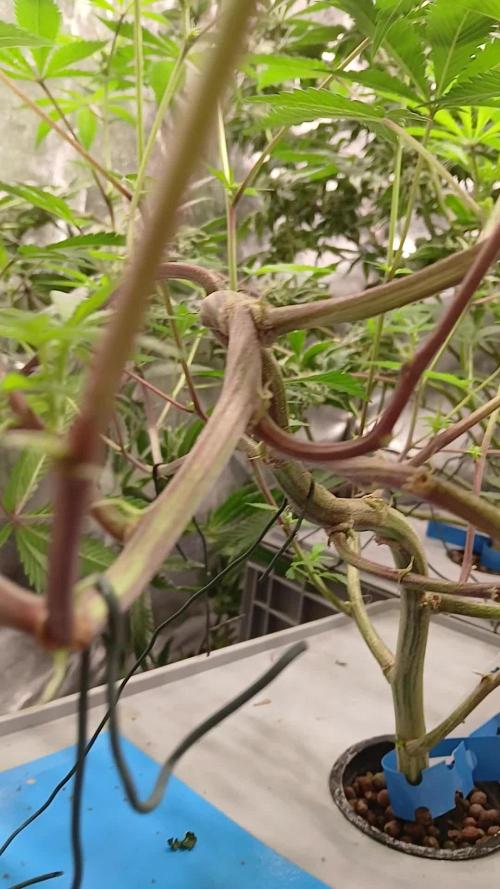
Thigmomorphogenesis, the process by which plants respond to mechanical stimuli like touch by altering their growth and development, results in significant morphological changes to improve survival against mechanical perturbations. This complex response involves sensing touch and initiating physiological and genetic responses, leading to changes in form and structure over days or weeks. The process is triggered by physical forces such as wind, rain, or touch. Plants adapt to these stimuli by changing their shape and structure, which may include slower growth, thickened stems, or altered leaf development. Plants possess sophisticated mechanisms to detect even subtle mechanical stimuli and initiate responses. A variety of molecules, including calcium ions, jasmonates, ethylene, and nitric oxide, are involved in signaling these mechanical inputs. Touch can induce the expression of genes that encode proteins for calcium sensing, cell wall modification, and defense mechanisms. A plant exposed to constant wind may become shorter and sturdier. A plant that is touched frequently might grow more slowly to conserve energy and develop thicker cell walls. These changes increase a plant's resilience and ability to survive in harsh environments.
Let's get Thiggy with it.


Processing
Likes
8
Share


@nyalexas
Follow
How are you guys combatting gnats?? I’ve been sprinkling cinnamon, thinking of nematodes next. Gnats are the reason I was growing outdoors to begin with


