


Likes
Comments
Share

@Emerald_Gardens
Follow
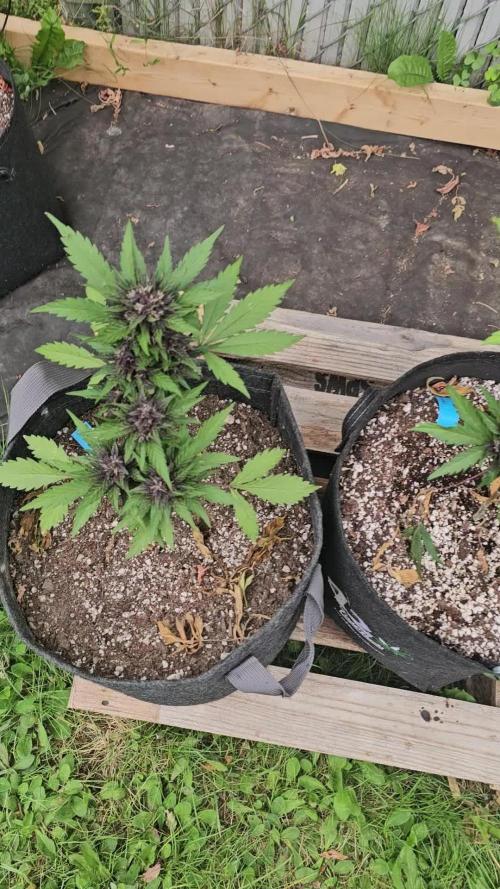
No real changes to organic nutrients, training, or watering. Making sure the soil doesn't go 100% dry to keep the microbes alive and noticing the buds densing up nicely. Smell is absolutely amazing. Overall the grow has been pretty hands off, as you would expect from a organic grow. I do not notice a difference in smell or size between the organic vs green planet purple lemonade grow. Keep in mind the plants were exposed to extremely high stress levels early on, due to my dog flipping the plants over a few times. This lead to stunted growth as you can see by the overall size.

Likes
4
Share

@DogDoctorOfficial
Follow
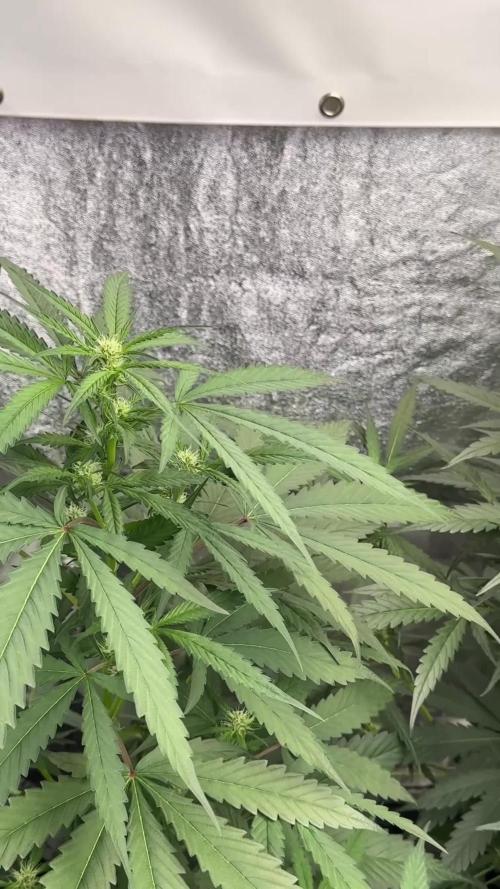
🌸 Pink Rosay Auto by Zamnesia | Pheno A | Week 6 (Flowering)
🌱 Elegance Never Needs to Be Loud
Some plants impress with sheer size.
Others with explosive growth.
Pink Rosay has chosen a different path.
She impresses through elegance.
Growing under the same 12/12 From Seed experiment as the rest of the 8×8 Adventure, she continues to prove that a plant doesn't need to be the tallest or widest to command attention. Standing at 96 cm, she has developed into a beautifully proportioned autoflower with a naturally balanced structure, excellent symmetry, and a calm confidence that becomes more obvious every week.
There isn't a single branch that feels out of place.
Everything seems perfectly positioned, as though nature designed her with precision from the very beginning.
Sometimes beauty isn't about being dramatic.
Sometimes it's simply about getting everything right.
⸻
🌸 Week 6 – Flowers Taking the Lead
This week marks a noticeable change in the plant's priorities.
The vertical stretch has begun slowing, allowing more energy to be invested where it matters most—building flowers.
Every branch is now crowned with bright white pistils, and the individual flower sites that appeared last week have already started connecting together, giving each branch the first hints of what will eventually become full colas.
The canopy feels alive.
Every day brings a little more volume, a little more stacking, and a little more character.
This is the stage where the plant quietly shifts from growing upward to growing outward, filling every flowering site with new life.
And Pink Rosay seems perfectly comfortable making that transition.
⸻
🌿 Structure & Natural Balance
One of my favorite qualities about this phenotype is just how naturally balanced she has become.
The gentle Low Stress Training performed during the previous weeks continues paying dividends, creating an open canopy where every branch receives excellent light without feeling overcrowded.
Her internodal spacing remains ideal, allowing light and airflow to reach deep into the plant while giving each future cola plenty of room to develop.
The central leader remains dominant, but the secondary branches are doing an excellent job keeping pace, creating a wonderfully uniform canopy that should translate into a very satisfying harvest later on.
She doesn't need correcting.
She simply needs time.
⸻
? The Language of White Pistils
One of the most beautiful sights in any flowering room is the explosion of fresh white pistils.
They're delicate.
They're bright.
And they're the plant's first true declaration that flower production is fully underway.
This week, Pink Rosay is absolutely covered in them.
Every flowering site seems to wear its own little crown of brilliant white hairs, reaching outward as the calyxes slowly begin stacking beneath them.
It's one of those moments every grower enjoys because those tiny white pistils are much more than beautiful—they're the blueprint of the harvest to come.
Today they're soft, fresh, and full of energy.
Over the coming weeks they'll guide the formation of every cola as the flowers swell, mature, and gradually begin revealing the frosty character hidden inside these genetics.
Watching that transformation never gets old.
⸻
🍃 Plant Health
Health continues to be outstanding throughout the entire plant.
The foliage maintains a rich, healthy green without excess or deficiency, while the leaves display excellent posture and remain perfectly relaxed under the current environmental conditions.
The stems have thickened nicely during the stretch and now provide a solid framework for the flowers that continue developing across the canopy.
There are no signs of stress.
No unnecessary stretching.
No wasted energy.
Just a healthy autoflower confidently following her own schedule.
⸻
💧 Hand Watering & Nutrition
Pink Rosay continues to be hand-watered, allowing close observation of both substrate moisture and daily plant response.
Current feeding:
• Terra Grow — 1.9 ml/L
• Terra Bloom — 1.9 ml/L
• Pure Zym — 1 ml/L
• Sugar Royal — 1 ml/L
• Power Buds — 1 ml/L
• Green Sensation — 1 ml/L
Maintaining:
• EC: 1.78 mS/cm
• pH: 6.0
The nutrient balance remains right where the plant wants it, supporting the transition from vigorous growth into full flower production while keeping the foliage healthy and vibrant.
⸻
🌡️ Environment
The environment continues providing exactly the consistency these genetics deserve.
Current conditions:
• Day temperature: 29°C
• Night temperature: 25°C
• Relative humidity: 60%
• Solution temperature: 21°C
• Root zone temperature: 21°C
• CO₂: approximately 529 ppm
Maintaining a stable environment allows each phenotype to express its genetics naturally, and Pink Rosay is taking full advantage of those conditions.
Healthy roots.
Stable climate.
Happy plants.
⸻
👀 Looking Ahead
The coming week should be where the flowers truly begin to gain substance.
The framework has been built.
Now it's time for the calyxes to start swelling, for the pistils to multiply even further, and for each flowering site to slowly merge into the colas that have been quietly preparing since the stretch began.
If she continues on this path, I expect a canopy filled with beautifully shaped, evenly developed flowers from top to bottom.
Everything about her suggests she's only just beginning to reveal what she's capable of.
⸻
🙏 Final Thoughts
Pink Rosay continues to remind me that perfection isn't always measured in size.
Sometimes it's found in balance.
In symmetry.
In healthy growth.
In the quiet confidence of a plant that simply does everything well.
Week after week, she has developed without drama, without setbacks, and with a grace that's difficult to ignore.
Watching those brilliant white pistils multiply across such a beautifully structured canopy has easily been one of this week's highlights, and I'm incredibly excited to see how these early flowers transform over the coming weeks.
A huge thank you to Zamnesia for these fantastic genetics, Plagron for providing the nutrition that keeps this project thriving, Future of Grow for the incredible lighting, TrolMaster for maintaining such a stable environment, and to everyone following this journey here on GrowDiaries.
Your encouragement, questions, and shared passion for growing make this 8×8 Adventure even more rewarding.
Until next week...
Growers Love and happy growing! 🌱💚



Likes
20
Share


@eldruida_lamota
Follow
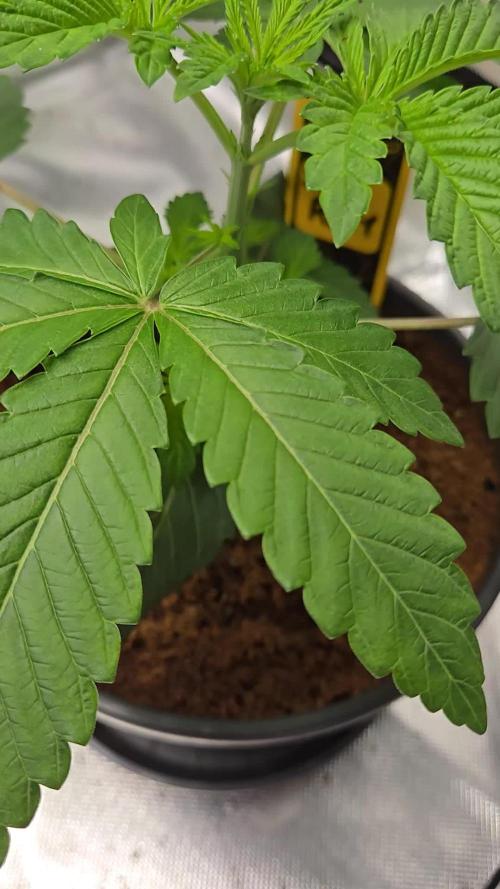
Que pasa familia, andamos por aquí, puesto que está farm cheese a cogido muy buen ritmo, esta será la última semana que la daremos de crecimiento, y en nada pasamos a 12/12.(floración).
El ph está controlado en 6.5 , la humedad está por debajo de 55% y la temperatura no sube los 26 grados.
Vemos un ejemplar que está ramificando bien, el led me está gustando mucho la flor crece más compacta.

Likes
72
Share


@BodyByVio
Follow
This will be the last week i will Feed. I m keeping TDS at 400PPM and PH at 5.8. This week I took out the Silica Blast, Great White and also stoped the CO2.
Also I lowered the water temp to 66 degrees.
Lights on temp is between 75 and 80 degrees, lights off between 65 and 72.
I’m trying to keep humidity as low as possible around 45%
week 10 will be flush week.
Likes
1
Share

Processing
Likes
74
Share


@Mr_Maes
Follow
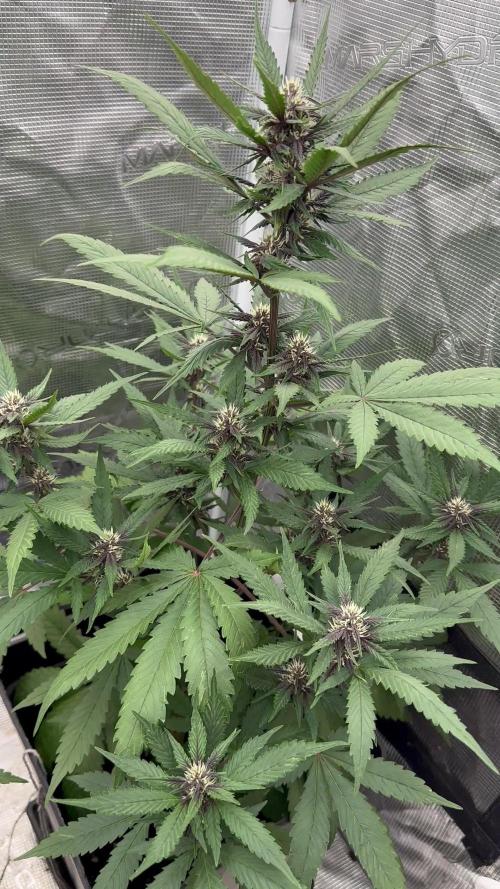
We are officially in full bloom. The have been enjoying 6-7 hours of sun light per day for about 4 days now, then brought back in under the cobs. The girls are all exploding with growth and stacking what I expect to be huge buds.


Likes
3
Share

@AestheticGenetix
Follow
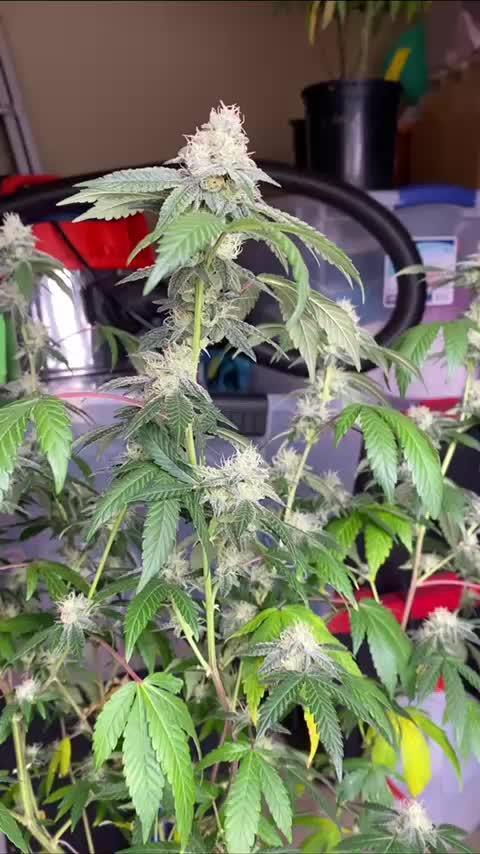
Looking really nice at this. No smell yet but really frosty for days

Processing
Likes
3
Share


@CharasKush
Follow
The two fastbuds are showing many pistils, whereas the two zambezas seems to be a bit behind in flowering, must be for the ruderalis genetics I imagine. Haply with the way the canopy is developing, looking forward to see these babes fatten up!!

Likes
17
Share


@HowtoBubatz
Follow
We’ve hit week five of flowering, and things are getting really exciting! 🌸
The plant is now covered in trichomes, and many of them are already turning a milky color—such a great sign that things are progressing perfectly.
The buds are starting to look really frosty. ❄️✨
I’ve been following the BioBizz week 6 feeding schedule, as it’s almost time to flush the plant—just 2-3 more weeks to go! 💧
I’m getting more excited each day as we move closer to harvest. Can’t wait to see how everything finishes up! 😁🌱
Processing
Likes
15
Share


@WighLowBeanz
Follow
She'll be 7 weeks Friday and today is Wednesday July 15th. Her buds are as round as a baseball! Some are 6 inches long and she is full of resin and sticky as hell!
Likes
26
Share


@BlackDragon22
Follow
Incredibili gli odori di questa gorilla punch, non si notano le leggere sfumature viola che invece erano più visibili con le foto di notte fatte in precedenza. Super colla anche per lei è cime belle e compatte, anche se nel complesso non è tanta per la quantità, ma la qualità è superiore. Grazie fast buds, a presto per altre foto e ulteriori aggiornamenti amici miei!


Likes
39
Share


@KitaKush
Follow
A white christmas for me after all! 😂
Week 13 harvest! Plant 1 = 67 grams/2.3 oz Plant 2= 55 grams/1.9 oz overall= 4.2 oz
(5-7 day dry)
The Gorilla Cookies are soooo damn frosty and stinky…i’ll be drooling at them for a month until I can taste them!!!!
Photos mostly of plant 2..1 was coated in resin but plant 2..the frostiness can be seen from far away! My first top shelf grow 😈…hopefully more to come!
My glove was literally sticking to the stems and getting stuck with plant #2
The stench reminds me of thanksgiving dinner LOL..sausage stuffing and gas is what comes to mind..very savory aroma!
One plant flushed partially the other not flushed and I can tell you that the flushed plant has much more flavorrrr..if this didn’t prove to me that flushing is absolutely essential IDK what would! LOL
Likes
19
Share


@Troy_Farms
Follow
This was a great experience, my3rd Auto plant. As soon as it showed its first pistils I topped it and mainlined the new top two nodes into a 4 way mainline. The plant recovered very well and began flowering and filled out great and filled in evenly. Buds are not super big but compact and quality. Smoke is great, nice steady high. Success! Cheers😎

Likes
18
Share

@Bncgrower
Follow
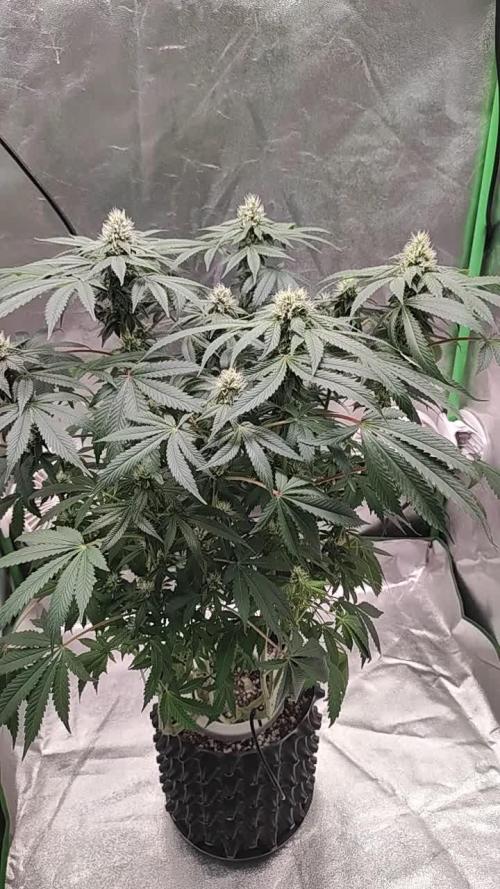
Everything as expected, good development so far, well resined flowers and a slight sweet smell. Looking forward to the next few weeks...
Good growing everyone 🏻💪🏻


Likes
9
Share


@Mo_Powers
Follow
it has really developed very well. it has grown another 10cm. and the flowers are now really coming into their own and are getting thicker and thicker. because of the heat, it has been given calm-a-mag and acti-vera by biobizz. and of course now also bio-bloom.
Likes
2
Share


@Saintvicious
Follow
Flower stretch and bud sites are setting. Lots of tops from the lst. Fingers crossed.


