


Likes
Comments
Share

@Easybudzzz
Follow
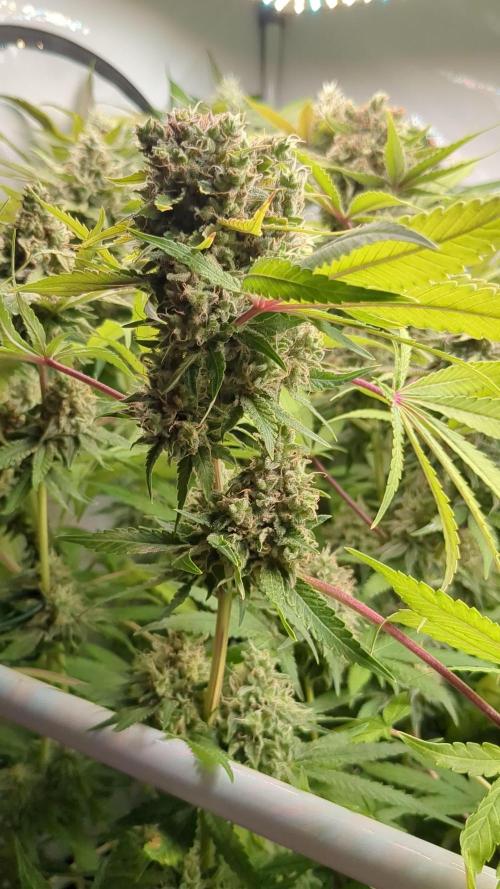
Wappa was a real joy to grow. It stretches enormously during flowering and doesn't require a long vegetative period. The aroma is fruity with a slight hint of vanilla. The buds are very dense.

Likes
7
Share


@BAMA_251
Follow
She’s really starting to frost up and the pine smell is really starting to get strong


Likes
6
Share


@XanHalen
Follow
Dec 12:
Growth has been good, leafs started yellowing as I tried a regular watering as opposed to a feed, and they did not take well to it. I’ve read that it’s good to incorporate waterings between feeds, but 24hr later noticed a bit of yellowing on the lower section, 48hr post watering even more yellowing.
Dec 18:
Going with feed only and yellowing has halted, stretching has officially begun. No adverse effects from the short term nitrogen deficiency (that’s what I narrowed it down to). Playing with budsites to maintain an even canopy, and as soon as I see stretching halt, and fattening begin, I will up the bloom nutes.
Dec 20:

Processing
Likes
17
Share


@greennug
Follow
plants looking great dinafem standing out from the crowd.my stardawg cuttings are thriving and a few of the fastbuds strains look beautiful.should be kicking into flower late next week. daily updates until harvest!


Likes
17
Share


@420DeepGrow
Follow
Gracias al equipo de AnesiaSeeds, Marshydro, XpertNutrients y Trolmaster sin ellos esto no sería posible.
💐🍁 Sticky Boof:
Prepárate para dejarte llevar por Sticky Boof, nuestra última obra maestra que está poniendo el listón muy alto para los amantes de las índicas. Nacida del legendario cruce de Super Boof y Cadillac Rainbow, Sticky Boof es una potente planta con un asombroso 80% de dominancia Indica que promete una relajación sin igual.
Prepárate para un viaje épico con el asombroso 37,5% de THC de Sticky Boof.
Sumérgete en una cosecha abundante con Sticky Boof, que produce hasta la friolera de 500 g/m² en interior y 800 - 900 g por planta en exterior. Esta variedad es generosa y está lista para llenar tu alijo de cogollos de la mejor calidad.
Sticky Boof es todo rapidez y eficacia, acelerando el tiempo de floración en sólo 7 u 8 semanas.
💡TS-3000 + TS-1000: se usaran dos de las lámparas de la serie TS de Marshydro, para cubrir todas las necesidades de las plantas durante el ciclo de cultivo, uso las dos lámparas en floracion para llegar a toda la carpa de 1.50 x 1.50 x 1.80.
https://marshydro.eu/products/mars-hydro-ts-3000-led-grow-light/
🏠 : Marshydro 1.50 x 1.50 x 1.80, carpa 100% estanca con ventanas laterales para llegar a todos los lugares durante el grow
https://marshydro.eu/products/diy-150x150x200cm-grow-tent-kit
🌬️💨 Marshydro 6inch + filtro carbon para evitar olores indeseables.
https://marshydro.eu/products/ifresh-smart-6inch-filter-kits/
🍣🍦🌴 Xpert Nutrients es una empresa especializada en la producción y comercialización de fertilizantes líquidos y tierras, que garantizan excelentes cosechas y un crecimiento activo para sus plantas durante todas las fases de cultivo.
Consigue aqui tus Nutrientes:
https://xpertnutrients.com/es/shop/
💻 Trolmaster Tent-X TCS-1 como controlador de luz, optimiza tu cultivo con la última tecnología del mercado, desde donde puedes controlar todos los parametros.
https://www.trolmaster.com/Products/Details/TCS-1
🍣🍦🌴 Xpert Nutrients es una empresa especializada en la producción y comercialización de fertilizantes líquidos y tierras, que garantizan excelentes cosechas y un crecimiento activo para sus plantas durante todas las fases de cultivo.
Consigue aqui tus Nutrientes:
https://xpertnutrients.com/es/shop/
📆 Semana 10:
Por fin comienza el buen tiempo aunque parece que está floreciendo día tras dia lentamente, hasta el dia 22 no paso a flores oficialmente.
Se esta quedando una planta compacta con muchas preflores y bastante resina.
Continuo aplicando nutrientes segun recomienda el fabricante.

Likes
36
Share


@Dwillsun1
Follow
This girls just chugging along. She seems to look good??? Have had No leaf curling, discoloration or spotting 🤞 so far... Don't defoliate much since she looks and seems so strong and healthy. Only got about 6 more of hey own grids on the Scrog net and she'll have covered two thirds the available lit floor space. Gonna start Nature's Living Soil Girl Flower Power.
2nd week Flower Yay.

Likes
34
Share


@Southwest_budders21
Follow
Not much to say apart from they are getting bigger and all three seem to be girls now 11 days until I flip!
Edit: I'm happy with the training and keeping them low, so the aim is to flip this week
Likes
3
Share


@d0cterstrain
Follow
Week started off good. 8 days in and we have great bud set . Tropicanna is such a fast flowering plant that in 8 days I have my poms beginning to show . Let’s goooo


Likes
1
Share


@Foxbud420
Follow
Short Update:
12/12 yesterday
Sanlight Mesh on 40% / in 10 days every week 10% more
All looks fine. Giving them a light defolation tomorrow. Lollipoing in week three.


Likes
12
Share

@420DeepGrow
Follow
Gracias al equipo de AnesiaSeeds, Marshydro, XpertNutrients y Trolmaster sin ellos esto no sería posible.
💐🍁 Coco Jambo:
Con una composición genética 60% Sativa y 40% Indica, Coco Jambo es tu billete dorado a un verano sin fin, ofreciéndote una escapada a un mundo donde el sol nunca se pone en tu felicidad.
Con unos niveles de THC que oscilan entre un relajante 30% y un estimulante 34%, Coco Jambo es un faro de euforia que guía a sus usuarios en un viaje a través de olas de serenidad y vibrante alegría. Su aroma es una celebración de los sentidos; imagina el momento de euforia al abrir un coco y descubrir que rebosa de las frutas tropicales más suculentas.
🌻🚀 Consigue aqui tus semillas:
https://anesiaseeds.com/es/product/coco-jambo/
💡TS-3000 + TS-1000: se usaran dos de las lámparas de la serie TS de Marshydro, para cubrir todas las necesidades de las plantas durante el ciclo de cultivo, uso las dos lámparas en floracion para llegar a toda la carpa de 1.50 x 1.50 x 1.80.
https://marshydro.eu/products/mars-hydro-ts-3000-led-grow-light/
🏠 : Marshydro 1.50 x 1.50 x 1.80, carpa 100% estanca con ventanas laterales para llegar a todos los lugares durante el grow
https://marshydro.eu/products/diy-150x150x200cm-grow-tent-kit
🌬️💨 Marshydro 6inch + filtro carbon para evitar olores indeseables.
https://marshydro.eu/products/ifresh-smart-6inch-filter-kits/
🍣🍦🌴 Xpert Nutrients es una empresa especializada en la producción y comercialización de fertilizantes líquidos y tierras, que garantizan excelentes cosechas y un crecimiento activo para sus plantas durante todas las fases de cultivo.
Consigue aqui tus Nutrientes:
https://xpertnutrients.com/es/shop/
💻 Trolmaster Tent-X TCS-1 como controlador de luz, optimiza tu cultivo con la última tecnología del mercado, desde donde puedes controlar todos los parametros.
https://www.trolmaster.com/Products/Details/TCS-1
📆 Semana 10:
Última semana antes del corte final, los cogollos están bien prensados y cargados de resina de un color muy lechoso, solo falta que se tornen algunos tricomas más en ámbar.
MarsHydro y XpertNutrients han hecho de nuevo un gran trabajo 💪😍


Likes
6
Share
@420DeepGrow
Follow
📆 Semana 7
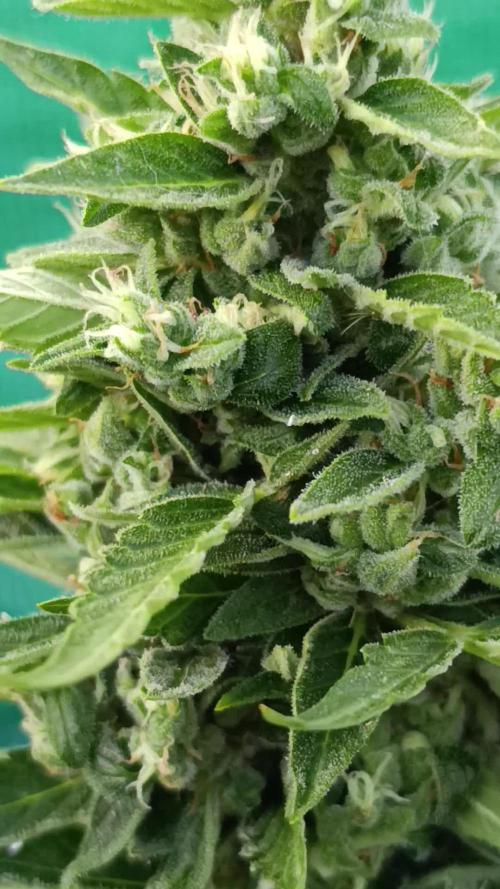
Esta séptima semana el cogollo principal continúa engordando y ganando todavía más densidad. La planta sigue siendo pequeña, pero cada vez queda más claro dónde está concentrando toda su energía: una única flor que continúa cerrándose y acumulando resina.
El desarrollo sigue siendo estable y mantengo una nutrición moderada, dejando que la planta avance sin forzarla en esta fase. La estructura del cogollo empieza a verse cada vez más compacta y madura.
⚡ EC: 0.9
💧 pH: 6.2
🌡️ Agua: 21°C
🌫️ Humedad: 45–55%
💡 Intensidad: Luz directa del sol
🔥 Nota de cultivo: Poco tamaño, pero mucha concentración. El cogollo principal sigue ganando volumen, densidad y resina semana tras semana, y empieza a tener una presencia que no parece corresponderse con el tamaño de la planta.
¡Seguimos creciendo fuerte! 💪

Likes
74
Share


@AsNoriu
Follow
Day 82. First of two is down.
Day 88. Second down. Both will be decent by weight and structure, but smell and taste .... maybe after cure ? ;)))
Day 92. First went to jars. Will be hard to keep fingers away ... ;)))
Day 98. Both in jars ! 170 g of my very likeable smoke ;)
Will update later
Happy Growing !!!


Likes
11
Share

@Paying_Customer
Follow
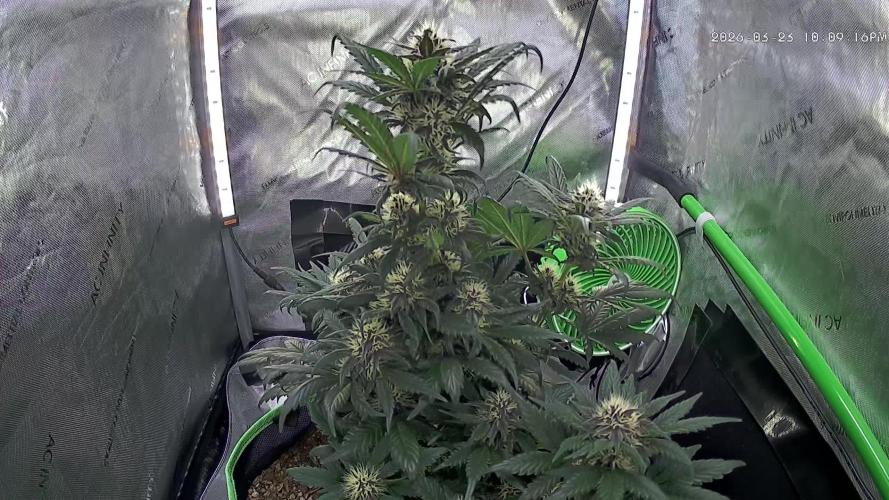
Not stretching as much and the buds are starting to bulk up all the bud sights have a nice purple fade. She’s a short plant but looks like she will be productive in the end. Day 47 had to remove some of the big fan leaves that were blocking light on some of the bud sites below them. She's really starting to put on some weight.
Likes
3
Share


@UrbanBoer
Follow
The craziest strain, this one ever since she started flowering all she has been doing is going in and out of reveggin and flowering, she has even out grown everyone, and the craziest part, is that she uses less grow medium than all the other ladies, I should expect late January harvest, my fear is her not been able to support her buds, as tall as she is, I think I should waiting and see.
Likes
6
Share


@Frosty905budz
Follow
Last week before the flush...
Blasted the plants with another dose of dense bud compactor by green planet nutrients...
Super exited now as we are getting close ...
Buds look amazing and smell even better 😍
Tris still kinds clear but with a few amber colour tris , most hairs turned color as and are starting to curl in ... will start the flush with Advanced nutritions flawless starting week 9

Likes
4
Share

@xXHappy420
Follow
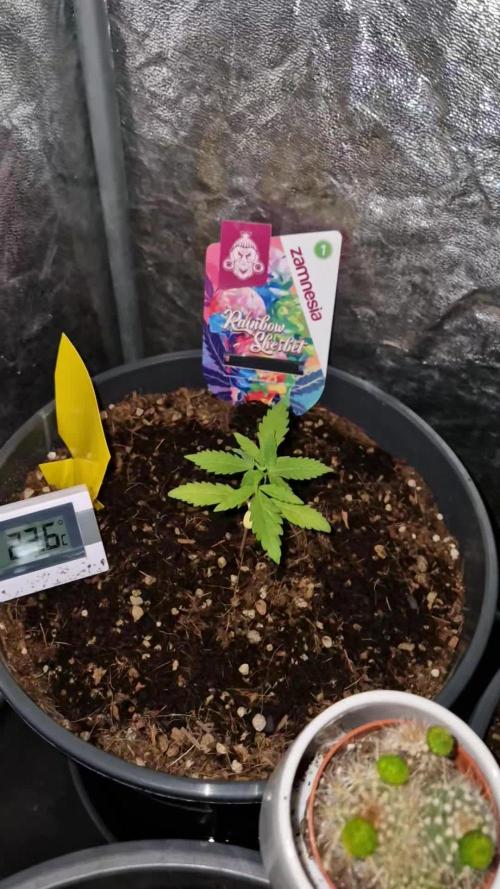
Sie wachsen super außer die rainbow sherbert die will komischer weiße nich obwohl sie genau das gleiche bekommt wie die anderen 2 will sie nicht trinken..

Likes
14
Share


@Echevarriaf
Follow
So it seems my baby is transitioning as her budder nips are growing at a quite doubling rate! Topped of with ph 5.5 R/O and Added an extra 5ml bloom and 5ml floranectar keeping the same nutes until Friday 5/17/2019 😛💪🏽


Likes
10
Share


@HideAndFly420
Follow
Day 75 watering with just ph controlled (6,2) water to finish flushing her
Day 77 looks incredible frosty now, I Tonino I’m really close to CUt her. This afternoon I will check with microscope and, I’d like 25%amber and 75% milky