


Likes
Comments
Share

@Terp-A-Derp
Follow
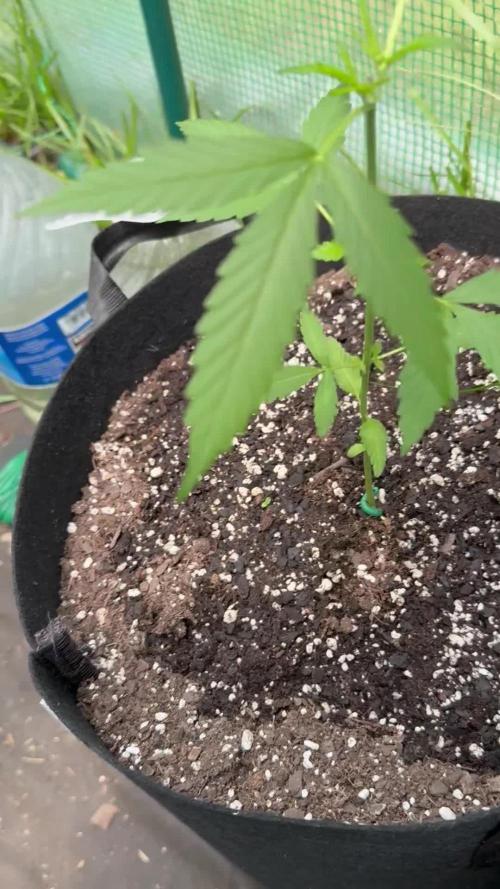
First time topping a plant so it made me kinda nervous. I cut right above the fourth node and it didn’t seem to stress out too much. There’s a lot of storms this week with large swings in weather so sunlight hasn’t been as good but also didn’t go over 100 degrees this week so I guess it’s the good with the bad. Thanks to all that’s following.

Likes
6
Share


@Terpio1500
Follow
Week 3
Great Pistil growth looking forward to day 21 defoliation
This one looks really good love the stretch it’s not getting to lanky
I’m seeing really fast growth
The New.
Check out my other Dairies (Gelato Cake& Jungle Verde)
Nutrients (floraflex) are in Grams/gal*
Light: HLG
Follow my IG @therealterpio for more updates & content!
Likes
6
Share


@1Prinz
Follow
25.07 Watering with 200 - 400 - 400 - 400
Used only 4ml/L TOP-Max (honestly I forgot about the fact, that I have to use the BioBizz Products only once in a week and I already added 4ml before I realized it…)
26.07 my neighbor complained about the smell one store under my balcony (told me he can smell it on the street 50 meters behind my balcony)
28.07 watering 400 - 400

Likes
22
Share


@MonsieurDeLaRuche
Follow
D83 F36: Hello everyone! I apologize for the quality of the photos, I really have a shitty phone! Apart from that everything is going well! The plants are growing very well, still no signs of deficiency.
I started cooling the box at night 2 days ago and the colors are already appearing!
I upgraded my LED panel to 600w F33, I was sure I was correct with 400 but I noticed that the flowers were not developing correctly
The smells are really incredible, more and more marked! I have a little crush on the code red #1, a smell of strawberry candy, cream and syrup.
the white runtz x Hollywood is very very special too! a very runtz smell, with a very marked smell of marinated ginger and lemongrass! very special, it's also the one that makes the biggest heads, incredible
I did a big defoliation (schwazzing) a few days ago and they recovered very well.
I moved the plants again, I'll put the locations below.
I will apply tco F40
in my flowering TCO, I put:
- kelp hydrolysate
- epsom salt
- bat guano
- mealworm guana
- castor bean shell ash
- palm ash
- vermicompost
- blackstrap molasses
- elycitor
-Yeasts Saccharomyces Cerevisiae
Bottom right: Papaya Bang Bang #1
Bottom middle: LA Vanilla cake #2
Bottom left: Papaya bang bang #2
middle right: cherry gar see ya #4 clone
middle: white runtz x Hollywood
middle left: code red #2
Top right: Code red #1
Top middle: B-45
Top left: LA Vanilla Cake #1


Processing
Likes
10
Share


@CzAlmighty
Follow
Hello all ,🙃
this week starts use Nutriends . Let s go :) 💪🏼

Likes
3
Share


@CK-OrgGrow
Follow
Blüte Woche 8
Die Pflanzen entwickeln sich mega In dieser Woche habe ich denn EC wieder von 3,0 auf 2,5 heruntergesetzt.
Bei der Pflanze hinten Rechts gibt es keine weiteren Verschlechterungen oder Verbesserungen zu erkennen, aber sie entwickelt sich auch weiter, nur langsamer und anders :-).
Trichome (THC) entwickelt sich sehr heftig.

Likes
21
Share


@Hydronaut
Follow
A step back recently:
Started a final flush (2 days in), and decided to start feeding her again - thanks to some great GD input!
250 ppm at re-start and will work my way to 500ppm? She's still rockin' along - like nothing happened.
She topped out at 350 ppm without tanking PH, so she is stable here.
PH is now swinging down fairly quickly last 12 hours. Drained off 1/3 of reservoir and get reservoir down to 250PPM.
5 days later, major PH swings down again. Mixed another fresh reservoir. I am using Zero Water 5 gallon system, and just realized the PPM coming out was 100, and PH at 3! If I am at 100 today, that means these filters have been shot for a while, maybe since start of my PH issue. There is also interesting information about when zero water filters reach their expectancy. They put out fishy smell and otherwise. I will be watching my filters more often and taking more notes since this ZeroWater 5 gal system is really the way to go if you are only growing a plant or two. Filters are a bit spendy but when you take time, gas, convenience etc. its a no brainer (if the water coming out is zero:) - I get about 15 gallons per filter (175ppm from tap).
Day 70. It’s been about a day since new res change. Steady Eddie at 250 ppm and 6.2. I’ll let her drink the bucket down a good ways if things remain stable with a drift down. I doubt it though, 5 gallon is fine for 12” autos but at 2’ she really needed 8 gal. Time to up the R&D on the cabinet! Also checked Zero Water again and filter is now putting out 200ppm of 3.0 water. New filters installed!
Hope she finishes soon, the top of her canopy slowly getting cooked over the last 10 days. 8" of light distance is too little. PPFD 2000+ at the top, but leaf temps are in the upper 70's. Gotta hit a decent DLI on these lower buds - without nuking the top nugs, right?!
As the week concludes, she’s in a fresh bath, at 250ppm @ 6.0 and running stable again. New water filters installed so zero water variable removed. Last serving of half+ teaspoon of GH dry KB ripening, and will reduce ppm by 25/day until I reach 10-15%. 1-2 day flush, if at all.

Likes
2
Share

@eldruida_lamota
Follow
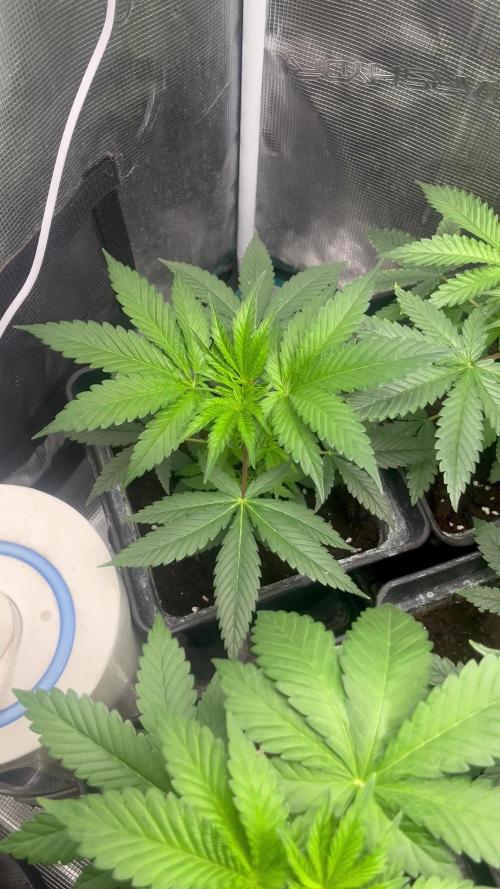
Venga familia que vamos con la quinta semana de vida de estas Toad Venum de Growers Choice.
Al lío, Las plantas están en macetas de 7 Litros, con tierra top crop mezclada con fibra de coco 90/10, y tienen un color verde espectacular.
El ph se controla en 6.5 la temperatura la tenemos entre 23/25 grados y la humedad ronda el 50% gracias al humidificador.
Los riegos actualmente se aplican 600 ml cada 48 horas, y suelo alimentar una vez a la semana.
El ciclo de luz se cambiará la próxima semana a 11/13 por probar algo distinto, el foco está al 65% de potencia.
Estoy utilizando preventivos una vez a la semana y coloque tiras de color azul y amarilla, no tengo plagas pero para prevenir que nunca se sabe.
- os dejo por aquí un CÓDIGO: Eldruida
Descuento para la tienda de MARS HYDRO.
https://www.mars-hydro.com
- los nutrientes directamente desde https://agrobeta.com/agrobetatiendaonline/36-abonos-canamo
Hasta aquí todo, Buenos humos 💨💨💨



Likes
200
Share


@Ferenc
Follow
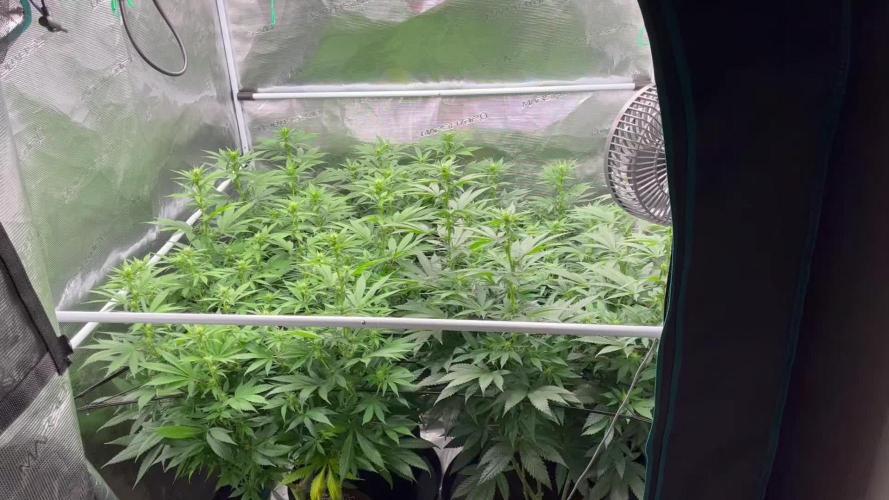
Day 96, 15th of December 2020:
Wao and wao... this is what I can say.
A bit late I was on holiday I usually start the week with the first day but now with the last one.
So let's start with the "black sheep" of this group as she is alone here RQS Wedding Gelato.
Easy growing issue free little bushy lady. Absolutely great choice of grow. Pretty much ready for Christmas but she can be cut even now lol....
And now let's speak about the Original Sensible Seeds' girls...
Well Black Ghost OG similarly to RQS Wedding Gelato is calm little bushy and issue free lady.... no problem all good ready for Christmas....
Runtz Gum the thick chick with heavy big buds and excellent appearance is really amazing. I placed a stick there and fixed her to look better... It was not necessarily but i have done it.
She needs more time pretty much done ny Christmas or a bit after....
Gelato from Original Sensible Seeds is similar in terms of acting such as streching and all that ...
The same situation applies not much to really say we wait ;)
I am really happy to have these ladies....
Well, Do-Si-Dos OG is the craziest one ever... lol.... not only due her crazy kind of streching style but the trichome developement that comes along to the fan leaf "holder" stem is pretty crazy....
Those buds are like a diamonds sticky and she would be ready to harvest but need to wait because I need to go....
I really had to fix her by placing a stick there I broke one stem but fixed as it did not come off... so crazy especially now because of the weight of the buds... now she looks even more beautiful...
I think she is the most challenging grow ever.
Original Sensible Seeds genetics is unique really high quality just look at them.
Royal Queen Seeds as well but this is my second grow from them my first was a Green Gelato which is the same calm littlw bushy plant. Amazing very good for newbies ;)
I am going on holiday again and back on 28th of December so after harvest starts.
Girls will be cut after.
The 7th weeks starts with tomorrow 16th of December....
Only flushing and no more nutritient will be used.
Soon full report comes. Lamp is the same 11 hours on and 13 off....
The last 4 days they will get 4 days darkness and only ventilation will be working no even more water ;)


Likes
33
Share


@Belverde
Follow
Welcome growers
Week n°6 is ended, the first in flowering for this two BLUEBERRY CHEESECAKE 🍰
The one that is growing in its most natural form apparently looks fitter than her sister where I have practice a topping technique, but in general they are quite beautiful and healthy..
The plants are starting to show early pre-flowers 🌻🌻
The appearance is not extremely healthy because of me, I was away for a few days and my self-irrigation system did not work properly, leaving the plants in shortage of water 💦
Maintaining the correct proportions between dry and wet soil is essential
But they will recover anyway..
In this week I have slightly defoliated to allow the light to penetrate more and also better ventilation ✂️✂️🍃🍃
About the lights cycle 💡
We are now in a 12/12 on / off..
Always under two SP3000, from Mars-Hydro, at 75% of the power..
About nutrients 👇
I still giving their always organic/veganic nutrients..
A little bit of silicium (Bionova) / Activator (Biomagno) / Crescita (Biomagno) / Activera (Biobizz) / Grow vegan (Bionova) / The Missing Link (Bionova) / X-Cell (Bionova) / Bioheaven (Biobizz) , a little bit of P-K 3-5 (Bionova) {in spray solution } and for the firsth time a little bit of Fioritura (Biomagno) and Bloom vegan (Bionova)
Like i usually do, a little bit of everything at any watering 💧
And that's pretty much everything i've done..
See you in week n°7 📆
Thanks for stopping and watching 😎👍👍
FC ✌️
🇮🇹


Likes
Comments
Share


@Dankmark420
Follow
We have flipped about 2-3 weeks ago and now we finally see some signs of flower🙌🏼😍


Likes
32
Share


@Fatnastyz
Follow
Sad she was ready to be chopped, but excited as hell too! 😁
I have another seed and Im already fighting the temptation to do her again! 🤣🤤
Cant wait to smoke! 💨
Ty for the 💚
Likes
2
Share

@Guerrilla_grower777
Follow
1/09/2025 19:45
Finally days with optimal climate, only half day cloudy with a little bit of rain
Coco fresh Is the only one who seems to attract animals,i think Is a fox
Everything looking fine with the others,smell Is now really strong, we are almost at the end
Se#1 gorilla z Is putting on some weight,colors are changing and the smell is becoming something loud,complex
Buds not looking the best in density but covered in trichomes so heavier than they look
#2 frostbanger better bud formation than any other autoflowering i growed ,even the bottom pop corn nugs are frosty so i cut a liittle sample
Smell Is super sweet,strong lemon scent
#3 Coco Milk not flowering yet but the plant looks amazing
Not much to say Is coming through very well,hope we will see pistils next time
#4 Coco fresh fighting to survive,another time i found the pot touched and soil dug
Not looking good but still growing so it's ok
Apricot not looking good too,It will be low yield
Buds will be 100% purple,at least aesthetically will become something different from the others
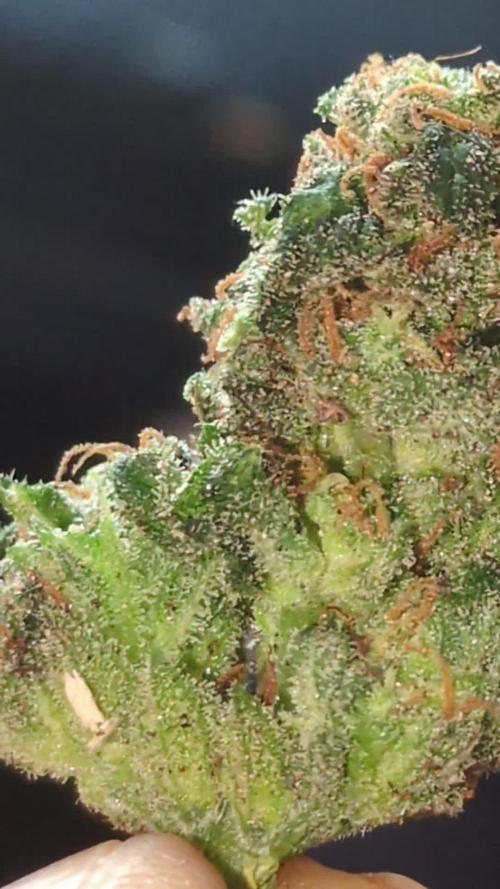
#5 Some samples ,first one frostbanger smelling loud,second gorilla z not the best but they are crappy pop corn nugs
Checked the trichomes gorilla z have some milky ones and barely any amber It has to go at least 1 week
Frostbanger barely any milk and not one amber at all,for a pop corn nug It Is pretty dense

Likes
1
Share


@Marmotaaaas
Follow
Avanzando super bien engorde en proceso y vamos bien y sanas muy ricos aromas sueltan todas


Processing
Likes
9
Share


Likes
13
Share


@Verde_og
Follow
Se sienten mas fuertes los aromas de esta planta. La resina a comenzafo a invadir cada flor y cada hoja apegada a las flores. Ya va quedando menos para llegar al final.

Likes
35
Share


@Rangaku
Follow
Good week of fattening up , temps are on the rise by 2 degrees in the tent as summer gears up I would of liked to have had these done by now as the next few weeks are hot and humid . Just gotta keep that air flow up and cop the wind burn on the fan leaves .
Started feeding every day last week instead of every other day and they are hooking thru their feeds . Will feed another week then a 2 or 3 week taper to flush . The smell from this purple punch is so strong and the leaves actually taste like blueberries , home stretch now