


Likes
Comments
Share

@Cooky_420L
Follow
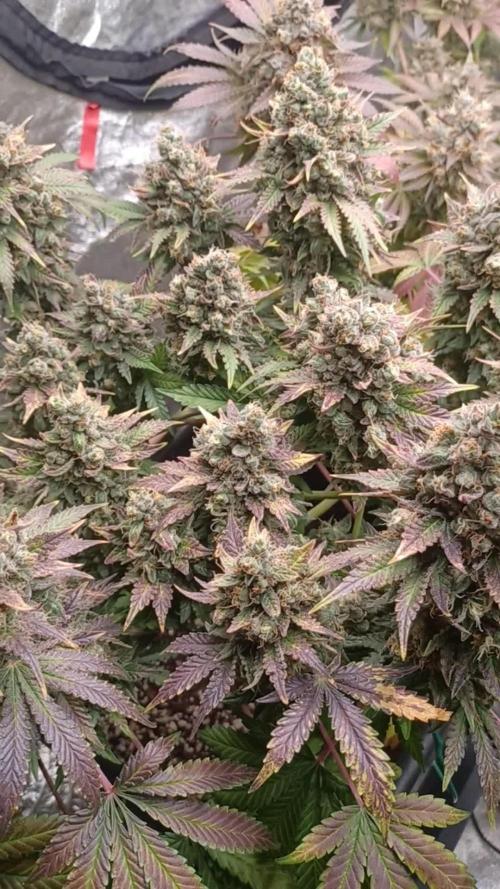
10' semaine de floraison ça devient bon.... 114 jours depuis la graine et 70' jours de floraison j'espère qu'elles sont bientôt finis mais y m'a a l'air que j'en ai encore pour 2 semaines vu les trichloms. Elles continuent de gonflé les branches ce plis sous le poids, je suis impatient de récolté. Je pense récolté B1 en premier la sénescence et plus avancé que ça sœur. Merci aux Growmies qui me suivent ✌️ Bonne semaine de culture à vous les p'tites ✋️ vertes 🌱🌞🌱


Likes
21
Share


@datrox
Follow
last week of the girls. everything is normal, i can't wait for the harvest 😁

Likes
19
Share


@adam_pawloski87
Follow
Let’s go!!! Today is day 52 from seed , and we are officially in bloom stage😍!!! Not much of a change for this bloom schedule, everything will stay the same but instead of 3 tsps of grow and 1 tsp of bloom , we just turn that around to 3tsp of Bloom and 1 tsp of veg an we are good to go!!! Now we get to watch em stack up over the next few weeks Let’s grow lol ladies let’s grow!!! Hope you all enjoy and have an amazing productive day as well as the week. Peace, love, an positive vibes to all y’all Cheers 😶🌫️💨💨💨💨💨🤙🏻if there’s any questions please ask , more then happy to help anyone out!!!!


Likes
58
Share

@Natrona
Follow
Strawberry Cadillac – STRNG Seeds
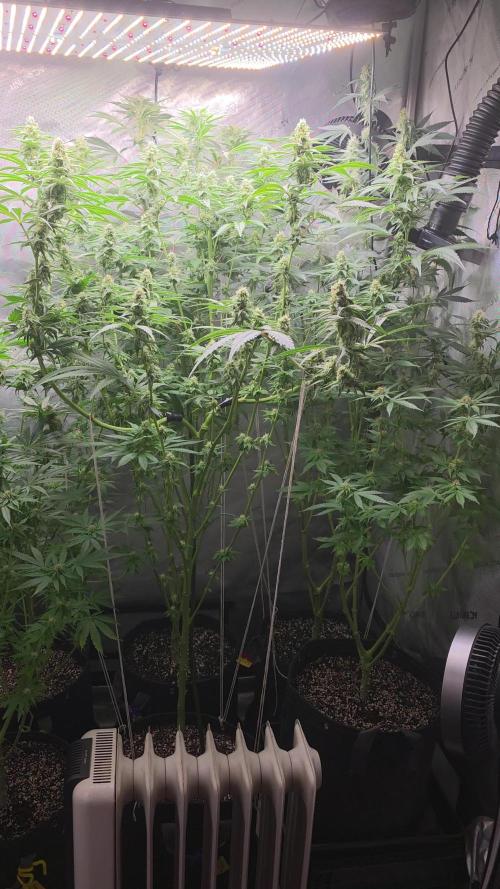
W12F3 1/25-31
I fed on 1/24 but Cadillac#1 needs more frequent watering than the others. Watered ph6.4 on 1/26 with another gallon. She is the largest and dries out next to the heater.
1/27 TPS1 14ml/g
Silica Gold 3ml/g
1/27 73 6.5 ph & 935 ppm
1/27 66.3F, 6.6 ph & 1014 ppm
To balance out the feed solution, I blend some of one bucket into the other and then back to the first bucket. I do this a couple of times to even out the PPM and temperature.
Strawberry Cadillac #1 51” #2 52” each drinks 1.5 gal
Strawberry Trop Cherry #1 37” #2 57” #2 drinks 1.5 gal #1 only 1 gal
Straw-Lectric Lemonade #1 40” #2 50” both drink 1 gal.
Other than bud development, they should not stretch any more.
1/29 I did the final defoliation on all strawberry gals. video
1/30 TPS1 14ml/g
Silica Gold 3ml/g
65.6f 6.3 ph & 1110 ppm
66.3f, 6.3 ph & 1120 ppm These are after blending the buckets.
Important dates
11/9 Germination
11/25 Transplant to 1.5 gal,
12/1 Topped, Pinned and removed 2 large center leaves
12/5 Repositioned pins and removed lowest fan leaves
12/16 Topped 4 tops on each plant except Cadillac1 (first topping) and put manuka honey on the cut.
12/24 Transplant to 5 gal
12/27 Defoliate all
12/28 Flip to 12/12
1/05 Supercrop Cadillac #1 at the joint where I topped her.
1/11 !st flower week defoliation and lollipop for all the Strawberry collection.
1/16 More super cropping of Cadillac1 and 1st time Trop Cherry2.
1/29 I did the final defoliation on all strawberry gals.
Stay green, growers love 💚🌿
💫Natrona💫
Likes
22
Share

@Bread_n_Buds
Follow
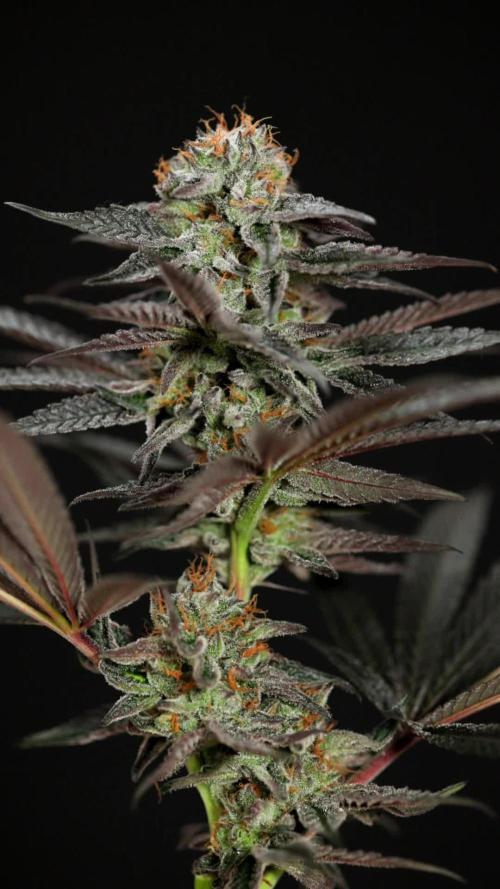
I brought a few bottles of good wine from Italy to celebrate the good harvests with friends. This evening, we'll be opening a nice Valdobbiadene prosecco to celebrate this harvest, which is a feast for the eyes: LA KUSH CAKE by Zamnesia -
We're talking about a California-caliber strain in every way, beyond the name: resin, flower firmness, and a full Kush Mint style are all present and clearly visible, giving the buds a truly Californian feel. Only Snoop is missing because he's in Italy for the Olympics.
We have spectacular dark foliage at the end that literally makes my eyes go crazy with joy; I couldn't stop taking pictures, I can't stop looking at the photo and video.
The plant looks a lot like the Black Diamond in that magnificent dark phenotype I found, and also like an epic Runtz pheno I recently had, all documented in the diaries. If you want, have fun looking for them.
I can't help but think of and mention the legendary King's Tart by Greenhouse, which was hybridized from LA Kush Cake, and when my friend Gabriele sent it to me for the first time, telling me it was special because it was hybridized with a super Californian...
I'm truly embarrassed by its beauty, like when a beautiful girl talks to me and makes me blush. And I have to tell you, it's not even the best; there are two more epic ones on the way.
Maturity - The pistils have looked super ripe for a long time, especially the top ones, which are very red, and we're still over 90%.
The trichomes are roughly 30% amber, 50% cloudy/milky, and 20% transparent, more or less naturally, but I think it's perfectly fine; it looks super ripe.
The flowers are all of the highest quality, and the yield is average. They aren't giant, but they are firm and very firm.
The overall shape of the plant is truly splendid. It was harvested correctly at the right time, naturally.
Techniques chosen: As mentioned, the plant was left to grow freely and beautifully.
We went 100% organic and 1000% Plagron, as always.
The soil we chose is the recently launched Plagron Bio LightMix, which will allow us to start with more gradual and reliable watering, without the sudden changes that liquid fertilizers can cause. A week of soil is sufficient, so don't overdo it.
Choose your favorite style and calculate your results on the website:
www.plagron.com
Visit the new Growshop area on the Zamnesia website:
Z - https://www.zamnesia.io/it/531-growshop
An excellent strain, excellent yields, compact buds, and excellent resin! Smells like heaven!
Our L.A. Kush Cake looks fantastic, try it!
Z - https://www.zamnesia.io/en/11097-zamnesia-la-kush-cake-semi.html
Z - Want to take your growth to the next level? Now you can with Zamnesia's LA Kush Cake. Originally bred by Seed Junky Genetics from a Wedding Cake and a Kush Mints, this indica-dominant strain produces large quantities of resin-coated buds, rich in sweet terpenes and a relaxing effect.
LA Kush Cake seeds produce stocky plants that thrive in any environment. Indoors, they require only 8-9 weeks of flowering to produce dense, trichome-rich buds with a pine-like structure and very compact calyxes. Outdoors, LA Kush Cake can be harvested in early October. Plants produce up to 600 g/m² indoors and 850 g/plant outdoors. In the right conditions, LA Kush Cake can develop intense purple hues that accentuate its allure. As you open the jars of these buds, you'll notice a wave of pungent vanilla terpenes wafting through the air, balanced by spicy notes of pepper and mint. Whether you smoke or vape, you'll be instantly intoxicated by its distinctive flavor, with a velvety, creamy aftertaste followed by a powerful yet functional high. Enjoy a relaxing effect that will melt away any tension while keeping your mind clear: perfect for unwinding, enhancing intimacy, or simply enjoying a pleasant smoke. If you need to stay focused, you can: LA Kush Cake relaxes the body while leaving the mind clear and focused, making it the ideal choice for experienced smokers seeking a dynamic and active euphoria that lasts all day. Want to try a potent, productive, and delicious strain? Don't wait: buy LA Kush Cake seeds now and start growing her premium buds at home.
You know it, but I recommend it: here you'll find so many wonderful things, practically "all the best nature has to offer."
Z - www.zamnesia.com
Music //
Gangsta Rap from West Coast last Week
to let plants feel like in Compton LA -
www.radionula.com
+ Feng Shui Music
+ 432 Hz Frequencies

Processing
Likes
149
Share


@CBD_Sweden
Follow
Hi all the happy people here in GrowDiaries.
This is my second cultivation ever and it will be fun to try a bigger space than my closet grow.
First, I'm just going to say I'm done with the construction of my new growroom.
I put some pictures on the construction here in week one.
The room is 2.14 meters by 1.7 meters and has a ceiling height of 2 meters.
It provides a floor area of 3.6 square meters.
I use a 54 Watt Lightwawe T5 for germination and 2 Pcs 400 Watt HPS lamps.
I have a channel fan that replaces the room air about 40 times an hour to get a comfortable theme in the room, the air enters a fresh air intake from the outside.
The air is purified through a carbon filter to then leave the room to the rest of the basement.
Then I use that heat to heat the rest of the basement.
I will use 8 pcs 15 liter Autopots to grow with and a 100 liter water tank that supplies the pots of water and nutrition.
I will grow completely organically in soil and will watercure my buds to get the best possible medicine for me.
But there are no cultivation rooms to be displayed here, so I continue with what is most important.
I am very excited to see how the new growroom will work and how this Blue cheese Auto from Royal queen seeds will turn out.
Blue Cheese automatic cannabis seeds are a cross of Blueberry Automatic and Cheese Automatic that has been perfected over five years of breeding and careful selection. The result is a feminized, autoflowering strain with superior yield, flavor, and effects to either of its distinguished parent strains.
THC: 16%
CBD: Low
Yield Indoor : 325 - 375 gr/m2
Yield Outdoor: 60 - 110 gr/plant
Height Indoor: 40 - 70 cm
Height Outdoor: 60 - 110 cm
Flowering: 7 - 8 weeks
Harvest month: 9-10 weeks after planting
Genetic Background: Blueberry x Cheese x Ruderalis
Type: Sa 35% In 40% Ru 25%
Effect: Cerebral and uplifting
Climate: Mild
-----------------------------------------------------------------------
2017-09-18. Week 5 starts and the girls are doing fine. Girl Nr 1 is 37 cm high, Nr 2 is 88 cm and Nr 3 is 23 cm. Did a lot of defoliation.
---------------------------------------------------------------------------------------------------------------------------------------------------------
2017-09-19. 2 new fans is installed in the grow room. Added pic and video.
---------------------------------------------------------------------------------------
2017-09-20. Kl 10.00. New pics and video. Girl Nr 1 is 39 cm high, Nr2 is 99 and Nr 3 is 21 cm.
Kl 23.00. Did some massive defoliation, added video and pics
------------------------------------------------------------------------------------------------
2017-09-22. The girls have recovered well after my massive defoliation. Girl number 1 is now 40 cm high, number 2 is 105 cm and number 3 is 25 cm. It is strange that 3 plants from the same strain, with the same care and environment, can distinguish so much in appearance and size. It separates 80 cm in numbers 2 and 3. In 4 days Nr1 has grown 3 cm, Nr 2 has grown 17 cm and Nr 3 has grown 4 cm. They have received 7 liters of water and nutrition today.
Likes
18
Share


@PrinceOfHerbs
Follow
Extremely sticky and a wonderful aroma.
I suspect just under 1-2 weeks until harvest
Dlowering Day 54

Likes
47
Share

@DE_BW
Follow
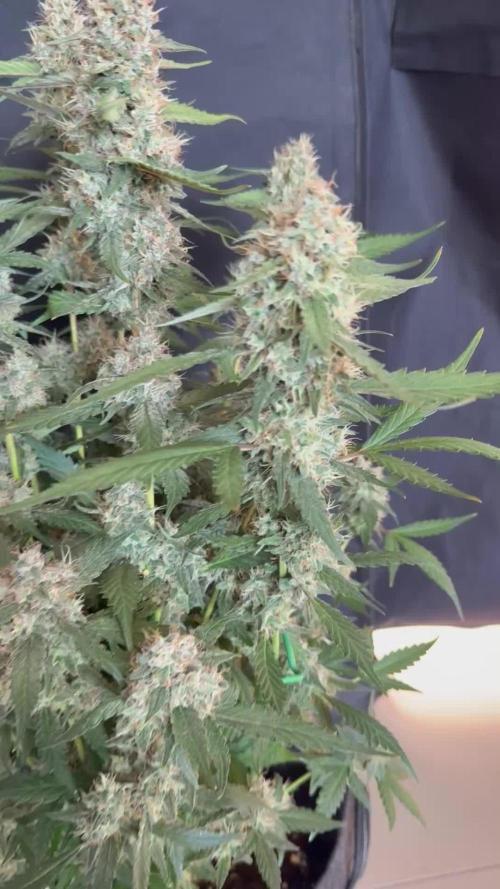
Flower Week 8: The plant is looking truly impressive now, with an above-average resin production and heavy frost across the buds. I flushed her this week, and she’s entering the final stretch with only a few days left. If everything stays on track, harvest is planned for this weekend.
Likes
7
Share


@eldruida_lamota
Follow
Esa familia, e retrasadonun poco la floración de estas gelato para que las Purple alcanzasen la altura y el ritmo.
Todo va de perlas practique varias apicales para retrasar el crecimiento para arriba.
Se ven bastante sanas y están pillando un tallo goloso. No tiene nada que ver con el anterior proyecto, este si tiene pintaza.
Agrobeta:
https://www.agrobeta.com/agrobetatiendaonline/36-abonos-canamo
Mars hydro:
Code discount: EL420
https://www.mars-hydro.com/
Bueno las maximas de temperatura no superan los 25 grados y las mínimas no bajan 19, así que no me puedo quejar.
Los niveles de humedad también son los correctos van entre 50%/65% de humedad relativa.
Por supuesto el Ph lo estamos dejando alrededor de 6.
Hasta aquí es todo poco más la verdad ya con ganas de empezar la floración, buenos humos 💨💨💨

Likes
101
Share


@TOTEM
Follow
This week I made a special video tour of the grow room, hope you like it.
This Gorilla is feeling great! She’s spent this week fattening up lower colas. These colas are even frostier than bigger ones. I didn’t get them so frosty on my last growth. I still have to give her Overdrive since the soil is still wet, but will do it in a few days. See you next week 🐵
Likes
11
Share


@Jacks_Pot
Follow
The first week of the 12/12 cycle went without any problems.
The scrog is going fine and I've done some pruning & defoliation
underneath the screen making it easier to water them.
On day 40 (5th day of this week) I spotted the first pre-flowers.
I gave them tapwater with Plagron nutrients once this week.
The rest of the week I gave them ph adjusted tapwater every other day (Ec 0.46 - ph 6.1 - 1 liter each/48h)
The cobs stayed at the same height and power as last week (43 cm/17 inch and 188 watt – DLI 28 – PPFD 648)
On the last day it got a bit brighter again with the cobs at 40 cm/15.75 inch and 208 watt. (DLI 30.2 – PPFD 699)
I sprayed them once with a CannaCure solution (50 ml CannaCure + 200 ml tapwater, ph 6.1)
Temperatures stayed between 20 – 25 °C (68 – 77 °F) and humidity levels between 49 – 66 %
C u next week! ✋
Do you want to grow this strain?
👉 https://www.barneysfarm.us/pineapple-chunk-weed-strain-15 👈


Likes
7
Share


@Robbaus
Follow
Bellissima settimana! Finalmente i fiori! C'è un profumo in quella stanza a dir poco meraviglioso, è la seconda volta che metto questa varietà (terza considerando la mimosa evo x orange punch) ed è di gran lunga la migliore, come profumi, velocità di crescita, bellezza delle cime.. Ne sono entusiasta! Non vedo l'ora di raccogliere! Procede alla grande, valori nella norma e ho dato oggi il 100% di potenza al led 🍀😎🎉🎉🍀🍀
Likes
2
Share


@Dralph
Follow
Una black berry y la crystal meth se me han estirado bastante... Ya estoy usando base de flora y algun boost de hesi y delta 9 junto a super vit y micorrizas con el agua nivelada sobre el 6.3


Likes
24
Share


@Ganjaman19
Follow
Such a difference 1 week can make shoutouts to my sponsors
@Hydroprowashington
@Anesiaseeds
@Divineseeds
Thanks for the help this wouldn't be possible without yous ❤️💕💛

Likes
16
Share


@RakonGrow
Follow
Tag 85:
+ Generative Phase III der Canna Dünger Tabelle
+ Lichtdauer von 16 auf 15 Stunden reduziert.
Ein Video und ein paar Bilder für den Größenvergleich . Ich hab versucht so nah wie möglich an die Buds zu kommen ohne das ich die Trichome platt drücke . Ausserdem hatte ich gestern noch etwas Entlaubung betrieben .
Tag 86:
+ 2,25L Flaschenwasser (16:00 Uhr)
++ Dünger Blüte
+++ Generative Phase III des Canna Düngeschema Leicht
+ final PH 6.10
Die Dame war heute Morgen noch fitt und noch Wasser vorhanden , 7 Stunden später war schon ein sichtbarer Wassermangel aufgetreten (Die kleinen Fanblätter hingen schon leicht). Tja so schnell kann es manschmal gehen .
Tag 88:
+ 2,0L Flaschenwasser (16:00 Uhr)
++ Dünger Blüte
+++ Generative Phase III des Canna Düngeschema Leicht
+ final PH 6.00
Tag 89:
Tageslicht von 15 auf 14 Stunden reduziert.
Tag 90:
+ 2,0L Flaschenwasser (13:00 Uhr)
++ Dünger Blüte
+++ Generative Phase III des Canna Düngeschema Leicht
+ final PH 6.00
Tageslicht von 14 auf 13 Stunden reduziert.
Photos mit Dose zum Größenvergleich !!! Und ein Video !!
Likes
23
Share

@Condocannibus
Follow
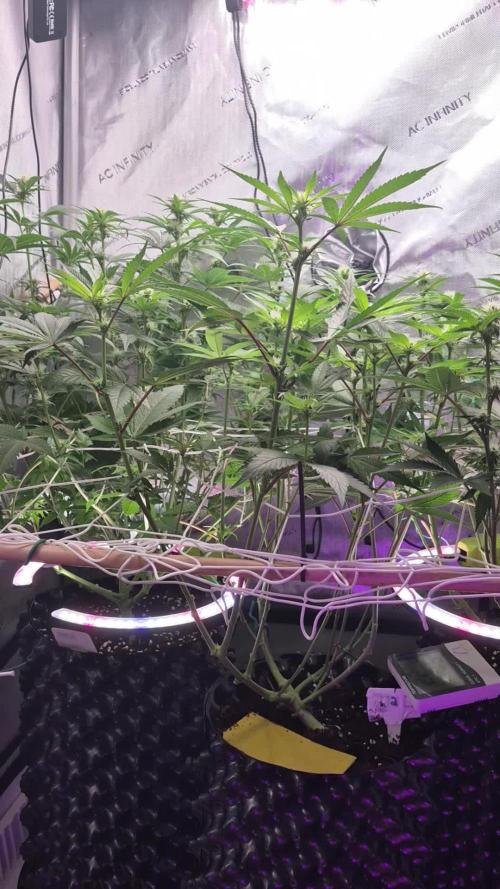
2nd week of stretch done.
No deficiencys
Big stretch.
Thanks everyone

Likes
5
Share


@tNASTY3k
Follow
Day 20 - she got 16oz of water pH balanced to 6.0~ on Day 16, Day 18, and Day 20.
I topped the plant and then defoliated to leave the 3rd and 4th nodes. The 3rd node is being trained to grow laterally until it reaches the container walls. Once the 4th node matures more, it will also be trained just as node 3. The goal is to train and top one more time in veg to ensure maximum yields in this small 2x2x4 tent.
Processing
Likes
11
Share


@Microsun
Follow
Flowering is going amazing, this candy cane is growing some very fast weight and caking up with Trichome’s. The sweet and slightly minty berry smell is growing in power day by day, and I’m very happy with how the size of the buds are developing since adding the increase of 2-8-4 and fish bone meal, just a little bit, not too much at all and she’s reacting great, knowing that the candy cane is a larger auto in size makes me a bit sad with the total size of this plant, but in its young age as my very first auto I believe I probably stunted it, but after all this and how she looks now Im more than happy with the growth, yield and quality of it, just speaking now as I do not obviously know how much I Will revive from it, I’m guessing about a ounce. No small bud sites other than maybe one on a lower branch that already has a main top cola on it. The main cola is massive and packing on a lot of size. I’ve switched the light to a hour less now as I am growing 2 photo indica L.A grape and with the season change I am having to fix my temp and humidity more for the photos, so changing to a 17-7 schedule has actually helped quite a lot and also has helped my other autos veg slightly better. But all in all I’m very exited!
