


Likes
Comments
Share

@Chucky324
Follow
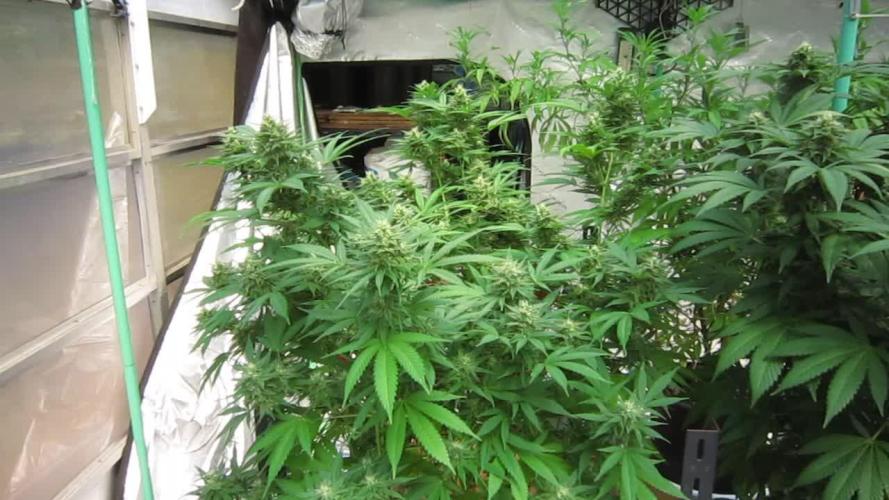
Hello. This is the end of week 6 and the beginning of week 7 of flowering.
The plant is growing well. I've spotted 2 small leaves with some white powdery mildew on them.
Took them off and throw them away. I have some heavy water that works well... I'll use it on the WPM.
I'll add another fan through the night to stir up the air more so the spores don't settle on the leaves, and drop the dehumidifier to 50%.
I've got the WPM on the squash plants in the garden just 20 feet away.
It's in the air here this time of year, just waiting for the right environment to start.
I see it on the leaves of the bushes and trees on our forest hikes.
So, I guess I'm saying that I might cut this plant down early if it gets to bad.
OK. Be Great.
Chuck.
Likes
16
Share


@Foggedaboudit
Follow
These are steady cruising towards the finish line. Really pretty bud structure and trichome coverage. The smell is straight pineapple hard candy. No piney-ness, no skunk funk, not even a hint of citrus. Just straight tropical fruits and sugar and a tad bit of earthiness at the end. They have been on plain water for the past week. A majority of trichomes are cloudy with about 20% still clear. Another week I’m thinking.

Likes
50
Share


@Kitties_and_Colas
Follow
~_~_~_~_~_~_~_~_~_~_~_~_~_~_~_~_~_~_~_~_~_~_~_~_~_~_~_~_~_~_~_~_~_~_~_~_~_~_~_~_~_~_~_~_~_~_~_~_~_~_~_~_~_~_~_~_~_~_~_~_~_~_~_~_~_~_~_~_~_~_~_~_~_~_~_~_~_~_~_~_~_~_~_
5/21/22 😽💨
Wow..we're totally impressed by 420FastBuds, even my husband is blown away and he typically wants nothing to do with autos inside...not even 3 weeks in and their main stems are as fat as drinking straws..we just started them on some light nutrients today...I think these will get bigger than I imagined, I'm really glad i decide to use 5gal pots..we settled on low stress training for all the 420FastBud strains however, we did top one just to compare results...this is our very first grow by 420 and it's been an amazing first impression! Im so excited to see how these girls are going to turn out!! We'll definitely update midweek if anything exciting happens, thanks for dropping by and happy harvests everyone!! ❤️💡🌱
~_~_~_~_~_~_~_~_~_~_~_~_~_~_~_~_~_~_~_~_~_~_~_~_~_~_~_~_~_~_~_~_~_~_~_~_~_~_~_~_~_~_~_~_~_~_~_~_~_~_~_~_~_~_~_~_~_~_~_~_~_~_~_~_~_~_~_~_~_~_~_~_~_~_~_~_~_~_~_~_~_~_~_

Processing
Likes
28
Share


@TrueNorth
Follow
-Strain: Purple Lemonade - Fast Buds
-Tent: 5x5 Gorilla Grow Tent
-Lights: Budget LED Grow Lights 2 x 250 Watt
LED Full Spec/Red Spec mixed boards
-Light Cycle: 18/6
-Soil: Fox Farm
-Air Circulation: AC Infinity Cloudline T6 Inline Duct Fan
WECLOME BACK GROWMIES! Week 12 here with our PURPLE LEMONADE by Fast Buds!
February, 09, 2020 (DAY 78) - YOO GROWMIES! Welcome to week 12 of our PURPLE LEMONADE! week 6 of flower to be exact! she is just thickening right out, i cant believe my eyes daily. she is just exploding even when i think it wont anymore. and to think there are still 2 weeks or so left..... she is still a thirsty and hungry one. she has about 5L with food every other day lol.
The smell is such a sweet citrus, i love when i touch it by accident and i get SLAPPED with that wonderful smell. The nugs have hues of purple nothing to crazy though!
February 12, 2020 (DAY 81) - WHAT UPPPPP!!!! here we are folks another update. think she is getting flushed starting this weekend. this will be the last feed then its onto that FLAWLESS FINISH by ADVANCED NUTRIENTS. hopefully im making the right choice......maybe another week wouldnt hurt....
Likes
175
Share

@Tower84
Follow
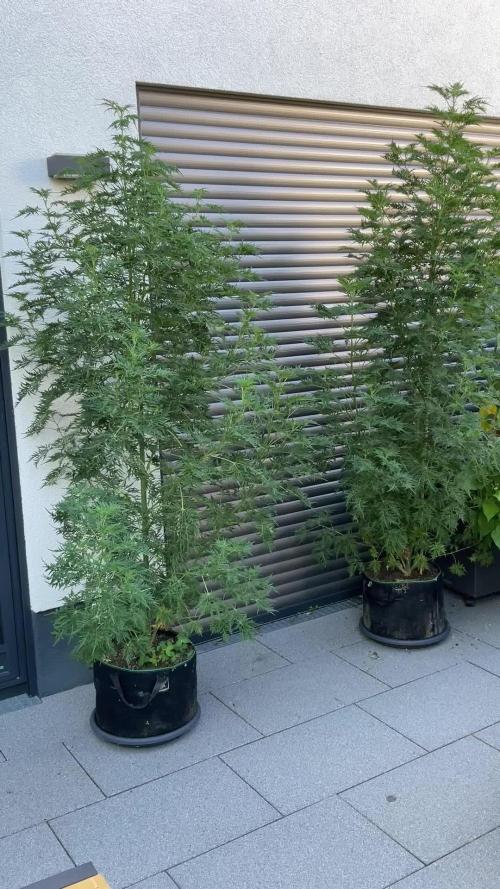
🌿 Woche 17 – Mentha de Croco 🇩🇪
Ein weiterer Meilenstein ist erreicht! 🚀 Die linke Mentha de Croco ist nun etwa 190 cm groß, die rechte hat mit ca. 202 cm bereits die 2-Meter-Marke geknackt! 📏🎉
Besonders spannend ist die Veränderung der Wuchsform. Während beide Pflanzen anfangs wie schlanke Wolkenkratzer in die Höhe wuchsen, entwickeln sie nun immer mehr die typische Tannenbaum-Struktur 🌲. Vor allem die linke Pflanze hat eine wunderschöne, gleichmäßige Verzweigung ausgebildet und sieht einfach fantastisch aus. 💚
Aktuell bekommen beide Pflanzen täglich etwa 5 Liter Wasser 💧. Das 30-Liter-Topfvolumen macht sich inzwischen deutlich bemerkbar und scheint das weitere Höhenwachstum zunehmend zu begrenzen. Trotzdem entwickeln sich die Pflanzen weiterhin hervorragend.
Heute gibt es wieder eine Gabe meines selbst hergestellten Ackerschachtelhalm-Brennnessel-Ferments mit 10 ml pro Liter Wasser 🌿. Ansonsten läuft alles absolut problemlos – keine Mängel, keine Schädlinge und keine Krankheiten. Genau so wünscht man sich einen Outdoor-Grow! 💪☀️
Ich bin wirklich beeindruckt von der Robustheit und Schönheit dieser Genetik. Bisher machen die beiden einfach alles mit und belohnen mich Woche für Woche mit einer beeindruckenden Entwicklung. ❤️🌱
🌿 Week 17 – Mentha de Croco 🇬🇧
Another milestone has been reached! 🚀 The left Mentha de Croco is now around 190 cm tall, while the right one has officially broken the 2-meter mark, reaching approximately 202 cm! 📏🎉
What’s especially interesting is how their growth pattern has changed. Instead of the tall, column-like “skyscraper” appearance they had earlier, both plants are now developing a beautiful Christmas tree structure 🌲. The left plant in particular has formed an incredibly symmetrical branching pattern and looks absolutely stunning. 💚
At the moment, each plant receives around 5 liters of water every day 💧. The relatively small 30-liter pots are now clearly becoming the limiting factor for further vertical growth, but despite that, both plants continue to thrive.
Today they’ll receive another feeding with my homemade nettle and horsetail ferment at a concentration of 10 ml per liter of water 🌿. Apart from that, everything is going perfectly—no nutrient deficiencies, no pests, and no diseases. Exactly what you hope for in an outdoor grow! 💪☀️
I’m truly impressed by the resilience and beauty of this genetics. These plants have handled every challenge so far and continue to reward me with outstanding growth week after week. ❤️🌱


Likes
9
Share


@sunshinegroww
Follow
Just been topped at around day 21 should done it earlier but here we go so far looking good and very healthy environment looks dialed in too

Likes
10
Share


@Elguacho420
Follow
Muy buenas noches muchach@s.... Bueno, comento!, segunda semana de crecimiento de las lemon cookies kush! 🌱 Cómo ven hoy fue día de selección de las q para mi, novato, fueron las mejores para trasplantar a estas macetas q ya son las definitivas, las regué con ½lts de agua c/u, prendí el otro led y ahora hay una fiesta ahi dentro q no saben, terrible!!.. 😎🕺🏻💡 Bueno, ya las ven, están re lindas... Así q ya no las molesto más... Ahí están trankilamente... La semana que viene les cuento más... Buen finde y buenos humos para tod@s... 🔥 💨💨💨
🇪🇸🤝🏻🇦🇷


Likes
1
Share


@MindFlowers68
Follow
Shes doing great but looks like something has been having a snack on her. I have some mantis eggs that should be hatching soon so Im not too worried and i think she will shrug this off once shes a little bit bigger and thicker leaves. Set up another water tank up closer to these for easy watering on a timer so i dont waste power and butn my motor out
Likes
13
Share

@NSABND
Follow
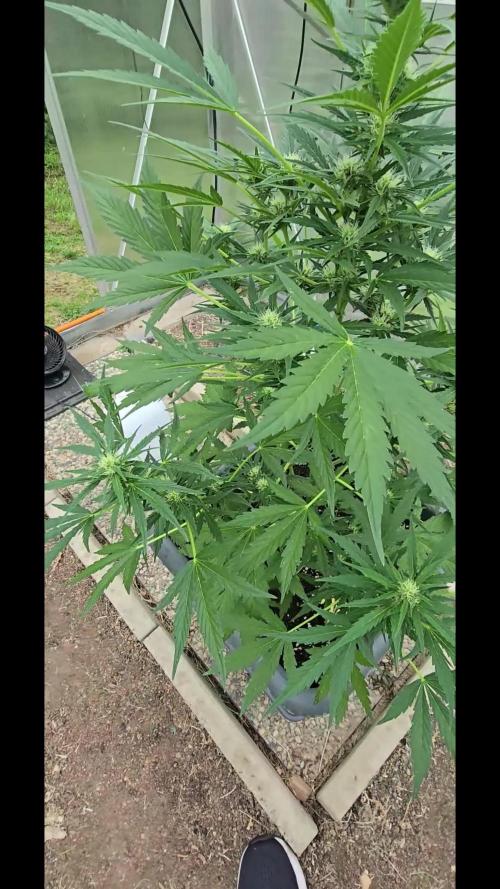
Let´s start Day 43 😎 some sun and cloudy with rain again 😳
Day44 cloudy and rain and cold 😡
Day45 rain and cloudy 😡 temp 16C/60F .. WTF it´s summer 😡😖😱
Day46 no rain litle bit sun and cloudy 22C/71F still not a real summer 😩
Likes
42
Share


@Ganjagrandaddy
Follow
Day 28 Veg
Day 1 Flowering: Hi growmies. Here we are at the start of flowering for these happy healthy little ladies from Zamnesia seeds.
Girl scout cookies #1 has now had to have pegs to hold her limbs in place as she keeps heading for the light but I want a more squat plant so will keep her lower this way until stretch has about ended. This should keep the main canopy uniform and lower than they want to grow naturally. It is a manageable size so far but is filling the pot out more each day. #2 is a little smaller in general and is also dealing with a repair from a major split on the 5th node bend. She has made sure it survived but I still need to watch her for any pathogens creeping in.
Amnesia haze #1 has gone crazy in the last week and her f.i.m has really brushed her out to fill her pot with so many potential mains. She will need a little defol along the way now flowering has begun but inam hoping to keep as many of those fat workhorse fan leaves in the game.
#2 has now lost the rectangular look and has also been held down with tent pegs in various locations to promote many mains. She is a nice growing lady with no signs of any issues.
#3 was left a more natural pattern but will definitely have to have some stripping out done as she is so full of growth tips, hidden by so many big fan leaves
another potential monster in the making in think.
Now we are going into the stretch periods , I need to keep on top of the training to best exploit the space I have to use as I am now fitting another Mars light into the fun zone. (Diary will begin soon !!). A lot of activity this week with harvests on other strains and new seeds going in too. I also have 2 100L living organic soil beds cooking for the next run .
Be well and sane growmies.

Likes
45
Share

@Hempface86
Follow
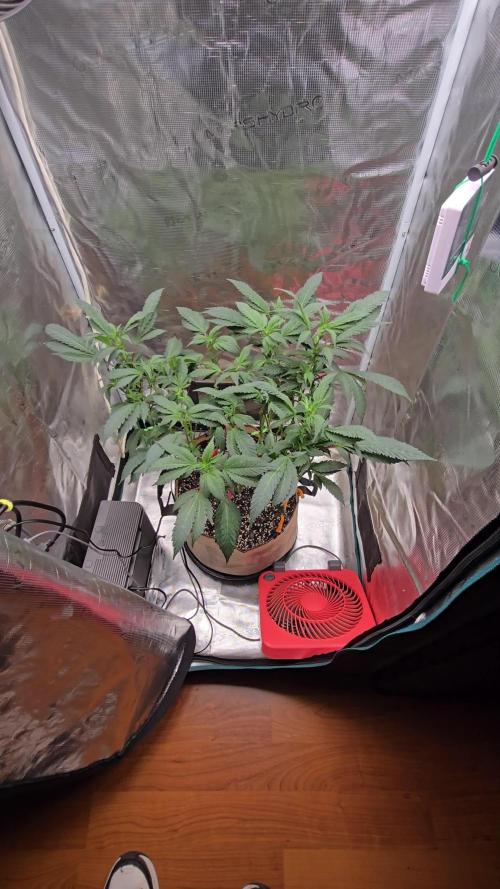
As you can see, she is stretching, showing sex and is going to be a decent plant , hopefully.. i hope everyone is doing well. I'm kind of over this site. To be honest with you, they do not make it phone friendly and I know I'm not the only one that feels his way... They just keep changing the site for absolutely no reason and make it harder and harder to navigate...smh .. God bless and happy grown guys


Likes
18
Share


@Bread_n_Buds
Follow
Now we've reached day 25.
We are in the transition phase, pre-flowering if you want, when the seedlings reveal their sex by showing the white fluff or the boyish balls. Here and in all F1 Hybrids you can be SURE, SURE as death that you will never see any balls.
If you have underestimated this aspect of the F1 Hybrid, go back and think about how many times you found the balls on the paint, full of pollen that fertilized your ladies.
Do you like having young ladies impregnate you? Absolutely not for me and this is a very valid reason why you can choose the F1 Hybrid. Really guys the seeds suck and the genetics of the various breeders if they don't do a job like this it means that they are super hybrid poles with genetic traces scattered here and there. Inglourious bastards.
Here we don't want to be Aryan but to cultivate healthy plants with safe results.
Our Watermalon Candy F1 per mea culpa mea culèa mea grandissima culpa shows some signs of overfeeding, the famous yellow tips of the leaves. Let's be clear, this is minor and is due to the fact that these genetics are so good that they need very little or no fertilizer in the vegetative phase. Then if you already have fertilized soil, forget about growing guys, another pro!
I gave the recommended doses even a little less to tell the truth of both Aptus and Plagron and the plants more or less all have these small signs of over. LITTLE guys, wait until the end to save if you feel like it, or at least I recommend it.
To fix this little thing we go to flush with pH 6.2 and only give Aptus Regulator which should rebalance the plant and soil before delicately moving on to fertilizers for flowering.
Site Description
ZAMNESIA SEEDS - WATERMELON CANDY F1 HYBRID AUTOMATIC: BUDS BURSTING WITH FLAVOR
If you've been looking for a flavorful strain with superb genetics that's effortless to cultivate, the hunt is over. Thanks to reliable F1 hybrid genetics, Watermelon Candy F1 Automatic showcases the highest degree of productivity and efficiency. This strain takes everything you know and love about the original, and packages it in a plant with even greater potential.
GROWING WATERMELON CANDY F1 HYBRID AUTOMATIC
Derived from Watermelon, Candy Kush, and ruderalis, Watermelon Candy F1 Automatic is a finely tuned medley of genetics. This cultivar is fast to flourish and reliable to grow, no matter where you choose to grow. Taking just 9–10 weeks from germination to harvest, she provides a uniform growing experience culminating in a huge haul of buds for her size.
Reaching heights of 65–80cm, Watermelon Candy F1 Automatic stays pretty grounded, making her perfect for smaller growing areas where space is a commodity. It also means you can fit more plants in if you have the room! Once ready to yield, growers will see a return of 400–450g/m² indoors and up to 100g/plant outdoors. Moreover, Watermelon Candy F1 Automatic is highly resistant to pests and disease, making it an ideal strain for newcomers and fans of low-maintenance cultivation.
AROMAS, FLAVORS, AND EFFECTS OF WATERMELON CANDY F1 HYBRID AUTOMATIC
If we haven't already sold you on the power of F1 hybrid genetics, the proof is in the pudding. Watermelon Candy F1 Automatic is teaming with terpenes and cannabinoids, making for a lively high coupled with huge flavors. Just one hit is all it takes to sample rich fruitiness mixed with sweet candies and a slight earthiness to back it up. And with an average THC content of 23%, the effects are euphoric at the start but settle into deep relaxation soon after. Whether you're chilling alone or with friends, Watermelon Candy F1 Automatic will see you right.
As for fertilizers, I'm doing a small comparison experiment to finish off the fertilizers I had at home, it's not 100% indicative, it's only on two specimens but given the stable genetics I decided to try to compare the results of Plagron Vs Aptus , both excellent brands which they will certainly produce beautiful plants which are already of excellent stable genetics. In the next few weeks the comparison will be more evident now the seedlings are still very small and just potted.
So seeds of all brands, in addition to these great F1 Hybrids and the entire Zamnesia line, fertilizers and everything related to the world of cannabis, you should buy them from the best online store in the sector
www.zamnesia.io
Likes
11
Share


@Beedog
Follow
Day 70 Really struggled with high temperatures this week everyday was 33 plus and nights wasn’t much cooler just glad it’s over now got a week left until I have to harvest hopefully they be ready to go by then most of em anyways
Likes
62
Share


@masterofsmeagol
Follow
9/19 FED TODAY ONLY USED ABOUT A GALLON OF A HALF AND I LEFT OUT BEASTIE BLOOM AS I FORGOT AND WAS IN A HURRY.
Wow. Yesterday was quite the day. I smoked a joint of the bud I had taken earlier. It was fire. Trichs look good and I didn't want to risk sustained damage from the storm or earwigs (more later). Took forever but I got the one ten foot blueberry hanging and one of my 5 gallon seedlings. I want to wait a little longer before I took ANYTHING. The seedling is was overdone if anything though. I'll add trichs pics. We are supposed to have some fairly good weather. This brings me to my next point. These earwigs must like blueberries because those three plants are the ones they damaged the most. That and one in a bucket. I mean they fucking strip it. I was going to take a branch off another blueberry as it looked awesome and kept hitting me in the face. I left it. I came back this morning and all the lower part of the branch was stripped. I mean fucking nothing. Im so fucking pissed. You can look on the interior and see secondary and tertiary branches that are just destroyed. Obviously my ice cream cake and a few others need more time. Dreamcatchers are totally unaffected by them. I could take those if I had to but they are fine. I could take the blueberries too if needed but this is when they really bulk up. It's a hard decision to make. Especially when they can work that fast and demolish a plant. If I don't chop I'll be using everything at my disposal today and hunting them after dark. I wonder if they are in the bag?
9/20 Harvested another blueberry yesterday. I left one to maybe catch a frost. I put petroleum jelly on every stalk and branch Of the other plants. Came here this morning to more striped branches further up on the lone blueberry. I don't care about the damage on the 5 gallon small experiment plants but it still sucks. I still don't totally know what is causing this ridiculous damage. As you can see in the pictures the damage is progressing up the plant. I'm cutting the last blueberry today. Trichs are good. It could go another week but with the damage sustained from ONE night I'm not going to risk it. Whatever is eating my plants don't seem to like the dreamcatchers. Luckily. I hope whatever this destructive fucking bug is doesn't move to another plant. I'll be on the look out. I'm ready for this season to end.
9/21 I think I lost a day in my diary. I've been so fucking busy. Took the last blueberry yesterday. Spent hours in the garden. Watered today. Need to do a potassium bicarbonate spray. I'll update later.
9/22 It's raining. Shook off the plants this morning. I cannot believe the rate of flowering. Maybe it's because the last four days I've been working my balls off harvesting and trimming those plants. Ill do a review and a harvest report of the blueberry once it's dry. The stuff is fire. The seedling is crazy too. Trichs are through the roof. I compared with a local dispensary pot and mine was better. Not as good as the dispo I frequent though. There is one on ever corner down here.
9/23 Didn't have time to feed this morning. I'll be back down in a bit and feed. We are expecting rain I guess but I'm not dealing with any mold issues other than the mild WPM. I plan to do a k bicarb spray today. I defoliated everything dead I saw. I've smoked my blueberry and it is amazing. The little seedling experiment I grew in the 5 gallon turned out AMAZING. Some of the densest buds I've grown. Trichs off the charts. Piny citrus taste and heavy sedative effects. Im waiting for the blueberry to at least dry before I do the harvest report. It's nice today. Plants have continued exploding into flower. For now I'll be in trim jail.
9/24 Watered lightly and fed 1 gallon. Started cha ching today at 1/8 tsp. Gallon. Still no idea on mysterious damage. I noticed a bit more. I went over at 4am hoping to find the culprit but nothing was there. We are supposed to have three days of rain. Everyone seems worried. I'm a little worried myself. I cut out a small branch on the middle of the dreamcatcher that had rot. Other than that it's just slight PM on some. I tried to mark damage so I can see what else happens. I'm letting the rest of this stuff ride. I'll do what I can to protect it but it's not coming down early.
9/25 The massive storm descended last night. Winds turned my ice cream cake literally sideways. Dreamcatchers are so fucking sturdy and strong that it would take a tornado to Damage them. The big plant in the fifty gallon pot had some branches that were 90° down. I tried to tie up what I could quickly. I noticed some damage on the ice cream cake. Same as on the blueberry's. I hope I made the right decision waiting this storm out. Defoliated and added supports where I could. Rushed morning.


Likes
52
Share


@xbabybitchx
Follow
♥️December 13/2020♥️
Hi everyone! Lots of growth this week wow! I measured 5 inches of height since last week! I turned my light to 100 % on the dimmer and raised a few more inches!
♥️ I think i'm finally starting to dial things in, I am pretty happy with how everything is going, I 100000x believe for my other grows I was underfeeding HARDCORE.
I am such a stoner sometimes, turns out my measuring syringe was 3ML instead of 30ML??? LOL wow idiot on my part..... but obviously giving them what they need now!
♥️ SO i'm going to add Big Bud next feed, but i'm not sure if I should do a flush before hand? I know this line can have pretty hard salt build up... So any suggestions plz! :)
♥️ Other news is, the roots are just creeping hard out of the drainage holes! I can see the roots also trying to escape the top soil, for me this is so exciting! My last grows the roots sucked hard.
I might be exploring hydro next grow in 2021.. I have someone who is willing to give me a setup because they upgraded to a cabinet! We shall see! I bought some lecca ( clay balls) to experiment with my house plants specifically airoids.. but i'll start there and see how I feel with that method of substrate.
♥️ Anyways, that's all from me this week, keep it sleezy n stay safe pals.👽
Likes
11
Share


@Camo_greenthumb1
Follow
Now on day 49,47&41 flowering has started and they are looking lovely. Started adding 19-4-23 well water into every other watering ..

Likes
8
Share

