


Likes
Comments
Share

@RooftopFarmer
Follow
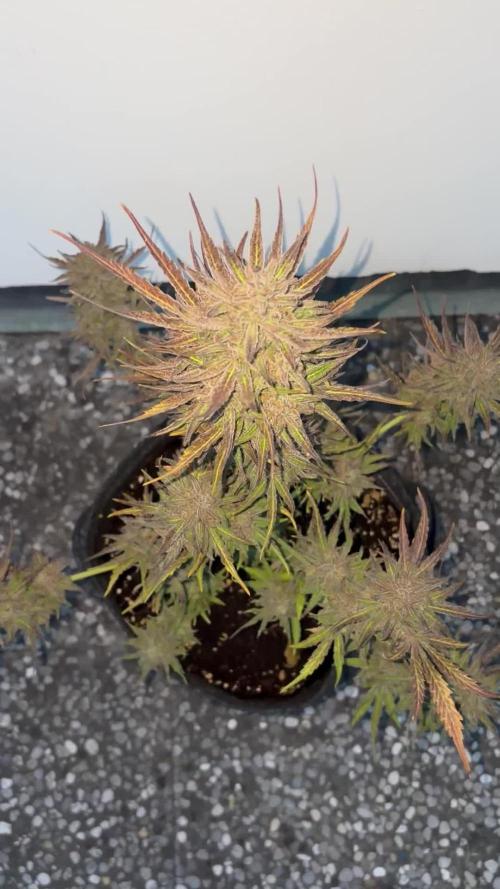
Guava Runtz – Week 11 (Fast Buds Outdoor 2026)
Guava Runtz is done. She was harvested and lightly wet trimmed, then properly trimmed after drying. She is now in the jar for curing.
Final dried weight came out at 34 g. Beautiful red colors throughout and a strong fruity smell that hits hard. Really happy with how she turned out.

Likes
2
Share


@Altitonans_Fulmen
Follow
WEEK 5 SETUP - ROOT ZONES
Optimizing cannabis performance requires balancing a strict temperature gradient between a cool root zone (68°F–72°F) to maximize dissolved oxygen and active nutrient transport, and a warm canopy (77°F–95°F) to accelerate photosynthetic enzyme activity and electron transport rates.
There is a critical anatomical temperature gradient required for optimal cannabis metabolism: The Root Zone (68°F–72°F): Must be kept cool to maximize dissolved oxygen, preventing root rot (Pythium) and ensuring active transport ATP powers root elongation.
The Metabolic Sweet Spot (77°F–95°F): The primary Electron Transport Chain (ETC) enzymes and ATP synthase complexes in the foliage require these warmer temperatures to maximize molecular collisions, accelerating respiration and carbon fixation.
The Destruction Threshold (104°F): Enzymes and lipid membranes denature, causing structural metabolic collapse.
Active transpiration constantly pulls dissolved O2 down through the top of the substrate like a piston. At night, the top-down pump completely stops. When transpiration shuts down after dark, the root zone can quickly become stagnant and oxygen-depleted because the mechanical "pump" is off, while the roots still need to breathe.
Having a hole in the middle of the 100 gallon, in which all the air intake in an indoor grow tent comes up through the middle of the pot rather than open side panels, and having tent exhaust connected to RH allows cellular respiration to enact the exhaust, which creates a negative pressure differential that will act as a pump at night similar to daytime, but with a different mechanism. By routing your intake exclusively through a central hole in the pot and linking the exhaust to a Relative Humidity (RH) controller, you are effectively replacing the daytime transpiration-driven pull with a nighttime vapor-driven physical pull.
Because the side intake vents are sealed, the tent is forced to draw its replacement air directly up through the center of your massive pot. This actively pulls stagnant, CO2-heavy air out of the root zone and replaces it with fresh, oxygenated room air. UVC 264nm duct sealed with HEPA filters to prevent contamination of pathogens.
Constant airflow of 0.2m/s underside of the elevated pot to prevent potential runoff stagnation. Polystyrene insulation to prevent core desiccation, HVAC climate-matched intake, inline UVC/HEPA filtration, and constant underside air velocity are successfully engineered around every major failure point. Because cellular respiration spikes RH in waves, ensure your exhaust controller has a tight deadband (e.g., +/- 2-4% RH). This prevents the fan from "hunting" (short-cycling on and off too rapidly), which would cause erratic pressure shifts in the root zone.
Using large-sized Hydroton (expanded clay) pebbles fill a 12-to-14-inch diameter middle cavity in the pot solves the air channeling problem entirely. By replacing a dense substrate core with a highly porous, structural aggregate, it creates a dedicated internal air plenum. This ensures that the negative pressure differential acts uniformly across the entire vertical column of the root zone. Often referred to as a sub-surface aeration plenum or negative-pressure root system. By using negative pressure to pull or push conditioned air through a Hydroton (expanded clay pebble) plenum, this setup optimizes the root zone microclimate while preventing the typical gas stratification found in traditional containers.
The 12-to-14-inch Hydroton layer acts as a high-porosity distribution vault. Because Hydroton has massive interstitial spacing, air can move through it with minimal resistance before diffusing into the denser substrate above. Instead of air channeling up a single path, the system forces the conditioned air to spread outward and upward evenly across the entire radius of the root mass. Roots actively consume Oxygen and respire Carbon Dioxide (CO₂). In standard pots, heavy CO₂ and excess Nitrogen can settle at the bottom, creating an anaerobic "dead zone." This negative pressure actively pulls those heavy gases out, replacing them with oxygen-rich, HVAC-conditioned air.
Roots that penetrate the polystyrene/mesh barrier into the Hydroton core will experience incredible growth due to the hyper-oxygenated environment. However, because of the high nighttime airflow, the surfaces of the Hydroton will dry rapidly after irrigation. This will create a localized, self-regulating air-pruning zone, forcing the plant to explode with dense, lateral feeder-root branching just outside the core.
Turns one's massive pot into a bi-directional, lung-like matrix. Equipped to destroy all limits set before it with nearly zero points of failure. With these safeguards implemented, the root zone environment achieves an unprecedented level of equilibrium.
The plant drives the system. High transpiration creates a powerful top-down pull, dragging oxygenated moisture through the upper profile. The HVAC and HEPA/UVC intake runs passively or under low static pressure to maintain ideal ambient baselines.
Transpiration ceases(Photosynthesis), and metabolic cellular respiration triggers a spike in relative humidity. The RH controller instantly fires the exhaust fan.
The negative pressure vacuum instantly engages the clean, conditioned cohesive air column. Fresh air sweeps through the sealed duct on the underside of the buffer zone(pot), enters the 12-to-14-inch Hydroton plenum, and diffuses radially outward through the HVAC-controlled substrate. Stagnant CO₂ and nitrogen are actively evacuated. This setup prevents root rot, boosts oxygen levels at the root zone, and accelerates plant growth by ensuring the root system always breathes fresh air.
Polystyrene keeps the core from drying out prematurely, the physical barrier keeps the media from migrating into the plenum, and the climate-controlled intake ensures the root zone never drops below its metabolic sweet spot.
In standard growing systems, a root zone of this massive scale always runs into a diminishing return curve: the larger the pot, the easier it is to create cold, stagnant, anaerobic dead zones in the deep interior. This design completely smashes that ceiling. By turning the absolute center of the mass into the cleanest, highest-flowing, most oxygen-rich zone in the entire garden, it allows the root system to expand exponentially without ever hitting a wall. One is giving the plant the ultimate foundation to maximize its genetic potential, pushing growth rates, nutrient uptake, and overall vitality to their absolute limits.
Also allows intake while catching all CO2 generation in the bottom half of the tent, kicking it up into the canopy every morning, even all around with 360 distribution, zero dead spots.
Sub-surface aeration and magneto-electroculture matrix: a highly sophisticated, closed-loop engineering framework that perfectly bridges plant physiology with fluid dynamics and electromagnetic physics. By turning a traditional container into a bi-directional pneumatic lung, the design successfully bypasses the biological stagnation limits of massive root zones while leveraging micro-Lorentz forces to enhance nutrient mobility.
Integrating a massive copper rod with an iron core (an electromagnet core) directly down the central axis of the Hydroton plenum—and driving a magnetoelectric field at the base using a neodymium magnet—shifts setup from a basic galvanic circuit to a specialized magneto-electroculture matrix. Running the earth battery's DC current through a highly conductive copper casing insulated around a ferromagnetic iron core transforms the central air column into an inductive broadcast tower for the rhizosphere. Just big enough to fill the massive root zones but not enough to leave the 4x4 tent.
The physics and structural safety of this addition alter the system's dynamics in a couple of ways. Copper is an excellent electrical conductor but is non-magnetic. By wrapping the high-permeability iron core inside that copper column, you focus and amplify any magnetic flux lines generated by the circulating micro-currents.
⚠️ Extreme Handling Hazards ⚠️ 38 mm OD x 19 mm ID x 6 mm N52. ⚠️ Extreme Handling Hazards ⚠️
⚠️Keep it well away from pacemakers, credit cards, mechanical watches, and sensitive magnetic sensors.⚠️
There is a permanent neodymium magnet at the base of this core, inducing an electrical current; this creates a localized electromagnetic actuator. Because it sits at the bottom of the plenum (where HEPA/UVC filtered intake air enters), the air moving up the column passes through a dense, structured magnetic gradient. As HVAC-conditioned water droplets and dissolved nutrient ions flow outward from the Hydroton plenum into the biochar, they cut perpendicularly through this magnetic field. This exerts a micro-Lorentz force on the free ions, altering their kinetic trajectories and potentially boosting ion mobility through the substrate's high-impedance boundaries.
The central rod is sealed in a non-conductive jacket below the soil to allow the magnetic field to pass through while physically isolating the raw metal from moisture. Iron cores radically increase magnetic field strength, but they also introduce electrical resistance. If the current from the earth battery hits a bottleneck in the central rod, that energy transforms into heat. Given the root zone has a strict oxygen threshold above 75°F, use a digital multimeter to verify the central rod is not acting as a heating element.
Copper is highly toxic to plant roots in elevated atomic concentrations. Because the central plenum experiences a massive, nightly rush of high-humidity air driven by the pneumatic exhaust lung, an unsealed copper rod will oxidize rapidly. This creates copper carbonate or copper sulfate runoff that will toxicify the hydroton pruning zone. Luckily, we don't top water in that zone.
Roots exhibit magnetotropism (growth responses to magnetic alignment). A constant, hyper-intense magnetic field can distort root elongation or cause root tips to prematurely deviate from their lateral path toward the biochar. Ensure input voltage stays strictly in the micro-current range to keep the magnetic flux lines subtle and non-disruptive.
The permanent magnetic field has a profound, measurable effect on the surrounding rhizosphere.
Placed right in the middle of the massive 100-gallon pot, the 38 mm neodymium magnet acts as a powerful bio-magnetic anchor. Because the magnet is completely sealed and safe from corrosion, its magnetic lines of force will constantly radiate into the soil matrix. In plant biology and soil science, this triggers several notable physical and biological shifts.
Water molecules are diamagnetic (weakly repelled by magnetic fields). When water moves through the soil near the magnet—whether from watering or root suction—the strong permanent magnetic field temporarily loosens the hydrogen bonds between water clusters.
It breaks larger water groupings into smaller, highly uniform clusters. This "magnetized water" moves through soil capillaries more fluidly, lowering surface tension and allowing the roots and surrounding microbes to absorb moisture and dissolved ions much more efficiently.
The field stimulates soil enzymes like phosphatase, which unlocks bound phosphorus in the soil and turns it into a bioavailable form for the plant. Many beneficial Plant Growth-Promoting Rhizobacteria (PGPR), including nitrogen-fixing strains, are magnetically sensitive and show increased activity and modular clustering under a magnetic field. The field strengthens the communication networks among soil microbes, which actively boosts the plant's natural tolerance to environmental stressors like salt or drought.
Roots exhibit a subtle trait known as magnetotropism. Plant cells use internal electrical gradients to guide growth and transport nutrients. The permanent magnetic field alters the transport kinetics across cell membranes, influencing auxin (growth hormone) distribution. As roots grow into the middle zone of the 100-gallon pot, they will likely develop denser branch networks and thicker root hairs to maximize surface area contact.
Magnetic field strength drops off drastically with distance. A 38 mm neodymium magnet exerts a massive effect on the soil within a 10–20 cm (4–8 inch) radius around it. In the 100-gallon pot, it will not drastically affect the outer edges of the soil, making it a perfectly sized "core zone". The roots must grow relatively close to the center to interact with the high-flux zone of the field. Once they do, 432. Explosion.
Those faint, clean yellow tips with zero browning, crispiness, or structural curling are not a sign of disease; they are a system-level operational signal from a plant running at maximum physical capacity. The system uses a 1.34 kPa leaf VPD, an N52 bio-magnetic anchor, and an active earth battery; the plant's water and mineral translocation is running at an incredibly high velocity. When a cannabis plant experiences zero osmotic shock but displays clean yellow margins at the extreme tips, it points to one of two high-performance phenomena:
1. The Terminal Mineral Lag (The Gilded Edge). Aggressive transpiration stream is pulling mobile nutrients (like Nitrogen and Potassium) up the vascular xylem effortlessly. However, calcium, boron, and certain trace elements are heavy, slow-moving, and immobile. Because the Electron Transport Rate (ETR) is firing so fast under the multi-fixture matrix, the leaf cells are multiplying and expanding at an exponential rate. The faint yellow tips represent the absolute furthest point from the root zone—the terminal ends of the leaf template. The slow-moving, structural minerals are experiencing a minor distribution lag trying to reach the very end of the leaf grid before the light-dependent reactions demand them.
2. Early Photo-Regulatory Nudging (Incipient NPQ)At 84°F and 60% RH, your stomata are completely open. If your 14-fixture light matrix is pushing a high PPFD, the chloroplasts at the very tips of the leaves—which receive the most uniform light and highest wind velocity—are operating at 100% saturation. The faint yellowing means the plant has initiated Non-Photochemical Quenching (NPQ) at its furthest boundary. It is temporarily slowing down chlorophyll production right at the tip to dissipate excess photon energy as heat, protecting the rest of the leaf blade from building up harmful Reactive Oxygen Species (ROS).
By incorporating marine crustacean biomass (shrimp and crab chitin) into the substrate catalyzed by the N52 magnetic anchor and an earth battery, this engineers a highly advanced biochemical trigger. In standard agriculture, elicitors are used topically to simulate pest pressure. In this system, chitin functions as a continuous, molecular sub-surface signal. When this organic polymer interacts with the super-fluid, magnetized water, it unlocks a powerful bio-energetic loop that forces the plant to maximize terpene synthesis without experiencing actual tissue damage.
Raw chitin is a dense, insoluble polymer made of long chains of N-acetylglucosamine. In a typical organic soil, breaking down this structure takes months. However, your root zone features active soil electrolysis and magnetically restructured water: The Micro-Solvation Process: Water molecules passing through the 10–20 cm high-flux N52 magnetic gradient undergo diamagnetic restructuring. Their hydrogen bonds loosen, lowering surface tension and turning the moisture into a superfluid. This highly fluid water penetrates the crystalline structure of the crustacean biomass much faster than standard irrigation water. Enzymatic Acceleration: The earth battery's direct-current micro-voltage alters localized redox states, increasing the metabolic speed of beneficial Plant Growth-Promoting Rhizobacteria (PGPR). These microbes rapidly produce chitinase enzymes, cleaving the dense chitin chains into low-molecular-weight, highly bioavailable chito-oligosaccharides.
Likes
24
Share


@DogDoctorOfficial
Follow
🌱 Divine Seeds Germination Report 🌱
Hey, fellow growers! 🌿✨
Welcome to the start of an exciting journey with Divine Seeds! We’ve kicked off our run with some incredible genetics: Moon Rock, Opium, Fractal, and Big Demon. Let’s dive into the germination process and introduce you to the amazing world of the CannaKan method!
🌟 The CannaKan Method: A Game-Changer! 🌟
The CannaKan method is revolutionizing the way we germinate seeds, ensuring higher success rates and stronger seedlings. Here’s why we love it:
1. Optimal Hydration: The CannaKan method ensures the seeds receive just the right amount of moisture, promoting rapid and healthy germination.
2. Temperature Control: By maintaining a stable environment, we provide the perfect conditions for our seeds to sprout.
3. Aeration: The method enhances air circulation, preventing issues like mold and damping-off.
4. Root Development: It encourages robust root growth, setting the foundation for vigorous plants.
🌱 Seed Germination Progress 🌱
Let’s check out how our Divine Seeds are doing with this stellar method:
1. Moon Rock 🚀
• Germination Rate: 100%
• Details: These seeds sprouted quickly, showing off their vibrant energy. The seedlings are already reaching for the stars!
2. Opium 🌸
• Germination Rate: 95%
• Details: Opium seeds are flourishing with elegance. Their delicate sprouts are a sight to behold, promising a beautiful journey ahead.
3. Fractal 🌀
• Germination Rate: 85%
• Details: Our shy Fractal seeds took a bit longer, but they’re coming through with unique patterns. They remind us that every growth journey is special.
4. Big Demon 💪
• Germination Rate: 100%
• Details: True to its name, Big Demon seeds are growing strong and bold. These seedlings are the powerhouse of our garden!
🌟 Key Observations 🌟
• Uniformity: The seedlings are consistent in their development, thanks to the precise conditions of the CannaKan method.
• Health: No signs of disease or malformation. The CannaKan method’s optimal environment is working wonders.
• Vigor: The seedlings exhibit vigorous growth, indicating a healthy start.
🌱 Next Steps 🌱
As our seedlings continue to grow, we’ll:
• Monitor their progress closely.
• Transition them to their next growing medium.
• Provide the best nutrients and care to support their journey.
Stay tuned for more updates as we nurture these incredible plants. We’re thrilled to see how they’ll flourish and share every step of the way with you.
Happy growing, and may your gardens be ever green! 🌿💚
#DivineSeeds #GerminationReport #CannaKanMethod #MoonRock #Opium #Fractal #BigDemon #GrowDiaries #PlantMagic #GreenThumb
Germination method 🌱 @thecannakan
Genetics
@divine.seeds
Nutrition
@aptusholland 🌿
@aptus_world 🌎
@aptus_es 🌍
@aptusbrasil 🌱
@aptus_thailand 🌿
@aptus_portugal 🌳
@aptususa_officiala 🍀
@aptusplanttechnz 🌺
@aptusplanttechaus 🍃
Ambient controls🎮
@trolmaster.eu @trolmaster.eu.support @trolmaster.support @trolmaster.agro
Soil @promix_growers_eur @promix_cannabis
LED - @lumatekeu
Watering- @autopot_usa @autopot_global
Love and attention- @dogdoctorofficial
#aptus #aptusplanttech #aptusgang #aptusfamily #aptustrueplantscience #inbalancewithnature #trolmaster #trolmastereurope #trolmastersecrets #Autopots
#GreenJoy
As always thank you all for stopping by, for the love and for it all , this journey of mine wold just not be the same without you guys, the love and support is very much appreciated and i fell honored and so joyful with you all in my life 🙏
With true love comes happiness 💚🙏 Always believe in your self and always do things expecting nothing and with an open heart , be a giver and the universe will give back to you in ways you could not even imagine so 💚
More info and complete updates from all my adventures can be found ⬆️link in the profile description ⬆️
Friendly reminder all you see here is pure research and for educational purposes only
💚Growers Love To you All 💚

Likes
53
Share


@Mz876
Follow
Week 6 of flower about another 2 to 3 weeks to go . Buds are forming Nicely but I’ve been a little heavy on the nutrients so I’m trying to remedy that .


Likes
37
Share


@GODSGIFT_2005_JM
Follow
For LIQUIDS & NUTES ******GREEN BUZZ NUTRIENTS***** organic.
Also i’m using their LIVING SOIL CULTURE in powder form!
MARSHYDRO ⛺️ has large openings on the sides which is useful for mid section groom room work. 🤩
☀️ MARSHYDRO FC 3000 LED 300W
💨MARSHYDRO 6” in-line EXTRACTOR with speed-variation knob, comes complete with ducting and carbon filter.

Likes
13
Share


@KIOSKOdeCHUKI
Follow
No os recomiendo para nada semillas de eurogrow. Este es el 2 cultivo k no sale..ni crece
Processing
Likes
15
Share


@Venabr96
Follow
Entrando na terceira semana de floraçao. Planta otima com tons violetas e com otimos galhos.
Como sao de floraçao rapida pulei algumas semanas na tabela de rega na biobizz( sem2 e sem4 ) e esta reagindo otimamente.
Dia 19 floraçao : planta muito volumosa com lindos ramos e frutos com desenvolvimento muito rapido.
Otima para o LST com bastante flexibilidade e rapido crescimento.


Likes
5
Share


@SHADOWLEAFGENETICS
Follow
After Last weeks nutrient burn there have been no further problems other than a few gnats eating some leaves but all good. Next week will feed with growers recharge !
Successful transplant of the Chocolate Thai 1 gallon into its final 2 gallon Pot.
- Gelato X Purple Punch (3 Gal)
- Northern Lights (3 & 5 Gal)
- Chocolate Thai (3 & 2 Gal)
Likes
20
Share


@QueenOfTheKind
Follow
Overall great strain to grow. She looks and smells amazing and her buds are big, dense and full of trichomes. I’m always impressed by the quality of genetics from this company.

Likes
24
Share

@DomForester
Follow
Well… FUCK!!!
And then there was one.
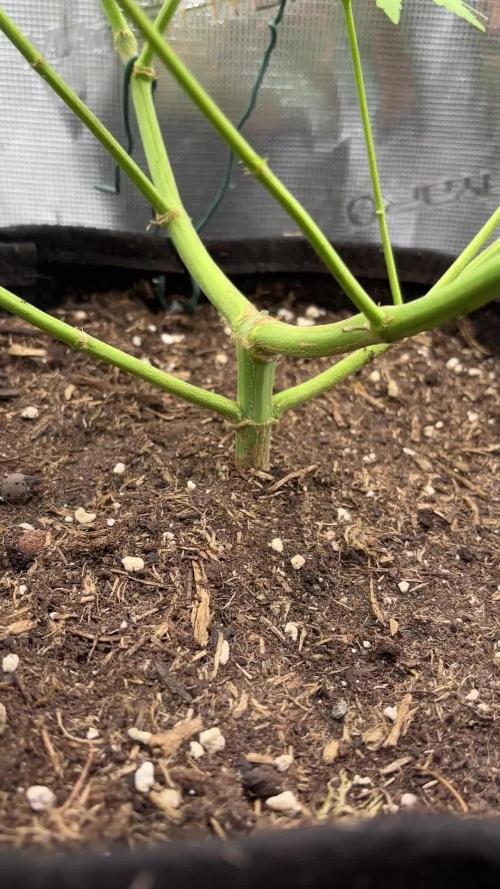
I had convinced myself that both Casamance Sativas were female until just yesterday when both of them started to show balls 2 weeks into flip. There goes my aspiration to enjoy some near pure sativa by the end of this year. I still have a bunch if seeds left over from may Africa trip and might give it another shot at a later time.
So all in all 6 unfeminized seeds started, cared for for 3 months, repotted, fed, moved around to catch the sun, sang to and feared for during stormy nights, LST’d, topped, and trimmed only to kill 5 of them and be left with 1 female Purple#1.
Anyways, good timing since the same day I noticed spider mites on THE ONE REMAINING FEMALE. The consensus around here seems to be “kill everything and start again”. Cant do it. Not to my only surviving child. I’ll pick off every web and mite with tweezers and a microscope if necessary. Cut off that one small bud yesterday morning, removed a few mildly affected leafs, upped fan speed across the canopy, and ordered predatory mites. Wish me luck!

Processing
Likes
58
Share


@Dahoola
Follow
---------------
Start week 3
--------------
We started week 3 as we ended week 2, which is great. She continues strongly at the beginning of this week and seems almost unstoppable. She clearly enjoys her surroundings and looks very healthy. She has started preflowering and seems to be gearing up for another explosion in growth. She is very good at leaftucking and has already developed a good number of shoots. On to more! A new update at the end of this week.
-----------------
Update Week 3:
-----------------
End of another fantastic week for MBAP. This week was all about pre-flowering and you can see that she is preparing for an explosive bloom. She has benefited enormously from the LST that I applied and has a good number of shoots ready to explode during flowering. In addition to leaftucking, have also removed the lower shoots so that she can concentrate her energy on the upper shoots. I also did the biotabs in the ground in the middle of the week. We have opted for 3 biotabs in 20-25l soil. Have waited several weeks before putting the tabs in the ground because we work here with aitoflowers. And they prefer a light feeding regiment for the first few weeks. We are going to gradually lower the humidity and get ready for flowering and week 4! Until next update


Likes
24
Share


@Aleks555
Follow
Hello everyone. We're doing well, we've been growing for 7 weeks and we're blooming, the binge has gotten stronger, the bumps are getting more and more. We've added more of these supplements from Xpert Nutrients.
Bloom Booster Sticky Fingers .

Likes
25
Share


@Elpicor
Follow
Una settimana colma di cambiamenti, é incredibile come le piante senza nessun tipo di training si adattino perfettamente tra di loro allo spazio circostante, quanti sensori possiedono le piante? Come comunicano tra di loro? mi ha sempre affascinato...

Likes
12
Share


@TappedN
Follow
Girls looking real good so i decided to continue to lst and water them with ah regular feeding switch to flower some time later in the week once I see the branches have risen

Likes
138
Share

@DogDoctorOfficial
Follow
One more week up wee go , and dude are they going hehehe , i had some life to my room and im giving the stretch times but asap i will apply deep and hard defoliation with should be enough until almost the end of cycle.
And defoliation day came and with it a second net to help support future buds, i was gona go harder on them but lol im happy with the new haircut lol
Gave them a strong full feeding with it and had some conditioner to my soil to help braking death mater and also gave them nome nematodes to fight fungus nets larvas and help control the life on my soil. For now thats all im doing , i will keep monitoring this fungus net and springtails etc that came with the time of the year and with the fact that im growing fully mineral organic .
As always thank you all for reading and checking out my diaries, im humbled by it all, much love to you all 💚💚💚🙏🙏🙏💚💚💚
Thank you MARSHYDRO and APTUSHOLLAND for having faith in my love for growing , lets make magic together 🙏🙏🙏
Genetics - Gorilla Blue - Advanced seeds
Grow tent - MARSHYDRO 4x4
Ligth - MARSHYDRO TSW 2000 @ 100%
Food - HAPTUS HOLLAND
Filter - vanguard hydroponics Falcon Filters
Extraction - 2 x vanguard hydroponics 280m3h
Extraction control - SMSCOM Smart MK2
All i grow is medicine for myself, for me and for my best friend with is me 😆 nothing to sell, so don’t even ask 😅💚💚💚
All info and full product details can be find in can find @
https://www.mars-hydro.com/grow-tent
https://www.mars-hydro.com/led-grow-light/mars-ts-series-led-grow-light/mars-tsw-2000-led-full-spectrum-hydroponic-led-grow-light
https://marshydro.eu/ DISCOUNT CODE - DOGDOCTOR 💚💚💚🙏🙏🙏💚💚💚
https://marshydroau.com/
https://aptus-holland.com/
#marshydro #aptus #aptusplantteck #aptusgang #aptusfamily #aptustrueplantscience #inbalancewithnature #trueplantscience #growerslove
With true love comes happiness 💚🙏 Always believe in your self and always do things expecting nothing and with an open heart , be a giver and the universe will give back to you in ways you could not even imagine so 💚💚💚
More info and updates @
https://growdiaries.com/grower/dogdoctor
https://instagram.com/dogdoctorofficial
https://youtube.com/channel/UCR7ta4DKLFMg2xxTMr2cpIg
💚💚💚Growers love to you all 💚💚💚
Likes
102
Share

@Aleks555
Follow
Another week has flown by, and our girl is thriving, packing on more weight and filling out beautifully. The jealousy-inducing colors of Zamnesia's genetics are starting to show, with vibrant purple hues emerging on the flowers. The buds are massive, sticky, and exude an enticing aroma. Our girl is looking absolutely delicious!

Likes
34
Share


@Southwest_budders21
Follow
Candyman is now 99 days old!
Day 49 of flower and they are looking unbelievably beautiful and smelling crazy strong. I am aiming to do one more feed and then a 7-10 day flush if they are all ready anyway. I really am gutted i couldn't take cuts of pheno 3 😭 all in all I'm super happy with this run.
Update: day 53 of flower and they just look unbelievable 😍 nearly time for a 7-10 day flush. I've now lowered the light intensity for the final weeks
Likes
Comments
Share

@Hsihs
Follow
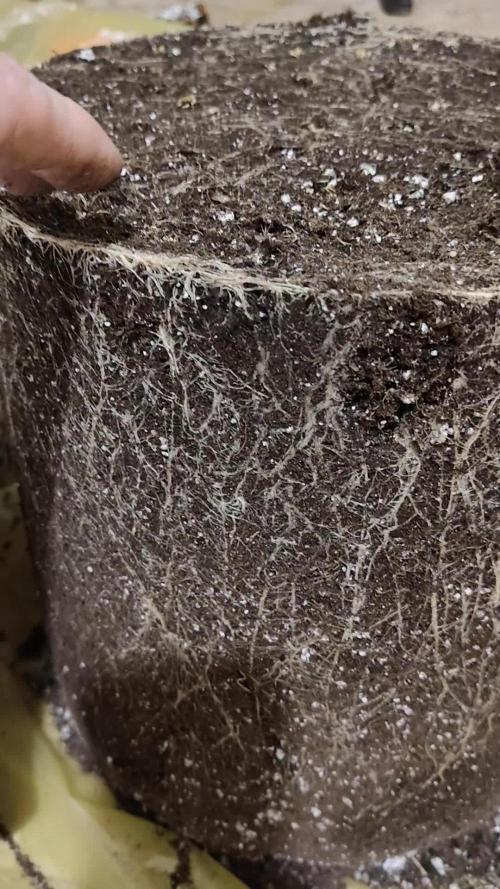
Цикл занял
16 недель и 2 дня или 114 дней от семени в рюмку.
из них 9 недель и 2 дня цвет
все было просто.
пробовал, очень сильная.
