


Likes
Comments
Share


@Green2Gold
Follow
Quarta e ultima semana de Vega assim eu espero, quanto a nutrientes vou continuar com os mesmos, planejo mudar apenas na floração.
Iniciei meu treinamento LST com arame e auxílio de palitos para afastar as folhas leque e dar espaço e luz para as gemas.
No meio da quarta semana ela entrou na flora
Nós vídeos a girl scout Cookies é a planta do fundo

Likes
4
Share

@DogDoctorOfficial
Follow
💜 Purple Haze by Zamnesia – Pheno A
Week 11 | This Girl Really Is on Fire 🔥💜👑
Welcome back to another chapter of the 8×8 Adventure! 🌱💚
Okay...
I'm going to say it again.
This girl is moving.
🔥💜
And not just moving...
she's MOVING.
😂
Every time I look at Purple Haze Pheno A, I get the feeling that she's quietly decided:
"Alright, enough waiting.
Let's get this show on the road."
😂🔥👑
Now, before anybody gets too excited...
let's make something very clear.
She is still FAR, FAR from the end.
We're not calling her finished.
We're not calling her close to harvest.
We're not making any predictions about where this ends.
But...
when I compare her with where she was just one week ago?
The difference is there.
The flower development is progressing.
The stacking is becoming more obvious.
The buds are gaining presence.
The resin is becoming increasingly visible.
And the whole plant is simply moving at her own very impressive rhythm.
Fast.
Very fast.
So this week...
let's turn the spotlight up.
Because Purple Haze Pheno A has absolutely earned it.
💜🔥👑
────────────────────────
🔥 THIS GIRL IS REALLY ON FIRE
────────────────────────
Last week I said:
"This girl is on fire."
I'm not taking it back.
😂🔥
If anything...
I need to turn the volume up.
Because this week she has continued exactly where she left off.
And that's what makes the progression so interesting.
We're not looking at a plant that suddenly changed overnight.
We're looking at a plant that is consistently moving forward...
and doing it quickly.
Week after week.
Flower after flower.
Layer after layer.
She's building.
She's stacking.
She's developing.
And when you look at her now, you can really see that momentum.
There's a difference between a plant simply being in flower...
and a plant that looks like it's actively building its flowering structure.
Purple Haze Pheno A is definitely giving me the second feeling.
She's working.
😂🌸🔥
────────────────────────
🌸 THE FLOWERS ARE MOVING
────────────────────────
This is the part that's catching my attention the most.
The flowers are becoming increasingly defined.
They're developing more structure.
They're beginning to look fuller.
And those flowering sites are no longer simply little points scattered through the plant.
They're becoming increasingly obvious parts of the overall architecture.
And when I compare her with the previous update...
I can see the progression.
That's what I love about keeping these weekly diaries.
Sometimes you think:
"Nothing dramatic happened this week."
Then you put last week's photograph beside this week's...
and suddenly:
"Oh..."
😂
Actually...
quite a lot happened.
The plant simply did it gradually.
And Purple Haze Pheno A is becoming one of those girls where the week-to-week comparison is particularly satisfying.
────────────────────────
💎 THE FROST IS KEEPING UP
────────────────────────
And then we have the trichomes.
💎💎💎
The frost continues to become more noticeable as the flowers develop.
This is another part of her evolution that makes me want to grab the camera.
Because once the flowers start developing that little sparkle...
you know you're entering one of the most visually rewarding parts of the journey.
You look at her from across the room and see flowers.
You move closer and see frost.
You move even closer...
and suddenly you're looking at an entire microscopic landscape.
😂🔬💎
That's what makes macro photography so addictive.
And this girl?
She's giving us plenty to photograph.
The resin isn't the whole story.
But it's certainly becoming a very beautiful part of it.
────────────────────────
💜 THE COLOUR STILL SPEAKS FOR ITSELF
────────────────────────
And of course...
I can't talk about Purple Haze without mentioning her colour.
That deep green remains one of the strongest visual characteristics of this phenotype.
The foliage continues to give her that rich appearance, while the developing flowers create beautiful contrast throughout the plant.
She's got a very distinctive look.
You can see her structure.
You can see the flower development.
You can see the resin.
And you can see that beautiful green.
Everything is starting to come together.
And I think that's why she's becoming so easy to recognize.
She's developing her own signature.
💜🌿
────────────────────────
🚀 HER RHYTHM IS FAST
────────────────────────
This is really the theme of this week's report.
Her rhythm.
Because I don't want to say that she's "ahead" of every other plant.
That's not what this is about.
Plants don't have to race each other.
And we're still very far from the finish line.
But compared with her own previous development?
She's moving quickly.
That's the important part.
We're watching HER progression.
And her progression is fast.
She's not sitting there waiting.
She's not slowly wondering whether she wants to flower.
She's clearly in the process of building.
And she appears to be doing it with a lot of momentum.
😂🔥
It's almost like somebody pressed the fast-forward button.
But I'm pretty sure nobody did.
She's simply being Purple Haze Pheno A.
────────────────────────
💡 SAME PHOTONS – DIFFERENT RESPONSE
────────────────────────
And this is where the 8×8 Adventure becomes really interesting.
Because nothing special was created for this girl.
She's still in the same room.
Same environment.
Same general irrigation strategy.
Same nutrition foundation.
Same lighting system.
Same 12/12 schedule.
Same overall conditions.
And yet...
she's expressing herself differently.
That's genetics.
The room provides the environment.
The plant interprets it.
And Purple Haze Pheno A seems to be saying:
"Thank you very much.
I'll take all those photons and get to work."
😂💡💜
And that's exactly what we're watching.
The same light enters the room.
Different plants respond differently.
Some build differently.
Some stretch differently.
Some flower differently.
Some take longer.
Some move faster.
And this girl?
She's definitely one of the faster-moving personalities in this room.
────────────────────────
☀️ MORE PHOTONS – MORE CAPABILITY
────────────────────────
The lighting setup remains the upgraded system we've been using throughout the room.
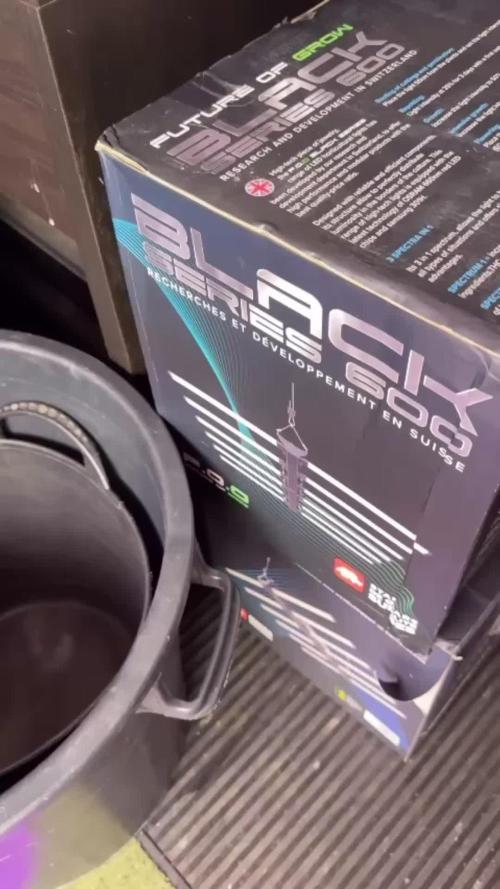
The two additional Future of Grow Black Series 600W fixtures are now part of the lighting environment.
We initially had more available intensity than we wanted to run, so we reduced the output.
We're now around:
💡 ~59% power from the plug
with approximately:
☀️ ~1,500 PPFD across the upper canopy
and naturally decreasing intensity depending on plant height and position.
And I really like this approach.
We're not trying to run the fixtures flat out.
We're creating lighting capacity.
Then we're controlling it.
That gives us flexibility without unnecessarily pushing the equipment or using more electricity simply because we can.
And Purple Haze?
She's certainly making use of what she's receiving.
💡🌿💜
────────────────────────
🌿 A THREE-DIMENSIONAL PHOTON CATCHER
────────────────────────
When you look closely at her structure, you can really appreciate how three-dimensional the canopy is.
Leaves occupy different heights.
Branches move through different spaces.
Flowers develop at different angles.
And photons interact with all of it.
Some are intercepted immediately.
Some travel deeper.
Some reach lower areas.
Some pass through gaps.
And the additional Lumiflora lighting helps bring useful illumination into those deeper and lower areas.
It's not simply:
"Put more light on the top."
It's about understanding that a plant is not a flat surface.
It's a living, three-dimensional structure.
And Purple Haze Pheno A has created a beautiful structure for those photons to interact with.
☀️🌿🌸
────────────────────────
🌸 STACKING – AND THEN MORE STACKING
────────────────────────
I think this deserves its own section.
Because...
wow.
😂🌸🔥
The stacking continues to become more obvious.
The flowers are building on one another.
The structures are becoming more substantial.
And the overall appearance is becoming increasingly dense.
This is the kind of progression where you can look at the plant and almost see the architecture changing in front of you.
One flower develops.
Then another.
Then the surrounding structures become more pronounced.
And suddenly the whole branch starts looking different.
That's what we're watching now.
Not the final product.
Not the finish line.
Just the plant building.
Layer by layer.
Week by week.
And she's doing it beautifully.
────────────────────────
📏 STILL COMPACT – STILL MAKING HER SPACE COUNT
────────────────────────
At around 120 cm, she's not one of the tallest girls in the room.
And honestly?
She doesn't need to be.
She's making excellent use of the space she has.
She's not trying to win the height competition.
She's building within her own architecture.
That's something I really appreciate about her.
She's compact enough to maintain that substantial flowering structure while still having plenty of space for the flowers to develop.
She doesn't need another 30 centimetres of height to make an impression.
She already has one.
😂💜👑
────────────────────────
⚗️ FEEDING – SAME ROOM, SAME FOUNDATION
────────────────────────
The nutritional update is the same as the rest of the room this week.
🌱 Plagron Terra Bloom – 2.3 ml/L
🌱 Power Buds – 1 ml/L
🌱 Green Sensation – 1 ml/L
🌱 Sugar Royal – 1 ml/L
⚗️ pH adjusted as required
Current solution values are approximately:
⚗️ pH – 6.02
⚡ EC – ~2.14 mS/cm
Again, we're not creating a special feeding programme just because she's moving quickly.
We're watching the plant.
We're watching her development.
We're keeping the room consistent.
And she's responding beautifully.
The important thing is that we're not confusing "fast development" with "rush everything."
😂
She's moving at her own pace.
We're simply supporting the environment around her.
────────────────────────
🌡️ WEEK 11 ROOM CONDITIONS
────────────────────────
The room remains stable around:
🌡️ Day temperature: ~26.5°C
🌙 Night temperature: ~26°C
💧 RH: ~61%
⚗️ pH: ~6.02
⚡ EC: ~2.14 mS/cm
💦 Nutrient solution: ~25°C
🌱 Substrate temperature: ~25°C
💨 CO₂: ~693 ppm
💡 Light schedule: 12/12
? Pot size: 15 L
💧 Irrigation: ~1.45 L/plant/24h
Same room.
Same conditions.
Same general strategy.
Different expression.
And that last part is really the entire point.
────────────────────────
🌿 WE'RE STILL NOT RUSHING HER
────────────────────────
Now...
because I keep saying she's moving fast, I want to make one thing very clear.
Fast compared with her own previous progression...
doesn't mean we're suddenly at the end.
We're not.
Not even close.
😂
There is still plenty of flowering development ahead.
The flowers can continue building.
The resin can continue developing.
The structure can continue changing.
And the plant can continue maturing.
So I'm not looking at her thinking:
"She's almost finished."
I'm looking at her thinking:
"Wow...
look how quickly she's progressing."
There's a big difference.
And that's the exciting part.
────────────────────────
📸 THE CAMERA HAS A LOT TO WATCH
────────────────────────
This is exactly the stage where I want to keep photographing her.
Because when a plant is moving quickly, the weekly photographs become even more valuable.
They create a visual timeline.
Week 9.
Week 10.
Week 11.
And suddenly you can see the story.
The flowers become larger.
The structures become denser.
The frost becomes more obvious.
The plant starts looking more mature.
And you can actually watch the transformation.
That's what these diaries are about.
Not just showing you a beautiful plant...
but showing you how she became that plant.
And Purple Haze Pheno A is giving us a beautiful story to document.
────────────────────────
👑 THE CROWN IS GETTING HOT
────────────────────────
I'm starting to feel like we need a larger crown budget in this room.
😂👑
Every week another girl walks into the spotlight.
And now Purple Haze is basically standing there with flames coming out of her flowers.
🔥💜😂
But again...
I'm not declaring any winners.
Every phenotype has something special.
That's the whole point.
One plant might have incredible structure.
Another might have incredible colour.
Another might have unusual flower formation.
Another might have an amazing aroma.
Another might be incredibly compact.
And Purple Haze Pheno A?
She's giving us:
💜 Beautiful colour
🌸 Strong flower development
🔥 Fast progression
💎 Increasing resin
🌿 Compact structure
👑 Serious personality
That's a pretty strong combination.
────────────────────────
🔍 WHAT I'M WATCHING NOW
────────────────────────
My questions for her have changed again.
I'm no longer asking:
"Is she going to flower?"
She's answered that.
I'm not asking:
"Is she developing?"
She's answered that too.
Now I'm watching:
🌸 How much more will these flowers build?
💎 How much more resin will she develop?
🌿 How much denser will the structure become?
💜 How will her colour evolve?
🔥 And how long can she keep this pace?
That's the fun part.
We don't know.
And I'm perfectly happy with that.
Because the plant gets to answer those questions for us.
────────────────────────
💭 FINAL THOUGHTS – KEEP THE FIRE BURNING
────────────────────────
Week 11.
And Purple Haze Pheno A?
Still on fire.
🔥💜👑
If anything...
even more so.
Compared with the previous update, this girl is clearly moving at her own rhythm.
And that rhythm is fast.
The flowers are becoming more substantial.
The stacking is becoming more obvious.
The resin is becoming increasingly visible.
The colour remains beautiful.
The plant is maintaining that compact, balanced structure.
And everything is starting to come together.
But we're still far from the end.
That's important.
This isn't a finish-line report.
It's a progress report.
And what a progress report it is.
😂🔥
Same room.
Same environment.
Same photons.
Same lighting strategy.
Same nutrition.
Same 12/12.
Different genetic response.
That's the magic.
The room gives her the tools.
Purple Haze Pheno A decides what to build with them.
And right now...
she's building something beautiful.
💜🌿🌸💎🔥
So let's give her the shout she deserves.
Let's turn up the spotlight.
Let's keep those photons flying.
Let's keep the camera ready.
And let's watch this girl continue to do what she clearly wants to do.
Move.
Build.
Stack.
Frost.
Grow.
And shine.
🔥💜👑
She's still got a long road ahead.
But if this is the pace she's choosing...
I'm very excited to watch the rest of the journey unfold.
────────────────────────
🙏 THANK YOU
────────────────────────
As always, thank you so much to everyone following the 8×8 Adventure. 💚🌱
Thank you to GrowDiaries for giving us the space to document these individual journeys and share the experience with growers around the world.
Thank you to Zamnesia for the Purple Haze genetics and for giving us the opportunity to discover what this beautiful phenotype can become.
Thank you to Plagron for the growing media and nutrition supporting the room.
A huge thank you to Future of Grow for supplying the additional Black Series 600W fixtures and allowing us to explore this expanded lighting setup. 💡☀️🌿
Thank you to Lumiflora for helping bring additional light into the deeper and lower areas of the canopy.
Thank you to TrolMaster for helping keep the environment stable behind the scenes.
And finally...
thank you to everyone following along.
Every comment.
Every question.
Every message.
Every person stopping by to watch the girls develop.
It genuinely means a lot. 💚
This 8×8 Adventure keeps showing us the same thing over and over again:
Give different genetics a shared environment...
and they will tell you very different stories.
And Purple Haze Pheno A?
Her story right now is moving fast.
🔥💜
She's not finished.
She's not even close.
But she's building.
She's stacking.
She's frosting.
She's developing.
And she's doing it at her own very impressive rhythm.
So...
let the girl shine.
👑💜🔥
Let's see how much more she can build.
Let's see how the flowers continue to evolve.
And let's keep watching this beautiful girl burn her way through another week of the 8×8 Adventure.
Growers Love, my friends. 💚🌱
And remember...
don't blink.
Purple Haze Pheno A is moving. 😂🔥💜👑


Processing
Likes
8
Share


@leliantu
Follow
96 días desde la germinacion.
47 días de floración.
Ya estamos entrando a las semanas finales de cultivo y las flores van engordando a buen ritmo. Finalmente, en mayor o menor medida, todas las plantas sufrieron de sobre fertilización y veo 2 factores responsables de esto; 1. me excedí en la cantidad de guano de murciélago (alto en fósforo) con el que fertilice el sustrato y 2. en la mitad de la floración se estropearon mis 2 herramientas de medida, el medidor de EC y PH, al calibrarlos el otro día me percate, y como estamos en cuarentena se me hace complicado adquirir nuevos medidores por lo que suspendí los riegos con abono y he estado regando solo con enzimas y Flawless Finish, voy a seguir así hasta finalizar el cultivo. Debo tener ojo con los hongos, donde vivo hay una humedad muy alta que no baja de 60% e incluso ha llegado (según mi termohigrómetro) a 96%. Eso, feliz cultivo a todxs. 👊
Likes
15
Share


@Tmasm
Follow
Descarregar de 2 semanas cou ulitama de ph 8.1
Última 48h em escuridão com temperatura rodar 6c⁰ a 13c⁰
Cortada e pendurada com mesmas temperatura baixas para secar lentamente.


Likes
14
Share


@kevgrow
Follow
Hey Friends, end of week 13 from seed
Buds are getting thicker
Smell is getting stronger
Bud structure is looking amazing, so far its been an amazing experience seeing this plant grow.
I am watering every 3-4 days 1 full gallon of water mixed with nutrients.
Leaves are green, looking healthy
Trichomes are 98% cloudy 2% amber
This week I had a tough time trying to maintain a steady humidity level, its been raining outside lately so humidity level goes up.
QUESTIONS
When should I begin flushing?
Likes
20
Share

@Nickeluring
Follow
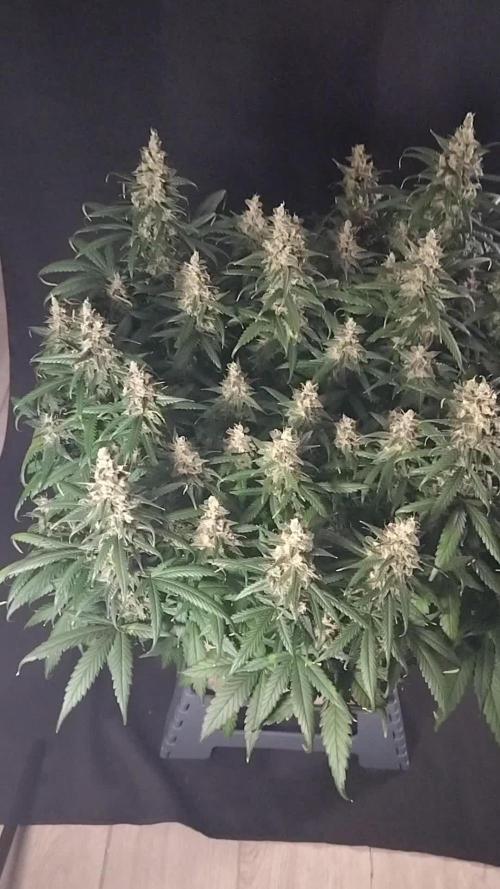
She has still some bud work to do before harvest, but we're getting close. She smells rellay good now. SHe is packed with delicious, sticky buds.

Likes
6
Share

@Ribemarti
Follow
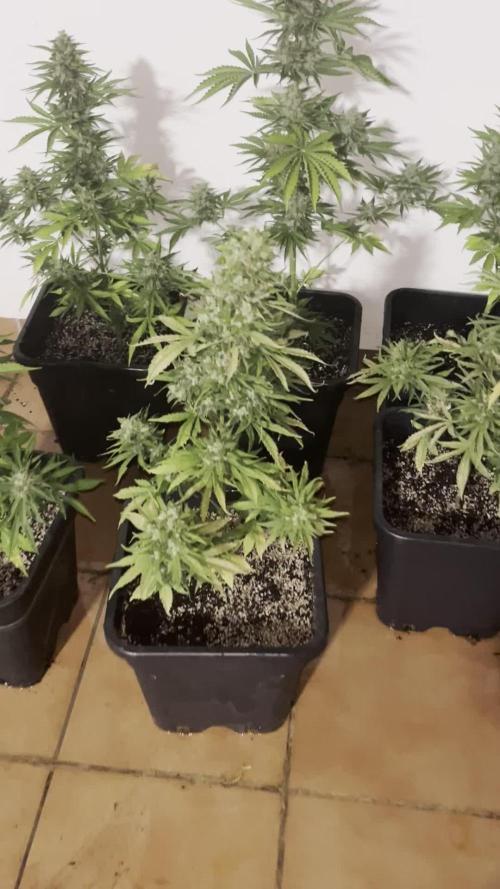
LAS PLANTAS YA ESTAN EN SUS ULTIMOS DIAS, YA TIENEN ECHO EL LAVADO DE RAIZES, DURANTE LA SEMANA QUE VIENE SE CORTARAN!!
Y FINALIZAMOS AUTOS HASTA PROXIMO AÑO,
PRONTO MOSTRARE LAS DE TERRAZA QUE TEGO 2 PLANTAS DE TEMPORADA UN ESQUEJE Y UNA PLANTA
Likes
24
Share


@TerpTurtle
Follow
14 day dry | Curing in Grove bags, filled 7 QP bags & got 56g of keif out the trim bin from only 2 plants!
More pictures coming! STAY FROSTY GROWMIES


Likes
53
Share


@StaresAtPlants
Follow
Mid week is day 21 of flower. I'll do one more leaf strip in the next few days and then I should be done screwing around in the tent with these ladies.
I'm extremely happy with how the canopy filled out. Just a couple of weeks ago I had to cull 3 of my 8 and that left a void.
The last leaf strip is done. I also removed the trellis netting. I am unsure if this was a good idea or not. As far as I figure, My canopy did fill the 5'x5' but it doesn't any more. Now that the scrog net is down everything "stood tall". The reason I removed it is so I could make sure that 1. I could strip everything that I wanted/needed to before everything turns woody and fragile. 2. get to my plants to make sure that no Male flowers surfaced. I did consider putting it back in but then I though of harvest time, what if one in the back is ready before the one in the front, that is gonna suck to pull out. So I left the net out. My hypothesis is that as the buds start to gain weight, the weight will get the branches to come down and spread out again. If the weight seems like it may break limbs, at that point I will apply the scrog net as more of a trellis net that will be easily removed. It's weird, two nights ago I was dreaming that I was in a panic looking for plant yoyo's. I was dreaming that my kolas were so huge that they were snapping. LOL Hopefully it wasn't a dream and it was more of a vision.
I have still been feeding by my pH range. I still haven't had to use any pH up or down in the last 18 days. I have noticed that flower isn't as forgiving as veg cycle. I do have one strain that is showing leaf tip burn so I have decided drop my EC enough to let my pH rise a bit more quickly. In the flower cycle the plants seem to be more finicky with their uptake. If It's too strong they leaf tip burn within a couple of days so if you need to make changes you can't tip toe like in veg. You need to aggressively get back into range because the plant isn't going to wait for you. It's clock is ticking and it's going with or without you.
After my recent leaf strip, my humidity has been lower than ideal so I will probably be putting a humidifier in shortly. I have been using the dimmer to dim my lights to 75% but I would rather have them at 100.
I am looking forward to what the next 5 weeks bring so I hope you all stay with to see how this turns out.
Grower's Love To You All!


Likes
Comments
Share

@HOME_GROWBOOK
Follow
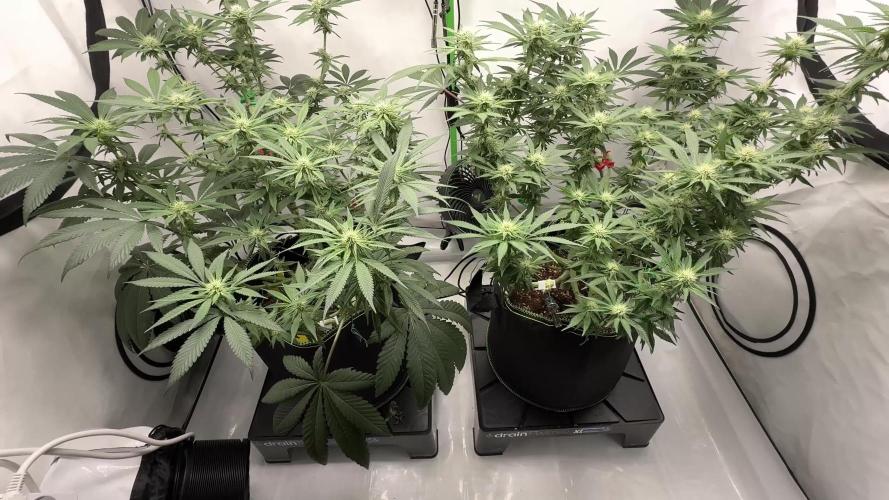
Der Stretch neigt sich dem Ende zu und das Netz wurde entfernt – beide Pflanzen stehen jetzt stabil und frei im Raum.
Nach dem Lösen des ScroG zeigt sich deutlich, wie kräftig die Struktur aufgebaut wurde:
dicke Stämme, starke Seitentriebe und ein gleichmäßiges, volles Blätterdach.
24K Gold reagiert mit einem beeindruckenden Stretch-Finish. Ihre Haupttriebe sind kräftig und leicht über dem Restniveau, perfekt verteilt für maximale Lichtausbeute. Die ersten Blütenansätze sind klar zu erkennen – kleine weiße Härchen schießen an allen Spitzen hervor.
Gelato 33 bleibt etwas gedrungener, aber sehr kompakt und buschig. Ihre Top-Sites sind gleichmäßig verteilt und zeigen ebenfalls die ersten Pistillen. Das entfernte Netz hat ihr Raum gegeben, sich frei nach oben zu entfalten.
Eine gezielte Entlaubung wurde vorgenommen, um die unteren Bereiche zu öffnen und die Luftzirkulation zu optimieren. Das Laub ist tiefgrün und gesund – keine Mängel oder Verbrennungen sichtbar.
Düngung & Werte:
• 💧 Canna Coco A + B → 6 ml/l
• 📈 EC: 1.6 pH: 5.8
• 🌡️ Temperatur: 25–26 °C
• 💧 Luftfeuchtigkeit: 50–55 %
• 💨 Umluft: stark & konstant
• 💦 Tropfbewässerung mit kontrolliertem Drain
Der Fokus liegt nun voll auf Blütenbildung – die Pflanzen stehen stabil, haben den Stretch abgeschlossen und beginnen mit sichtbarem Blütenaufbau.
Ein sehr kräftiger Start in die Hauptblütephase!

Likes
2
Share


@PalmaGrow
Follow
Responde bien a la poda y al estrés generado por los amares re van regulando ramas a la abisma altura para posteriormente pasar a floración.
4 - 10 agosto

Likes
65
Share


@Dendegrow
Follow
Week 2 of the flowering phase flew by 🌱💨. Unfortunately, I may have overdone it with potassium or kept the water level too high – the classic signs of clawing leaves were evident. Thankfully, they seem to be recovering now and are back under control 💪🍃.
My IR night experiment is showing clear results 🌌: The plants exposed to infrared radiation at night stretched significantly more. This might be especially beneficial for this indica-dominant strain as it leads to better canopy distribution, improved airflow, and reduced risks of mold and disease. Plus, the light distribution is much more efficient now, which I’m excited to see pay off.
On the downside, my Orange Sherbert turned hermaphroditic 😔. It’s hard to pinpoint the cause – overfertilization seems unlikely since I’m using only organic nutrients. I suspect it might be linked to an E-field experiment I’ve been running. To confirm this theory, I’ll conduct a new grow with a similar strain next year to see if the electric field negatively impacts cannabis development.
Stay tuned for updates! Drop a like and follow along for more grow insights 🌿✨. See you next week!
Woche 2 der Blütephase ist wie im Flug vergangen 🌱💨. Leider habe ich wohl etwas zu viel Kalium gegeben oder den Wasserstand zu hoch gehalten – die typischen Anzeichen von Adlerkrallen waren sichtbar. Zum Glück scheinen sich diese jetzt zurückzubilden und sind wieder unter Kontrolle 💪🍃.
Mein IR-Nachtexperiment zeigt bereits deutliche Ergebnisse 🌌: Die Pflanzen, die nachts mit Infrarotstrahlung bestrahlt wurden, haben deutlich stärker gestretcht. Das ist besonders bei dieser indica-dominanten Sorte wahrscheinlich von Vorteil, da es zu einer besseren Verteilung des Blätterdachs führt. Dadurch verbessert sich die Luftzirkulation, das Risiko von Schimmel und Krankheiten wird minimiert, und die Lichtverteilung wird effizienter. Ich bin gespannt, wie sich das weiter auswirkt!
Leider hat meine Orange Sherbert gezwittert 😔. Woran das genau liegt, kann ich schwer sagen. Eine Überdüngung halte ich für unwahrscheinlich, da ich nur biologischen Dünger verwendet habe. Ich vermute, dass mein E-Feld-Experiment eine Rolle spielt. Um das zu bestätigen, werde ich nächstes Jahr einen neuen Durchlauf mit einer ähnlichen Sorte machen und prüfen, ob das elektrische Feld tatsächlich eine ungünstige Rückentwicklung der Pflanze verursacht.
Bleibt dran, lasst ein Like da und folgt mir für weitere Updates 🌿✨. Bis nächste Woche!

Likes
29
Share


@Lazuli
Follow
The pistils are still white
Shes very fat now and i think 2 weeks before harvest, i feed less now at 400ppm and starting ripen feed when half of her pustils turned brown
August 18 (mid this week)
I flushed her completely and fed ripen untill runoff got in the 200ppm.
Now she is ready to finish
Harvest will be at august 28th

Likes
Comments
Share



Likes
10
Share



Likes
1
Share


@SessionMeister
Follow
Plants are doing good but humidity could be higher sometimes. I am spraying the Clones with water to keep them hydrated as long as they dont have strong roots. Clones experienced slight sunburn but nothing bad.


Likes
16
Share

@Shawneyboy85
Follow
My Zkittles is farther ahead of any of the others, she is really going yellow, she’s at day 67 but isn’t quite ready by the looks of the trichs, other than that and wishing I hadn’t underestimated these genetics and wishing I had put a scrog up when I had the chance and knowing I should have put one in. Lesson learned I’ll do better 🤙🏼🤙🏼

Processing
Likes
31
Share


@MadeInGermany
Follow
Hi everyone 🤗.
Welcome to a new diary.
Cuttings were cut and rooted last week 🙂.
Today they were placed in 11 pots in Canna Coco Proffesional +.
Green Buzz Liquids is used for the fertilizer 😀👍.
Made in Germany 🤗.
I looked at the compositions of the individual elements and I am very impressed and excited about him 😎.
Greetings go out to Green Buzz Liqudis, and a big thank you for the support 🙏🏻👍.
Which training methods I will use will be decided spontaneously each day 😃.
I wish you a lot of fun with the diary, stay healthy l and let it grow 🌱.
You can buy this Strain at
https://www.barneysfarm.com/blue-cheese-34
You can buy the fertilizer at
https://www.greenbuzzliquids.com/
Type:
Blue Cheese
☝️🏼
Genetics:
Blueberry
X
Original Cheese
👍
Vega lamp:
2 x Todogrow Led
Quantum Board 100 W
💡
Bloom Lamp :
2 x Todogrow Led
Cxb 3590 COB 3500 K 205W
💡💡☝️🏼
Soil :
Canna Coco Professional +
☝️🏼
Fertilizer:
Green Buzz Liquids :
Organic Grow Liquid
Organic Bloom Liquid
Organic more PK
More Roots
Fast Buds
Humic Acid Plus
Growzyme Big Fruits
Clean Fruits
Cal / Mag
Organic Ph - Pulver
☝️🏼🌱
Water:
Osmosis water mixed with normal water (24 hours stale that the chlorine evaporates) to 0.2 - 0.4 EC. Add Cal / Mag 2 ml per l water every 2 waterings . Ph with Organic Ph - Pulver to 5.8 .
Likes
64
Share

@MadeInGermany
Follow
Hi people :-)
Today the update of the Blue Gelato # 41 🌱.
She looks very healthy and vital 👌.
It has grown very nicely this week.
I only uploaded 2 of the same videos for testing, once in 4 K and once in HD. Since the last videos of the quality were unfortunately not so good when you watched them on the PC.
I hope this bug is now fixed, otherwise it is because of my apps etc.
Tomorrow there will be a few more pictures, because unfortunately I only came to the videos today.
That's a hell of a lot of work that comes with growing, and still work in everyday life 😅.
What you don't do for your passion 😍👍
I wish you all a nice start into the new week, let it grow and stay healthy 🤗🙏🏻🌱🍀
Likes
4
Share
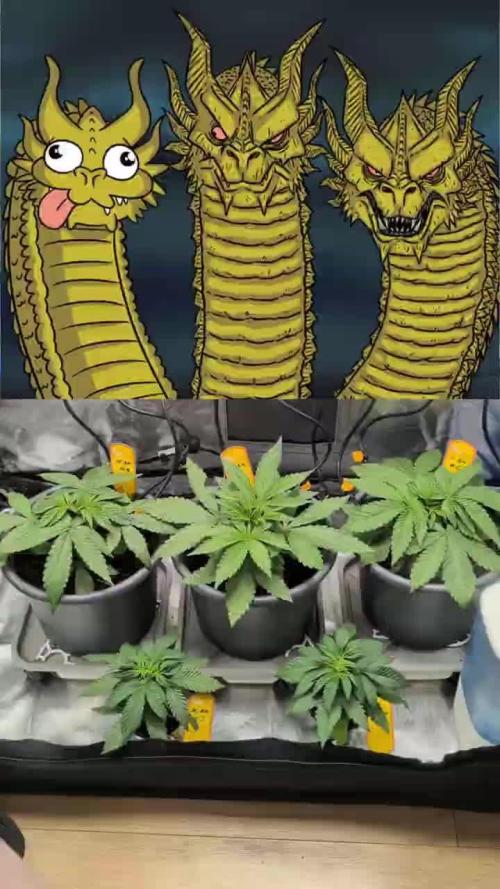

@TyRun
Follow
Looks like I fell into the classic coco trap — when it’s still too early to water to runoff. You either overwater, or the pH in the root zone keeps rising every day.
The result is obvious: #4 and #6 got calcium and phosphorus lockout because I didn’t water to runoff right after transplant. They’re still recovering.
#3, on the other hand, is doing great — you can tell by how perky she looks. She was transplanted later, so she got proper runoff earlier than the others. It literally took just 2–3 days without runoff to cause issues.
Overall, these are just early-stage problems that won’t matter later. We’ll probably remove those big leaves anyway since they’ll be in the shade (or maybe not, if they’re still functional when side lighting kicks in — then the marks might stay 😄).
Plants are already adapting to the watering routine, and root zone pH should stabilize soon.
Feed (input): EC 1.5 / pH 5.4 (today tested 4.9 just for fun)
Runoff: EC 1.1–1.2 / pH 6.4–6.7
Experimenting with VPD — was around 1.3–1.35 most of the week, now pushed to 1.5.
Growth rate is decent, leaf color recovered to bright green, no stunting.
Interesting note — plant #6 has a very unusual branch structure, never seen side branches attach like this. Doesn’t want to grow upward at all 😄