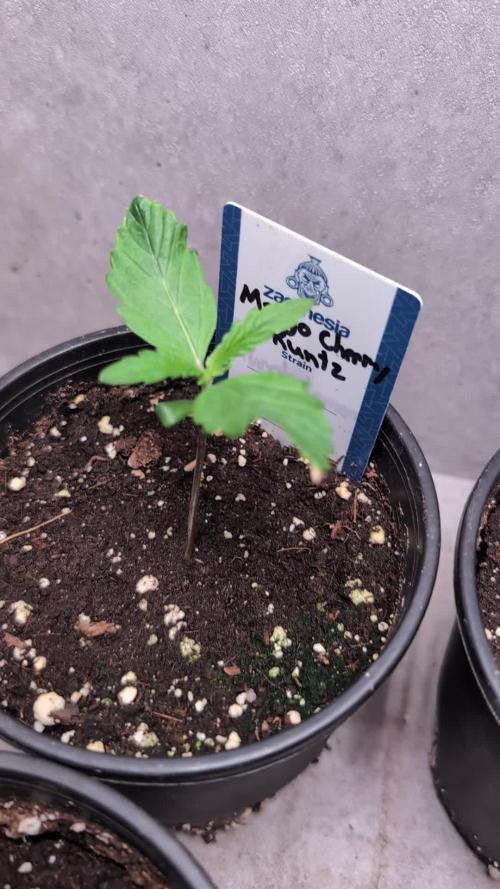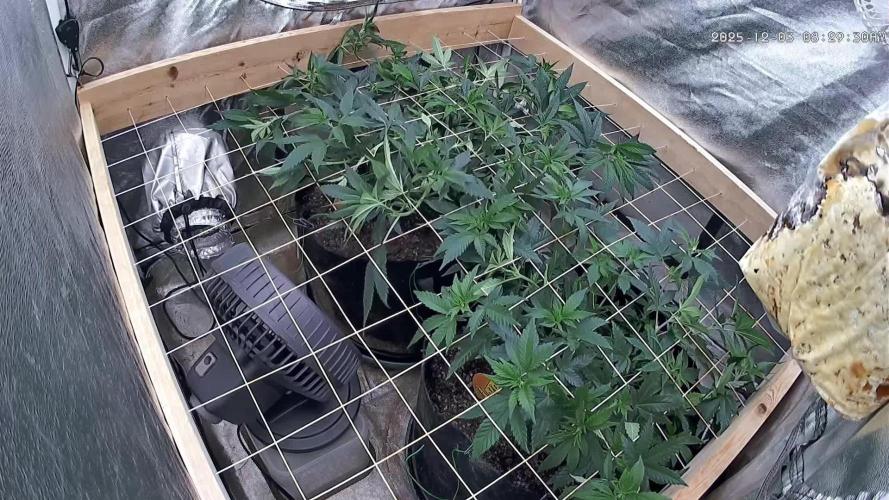
Likes
Comments
Share
Likes
32
Share
All good so far, will post some divided pics later on when flowers start forming.. Orinoco and critical plus are close to being double in size since i flipped lights to 12 12, they are gonna be huge :)
Likes
14
Share
GMO Cookies Served with Extra Curiosity ?🍪 Drying & Trimming Report | Garlic, Gold & Preservation And once again… yes 😄 We are dividing the reports. At this point it almost became tradition. But honestly, there is simply no realistic way to fit: * harvest, * drying, * trimming, * curing, * smoke review, * fresh frozen, * washing, * strain review, * extraction plans, * terpene analysis, * and all the small details we love documenting… into one single update without turning everything into chaos. So first of all: thank you for the patience. Everything from seed until harvest was already documented in the previous reports, but for the people arriving only now, let’s quickly recap how we got here. This GMO Cookies run was grown under a 12/12 from seed cycle using the F.O.G. LED setup, with environmental management focused on healthy plant development, airflow, structure, and resin production. Throughout flower the girls received selective defoliation, LST, continuous observation, and careful feeding while expressing one of the loudest terpene profiles we have had in the room in a while. And now? Now the plants have moved beyond harvest and entered one of the most important phases of all: preservation. Because growing beautiful flowers means very little if drying and trimming are rushed afterward. So this report belongs to: * drying, * trimming, * handling, * preserving terpenes, * collecting resin, * and slowly preparing the medicine for cure. The branches that were selected for drying spent approximately: * 10 days drying, * around 60% humidity, * temperatures between 18–20°C, with the first couple of days running slightly drier in order to help remove excess surface moisture before stabilizing the environment more carefully. And honestly? The aromas coming from these flowers during drying were absolutely ridiculous. Now, to be completely honest and transparent: these were not the densest flowers from the tent. Visually they actually looked denser while still wet than they ended up feeling after drying. But what they lacked slightly in density… they completely compensated for in aroma, terpene expression, flavor potential, resin behavior, and overall personality. And honestly, that trade-off is something many growers happily accept. Because this GMO profile is LOUD. Like… walk-into-a-kitchen loud. Real GMO lovers will understand this instantly. Every trimming session felt like sitting next to a chef smashing fresh garlic cloves directly beside us. Savory. Greasy. Funky. Sharp. Warm. Almost oily-smelling. And hidden underneath all that madness: sweetness, cookie notes, earthiness, and weird creamy undertones slowly revealing themselves as the flowers cured further. This is not a shy cultivar. Not even close. Once the drying process finished, it was finally time to trim. So: gloves on. Trim station ready. Trim bin prepared. Scissors cleaned. Glass jars nearby. Grove Bags prepared. And of course… little self-medication beforehand 😄 Because trimming sessions and cannabis culture somehow always belonged together naturally. The branches were broken down carefully by hand, one by one, and every flower was trimmed individually with patience instead of speed. As always, we used pointed curved trimming scissors. And honestly, they are fantastic for this type of flower structure. Especially with fluffier or more open flowers, curved pointed scissors allow you to: * enter tighter spaces, * remove excess leaf material precisely, * preserve flower structure, * avoid crushing calyxes, * and maintain a more natural-looking final product. Straight scissors work perfectly fine too of course, but for this type of trimming, curved points genuinely feel more comfortable and surgical. And with GMO? You quickly realize precision matters. Because these flowers become sticky almost immediately. The scissors start collecting resin. The gloves become greasy. Finger hash starts forming naturally. And suddenly trimming stops being just “work” and starts becoming part of the experience itself. The first dried branches gave us: 137.1 grams. After trimming and weighing, the flowers were carefully transferred into Grove Bags, with smaller amounts also resting inside glass jars for comparison and monitoring during cure. Then we moved onto the flowers dried on the drying rack. Again: not the densest plant from the tent. And honestly, we believe temperatures played a role there. This cultivar appeared slightly more sensitive to higher temperatures than some of the others around her. Our personal feeling is that she continued pulling significant water during flower development, which likely contributed to the final structure remaining slightly more open once dry weight settled. But despite that? The quality remained absolutely beautiful. Sometimes growers become overly obsessed with density alone. But density is not everything. Aromatic expression, resin quality, effect, smoothness, flavor, and terpene complexity matter just as much — sometimes even more. And this GMO absolutely shines there. The second drying batch landed at: 224.2 grams. Again carefully bagged for preservation. And speaking of preservation: we decided to use Grove Bags for most of the flower storage. Why? Because preserving terpenes matters deeply to us. Especially with a cultivar this expressive. The idea behind Grove Bags is maintaining stable curing conditions while reducing the constant need to burp jars manually. They help regulate humidity exchange while still allowing the flowers to continue stabilizing naturally over time. Of course, glass jars still remain legendary and we still use them too. Honestly? Both methods have their place. And later during cure and smoke review, we will probably compare the differences more deeply. But for now, the priority is simple: protect the terpenes. Protect the medicine. Protect the work. Now let’s talk about something we personally love a lot: the “gold.” Or what many people simply call: kief. During trimming, tiny trichome heads naturally separated and fell through the trim bin screen. And honestly… watching that happen never gets old. At one point we jokingly started “playing the drums” Moroccan style across the trim bin while working, moving material gently across the screen and collecting the resin heads gathering underneath. And the result? Beautiful golden powder. Tiny greasy trichome heads. Pure aromatic dust from the plant itself. Eventually we pressed part of it together gently using finger warmth and pressure, creating a tiny mini temple ball. Small. Dark. Sticky. Greasy. Beautiful. The type of resin that already tells you: “This plant is going to wash beautifully later.” And yes… that curiosity is still alive and stronger than ever. Because despite everything already documented here, we still have: more than 700 grams of fresh frozen flower material waiting patiently inside the freezer. That future report is still coming. And honestly? We are incredibly excited for it. But there is no rush. That material is preserved safely and waiting for the right moment to become: * ice water hash, * solventless resin, * or whatever expression this GMO decides to offer us later. For now, this chapter belongs to drying, trimming, preservation, and preparation. Before ending this report, one more important thing: cleaning. Once trimming was finished and the room slowly emptied, it was time to clean everything thoroughly and prepare the environment for future runs. And honestly, this part matters far more than many growers realize. Between runs we strongly believe in: * deep cleaning, * sanitizing surfaces, * cleaning fans, * sterilizing tools, * removing plant residue, * using UVC if available, * using ionizers or environmental tools carefully, * and resetting the room properly. Because prevention is always easier than fighting problems later. A clean room protects future harvests. And after a run like this? The room deserved a respectful reset. Now next week? Next week we finally move deeper into: * curing, * smoke review, * terpene evolution, * flavor, * effects, * smoothness, * strain review, * and our true thoughts about GMO Cookies after spending months with this cultivar from seed until cure. And honestly… we cannot wait. Before ending, as always: Thank you. To Zamnesia. To F.O.G. To Plagron. To Lumiflora. To Grove Bags. To the platform. To the community. To the growers sharing knowledge. To the hash makers. To the flower lovers. To the silent supporters. To the curious people following this strange garlic-filled adventure 😄 To everyone spending even a few moments here with us. This GMO Cookies run truly was served with extra curiosity. And honestly? That curiosity still hasn’t disappeared yet. 🌱 📲 Don’t forget to Subscribe and follow me on Instagram and YouTube @DogDoctorOfficial for exclusive content, real-time updates, and behind-the-scenes magic. GrowDiaries Journal: https://growdiaries.com/grower/dogdoctorofficial Instagram: https://www.instagram.com/dogdoctorofficial/ YouTube: https://www.youtube.com/@dogdoctorofficial Deleted by Youtube - https://www.youtube.com/@TheDogDoctorOfficial NEW Vimeo : https://vimeo.com/dogdoctorofficial Under construction stay tuned ⸻ Explore the Gear that Powers My Grow If you’re curious about the tech I’m using, check out these links: 🔆 Lighting & Environmental Control • Future of Grow — Advanced LED lighting technology https://www.futureofgrow.com/ DISCOUNT CODE: DOG20 • Lumiflora — Under-canopy LED lighting https://lumiflorade.com/ • TrollMaster — Environmental controllers and automation gear (past collaboration) ⸻ Genetics • Zamnesia Seeds — Genetics used in this project https://www.zamnesia.com/ ⸻ 🌱 Soil, Substrates, Boosters & Root Support • Plagron — Substrates, bio mixes, and supportive products https://plagron.com/en/ ⸻ 🎒 Storage, Curing & Preservation • Grove Bags — Curing and storage solutions https://grovebags.com/ ⸻ 📸 Photography Equipment & Tools (Not sponsors, but part of my creative toolkit) • Sony A6700 • Sony full-frame macro lens + few more • Stacking photography workflow - learning • iPhone (for behind-the-scenes shots) As always, this is shared for educational purposes, aiming to spread understanding and appreciation for this plant. Let’s celebrate it responsibly and continue to learn and grow together. With true love comes happiness. Always believe in yourself, and always do things expecting nothing and with an open heart. Be a giver, and the universe will give back in ways you could never imagine. 💚 Growers love to all 💚 📸 P.S. – The Eye Behind the Lens All photos in this diary (for now — except for the ones showing the camera, which I took with an iPhone) are taken with a Sony A6700 paired with a Sony full-frame macro lens and a few more. Photography is part of the story — it’s how we share the fine textures, the glow, and the quiet details that words can’t always capture. I’ve also started experimenting with photo stacking — a technique where multiple images, each taken at a slightly different focus point, are layered together to create one perfectly sharp image from front to back. It’s not digital enhancement or AI; it’s pure photography — a way to reveal the plant’s beauty in microscopic depth, from trichome to petal. You’ll even see a few shots of "ghost me" capturing the shots — camera, lens, setup — because every grow deserves not just to be cultivated, but documented like art. FOR DISCOUNT CODES AND MORE JUST FOLLOW THE LINK https://website.beacons.ai/dogdoctorofficial NEW DISCORD - Official Server Invite Link : https://discord.gg/ksjAkA5T74
Likes
2
Share
@Manball
Follow
We surely are in flowering phase after some great veg stage. The 20/4 cycle had a great impact in terms of their height, next 8/10 days the Gorrila Z will leave the tent; so they will be able to gather more light and hopefully continue thriving :3 Also, Did some measures and here are the sizes: -Critical mass 90cm -Moby 1 - 60 cm -Moby 2 71cm -Moby 3 63cm -Lsd 01 80cn -Lsd 02 70cm
Likes
4
Share
@Milky_way
Follow
🥦🍇🍎 9.week blooming 🍭 Grape Cookies Auto is a ready for cut. Apple Strudels need a 2-3 weeks to finish. Plagron Green Sensation 1ml/1l for a maximal blooms. 👌
Processing
Likes
68
Share
hello, the two topping is done 😁👍 and start the main-lining. i have just to wait now, and continue to bend the branches, and soon put the scrog grid.
Likes
2
Share
Wakíŋyaŋ, I am who I am, the salt of the earth. Thunderbird is an allegory; his conflicts with other forces in nature are then an attempt to allegorize relationships observed in the natural order, such as the changing of the weather. He is essentially an attempt to represent the patterns of activity of a powerful, mysterious force in a way that can be understood simply and easily – sort of the way in which a weather map functions today. Moving from18x60x60 = 64,800 seconds in 18 hours. 64800x860(ppfd) = 55,728,000 umol per daylight. Into Flower 12x60x60 = 43,200 seconds in 12 hours. 43200x1145(ppfd) = 49,464,000 umol per daylight. It's asking a lot of Rubisco regeneration to maintain 50 DLI in the 12 instead of 18. Raised the ambient CO2 to 1200 to 1500 ppm to achieve efficient gas exchange. Not particularly recommended, but adding sugar to an indoor growing medium is a highly effective way to stimulate microbial activity, which rapidly breaks down the sugars and releases CO2 through cellular respiration. You can safely capture this CO2 to fertilize indoor crops and boost photosynthesis. While this process works, the setup requires precise understanding and management to avoid common indoor growing hazards. The plant Carbon to Nitrogen C:N ratio defines the balance between structural carbon (sugars/cellulose) and nitrogen (proteins/enzymes). It acts as a master regulator of plant health, growth, and metabolism. Rubisco (Ribulose-1,5-bisphosphate carboxylase/oxygenase) is the engine of photosynthesis responsible for fixing atmospheric CO2 into sugars. It is intimately tied to the C:N ratio for three primary reasons. It is the Plant’s Biggest Nitrogen Sink, Drives the Carbon Side, and it is the Nitrogen Control Knob. Understanding this relationship allows you to predict how plants respond to environmental stress or fertilizer. Rubisco acts as the primary storage sink for leaf nitrogen, accounting for up to 30% to 50% of a C3 plant's soluble protein. Deep Green Leaves signal a rich abundance of both chlorophyll and Rubisco proteins. The plant possesses the heavy enzymatic machinery required to handle 1145 PPFD. Pale or yellowing leaves indicate a nitrogen deficiency. The plant is actively breaking down its own Rubisco to salvage nitrogen for newer growth, drastically reducing its light-tolerance threshold. Subtle difference, but understanding is important in order to be able to judge when to dial light intensity up and light intensity down, when to push, and when to back off. An extra dose of magnesium is vital if a plant is going to push through the growing pains of high-intensity lighting. Foliar application of magnesium is an excellent and rapid way to assist with Rubisco regeneration within a plant, so long as it is applied correctly. Spray strictly in the early morning or late evening, mixing your magnesium with a little fulvic acid or chelator, but only when she gets a little limey on top. This, for me, is the experience of growing, akin to "riding the surf" maintaining efficient Rubisco regeneration through visual identification of the shade of green. Surf a razor-thin wave when balancing light intensity, nutrient availability, and transpiration to maximize Rubisco enzyme efficiency. Keeping the Calvin cycle fully charged without tipping into nutrient toxicity, light stress, or the dreaded chlorosis requires paying close attention to the visual cues the plant provides. By monitoring these subtle shifts in color, turgor pressure, and leaf posture, you adjust your environmental controls and surf that exact razor-thin wave. Nute recycling acts as the vital execution mechanism for autophagy, which defines senescence. Natural senescence is a genetically programmed developmental stage aimed at nutrient recycling, whereas triggered autophagy is a rapid survival response activated by environmental stress. While both processes utilize the vacuole to break down cellular material, their triggers, selectivity, and overall goals are entirely different. Cannabis plant senescence is not separate from nutrient recycling protocols; rather, nutrient recycling is the primary physiological purpose of senescence, and autophagy serves as the core switch mechanism executing both processes. Takes about 24 to 48 hours to notice visible changes once the signals have initiated the autophagic response. Not too late at all. A little bit of fade from senescence 2 weeks from harvest is normal and genetically expected. Send the C:N 32:1 signal 1 week from harvest for the best effect in your organic grow. Understanding what makes leaves fade is not always senescence, but also strongly linked to Rubisco regeneration. That's a whole other subject. Vital to understand the differences if you want a correct diagnosis and to transition from hobby grower to master stoner, differentiating between a true genetic fade and a decline in photosynthetic proteins. Nitrate is nitrate, whether it oxidizes or not is not up for debate. If it's not sunk by the plant you are smoking some if not all of, it's regardless of what your feelings are on the matter. Senescence is highly critical. It is the natural end-of-life stage where the plant redirects energy to ripen flowers. Properly managed, it breaks down harsh chlorophyll, allowing the terpenes (which provide taste and aroma) to peak. Harvesting outside this window leads to an "unripe" or degraded flavor comparable to going without. To initiate the response you seek, you can trigger it multiple ways, when growing synthetically its triggered by nutrient starvation, generally when the entire medium is flushed. This is more to do with N starvation than being entirely empty. Nonetheless. PK boosters are N starvation through maximizing P and K. (Generally only works for synthetic grows) Normally, a medium only holds 10-30% of its nitrogen as ammoniacal ta part boosts this to 50% as it triggers the "ripen" signal, but you don't want to keep ammoniacal above 30% for more than 7-10 days if you can help it. Its a trigger mechanism no more. PK BOOST with 50% ammoniacal N signals floral maturation. PK BOOST with N starvation signals nutrient recycling/sinking. Because you are using organic nutes and you want to maintain the rhizosphere, what you want to do is add carbon in the form of sugars (powdered molasses). It's almost impossible to empty a medium enough when microorganisms are constantly releasing nutrients into the direct EC. Very difficult to initiate starvation responses with ammoniacal nitrogen. Manipulating the C:N ratio is the key to triggering an autophagic response and resulting nutrient recycling in the last days using organic nutes and without having to flush. Generally not recommended for new growers. So do what you want. But if you don't trigger the plant to dump its nitrates into root zones, you will smoke nitrates as NO3- does not oxidize during the dry and cure no matter what you do or how long you dry or cure. Doesn't matter what anyone "feels" about it, how many grows they had with no fade. "Clover steals valuable nutrients." Crop and drop the clover come flipping to flower, its benefit comes from creating an airy and porous rootzone. I don't need to crop and drop once the plant fills the canopy, she blotches out the light, and the clovers die. This is the nitrogen the microorganisms use to convert carbon for respiration throughout the flowering stage.
Likes
58
Share
7 months after planting her from seed the day is finally here. A little earlier than I would of liked due to insects (crickets/grasshoppers eating buds) but she's thereabouts finished. Probably lost 1/3 of buds from the chewing insects but still a big yield and my drying room is full 😊 She survived two rainy season's and some serious wind from a tropical depression back in September. I have kept this grow completely organic so no pesticide or chemical fertilizers used. Apart from heavily amending the soil at the start I mostly fed her crabmeal once a month and seaweed and molasses in most waterings. A few of those waterings were diluted with my urine 😆👌 NPK right!? Why not.. then at the end I added a cultured pro biotic yogurt to the soil 2 days before I harvested. (Tip from a fellow grower @med_in_tropic - thanks bro) Not sure if it made any difference as I cannot compare with another plant but, the plant starting smelling like lemon furniture polish.. like a lemon scent with a fuel undertone. Almost menthol like 🤷‍♂️.. smells amazing. Me and my wife drank tea from the trimming and the citrusy flavour came though into the tea which was nice. Weather wise the temperature is down now to around 16c at night with RH around 50% so the buds should dry much slower than the last harvest so I should get a better flavour profile. Smoke report to follow after she has been in a jar for a week or so.. I did try a bud sample a few weeks back and the taste then was already pleasant so for sure this will be fire... 🔥 Thanks for all the kind comments, this was my first ever grow start to finish. Already looking forward to next season 😁
Likes
9
Share
@Nebula
Follow
Transitioning to LED this week, going to ease into it. Topped at 21 days. Growing Lost Pearl and Critical Kush (which I plan to push into flower early.
Likes
1
Share
@BruWeed
Follow
11/10 - comenzó su cuarta semana de floracion. Su evolución fue muy notoria, de un dia para el otro se desarrolló mucho. No tuve problemas en ninguna etapa, hasta el momento se encuentra perfecta. Los cocos son muy resinosos y grandes.
Likes
43
Share
Really happy with the quality, only had three plants so yield was down on usual. The THC content was absolutely insane, two of the phenos had a zkittlez terpene and the other was more gelato leaning. This is my favourite strain of barneys to date👍
Likes
14
Share
📆 Semana 9 Llegamos al final del ciclo con las flores completamente desarrolladas, mostrando un gran nivel de engorde, densidad y producción de resina. Los cálices terminaron de hincharse y los aromas alcanzaron una intensidad máxima, mostrando perfiles terpénicos muy marcados. Esta última semana estuvo condicionada por la evacuación, lo que hizo especialmente difícil mantener la rutina habitual de cultivo. A pesar de ello, las plantas consiguieron completar su maduración y llegar a cosecha con un resultado muy satisfactorio. Finalmente, llegó el momento de cortar y poner fin a un ciclo intenso, con flores compactas, cargadas de resina y con un excelente desarrollo final. Seguimos creciendo fuerte 💪!
Likes
20
Share
30 días para las 16 Frutangie de @barbaseeds El día 26 se cambió a macetas de 7L En los próximos días ya nos vamos a flora 😁
Likes
5
Share
@Rizza78
Follow
Smooth few days after the defoliations. They seem to be happy. Malted Milk can be very temperamental but I have been catching on to her ways. Still wary with my feedings tho. Want to give all these different nutes and unknown what the results will be? Installed ac units in each room to ensure good temperatures and RH outside the tents. Hoping for another good week!
Likes
6
Share
Today will mark 3rd week on Sunday 6/18/23 🌱. Double the size they all about 6 inches now. Looking pretty healthy. Starting to intake more waters. Each weeks I up the PPM to 1200 within Lotus nutrients sitting at 6.3 PH.
Likes
2
Share
@Elk419
Follow
I'm thankful for ditching the elastic style netting for a custom hard fence scrog. I'll note that the Hitop bubblers I'm using last about 3 runs, then they get loud and annoying and probably less effective. New circulating fan ordered and installed (no more clicking). Used that one for a lower deck fan.
Likes
16
Share
All done and dusted on this bad boy. Nice big bushy auto that did its job from the beginning. It was always harder work than the Do Si Dos and with what I’ve hung up to dry I don’t think it’ll have a larger harvest either. The smell is super strong and very fruity and will give an updated the final smoke and weight. 🙌🏼
Likes
13
Share
@knicko
Follow
Als die Jiffys durchgewurzelt waren habe ich sie in 1.2L töpfe umgetopft. Gieße sie alle 2 Tage mit 180ml. Nur wasser da ich BioBizz AllMix Erde habe.
Likes
Comments
Share
Hace un año exactamente estábamos cruzando uno de estos blíster de dosi- gelato del cual germinaron 3 de 5 semillas regalando nos dos hembras y un macho muy resinoso y oloroso y varias genéticas campeonas y de ediciones limitadas como amerth souer diesel x somango,souer diesel, como le pondría. A ese cruce o a dosi gelato x dosi gelato de hecho esa siempre fue nuestra intención sacar el máximo de semillas posibles de nuestro primer cultivo con semillas importadas primero necesita vamos unas semillas regulares pero de buena calidad y que supiéramos un poco de su genética investigamos acerca de doci-gelato y decidimos que sería la primera base de nuestros cruces sus efectos y aromas nos llamaron la atención aparte de que el nombre estaba de moda abrimos varios blister más como blackberry gum thunder banana moví d y varias que ya no quiero nombrar porque quiero que esos sabores sean invento mío jajajja leeimos un poco de como podíamos hacer semillas y lo hicimos polinizamos 11 hembras originales o estabilizadas que no se escuche feo y 3 hembras regulares una de ellas nos la vendieron con el nombre de Hulk otra como Cherry y la última una buble gum que comparamos su olor y sabor con el de la blackberry gum de seedstockers fue muy parecido a nuestra buble gum pero con notas a moras muy buenas de hecho es un cruce que tenemos contemplado para ver si con una planta macho de buble gum regular y una blackberry gum de seedstockers podemos mejorar aun mas el sabor y el olor en nuestro país de hecho hay buenas cepas regulares hemos probado genéticas con sabor mango,pastel de arándanos,limón ,sandía ,uva y gas,chicle clásico rosa,plátano,zorrillas todas esas genéticas y variedades nos han hecho llegar a pensar que en realidad hay gente que lleva incluso mas tiempo conociendo las semillas importadas o aun mejor importando las para realizar investigar o mejorar las genéticas y sus distintos efectos en el 2012 llegué a acceder a bancos de semillas quedé deslumbrado de la cantidad de nombres que había pero no era 100% seguro entonces no quise seguir insistiendo pero ya se escuchaban nombres como mango kush, Golden Acapulco,cronic el precio era mas elevado que los demas prensados que podiamos conseguir pero eran mejores efectos y aromas ya para 2018,2021 Se empezaron a escuchar nombres como blueberry,amnecia,skunk,pineaple,og,kalifas,jirafa ,puma,gorila,Hulk, chocolopez,candy, arcoiris,cristal,poison,f1,sueño azul , Tutankamón,shark, snow,Jack jerer, y mas llevamos 13 años recolectando semillas de diferentes genéticas de cannabis siempre hemos cultivado esas semillas regulares pero nunca habíamos intentado un cruce para empezar no sabíamos como hacerlo solo sabíamos que no teníamos que dejar crecer el macho. Para 2022 después de un obsequio que tuvimos de un conocido volvimos a intentar una vez más conseguir semillas importadas nos regaló un tubo con 10 semillas del banco sweet seeds con fecha de empaquetado en 2017 llevándonos ala misma pregunta desde cuándo estaban llegando las semillas importadas y entonces algunas veces fumamos de genéticas originales al contrario de sentirme mal por no ser el primero en decir que traje genéticas originales o importadas a mi país me sentí feliz por que sabía que lo que estaba guardando todo el tiempo desde 2012 puede ser una gran colección de diferentes breeders tal vez tengamos varias ediciones especiales como la cepa froot loops, jirafe pussy,cronic,ak47 , y así fue como logramos contactar con un banco que parecía de confianza y obtuvimos dos blíster de doci-gelato , blackberry gum,thunder banana ,banana blaze y varias más hemos crecido varios de nuestros cruces pero necesitamos seguir investigando más aún para lograr estabilisar nuestras propias genéticas les dejo una foto de nuestro cruce María Sabina.