




@DogDoctorOfficial
Follow
💙 Project Blue Tent – Week 13
🌿 Blue Waffle F1 – Pheno B
🌱 Same Genetics, Different Expression – A Beautiful Fade into Lighter Greens
Hello everyone, and welcome back to another chapter of Project Blue Tent! 💙🌱
My friends, we're back with another individual report, and this time it's all about our beautiful Blue Waffle F1 Pheno B!
And honestly, what can I say?
These girls are amazing! 😂💙
We've reached another interesting stage of flowering, and while all four plants are sharing the same environment, the same reservoir, the same irrigation system, and the same general cultivation approach, each one continues to show us her own individual characteristics.
Last week, we talked about the beautiful development of our Blue Waffle F1 girls and the incredible details we've been capturing through photography and focus stacking.
This week, we're continuing that journey.
The room is moving towards the final stage of flowering. We're gradually reducing temperatures, lowering the nutrient concentrations, and beginning to decrease the output of the overhead LEDs.
The two LumiFlora under-canopy fixtures remain part of the experiment, and the irrigation system continues supporting all four plants.
But today, we're not simply repeating the room update.
We're looking at what makes this particular girl different.
Because even when plants share the same genetics, that doesn't mean they will express themselves in exactly the same way.
And Pheno B is giving us a beautiful example of that.
Her structure is a little different from her sister's. Her flower development has its own character, and her colours are moving more towards lighter shades of green rather than the more pronounced blues, purples, and reddish tones we've been admiring on Pheno A.
She's still compact. She's still beautiful. And the aroma?
Absolutely incredible!
Let's take a closer look. 💙🌿
🌸 WEEK 13 – MOVING TOWARDS THE FINISH
We're now in Week 13 of flowering, and the entire room is gradually moving towards the final stage of the journey.
The major structural work has already been completed.
The plants have been trained, topped, managed through the stretch, and supported with the SCROG system. The second layer of support remains in place, and the under-canopy lighting experiment continues.
At this stage, we're concentrating on maintaining a stable environment and observing how each plant develops.
We're not looking to make unnecessary structural changes just because another week has passed.
Instead, we're watching the flowers, the changing foliage, the overall structure, and the characteristics each phenotype is expressing.
And this is where things become particularly interesting.
Pheno A and Pheno B share the same cultivar, but they aren't identical copies of one another.
They have their own morphology, their own individual appearance, and their own way of progressing through flowering.
Pheno B is now showing us a different side of Blue Waffle F1.
And I'm really enjoying seeing those differences develop!
🌿 SAME GENETICS, DIFFERENT MORPHOLOGY
One of the most interesting things about documenting individual plants is that it gives us the opportunity to observe differences that might otherwise be overlooked.
Our two Blue Waffle F1 plants share the same cultivar, but each comes from a different seed.
And although they share the same growing environment, their physical expression isn't identical.
Pheno B has a different overall structure from her sister.
The way her flowers are developing, the way the plant presents itself, and the colours she's expressing are all slightly different.
We're still seeing that compact appearance, but the overall morphology isn't exactly the same.
It's a reminder that a cultivar name doesn't guarantee that every individual plant will look identical throughout its life cycle.
Genetics provide the potential for particular characteristics, but individual plants can express that potential differently.
Environmental conditions can also influence how plants develop, so we shouldn't automatically attribute every difference to genetics alone.
And that's precisely why we document these plants separately.
We're not trying to force them into the same description.
We're observing what each one actually shows us.
Pheno A has her own personality.
Pheno B has hers.
And both deserve their own spotlight! 💙🌱
🌱 A DIFFERENT STRUCTURE, BUT STILL BEAUTIFULLY COMPACT
Let's talk about the structure of this girl.
Pheno B remains compact and beautifully developed, but when I compare her with Pheno A, I can see differences in the way the plants have expressed themselves.
The overall morphology is slightly different, and the flower formation isn't quite the same.
It's difficult to say exactly why those differences have developed.
It could be down to individual genetic expression, environmental influences, or a combination of factors.
Even though the plants share the same tent, they don't necessarily experience every condition in precisely the same way at every point across the canopy.
Light distribution, local airflow, and individual plant characteristics can all contribute to differences in development.
However, we don't have enough evidence to identify one specific cause here.
And that's perfectly fine.
We're documenting the observations rather than inventing an explanation.
What matters is that Pheno B has developed her own structure, and we're now able to appreciate that individual expression as flowering progresses.
She's looking beautiful, and I'm happy with what we're seeing.
🌸 FLOWER FORMATION – HER OWN WAY OF DOING THINGS
The flower formation is another area where I notice differences between the sisters.
Although both plants remain compact and are progressing through the same general flowering stage, their flowers don't present themselves in exactly the same way.
Pheno B has her own pattern of development, and this is something I'm particularly interested in following as we move closer to the finish.
Was it something about the environment?
Was it simply the individual expression of this plant?
Could it be a combination of factors?
At this point, I can't give you a definitive answer.
And I don't want to pretend otherwise.
Sometimes, when we're growing several plants together, we see differences that are easy to observe but much harder to explain with certainty.
That's part of the learning process.
We record what we see, compare the plants, and continue observing as they mature.
The important thing is that Pheno B is developing beautifully, and her individual characteristics are becoming increasingly clear.
Her sister might be showing a more colourful expression, but Pheno B has her own charm.
And that's exactly why I love keeping separate phenotype diaries.
🌿🌈 THE COLOURS – A DIFFERENT KIND OF BEAUTY
Now, this is where Pheno B really separates herself from her sister.
While Pheno A has been showing us a more pronounced mixture of blues, purples, reddish tones, and greens, Pheno B is moving towards lighter shades of green.
Her fade is different.
It's less about those strong contrasting colours and more about the changing green tones we're seeing throughout the plant.
And honestly, my friends, there's absolutely nothing wrong with that!
😂💚
Not every plant needs to develop the same colours to be beautiful.
Different phenotypes can express different pigmentation patterns, even when they share the same cultivar.
Genetics can influence those characteristics, while environmental conditions and the stage of maturity can also play a role.
We're seeing Pheno B move towards a lighter, greener appearance as she progresses through flowering.
That's what the plant is showing us, and that's what we're documenting.
I'm not going to claim that the cooler temperatures alone caused this particular fade, because we can't establish that from our observations.
Instead, we'll continue watching her colours develop alongside the other signs of maturity.
And I have to say, I really like seeing the contrast between the two sisters.
One is showing a more colourful palette.
The other is expressing herself through lighter greens.
Same cultivar. Same room. Different individual expression.
That's what makes this comparison so interesting! 💙🌿
❄️ COMPACT FLOWERS AND PLENTY OF DETAILS TO OBSERVE
Despite the differences in colour and structure, Pheno B remains compact and attractive.
The photographs give us a closer look at her flowering sites and the details developing across the plant.
And this is another reason I enjoy documenting each phenotype individually.
When we look at the whole tent, it's easy to concentrate on the general appearance of the canopy.
But once we start looking at individual plants, we can appreciate their particular characteristics much more clearly.
The flower structure.
The arrangement of the flowering sites.
The way the plant presents its foliage.
The changing colours.
And the small differences that make one phenotype distinct from another.
We're continuing to observe the flowers and the developing trichomes as the plant progresses.
The pistils are also changing as flowering advances, but their appearance alone doesn't tell us everything about maturity.
We'll keep looking at the overall development rather than relying on a single visual indicator.
For now, Pheno B is looking beautiful, and I'm excited to continue documenting her progress.
📸 PHOTO STACKING – LOOKING CLOSER AT THE DETAILS
Photography remains an important part of Project Blue Tent.
This week, we've continued capturing photographs of the plants and documenting the flowering sites through close-ups and focus stacking.
As many of you already know, focus stacking combines multiple images captured at different focus distances to create a final photograph with greater depth of field.
It's a fantastic technique for showing intricate details that can be difficult to capture in a single frame.
The process also takes time.
We need to set up the camera, choose the composition, capture the individual frames, and then process the stack.
And when we're working inside the grow room rather than in a dedicated studio, we have to work with the conditions available to us.
But that's part of the process, too.
The aim is to document the plants as accurately and clearly as possible, while giving everyone following the diary a closer look at what we're seeing.
For Pheno B, these photographs help us appreciate her individual flower formation and the differences between her and her sister.
They're not just pictures for the sake of taking pictures.
They're part of the record of this grow.
And I genuinely enjoy sharing that process with the community. 📸💙
🌡️ THE SHARED ROOM – LOWER TEMPERATURES FOR THE FINAL STAGE
Now let's return to the wider environment, because everything we've been doing in the room applies to Pheno B as well.
We're gradually lowering both daytime and nighttime temperatures as we move towards the final stage of flowering.
The current daytime air temperature is approximately 25°C.
During the night, when the plants are resting, the temperature drops to around 19–20°C.
We've also brought the solution temperature and substrate temperature down to approximately 21°C.
These adjustments are part of our approach to the finishing stage.
We're interested in observing how the plants respond as the environment changes and how their natural characteristics develop over time.
Cooler conditions can influence colour expression in some cultivars, but the response depends on the genetics and the overall environment.
We're not assuming that every plant will respond in the same way.
And Pheno B is a perfect example of why individual observation matters.
Despite sharing the same room with Pheno A, she's expressing a different colour pattern.
We'll continue watching both plants and documenting what happens as they approach the finish.
💧 HUMIDITY – UNDERSTANDING THE READINGS
Our normal relative humidity is approximately 55%.
You may notice that some photographs show higher readings, particularly when I'm working inside the tent.
When I'm moving around, taking photographs, checking equipment, and breathing inside the room, the humidity can rise temporarily.
Even with the air conditioning running, the readings can change while I'm working.
That's why it's important to distinguish between a temporary measurement during maintenance and the normal operating conditions we're aiming to maintain.
For this report, we're recording approximately 55% relative humidity under normal room conditions.
The aim is to keep the environment stable while monitoring the plants throughout this stage.
🌱 NUTRITION – LOWERING HYDRO A AND B
We've also started reducing the nutritional concentration as the plants move towards the final stage.
The new recorded recipe is:
PLAGRON Hydro A – 1.8 ml/L
PLAGRON Hydro B – 1.8 ml/L
PLAGRON Power Buds – 1 ml/L
PLAGRON pH Plus – as required
PLAGRON pH Minus – as required
The recorded pH is approximately 5.96, while the EC is around 1.86 mS/cm.
By reducing Hydro A and Hydro B, we've also reduced the overall nutrient concentration, which is reflected in the lower EC and TDS readings.
The pH can also shift as the composition of the solution changes, although its response isn't always predictable.
Our target is to keep the pH close to 6, allowing for small variations above or below that point.
As long as the reading remains within our intended range, we avoid unnecessary adjustments.
We're not chasing a perfectly fixed number every minute.
We're observing the solution, keeping the system stable, and making changes when there's a reason to do so.
The same nutritional program is being used across the shared reservoir, so Pheno B is receiving the same general solution as her sister and the two Pickle Lemon Haze F1 plants.
Keeping this consistent also helps us compare the plants without introducing unnecessary differences in the feeding program.
💡 LIGHTING – REDUCING THE OVERHEAD POWER GRADUALLY
The overhead LED output is now approximately 90%.
From here, we're planning to reduce the output gradually, by around one or two percentage points per day, as we move closer to the end.
We're not switching everything off or making a sudden change.
We're taking a gradual approach while observing the plants and maintaining the overall environmental balance.
The goal is to keep the lighting appropriate for this stage rather than simply running the equipment at maximum power.
Light intensity, temperature, humidity, and plant response all need to be considered together.
And that brings us to another interesting part of the project.
💡 TWO LUMIFLORA FIXTURES – LIGHT FROM BELOW
The two LumiFlora 150W full-spectrum under-canopy fixtures remain in place beneath the canopy, arranged in an X-cross configuration.
We're keeping their output around 90–95% for now, with the possibility of reducing it closer to the finish.
The overhead LEDs provide the main lighting, while the under-canopy fixtures supplement the lower portions of the plants.
We're interested in observing how the lower flowering sites develop under this arrangement.
One of our goals is to see whether this lighting balance helps the flowers across different parts of the plant progress more uniformly.
However, we won't assume that the additional lighting automatically produces that result.
We'll continue monitoring the plants and documenting what we see.
The lighting arrangement is part of the experiment, and the individual phenotype reports allow us to keep track of the differences between the plants as they develop.
💧 IRRIGATION AND DRAINAGE – THE SYSTEM CONTINUES WORKING
The automatic irrigation and drainage system remains an important part of the Project Blue Tent ecosystem.
All four plants share the same reservoir, and the system helps us maintain consistency throughout the room.
The recorded watering volume is approximately 1.6 litres per plant per 24 hours.
As always, the actual water requirements of an individual plant can depend on its development and the conditions around it, so we continue observing the system rather than assuming that every plant necessarily uses water at exactly the same rate.
The aim is to keep everything working smoothly while we concentrate on the plants themselves.
And that's one of the advantages of having an established system.
When the equipment is operating as expected, we can focus on observing, photographing, and documenting the plants without making unnecessary changes.
🌿 FOUR PLANTS, TWO CULTIVARS, ONE SHARED ENVIRONMENT
This is one of the most interesting parts of Project Blue Tent.
We have four plants sharing the same room, representing two cultivars: Blue Waffle F1 and Pickle Lemon Haze F1.
They share the same general environment, the same reservoir, and the same lighting setup.
Yet each plant has her own characteristics.
And when we compare Blue Waffle F1 Pheno A with Pheno B, those differences become particularly interesting.
Pheno A is showing more pronounced blues, purples, reddish tones, and contrasting colours.
Pheno B is moving towards lighter greens.
Their structures are also slightly different, and the flower formation isn't identical.
At the same time, both remain compact, both are progressing through flowering, and both are producing an aroma that I absolutely love.
The similarities are just as interesting as the differences.
Their shared genetics provide a starting point for comparison, but they don't mean that every characteristic will be expressed identically.
That's why these individual diaries are so valuable.
We're not trying to make the plants look the same on paper.
We're recording what makes each one unique.
And I'm really enjoying seeing these differences emerge as the girls approach the finish.
👃 THE AROMA – INCREDIBLE, AND VERY SIMILAR TO HER SISTER
Now, one thing that seems remarkably similar between the two Blue Waffle F1 girls is the aroma.
The whole room smells amazing!
😂🌸
Despite their differences in structure and colour, the aroma coming from these plants is very similar, and it's becoming increasingly noticeable as flowering progresses.
It's another interesting point of comparison.
Their visual expression differs, but the overall aromatic impression is remarkably alike.
I'm not going to assign a detailed terpene profile or invent specific aroma notes that we haven't documented.
For now, what I can say is that the smell is strong, beautiful, and very similar between the sisters.
And honestly, it's one of those things that makes spending time in the room such an enjoyable experience.
The photographs can show us their colours and structure.
The video can give you a closer look at the garden.
But the aroma?
You'll have to take my word for it!
😂💙🌿
🔭 WHAT I'M WATCHING NEXT
As we continue towards the end of flowering, I'll be paying particular attention to Pheno B's changing colours and overall development.
I'm interested in seeing how her lighter green fade progresses.
I'll continue observing the flower structure and the developing trichomes, alongside the overall condition of the plant.
I'll also keep comparing her with Pheno A, because their differences are becoming an increasingly interesting part of this project.
We're maintaining the same general environmental approach across the room, gradually reducing the overhead LED output, keeping the under-canopy fixtures in place, and lowering the nutrient concentrations.
Now we give the plants time to respond.
There's no need to rush to a conclusion or assume that the sisters will finish in exactly the same way.
We'll keep observing, photographing, and documenting their individual journeys.
And that's what this project has always been about.
💙 FINAL THOUGHTS – DIFFERENT EXPRESSION, EQUALLY BEAUTIFUL
My friends, Blue Waffle F1 Pheno B is looking beautiful.
She's compact, she's developing her own flower structure, and she's moving towards a lighter green expression as flowering progresses.
Her sister has been showing us more pronounced blues, purples, and reddish tones, while Pheno B is taking a different visual path.
And I love that.
We have the same cultivar, the same shared environment, and the same general cultivation approach, yet the individual plants aren't expressing themselves identically.
It's a great reminder that growing is about observing what actually happens rather than expecting every plant to follow exactly the same pattern.
We can make comparisons.
We can record measurements.
We can photograph the differences.
But we should also be honest when we don't know exactly why a particular characteristic has developed.
That's part of learning.
And it's one of the reasons I enjoy documenting the entire journey, including the weeks when the changes are subtle rather than dramatic.
The room is gradually getting cooler.
The solution and substrate temperatures are around 21°C.
The nutrient concentrations have been reduced.
The overhead LED output is now around 90%, with gradual reductions planned.
The under-canopy lights remain part of the experiment.
And the irrigation system continues supporting all four plants.
Meanwhile, Pheno B is showing us her own beautiful expression of Blue Waffle F1.
Different structure.
Different colours.
Very similar aroma.
And a beautiful plant continuing towards the finish.
I'm genuinely happy with what we're seeing.
Let's keep observing, keep learning, and see what the next chapter brings!
🌿💙🌈
💬 COME JOIN THE DOGDOCTOROFFICIAL DISCORD COMMUNITY!
Before we wrap things up, I want to invite everyone to join our Discord community.
If you're already a member, you know how much fun we have together.
And if you're new, you're more than welcome!
We have a fantastic community where growers can share experiences, exchange ideas, show their gardens, ask questions, and enjoy the hobby together.
No level required.
You don't need to be an expert.
You don't need the biggest setup.
Everyone is welcome.
We also organize giveaways and photo championships, with prizes for the winners.
It's a wonderful place to meet other growers, learn from one another, share photographs, and become part of a community that feels like family.
So come and join us!
💙 DogDoctorOfficial Discord:
https://discord.gg/dogdoctorofficial
Introduce yourself, share your garden, and say hello.
We'd love to see you there!
🙏 A HUGE THANK YOU
A huge thank you to Zamnesia for making Project Blue Tent possible and giving us the opportunity to document these beautiful Blue Waffle F1 and Pickle Lemon Haze F1 plants.
Thank you to PLAGRON for the Hydro nutrient line supporting the girls throughout this journey.
A massive thank you to Zamnesia for the Phytonaut LED lighting, curved scissors, and clip fans that have become important parts of this ecosystem.
Thank you to Mars Hydro for the irrigation and drainage equipment helping us maintain consistency throughout the room.
And a special thank you to LumiFlora for the 150W full-spectrum under-canopy fixtures that we're using to explore supplemental lighting beneath the canopy.
Thank you to GrowDiaries for giving us the platform to document the journey, share the photographs, compare the plants, and record what we learn along the way.
And, of course, thank you to everyone following Project Blue Tent!
Your support and your comments make these diaries even more enjoyable to put together.
We're continuing to observe, experiment, photograph, and learn, one week at a time.
Until next week, my friends...
More flowers.
More observations.
More photographs.
More learning.
And hopefully, even more beautiful details to share with you.
Growers Love, happy growing, and take care everyone! 🌱💙🌸



@SlyNJen15
Follow
Wow these girls have fatten up nicely over the last week. I am giving them at least 10 more days. They have some golden hairs and they are starting to get milky. I can't wait to try this strain out.
4/28 they each have grown an inch in a day and a half. Lightly defoliated a few large fan leaves to get light to the smaller buds underneath. This grow has been so easy. They have loved the coco and clay 50/50 mix and my nutes. I haven't increased anything in a few weeks. They have only had a few spots that may have been sun burns from a few light leaks that I noticed and covered with black crayon to fill the spaces, mainly around the zipper seam. Next grow I will increase from 6" pots to 8" self watering pots. They work like hydroponic without the bubbles. Watering twice daily keeps the buildup flushed out and with fresh nute water in the bottom of the pots, I have huge root balls under the inner pot. One or two weeks to go. Pink seems like she will be done first, followed by blue and purple. Green is huge so far but hasn't started to turn golden at all.
5/1 Had a friend stop by who actually works at a grow center and she told me that my babies were ripe and ready to pick. I'm not sure how everyone does it but she told me to pluck as many leaves as I could get to before turning the light off for 24 hours and then chop. She also said to hang the whole plant since they are small autos so I didn't harm the buds in the trimming and drying process. She said once they are dry to trim the remaining leaves for butter and oil for edibles then collect the buds from the stems. Pics will be added tomorrow of the drying setup. Last grow until September because we will be traveling for summer!!


@Cocogrow1234
Follow
3rd week of flower , I’ve started the boost at 1.5ml per litre , both my lights are about 6-7” away from the tops of the plants and are not causing any issues .
I’ve lowered my humidity to 45% in the day and about 55% at night , had to purchase a decent dehumidifier and put it outside the tent .
Gave them there last lollipop and defoliation on end of week 3 .Will only take some fans leaves off when needed from now

@DE_BW
Follow
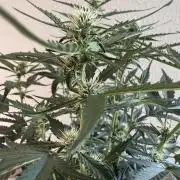
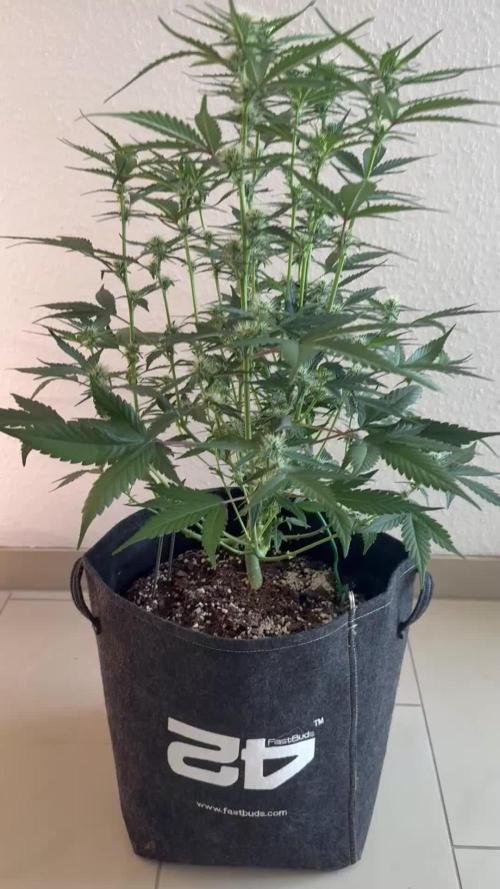
The plant is looking extremely healthy and vigorous, with explosive branching and a very open structure after some selective cleanup. Stretch is still ongoing, but she has already formed a large number of bud sites across the entire canopy.
The overall structure developed beautifully with LST only, creating many evenly exposed tops and strong light penetration throughout the plant. Bud formation is now clearly accelerating, and the plant is transitioning fully into productive flower growth.


@MxGrow
Follow
Feliz por como van mis gorilas, todos los días hay cambios y cada semana tengo que aumentar el riego, esta semana utilice en total 18 litros, 4.5 litros para cada planta aproximadamente.
En los primeros 6 litros uso:
▪️︎4ml de Connoisseur A y B por litro de agua.
▪️︎2ml de Rhino por litro de agua.
▪️︎2ml de Bud Candy por litro de agua.
▪️︎2ml de Carboload por litro de agua.
▪️︎2ml de B-52 por litro de agua.
Espero 30 minutos y despues aplico otros 6 litros con los siguientes nutrientes:
▪️︎4ml de Connoisseur A y B por litro de agua.
▪️︎2ml de Nirvana por litro de agua.
▪️︎2ml de Big Bud por litro de agua.
▪️︎2ml de Overdrive por litro de agua.
▪️︎2ml de Voodo Juice por litro de agua.
No tengo medidor de EC, por lo tanto trato de que las mediciones en ml sean exactos con una jeringa.
☆ 1 día a la semana riego las plantas con 6 litros de agua sin nutrientes y con un PH en 6.0, hasta el momento no han presentado carencias pero tengo la duda si tienen exceso de nitrógeno por el color verde intenso de las hojas.


@Ryno1990
Follow
The Purple Lemonade from fast buds is starting off week 3 awesome she has been blowing up with growth this last week an has been looking healthy an praying to the medic grow fold 6 every day
Ending week 3 the Purple Lemonade has started bushing out with growth she filled her pot up in a couple days an has been growing great with these cronk nutrients


@AERO_Grower
Follow
3° Semana- Aeroponía - Mejoría apreciable, las raíces están mucho más sanas, la velocidad de crecimiento comienza a ser mayor, además el área de las hojas que realizan fotosíntesis es mayor.
---------------------------------------------------------------------------------------------------------------------------------------------------------------------------------------------------------------------
3° Week- Aeroponics - Appreciable improvement, the roots are much healthier, the speed of growth begins to be greater. The area of the leaves that carry out photosynthesis is greater.


@NachoTheDog46
Follow
02 Feb 2022
Update:
I noticed a strange chromatic coloring on some leaves of the "older" plants, a couple of the smaller plants have small brown spots on the leaves ...
i also noticed that the grow tent is quite hot and the ground is quite dry, could be that the watering maybe is not enough, so from today i'll give a bit more water. I didn't expect that kind of temp from a led, adjusting the watering should goes better.
Light regime ☀️21/3🌑 temp ☀️22/32 🌑 18.5/22 humidity 48%
The lamp is till running it at 100% of his power but I just moved the lamp up to 70cm from the ground for more air flow and maybe the leds where to near the leafs, this why the chromed coloring on leafs?
03 Feb 2022
Update:
Light regime ☀️21/3🌑 temp ☀️24/28 🌑 18.5/24
Plants looks already more happy now!!! soon photo/video update
04 Feb2022
Update:
Little check and evrething looks great now, the new distance of the lamp did the magic , temperature is also much much better and stable, all plants look bit happyer now 😁
Light regime ☀️21/3🌑
temp ☀️22/26 🌑 20/18 humidity 51%
07 Feb 2022
Update:
With a Lamp distance of 70cm at 100% is going really good, temperature is right and the earth in the pots also stays moist longer, the new leaves on all plants are doing well and the two "older" plants are doing a lot of side arms. In the last couple of days I have been noticing an increase in the speed of growth. The little BlackBerry Banana is staying small but is making new leaves that look healthier than the plant was born, I wait another week before deciding what to do but most likely I will pull her out of the tent and she will grow as an outdoor plat looking out the window 😂
Light regime ☀️21/3🌑
temp ☀️22/26.9 🌑 19.5/22 humidity 59%
08 Feb 2022
Update:
After a little thinking i decided and Ijust moved the small BlackBerry Banana plant out the tent for a "Free" grow ☃️🌈🌤️
😅😅
More air/co2 space and lamp ☀️ for the other 8 plants.
Sometimes have to do wha need to be done.

Auto Blueberry Banana · Anesia Seeds

Wedding Cake Automatic · Zamnesia Seeds
Do-Si-Dos Automatic · Zamnesia Seeds
Girl Scout Cookies Automatic · Zamnesia Seeds

White Choco Autoflower · Amsterdam Genetics

Californian Snow Auto · Fast Buds
Diesel Automatic · Zamnesia Seeds

Purple Power Auto · Amsterdam Marijuana Seeds AMS






@GroloCup
Follow
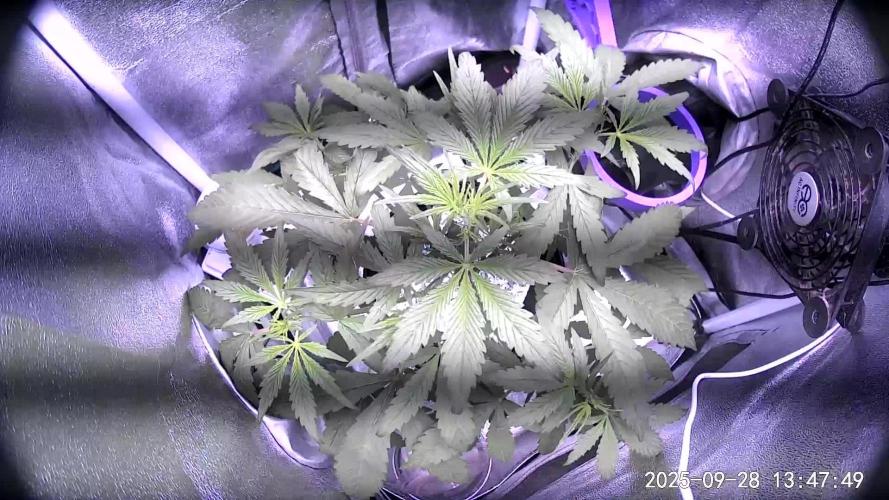
Shes in the fast lane and got the hammer down now. Look at the growth over 2 days once I hit that sweet spot with the nutrients. Geoff has definitely checked off some boxes with this girl, the vigor and structure are on point, she's definitely oozing some strong skunky terpene early on as well.


@HookahCli
Follow
d39
ya no me caben dentro del Indoor, debajo del foco pequeño que tengo.
Todavía se espera lluvia para la semana que viene, pero no caben y temo que alguna se ponga a florar por estrés, entonces las sacaré al exterior y las aclimataré.
d40
Las he sacado a exterior , no les da mucho el sol, están a media sobra, esperemos que no se pongan a florar debido al cambio de fotoperiodo, son menos horas que en el Indoor, podía pasar, lo bueno es que las hemos sacado y ahora cada día están aumentando las horas de luz, mas o menos cada día tenemos 2 minutos más de sol, uno por la mañana y otro por la noche, amanece antes y se va más tarde poco a poco, si se adaptan bien, van a crecer mucho, pero si se ponen a floración veremos que hacemos, esperemos que no pase.
Se le han puesto unas piedras para que se aguante la maceta, es de 2LT y con que haga viento la maceta se va al suelo y no queremos que pase eso.
También se ha quitado el primer par de nodos LBP(Lower Branch Pruning), que normalmente salen ramas que no llegan a ser gran cosa.
Se han quemado del sol, se ve que les da directo y no lo han soportado y se han secado, la tierra esta bastante seca al igual que muchas hojas, por suerte me he dado cuenta al cabo de unas horas, no esperaba que el sol ya pegase tan fuerte, las he cambiado de sitio y se han puesto donde no da el sol directo en ningún momento del día y están solamente a la sombra.
Se han regado con un poquito de agua para que se recuperen, les he puesto una maceta más grande por fuera para que si diese el sol, que no le de a la maceta de dentro(2L) que es más pequeña y se calientan las raíces.
d42
Se han regado y añadido aminoácidos(más Pro XXL 42% Aminoácidos) ya que eso ayudará a que la planta se recupere, por la tarde-noche les da el sol, no hay otro sitio que le de menos el sol directo, se han secado un pelín más la hojas, pero los brotes nuevos están blanditos y parece que las plantas seguirán creciendo bien.


@I_Identify_As_A_Dan
Follow
Week 8 for Kalini Asia by Zamnesia Seeds
This was a hard one to top again 😭 She was so pretty with 8 tops perfectly symmetrical but she needed to be topped again for 16 tops... Shes very ugly right now but lets see in a weeks time how symmetrical she stays.
Since having the funky light schedule their growth has slowed down a fair amount. But can still see a some slight growth over the last week, they got their first proper watering 2 days ago so should make a difference for this upcoming week.


@eldruida_lamota
Follow
Bueno pues ya llegamos al final familia, do sweet dos es una variedad bastante productiva. De cuatro plantas casi 180gs y la verdad que bastante contento, no tuve tiempo para poder hacer más fotos y trabajar más este post pero con la prisa y la mudanza pues bueno, bastante e cosechado.
Humedad en el secado relativamente baja al 40% y la temperatura estuvo entorno a 23 grados ambientales.
Hasta aquí todo familia, os recomiendo también la gama de productos de agrobeta, ya que los resultados son llamativos.


@ThatoneAKguy
Follow
Boom! The stardawgs absolutely exploded in the room. I was bending branches and exposing the preflower sites which are now straight into flower trying to give them some space. I’ve never experienced anything like this. The plants gained a foot in width all the way around and at least 6” in height in 7 days. I did the same to the very Indica blackberry after I took the photos and video as she was just a locked down little bush and hopefully there is some sort of stretch. Between the 6 in this room they are consuming 3-4 gallons of water per day. The other stardawg is one week behind everyone else because the other blackberry didn’t germinate.
shorts_status_processing


@Grey_Wolf
Follow
Ginger Nut Cookies & Aussie Music Videos
Two weeks Of Flowering Completed 12th March 2020
Ginger Nut cookies managed to squeeze in another inch or so of stretch this week but is now focusing on the flower production.
I'ts only early on but I can already detect a distinct difference in aromas from both the mother plant and the Red Diesel clone "Feminised pollen " donor.
The GSC mother had a strong funky smell , whilst the red diesel was straight up Gassy smelling. The buds on this plant smell sort of Fruity and sweet which is interesting.
Now that the stretch is done I'll switch my supplemental feeds to More Potassium etc .
Gave her a nice Drink yesterday of unsulphured Australian sugar cane Mollasses mixed with Rain water.
This is a great source of Iron , Calcium and Potassium as well as lots of sugars and carbs for the roots to use as food.
I did the weekly Ph and Temp check and it was 6.5 and 22c .
That is about all I have to Report this week so......
Now it's Time for......
The Weekly aussie Music Video/s 👍
Last week was Daddy Cool with a couple of their
hit songs "Eagle Rock" and "Come back again"
For This weeks Video/s I have chosen an Iconic
Aussie Pub Rock Band called Cold Chisel.
Cold chisel are fronted by Two singers Jimmy Barnes
who will feature again next week as a solo artist and Ian Moss who is also Chisels Lead Guitarist.
I have chosen two videos that features each lead
singer performing . The first Video is 'Khe sanh'
sang By Jimmy Barnes
https://www.youtube.com/watch?v=inKlN0ScObA
And the second video is 'Bow River' sang by Ian Moss
https://www.youtube.com/watch?v=y2by810nulE
Hope you enjoy the music and please leave a like
I'll be back again next week with another update
and Aussie Music Video/s
👍👍👊


@Jays_Not_Here_Man
Follow
Week 3-Day 21 of flower. These ladies have been on autopilot. The environment is controlled, we have been having some temp and RH swings, but the equipment is dialed in. I have a portable AC when it is humid and hot, only needs to run for 15 minutes from time to time to keep the lung room/tent at the perfect temps.
I can’t say enough how important it is to test, test and dial in your environment. I can already see big advancements in my photo periods from when I started, to today just a 1 1/2 years later. Having your environment as close to perfect as you can, can compensate for A LOT of rookie
Mistakes 🤓
Anyways, still keeping to Feed, Feed, water schedule, despite the tip burn, I’ve dialed it back to about 900 ppm and seeing how the plant reacts. Did a light defoliation, which will probably be the last one. Seems like all I am doing at this point is watching and watering. Happy Growing Folks 🇨🇦❤️🌱😎💨


@Thigh
Follow
Start of the week
- Registration for the Fast Buds pet contest. 👨🏽🌾
Cloudy weather this week. Plant is growing nice.
What you think about my first grow outside?
End of the week
-Weather is getting better. I’m very happy whit her. My favorite plant at this time 😄
Starts der Woche
- Anmeldung für den Haustier Wettbewerb. 👨🏽🌾
Bewölktes Wetter diese Woche. Pflanze wächst schön.
Was denkt ihr über meinen ersten Grow draußen ?
Ende der Woche
-Wetter is besser geworden. Ich bin sehr glücklich mit ihr. Meine Lieblings Pflanze bis jetzt😄


@gr3g4l
Follow
Esto sigue creciendo aunque algo menos y floreciendo a buen ritmo.
Crecimiento nº1 171 ctms y la nº4 147 ctms
Una semana bastante pasada por agua y un final de semana también fresquita.


