


Likes
Comments
Share


@CalGonJim
Follow
10/26 1AM FULL RETARD MODE ACTIVATED....BLA BLA BLA
10/27 11:54PM Going for a Dracula Sinatra theme tonight
10/28 8am Made Changes to Purp. City Packaging for printing. My new toy, using grok to make little lables on photo paper




Likes
33
Share


@Theia
Follow
Hello.
Lovely week for dosidos. Nothing has happened to speak of. She gets frostier and denser . The smells are sweet and skunky and she is pretty to look at.
At 5l of Coco I think I should have gone a bit bigger. I think she is more root than the pot wants to allow but we're stuck like this now. If you wanna grow this strain maybe worth a note...🤔
I will remove more pk this week and reduce her EC to 1.6. just from Greenbuzz Nutrients Organic Bloom.
Lights are at 60% 1100umols average across the canopy.
Thanks for passing.
Grow well 🌿💚🌿🙏🏼

Likes
2
Share


@Comfrey
Follow
Die Blüten werden fetter und riechen sehr lecker. Bis auf Wasser gießen und ein bisschen Ackerschachtelhalm Tee füttern musste ich nicht viel machen.

Likes
34
Share


@MrJoint
Follow
✌️🎃 Thank you for checking my cultivation.
✂️ Defoliation Time’s
🌷 Started flower stage
🤕 #3 doesn't look good yet
Likes
Comments
Share

@UDUDUDUDU
Follow
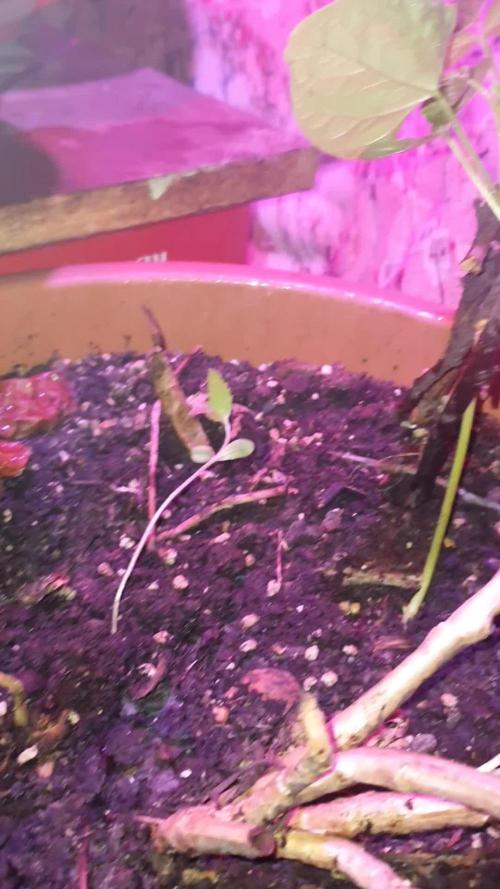
Yea. This year out of 60+ seedz only 3 are making it to harvest and an addition 4 are growing'
Plant seeds are serious messed up.
Likes
5
Share


@SgtDoofy
Follow
Mar 14
Looking okay. Flowering started this week! Some leaves are looking like they are being sacrificed by the plant. The top leaves being so thin makes me wonder if the lights are too intense. I've lowered them from 80% to about 60%.
Fed 3/4 gallon of RAW GROW 6 days ago. Seems to have taken it well. Getting close to needing another drink.

Likes
5
Share


@Kinghaze
Follow
First week of 12/12
You can see the buds forming now
The blueberry cupcake is stretching wild
In comparison with the blue zushi.
I also put in the dehumidifier and set it on 65%
If the cupcake gets too high I'll just add the second trellis earlier.

Likes
10
Share


@Ultraviolet
Follow
Voltage, also known as electric pressure, electric tension, or (electric) potential difference, is the difference in electric potential between two points. In a static electric field, it corresponds to the work needed per unit of charge to move a test charge between the two points. In the International System of Units (SI), the derived unit for voltage is named volt.
The voltage between points can be caused by the build-up of electric charge (e.g., a capacitor), and from an electromotive force (e.g., electromagnetic induction in generators, inductors, and transformers). On a macroscopic scale, a potential difference can be caused by electrochemical processes (e.g., cells and batteries), the pressure-induced piezoelectric effect, and the thermoelectric effect. Since it is the difference in electric potential, it is a physical scalar quantity.
A voltmeter can be used to measure the voltage between two points in a system. Often a common reference potential such as the ground of the system is used as one of the points. A voltage can represent either a source of energy or the loss, dissipation, or storage of energy.
Dropping the temps will slightly raise the humidity, air holds less % water the colder it is. Lights on 25-35rh% the same water content will spike to 50rh% + at night just by dropping the temps.
At night all the juice photosynthesis has been storing up is mashed and mixed up to make all the goodies we need for bud, water is used to transport all these things everywhere, like little solvent transport devices, once a nutrient/protein has been delivered to destination the plant needs to get rid of all this excess water molecules it was using to transport. The only solution at night is to spit it back out into the air at night. During the peak of flower, this can catch a grower unaware, with a 4x4 full tent it can be a challenge to control all that moisture exhaust overnight especially if you're really pushing the limits.
We live in a water world, above or below, our misconception is we live on dry land, we don't live in less watery conditions than above or below. We fit into a very narrow band of moisture that just so happens to be full of lots of air and everything else required for life.
Got my first full whiff of the smell of purple lemonade, always surprises me how accurately the smell fits names, the dominant terpenes in the Purple Lemonade weed strain are carene, linalool, limonene, and myrcene. Carene gives this strain its sweet, citrus flavor and some woody notes, whereas the linalool I recognize so well from Granddaddy Purp. Myrcene has been shown to have sedative qualities while bringing musky, earthy elements to the flavor profile.
Trichome production started to ramp up, and the plant that grew taller/closer to UV showed noticeably thicker coatings. The taller plant shows slight yellowing of lower leaves, and the smaller plant is green and lush but the buds are slightly less progressed, interesting.
I super-cropped the main stem of the tall one just over a week ago (clean). I expected it to be the one slightly behind in development.
The plant has roughly 10-15% "Total resources" that it keeps in case emergencies arise. Reserves if you will.
My rationale behind breaking anything goes hand in hand with slowing things down as production is lost due to the time it takes to repair damage.
I recall watching a YouTube video, where a curly hair gentleman would super crop in a manner to damage but not disrupt using a twisting method, using fingers and thumbs placing them close together one goes clockwise other counter clock this varies a lot depending on the thickness of stem but what you wait for is a tiny snap, it may take several rolls to weaken if walls are tough I found. No snapping or bending of the stem, you want just to fracture it but not puncture this way the xylem and phloem channels remain flowing,the damage is repaired almost instantly and the 10-15% is dispatched with very little repair time. Everything in the general vicinity of the stress will now grow stronger so as to prevent further similar damage.
This is why I had expected the tall one to lag behind in development once I had cropped it but low and behold it worked and the tall one has slightly more developed buds.
The effects of birdsong on plant life may at first glance be far-fetched. Nigh on ten years ago an article appeared in Nexus Magazine on the discovery or invention of a method of growing plants using bird sounds. Christopher Bird and Peter Tompkins describe the development of Dan Carlson’s Sonic Bloom in their book The Secret Life of Plants. Many others have, it seems, recognized the role of birdsong in the growth of plants, and influenced or directly helped Carlson to develop his invention.
Dan Carlson’s desire to see that no one need be hungry through shortage of food sought to understand the optimum growth of plants. He discovered that plants also feed from ‘the top down’ as well as the roots. Underneath all leaves are pores called stomata which open to take in nutrients and moisture from the air. Carlson’s observation that the more bird life there is on the farm, the more abundant is plant life, has been echoed by farmers throughout history, except in modern times. Where there is little bird life, plants are stunted, and dwarfed. Nature has the birds sing at dawn and dusk, which dilates the stomata, and so feeds the plants. One can immediately see the importance of trees.
The development of Sonic Bloom was to create birdsong, which is played to the plants, while a foliar nutrient is sprayed onto the plants at the same time as they are being stimulated by the sound, to enhance their growth. This method produced fantastic results in the amount of abundantly nutritious produce from one plant, often in poor soils and in drought conditions. Carlson showed that the breathing leaves of plants are the source of the nutrient intake for growth. This of course is also true for humans—the breath is food. We shall discourse on this on another occasion. Plants transfer nutrients to the soil via this breathing, and Carlson showed that his plants improved the soil and helped earthworms proliferate.
The secret of Sonic Bloom was the development of the music of the same frequency as the dawn chorus of the birds. With the help of a Minneapolis music teacher, Michael Holtz, a cassette was prepared. It seems that both birds and plants found Indian melodies called ragas delightfully suitable. This is actually quite profound, although the American farmers, especially women, who had to endure this music whilst it was played to the plants, found it irritating. Holtz found the “Spring” movement of Vivaldi’s The Four Seasons appropriate and concludes: “I realized that Vivaldi, in his day, must have known all about birdsong, which he tried to imitate in his long violin passages.
Holtz, it is related by the authors Bird and Tompkins, also realized that the violin music dominant in “Spring” reflected Johann Sebastian Bach’s violin sonatas broadcast by the Ottawa University researchers to a wheat field, which had obtained remarkable crops with 66 percent greater yield than average, with larger and heavier seeds. Accordingly, Holtz selected Bach’s E-major concerto for violin for inclusion on the tape. “I chose that particular concerto,” explained Holtz, “because it has many repetitions but varying notes. Bach was such a musical genius he could change his harmonic rhythm at nearly every other beat, with his chords going from E to B to G-sharp and so on, whereas Vivaldi would frequently keep to one chord for as long as four measures. That is why Bach is considered the greatest composer that ever lived. I chose Bach’s string concerto, rather than his more popular organ music, because the timbre of the violin, and its harmonic structure, is far richer than that of the organ.
Birdsong has long been loved but also studied with reference to the musical scale and harmonics. As Holtz deepened his study he said, “I began to feel that God had created the birds for more than just freely flying about and warbling. Their very singing must somehow be intimately linked to the mysteries of seed germination and plant growth.
The spring season down on the farms is much more silent than ever before. DDT killed off many birds and others never seem to have taken their place. Who knows what magical effect a bird like the wood thrush might have on its environment, singing three separate notes all at the same time, warbling two of them and sustaining the others.
Tree and bird life are essential to Earth's existence, which Carlson, Holtz, and others have shown, but indeed others see and feel. “Plants”, says Steiner, “can only be understood when considered in connection with all that is circling, weaving, and living around them. In spring and autumn, when swallows produce vibrations as they flock in a body of air, causing currents with their wing beats, these and birdsong, have a powerful effect on the flowering and fruiting of plants. Remove the winged creatures, Steiner warns, and there would be stunting of vegetation. Nothing more needs to be added here.
It has been said that you cannot hurt the humblest creature or disturb the smallest pebble without your action having a reaction upon something else...You cannot think of an evil thought, no matter how private, without it having an effect upon somebody else. Whatsoever you do in life sets up some form of resonance.
When I say the morning chorus of the birds awakens the earth I mean that the characteristic song of the birds sets in motion a series of vibrations which react upon other forms of life. Remember, the soil of the earth is full of living microorganisms. The plants are also living organisms. You, yourselves, are living organisms. Now, this is the beauty and wonder of it all—when one aspect of nature has been moved into a state of resonance it immediately relays its vibrational motion to something else.
So when I say the dawn chorus awakens the earth I literally mean what I say. I do not suggest that the earth would come to a standstill without the bird song, but I do mean that life on earth would be sluggish and ineffectual without that first instigating outburst of vibrational power poured forth at just the right pitch and tone to set off a chain effect.
I know some of you will say, what happens in those parts of the world where there are no birds? Well, what does happen? Very little, I assure you. The hot deserts and the polar regions where there are few, if any, birds are not renowned for their wonders of nature. It is as though they are asleep. Nothing grows, few things live. Little resonates and there is a great stillness over everything.
You see, that outburst of sound just before dawn is like the little lever that works the bigger lever which turns the wheel which moves the machine…and so on. Never underestimate small things.
Animals are blessed with instantaneous and unthought-out wisdom. They are in direct contact with God and they act and live as though they are fully aware of it. Men are also in contact with God, but most of them act as though they have never heard of God because they are largely veiled from their divine center by their own thinking minds of which they are so proud.


Likes
1
Share

@HappyFarmer2
Follow
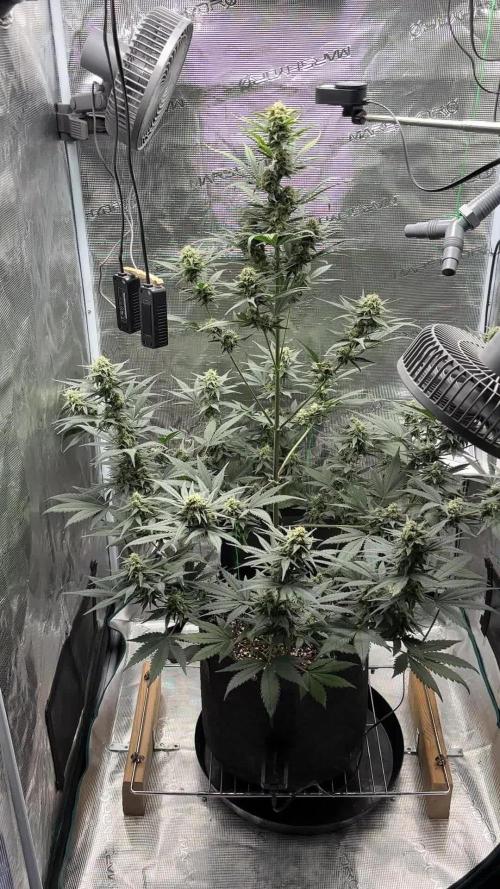
Oct 21-27: FrostBanger looking good. Photography IPhone 15. Defoliated 7 big fan leaves, plant showed no negative signs. Buds are starting to fatten up.
Likes
35
Share


@Kellykush420
Follow
Started week four with a top dressing of rabbit guano. Growth is very good in my opinion. The lst has produced lots of new stems❤️Used some wooden skewers to open up the plant to the light.
Likes
14
Share


@Lushbloomz
Follow
She's done! Whew! I can say that this wasn't my easiest grow. She had some issues in the beginning, due to over fertilizing (see diary) but she managed to produce some beautiful crystallized nuggets. I flushed her for a week but she looked so ready, and she's so loud, I had to chop her down.
Stay tuned for the smoke report.
Likes
25
Share


@Creme_De_La_Creme
Follow
Hey fellow growers, so im back after a few weeks ! Sorry about that ,i had a lot of trimming to do hahaha
This lady was harvested on day 103, i had my dry room full so i had to keep her going all the way to 14/15 weeks, my 5x5 tent had so many plants that this lady was amassed in the corner =/
The FLUSH started on day 86 (week 13), so she had around 2 weeks of only RO Water with a little bit of Flawless finish.
Buds are huge and the smell is amazing, super sticky flower, the dry sift and water hash that im planning to extract will be GREAT no doubt =)
Wet weight of full plant was 2.650kg or 5.8 pounds 😑
I will be back soon with the DRY BUD WEIGHT !
Let me know what you guys think, any comments will be greatly appreciatted.
😎😎😎
Likes
7
Share


@safegrowing
Follow
Início da oitava semana de floração, a planta aparenta já estar pronta, mas iremos deixar mais uns 5 dias, elas estão muito robustas e cheirosas ( 06/10 )


Likes
12
Share


@gr3g4l
Follow
estos últimos dias estiraron bastante los apicales aumentando la distancia entre nudos.
para bajar el PH utilizo ácido cítrico . El agua de grifo de base sale a 8,2 Ph y voy añadiendo hasta bajar a 6,7 áprox.
A los 25 y 26 dias estas plantas poco deberian de crecer más y todas ya han elejido por donde crecer y engordar. Llegados a este punto quité alguna hoja y algún chupóptero y até algunas de las ramas a los tutores como buenamente se pudo. El fin no es otro que mirar de acomodarlas por donde seguir creciendo y no tengan que soportar ellas solas el peso que se les viene encima cuando engorden los cogollos.
Como puede verse a una de ellas le salió una mutación genética llamada fasciación. una modificación cromosómica .
Likes
9
Share


@REYCG9091
Follow
This grow is an example of how important is to check your veg time to make sure it doesn't shoot over the lights and over the roof really, overall is good tho.
Also i ditched advanced nutrients for a new brand, since advanced nutrients are just costly stickers imho.
11/16/24 bought a new fert , that will not only last me 10 times with a fraction of cost, also it's much easier then mixing 24 different bottles , also all the liquid ferts tends to cristallize so i don't even know if the fert i've applyied in the past (advanced nutrients perfect ph micro-grow-bloom) was all bioavailable (probably not) since the buds looks already bigger after 1 application.
Also Ferty 1 Geo has also molybdenum among the microelements wich was not present on advanced nutrients.
cheers!
Likes
2
Share


@Carter420125
Follow
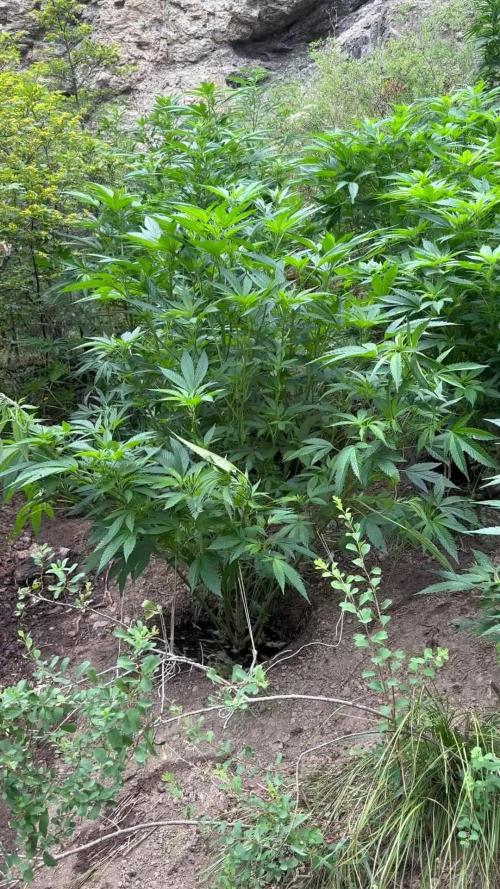
Finally starting to see some roots underneath and some decent growth up top. I’ll update again after changing out the reservoirs to see if that helps with some of what I think is a nitrogen toxicity.



Likes
42
Share


@deFharo
Follow
Bienvenidos camaradas cultivadores, siete semanas de floración y las dos últimas con problemas de bloqueo de nutrientes que se ha reflejado en las hojas de las dos ramas principales, quemaduras en las hojas y marcas claras de deficiencia de Manganeso, el consumo de agua estaba en bajada desde hace dos semanas, y una vez más, mi falta de reflejos me ha impedido comenzar antes a tratar el problema.
Ya sabía yo que esta cepa, con semejante nombre Psicopático me iba a dar problemas!! 🙄
Bien, es el momento de los fuertes!! 🤜🤛
ACTIVIDAD SEMANAL 💀
Día 84. Muevo la planta a mi carpa principal donde tengo como lámpara de dosel una magnífica MH TS1000, apoyada por otras luces que aportan espectros de luz más cercanos al rojo (2700k, 660nm, 2000k, 3000k, IR 730nm que enciendo 15 minutos cada hora.)
Días 85, 86, 87, 88, 89. La planta no reacciona al último riego con agua de montaña y melaza, sigue perdiendo hojas completamente amarillas de la parte baja de la planta, en los dos últimos días, en la parte superior de las dos ramas principales han vuelto a aparecer manchas en las hojas más grandes, ahora también rizado de las puntas... muy feo!!
Día 90. Acudo al cultivo dispuesto a intentar solucionar el bloqueo de nutrientes.
1º. Preparo una mezcla con agua de montaña y Ormus que aporta calcio y Magnesio y ayuda a la asimilación de nutrientes, corrijo el PH con vinagre blanco. PH: 7.0, EC: 0.55. 1000ml.
Riego rápido con esta mezcla hasta conseguir un buen nivel de escorrentía, recojo 500ml con un EC: 3.1 y PH: 7.05.
Preparo una mezcla de sólidos (Ca, Mg, P, Fe, Mn, Cu, K...) que añado al sustrato, para que traspasen sus nutrientes lentamente en los próximos días.
2º Preparo otra mezcla suave con Agua de montaña, melaza, 3% de mi Biol de Frutas y minerales con Microorganismos Eficientes -EM- (MMA, BAL, Vitaminas, Azúcares, Micro elementos, Húmicos...) y Ormus 1%. PH: 6.59, EC: 1.15. 1500ml.
Vuelvo a regar rápido para arrastrar nutrientes del sustrato y al tiempo aportar en ese agua los nutrientes de la mezcla que potenciarán el trabajo y reproducción de la microbiología del sustrato.
La escorrentía la uso para regar mis geranios!!
Día 91. Se ha notado el tratamiento, la planta parece hinchada, ha recuperado en 24h la tersura, seguiré con unos riegos suaves hasta estar seguro de que el problema desaparece. Aunque me preocupa el impacto en la producción, pues justo estas semanas son cruciales para el crecimiento de las colas.
SALUDOS Y SALUD A TODOS!! 😬
================================= 🙄☮️👇🙏👌🤛👍👉👉👉❤️💜❤️👈👈👈🤜👌🙏👇☮️🤩🖐️🏻 =================================