




@DogDoctorOfficial
Follow
💙 PROJECT BLUE TENT – WEEK 15 💙
🥒 PICKLE LEMON HAZE F1 – PHENO A
🍂 THE COLOURS ARE CHANGING, THE FLOWERS ARE GETTING READY, AND WE'RE ENJOYING THE FINAL CHAPTERS!
Hello everyone, and welcome back to another chapter of Project Blue Tent! 💙🌱
My friends, my friends…
IS IT SPRING OUTSIDE OR ARE WE STILL IN AUTUMN?! 😂🌸
The temperatures outside are rising again, the plants are showing beautiful colour transitions, and inside our little green oasis, we're approaching what I believe will be the final chapter of this adventure.
Welcome to Week 15 of flowering for Pickle Lemon Haze F1 Pheno A!
And what a beautiful girl she is!
This week is very much about observation.
We're not introducing new training techniques, we're not restructuring the canopy, and we're not making unnecessary changes to an environment that's already established.
The major work is behind us.
The flowers are looking beautiful, the fading is becoming increasingly visible, and we're observing how each individual plant progresses towards maturity.
We've also moved to plain water, with our reservoir EC now sitting around 0.2 mS/cm and the natural pH reading approximately 5.98.
Meanwhile, our under-canopy lighting experiment continues to give us interesting observations, particularly regarding the colour expression and the development of the flowers throughout the lower sections of the canopy.
And because apparently taking photographs of flowers wasn't enough for this week's entertainment, we've also invited Matilda, our little spider friend, for another photographic adventure! 😂🕷️
We're also continuing our 3D-printing experiments, testing some new irrigation accessories for the next run.
So, although this is a week without major cultivation changes, there's still plenty to talk about.
Let's give Pickle Lemon Haze F1 Pheno A her own spotlight!
💙🌿
🌱 A QUICK LOOK BACK – WHAT IS PROJECT BLUE TENT?
For anyone joining us for the first time, let's quickly explain what we're doing here.
Project Blue Tent is our shared growing environment, where we're documenting four individual plants representing two different Zamnesia F1 cultivars.
🌈 BLUE WAFFLE F1 – PHENO A.
🌈 BLUE WAFFLE F1 – PHENO B.
🥒 PICKLE LEMON HAZE F1 – PHENO A.
🥒 PICKLE LEMON HAZE F1 – PHENO B.
Four individual plants.
Two cultivars.
One shared ecosystem.
All four girls share the same general environmental conditions, reservoir, irrigation arrangement, and nutritional program.
Throughout the project, we've documented their development individually, starting with their early stages and following them through transplantation, HST, topping, LST, SCROG, defoliation, and flowering.
We've spent considerable time establishing the canopy, organizing the branches, supporting the structure, and experimenting with different aspects of our growing environment.
Lighting has also been an important part of this project.
Our main overhead LEDs provide the primary illumination, while two LumiFlora 150W full-spectrum fixtures have been installed beneath the canopy in an X-cross configuration.
Nutritionally, we've been working with the PLAGRON Hydro line, gradually adjusting the program as the plants progressed through flowering.
And now, we're approaching the finish.
The structural work has been completed, the flowers have developed throughout the canopy, and we're concentrating on observing the individual characteristics of each plant.
That's also why we've kept separate GrowDiaries reports.
Even when plants share the same environment, their individual expressions deserve to be documented independently.
And today, it's Pickle Lemon Haze F1 Pheno A's turn!
💙🥒
🌸 WEEK 15 – PHENO A IS LOOKING BEAUTIFUL!
Let's start with the obvious.
THIS GIRL IS LOOKING FANTASTIC! 😂💙
Pickle Lemon Haze F1 Pheno A continues to impress with her flower density, compact structure, and beautiful overall appearance.
We're now at a stage where the flowers themselves are taking centre stage.
The earlier work on the canopy is behind us, and we're able to appreciate the structure that developed throughout the previous weeks.
The branches are established, the flowering sites are distributed throughout the canopy, and the flowers are continuing to show their individual characteristics.
One of the things I particularly enjoy about this stage is being able to step back and appreciate the complete plant.
You spend weeks working on structure, positioning branches, managing the canopy, and making adjustments.
Eventually, you reach a point where you can simply grab the camera and enjoy what has developed.
And that's exactly where we are.
There aren't any major structural interventions this week.
We're concentrating on observation, photography, environmental stability, and the individual progression of the plants.
Sometimes, doing nothing is precisely what the situation calls for.
And honestly, I could spend hours looking at these girls!
😂📸🌱
🍂 THE FADING – BEAUTIFUL COLOUR TRANSITIONS THROUGHOUT THE PLANT!
Now, let's talk about one of the most interesting things happening this week.
THE FADING!
We're seeing increasingly noticeable colour changes throughout Pheno A, with lighter green areas, yellowing foliage, and warmer reddish tones becoming more visible.
And I absolutely love photographing this stage.
But why does this happen?
Let's take a moment to understand what's happening rather than simply describing the colours.
The green appearance of leaves is primarily associated with chlorophyll, the pigment responsible for capturing light energy during photosynthesis.
As plants progress through their life cycle, chlorophyll levels can decline, allowing other pigments to become more visible.
Carotenoids contribute yellow and orange tones, while anthocyanins are responsible for many of the red, purple, and blue colours we can observe in plants.
The expression of these pigments is influenced by genetics, while environmental conditions can also affect how the colours develop.
This is particularly interesting in Project Blue Tent because we're observing several plants sharing the same general environment.
Even within the same cultivar, individual phenotypes can display different colour combinations.
And between our two cultivars, the contrast can be even more noticeable.
Pheno A is showing us her own beautiful colour palette, with increasingly visible fading and warmer tones throughout the plant.
Her sister, Pheno B, has been displaying a somewhat different expression.
And that's exactly what makes individual phenotype documentation so interesting.
We shouldn't assume that every plant will develop identical colours simply because they share the same environment.
Nor should we attribute every change to one single factor.
We're recording what we observe and looking at the complete picture.
The flower development, the trichomes, the pistils, the foliage, and the overall condition of the plant all matter.
One important point: fading alone doesn't tell us that a plant is ready for harvest.
It's one observation among several, and we're continuing to assess the individual maturity of the flowers.
For now, we're enjoying the colours and documenting the changes.
🍂🌈💙
❄️ THE FLOWERS – DENSE, COMPACT, AND BEAUTIFULLY DEVELOPED!
Now, let's get closer!
The flowers are looking absolutely beautiful.
Their compact appearance and dense structure are among the things that stand out most when looking at Pheno A.
Throughout the canopy, we're finding plenty of beautiful flowering sites, and the photographs give us an opportunity to appreciate their development from different angles.
Looking at the whole plant, we can appreciate the overall structure and the distribution of the flowers.
But when we move closer, we discover an entirely different world.
The textures.
The pistils.
The trichomes.
The intricate details of the flowers and surrounding sugar leaves.
And that's precisely why I enjoy macro photography so much.
A photograph can capture a beautiful moment, but getting closer allows us to appreciate details that might otherwise go unnoticed.
The visible frost is another beautiful feature of this stage.
And although we're approaching the end, we're not going to rush the conclusion.
We'll continue observing the trichomes and the overall flower maturity before making any final decisions.
For now, we're enjoying the view, taking photographs, and appreciating the beautiful work these girls have done!
😂📸❄️
🌈 PHENOTYPIC EXPRESSION – SAME CULTIVAR DOESN'T MEAN IDENTICAL PLANTS!
This is something I always enjoy discussing when documenting individual plants.
We have two Pickle Lemon Haze F1 sisters growing inside the same tent.
They share the same general environment, lighting arrangement, irrigation system, and nutritional program.
Yet individual plants can still express their characteristics differently.
Their morphology, flower formation, pigmentation, and progression through flowering can all provide interesting differences to observe.
Genetics influence how a plant expresses its characteristics, while environmental factors can also contribute to the appearance we see.
This is why comparing individual phenotypes is so interesting.
We can look at Pheno A and Pheno B and appreciate their similarities without expecting them to be identical.
And the same applies when comparing the Pickle Lemon Haze girls with our Blue Waffle F1 plants.
Four individual plants, sharing one ecosystem, but each with her own story.
We're not trying to manufacture differences or attribute every characteristic to a specific cause.
We're documenting what we actually observe.
And that's one of the most valuable aspects of keeping individual diaries.
💙🌿
👃 THE AROMA – THE ROOM IS GETTING INCREDIBLY AROMATIC!
Now, let's talk about something our photographs cannot communicate.
THE SMELL! 😂🌸
The aroma throughout the room is incredibly strong, and spending time around these plants has become an absolute pleasure.
It's one of those things that makes the final weeks particularly enjoyable.
We can photograph the flowers.
We can capture the colours.
We can get close enough to document the trichomes.
But the aroma is something you'll have to experience yourself!
The photographs simply cannot do that part justice.
I'm not going to invent a detailed terpene profile or assign specific aromatic compounds without proper testing.
What I can tell you is that the room smells beautiful, and Pheno A is certainly contributing to that wonderful aromatic experience.
A little reminder of why we enjoy documenting every stage of these adventures.
😂💙🌸
💡 UNDER-CANOPY LIGHTING – MORE INTERESTING COLOUR OBSERVATIONS!
Now, let's talk about one of the most interesting experiments inside Project Blue Tent.
Our LumiFlora under-canopy lighting arrangement!
As many of you already know, we're using two LumiFlora 150W full-spectrum fixtures positioned beneath the canopy in an X-cross configuration.
These fixtures supplement our main overhead LEDs, which provide the primary illumination from above.
And throughout this project, we've been paying particular attention to the lower sections of the plants.
One of the observations we're making at this stage is that we're seeing more pronounced reddish colour expression around some of the areas receiving supplemental under-canopy illumination.
It's particularly interesting when looking at the photographs and comparing different sections of the plants.
We're also observing that the plants in this run are progressing towards the finish relatively quickly.
However, I want to make an important distinction here.
We're documenting an interesting association, not claiming that the under-canopy lighting or its red spectrum alone is responsible for the colour changes or faster finishing.
There are several variables involved, including genetics, plant maturity, environmental conditions, and the overall lighting arrangement.
To establish a direct relationship, we'd need a controlled comparison with appropriate measurements and comparable plants.
For now, we're observing, photographing, and recording what happens.
And that's exactly what this project is about.
Experimenting, learning, and sharing the results without making claims that the observations cannot support.
The two LumiFlora fixtures remain in their established X-cross configuration, and we're continuing with the same general approach.
I'm genuinely looking forward to reviewing the complete project once everything is finished.
A massive thank you to LumiFlora for making this experiment possible!
💡🌱💙
🌡️ THE ENVIRONMENT – FEELS LIKE SPRING OUTSIDE!
Now, this is something worth mentioning!
The outside temperatures have increased again.
And we're not talking about a small difference during the afternoon.
Even past midnight, we're seeing temperatures around 22.4°C outside!
My friends, what is happening with the weather? 😂🌸
It almost feels like spring is trying to make an early appearance.
But inside the tent, we're keeping things under control.
Fortunately, our air conditioning is helping us manage the warmer outside conditions and maintain the established environmental targets.
Our current reference conditions are:
🌡️ Day air temperature: approximately 25°C.
🌙 Night air temperature: approximately 20°C.
💧 Relative humidity: approximately 55%.
💧 Solution temperature: approximately 21°C.
🌱 Substrate temperature: approximately 21°C.
🌫️ CO₂ level: approximately 666 ppm.
The important thing is that we're adapting to the outside conditions without making unnecessary changes to the established indoor environment.
We're keeping an eye on the temperatures, monitoring the room, and allowing the air conditioning to help compensate for the warmer weather.
As always, these are our reference operating conditions, rather than every temporary reading that might appear during maintenance.
The girls have been developing under this general arrangement, and we're concentrating on keeping things stable as we approach the final stage.
Outside: spring vibes.
Inside: autumn colours.
I think we've managed to create our own little season! 😂🍂🌸
💧 IRRIGATION – THE SYSTEM REMAINS UNCHANGED
The irrigation and drainage arrangement continues operating as part of our established ecosystem.
All four plants share the same reservoir and irrigation system.
Our recorded watering volume remains approximately 1.6 litres per plant over 24 hours.
This is our reference measurement, rather than an assumption that every plant consumes exactly the same amount.
Individual demand can vary, so we continue monitoring the plants and the system.
At this stage, we're not introducing unnecessary changes to an arrangement that's already established.
The irrigation system remains in place, and we're concentrating on observing the plants as they progress.
And speaking of irrigation, there's something new happening behind the scenes!
But before that, let's talk about this week's nutritional change.
💧🌱
⚗️ NUTRITION – PLAIN WATER FROM HERE!
As explained in our previous reports, we've now reached the point where I've decided to discontinue the nutritional program and move to plain water.
This change applies to all four plants because they share the same reservoir.
Our current readings are:
💧 EC: approximately 0.2 mS/cm.
💧 pH: approximately 5.98.
The EC represents our starting-point water reading.
We're no longer adding:
PLAGRON Hydro A.
PLAGRON Hydro B.
PLAGRON Power Buds.
PLAGRON Green Sensation had already been discontinued earlier in flowering.
We're also not using PLAGRON pH Plus or pH Minus for the current water.
The natural pH is approximately 6.8
Why have we made this change?
Because we're approaching the final stage, and after observing the flowers, the trichomes, the aroma, and the overall development, I've decided it's time to move away from the previous feeding program.
The initial plan is to use plain water for a few days, potentially around one week, while continuing to observe the plants.
We're not setting an exact harvest date based solely on this change.
And an important clarification for anyone following the experiment: plain water doesn't magically remove nutrients from the flowers or guarantee a particular flavour outcome.
It's simply the nutritional change we've chosen for this stage of our project.
Our priority remains accurate documentation and observing the actual maturity of each individual plant.
So, from this week onward:
EC approximately 0.2 mS/cm.
pH approximately 6.8
No additional nutrients.
Let's see how the final chapter develops!
💙💧
🖨️ 3D PRINTING – BUILDING SOMETHING FOR THE NEXT RUN!
Now, let's move away from the flowers for a moment.
Because while the girls are approaching the finish, I'm already experimenting with something for our next adventure!
3D printing!
I've been working on several prototype bases designed to sit beneath the watering points.
The idea is to create a small distribution plate that helps spread the incoming water across a wider area of the coco surface.
Instead of allowing the water to fall directly onto one concentrated spot, the design aims to distribute it more evenly.
And that's what we're currently testing.
I've printed several versions and have been carrying out small tests to observe how the water flows across the different designs.
Will the distribution be more uniform?
Will the shape need adjustments?
Will we need to modify the dimensions?
These are exactly the questions we're trying to answer.
At the moment, these are prototypes, not finished products.
I'm evaluating the designs and checking their practical behaviour before deciding which version, if any, will be incorporated into the next run.
I've included photographs showing the 3D-printed pieces and some of the tests.
And honestly, this is one of the things I love about cultivation.
There's always something new to explore.
Sometimes it's genetics.
Sometimes it's lighting.
Sometimes it's environmental control.
And sometimes it's simply sitting down with a 3D printer and trying to improve a little detail in your irrigation system!
😂🖨️💙
We'll share more about these experiments as they develop.
For now, it's another project happening behind the scenes while the girls finish their journey.
🔬 MATHILDA RETURNS – A LITTLE SPIDER PHOTOGRAPHY SESSION!
And now, my friends…
THE REAL STAR OF THIS WEEK'S PHOTOGRAPHIC SESSION!
MATHILDA! 😂🕷️💙
Yes, our little spider friend is making another appearance!
This time, we decided to bring Matilda along for a little adventure and let her explore while we captured some photographs.
Nothing too serious.
Just a bit of fun and an opportunity to experiment with macro photography.
And honestly, she's a fantastic little subject!
Look at those legs.
The body structure.
The details.
The way she moves across the flowers.
When you get close enough with a macro lens, even the smallest creatures become fascinating photographic subjects.
It's incredible how much detail we can discover when we slow down and take the time to look.
I've included several photographs of Mathilda because I wanted to share this little moment with everyone.
Of course, she isn't part of our cultivation experiment!
She's simply our unexpected photographic guest.
😂🕷️📸
And I think it's fair to say she's becoming quite comfortable in front of the camera.
Mathilda, you're officially part of the Project Blue Tent photo collection!
💙
📸 MACRO PHOTOGRAPHY – THE BEAUTY IS IN THE DETAILS!
Photography remains one of my favourite parts of documenting these projects.
And during these final weeks, there are so many beautiful details to capture.
The flowers.
The changing colours.
The trichomes.
The textures.
And, of course, Matilda!
I'm continuing to experiment with macro photography and focus stacking.
For anyone unfamiliar with focus stacking, it's a technique where multiple photographs are taken at different focus distances and combined into one image.
The idea is to increase the depth of field and bring more of a small subject into focus.
This can be particularly useful when photographing intricate subjects at high magnification.
And between the flowers and our little spider friend, we've certainly had plenty of opportunities to experiment!
I hope you enjoy the photographs as much as I enjoy taking them.
Sometimes the smallest details make the biggest difference.
📸💙
🔭 THE FINAL STAGE – ARE WE APPROACHING HARVEST?
My friends, we're getting close!
Looking at the flowers, their development, the visible trichomes, the fading, and the overall appearance of the plants, I genuinely feel we're approaching the end of this adventure.
We've already moved to plain water, and we're continuing to monitor the plants as they progress.
But exactly when will we harvest?
That's still something we'll have to determine.
I don't want to invent a date simply because we're excited to reach the finish.
We'll continue looking at the trichomes, the pistils, the overall flower maturity, and the individual condition of each plant.
And remember, we're growing two different cultivars inside the same tent.
Even the two phenotypes of the same cultivar may not necessarily finish together.
That's another reason why keeping individual diaries is so important.
Will Pickle Lemon Haze F1 Pheno A be ready before her sister?
Will the Blue Waffle F1 girls follow a similar timeline?
Will we end up harvesting the plants separately?
Let's see!
I'm genuinely curious to find out.
For now, we're keeping things stable, continuing our observations, and allowing the plants to complete their journey.
No rushing.
No guessing.
Just patience and good documentation.
💙🌸
💬 COME JOIN OUR DOGDOCTOROFFICIAL DISCORD COMMUNITY!
Before we finish, I want to invite everyone to join our Discord family!
If you're already part of the community, thank you for being there.
And if you haven't joined us yet, you're more than welcome!
We've built a place where growers can share their experiences, exchange knowledge, discuss equipment, show their gardens, share photography, and learn from each other.
We also organize our community photo championships, cups, and giveaways!
There's always something happening, and one of the things I appreciate most is seeing growers with different backgrounds and levels of experience coming together.
You don't need to be an expert.
You don't need an enormous garden.
You don't need expensive equipment.
Everyone is welcome!
Come and introduce yourself, share your photographs, join the conversations, and become part of the adventure.
And don't forget to check our giveaway channels!
👽 Mr. Baggy and other surprises are waiting for you!
💙 JOIN US HERE:
https://discord.gg/dogdoctorofficial
Growers helping growers.
Sharing knowledge.
Learning together.
And having a little fun along the way!
We'd love to have you with us!
💙 FINAL THOUGHTS – ANOTHER BEAUTIFUL CHAPTER FOR PICKLE LEMON HAZE F1 PHENO A!
My friends, Week 15 has been another beautiful chapter for Pickle Lemon Haze F1 Pheno A.
The flowers are looking fantastic, the density is impressive, and the fading is giving us a beautiful display of changing colours.
We're seeing lighter green tones, warmer colours, and increasingly noticeable transitions throughout the plant.
The under-canopy lighting experiment continues to give us interesting observations, particularly regarding the colour expression and the development of the flowers throughout the lower sections.
We're also observing relatively fast progression towards the finish, although we're not attributing that to one particular lighting variable without further testing.
The environment remains stable despite the warmer temperatures outside.
The air conditioning is helping us maintain our indoor conditions, while the irrigation arrangement continues operating as established.
We've now moved to plain water, with an EC of approximately 0.2 mS/cm and a natural pH of approximately 5.98.
The major cultivation work is behind us.
Now we're observing, documenting, and enjoying the final stages.
We've also had Matilda joining us for another little photographic adventure, continued our macro photography experiments, and started testing our 3D-printed irrigation prototypes for the next run.
So, although this week hasn't brought major changes to the cultivation setup, there's certainly been plenty happening behind the scenes!
And as for Pheno A?
She's looking beautiful, and I'm genuinely looking forward to seeing how the final chapter unfolds.
Four individual plants.
Two cultivars.
One shared ecosystem.
Different expressions.
Different stories.
And one incredible adventure that has given us plenty to learn along the way.
Same tent.
Same ecosystem.
Same passion.
Same love.
And another beautiful week inside Project Blue Tent!
💙🥒🍂🌈❄️
🙏 A HUGE THANK YOU – THE PEOPLE BEHIND PROJECT BLUE TENT!
A project like this doesn't happen alone, and I want to take a moment to thank everyone who has been part of this adventure.
A massive thank you to ZAMNESIA for providing the genetics and making it possible for us to document these beautiful Blue Waffle F1 and Pickle Lemon Haze F1 plants individually.
Thank you to PLAGRON for the Hydro nutrient line supporting the girls throughout their journey.
A huge thank you to ZAMNESIA for the Phytonaut LED lighting, curved scissors, and clip fans that continue playing important roles in our setup.
Thank you to MARS HYDRO for the irrigation and drainage equipment helping us maintain consistency throughout the room.
A special thank you to LUMIFLORA for the two 150W full-spectrum under-canopy fixtures. This has been one of the most interesting experiments in Project Blue Tent, and I'm looking forward to reviewing everything we've learned.
WELCOME TO HEMP HOOKS!
Thank you for joining our adventure and for providing our community with a discount code.
🌐 https://hemphooks.com/
Discount code: DogDoctor
Enjoy 15% OFF your entire order!
We're looking forward to exploring more of your products in upcoming runs and sharing our experiences with the community.
Thank you to GROWDIARIES for providing the platform where we can document the plants, share our photographs, and record the lessons we learn along the way.
And, of course, a massive thank you to everyone following Project Blue Tent, reading our diaries, watching the videos, and supporting the journey.
Your comments, encouragement, and continued support make sharing these individual chapters even more enjoyable.
And to our Discord family, thank you for making this community such a fantastic place to spend time.
If you haven't joined us yet, come and say hello, check out our photo championships and giveaways, and become part of the adventure!
💙 https://discord.gg/dogdoctorofficial
Until the next chapter, my friends…
Keep growing.
Keep learning.
Keep documenting.
Keep experimenting.
And never lose that passion for the little details that make every run special.
GROWERS LOVE, HAPPY GROWING, AND TAKE CARE, EVERYONE! 🌱💙🥒🍂🌈❄️



@Bluemels
Follow
Tag 57: Die Green Gelato wächst sehr gut. Ich hoffe sie streckt sich die kommenden Woche nicht zu sehr.




@Simba732
Follow
Week 6 Complete.
Everything is going well
She started giving out a citrus smell, it’s lovely
She drinking a bit more and don’t seem to be stretching much.
Onto week 7


@Ju_Bps
Follow
Hello my friends 👩🌾👨🌾,
Week was good, nice weather, some days too much hot 🔥, but no rain .
I've removed several leaved burned by heat, they was all dried.
I've given 1.5l per plant,
#1 and #2
1x 1.5l water + canazym + sugar royal
#3
2× 1.5l water only
1x 1.5l water + canazym + sugar royal
PH @6
Harvest is very close ✂️✂️🌲🌲,
I had not yet check trychrome, and as usually I'm in late lol...
(See videos)
I'll start my flush this week, weather would be nice for the last week, under 30*C with nice sun 😎🌞🌞 and low humidity.
See you soon for harvest my friends 👩🌾👨🌾💕
Thanks for likes, comments and follows 😘


@Rock_n_Roll_Randy
Follow
ALMOST TIME. TOOK A PEEK AT THE GERMINATING SEEDS AND SOME ARE POPPING OPEN. PROBABLY TOMORROW APRIL 23RD I WILL START PUTTING SOME IN THE SOIL👍
FOR EVERYTHING MARS HYDRO VISIT:
www.mars-hydro.com
www.marshydroled.ca
PROMO CODE: rocknroll
VISIT THE ALIEXPRESS STORE:
@marshydro_aliexpress
Instagram: @marshydropenny
https://youtube.com/channel/UChU5ZWwNi-DvnO3oWVU3ceA
Thanks for taking the time to read and check out my diary🤜🤛
FC-E6500 LED GROW LIGHT:
FC-E6500 grow light with 3978pcs OSRAM BridgeLux Diodes & Moso Driver, market-leading PPF 2.7 µmol/J, Max 2.5g yield/watt with 30% higher Average PPE, more cost-effective when compared to same style type lights. Only consumes 650W, perfectly cover 5x5ft (personal), 4x4ft (commercial) grow space. Innovative Precise Uniform Lighting-Built-in removable bars interval & dimmability enable the exact & dynamic PPFD control over each of the plant growing stages, FC-E6500 detachable bars deliverSuperior Heat Dissipation: Real Aluminum heatsink together with 6 slim profile passive cooled bars (THINNER & LARGER surface) and detachable Meanwell Driver, create less heat. save 50% hydro than other old grow lights! Driver can be mounted remotely on the side of a grow tent/rack or on an adjacent wall to remove heat from grow space. Full Spectrum UV IR LED: With Yield Max spectrum (660nm Osram enhanced Deep Red,2800k-5000k,730-740nm IR,380-410nm UV LEDs), Average PPFD the FC-E6500 LED grow lamp enables cultivators to produce BIG FAT Dense Buds, perfect for full-cycle hydroponic, soil, grow tent/grow room.
Dimmable Commercial Grow Light: Cost-efficient, easy dimming & daisy chain With a max up to 20 lights, IP65 Waterproof, master light easily controls the rest. Perfect for commercial & home horticulture.
FC4800 LED GROW LIGHT:
GET THE MAX FROM MARS👍: Welcome one of the newest members of the Mars Hydro family🤜🤛🤘. The Mars Hydro FC 4800 480W LED Grow Light can accommodate up to a 4' x 4' area for flowering. It has OVER 2000 LED chips consisting of the best selling Samsung LM301B diodes which has a Luminous Efficacy of: 220 lm/W
0.2 W, 3 V mid power,
Osram 660nm Diodes, Infrared light and UV LIGHT👍. It boasts the incredible efficiency of 2.8 µmol/J, maximum 2.5gram yield per watt with 30% higher Average PPFD. This High-intensity spectrum is beneficial for plants at all stages - from veg to bloom, and creates Big dense Buds👍. achieve 50% higher yields & quality compared with the old lights! Only consumes 480W for 4x4ft personal grows, and 3x3ft for commerical grow. It comes with a dimmer and daisy chain function with a maximum of up to 15 lights, the master light controls the rest👍. Wide 6-bar design offers even & wide canopy coverage and can maximizes your grow space. slim 180° FOLDABLE DESIGN... YES I SAID FOLDABLE🤘🤣 , making it compact and easy to install, it's IP65 WATERPROOF and will give you no worries while growing in a humid environment and makes it a flexible high performance commercial grow light for enormous SUPER FROSTY yields.😛😛😛. MARS GETS EM FROSTY BOYS👍
AWESOME HEAT DISSIPATION: The Low energy consumption FC4800 growing light has 6 passive-cooled bars and an aluminum heat-sink a removable driver you can upgrade later or have it outside your tent. with zero noise you can save up to 50% in your electricity bill compared to HID's or HPS lights!
It also has a removable driver so you can upgrade it in the future or have it outside your grow space for better heat control in your growroom👍
UPGRADED FULL SPECTRUM: Yield Max Spectrum with enhanced red (Top-Bin Samsung 3000k-5000knm, Osram 660nm Deep Red), speed up blooming & fruiting, perfectly suited for full-cycle growing. The FC4800 LED grow lamp was born for Big Buds, perfect for commercial, grow tent, grow room, hydroponics, and all soil grows.👍
THE BEST SAMSUNG DIODES: THE FC4800 has Top Bin genuine Samsung Osram Diodes, combined with remarkable 2.8 µmol/J Efficacy, 30% higher Average PPFD, 50% less energy consumption, to maximize your yields. They give you a TRUSTED 3 years warranty 100% Satisfactory guaranteed!!!
TSW2000 LED GROW LIGHT:
INCREASE YIELD AND CROP QUALITY WITH MARS HYDRO LED GROW LIGHTS: NEWEST SMD LED technology provides the highest PAR/LUMEN output (1122umol@18") and can make you get 30% higher yield compared to OLD blurple led lights. Max 2.5g yield per wattage and achieve maximum quality and quantity, much better than traditional HPS grow systems
LOW ENERGY CONSUMPTION LED GROW LIGHT: Consuming only 300W true output with 684 LEDS! It saves up to 50% energy than other led grow lights. Perfect for 3.5x3.5ft bloom stage, 4x4ft veg stage. Over 90% light energy can be absorbed by plants, it will have higher intensity in a MARS HYDRO grow tent with diamond design mylar, or by crossing over using multiple TSW2000
HIGH EFFICIENCY FULL SPECTRUM INDOOR GROW: 3000K 5000K and IR 660nm 760nm RED, makes it close to natural light, highly engineered to provide improved growing performance for plants at all stages of growing, rapid plant response from seed to flower; Uniform and wide-beam light distribution for your plant's optimal growth
8x8 1680D GROW TENT
The MARS HYDRO 8x8 Grow Tent interior is made of a unique diamond design mylar which is highly reflective. (Other companies mylar and reflective rate is as low as 50%, and it won't provide efficient light. They use thick 1680D oxford canvas, and being double stitched, it is tear proof and perfect for locking in the light. Their grow tent keeps 100% of the light inside the tent and helps your plants absorb more light. EXTRA-THICK material means No light leaks or rips at all.👍
Strong Stable metal corner adapters and poles are the trustful supporters of the tent. It's very sturdy, neither rusting or paint flaking off. quick and easy tool-free setup. They use heavy-duty metal zippers, with double layer black lining, by far the best on the market which creates a light-proof seal.
The Easy observation windows are made by double layers of cloth. Observe the growing conditions of your plants without opening the tent and avoid disturbing your plants. The observation windows also serves to dissipate heat and ventilate the air.
The tent includes 2 removable waterproof floor trays to hold soil and water. The removable tray can be taken out to wash easily.
They guarantee the grow tents are easy to install even if you've never done something like this before. Clear Instructions and no tools needed! They also offer 30-day unconditional refunds for quality problems. Just contact their friendly 24 hours customer service 👍



@Chef_LA
Follow
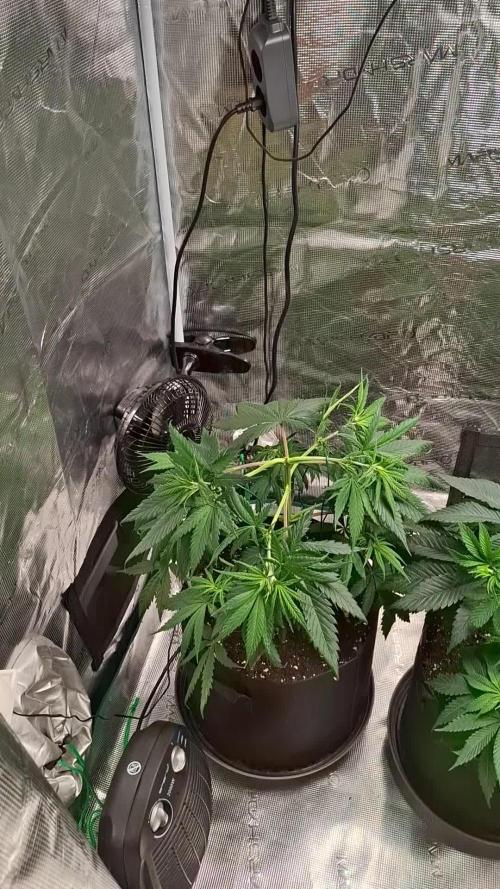
Die Pflanzen wachsen und sehen gut aus. Habe sie heute im unteren Drittel stark entlaubt und LST angewendet. Jetzt dürfen sie sich eine Woche erholen dann leite ich langsam die Blüte ein.
Gedüngt wie immer nach Herstellerangabe.


@GODSGIFT_2005_JM
Follow
Grow tent⛺️ check out MARSHYDRO
💡 GROW LAMPS 💡 check out:
VIPARSPECTRA PS2000 (200W) & XS2000 (240w)
MARSHYDRO ts1000 (150w) & fc3000 (300w)
NUTRIENTS: GREENHOUSE FEEDING BIO LINE —-ORGANIC STYLE GROWING


@555ABKY555
Follow
I have a low consume of electricity today i change the light upped 50 watt the next week i started to fertilized. More auto of Dutch passion have more weeks to live for this in this time i prefer dont use any fertilized. I dont have idea the cbdv are strong plant for this i think wait to fiammingo the plant in the future in this time IS very early mi waiting... Next week bye


@bigolebuds
Follow
Week 2 Day 2: Things are going well. We had some high humidity and a little algae, so I increased the fan level. There was also some slight bubbling in the leaves which could be due to the humidity, so I'm keeping an eye on that. Otherwise, things are looking good. Planning to water today (8/8), and keep an eye on them for the rest of the week. Feels like patience is key at this point. Will need to decide on feed schedule soon, and will be PH'ing my water for the first time today. Will also continue researching LST methods.
Week 2 Day 7: Still struggling with high humidity. My grow is in my basement, and in the summer it stays around 70% RH. When the tent was at 80% RH I opened the vents and had the airflow running pretty high. I couldn’t come up with any other way to decrease it, so I went to Facebook marketplace and got a dehumidifier. Ran it overnight in the basement yesterday and the humidity has not really changed and there were barely droplets of water in it 😭. I’m going to try putting it in the tent if things don’t change.


@Amazone27
Follow
die Letzte der überlebende Pflanze macht ein Wachstum schub und in Blüte jetzt Scheint ertragreich zu werden für eine Auto


@Luv2Grow
Follow
Day 71 - Starting week 11 and this is most likely her last week, she might only make it till this weekend. She’s definitely plumped up and I haven’t seen a single clear trich anywhere, she’s about 90-10 milky to amber so I’d like her to get to about 25% amber before chopping. Gave her the last drink of water tonight and just letting her dry up from now until chop day.
Day 73 - Just waiting another day or two for her to finish drying up and then she’ll get the chop. Leaves are really faded now and it’s making her flower colors pop. Pictures really don’t do any justice.
Day 74 - Looks like I’m gonna give this girl another day or two before chopping, she doesn’t quite have the amber trichs I’m looking for yet.


@Va_smoking
Follow
After dropping my plant last week I thought it was done for.
But the new light really seemed to make all the difference for her. Having her in the tent is good because I can control the humidity a little better. But to be honest I'm doing a crap job at it ... Humidity can be anywhere between 50 and 80%.
When I went to work on Tuesday the plant jumped up. Amazing how much growth in just a few hours. I was thinking about whether I should top her or not. I don't think I will though because she seems like a nice sturdy little plant
At the end of the week I decided she really needed to be repotted.. I thought I was pushing it going early but I got a new light in and was planning to take her off the shelf and move her to the floor so it seemed a good time.
Turned out to be a good choice. She's lovely


@Ferenc
Follow
Day 65, 14th of November 2020:
Amazing week....
RQS Wedding Gelato does not strech a lot and pistils coming out nicely....
Original Sensible Seeds has amazing gentics they are so strechy except Black Ghost OG, rest of them crazyyyyyyy..... I also broke two of the sides from Gelato Original Sensible Seeds but fixed with tape and now all good lol 🤣🤣🤣
Pre flowers out and I really hope they stop growing lol.
I also noticed that the Original Sensible Seeds strains have nice purple colours of the fan leave's stem.
All the same fertilization happens every 2nd day with the mix above and ratio.
One more thing:
I set the lamp 15 minutes shorter to switch off earlier so they receive 11:45 of darkness. I would like to imitate the nature when longer nights come with time till the 4th week (when they will receive 13 hours darkness a day 15 minutes minus 4 times = 1hour) so every week 15 min longer darkness for 4 weeks and then back to 12/12 to have bigger buds from the 4th week....


@Staffedition
Follow
Привет друзья. Моей растихе сегодня 112 дней
Паутинный клещь побеждаю, но до конца не вывел
Растение на много стало зеленее и пушистей.
20.10 перевёл свет в режим 12/12
Начал применять LST технику на 19 дне и продалжаю применять её через день, а 18 августа добавил ДЕФОЛИЗАЦИЮ
С 20.08 ДЕФОЛИЗАЦИЮ делаю каждые 3,4 дня
С 20.08 LST технику делаю каждые 4.6 дней
На сегодняшний день влажность 54%
5.09.2023 заметил высокий Ph 7.9
С 48 дня Ph не ниже 5.8
На сегодняшний день Ph 6.0
Начал кормить с 60 дня Canna Terra Vega
PPM 870
Всем мира и добра!
Не забудь поставить лайк❤️, если понравилась как прошла неделя
И читайте наш TELEGRAM: https://t.me/smail_seeds
#Smail_Seeds 😀



@Bread_n_Buds
Follow
Merry Christmas and happy holidays to everyone, and above all, a fantastic new year of growth with monsters, plants, unicorns, and all the magical beings we love.
** This week, mostly just growbox photos so you don't miss out on updates during the holidays.
Our Georgia Pie #2 from Zamnesia has emerged with the first seedlings, and after a strong vegetative phase, a fimming seemed right to send her into flowering, especially since I'm afraid she'll get too tall. The first week went well; there are four of us in a small growbox, but I'll soon expand with the release of all the autoflowering strains.
Selected techniques - This plant is going like a rocket, just repeated fimming and no topping, so she's practically straight, just like nature intended.
We're 100% organic and 1000% Plagron, as usual.
The soil we've chosen is Plagron Promix, unfertilized and 100% organic. The green bag and green label mean this with Plagron.
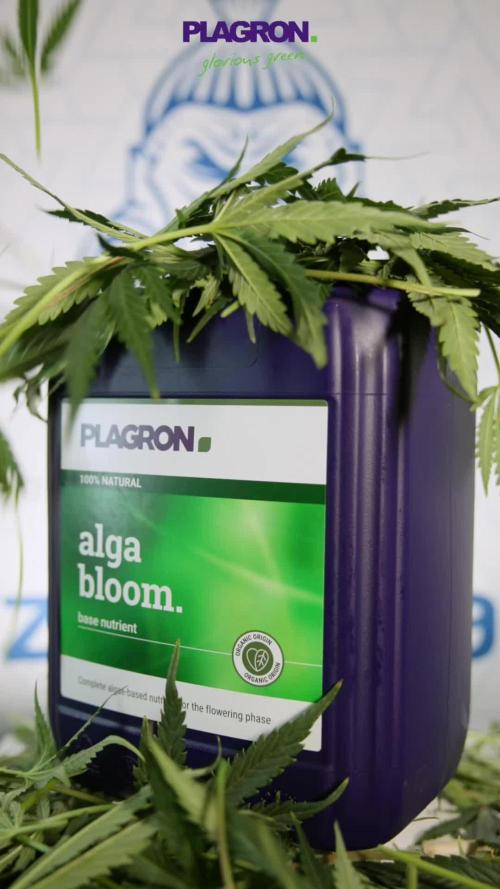
We're in the early stages of the bloom phase, but we're well-equipped with fertilizers and additives. We've added Power Buds and switched too ALga Bloom, using power buds from first week is important to launch the bloom activity fast:
- Power Roots 1 ml/l
- Pure Zym 1 ml/l
- Silic Rock 1 ml/l
- CalMag Pro 1 ml/l
- Sugar Royal 1 ml/l
- Alga Grow 5 ml/l
Once a week as a foliar spray
- Vita Race 5 ml/l
Choose your favorite style and calculate your results on the website:
www.plagron.com
Our new 720W Spider King lamp from Vanguard Hydroponics is still dimmed to its lowest setting. Visit the new Growshop area on the Zamnesia website:
Z - https://www.zamnesia.io/it/531-growshop
I can almost hear Ray Charles singing...Georgiaaa, try it.
Z - https://www.zamnesia.io/en/11085-zamnesia-seeds-georgia-pie.html
Z - Spice up your grow with this delicious US hybrid. Originally created in San Francisco, Zamnesia breeders worked hard to trace and stabilize the Gelatti x Kush Mints lineage that gave rise to the original Georgia Pie. The result? A 50/50 indica/sativa hybrid that grows beautifully both indoors and outdoors, quickly producing dense buds with deliciously sweet terpenes and a potent effect.
Combining the genetics of two fantastic parent strains (Gelatti and Kush Mints), Georgia Pie is both productive and easy to grow. During the vegetative stage, plants grow vigorously, developing moderately spaced internodes and fairly broad fan leaves. Expect noticeable stretch when it transitions to flowering: mature plants can reach 130cm indoors and up to 200cm outdoors, with numerous side branches that will develop large buds. Thanks to its exuberant leaf growth, Georgia Pie responds very well to regular pruning, defoliation, and training. These interventions will open up the plant's canopy, exposing even the lower buds to light. Indoors, Georgia Pie typically requires 8–10 weeks of flowering to produce up to 500g/m², while outdoor plants are generally ready to harvest around mid-October, producing up to 500g/plant.
You know it but I recommend it, here you will find many beautiful things basically "all the best that nature has to offer"
Z - www.zamnesia.com
Music //
www.radionula.com
+ Feng Shui Music
+ Frequencies 432 Hz


@Ageddd
Follow
Whats up GD !!!
------------- GROWTH-------------
The plant is growing more leaves, but the flowering is getting weird, i dunno what is going to happen, im giving her like 16 hours, 6am-10pm.
Weather is the worst i have ever seen in years, last year summer stayed until October, and now the counterpart haha, Nature things.. im letting the plant to decide what to do so, cause is in advanced flowering, gave her a bigger pot (25L) to manifest the fact that she has more soil avaliable.
------------- IRRIGATION-------------
2l, watering aprox each 2-3 days, when soils is dry.
1 of 2 irrigations with nutes, and the other with ph adjusted water.
Deeper Unerground 2ml/L, for transplant.
------------- NUTRIENTS-------------
Bio-Grow (3.5ml/l).
Green Explosion (1ml/l)
---------------------------------------
Good vibes !!
_06/06/2018_


@Earthsower
Follow
She has fully recovered from the stress period the Fuel dog now has five fingers and she also has wilted. She is only 12cm but back and ready to go!


@AsNoriu
Follow
Day 92. Girls are runing to the end, foxtailing on one of Tangies is crazy, but bud is dence and i let her to go.
Now StrawberryCough have loads space, she loved nutes, leaves are a bit too dark for me, but she is flowering and its fun !
Made on her Fims , tried to understand how deep you need to cut, so she will have some strange grow 4sure.
Day 94. Early Tangie became TheRealFoxtailQueen ;)) thats it, i dont want to smoke tails, so she was choped aswell, sad , was hoping she will be my biggest girl from first 8...
Was puting ice as a test on Early bigger FastDiesel, so part of roots stayed wet, its easy to spot, that those cones in airpots really works great.
Day 95. Eve. Maybe Fatty could hang for 12 hours more, but i am leaving house for a bit and dont want them to overdry. Thats why tops are in seperate jar, not because it looks better ;) inside bigger tops, even when i trim them hard ( i could leave longer colas) still stemp is fat and keeps more mosture, that way its easier to cure them, humidity is more even trough each jar.
So now to the main point .... Weight .....
And the winner is ...... ;))) 69.65 !!!! Never hoped that much from her, my eye scales are way off ;)) i think thats the winner, only late FastDiesel or StrawberryCough can beat.
Bud dried 1-2 days too early for perfectness, but heating is on and its really dry weather in the house and dehumidifier triggers electrics ;)) i am flat out on max usage now ;)
I am in a choping spree ;) Slimmer Fat Tangie falls aswell, she smells crazy, dont know is it smart to dry like i do now, neighbours should smell it 4sure ;))
Smells is fruity from distance and citrus from close up ... Tangie in the best by smell and not so sad by quantity ;))
All girls running well, really happy and that makes me happy. The purpose of Theraphy Room - works !!!!
Day 96. Every day new champ ? ;)) Early Big FastDiesel very sticky, not rock hard, but hard buds in total of 73.61 !!! That strain i have in marks for summer, its a killer ;) if you smoke it, all neibourghood knows about it, maybe even all small town ;)))
Smaller Early FastDiesel is choped today,she easy could make two more weeks and gane weight, but her choped sister is too strong, cant have couch lock weed all day ...

