


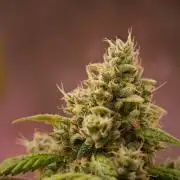


@DogDoctorOfficial
Follow
💙 PROJECT BLUE TENT – WEEK 14 💙
🥒 PICKLE LEMON HAZE F1 – PHENO B
🍂 BEAUTIFUL FADING, DENSE FLOWERS, AND ANOTHER GIRL APPROACHING THE FINISH! 🌸❄️
Hello everyone, and welcome back to another chapter of Project Blue Tent! 💙🌱
My friends, here we go again!
Another week, another beautiful girl, and another opportunity to spend far too much time inside the tent taking photographs! 😂📸
Today, we're giving Pickle Lemon Haze F1 – Pheno B her individual spotlight.
And honestly, what a beautiful girl she is!
We're now at Week 14 of flowering, and just like the rest of the room, she's showing increasingly noticeable changes as she progresses towards the final stage.
The flowers are looking beautiful, the fading is becoming more pronounced, and we're seeing some lovely colour transitions throughout the plant.
The structure is established, the major training work is behind us, and we're firmly in observation mode.
No new structural interventions.
No unnecessary changes.
Just maintaining the established environment, observing the flowers, and enjoying the final chapters of this adventure.
We've also moved to plain water, with an EC reading of approximately 0.2 mS/cm and a natural water pH of 6.8.
Our under-canopy lighting experiment continues, we're working on some interesting 3D-printed irrigation accessories for the next run, and Matilda has returned for another little photographic adventure!
😂🕷️
So, even though we're repeating some of the same environmental updates across the individual diaries, there's still plenty to appreciate.
Because Pheno B has her own expression, her own characteristics, and her own story.
Let's get into it!
💙🥒🌸
🌱 A QUICK RECAP – WHAT IS PROJECT BLUE TENT?
For everyone joining us for the first time, let's quickly introduce the project.
Project Blue Tent brings together four individual plants from two different Zamnesia F1 cultivars.
🌈 BLUE WAFFLE F1 – PHENO A.
🌈 BLUE WAFFLE F1 – PHENO B.
🥒 PICKLE LEMON HAZE F1 – PHENO A.
🥒 PICKLE LEMON HAZE F1 – PHENO B.
Four plants.
Two cultivars.
One shared ecosystem.
All four girls share the same general growing environment, irrigation system, reservoir, overhead lighting, and supplemental under-canopy lighting.
Throughout the project, we've documented their development individually, from their early stages through transplantation, topping, training, SCROG, defoliation, and flowering.
We've experimented with different lighting arrangements, environmental settings, irrigation equipment, and nutritional approaches.
And now, we're approaching the end of this particular adventure.
One of the most interesting aspects has been observing how different plants develop under the same general conditions.
Although they share the same environment, their individual expressions aren't necessarily identical.
That's precisely why we've kept separate diaries for every plant.
We want to document what each girl actually shows us, rather than assuming that four plants growing together will follow exactly the same timeline.
And today, it's Pickle Lemon Haze F1 Pheno B's turn!
💙🌿
🌸 WEEK 14 – PHENO B IS LOOKING BEAUTIFUL!
Let's start with the obvious.
SHE'S LOOKING FANTASTIC!
😂💙
Pheno B continues to impress with her compact structure, beautiful flowers, and increasingly noticeable colour transitions.
The flowers are looking dense and well developed, and the overall appearance of the plant is changing as we move further into the final stage.
One of the things I particularly enjoy at this point is looking back at the photographs from the earlier weeks.
Remember when we were concentrating on building the canopy?
The topping, training, SCROG, branch positioning, and defoliation?
All those interventions happened much earlier in the project.
Now, we can appreciate the structure that developed throughout those weeks.
The branches are established, the canopy is in place, and the flowers are the main attraction.
We're not trying to reshape the plant anymore.
We're simply observing her development and documenting the changes.
And honestly, that's one of my favourite parts of the journey.
You spend so much time working with the plants that eventually you reach a point where you can step back, grab your camera, and appreciate what you've been building.
That's exactly where we are with Pheno B.
💙📸
🍂 THE FADING – ANOTHER BEAUTIFUL COLOUR TRANSFORMATION!
Now, let's talk about something particularly noticeable this week.
THE FADING!
As with her sister and the other girls sharing the room, Pheno B is showing increasingly visible colour changes.
We're seeing lighter green foliage, yellowing leaves, and warmer tones appearing throughout the plant.
And I absolutely love this stage!
The green appearance of leaves is primarily associated with chlorophyll.
As chlorophyll levels decline during natural plant development, other pigments that were already present can become more visible.
Carotenoids contribute yellow and orange tones, while anthocyanins are responsible for many of the red, purple, and blue colour expressions we sometimes observe.
Genetics play an important role in determining how individual plants express these colours, while environmental conditions can also influence their appearance.
And this is particularly interesting when looking at our four girls.
They're sharing the same general environment, yet their individual colour expressions and progression are not necessarily identical.
Pheno B is developing her own beautiful palette, and the photographs capture some lovely transitions throughout the foliage.
It's also worth remembering that fading alone doesn't establish whether a plant is ready for harvest.
We're looking at the complete picture, including flower development, trichomes, pistils, and the overall maturity of the plant.
We're not trying to force a particular colour or use fading as a harvest indicator on its own.
We're simply observing and documenting what happens.
And Pheno B is giving us plenty of beautiful details to photograph!
🍂🌈💙
❄️ THE FLOWERS – DENSE, BEAUTIFUL, AND FULL OF DETAILS!
Now, let's get closer!
The flowers are looking absolutely beautiful.
Their density and overall development are among the first things that catch my attention when looking at Pheno B.
The structure is established, and we're now appreciating the flowers developing throughout the canopy.
The photographs show different perspectives, from the overall plant structure to individual flowering sites and close-up details.
And that's something I always want to preserve in these diaries.
A photograph of the entire plant tells one story.
A close-up of an individual flower tells another.
And when we get into macro photography, we discover an entirely different level of detail.
The trichomes.
The pistils.
The textures.
The intricate structures of the flowers and surrounding sugar leaves.
It's fascinating how much there is to appreciate when we take the time to look closely.
The visible frost is beautiful, and the flowers certainly deserve their photographic attention.
We're continuing to observe their development without making assumptions based on appearance alone.
No rushing the conclusion.
No inventing a harvest date.
Just appreciating what we're seeing and documenting the progression.
📸❄️💙
🌿 THE INDIVIDUAL EXPRESSION – PHENO B HAS HER OWN STORY!
One of the most interesting parts of Project Blue Tent has been comparing the two Pickle Lemon Haze F1 sisters.
Both girls share the same cultivar and grow within the same general ecosystem.
Yet their individual development and appearance can still differ.
Their structure, flower formation, colour expression, and progression through flowering are all worth documenting separately.
And that's exactly why we don't want to turn these individual diaries into identical room reports.
The environmental conditions may be shared, but the observations belong to each plant.
Pheno B is showing her own characteristics, and we're continuing to record them as she progresses.
The same applies when comparing the Pickle Lemon Haze girls with our Blue Waffle F1 plants.
Different genetics can express different characteristics, and individual plants can progress differently even when grown under comparable conditions.
We're not trying to invent differences or attribute every characteristic to a single variable.
We're simply documenting what we actually observe.
That's the value of keeping individual diaries.
Every plant deserves her own chapter.
And Pheno B certainly deserves hers!
💙🥒🌱
👃 THE AROMA – THE ROOM IS GETTING INCREDIBLY AROMATIC!
Now, my friends, let's talk about something that photographs cannot capture.
THE SMELL! 😂🌸
The aroma throughout the room is beautiful, and spending time around these girls has become an increasingly enjoyable experience.
It's one of those things that makes the final weeks particularly special.
We can capture the colours, the flower structure, the visible trichomes, and all those intricate details with our cameras.
But the aroma?
That's something you need to experience yourself!
I'm not going to invent a detailed terpene profile or assign specific aromatic notes without proper testing.
What I can tell you is that the room smells incredible, and Pheno B is contributing to that wonderful experience.
Sometimes, the best part of a grow isn't something you can show in a photograph.
😂💙🌸
💡 UNDER-CANOPY LIGHTING – CONTINUING OUR EXPERIMENT!
Now, let's talk about one of the most interesting experiments inside Project Blue Tent.
Our LumiFlora under-canopy lighting arrangement!
As many of you already know, we're using two LumiFlora 150W full-spectrum fixtures positioned beneath the canopy in an X-cross configuration.
These fixtures supplement our main overhead LEDs, which provide the primary lighting from above.
Throughout this project, we've been interested in observing how the lower flowering sites develop under this additional illumination.
And now, during these final weeks, we're getting some interesting visual observations.
One thing we've noticed is that some of the areas receiving supplemental illumination are showing more pronounced reddish colour expression.
It's particularly interesting when comparing photographs from different positions throughout the canopy.
We're also observing relatively fast progression towards the finish across the room.
However, I want to make something clear.
We're documenting observations, not claiming that the under-canopy lighting or its red spectrum alone is responsible for the colour changes or the finishing timeline.
There are multiple variables involved, including genetics, plant maturity, environmental conditions, and the overall lighting arrangement.
To establish a direct relationship, we'd need controlled comparisons and appropriate measurements.
For now, we're documenting the setup and observing what happens.
That's the purpose of this experiment.
We want to explore supplemental lighting, understand how it fits into the overall environment, and learn from the results.
The fixtures remain in their established X-cross arrangement, and we're continuing to monitor the plants.
I'm particularly interested in reviewing the photographs and environmental records once the entire project is finished.
A massive thank you to LumiFlora for making this experiment possible!
💡🌱💙
💡 OVERHEAD LIGHTING – THE MAIN LEDS REMAIN AT THEIR ESTABLISHED SETTING
The main overhead LEDs continue providing the primary illumination for the canopy.
As discussed in the previous reports, we've been gradually reducing their output as we approach the final stage.
Our previous reference setting was approximately 90%, with gradual adjustments rather than sudden changes.
The idea is to maintain a balanced lighting environment while observing the plants.
The main fixtures and the supplemental under-canopy lights work together as part of the overall arrangement.
We're not assuming that increasing or decreasing one particular setting automatically produces a specific result.
Instead, we're documenting the configuration and observing the plants as they progress.
At this stage, the canopy is already established, and our attention is on the final development of the flowers.
No unnecessary changes.
Just the established lighting arrangement and plenty of photographs!
💡💙
🌡️ THE ENVIRONMENT – OUTSIDE FEELS LIKE SPRING!
Now, something interesting is happening with the weather!
The outside temperatures have increased again, and we're seeing readings around 22.4°C even after midnight!
My friends, is autumn taking a holiday? 😂🌸
It almost feels like spring outside!
Fortunately, we're adapting to these warmer conditions.
Our air conditioning is helping us maintain the established indoor environment, allowing us to keep the room within our intended operating conditions despite the changes outside.
Our current reference conditions are:
🌡️ Day air temperature: approximately 25°C.
🌙 Night air temperature: approximately 20°C.
💧 Relative humidity: approximately 55%.
💧 Solution temperature: approximately 21°C.
🌱 Substrate temperature: approximately 21°C.
🌫️ CO₂ level: approximately 666 ppm.
These are our reference operating conditions, rather than temporary readings that might appear while we're inside the room working or taking photographs.
The important thing is maintaining consistency and adapting to the outside conditions without making unnecessary changes to the indoor environment.
The girls are sharing the same general conditions, and Pheno B continues progressing within that established ecosystem.
Outside: spring vibes.
Inside: beautiful autumn colours.
I think we're enjoying both seasons at once!
😂🍂🌸
💧 IRRIGATION AND DRAINAGE – THE SAME ESTABLISHED SYSTEM
The automatic irrigation and drainage system continues operating as part of our shared ecosystem.
All four plants share the same reservoir and irrigation arrangement.
Our recorded watering volume remains approximately 1.6 litres per plant over 24 hours.
This is our reference measurement, while actual water demand can vary between individual plants.
We continue monitoring the system and observing the plants rather than assuming every girl consumes exactly the same amount.
At this stage, we're not introducing unnecessary changes.
The irrigation arrangement is established, and our attention is increasingly focused on observing the final development of the flowers.
And speaking of irrigation, we're already experimenting with something new for the next adventure!
More about that shortly.
💧🌱
⚗️ NUTRITION – PLAIN WATER, AND A DIFFERENT APPROACH TO THIS EXPERIMENT!
Now, let's talk about one of the most important changes in the current stage.
We've moved to plain water.
Our current readings are:
💧 EC: approximately 0.2 mS/cm.
💧 pH: approximately 6.8.
And I want to make an important distinction here.
The EC reading represents the water we're currently using, not a nutritional solution.
The pH of 6.8 is the natural pH reading of that water.
We're not adding additional nutrients or adjusting the water simply to chase a particular number.
There is no PLAGRON Hydro A.
There is no PLAGRON Hydro B.
There is no Power Buds.
There is no Green Sensation.
We're currently using plain water, without additional nutritional products.
Now, why are we doing this?
Well, this is where I want to explain a little about the approach we're taking with this particular project.
🌱 ORGANIC GROWING VS. MINERAL NUTRITION
One thing I always like to distinguish is the difference between growing in an organic living-soil environment and working with a mineral-based hydroponic setup.
They're different approaches, and they shouldn't necessarily be treated in the same way.
When working with organic living soil, the idea is to maintain and support a functioning biological environment.
The soil contains a complex ecosystem involving microorganisms, organic matter, and nutrient cycling.
You're working with a system where biological processes play a major role in making nutrients available to the plant.
Trying to chase every number, constantly force changes, or manipulate the system unnecessarily isn't necessarily beneficial.
Sometimes, the best approach is to establish a healthy environment, support the soil biology, and allow the system to function.
Mineral-based hydroponic nutrition gives us a different level of direct control over the nutrient solution.
We can measure EC, monitor pH, adjust concentrations, and make changes to the composition of the solution.
That doesn't mean every adjustment is necessary, or that chasing numbers automatically produces better results.
It simply means we have a different set of tools available.
And in this project, we're using that flexibility to explore different approaches and document what happens.
For this particular final stage, we've chosen to move to plain water.
Not because we're trying to force a particular outcome.
Not because we believe plain water magically removes nutrients from the flowers.
And not because every grower needs to follow the same approach.
It's simply the method we've chosen to document in this run.
We enjoy experimenting, observing, and comparing the results.
And that's what Project Blue Tent is all about.
Different systems, different approaches, and continuous learning.
💙🌱
🖨️ 3D PRINTING – MORE EXPERIMENTS FOR THE NEXT RUN!
While the girls are enjoying their final chapters, I'm already thinking about the next project!
And this time, we're getting creative with the 3D printer.
I've been working on some prototype irrigation accessories designed to improve water distribution across the coco surface.
The idea is to create a small distribution plate that sits beneath the watering point.
Instead of allowing water to fall directly onto one concentrated area, the design aims to spread it across a wider surface.
I've printed different versions and have been testing how the water behaves with each design.
We're looking at the distribution pattern, the dimensions, and whether the shape needs further adjustments.
These are still experimental prototypes.
We're not calling them finished products yet.
The objective is to evaluate the designs, identify potential improvements, and see which version might be suitable for the next run.
And honestly, I love these little side projects!
Cultivation isn't only about plants.
It's also about equipment, problem-solving, experimentation, and finding practical ways to improve the overall setup.
Sometimes a small modification can make a big difference to how convenient a system is to use.
We'll share more photographs and updates as the prototypes develop.
For now, it's another little experiment happening behind the scenes while the girls approach the finish.
😂🖨️💙
🕷️ MATHILDA RETURNS – ANOTHER LITTLE PHOTOGRAPHIC ADVENTURE!
And now, my friends…
LET'S TALK ABOUT MATHILDA!
😂🕷️💙
Our little spider friend has returned for another appearance!
This week, we decided to bring Mathilda into the tent for a little adventure and let her explore while we captured some photographs.
Nothing too serious.
Just a bit of fun, some interesting macro photography opportunities, and a chance to appreciate another tiny creature from a completely different perspective.
And honestly, she's a fantastic little photographic subject!
When you get close enough with a macro lens, the details become fascinating.
The legs.
The body structure.
The tiny features.
The way she moves around and explores her surroundings.
It's incredible how much detail we can discover when we take the time to look closely.
I've included several photographs from this little session because I wanted to share the fun with everyone.
Mathilda isn't part of our growing experiment, of course.
She's simply our unexpected photographic guest!
😂📸
And I think she's becoming quite comfortable in front of the camera.
Welcome back, Mathilda!
You're officially part of the Project Blue Tent photographic collection.
🕷️💙
📸 PHOTOGRAPHY – DOCUMENTING THE LITTLE DETAILS
As always, photography remains one of my favourite parts of these projects.
During the final weeks, there are so many beautiful details worth capturing.
The flowers.
The changing colours.
The trichomes.
The textures.
The individual characteristics of every plant.
And, of course, our little spider friend!
I'm continuing to enjoy macro photography and focus stacking, experimenting with different perspectives and trying to capture as much detail as possible.
Focus stacking allows us to combine multiple photographs taken at different focus distances to create a final image with greater depth of field.
It's a fantastic technique for documenting small, intricate subjects.
And between the flowers and Matilda, we've certainly had plenty of opportunities to experiment!
I hope you enjoy the photographs as much as I enjoy taking them.
Because these diaries aren't simply about recording measurements.
They're also about creating a visual history of the entire adventure.
📸💙
🔭 THE FINISHING LINE – WHAT HAPPENS NEXT?
We're getting closer, my friends!
Looking at the four plants together, it's becoming increasingly interesting to compare their individual progression.
The Blue Waffle girls and the Pickle Lemon Haze girls are showing their own characteristics, and we're observing how their development unfolds under the same general conditions.
Pheno B is showing beautiful fading, dense flowers, and an increasingly mature overall appearance.
We've moved to plain water, and we're continuing to monitor the plants rather than deciding on an exact harvest date in advance.
We'll keep observing the trichomes, pistils, flower development, and overall maturity.
And if the plants don't finish together, that's perfectly fine.
Each girl has her own timeline.
That's one of the most important lessons from documenting multiple plants individually.
We shouldn't assume that sharing a tent means sharing an identical finishing date.
Maybe we'll have a staggered harvest.
Maybe the girls will finish closer together than expected.
Let's see!
For now, we're enjoying the final chapters and keeping the cameras ready.
💙🌸
💙 FINAL THOUGHTS – ANOTHER BEAUTIFUL CHAPTER FOR PHENO B!
My friends, Pickle Lemon Haze F1 Pheno B is looking absolutely beautiful.
The flowers are dense, the frost is impressive, and the fading is becoming increasingly noticeable.
She's showing her own colour expression, with beautiful transitions throughout the foliage as she progresses through the final stage.
We're maintaining the established environmental conditions, continuing with the same irrigation arrangement, and using plain water with an EC of approximately 0.2 mS/cm and a natural pH of 6.8.
Our under-canopy lighting experiment continues to provide interesting observations, while the 3D-printing experiments are already preparing the way for the next adventure.
And let's not forget Matilda!
😂🕷️
This week hasn't been about making major changes.
It's been about observation, documentation, and enjoying the individual characteristics of this beautiful girl.
Sometimes, that's exactly what a grow needs.
The major work is behind us.
The canopy is established.
The flowers are developing.
The colours are changing.
And we're getting closer to the moment when we'll finally be able to document the end of this journey.
Four plants.
Two cultivars.
One shared ecosystem.
Different expressions.
Different finishing timelines.
And four individual stories worth telling.
Thank you for following another chapter of Project Blue Tent.
And thank you for taking the time to appreciate this beautiful girl with me!
💙🥒🍂🌸❄️
💬 COME JOIN THE DOGDOCTOROFFICIAL DISCORD COMMUNITY!
If you're already part of our Discord family, thank you for being there!
And if you haven't joined us yet, you're more than welcome!
We've built a community where growers can share their experiences, exchange knowledge, discuss equipment, show their gardens, share photographs, and learn from each other.
We organize community photo championships, giveaways, and plenty of activities throughout the year.
You don't need to be an expert.
You don't need an enormous garden.
You don't need expensive equipment.
Everyone is welcome!
Come and introduce yourself, share your photographs, join the conversations, and become part of the adventure.
💙 JOIN US HERE:
https://discord.gg/dogdoctorofficial
Growers helping growers.
Sharing knowledge.
Learning together.
And having a little fun along the way!
We'd love to see you there!
🙏 A HUGE THANK YOU – THE PEOPLE BEHIND PROJECT BLUE TENT!
A project like this doesn't happen alone, and I want to take a moment to thank everyone who has been part of this adventure.
A massive thank you to ZAMNESIA for providing the genetics and making it possible for us to document these beautiful Blue Waffle F1 and Pickle Lemon Haze F1 plants individually.
Thank you to PLAGRON for the Hydro nutrient line supporting the girls throughout their journey.
A huge thank you to ZAMNESIA for the Phytonaut LED lighting, curved scissors, and clip fans that continue playing important roles in our setup.
Thank you to MARS HYDRO for the irrigation and drainage equipment helping us maintain consistency throughout the tent.
A special thank you to LUMIFLORA for the two 150W full-spectrum under-canopy fixtures. We're enjoying exploring this supplemental lighting arrangement and documenting everything along the way.
WELCOME TO HEMP HOOKS!
Thank you for joining our adventure and for providing our community with a discount code.
🌐 https://hemphooks.com/
Discount code: DOGDOCTOR
Enjoy 15% OFF your entire order!
We're looking forward to exploring more of your products in upcoming runs and sharing our experiences with the community.
Thank you to GROWDIARIES for providing the platform where we can document our plants, share photographs, record our observations, and learn from the entire process.
And, of course, a massive thank you to everyone following Project Blue Tent, reading our reports, enjoying the photographs, and supporting the journey.
Your encouragement and support mean a lot.
Until the next chapter, my friends…
Keep growing.
Keep learning.
Keep experimenting.
Keep documenting.
And never forget to enjoy the journey as much as the destination!
GROWERS LOVE, HAPPY GROWING, AND TAKE CARE EVERYONE! 🌱💙🥒🍂🌸❄️



@CheeRz
Follow
🌿 VEG WEEK 4: AK-47 XL | Divine Seeds
🌱 VEGETATIVE PROGRESS
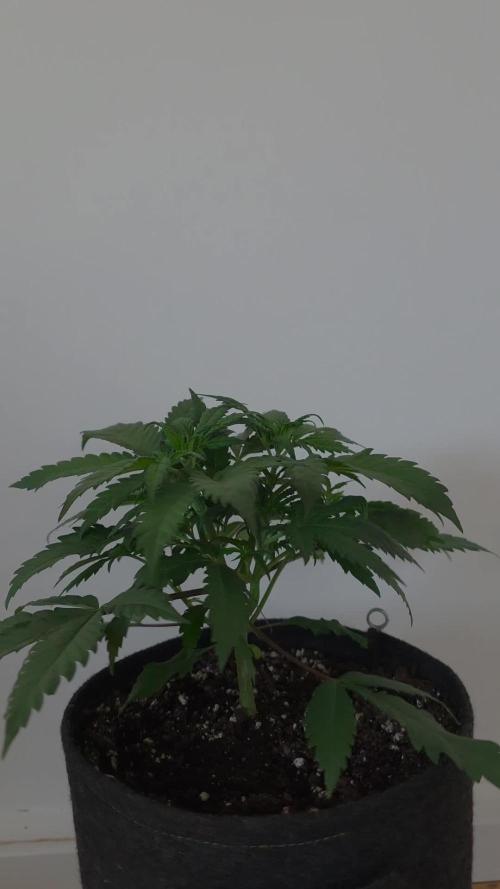
Moving through Week 4 and the response to the topping has been phenomenal. The growth hormone distribution has shifted completely, turning this AK-47 XL into a beautifully thick, bushy canopy with multiple strong shoots pushing up.
Looking at the lower structure, the main stem is getting incredibly thick, acting like a solid tree trunk already. The node spacing remains tight, and the plant is developing a very dense structure from the top-down view. The fan leaves are wide, lush, and a healthy dark green, showing that she’s soaking up the light and converting it efficiently into rapid growth. No shock, no slowing down—just pure vegetative vigor. 📈
💧 NUTRIENT FEEDING & WATERING
She is processing the current feeding well, supporting both the thick stem development and the new branch expansion.
Current Feeding Schedule (per Liter):
Root-Juice: 2.0 ml/l
Acti-Vera: 1.0 ml/l
Calmag: 0.5 ml/l
Parameters:
pH: 6.5
Relative Humidity (RH): 69%
Temperature: 23°C
VPD: 0.88 kPa (Perfect spot!)
CO2: 716 ppm
💭 GROWER'S NOTE
The canopy is filling out perfectly after the top. We now have a great multi-topped baseline, and the side branches are catching up fast to create an even profile. Stem thickness is 10/10 for Veg Week 3, which is exactly the robust foundation needed for the heavy AK-47 XL yields later on. With a stable VPD of 0.88 kPa, environmental stress is at an absolute minimum. Ready to explode! 🚀


@Nookandplant42o
Follow
Alright Robust in the original shape of a Christmas tree, its thick leaves and well-resined flowers the pistil phase starts to turn orange the trichomes we can go further to have milky with amber, and enjoy its performance until the end its smell is very strong it is sweet .


@BioBuds
Follow
She seems to thrive in the new soil, I'm checking her regularly because of the darker ridged leaves, could I have overdone the bloodmeal content? It should not have overfeeding effects with organic super soil. But we'll see.
The FIM seems to have taken hold with her and today I started training, although it is more main-lining.
For this, I just used some microwaved bamboo from the garden. Now we go towards flowering and I'm getting more excited after the first few weeks were a bit sad.
Some of you might have seen my super soil recipe in my other grow, the Orange Hill Special, if you didn't, check it out here in the images!
I designed it out of frustration that products like Fox Farms etc are not readily available in Europe.
Those who saw my Gelato Monstercop grow, know that soil was pretty good, that soil became the base for this recipe, amended with some organic precursors to make it less dependent on feeding and after amending.
I would recommend amending some before flowering starts without the bloodmeal.
Hope you can use it!! Thank you very much for checking me out again this week!
Hapy growing and big hug
BioBuds and Sunshine


@Nomad
Follow
Today starts week 6 and couldnt be happier everything is green and lush and i cant wait to see what she can do since im training her and shes supposed to be a tall sativa plant


@Papapeyote
Follow
Traspaso a nueva carpa, por el momento misma luz, para floracion de usara un sodio en cambio de la LED


@MaxMo8
Follow
I would like to thank all those in charge of this site. Also all those who supported me and followed me thanks to everyone
I will I will keep you update guys win while the flowers are drying 😍


@Hashy
Follow
Grow diary 11 stage 8
Day 71 to 80
She doing her thing. Have managed to get a bit more light to her. Probably 2 weeks before she is moved out to finish on her own. Wish all the others in this grow had grown like this one.



@SwabianMadness
Follow
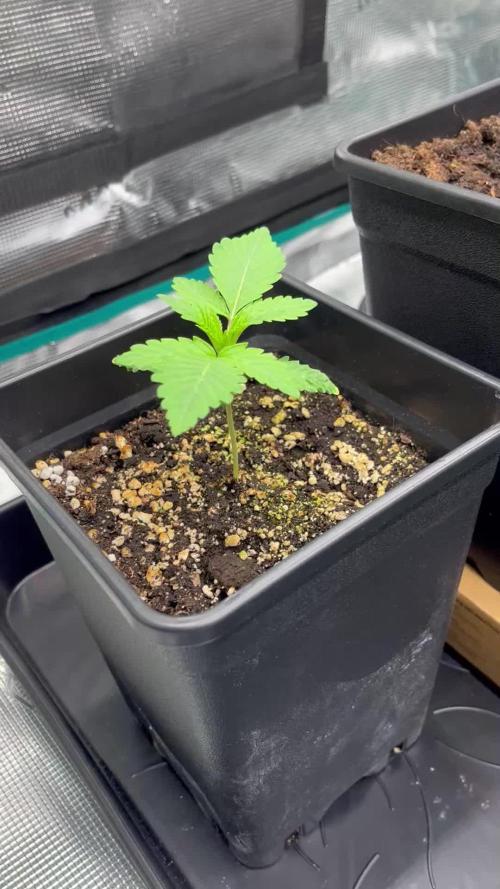
Almost Week 2 is over. She‘s perform very well my dear Paradise Lady 😍😛🙏🏼
First Week Veg i was nearly at 300 PPFD. Some Days later i going up to 400 and that was right Decision.
Tomorrow when the Week is over, i started to give them every Hour 5 Minutes UV Light.


@DogDoctorOfficial
Follow
👑 Godfather OG – Pheno B
Week 5 | A Gentle Giant Finds Her Rhythm
Welcome back to another update from the 8×8 Adventure!
One of my favourite aspects of this project is documenting every phenotype individually. Although every plant is receiving the same care, the same environment, and the same attention, each one responds in her own unique way.
Godfather OG Pheno B is a perfect example of that.
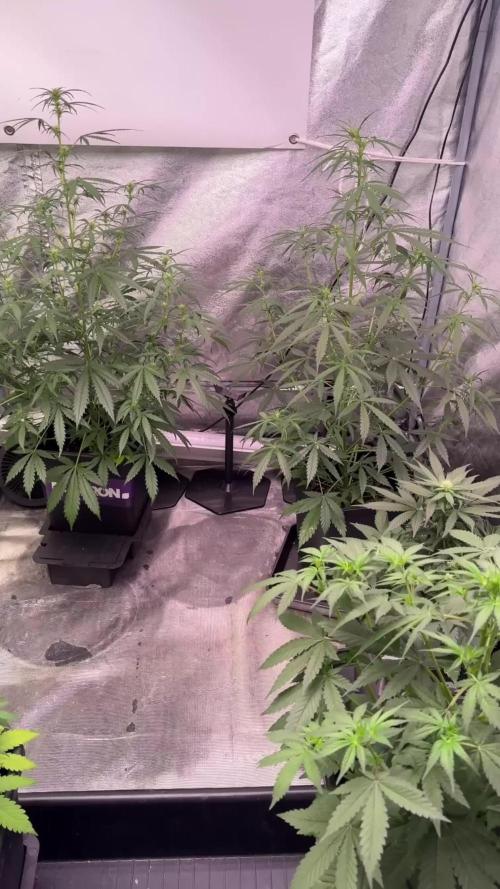
Standing proudly among the tallest plants in the room, she’s developing into a vigorous, elegant lady with excellent structure, healthy growth, and an increasingly impressive canopy.
She may share the same name as her sister…
But she’s writing a completely different story.
⸻
🌱 The Journey So Far
If you’re joining this diary for the first time, welcome!
This entire project is being grown using the 12/12 From Seed technique.
Instead of allowing a long vegetative period before switching to flower, every plant has remained under a constant cycle of 12 hours of light and 12 hours of darkness from the very beginning.
This allows every phenotype to express its own natural rhythm.
No forcing.
No extended veg.
Just letting genetics decide when they’re ready to bloom.
That has become one of the most educational parts of this entire grow.
Watching siblings respond differently under identical conditions never gets old.
⸻
🌸 Flowering Has Officially Begun
For me, this marks Week One of Flower.
She’s now fully entering that exciting transition where vegetative growth slowly gives way to reproductive growth.
Fresh white pistils are appearing across the tops and developing branches.
Those tiny white hairs are the first signs of the flowers to come.
During the next several weeks they’ll multiply rapidly as each growth tip transforms into a future cola.
Every morning brings another little surprise.
It’s one of those stages where you can almost watch the plant changing before your eyes.
⸻
🌿 A Beautiful Structure
Already reaching approximately 70 cm, Godfather OG Pheno B is another one of the largest ladies inside the grow room.
She has developed a wonderfully open structure with strong vertical growth and healthy lateral branching.
Throughout vegetative growth I’ve relied mainly on gentle Low Stress Training, carefully bending leaves and branches to improve light penetration while allowing the plant to maintain her natural architecture.
Rather than forcing the plant into shape…
I’ve simply guided her.
Now those early adjustments are beginning to pay off as multiple flowering sites receive excellent light exposure.
Every branch is beginning to compete for the spotlight.
⸻
💧 Hand Watering — Precision Through Observation
Unlike her sister, this phenotype is being hand-watered, allowing me to monitor her individually at every irrigation.
Hand watering offers a different type of control.
Each watering becomes an opportunity to inspect the plant closely, evaluate her response, monitor runoff, and make small adjustments whenever needed.
It’s a slower approach than automated irrigation, but it creates a very personal connection with each plant.
As flowering begins, the feeding program has also transitioned to support this new phase of growth.
Bloom nutrients are gradually taking the lead while maintaining enough nitrogen to fuel the final stretch before the plant fully commits her energy to flower production.
⸻
🌡️ Environment Continues to Deliver
The grow room continues providing an exceptionally stable environment.
Current conditions include:
• Day temperature: 31.1°C
• Night temperature: 25°C
• Relative humidity: 72%
• Nutrient solution: 24.2°C
• Root zone: 21°C
• CO₂ concentration: 639 ppm
Everything remains remarkably consistent, allowing the plants to focus entirely on healthy growth.
As flowering progresses and the buds begin to develop greater density, humidity will gradually be reduced to create the ideal environment for the weeks ahead.
Consistency remains one of the most important nutrients we can provide.
⸻
📷 This Week’s Gallery
This week’s photographs capture her from every angle.
Studio portraits showcase her elegant structure and increasing height.
Close-up images reveal the first pistils emerging across multiple flowering sites.
Bird’s-eye views highlight how evenly the canopy is developing after weeks of gentle training.
I’ve also included updates from inside the room together with environmental controller readings so everyone following this project can continue seeing not only the plants themselves, but also the conditions helping them thrive.
Documenting the entire journey has become almost as rewarding as growing the plants themselves.
⸻
🔮 Looking Ahead
The coming week should bring another noticeable burst of development.
I expect the flowering sites to expand quickly as more pistils appear and the early bud clusters begin taking shape.
Stretch may continue for a little longer before gradually slowing down, allowing the plant to redirect more energy into flower production.
Training will remain minimal from this point onward, with only gentle adjustments where needed to maintain airflow and light penetration.
She’s healthy.
She’s vigorous.
And I have a feeling she’s only beginning to reveal what she’s capable of.
⸻
💚 Thank You
Thank you so much for following another chapter of this 8×8 Adventure.
Every diary tells a different story, and sharing these journeys with this amazing community makes the entire experience even more rewarding.
A huge thank you to:
💚 GrowDiaries for providing an incredible platform where growers from around the world can learn, share and inspire one another.
Zamnesia for the fantastic genetics making this phenotype hunt possible.
🌱 Plagron for providing the nutrients supporting these ladies every step of the journey.
💡 Future of Grow LED for delivering the light powering this entire project.
🌿 TrolMaster for helping maintain a stable, carefully controlled environment from day one.
And finally…
Thank you to everyone who takes the time to read these updates, leave comments, ask questions, share knowledge, or simply follow along.
Your encouragement makes documenting every single phenotype worthwhile.
I’ll see you all next week as Godfather OG Pheno B continues her journey deeper into flowering.
Growers Love and the adventure is only just beginning. 🌱👑💚


@WAWAWEED
Follow
My pH meter was troubled that make my plants got lower pH you can see brown spot on the leafs that's it.🌱✌️


@Ross4Twenty
Follow
Was showing signs of nutrient lockout so decided to start flushing process.. amazing smell but this will be the last ever diary of disco biscuits as she has outstayed her welcome.
Not as fat as I’d like her to be but still 2 weeks remaining before chop.


@Roberts
Follow
Jack Herer auto is doing really good. Her colas are starting to stack. Curious to how well she will do under a 100 watt light. Everything is going good at the moment. Thank you ILGM, and Athena nutrition. 🤜🏻🤛🏻🌱🌱🌱
Thank you grow diaries community for the 👇likes👇, follows, comments, and subscriptions on my YouTube channel👇. ❄️🌱🍻
Happy Growing 🌱🌱🌱
https://youtube.com/channel/UCAhN7yRzWLpcaRHhMIQ7X4g


@Metatronix
Follow
Good day to all my friends and visitors here on GD.
We harvested one of the Purple OG Punch girls , this is going to be a weird entry because I decided to not make a harvest entry till the other one lady finishes.
Unfortunately because of my sticky fingers from all the trimming I did not make many pictures/videos of the grow itsels, to fill this void I decided on including the harvest videos and photographs. Although the final weight will be summed up in the final harvest.
We finally see that our problem with the plants may not a deficiency but overfeed...decided to leave the reservoir as it is for this week and add only fresh water next week we will flush the system and for seven days the girls will only drink water.
----------------------------------------------------------------------------------
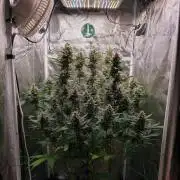
The SE7000 runs at 520 Watt and about 33cm from the canopy and is doing an astounding job.
For anyone who is interested in obtaining this efficient and affordable light fixture here's the link:
https://spider-farmer.com/products/spider-farmer-upgraded-se7000-730w-commercial-led-grow-light/
A shout out to Super Sativa Social Club for the gift of genetics : https://supersativaseedclub.com/
Also I want to thank Jungle Indabox nutrients for supplying me with their excellent & affordable nutrients : line https://www.jungleindabox.cz/en
That's it friends, I hope to see y'all next week, bless.



@GnomesAndStones
Follow
🌱 Super stressfull week! Her Foxtailing increased, i fucked up the nutrients once and she got bud rot... Despite these throwbacks, she is absolutely gorgeous with insane terps.
Day 78
💧 I didn't spend much time thinking and guessed i should probably start feeding her Final Part instead of regular bloom nutrients. Didn't check trichomes though and it was wayy too early (currently no amber trichomes, 50% clear, 50% milky and she is still bulking in the lower buds). -- 4L with 4 ml/l CalMag and 5 ml/l final part
Day 80
🌱 I wanted to do something against the foxtailing and since i cant just improve her surroundings (we have no heaters and the fans are too big for the tent), i decided to cut off the highest part of the top foxtails to hopefully make her grow outwards from there.
Day 83
❗Bud rot detected! I immediately removed the concerning buds.
💧She was dry, so i watered with 4 L, 1,2 ml/L bloom, 0,8 ml/l micro and 0,4 ml/l grow.
Day 84
🌱 To avoid further bud rot, i cut off all the colas to just leave singular bud sites. The tops are now drying in the tent. She still looks almost like a regular plant, insane mass!


@bypado_farm
Follow
Day 42:
Watered the plants 0.5L with nuts(same as nuts chart here), 824 ppm, 1753 us/cm, PH 6.4
All plants showing signs of Mag/Cal, P, N deficiency.
Watered the plants on day 38 with half the nuts, and the 2 irrigations before that day, were only tap water, no nuts.
Looks like they are growing very slowly... They aren't happy at all.
All the leaves from bottom to top are turning yellow... some of them have brown spots. Seems like it's already mid or late stage of deficiency...
I hope they recover!
Day 44:
Watered the plants 0.5L with nuts, 4L total, 834 ppm, 1775 us/cm, PH 6.5
5ml callmag
5ml fishmix
4ml biogrow
12ml biobloom
15ml bioheaven
15ml activera
4ml top max
Day 47:
Watered the plants 0.5L with nuts, 4L total, 944 ppm, 2008 us/cm, PH 6.5
5ml callmag
5ml fishmix
4ml biogrow
12ml biobloom
16ml bioheaven
16ml activera
4ml top max


@All_about_420
Follow
In der zweiten Stretch-Woche haben die Amnesia Haze Mädels ordentlich an Höhe und an Canopy zugelegt.
Alle drei wachsen jedoch relativ unterschiedlich.
Die beiden ungetoppten bilden den größten Kontrast.
Die eine ist die Größte mit 74cm, die andere die Kleinste mit gerade mal 45cm, also ganze 30cm Unterschied.
In der Mitte liegt die Getoppte mit 58cm, die sich schön über mehrere gleichmäßige Main Buds verteilten.
Darin ähneln sich die Mittlere und die Kleinste. Trotzdessen die Kleine nicht getoppt ist, wächst sie jedoch ähnlich.
Die helle Farbe des Blattwerks deutet auf einen erhöhten Nährstoffverbrauch im Stretch hin.
Deshalb ist die kleinere auch weniger davon betroffen, als die anderen beiden.
Den BioBizz Nährstoffgehalt habe ich entsprechend angepasst und erhöht.
Da der Dünger auf Biologischer Basis ist, wird es ein paar Tage dauern, bis das Futter verwertet ist und auch komplett ankommt.
Die Farbe wird also dann bald schon wieder leuchtend grün sein.
Jetzt haben sie noch eine Woche bis zur finalen Defolierung und bis zum Lollipopping...
Bis dahin...
