


Likes
Comments
Share


@starke
Follow
I don't know where to start and I must admit I'm completely overwhelmed by this beautiful beautiful plant ❤️❤️❤️ Aaaaaaaaaaaaaaaaaaaaaaaaaaah, I'm so happy 😍😍😍
She is a blessing!
Excuse the outburst, but she is magical ☀️ I applaud you guys at Humboldt for creating such a wonderful strain 🙌
Some details upfront, before I rave some more:
- 134 Days in total: 70 Days in Veg, 64 Days in Flower with 128W LED in a 60x60x160cm tent
- 7 Days Drying regularly, 9 Days Drying in the Fridge
- 432g - Wet weight with stems
- 103g of those for Fresh Harvest Infused Oil - 190ml Olive oil with 30mg/ml THC & CBD - approx. 20g dry (for dry weight calc.)
- 87g for the DrZiggy's Low And Slow Drying in the fridge - 20g dry
- 242g for regular Drying @50% RH and 22°C - 55g dry
- 30g dried sticky trim in the freezer
Summary of my growing experience with this strain:
She takes well to massive training and a little neglect in the beginning, meaning she recovers well, which is what I want 😊 I didn't experience any major deficiencies. She had a little nitrogen deficiency during the later veg phase, which she showed with lighter green leaves. I blame this on my long veg time and my pot size of only 11l. She consumed all her soil and nutes by the end of veg. I will keep that in mind for my next grow. Since I increased my nitrogen levels so close to flowering phase, I overdid it a little on the nitrogen which showed a little bit during later flowering phase with downwards clawing leaves. So I will be more careful with nitrogen especially while transitioning into Flower. I did not flush this plant and she smokes already beautifully mild after only a couple of days of curing. Drying her took 7 days in the tent and 9 days in the fridge. She crusted up with lots of stickiness while drying and gave off a good bit of scissor hash & kief when trimming. Smoking her is a great and different experience to me. It's my first time with a 1:1 strain and I can definitely notice the CBD content. She shows in a very well balanced body high with a slight and gentle knock on the THC door. The first couple of days I felt a craving for higher THC which settled down after only a couple of days. Very interesting and definitely worth growing. So you guessed right, I totally recommend growing this beauty. Especially if you are interested in exploring a 1:1 THC:CBD strain with all its magical medicinal values 🙏
Why I grew this strain:
Like @Experimentgreen on here, I grew this strain for my Mama ❤️ She is open minded to trying to solve some of her health issues with these beautiful plants and the magic they bring but she also likes to have a bit of fun, she doesn't mind. So a 1:1 strain was quite handy. She suffers from neuropathic pain, arthritis in her joints, restless legs and insomnia. All very relatable issues and perfectly suitable to be introduced to some good CBD and THC content. She already has a little tolerance, since she is treating her restless legs with gummi bears I made with a strength of 1.5mg/gummi bear. This small dose already helps her on a daily for her restless legs. Beautiful 😍
So with this special mission in mind, I wanted to process the plant with only the very best options and create Cannabis Oil (Capsules) for my Mom to take. I chose a method called "Fresh Harvest Infused Cannabis oil" by the wonderful member SweetSue over at 420magazine: https://www.420magazine.com/community/threads/fresh-harvest-infused-cannabis-oil.363371/ I hope it's ok to relink, no need to duplicate already existing and well researched content, right? I will not go into detail and def. recommend reading through the whole thread. I only document the short version here, but feel free to ask me, I'm happy to share my experience. The oil I made has 30mg/ml of THC and CBD. That's a good value.
I calculated the strength the following:
75g fresh Flower in 200ml Olive Oil - with 10% CBD&THC
85% extraction efficiency with the infusion method
85% * 10% THC&CBD = 0.0850
0.0850 * 75g = 6.375 gram of available THC & CBD
6.375gram * 1000 = 6375mg/THC
6375mg/CBD
6375mg/200ml = 31.875mg/ml CBD & THC
I created capsules with 3mg per capsule. We are currently trying to find the right dose for her. She started taking one capsule 60-90min before bed for 3 days now and will increase by 1 capsule tonight. We continue until a max dose of 15mg/day but always re-evaluate how she feels. She's documenting her experience quite cute. Very heartwarming and powerful. So far she sleeps better and she falls asleep faster, which she hadn't done in a long while. Onset is pretty precisely between 60 and 90 minutes. She has not had any restless legs so far. I'm excited for her and can't wait to see where this takes us.
I also made her a salve/creme she uses as a topical on her joints. When she uses it early enough, before the big pain hits, she feels it helps. Of course this is not a science study and everything is purely based on personal experience. I thought I share, in case anyone is interested, also I want to give back a little, since I consume so much knowledge from all over the internet, including here, so thanks 🙏



Likes
14
Share
@squalino
Follow
🌿 Journal de Culture : Mac 1 Autoflower – Semaine 3
On passe aux choses sérieuses. La Plante 1 est en train de muter en un véritable buisson. La croissance ne s'arrête plus, on sent que le système Autopot et les Biotabs tournent à plein régime.
État des lieux et Mesures
Taille : Elle a fait un bond énorme pour atteindre 24 cm. ( + 11 cm )
Structure : Elle est incroyablement massive. Le tronc principal est déjà d'une épaisseur impressionnante pour son âge, ce qui témoigne d'une santé de fer.
Paramètres de culture
Lumière : Intensité toujours à 75%, hauteur maintenue à 90 cm.
Climat : Stable à 24°C le jour / 21°C la nuit.
Humidité : 50%.
Système : Vannes Autopot fermé .
LST, Accident et Soins
J'ai voulu commencer à structurer tout ça avec un peu de LST (Low Stress Training), mais j'ai eu une petite frayeur :
Micro-fissure : En voulant placer un clip sur le tronc principal, la rigidité et l'épaisseur du bois ont causé une micro-fissure. Je m'en suis rendu compte immédiatement et j'ai réagi à temps. Elle devrait s'en remettre sans souci, le tronc va cicatriser et n'en sera que plus solide (un mal pour un bien !).
Adaptation :
Du coup, j'ai déplacé ma stratégie en plaçant deux clips sur deux branches secondaires pour bien les écarter et laisser la lumière pénétrer au centre.
Nutrition :
J'ai donné aujourd'hui un petit cocktail de santé : 1 gramme de Bactrex dilué dans 1 litre d'eau, avec un pH ajusté à 6,3.
Défoliation et Observations
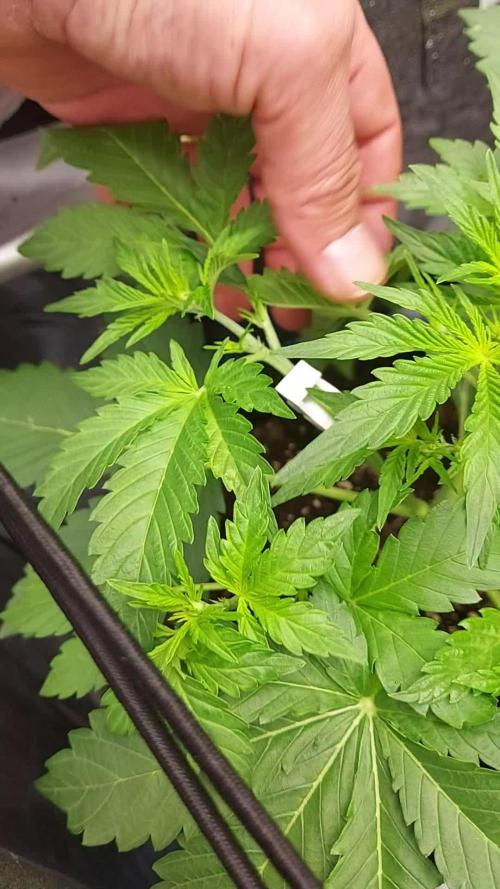
J'ai procédé à une légère défoliation. J'ai retiré environ 4 feuilles nourricières qui étaient devenues absolument énormes et qui faisaient trop d'ombre aux départs de fleurs et aux branches secondaires du dessous.
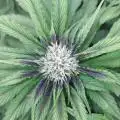
Comme on peut le voir sur les clichés, la plante a un aspect "ultra-compact". Le feuillage est d'un vert forêt très sain, les feuilles sont larges et bien dentelées. On voit clairement que malgré la défoliation, la canopée reste très dense. Les nœuds sont si rapprochés que la plante forme un dôme de verdure. Le système racinaire doit être en train d'exploser dans le pot géotextile pour soutenir une telle masse aérienne.
Merci à tous ceux qui suivent et a @Mia_BIOTABS pour ses précieux conseils et soutient .
l'évolution de cette Mac 1
! On surveille de près la cicatrisation du tronc, mais avec la vigueur qu'elle a, je ne me fais pas trop de soucis. À la semaine prochaine !
dernière foto .le 30/04
on dirait qu'elle c'est mis en floraison. lol a à peine 3 semaines . sois elle a eu un stress ( peut être la micro fissures) ou sa génétique. mais elle est très verte et superbe à admirer. je suis impressionné.
01/05
FÊTES DU TRAVAILLE BONNE FÊTES A TOUS
mais aujourd'hui petit LST .
vue la taille impressionnante, 45 cm , j'ai commencé à écarter la branche principale ainsi que les branches secondaires.avec clips et corde .
REMARQUE IMPORTANTE
la mac 1 est passée effectivement déjà en floraison.
bonne lecture



Likes
Comments
Share

@hassehujasse
Follow
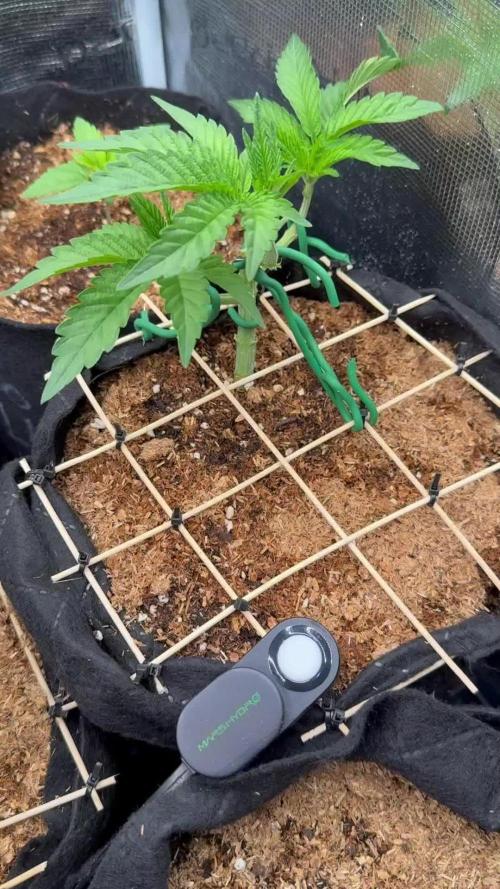
Wood stick and your plants going any derection. Palos de madera y tu planta esta andando po si mismaRecovering now. Does I need it? Another experience ahead. EnjoyAll My Lights on To all my plants.Lemon Cherry Gelato by @Barneys going well after transplantación, topping,LST
Lemon Cherry Gelato de @Barneys esta empesando dar su poder

Likes
6
Share


Processing
Likes
9
Share


@LittleBigTrees
Follow
Turned light to 12/12 start week 6 day 35.
Defoliated the central cola's to allow the sides to catch up.
She's stretching fast at the moment.
I'll start feeding her from week 7

Likes
26
Share


@otzicore
Follow
Video posted for this week was taken last night. Getting anxious on which plants will be kept. I just noticed the Zombie Kush with the smallest root zone, leaves and shortest height happens to be (by far) the frostiest. Will be running 1 of each, 1 more time to be certain. I will be taking these to the lab to be tested as well.


Likes
14
Share


@GODSGIFT_2005_JM
Follow
For LIQUIDS & Nutes ******GREEN BUZZ NUTRIENTS***** organic.
Also i’m using their LIVING SOIL CULTURE in powder form!
MARSHYDRO ⛺️ has large openings on the sides which is useful for mid section groom room work. 🤩
☀️ MARSHYDRO FC 3000 LED 300W
💨MARSHYDRO 6” in-line EXTRACTOR with speed-variation knob, comes complete with ducting and carbon filter.

Likes
13
Share


@Drawer
Follow
A sad week, I found bud rot and had to take my plants out and do a big check and remove all dense underdeveloped growth.
It will be a pretty big hit on the yield I guess but the most important thing is learning and that I did.
The bud rot could spread due to my RH being 65/70 at nights and it used to be +80 before, + bad airflow.
I got new fans in the tent and my dehumidifier was ordered already but its not in yet.
On the other side, the plants are looking pretty damn good, they smell amazing
and 3 of the 4 plants is getting a very dense nug structure.

Likes
15
Share


@JeyGanesha
Follow
Prima settimana di fioritura... tutto procede come deve .. 💪 forza belle piantine mie regalatemi della Apple strudel buona ed efficace per la mia cura🙏✌️

Likes
12
Share


@CanadianFillmore
Follow
Week 8 begins for Amnesia lemon haze. Frost, bulk and a lemon smell that smacks you in the face! Last week of feed before flushing.
Thanks for stopping by, tune in next week! 👽🌳🔥
Likes
52
Share


@WhiteEdge
Follow
12.03.2024
Continue into week two. Target EC is the same for this week
Girls looking great
Clean tanks and filters with h2o2+vinegar acid +bleach
Replace all filters
Mix new batch with 2ml AN connoisseur AB + Silica @ 1% H2o2 - total 30l
Donne one pass off long misting 2m
700 PPFD @ center, VPD 1.0, RH 53-56% day, RH 45-48% night, Temp Night-20c, Day-25/26c, Leaf temperature 23c, Light distance 60-65cm, CO2 750+ppm
560w@60cm distance
NT-Nutrient Tank - PH -5.9, EC -1.15, Temp-21c
13.03.2024
Top up tank with 10l off 1.2EC solution - 2ml AN Connoisseur A+B + 3g Big Bud @ 18l (1.16EC)
Replace all filters
Before top up, nutrient solution in tank was 0.84, after adding 1.2EC new mix is 1.03
PH is slightly rising, normal when EC is drooping
Girls grow nicely, no deficiencies, this week is start off stretchy faze
Remove some big and bottom leves
PAR 800 PPFD, VPD 1.0-1.1, RH 50-54%, Temp Night-21-22c, Day-25/26c, Leaf temperature 23c, Light distance 60cm, CO2 750+ppm
580w@60cm distance
50s ON time 20min OFF time Day Time
50s Off time 30min OFF time Night Time
NT-Nutrient Tank - PH -5.92-5.99, EC -0.89-1.0, Temp-20-22c
14.03.2024
Position TrolMaster Tent-X Box on tent and connect to internet. Temperature ,Light and humidity sensor is great, I lake that all sensors and connector boxes are on RJ connectors
Great and fast install, registration and connections off all cables, censors and light! Like ability to expand system with Aqua-X and Hydor-X for irrigation ,PH/ EC/Temp monitoring off nutrient tank
Controlling solenoid valves and pump will be SUPERB!!! Recycling type off timer are great for Aero misting!
With Inkbird equipment i have issues that all connections are permanent and if you have longer cables....😡
HLG Scorpion Diablo LED light is connect via LMA-14 light adapter ! Wow i can control dimming and timing off my light via Wi-Fi😀😊😎👏🙏🙌
PAR map 800max/600min PPFD, VPD 1.0-1.1, RH 50-54%, Temp Night-21-22c, Day-25/26c, Leaf temperature 23c, Light distance 60cm, CO2 750+ppm
HLG Scorpion Diablo@83%
580w@60cm distance
50s ON time 20min OFF time Day Time
50s Off time 30min OFF time Night Time
NT-Nutrient Tank - PH -5.95-5.99, EC -0.89-1.1, Temp-20-22c
15.03.2024
Top up tank with 15l off 1.2EC solution - 2ml AN Connoisseur A+B + 3g Big Bud @ 18l (1.16EC)
Replace all filters, still everything in pristine condition after every changing, nutrient solution in tank looking and smell fresh and clean.
Reducing humidity in night time below 50% , humidifier rise temperature to 22-23c at night
Day RH is 53%, in first two hours keeping temps and humidity lower to reduce deferential form night time to 1-2c
Don't want to have more than 10-15cm off stretch in next week
Girls drink more water and nutrients every day, think around 10-12l per day
Managing EC strength with adding slightly higher nutrients solution when top up tank. Overall its around 0.9-1.0EC for most of the time
PH is stabile , slowly rise in small increments. Need to adjust @ 6.2 to 5.9 every two-three days. Probably i will leave it to swing even more.
Diablo is at 80% power @ 45-55cm from top canopy, 900+PPFD in center, lowest corners get 650+
PAR map 920max/650min PPFD, VPD -1.1, DRH 50-54%, NRH48-50%, Temp Night-21-22c, Temp Day-25/26c, Leaf temperature 23c, Light distance 45cm, CO2 750+ppm
HLG Scorpion Diablo@80%
580w@45cm distance
50s ON time 20min OFF time Day Time
50s Off time 30min OFF time Night Time
NT-Nutrient Tank - PH -5.95-5.99, EC -0.89-1.1, Temp-20-22c
17.03.2024
Top up tank with 10l - 1.2EC solution - 1.8ml AN Connoisseur A+B + 3g Big Bud @ 18l (1.16EC)
Replace all filters, install one new. Total 5 mash filters + 2 disc filters
Remove some large fan leaves from all girls. Nothing crazy. Next week is final BIG defoliation and pruning
Clean room benches a little bit after defoliation.
Whole week all girls are doing great , no sign off any kind off stress or deficiencies. Superb fast growth.
Stretching is more apparent in the end off this week. Next week is going to be madness!
18.03.2024
Raise light 10cm , adjusting to canopy level..
HLG Scorpion Diablo@83%, Set sunrise/sunset dimming @ 30min - TrolMaster Tent-X
PAR map 890max/650min PPFD, VPD -1.1, DRH 50-54%, NRH48-50%, NT-21-22c, DT-25/26c, Leaf temperature 23c, Light distance 45cm, CO2 750+ppm
Week 2 off Flowering in Summary
100l off RO water
190ml+190ml AN connoisseur A+B, 15g Big Bud Powder
70kW electricity in total for light, Pumps and AC Infinity Fans. 58kW for Light + 8kW Dehumidification + AC Infinity ventilation
Week start @ 1.14EC, nutrient strength. Strength dropping every day by 0.1-0.2. Topping up tank with 1.2EC solution bring back strength to 0.9-1.0EC
Start using AN Big Bud powder for day two off this week. For next slowly reducing Nitrogen and add more Big Bud. Next week start @ 1.2EC
Girls look superb all time, Tropicana Cookies is short and bushy with lots off side branching. Need good defoliation next week .
Flowering going nicely, obvious sign off formation off bud sites, pistils have shown an all girls.
PH was stabile and move from 5.85 min to 6.2 max. Swing all week without chasing perfect number.
Light distance start at 65cm from canopy finish week at 45-50cm , PPFD levels around 800-940 in center, trough whole week
Temperature vary slightly from 23c at start off day to 26c max at some points. AC Infinity T6 extracting fan program in AUTO to kick in @ 26c
Night temps around 21-23c, dehumidifier start to work at night time to bring down humidity, trying also to minimize Day/Night temperature differential for this week also
Continue in next week at same environment settings and light strength..
Likes
15
Share


@Fronti89
Follow
Hi alle zusammen 😉 Nachdem Sweet Seeds mir 3 Sorten gesponsert hat hab ich noch eine 4 Sorte dazu gekauft weil ich 4×4 in 7 Liter machen wollte .Am Abend des 28.10.24 wurden die Samen in Easy Plug's gesteckt und mit einer leichten Nährlösung angegossen.In der Lösung befand sich Hesi Wurzel Complex & Hesi Superfit , dazu noch eine 3% Wasserstoffperoxid - Lösung damit die Babys es ein wenig leichter haben ! Nachdem alle Gekeimt sind außer eine Gorilla Girl wurden sie gleich in den Easy Block umgesetzt .Schlau wie ich war habe ich gleich am Anfang einen Ersatz Samen mit angesetzt (Sweet Seeds S.A.D Fast Version)Dieser ersetzt jetzt die fehlende Gorilla Girl.Leider hab ich vergessen mehr Leistung mit der Lampe zu geben , worauf sie ein wenig in die Höhe gewachsen sind .Aber alles noch im Rahmen. 😉 Jetzt werden sie für ein paar Tage in in meiner Anzucht-Box verbringen bevor es ins Zelt geht .


Likes
77
Share


@BipolarHellas
Follow
Hello there,
🇬🇷
so the previous week was good with slow but steady growth...the girls were fed with Bio Grow from GHF and some of the Enhancer...they are under a 50W Led,safe and sound,until transplant when they will be moved outdoors...
WEEK 3 : "RUN IF YOU CAN"
☠️Day 15...they are forming the 5th set of leaves...strange thing,when I get them out of their cupboard they tend to stretch their leaves upwards...when I put them back they are back to normal...I think it has to do with humidity...thinking of transplanting soon as I can see the roots on 2 of the 3...I started preparing the pots,I put Bio Grow from GHF and the babies will be transplanted there in a few days...just waiting for the weather to be stable as they will go outdoors...
☠️Day 16...💧watering time for my babies...they seem to be very well...awaiting for that transplant...today I was thinking about what to do with the girls in terms of training...what I have decided is that I will perform different techniques for each one of them...one will be left to grow naturally like a Christmas tree...the second will be topped and the third will be LSTed...it is a good chance to compare the final weight of each technique...what stresses me a bit is that these girls will go outdoors during the day and under low wattage Leds during the night...I am used to using an HPS lighting and I don't know if the sun here from my spot will be enough...moreover summer is coming...here in Greece the temps will go above 35° C in July...I guess I have work to do and solutions to find...
☠️Day 17...💧📥transplant is here...the girls were put in their final homes, pots of 15 L,and were watered with plain water...I used "Coco Humus" which is coco coir fiber mixed with 20 % manure and organic matter...Its ph is 6,0 - 6,8...I also added Bio Grow, 45 gr for 15 L substrate, and the same quantity of Bio Bloom, both from Green House Feeding... I was a bit confused if I should place the Bio Bloom now,but I decided to do so as these are their final containers...they are 100% organic so I am not worried about any kind of burn...
they are now inside under low wattage Leds so that they will slowly get used to their new environment...I may give them some sun in the afternoon...their roots had reached the bottoms of the solo cups,so it was a good time for transplanting...hope they will take it good...I don't like calling them with numbers so I will give them names...We have Angie,Michelle and Lucy...Girls say hello to everyone...
☠️Day 18...its cloudy outside...the girls will stay inside under their low lighted shelter...maybe I will take them outside for a couple of hours just to get some fresh air...transplant was OK for them,no signs of shock or something...they are a bit small but from now on they will have the mighty Sun with them outside...I hope they will boost...Run if you can babies...
💀💀💀...today they survived a massive attack from my son...he probably wanted his toys back from the pots...🤣🤣🤣Anyway,Michelle is a bit hurt on her stem..not something very serious but I have to keep an eye on her...
☠️Day 19...💧summer is here...with temps at 32°C the girls are outside sunbathing...🌞I uploaded a short video showing them off...
I watered each one with 500 ml of pure water (ph 6,9)...
☠️Day 20...it's too hot down here...the girls are enjoying the sun but I have a feeling I will have a problem with the temps outside...it's too early too be that hot...32-35 °C...
☠️Day 21....💧last day of the week...the girls are doing fine...I would like them a bit bigger but I think they will catch up...Today I used 6,0 ph water for the first time...usually I don't adjust it,straight from the tap...after a lot of research I decided to give them water at this ph as it is better for coco.I hope the will like it..
So,I hope u enjoyed this week like I did...see u next week..stay tuned...

Processing
Likes
34
Share


@Birale91
Follow
Day 71. Start week 4 looking great by now.
Day 74. Starting to have a bit smell of fruit with citrus. Hope her taste will be good.
Lots of trichomes on early stage of bloom. :)
Video on day 75 and 77.

Likes
13
Share


@Robeeriegenetics
Follow
Week 13 not a bad week if I do say so my self …guna tie down this week and begin spraying silver thiosulfate on donor plants then next week I’ll throw the donor plants into flower and begin the actual breeding project …which ever specimen reverses first shall be collected and used to pollinate which ever one doesnt will be killed and removed acord


