







@Ultraviolet
Follow
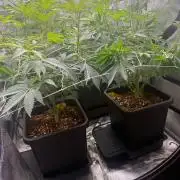
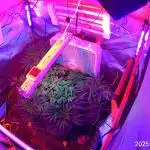
Thank you. Gave her a cocktail to help with stress. Added 1st net for lateral support, not so much now, but for later. Blue light is absorbed by photoreceptor proteins called phototropins, which trigger a hormonal response that causes cells on the shaded side to elongate, making the plant bend toward the light. Try and fill this side a little. She is quite big already, just needs to find her stride again after the undue torture.
The mind is constantly working and producing, just like a factory. It's not just a passive recipient of information but an active producer of ideas, attitudes, and beliefs. The "ingredients" in this factory are the information you consume, such as books, conversations, and the media you engage with. The "products" are your thoughts, beliefs, and actions. The quality of the ingredients directly influences the quality of the output. To guard the door of your mind means to be selective about what you allow in. It involves actively choosing to consume positive and constructive information while filtering out negativity and harmful influences. If you don't guard your mind, others can "dump" whatever they want into it, leading to undesirable results in your life. You must take responsibility for the inputs to ensure you produce the outcomes you desire.
5 apex stems with 20-30 mini cola, let them develop a little, with the apical dominance shattered, all those 20-30 will all compete with each other as soon as that stretch is initiated. Key to a good stretch is making sure the plant is cycling efficiently, with large ATP conversions occurring lights out.
For now, I'm keeping light intensity high. A plant will slow its vertical growth in very high light intensities, leading to a more compact form with thicker stems and leaves. This response is a protective mechanism against light stress, which can damage the photosynthetic apparatus and lead to symptoms like leaf scorching, yellowing, and brittleness. Instead of growing taller, the plant invests its energy into creating a more robust, stress-tolerant structure.
Providing plants with necessary antioxidants helps protect the photosynthetic apparatus by scavenging reactive oxygen species (ROS) that cause damage from excess light.
UV light exposure can impact the xanthophyll cycle by either enhancing its photoprotective role or causing damage, depending on the intensity and type of UV radiation. UV exposure can trigger the synthesis of more xanthophyll cycle pigments to increase the plant's capacity to dissipate excess energy, but it can also cause direct damage, particularly to Photosystem II, and may lead to a decrease in the de-epoxidation state (DEPS ratio) which indicates a reduced capacity to dissipate excess energy.
Plants can respond to UV stress by increasing the synthesis of xanthophyll cycle pigments, such as violaxanthin and zeaxanthin, to improve their photoprotective capacity. UV-induced changes in xanthophyll cycle pigments can be linked to a plant's overall tolerance to high radiation stress. The xanthophyll cycle helps protect against photoinhibition, which is especially important when the plant is exposed to high levels of both UV and visible light. High doses of UV radiation can directly damage photosynthetic components, including the proteins, lipids, and pigments in the thylakoid membranes. Exposure to UV radiation can have a mixed effect on the de-epoxidation state (DEPS ratio) of the xanthophyll cycle pigments. In some cases, UV can inhibit the conversion of violaxanthin to zeaxanthin, resulting in a lower DEPS ratio and a reduced capacity for energy dissipation. However, the total pool of xanthophyll cycle pigments may increase, and this enhanced pool size could provide a greater potential for photoprotection despite a lower DEPS ratio.
The xanthophyll cycle works alongside other mechanisms, such as the accumulation of flavonoids (UV screens), to protect the plant from UV-induced damage.
Blue light repairs 100% UV-induced damage in plants through a process called photoreactivation, which uses a light-dependent enzyme called photolyase. This enzyme uses energy from blue and UV-A light to directly reverse the damaging pyrimidine dimers in the DNA caused by UV-B radiation, a key mechanism for maintaining the plant's genetic integrity.
After carbon, light, water, temperature, and nutrients, the limiting factor of a plant's growth is often its own internal factors or the amount of a key ingredient. Chlorophyll concentration is one such factor, as the amount of this pigment limits how much light can be captured for photosynthesis. Other factors include chloroplast number, respiration rate, and the concentration of carbon dioxide in the atmosphere, as plants are often in a CO2-deficient condition.
60x60x18=64800seconds x 700 = 45,360,000moles. 45DLI
Exposure to 165 µW/cm² of ultraviolet-B (UV-B) light for 3600 seconds = 1 hour, a extremely high, acute dose triggering stress responses and protective mechanisms.
.
The plant's photoreceptor protein, UVR8, senses the UV-B radiation. This triggers a signaling cascade that activates specific genes to protect the plant from damage. In response to the UV-B signal, the plant ramps up the biosynthesis of protective compounds like flavonoids, phenolic acids, and anthocyanins. These compounds absorb UV radiation and accumulate in the epidermal layers of leaves to shield inner photosynthetic tissues. The plant may increase leaf thickness or deposit more cuticular wax, creating a physical barrier to the radiation. The plant will produce more enzymatic and non-enzymatic antioxidants to neutralize the reactive oxygen species (ROS) produced by the UV-B radiation. The plant activates enzymes, including photolyases, to repair DNA damage caused by the UV-B. These repair mechanisms are critical for preventing permanent genetic mutations.
While protective measures are activated, a high dose delivered over a short period can cause stress that overwhelms the plant's defenses.
Photosynthesis is highly sensitive to UV-B. A high dose can inactivate Photosystem II (PSII), damage thylakoid membranes within the chloroplasts, and reduce chlorophyll content, which lowers the plant's overall photosynthetic capacity. Despite repair mechanisms, high UV-B doses can inflict persistent damage on the plant's DNA. The overproduction of reactive oxygen species can cause oxidative stress, leading to the oxidation of lipids and proteins and disrupting cellular function.
I am playing in the enchanted forest.


@M420_GROWS
Follow
Right out of the nursery!
Root came out of stone wool by approx 2cm before moving into Waterfarm.
I am not very comfortable with current light setup. I will leave flood light for vegetation as it is for this run but will try to organize some better equip befor flower.
Current cooling also needs improvement - I try to do it step by step.
Day 4 - Got an accident, not sure if she survives it. I will keep watching her but probably will update less frequently in next days.
Day 7 - Alright, looks like she will survive that but she looks very week because of stress I gave her in first days...


@biologischNL
Follow
27th jan:
Topped and Started LST. Plants are looking fine. Expecting slowed growth. Looking to baby these plants with the LST not looking to break any stems so slow and steady wins the race, especially when you only have 2 plants . Minimal lollipopping as Im making sure to leave them bushy
Im not sure if I have said this already but I abandoned the main-lining idea, good for when you have a lot of space but I need to keep it under 30cm for flower, I need that bushy plant as instead ill have lots of stem taking up space instead of colas. I might try mainlining next run.
31st jan:
theres a possiblity I might have a 2 meter tall tent, in which case I really shouldnt be training these plants that hard. But im still training for 15cm until veg.
#1 really hates me and is just trying to increase in height. (not stretching i dont think) So I upped my game and really took a few minutes to delicately tuck those leaves out.
#2 im not sure whether its having a hard time recovering from the initial top, but it literally hasnt increased in height at all. Interesting
2nd feb:
note: keep lights at 50-60 % through veg. Plants were 31c at 75-80% and started canoeing (heat stress)
#1 seems to be vegging much faster than #2, probably the reason why it has developed some sort of deficiency. I assume potassium. #2 is a bit slower but seems perfectly healthy, seems to be growing out more bushy and doesnt really care about vertical growth.
3rd feb:
added 60 grams of 248 (bloom 1) fertiliser to top dress for each plant over 1.5 liters per plant. This water also had some banana peels I let brew over 2 days. Not sure if it will do anything but we will see.


@Roberts
Follow
Divine indica is growing great. She has about a week of bulking left. She has some nice fat colas developing. She has a light nitrogen deficiency going on. I am okay with that and did add more when I topped her solution off. She has been very hungry and thirsty. Everything is going really well. I have the light on at around 70 percent durle to avoiding it getting too hot or intense on colas. Trying to anyway. Thank you Spider Farmer, and Divine Seeds. 🤜🏻🤛🏻🌱❄️🌱
Thank you grow diaries community for the 👇likes👇, follows, comments, and subscriptions on my YouTube channel👇.
❄️🌱🍻 Happy Growing 🌱🌱🌱
https://youtube.com/channel/UCAhN7yRzWLpcaRHhMIQ7X4g



@The_Doctor_Green
Follow
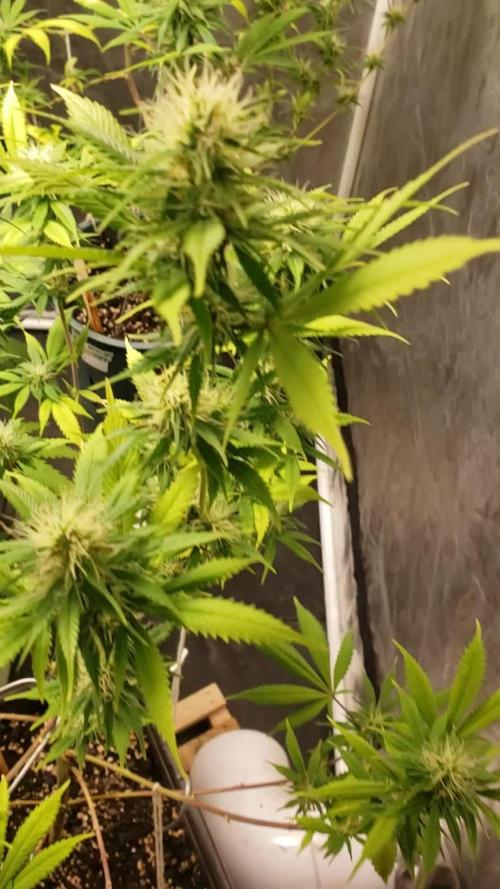
Hola a todos!!
Esta semana he repetido el riego de la semana pasada 2ml x litro de agua de fertilizantes .
He añadido un poco de nitrógeno porque a las laughing budda se han puesto más amarillas las hojas.
Use top bloom y top candy (2ml) y top veg 1ml.


@MR_FLEXOPONIC
Follow
Week 11 of veg day 76--------------------------7/30/22-----------------------Week 5 of flower day 34
Got new lights for my Veg tent (viparspectra 1000) and flowering tent (viparspectra 1500) the 1 Runtz in flower the buds are plumpinging up nice and with the new light should do even better
Everything in veg tent is doing great as well and with 3 -4 more weeks of veg, upping the pot size from 3 to 5gal, and the new viparspectra 1500 light the buds should be way bigger then any other grow I've done


@JohnnyBlaz3
Follow
Day 92
Day 30 Bloom
42ish days remaining.
Pour some SUGAR on meeeee.........wowzers the sugar is really starting to cake the sugar leaves now. Got tons of healthy bud sites forming and the smell is just delightful. Did another decent defoliation to keep all the buds site in the light. Keeps it nice and clean with great air flow. Speaking of air flow I added an oscillating fan to keep the air moving under the canopy better.
There is a problem forming that I'll need to take care of this week. Another purchase?? 😡 lol
De-humidifier......the humidity is very slow starting to raise. I started with 2 humidifiers on full, then 1 on full, then 1 on min for a bit then no humidifier and now its starting to raise with no humidifier so I'm gonna need to deal with this asap as it will become a very big issue in the future if I let my girls get moldy, but no chance I would let that happen! so i'll be on the search for a decent used one this week or purchase a new one unless I learn something new here, which I probably will.
A question this week too. about Harvest. mayb 2 questions. So I hear alot of tricks regarding harvest. 24-48-72 hours of darkness before harvest then cut them in the "dark" meaning dont let the bloom lights come on again before harvest. different flush times and so on. what works best for you guys?! I'm thinking 7 day flush since thats why my nute sched says and it hasnt led me astray yet. I'm considering doing a tiny mid bloom flush reccomended by a friend, i like the idea to give just pure water for 1-2 days and kind of give the plants a break from the massive ppms i'm putting them through although I might skip this step if not needed either.
2nd part of the question, if the flower time for this strain is 70-75 days, I realize I should harvest when most of the tricones are milky and some clear with very little to no amber ones. but if I flush for a week before harvest, how do I know when to start the flush, how long is my harvest time frame for maximized potency. I'm guessing with experience I'll be able to know my girls and say yup harvest is x days out but for this one not too sure.
40ish days til harvest is bittersweet, feels so long but part of me loves it, how big can/will these buds get with another 42 days!
Thanks again friends for following, this week the sugar came now I wanna see the weight really start being packed on.


@Mr_ZAF_Budz
Follow
So I did a partial harvest of 16 of the main colas on day 65 of 12/12 and I am very happy with the result. I have the left the lower buds to ripen for another week. The terps are amazing and the buds are twinkling with trichomes.
I will upload the cured weights and pics in 2 weeks.
Happy growing✌️🏼


@matias_scrog
Follow
Las puntas de varias hojas de la rainbow se han enrolado hacia arriba levemente, esta semana he regado con agua solamente, mañana pondré la mitad de la dosis de fertilizante. Gorilla ghost va increíblemente bien, los pistilos empezaron a madurar, esperando con ansias el día de la cosecha, pero sin apurarme!

shorts_status_processing



@DogDoctorOfficial
Follow
LSD Zamnesia Tripping 🙂 | Fresh Frozen, Ice Water & Temple Balls — Week 16 From Seed
First of all…
Yes 😄
We are once again dividing the harvest reports into multiple chapters, and once again we apologize for that. But honestly, there was simply no way to fit:
* harvest,
* drying,
* trimming,
* curing,
* smoke review,
* macro photography,
* fresh frozen work,
* washing,
* extraction,
* and hash making…
…into a single GrowDiaries update without rushing through important parts of the process.
And this part?
This part deserved its own spotlight completely.
Because this week was not about flower anymore.
This week was about resin.
Living resin.
Fresh frozen material.
Ice water extraction.
Patience.
Cold temperatures.
Sticky hands.
And slowly transforming trichomes into beautiful hash.
For everyone joining only now, quick recap:
These LSD girls were grown under 12/12 from seed from the very beginning. Minimal training, mostly natural structure, gentle leaf manipulation, and environmental balance instead of aggressive intervention.
Part of the harvest was dried traditionally and already covered in the previous report.
But another part…
…never got dried at all.
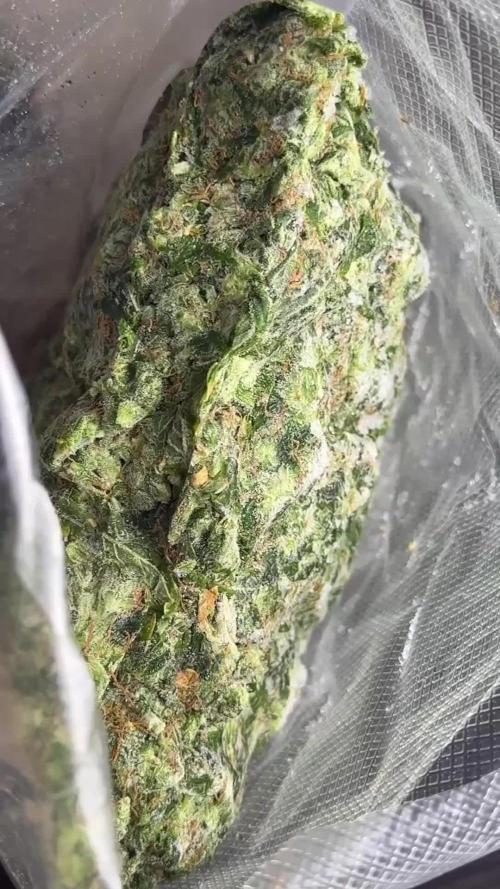
Straight during harvest, selected flowers were removed fresh from the plants and immediately vacuum sealed before going directly into the freezer.
No drying.
No curing.
No waiting.
Fresh frozen.
And that changes everything.
The goal here is preservation.
When flowers are frozen immediately after harvest, a large portion of the volatile compounds:
* terpenes,
* flavonoids,
* aromatic compounds,
* and delicate resin characteristics…
…can remain much closer to their living state compared to traditionally dried material.
This is why fresh frozen extraction became so respected in modern hash making.
It captures a version of the plant that only exists for a very short moment in time.
Alive.
Wet.
Fresh.
Fully expressed.
And honestly?
Opening those frozen bags weeks later felt like reopening harvest day itself 😄
The flowers still looked incredibly resinous even after sitting frozen for weeks waiting for wash day.
Now let’s talk process.
For the wash itself, we used the Bubbleator machine courtesy of Zamnesia , and honestly huge thanks to them for providing it. They knew I wanted to start exploring ice water extraction properly, and they were kind enough to support the journey.
The setup itself is actually beautifully simple.
First:
ice.
Lots of ice 😄
The machine was filled partially with ice first before adding the fresh frozen material inside the working bag.
The flowers themselves were placed inside a closed 220-micron washing bag. This is important because the bag keeps the plant material contained while still allowing the trichome heads to separate during agitation.
After placing the material inside:
* more ice on top,
* cold water added,
* everything submerged,
* and then…
…we waited.
Around 30 minutes or so.
And this step is actually extremely important.
A lot of people think washing starts when the machine turns on.
But honestly?
The wash starts before that.
This resting phase allows the frozen material to:
* slowly rehydrate,
* absorb water again,
* become fully saturated,
* and most importantly…
* become extremely cold throughout the entire plant material.
Why does this matter?
Because trichomes become brittle at very cold temperatures.
The colder everything gets:
* the easier the resin heads separate,
* the cleaner the release becomes,
* and the less physical force is required.
That is also why ice exists under and above the material:
* lower temperatures evenly,
* protect the resin,
* and maintain the cold environment throughout the wash.
Once the water temperature approached near freezing…
…the machine came alive 😄
And honestly?
Watching the water slowly transform during the wash is always magical.
At first:
just ice,
water,
and flowers.
Then slowly:
foam,
cloudiness,
resin separation,
and finally that beautiful milky golden water hash makers love seeing appear.
Meanwhile on the side, we prepared the filter bags.
We did not use every single micron separation individually because honestly sometimes over-separating becomes unnecessary depending on goals and material quality.
Instead, we focused on collecting the grades we actually wanted to work with and enjoy.
And then came one of the most satisfying parts of the entire process:
Collection 😄
Slowly lifting the bags.
Watching the resin gather.
Carefully scraping.
Separating grades.
Observing texture and color differences.
Beautiful creamy resin everywhere.
Some lighter.
Some slightly darker.
Some sandy.
Some greasy.
Every layer carrying slightly different characteristics.
After collection, the resin was carefully freeze-dried.
And this part also requires patience.
First freeze drying.
Then breaking it apart.
Then more drying.
Then more waiting 😄
Depending on environment and conditions, full drying can take several days because trapped moisture inside hash is dangerous long term. Rushing this step can ruin months of work later.
In this case, the process stretched closer to about a week before everything felt properly stable and ready to work.
And honestly…
This is where the magic really started.
Once dry enough, we allowed the hash to rest briefly before beginning the hand-working process.
No extreme heat.
No giant pressure.
No fancy machinery.
Just:
room temperature,
body warmth,
gentle pressure,
folding,
rolling,
stretching,
and patience.
The room itself stayed around 15°C, which turned out to be perfect for working the resin slowly without overheating it.
And this step matters far more than many people realize.
When hand-working hash properly:
* oils redistribute,
* compounds begin merging,
* terpenes spread through the material,
* oxidation starts slowly,
* texture evolves,
* and curing begins transforming the resin itself over time.
You are not simply “rolling hash.”
You are starting a living curing process.
And slowly…
The texture changed completely.
From sandy loose resin…
to creamy material…
to sticky dough…
to smooth beautiful temple balls.
Honestly, seeing that transformation happen in your hands never gets old 😄
Final result?
Three temple balls total:
* two smaller ones from smaller micron collections,
* and one large main temple ball that became the true star of the session.
Final weight:
46.5 grams.( big one )
And honestly?
I was extremely happy with that result.
Especially considering the quality, texture, color, and how beautifully this LSD washed overall.
Once formed, the temple balls were wrapped carefully in parchment paper before being vacuum sealed for long-term curing.
And now?
They rest.
Months.
Maybe longer.
Waiting.
Because the goal here is not “fresh hash.”
The goal is evolution.
Traditional temple ball style curing allows:
* oils to redistribute,
* compounds to merge,
* texture to transform,
* aroma to deepen,
* and the entire resin profile to mature over time.
Almost like aging wine.
Or curing cheese.
Or fermenting traditional products slowly and intentionally.
This is medicine with patience built into the process.
And honestly…
That part alone deserves respect.
We also included:
* detailed process photos,
* collection stages,
* macro photography,
* texture closeups,
* curing progression,
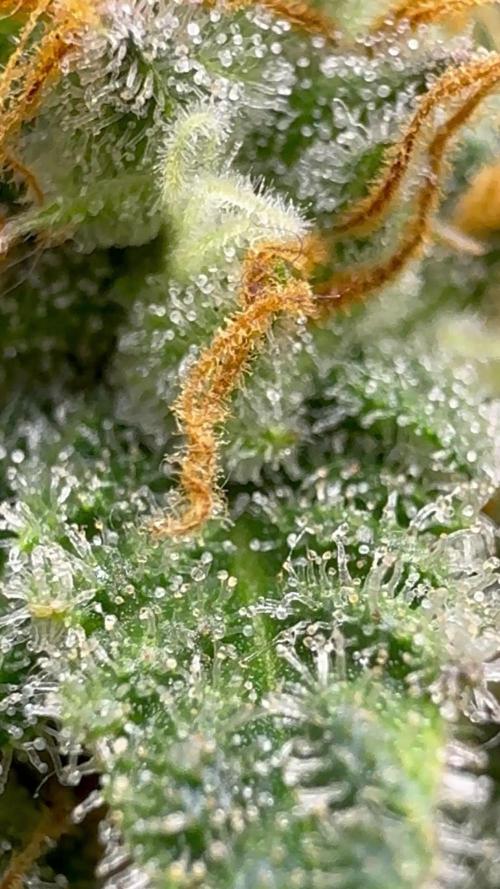
* and multiple stacked macro images showing the resin in insane detail.
Some of these stacks reached:
* 62 frames,
* 87 frames,
* 114 frames,
* and even 152-frame focus stacks.
Because honestly, hash under macro magnification becomes another universe completely.
The textures stop looking real.
Tiny resin mountains.
Oil rivers.
Micro-crystals.
Glossy surfaces.
Soft creamy structures.
It almost starts looking geological instead of botanical 😄
Mr. Baggy of course supervised the entire operation like the professional resin inspector he clearly believes he is.
And next week…
The final chapter arrives.
Smoke review.
Curing review.
Flower review.
Hash review.
Terpene evolution.
Effects.
Textures.
Lessons learned.
Mistakes made.
And final thoughts after this entire LSD journey from seed to cured medicine.
And finally…
Thank you.
To Zamnesia for the genetics and the Bubbleator.
To Plagron.
To F.O.G.
To all the LEDs, gear, and equipment involved.
To GrowDiaries.
To the community.
To the OG followers.
To the new curious visitors.
To the silent supporters.
To the skeptics.
To the lovers and even the haters 😄
To everyone spending time sharing this strange beautiful plant journey with us.
Wishing everyone:
cold water,
sticky fingers,
healthy plants,
beautiful resin,
and enough patience to let good hash become great hash 🌱


@The_Lonely_Farmer
Follow
So yet again it refuses too let me add images...
In honesty I wont sit her and keep trying for another hour instead if it doesnt upload it is what it is...
Luckily it allowed 1 video i say lucky this situation doesnt help as i find growdiaries so usefull in helping myself keep a track....
Not much done with these girls apart from i have removed select few that were bot upto scratch and left with these 5/6 that are themselves not showing great growth compared too my other diary.
I may remove the testers that I notice no improvements as too better assist the others,
Also I am lucky atleast 1 of each tester strain is still standing 🙏 hopefully this week shows me no others are worthy of the compost heap 🤞🌱
Let's hope a week of hst pushes them too grow this week coming (week 4)...
Again apolagies minimul images it annoys myself but theres not much I can do unfortunatley.
Growers love, stay blessed 💚
Please note also it wont allow me too change nutrients or conditions now also... I think I will not use this app any longer if continues



@sellem
Follow
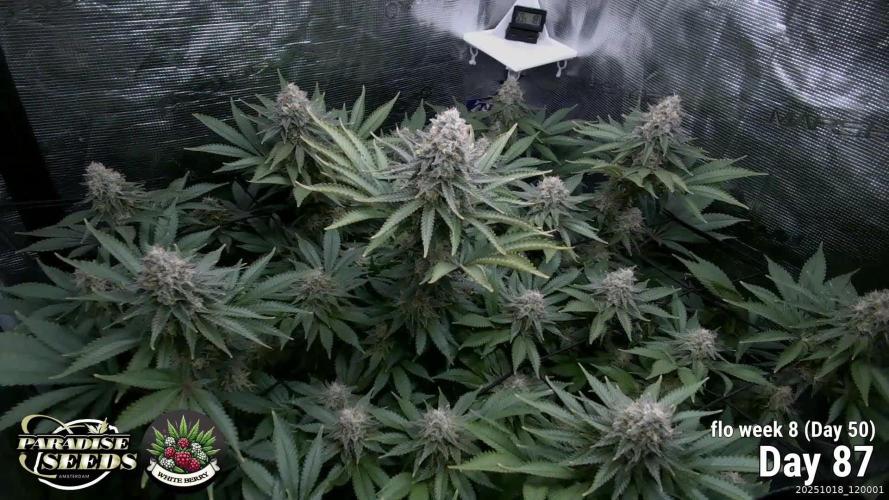
My how she smells and fades 😋😍👌
Getting some really nice coloration on her in her last stage 👏👏.
Trichomes look good, ill let her rip for another week or so to have the middle and bottom buds catch up a bit, and probably harvest during my vacation. Looks im gonna be busy for a while with her.😵
Watering still stays 6L at ~6PH 5ml/L Bloom, 5ml/L Green Sens.
Did some final and thorough defoliaton this week because i did not like that the RH was creeping towards 60%.
Next run already decided for a 1:1 Plant, also from Paradise Seeds. Photoperiods it is for now 👻
Harvest is approaching 💀
