


Processing
Likes
Comments
Share


@Ensign420
Follow
Week 02 Introduction
This week has been a bit of a struggle. Had my first experience dealing with slime and brown algae. But I think adding enzymes and increasing the beneficial bacteria helped to fix the issue. Also experienced nutrient burn for the first time. My nutrient solution strength got as high as 671 PPMs. So backed it down to about 430 PPMs during the end-of-week reservoir change. Also cut Hydroguard (expired?), CaliMagic, and Superthrive from this grow. Now she's still stunted, but is starting to recover. Hopefully...
[START OF WEEK 02]
Day 01 - Monday - 08/10/20 - Total Days: 008
-----------------------------------
- [0830]: Still looks a bit yellow. But getting larger!
--- Solution strength was at 248 PPMs.
--- Just topped off with a bit of distilled water
--- PH went up to 6.1 so PH'd down to 5.8
--- Ran the top feed for a bit to wet the hydroton.
- [2130]: She's looking even more yellow now.
--- Even the new leaves are really yellow.
--- Decided to add more base nutes.
--- Added 4ml of Sensi A
--- Added 4ml of Sensi B
--- Now at about
--- Solution Strength went up to 304 PPM.
--- PH was at 6,
--- Also raised the water level a bit more.
--- I really hope it's a nutrient deficiency and not an over-watering issue.
--- Please live!
Day 02 - Tuesday - 08/11/20 - Total Days: 009
-----------------------------------
- [0830]: Looking less droopy. But still yellow.
--- Decided to do a reservoir change.
--- 4.5gal of distilled water
--- 8ml of Sensi Grow A
--- 8ml of Sensi Grow B
--- 8ml of Voodoo Juice
--- 4ml of B-52
--- 4ml of CaliMagic
--- 4ml of Hydroguard
--- 4 drops of Superthrive
--- PH'd down to 5.8
--- Solution strength: 302 PPM
--- Since I didn't want to risk over-watering the rockwool, I did not to do a top feed, may do one tonight after the sleep cycle (lights are still set to go off at 10am and back on at 4pm).
--- As I was doing a reservoir change, I noticed that the tubes and bucket were a bit slimy. Didn't really stink or anything. Is this normal? Maybe due to the Hydroguard and Voodoo Juice?
--- I hope she gets better soon!
- [2215]: Getting larger! But still yellow.
--- Also can see a root growing through the net pot! Tiny little thing but it's there! Will have to start dropping water once more appear.
--- After looking over a few DWC diaries using AN nutes, seems like my solution strength is still too low. Most around this stage average around 500 PPMs with about 4ml per gallon.
--- Top fed for a minute to wet the top of the hydroton.
--- Solution strength went down to 263 PPM.
--- Added 8ml more of Sensi A
--- Added 8ml more of Sensi B
--- Now base nutes are at 16ml for 4.5 gal of water.
--- PPMs went up to 411.
--- Still lower than 500 PPMs, but that's okay.
--- PH was at 6. Not sure if I should adjust PH using AN nutes. So going to not ajdust unless PH goes above 6.1.
Day 03 - Wednesday - 08/12/20 - Total Days: 010
-----------------------------------
- [0830]: Looks like more root growth!
--- She still looks yellow. But leaves are perky.
--- PH was at 6.2 so lowered down to 5.8.
--- Solution strength was at 394 PPMs
--- Since roots are still growing, I decide to lower the water level a bit. Now water level is a bit below the net pot.
- [2200]: Root is getting longer!
--- Slime is returning. Not sure why.
--- Solution strength: 357 PPMs
--- PH: 6.1
--- Decided to add an enzyme along with more beneficial bacteria to hopefully cure the slime.
--- Added 16ml of Sensizym
--- Added 5ml of Hydroguard
--- Added 8ml of Voodoo Juice
--- New solution strength: 430 PPMs
--- New PH: 6.1
--- Top fed for a minute.
--- This slimy residue is really freaking me out! I hope the added enzymes will help eliminate the slime.
--- Going to do a full reservoir sterilization/nutrient change over the weekend. Please survive until then girl!
Day 04 - Thursday - 08/13/20 - Total Days: 011
-----------------------------------
- [0930]: I think the enzymes worked! There is little to no slime now!
--- Although I think the root was also dissolved in the process. It's now just a little stub sticking just below the net pot. The enzyme is also suppose to dissolved dead roots too but guess that root was too weak? Not sure what happened there. But I think the slime is cured!
--- Solution strength went down to 395 PPMs. Decided to add more base nutrients.
--- Added 8ml of Sensi A
--- Added 8ml of Sensi B
--- Added 4ml of B-52
--- Solution strength went up to 598 PPMs.
--- PH was at 6.1
--- As long as the PH is between 5.5 and 6.3, I'm not going to use PH Up or Down. But still will monitor PH levels.
- [1715]: Checked up on her after her nap and shes looking alive but stunted. But no slime!
--- Decided to add some sugars to help maintain the enzymes and beneficial bacteria.
--- Solution strength was at 587 PPMs.
--- PH was at 6.2
--- Added 8ml of Bud Candy
--- Solution strength went up to 671 PPMs.
--- PH also went up to 6.3
--- Lowered water level a bit to hopefully promote more root growth.
--- Top fed for a minute.
--- She is getting bigger, but still looks yellow.
Day 05 - Friday - 08/14/20 - Total Days: 012
-----------------------------------
- [0915]: Leaves look a little burnt on the tips. Still no slime.
--- Going to back off on the PPMs to hopefully fix the nutrient toxicity.
--- Solution strength was at 632 PPMs
--- PH was at 6.3
--- Added/Removed water until PPMs were at 536.
--- PH was still at 6.3
--- Raised water up a bit, then top fed for a minute.
- [2200]: Looking better. Still yellow though.
--- Solution strength: 514 PPMs
--- PH: 6.5
--- Added PH down.
--- New solution strength: 518 PPMs
--- New PH: 5.2
--- PH was kind of high. So decided to PH down. Had to use quite a bit to bring it down. But eventually got it to drop down to 5.3. A little low, but so far, the PH has always gone up so wanted to start it really low.
--- Ran the top feed for a minute to re-saturate the top of the hydroton.
Day 06 - Saturday - 08/15/20 - Total Days: 013
-----------------------------------
- [0830]: She looks stunted. leaves are still yellow.
--- Solution strength: 514 PPMs
--- PH: 5.6
--- Top fed for a minute.
--- Not sure what to do at this point. Going to do another reservoir change soon. Hoping she lives until then.
- [2145]: Looking pretty much the same.
--- A bit of slime has returned. Since I've been diluting the nutrient solution, the enzyme ratio has dropped. So I guess this is expected.
--- Also noticed that slime build up was on the air-stones. Never really checked the stones so not sure how long that has been there. Looks brown too, which can't be good.
--- Going to do an H202 sterilization of the system (minus the net pot) tomorrow so did not add anything.
--- Lowered the water level to below the net pot.
--- Then top fed for a minute.
Day 07 - Sunday - 08/16/20 - Total Days: 014
-----------------------------------
- [0900]: STERILIZATION DAY!
--- Decided to skip today's night cycle for a deep clean.
--- I'm hoping that skipping a night cycle won't be too stressful.
--- Temporarily moved her to a new bucket.
--- Used about a half of gallon of straight distilled water to flush out the net pot.
--- Drained the system and wiped up all the brown sludge. Also removed the air stones and cleaned up all the goo.
--- Filled the system with 2 gallons of distilled water and at least 30ml of food grade hydrogen peroxide (35% strength).
--- Yea its a lot, but since I'm not going to sterilize the system overnight, I went with a really high doseage. Basically I kept adding until I started to see little bubbles start to form.
--- Then I ran the water pump.
- [0915]: Boiled the air stones in tap water for about 10 min. Then reconnected them to the airlines.
--- I let the air stones and hose soak in the sterilization solution for about 5 minutes so the peroxide can absorb into the stones. Then ran the air stone to help mix and agitate the solution.
--- Occasionally, I'd repeat the process of turning the air pump off for a few minutes to let the stones soak.
- [1000]: Covered the top two row of holes of the net pot with some aluminum tape. Hopefully this solves the light leaking in through the hydroton.
- [1200]: Used an old toothbrush and scrubbed the pump clean. Then drained the system.
--- Refilled with more distilled water and peroxide. Again added a lot.
--- Ran system again to sterilize even more.
- [1530]: Drained the system and refilled with distilled water to rinse.
--- Ran the system for a few minutes, then drained and rinsed again.
--- Did this a few more times over about an hour.
- [1630]: Added 4 gallons of fresh distilled water.
--- Added 15ml Sensi Grow A
--- Added 15ml Sensi Grow B
--- Added 12ml of B-52
--- Added 16ml of Voodoo Juice
--- Added 16ml Sensizym
--- Solution strength was at 430 PPMs
--- PH was at 5.6
--- I was going to add Hydroguard, but I think the bottle is expired. Since 2017 or 2018!? I think Hydroguard is good for up to 2 years from the date on the bottle or 6 months after opening. So not going to use from now on. I wonder if this could have contributed to the slime build up.
--- Also removed the CaliMagic and Superthrive too. Going to only use AN products to eliminate the chance of incompatible nutrients.
--- Placed her back in the bucket and top fed for a minute.
--- Here's hoping for the best. Going to let it ride until morning! Please feel better!
[END OF WEEK 02]

Likes
2
Share

@GoodTimesOrganics
Follow
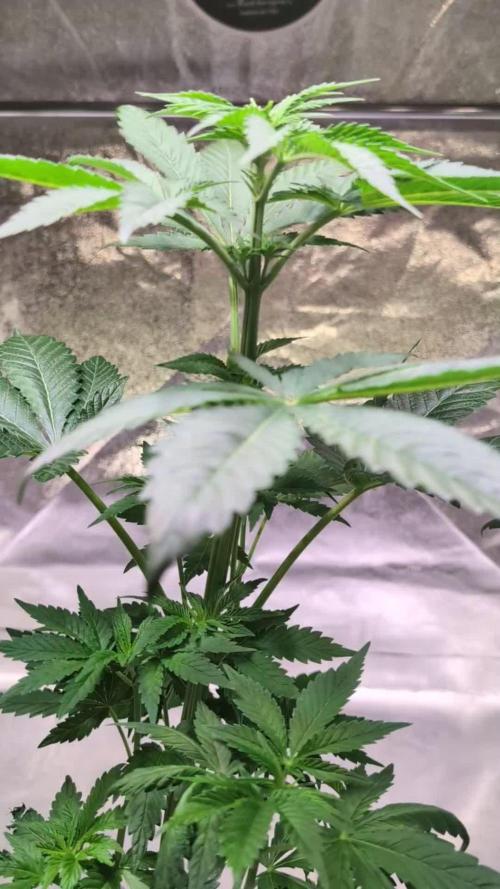
Hi liebe Community! 💚
Der zweite Strain von Good Times Genetics. Entwickelt sich wunderprächtig und es sind sehr schöne große und Breitgefächerte Blätter zu erkennen. Ein schönes Wuchsbild verreint mit einer starken Indica Dominanz.
Bei diesem Typ allerdings liegen die Seitentriebe etwas näher am Haupttrieb, als bei der anderen Pflanze.
Gestern wurden die Ladys ausselektiert und in ihre neuen Töpfe gepflanzt.
Wir sind mega gespannt, wie sich die Pflanzen weiter entwickeln.
Nach der nächsten Woche Erholung wird noch ein Topping folgen.
Die Wachstumsbedingungen im Growzelt sind weiterhin am Optimum und Stabil:
———————
🌞 Temp: 23°C
🌚 Temp: 20 °C
💨 RH: 58%
VPD: 0,86 kPa
😎PPFD: 330 mqm
———————
Stay Tuned! 💚
Likes
43
Share


@DeepWaterGrower
Follow
[DAY 78] - 12/12/2022
- TS1000 40 cm distance - 100% dimmer: 144 watt;
- Light cycle 20/4;
- Height: 74 cm from clay (the other one is 83 cm from clay);
- 24° C - 60% RH during light - 19° C - 70% RH during night;
- EC 1.7- PH 5.9.
[DAY 79] - 13/12/2022
- 24° C - 60% RH during light - 19° C - 70% RH during night;
- EC 1.5- PH 5.9.
[DAY 80] - 14/12/2022
- 24° C - 65% RH during light - 19° C - 80% RH during night;
- EC 1.4 - PH 6.
[DAY 81] - 15/12/2022
- 22.5° C - 73% RH during light - 19° C - 80% RH during night;
- EC 1.4 - PH 6.1;
- Defoliation.
[DAY 82] - 16/12/2022
- 22.5° C - 70% RH during light - 20° C - 80% RH during night;
- EC 1.4 - PH 5.9;
- Pretty fine, some spots here and there on the leaves.
[DAY 83] - 17/12/2022
- 22.5° C - 70% RH during light - 20° C - 80% RH during night;
- FLUSH EC 0.3 for 24 h.
[DAY 84] - 18/12/2022
- 22.5° C - 70% RH during light - 20° C - 80% RH during night;
- EC 1 - PH 6.

Likes
16
Share


@Oimjr
Follow
Still going...sigh...
3/18 ; did a water change and man is ut getting awkward getting her out of the tent to do water changes. I might drill and put a valve on the very bottom of the bucket next grow to make water changes a little easier in the future. 4 gallons of well water with 4 tsp of maxi grow and 1 tsp of Kool bloom. I added 1 tbl of calmag for the hell of it. The older leaves are looking a little stressed. The buds seem to be swelling to me, but strange enough, seems like the smell is decreasing. But what there is, is very fruity.ph to 6.1
Likes
2
Share

@GreenEldritchGardens
Follow
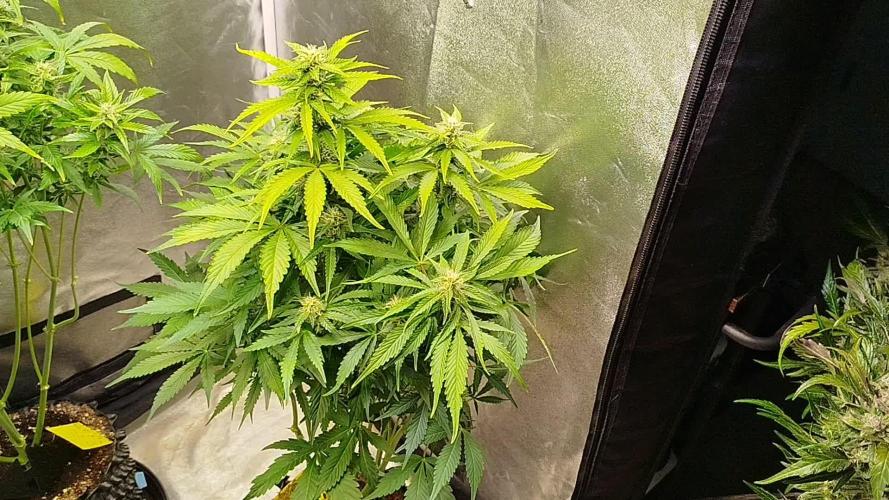
Very tight space for her in the tent right now, but she is going slowly well (since the beginning). A week or so more and she will have more space and will be defoliated more.


Likes
23
Share


@nonick123
Follow
Día 0 (23/04) La semilla ha germinado! 💥
Día 1 (24/04) Spray solo agua en el top de la maceta para mantener la humedad alta
Día 2 (25/04) La plántula se ve sana. Spray solo agua el top del sustrato. DLI 13
Día 3 (26/04) Spray solo agua el top del sustrato. DLI 13
Día 4 (27/04) Spray solo agua el top del sustrato. DLI 13
Día 5 (28/04) Empiezan a aparecer las primeras hojitas tras los cotiledones 😍 Spray solo agua el top del sustrato. DLI 13
💦Nutrients by Aptus Holland - www.aptus-holland.com
🌱Substrate PRO-MIX HP BACILLUS + MYCORRHIZAE - www.pthorticulture.com/en/products/pro-mix-hp-biostimulant-plus-mycorrhizae


Likes
6
Share


@Ninjabuds
Follow
This weather's been crazy! We've been stuck in this deep freeze for over a week now. The temperature hasn't climbed above freezing for like 10 days – it's brutal out there. And to make things worse, with all this cold, the humidity's been acting weird. It's really hard on the plants, especially without the sun to help them dry out a
Little.
Even though they're a little behind the others, those permanent marker plants are looking good. Being so close to the light must be helping them stack up those buds, so hopefully it's just a matter of time before they really start to shine.


Processing
Likes
10
Share

@CrackinBeans
Follow
The mephisto is has bounced back and pushing hard. All the plants still have a high runoff but has been pushing hard this last week or so. Ph run off has been around 7.6 from around 8.4ph😬😬
I kinda gave up on the freeze berry but I started checking it out and I didnt notice how well the branching is on that plant and how frosty it is.
the freeze berry has been getting set up nicely hoping it fills out nicely because the branching and spacing on that one is not too shabby
I'm not sure wth is going on with the big bomb that one decided to just grow like a bush real fast and has soo many bud sites but is flowering super slow.. I started all the seeds at the same time except the mephisto is about a week or two younger than the rest.
The crystal meth is about ready I'm going to start flushing that here sometime this week when I get my new ph pen.


Likes
4
Share


@rkomaaa
Follow
Lack of space
I had to move two plant to other tent
Honestly there is no room for 6 plants
Another problem is that they stretched a lot, but rly a lot.
Likes
13
Share


@leapingsoil
Follow
Hello hello!
Cream cookies is getting her final flush today!
Lets see how she develops this final week. I will let her medium dry, then harvest. The buds are getting deep colors, are nice and big but could be a bit more dense.
I am eager to smoke her. Very inviting pungent cookie dough smell from her is filling the tent.
For her flush: 3ml L Flashclean until 20% runoff then 20L icewater and pot full of ice cubes.
Likes
30
Share


@bioaccessory
Follow
Hey!
This time the start turned out to be successful, which I am very pleased with. In this cycle I will have two plants - CBD Crack in the neighborhood, I already had a report on this strain, so this time all the attention is on Hulk 💪😍
By the end of the week, I planted mycorrhiza, this time of our Ukrainian production, and will look at the result.
Glory to Ukraine! 🇺🇦
Stay connected and take care of yourself! 🙏


Likes
6
Share

@MindFlowers68
Follow
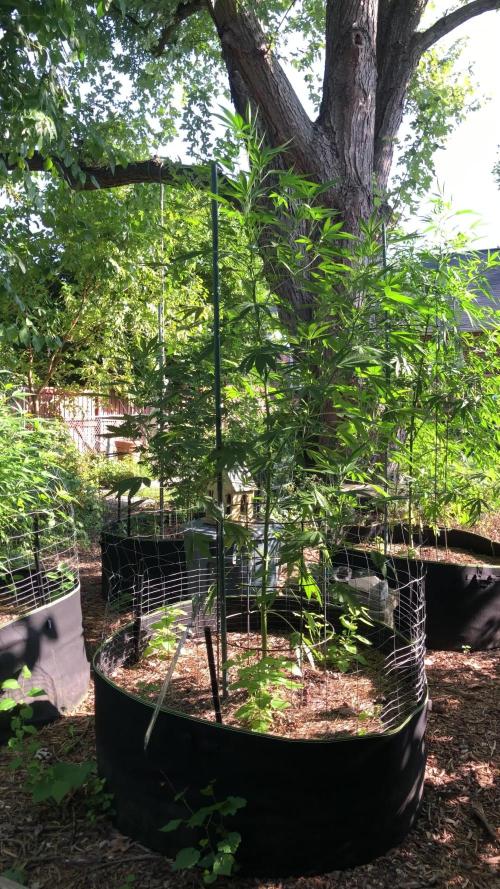
Shes 82 inches tall and we just hit 14/10 light cycle. I noticed shes starting to put out more pre flowers so I think this will mark the end of veg. She got some rain water this week and a nice strong batch of compost tea. I wanted to get a preventative mold spray on the plant so I mixed of some aloe with a little baking soda and let it soak in. I followed with a foliar spray of the compost tea, also trying to remove the honeydew on the leaves cause by spotted lanternflys in the maple tree above. It was not very affective and will need to wash it off this week, and also think of a way to get it to stop fast because it looks like the plants are transitioning into flower. I'm seriously moving the pots somehow to a safer location.
Likes
12
Share

@Bncgrower
Follow
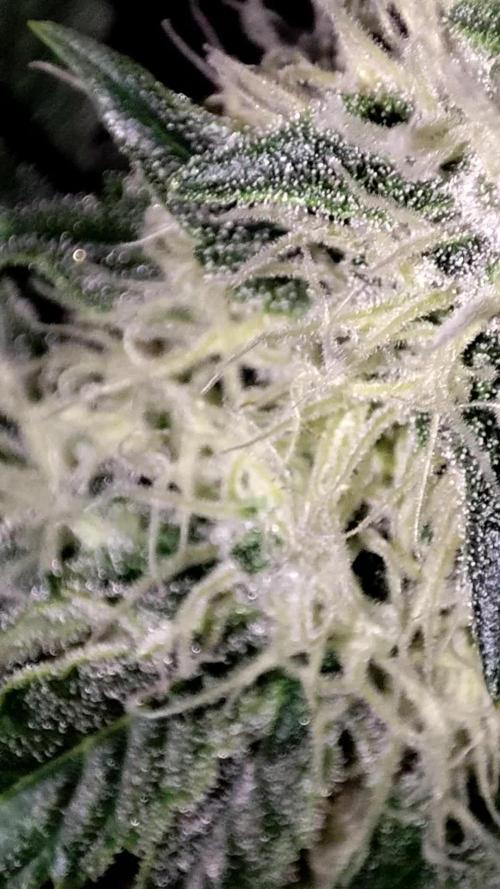
Another week successfully completed... All the plants are developing very well, the flowers are plumping up nicely, and all the plants smell great... Everything is as expected, and now we're closer to the end than before... Happy growing to all! 🌱🌿💪
Likes
3
Share


@thefrozenking
Follow
Day 42
Things startinmg to look up.
I had to put the trellis up and bend over the NYC Sour D, trhe cola was in the lights
-bubblegum is getting taller i need it to do some stretching so i can match the light.
-Growdots, recharge, calmag and silica.
Likes
60
Share


@Drgreenthumb627
Follow
half way through the first week of flower and the stretch is in full effect. canopy is going to be completely full in a few days, scared for my dwarf white runtz in the middle of the group, itll get swallowed
Likes
88
Share


@No_Clout
Follow
29/08/18 - A wee bit of light burn(Bleaching) on tips of girl #1 and #2, girl #3 is abit smaller than the others but that should change once my new light arrives next week, also got some terpinator arriving on Saturday so I’ll update then ✌️🏻
02/09/18 - unfortunately my terpinator dident arrive yesterday still a unknown ETA on that but the good news is my mars hydro 192 reflector is arriving tomorrow.
03/09/18 - new light hanging up great had to tie some of the stems to my tent post to keep them at 16” distance, still no terpinator which is guttin I’m hoping it arrives tomorrow, also got some big bud coco in the post aswell. ✌️🏻