




Likes
8
Share


@HiCultureClub
Follow
Hi Guys
here we go again with the fifth week of vegetation and one thing is for sure, there are still some...
👉 Lighting
The Lumatek is now running at 160 watts at a distance of 30 cm. This corresponds approximately to a PPFD of 450.
👉 Pot size
New in 19 liter pots. Soil has been enriched with green manure and mycorrhiza.
👉 Climate
Has remained the same.
Grow report vegitation phase day 29-35:
--------------------------------------------
- Repotting at vegitation day from 3.5 liters to 19 liters
- Adding Mykroriza fungi for a good microbiological life
- Insertion of greenery through spinach in the top layer of soil
- Roots looked very good, white and healthy
- Drainage with expanded clay balls. approx. 5 cm
- Plants have handled repotting well
- Vegitation day 34: Multitopping - Mainlining
- Vegitation day 35: LST with plant wire
Have fun growing,
HiSpycy 💜
Translated with DeepL.com (free version)
Likes
16
Share


@GrowBeforeHoe
Follow
The Royal Cheese Automatic stop growing the branches on top only the two lowest branches grow even further... So I bend her down so that the low branches can get the new tops... Hope this will work.
All the other plants doing good and growing along nicely!


Likes
11
Share


@Weed4Lord
Follow
Une liberty haze a cramé a cause de la lumière, elle est beaucoup trop grande comparée au autres et une amnesia lemon a cause d’un sur-engraissage sinon a part ca elle se porte plutôt bien

Likes
Comments
Share


@SmithNuggets
Follow
2/10 No feed tonight just water ph'd at 6.2
2/12 gave them a trim yesterday to open them up. Feeding tonight pots are feeling light. I will lst Blueberry muffin either tonight or tomorrow.


Likes
11
Share

@Growfather1
Follow
Hello everyone,
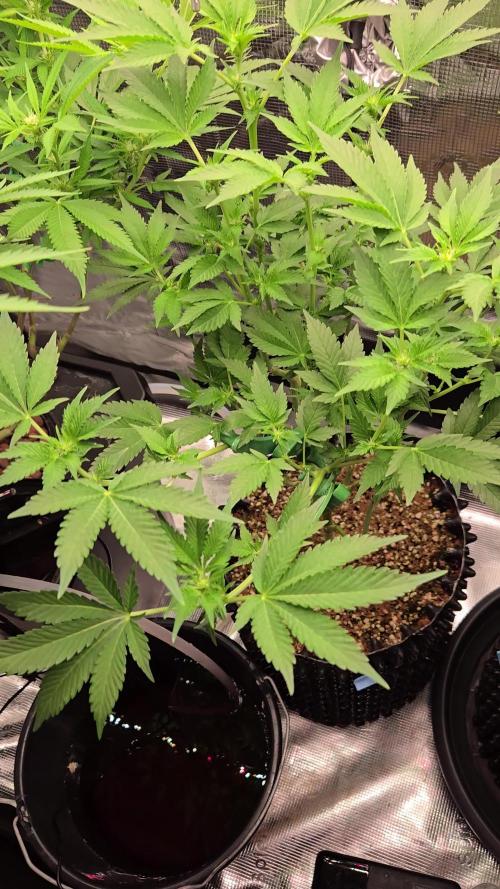
The amnesia fast is doing okay, i just finished changing the water and changed nutrients from aqua vega to aqua flores and added 3ml pk13/14 to 22 liters of water.
I also gave her a good defoliation and removed some lower growth.
Thanks for stopping by and have a nice day.
Growfather


Likes
28
Share

@Chubbs
Follow
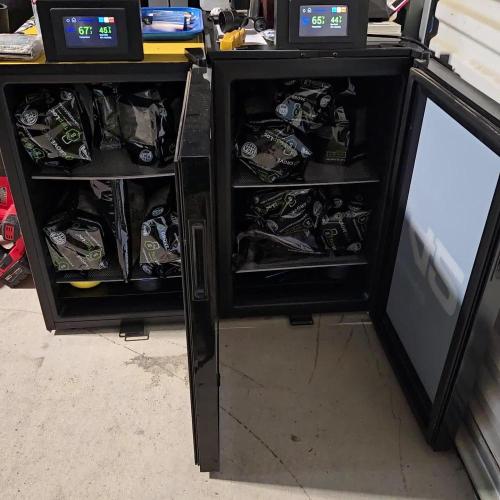
Second time growing the newer RF3 version of BPP and just like the first time it doesn't disappoint. From the fruity sweet smell to the dark purple flowers it's one that's a stunner. They grow super easy no requiring any special treatments. Excited to sample the flower to see if it taste like the one I grew previously. I chopped and hung dry the plants since the weather has been ideal. All in all Happy Growing
Likes
454
Share

@yan402
Follow
🌸🍏✨🍭🌸🍏✨🍭🌸🍏✨🍭🌸
Hi and welcome to another Kannabia grow!
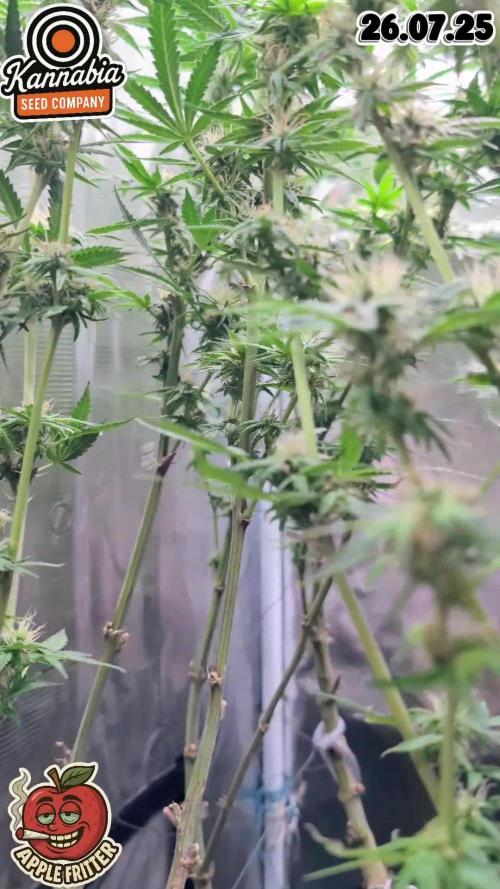
This time I’m running their Apple Fritter (feminized photoperiod). She’s going to veg under 24hr light and be manifolded.
Still cleaning the rest of my Candy Cream GF (11.04.25) — going to sow the seed tomorrow (12.04.25)
*been lazy, sowed on 14.04.25
🌸🍏✨🍭🌸🍏✨🍭🌸🍏✨🍭🌸
---
💭❗💭❗💭❗💭❗💭❗💭❗💭
❗Events & thoughts worth noting❗
💭❗💭❗💭❗💭❗💭❗💭❗💭
12.04.25 (GW1) – Cleaning + flushing the old coco coir. Might need to add another brick. *No new brick needed ✅
This is how I recycle my coco coir — fast, cheap, no BS.
🌿 Harvest plant
✂️ Chop roots small — they stay in for structure (organic perlite)
💦 Hot water rinse — remove salts & dust
🍶 Pre-soak with light feed:
Micro 10ml
Bloom 0ml
GreenBuzz 10ml
Cal-Mag 60ml
FFJ/FPJ 10ml (new disgusting batch)
pH down (citric acid)
♻️ Media stays — Roots stay — Back in service.
14.04.25 (GW1) – Planted seed in final pot ✅
16.04.25 (GW1) – Did last tent clean up + setup ✅📸
17.04.25 (GW1) – Seed germinated 🎉📸 — roughly 48hrs in final pot. Solid start👌♥️
23.04.25 (VW1) – Minimal burnt tips 📸 — not progressing, not a concern.
26.04.25 (VW1) – Started using the new batch of FPJ/FFJ
https://growdiaries.com/diaries/266849-grow-journal-by-yan402
30.04.25 (VW2) – Increased TriPartMicro & GreenBuzzBloom 10ml → 15ml
03.05.25 (VW2) – Increased TriPartMicro again 15ml → 20ml, topped the plant, and added final layer of clay pebbles around the base, trimmed side branches and did LST in preparation for "manifold" 📸
08.05.25 VW3 finished manifold📸
13.05.25 VW4 Increased TriPartMicro to 30ml and GreenBuzzBloom to 20ml.
15.05.25 VW4 Done defoliation and LST 📸
18-19.05.25 VW5 pruned all the shoots bellow my "mains" and did a full defoliation📸
24.05.25 VW6 increased GreenBuzzBloom to 30ml
04.06.25 VW7 did a cleanup📸
11.06.25 VW8 increase TriPartMicro to 40ml
17.06.25 (VW9) – Final structure pass 💈🌿
Did a clean perimeter prune + removed weak shoots. Ended up with 12 tops, was aiming for less, but she made the call
Didn’t fight it, just shaped it the best I could
Airflow’s good, structure’s stable
🛑 No more cuts until post-stretch
Pics coming shortly 😘
Flip coming soon — we’ll see how she handles it.
20.06.25 VW9 Switched lighting to 12 hours, may the stretch begin 🤞
22.06.25 VW10 Did a good LST session,made some pics, and came to some conclusions and a small change of plans:
Originally planned for 8 mains — long, spaced colas and maybe a couple stronger “titans” if she wanted to go that way.
But she’s showing me something else, and I’m not here to fight her — just guide her.
Now after stretch, I’m keeping side shoots only if they: Fill real canopy gaps
Don’t crowd neighboring tops (minimum 15cm spacing)
Aren’t growing into walls or toward the next plant
Anything too close, too low, or heading into shade gets removed. No point forcing it.
Looks like I’ll finish with 14–16 solid tops, depending on how she settles.
I’m just trying to give each one enough light and space to stack properly.
No overcrowding, no larf — just letting her do her thing with a bit of structure.
Increased Tri Part Micro to 50ml as well.
28.06.25 VW11 one week since I flipped to 12/12 and she is stretching nicely, a bit shy in showing pistils compared to the Fantasy Feast regulars I have in the same tent.
29.06.25 VW11 increased GreenBuzzBloom 30→ 60ml
06.07.25 FW1 TriPart Micro: 50→ 30ml
TriPart Bloom: 0 → 20ml
Home-made FFJ/FPJ (Watermelon + Pumpkin): 10 → 30ml
12.07.25 FW1 GreenBuzzBloom 60 →40ml, TriPart Bloom: 20 → 60ml, fpj 30→60ml
19.07.25 FW3 Got some bleached tops, been out and about at job interviews and didn't notice a last minute stretch spurt 😭, should recover fine though plenty of time left 😁
22.07.25 FW3 TriPartMicro 30→20ml , TriPartBloom 60→80ml , GreenBuzzBloom 40→50ml
24.07.25 FW3 Cal-Mag 60→40ml
26.07.25 got thrips but handled them with extra airflow and defoliation.
🌱💦🌱💦🌱💦🌱💦🌱💦🌱
🌿 Day to day tasks & actions 🌿
🌱💦🌱💦🌱💦🌱💦🌱💦🌱
26.07.25 FW3 – Fed 5l of #1 50% strength→ 2l runoff
(*RUNOFF reused for tomato plants)
🍶💧🍶💧🍶💧🍶💧🍶
💧 Nutrients in 30L #1
🍶💧🍶💧🍶💧🍶💧🍶
💧 TriPart Micro: 10 → 15 → 20 → 30 → 40 → 50ml → 30 → 20ml (0.67ml/L)
🍶 TriPart Grow: 0ml (0.00ml/L)
💧 TriPart Bloom: 0 → 20 → 60 → 80ml (2.67ml/L)
🍶 GreenBuzz Bloom: 10 → 15 → 20 → 30 → 60 → 40 → 50ml (1.67ml/L)
💧 Cal-Mag: 60→40ml (1.33ml/L)
🍶 Home-made FFJ/FPJ (new batch): 10 → 30 → 60ml (2.00ml/L)
💧 pH Down: Citric acid (buxXtrade)
📦 TOTAL: 250ml per 30L
🔬 8.33ml/L
🍶💧🍶💧🍶💧🍶💧🍶
⚙️✂️⚙️✂️⚙️✂️⚙️✂️⚙️
✂️ Tools & equipment ✂️
⚙️✂️⚙️✂️⚙️✂️⚙️✂️⚙️
✂️ 2× MarsHydro SP3000
⚙️ MarsHydro 150mm ACF Ventilator
✂️ Trotec dehumidifier (big unit)
⚙️ Mini no-name dehumidifier
✂️ Kebab skewers (LST – stainless)
⚙️ Wire + roast skewers (LST assist)
✂️ Scissors (HST)
⚙️ Vacuum (for spills & cleanup)
✂️⚙️✂️⚙️✂️⚙️⚙️✂️⚙️✂️⚙️✂️⚙️
---
🍏🍪🌬️🍬🍏🍪🌬️🍬🍏🍪🌬️🍬
Apple Fritter (Kannabia Seeds)
🍏🍪🌬️🍬🍏🍪🌬️🍬🍏🍪🌬️🍬
Species: 50% Indica / 50% Sativa
Genetics: Sour Apple × Animal Cookies
THC: Up to 25%
Effect: Euphoric, relaxing, creative
Flavor: Sweet, fruity, pastry notes
Flowering: 56–63 days
Resistance: High
Indoor yield: 450–500g/m²
Outdoor yield: 600g/plant
Structure: Strong, bushy, dense buds


Likes
16
Share


@Dabking
Follow
Buds fattening up. Looking to be at least a 4-7 ounce dry weight harvest .

Likes
7
Share


@Mr_nugs_lover_David
Follow
This 5 plants are absolutely gorgeous, they're supper similar to each to each other beautiful leafs and structure, looks like this lady is gonna provide us with beautiful citrussy buds!! Stay tuned everybody! Great autoflowering strain by SPLIFF SEEDS!

Likes
24
Share

@BUZIMAN
Follow
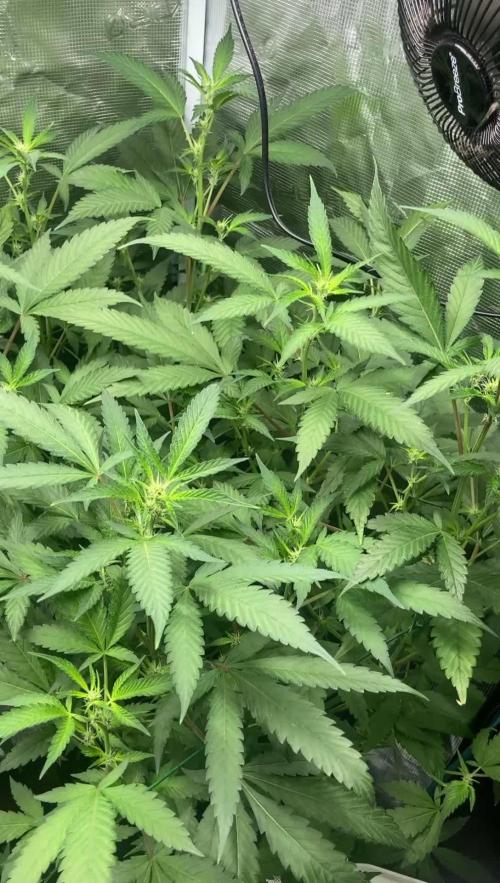
Really happy with these two girls — they’re both looking super healthy and seem to be doing really well ! 😎
I’m just hoping the Pickled Lemon has finally finished stretching (I think she has 😅). I’ve already had to play around with the light height a bit, and it’s now raised as high as I can get it.
The Runtz N Roses is starting to stack some really nice-looking buds, and they’re definitely looking promising. 👀
I’m going to be away for 5 days, so fingers crossed I don’t come back to any disasters… especially with coco. 😅🤞
I’m planning on setting up two Blumat carrots per plant. I’ll keep them well watered until tomorrow, then leave the saucers topped up before I head off. I’m also thinking about making some simple cardboard covers for the pots to help keep as much moisture in the coco as possible while I’m gone.
I’ll drop the light intensity a little as well and hopefully that’ll help keep everything happy while I’m away.
Now I just have to hope they can behave themselves for five days! 😂☮️🤞

Likes
19
Share


@GoldenWeedGrower
Follow
Legend
Timestamp: 📅
Measures: 🛠️
Water: 🌊
Actions: 💼
Thoughts: 🧠
Events: 🚀
________________________________
📅 D43/F04 - 05/10/23 - ,
🛠️ EC 1.1 pH 6.4
🌊 Added 2L of water and nutes
💼 Big Defolation
🧠
🚀
________________________________
📅 D44/F05 - 06/10/23
🛠️
🌊 RES Changed 💦💦💦
💼
🧠 I'll let her run pure water 'til tomorrow
🚀
________________________________
📅 D45/F06 - 07/10/23
🛠️ EC 1.1 pH 6.5
🌊 New water
💼 Defolation and HST on the litte one
🧠
🚀
________________________________
📅 D46/F07 - 08/10/23
🛠️ EC: 1.1, pH 6.4
🌊 Added 5L of water and nutes
💼 LST and defolation on the little one
🧠
🚀
________________________________
📅 D47/F08 - 09/10/23
🛠️ EC1.2, pH 6.4
🌊 Added 3L of water and nutes
💼 Increased EC from 1.1 up to 1.2 adding only B52. Made a Timelapse of the little one
🧠
🚀
________________________________
📅 D48/F09 - 10/10/23
🛠️ EC: 1.3 , pH 5.5
🌊 Added 4L and nutes
💼 Eliminated lot of sprouts of the little one and lollipopping on the big one. Added water and raised EC up to 1.3 from 1.1
🧠 Very hungry and thirst girls. pH decresead drastically and it can be a problem
🚀
________________________________
📅 D49/F10 - 11/10/23
🛠️ EC: 1.3 stable pH 5.1 decreasing
🌊
💼 Strouts cutted and LST on the little one. Also raised the lamp. No water added
🧠 The little one is ready to bloom, I need to change the water and put bloom nutes, also to support the big one. I think I'm going to do it tomorrow or in a couple of days
🚀
Likes
Comments
Share


@HideAndFly420
Follow
Day 29, giving structure to ghe little baby, trying to multiply branches and giving some attention to the topped one.
Day 30 fertisilisation today. Next time just water. LST is still in the middle
Day 32 31/10 dinner at 100% now and pushing hard with grow, just watering without fertilisation this time and lamp higher for 2 cm. Stretching a little bit before passi into flow, next 7/8 days of veg
Let’s see what’s happen
Likes
13
Share


@JohnnyBlaz3
Follow
I love this strain and cant wait to grow it again. It came out amazing with a very nice look and taste to it. It reminds me of this grapefruit strain i smoked way back, the taste is very unique that i have only found in a few strains in my 20 years of smoking. I'm very curious what this strain is!!!! I think its high in sativa genetics
Processing
Likes
18
Share


@KemoSace
Follow
Added CO2 suplimentation and up'd the nutes to 900ppm today; the runoff was 230ppm which means the plants appreciated the additional nutes & drank good; today's feeding of rain water, cal-mag, floraMicro, FloraGrow & FloraBloom was at a pH of 5.5 and the runoff pH was 6.6 (All exceptional numbers IMO).

Likes
10
Share


@Cocogrow1234
Follow
Week 6 flower : I stopped the pk half way through week 6 so it had a total of 10 days feed with pk13/14 I also cut out the silicone and calmag on the same day .
I defoliated a little as there was a lot bud sites covered . I am going to start the flush in 3 days which will be
. .6 1/2 weeks into flower , going to give them 2 weeks flush with plain water .
Still have a bit of leaf curl from the light being so close I did move it but because the canopy is not so even it’s hard to get it right .