


Likes
Comments
Share


@Jodas
Follow
Waiting game begins. Posted a video as well so you can see a bit more of the plant. Patience is the game we are playing now. Hopefully they can finish soon. Although the trics are 50-50 milky and clear.

Likes
29
Share


@Sidbank
Follow
3.07 I checked for signs of bananas. All clear. Some of the plants needed to be tied up. Strong flowering begins. I hope nothing happen to them
4.07 During the day in the tent was heat as hell. While I slept they were warm. I cannot switch on clima during the day because of technical problems.
5.07 Clima is broken, i water Penahyah from Hype Company cause of too much heat, and little dose of Frooting Power from BAC.

Likes
6
Share


@color
Follow
I'm sorry I picked up too early but the botritis was taking over, I preferred an unfinished product than losing everything


Likes
61
Share


@Roberts
Follow
Sweet bourbon kush is ready to start growing. She is looking good under the SE3000 so far. It is a small potter grow in coco. So curious to see how she does. Nothing else to report at the moment. Thank you Super Sativa Seed Club. 🤜🏻🤛🏻🌱🌱🌱
Thank you grow diaries community for the 👇likes👇, follows, comments, and subscriptions on my YouTube channel👇. ❄️🌱🍻
Happy Growing 🌱🌱🌱
https://youtube.com/channel/UCAhN7yRzWLpcaRHhMIQ7X4g

Likes
10
Share


@WEEDOOR
Follow
Hello everyone
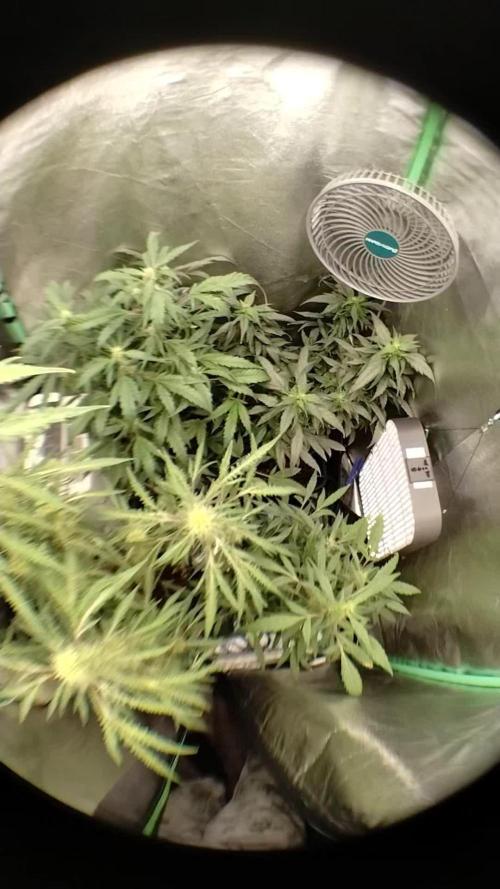
Last week I cut the Gorilla Skittles after two days in the dark. I put it in the drying cabinet for two more days hanging upside down. After that I separated into branches and hung on hangers.
It dried in the closet for 7-9 days when I started trimming the branches that were already ready on the seventh day. Photos, weight and more details in the harvest post.
As for the wedding cake, yesterday I finished washing and put it in the dark for 40 hours. Due to extreme heat problems and my broken ac, my plants are suffering from heat and you can see the signs on them. Hope it don't do too much damage. Keep following, more details later :)



Likes
Comments
Share


@Leonweed10
Follow
En pleno proceso de engorde los 16 clones en macetas de 7 litros,con un leve problema de araña roja ya solucionado orgánicamente.
Ya todo funcionando mejor

Likes
28
Share


@Chubbs
Follow
420Fastbuds
FBT2307/Week10
Weekly update on these three lovely ladies. All seem to be growing great especially this far into flower. Definitely getting three different colors on the plants but no complaints at all. The darker one is an awesome shade of black which to me is really cool. I've stopped nutes and just giving ph'd water from here on out. I did a mild defoliation this week on the shorter two taking off a couple of the bigger fan leafs. All in all Happy Growing

Likes
2
Share

@Colonel
Follow
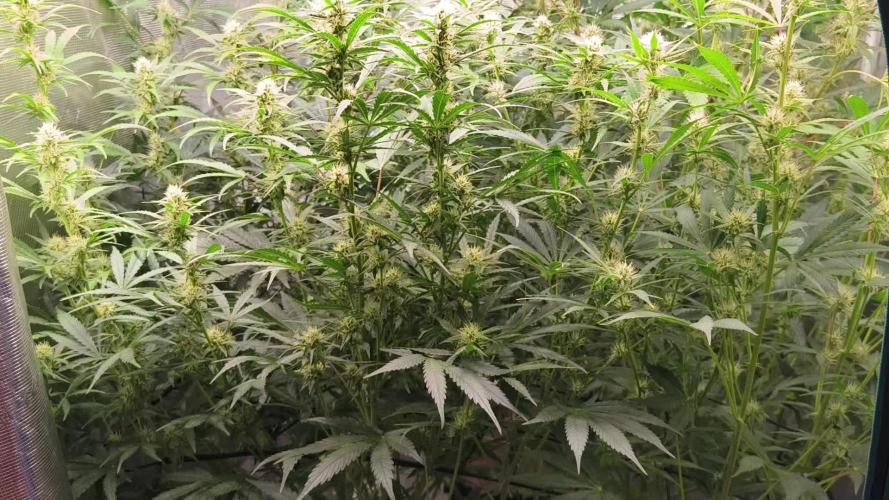
The smell is very strong up close, even with two inline fans and two carbon filters running.
The plant on the left side started showing light burn. I checked the light levels above those leaves and it was around 75 DLI — looks like that spot is where the beams from my two “suns” overlap.
I reduced the overall light output by about 5%, measured again and now it’s around 65 DLI in that area.
That should be enough, I figured, otherwise the other shoots might end up starving for light.

Likes
9
Share

@J4kpvp
Follow
Hello:)
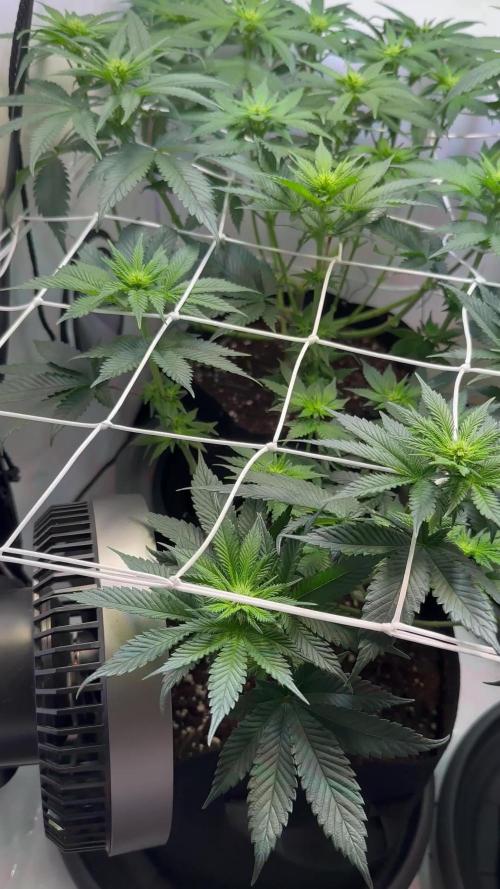
This week I installed the net and defoliated them a final time, now I just need to sit back and relax:) maybe some fertiliser next week since the plants still look just fine without anything more than what I put in the soil at the start… let‘s see:)

Processing
Likes
9
Share


@NightsAssassian
Follow
Day 67: My leaves are getting very crispy so i increased the watering of the garden today and hopefully that fixes the problem. Also the girls are still healing from not having cal mag for 2 weeks.
Other than that they are growing well and as always if you have any tips or tricks please feel free to share. Thank you for looking and happy growing. 😀


Likes
48
Share


@Focus420
Follow
Dobrý den a áhoj vítejte v poslednim týdnu kvetení 🤟🌱
Poslušně hlásím proplachuji 4 den 🤗
7 dní schází k dokončení procesu🌱🤠
Květiny vypadají skvěle.👊😉 na první sklizeň teda. AŤ PŘÍŠTĚ VYPADAJÍ LÍP!!!!!!!!!
podle mikroscopu cca 15 - 20 procent jantar trichom☺️
106 den - po proplachu zdá se být vysoká vlhkost 😂 cca 40%
- přidán odvlhčovač👍po 2 hodinách 30%,
107.den 🌱 proplach ph 6.3 ec 0,42👏
108.den kontrola trichomu, průměrně kolem 40 % jantar 😉
mohl jsem o týden víc podávat živiny..
109.den nic nedělám jen se dívám✌️
110.den poslední 3 dny nechám vyschnout vodu a sekera🤫
111. Den video , kontrola trichomu 60% ,zítra sekera🌶️🌶️
112.den sklizeň proběhla dobře ☺️ ted 10 - 14 dní sušení a jedem bomby ,
Barneys farm těším se 🤗🤗🤗
jsem připraven na vaše kmeny !!!🥇


Likes
20
Share

@TrickzGrowz
Follow
Super klebrige Lady. Riecht sehr intensiv, kann den Geruch Langsam nicht mehr einschätzen.
Bin gespannt wie es schmeckt!

Likes
92
Share


@DogDoctorOfficial
Follow
🌸 Week 3 Flower – Growing Strong, Tall, and Vibrant! 🌱
Hey Grow Fam! It’s already Week 3 in flower, and I’m thrilled to bring you this update because these plants are doing phenomenally well! Some are stretching up so tall that I might have to get creative in the coming weeks! Fruit production is well underway, and it’s absolutely amazing to watch the canopy fill out as these girls reach their potential.
Aptus Holland Pack Unboxing & New Additions
This week kicked off with a big arrival: the Aptus Holland nutrient pack! 🙌 I couldn’t wait to share the unboxing with you all; there’s a video up where I go through all the goodies, so check it out if you haven’t yet! Between the photos and videos, you’ll be able to see just how well these nutrients are already feeding these green beauties. Having a blast sharing more content lately—I’m in the zone with editing and creating, so get ready for even more shares!
🌡️ Environmental Control and Fine-Tuning the Reservoir pH
Temps this week have been holding around 27.2°C with RH at 65.2% and CO2 at 800 ppm, creating a VPD of 1.26 for ideal flower development. The lighting intensity is at 833 PPFD, and the solution in the reservoir is fine-tuned to a pH of 6.22, EC of 475, with a temp of 21.8°C.
Let’s talk pH in the reservoir: it’s a dynamic process, and I’m constantly adjusting it to keep everything at the right level. The pH tends to rise throughout the week, and each day, I work it back down, fine-tuning it to keep those plants happy and balanced. Managing pH is truly a hands-on job, and it’s worth every moment. I love staying on top of it for optimal nutrient uptake—it’s all about consistent effort and keeping that perfect range dialed in.
Leaf Maintenance & Selective Defoliation
These leaves are HUGE and gorgeous, creating a lush canopy that’s nearly too perfect! I’ve been taking a few leaves here and there, focusing on leaves that may be blocking light from reaching lower parts of the plant. Selective defoliation at this stage is key because it opens up airflow and allows light to penetrate deep, boosting energy distribution across the whole plant.
Big, healthy leaves mean we’re getting excellent photosynthesis, but a gentle, strategic defoliation can guide that energy toward those developing buds. Leaf removal is all about balance, giving the plant space to breathe and thrive while still maximizing growth in flower!
🌐 TrolMaster + App – Real-Time Precision
Huge shoutout to the TrolMaster system and the app—keeping everything in sync and at peak performance is honestly effortless with this ecosystem. The app provides a full overview of each environmental parameter, allowing me to make real-time adjustments as needed and track trends over time. The precision here is unbeatable, giving me complete control over temps, humidity, CO2, and VPD, ensuring my girls are in a controlled paradise 24/7.
What I love most is how the app records everything automatically, so I always know exactly where things stand without having to keep separate records. If you haven’t tried TrolMaster yet, it’s a total game-changer for any grow setup!
💥 Shoutouts & Gratitude
Massive shoutout to TrolMaster and Aptus Holland for powering this grow with tech and nutrition that’s second to none. And, of course, gratitude to Pro-Mix for the superb growing medium and to the seed banks behind the genetics. We’re running strong thanks to each of you.
And to the whole community—thank you, everyone, from new friends to seasoned followers, lovers to haters. Your energy, whatever form it comes in, is all part of this journey, and I’m so grateful for it all. Special shoutout this week to my brother Daggadna—head over to IG and give him a follow! And if you’re loving the journey, remember to like, comment, and subscribe—it really helps the channel grow and reach others who may also dig this content!
Discount Codes so you can save big on your next check out 💚💚💚
Kannabia - DOGDOCTOR 30% off
SeedsmanSeeds - DOGDOCTOR 10% off
CannaKan- DOGDOCTOR 15% off
terpyz.eu - DOCTOR 15% off
The Neutralizer - PORKIT5-DOG 15% off
As always thank you all for stopping by, for the love and for it all , this journey of mine wold just not be the same without you guys, the love and support is very much appreciated and i fell honored and so joyful with you all in my life 🙏
With true love comes happiness 💚🙏 Always believe in your self and always do things expecting nothing and with an open heart , be a giver and the universe will give back to you in ways you could not even imagine so 💚
Friendly reminder all you see here is pure research and for educational purposes only
Growers Love to you all 💚💚💚


Likes
32
Share


@D33jW
Follow
🐾🐻🐾 Bros Beast - Breed Bros 🐾🐻🐾
DAY 98 / FLOWER 60 / WEEK 13
Gens: Hulkmania x Muffin Berry
You can buy this great genetics on Web side:
https://breedbros.com
Only water to the end. I will keep it for a few days more.
Thanks for the likes and comments, see you in harvest next week!

Likes
55
Share

@Cyrusdavirus
Follow
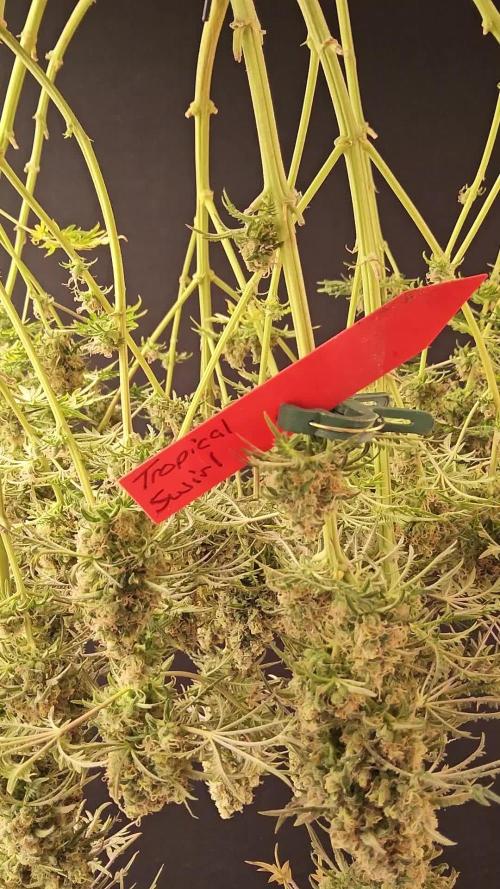
This is final harvest week in the growroom
Plants are coming down all around me. As always I strip the plants down and put them back under the lights for a few days then I cut them down a hang them by the toes until around 20% humidity which is still a little wet but I like to start the sweating early so it slows the drying down a little and starts the cure
Thanks for stopping by and for following along with me on another grow... Cyrus
Likes
8
Share


@SmallCannabisDojo
Follow
Day 49: She is back on
Day 51: She keeps pushing strong. Ive used some LST to even out her height. Also defolaited a bit every day and removed some lower bud shoots.
Summary of how I got her back:
The problem I have identified was slight overwatering and too high temperatures. Thats why her leafs hang down in veg, and are now cupping a bit in flower. Unfortunately I cant get the temperatures down much. When possible, im decreasing the lights during the day, and increase them at night while pulling cold air. Current night temperatures are around 15C, but I only reach arround 23C with 60% rh in the tent. This should be fine, but the leaf temperatures are probably a bit higher. I also hang the light as low as possible right now since that also helps with the temps. I keep the lights at about 45%, which results at 20h at a dli at roughly 38. A bit of an increase in the night times will hopefully push this to 45 overall.
Also fed her today with 1 silica | 1,5 calmag | 2 grow | 1,5 micro | 1,5 bloom. She took 2,5 l of water.

Likes
11
Share


@BruWeed
Follow
🍀22/06 - Empieza su cuarta semana en Etapa de floración.
🍀Se encuentra perfecta sin ningún problema hasta el momento.
🍀Los cocos ya se aprecian más y están llenos de tricomas por todas partes.
🍀En su cuarta semana ya le agregue Top Bud que es rico en fósforo y potasio, ideal para potenciar el engorde de los cocos.
🍀Hoy esta cumpliendo 65 días de vida desde su germinacion hasta ahora.
🍀En estos dias seguire subiendo mas imagenes de como viene su evolución.
🇦🇷😶🌫️🍀Podes seguirme en Insta Gram como @bruweed_arg🇦🇷😶🌫️🍀


Likes
5
Share


@most_dope
Follow
This week I was wondering why the tops looked funny but it looks burned so I chopped the top cola off the afgan kush. It was too crispy and all the holes from the dead pistils made me think it Hermed and those were all seeds. Found some little white maybe beginning of seeds but not sure because it wasn’t many. I tried snipping a sugar leaf a few weeks back and accidentally snipped the bud a little so I might have caused that bud to stress. I’m almost done so I’m just hoping the others in the tent don’t get affected if it pollinated itself at all. I might chop the top of the zkittlez off too and let the bottoms finish off for a week or two longer when I drop the lights down some. For no I just tied the big cola to the side. I need to get a par reader and get on my Ppm meter too because so far I’ve grown 3 plants without those and just guessing based on the packaging lol. I feel like it’s been relatively smooth for the circumstances tho and happy that I could at least smoke all of them so far.