


Likes
Comments
Share


@chapadux420r
Follow
Hello guys!
So it’s the end of week 2 of flowering and all is going well. Been watering every 2 days and, as you can see, we have white pistils and small buds in every plant
Not much to say, the ladys are green, stretching and growing buds as it should
Yesterday i’ve defoliated one of the critical + 2.0 clone and next week I’m going to defoliate the rest of the plants. Just wanted to test when it is better to do the defoliation so it’s kind of an experiment
Tell me what do you think of how this is going


Likes
35
Share


@Hashy
Follow
1st week has been OK. Not really much to report on. This plant is where I would expect it to be at this stage.
Fan controller set so max temp should be 26deg and max humidity 80%
Day 1 did nothing
Day 2 did nothing
Day 3 did nothing
Day 4 rigged up autofeed system and watered this weeks nutes.
Day 5 autofeed this weeks nutes.
Day 6 did nothing, 109ppfd 7.1 dli
Day 7 increased mars ts1000 power. 170ppfd 11 dli.
Back in a week.
Take it easy.


Likes
5
Share

@JorgeNitales420
Follow
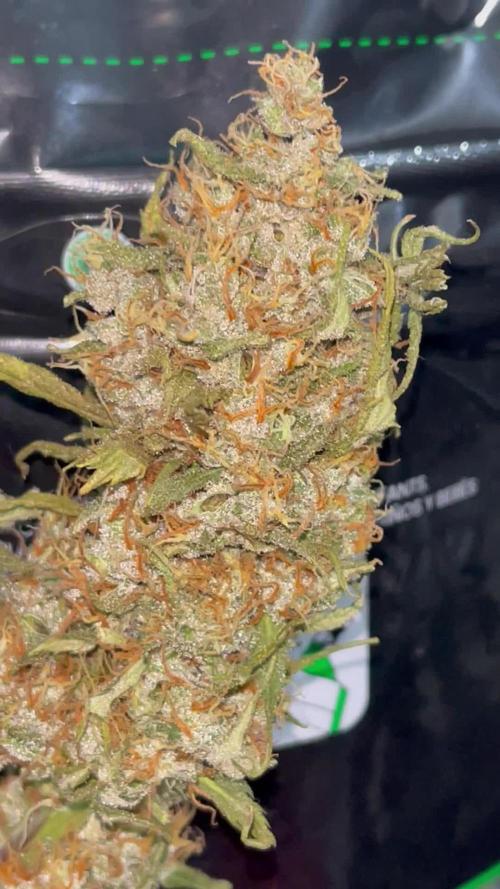
End of the mimosa, 3 plants, didnt measure te exact weight as its not gonna be accurate with the fkin seeds in my buds.
Overall not a bad plant, my thoughts is that the tropicanna polinized this one so this is the best bud of all the canopys
Fkin hermies
Likes
15
Share

@pHilosophy420
Follow
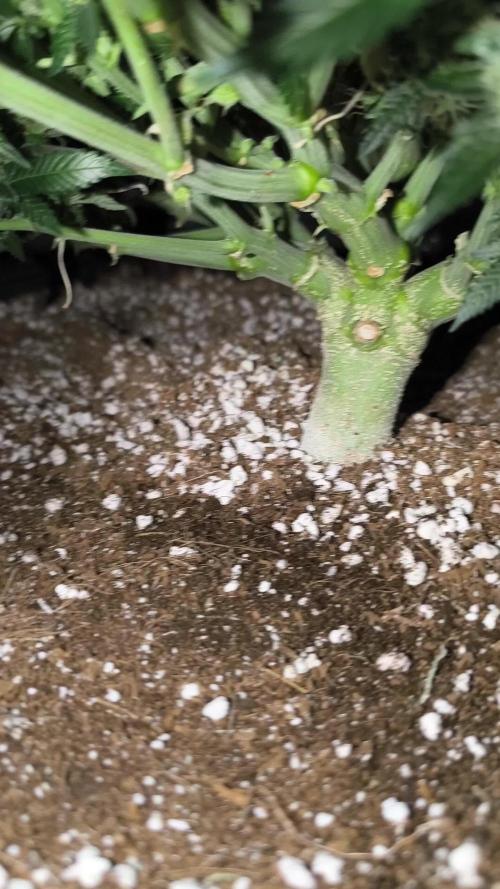
Day 91, Power at 95% and lamp distance at 40cm.
She’s looking almost ready now. Most of the trichomes are cloudy, with about 30% still clear, so I’d say another 7–10 days before harvest. Now ust plain water until chop day.

Likes
Comments
Share

@Tropical_Growerz
Follow
New week,
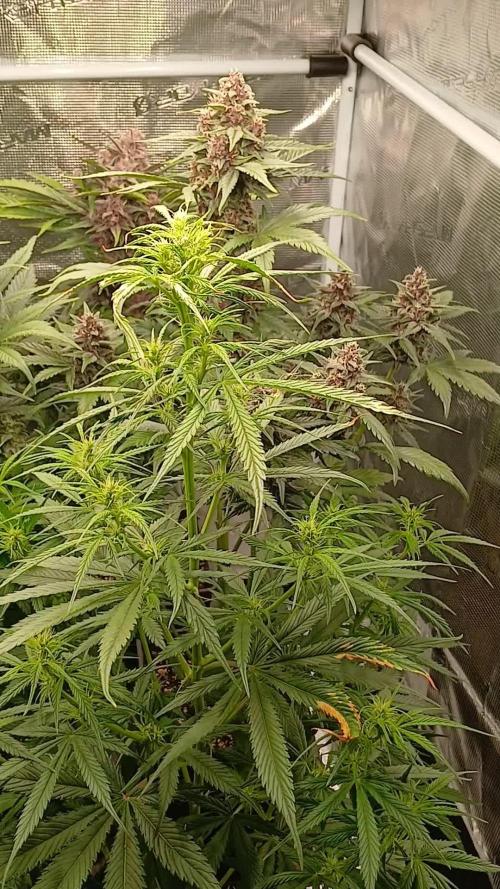
The plants have been moved and the lighting cycle adjusted to finish flowering.
Lots of surprises with the free seeds and even the ones I bought.
The autoflowering ones are all different; it's a real mixed bag.
I still have a few autoflowering seeds to grow, and then it's time for feminized seeds and crossbreeding varieties for my own creations...


Likes
1
Share


@DrGL_Thumb
Follow
Girls doing well, clearly see all hit with hit substrate 😂 but ChemDawg is despite the hit battling n fast 😂
Likes
15
Share


@VanHealzing
Follow
All 4 are growing very well. I noticed some light stress on 2 and 3, so I dimmed the lights.

Likes
12
Share


@Marijuanaisland
Follow
As cores Red da Red hot cookies já começaram
Depois da troca de foto período elas esticaram bastante diferente de outras genéticas que tenho aqui belo desenvolvimento...
Likes
253
Share


@Ju_Bps
Follow
Hello growmies 👩🌾👨🌾🌲🌲,
👋 The flowering starting good, girls have a good stretch and coming along nicely, hedgehogs are there
The weather is cold here ❄️, someday was very low in the tent.
💪 Continue training, defoliation, Working on the scrog.
💧 Give water each 2/3 day
2 l Water + Roots + Bloom + Zym + Sugar Royal (1 + 3 + 1 + 1 ml/l)
PH @6
💡Mars Hydro - FC 3000
50% - 50 cm
Mars Hydro Fan kit
Setting 6
Have a good week and see you next week 👋
Thanks community for follow, likes, comments, always a pleasure 👩🌾👨🌾❤️🌲
Mars Hydro - Smart FC3000 300W Samsung LM301B LED Grow Light💡💡
https://www.mars-hydro.com/fc-3000-samsung-lm301b-led-grow-light
Mars Hydro - 6 Inch Inline Fan And Carbon Filter Combo With Thermostat Controller 💨💨
https://www.mars-hydro.com/6-inch-inline-duct-fan-and-carbon-filter-combo-with-thermostat-controller
Fast Buds - GG4 Sherbet FF🌲🌲
https://2fast4buds.com/us/seeds/gg4-sherbet-fast-flowering


Likes
38
Share


@Green_Mountains
Follow
End of week 1. All 3 plants have their true leaves. The stems seem to be developing nicely but I was hoping for more leaf development. I still need to create more humidity. My exhaust fan still vents too much of it.
I added a second camera and I hope to start adding some time lapse videos.
Overall a good week! Still trying to learn my environment and tweak where I can!


Likes
108
Share


@420DeepGrow
Follow
Gracias al equipo de Sweet Seeds y a Marshydro, sin ellos esto no seria posible.
Excelente hibridación de dos de nuestros mejores clones élite de genéticas procedentes de USA. En el cruce interviene un clon seleccionado de San Fernando Valley OG Kush, caracterizado por un agradable y complejo aroma con fuerte presencia de limón procedente de la Lemon Thai que interviene en el cruce original de las OG Kush. El otro clon élite que interviene en el cruce es una Kosher Kush, otra genética OG Kush muy apreciada en la zona de Los Angeles y alrededores (California).
De aroma muy agradable y penetrante, con tonos originales OG Kush muy alimonados y tonos de disolvente, pinceladas de especias, maderas y ciprés azul. El aspecto de las plantas es de híbrido índico-sativo con predominancia sativa. Estas variedades americanas con fuerte presencia del terpeno limoneno son muy apreciadas en USA para la realización de extracciones cannábicas.
🌻 🚀 Consigue aquí tus semillas:
https://sweetseeds.es/es/semillas-fotodependientes/2345-san-fernando-lemon-kush.html
💡 Mars Hydro TS 3000, como la lámpara de cultivo LED más grande de la serie TS, ofrece suficiente cobertura para un área de 4 × 4 pies con un precio asequible y rendimientos de calidad; a cambio, se puede aplicar tanto al cultivo doméstico como al cultivo comercial.
Potencia - 450w
Cobertura Vegetal – 5×5 pies
Cobertura de flores - 4 × 4 pies
La opción abrumadora para la mayoría de los productores que la aplican en tiendas de campaña.
Consigue aqui tu lámpara:
https://marshydro.eu/products/mars-hydro-ts-3000-led-grow-light/
📆 Semana 8:
Finalizando la etapa de engorde, esto va que vuela 😍, la resina esta cada vez mas presente ❄️ , los cogollos comienzan a madurar
Esta semana estará el TS-3000 de MarshHydro al 100% y 30cm de distancia.
Se estan desarrollando mejor que nunca, con una floracion mucho mas rapida, noto una gran mejoria gracias al Marshydro TS-3000.
Continuo con defoliaciones
Estoy impresionado con esta planta 😍🔥😎
Aplico una solución con nutrientes EC 1500 y otra con agua del grifo reposada y PH 6.6


Likes
16
Share


@DreamIT
Follow
Sponsored by:
💫PARADISE SEEDS💫-💡VIPARSPECTRA💡-💐GREEN BUZZ LIQUIDS💐-🛠️WEDRYER🛠️
28/7 all good for this delight, which is about to enter into bloom
2/8 the stay in the small vessel begins to show signs of deficiency. Prezto starts flowering without being cloned
__________________________________________
Personal advertising (contains affiliate links)
__________________________________________
🦄 winners and holders of the most prestigious awards, since 1994 they offer genetics of the highest quality! Anonymous shipping!
✅https: //bit.ly/Paradiseseeds_
__________________________________________
Did you know that Green Buzz Liquids fertilizers are 100% vegan? A complete line of products ready to give the best to each of your plants! Visit the site and see my journals to see how they work 🦄
🤯 And with the code "dreami t" you will immediately receive a 15% discount on your purchases
✅https: //bit.ly/GreenBuzzLiquidsPro
__________________________________________
👀 Are you looking for a good lamp to start with? 👀
🌞Viparspectra has something more than the others, take a look at their site.
⏩ Use "GDVIP" for an extra discount or "DREMIT3" for an extra 5 %% discount
👀 Search for it on Amazon
✅Amazon USA: https://amzn.to/30xSTVq
✅Amazon Canada: https://amzn.to/38udUVe
✅Viparspectra UE: bit.ly/ViparspectraUE
✅Viparspectra USA: bit.ly/ViparspectraUS
______________________________________________
🌈 Tired of blowing on your weed hoping it dries quickly? Check out the Wedryer website! You will find a well-made accessory that will help your weed dry in just 8-10 days without the annoying risk of finding mold or other annoyances! (no affiliate links)
✅https: //bit.ly/Wedryer_
______________________________________________
📷🥇Follow the best photos on Instagram 🥇📷
https://www.instagram.com/dreamit420/
Backup
https://www.instagram.com/dreamit4200/
🔻🔻Leave a comment with your opinion if you pass by here🔻🔻
🤟🦄💚 Thank you and good growth 💚🦄🤟

Likes
18
Share


@RFarm21
Follow
Semana 13 abril - 19 abril
14 abril - feeding day para as duas.
18 abril feeding day cheese #2(2l):
Calmag 2.4ml; bio bloom 9ml; topmax 8ml; bio heaven 10ml; acti-vera 10ml; bio grow 8ml pH 6.5
20 abril feeding day cheese #1(2l):
Calmag 2.4ml; bio bloom 9ml; topmax 8ml; bio heaven 10ml; acti-vera 10ml; bio grow 8ml pH 6.5

Likes
9
Share


@Krautbauern
Follow
After 35 days of vegetation we send them into Flower. They get 2 hours less light every day until we reached the day/night-cycle 12/12 hours.
we have noticed that they have already started their stretch. they grow 5-10 cm every day.
We water them with bio grow for the first time.

Likes
18
Share


@Grow_for_Happiness
Follow
Well it's official the first week of flower is in the bag! All in all not an eventful week but it's always exciting to see the girls start their transformation to flower and seeing the stretch kick in! Netting is really filling in nicely, will be a good clean up job on fan leaves in a week or so. Did a diatomaceous earth treatment because I was noticing some fungus gnats still, had it on for 48 hours and since have not seen any new ones in the traps so 🤞. Added a 6" oscillating fan below canopy, should help keep temps even and keep bugs away. With all the trimming down there the fan doesn't even effect the leaves hahaha.
Flower week 2 here we come!

Likes
12
Share


@ChitownCannaChica
Follow
Flushing as we speak! Chopping this plant in 2 days to get a harvest done before the competition ends!
This is an amazingly fast plant!
Resin production- ✅
Terps - ✅
Fast - ✅
Easy to grow - ✅
I cannot say enough about this lady! Just fed an average amount of nutrients. Vegged a little longer because of flower tent overflow, but once she flipped, she was fast and quality all the way!
More details to come! ✌️🏻💚