


Likes
Comments
Share


@nachito1399
Follow
The buds are getting bigger and icy, it seems Delta 9 did its job good. You can smell the fruity odor coming from the bubba buds. I hope they get a little bit fattier to compensate the short height. Can´t wait to taste them :))

Likes
86
Share


@CANNASIM
Follow
------GENERAL COMMENT------
Here e go, last week for the final flush. Piece of cake! 👋
Went in with the overdrive. I noticed some buildup in the runoff as the EC is testing high, little overfeed so I will water with, PH water + Recharge, might cut the Sensi and go with big bloom in this last feed week.
Feeding every other day, gave a shoot in constant feeding, alternating the Base+Recharge+PK and the VeloKelp + Natures Candy in the other. Did not need more CalMag.
No deficiencies, or spotting, they are growing nicely.
------GG.AK47 COMMENT------
The AK is adding height, buds are bulking and on both are very dense!

Likes
19
Share

@RDWCGrowing
Follow
Week 1 Day 1 - 8/12/2023
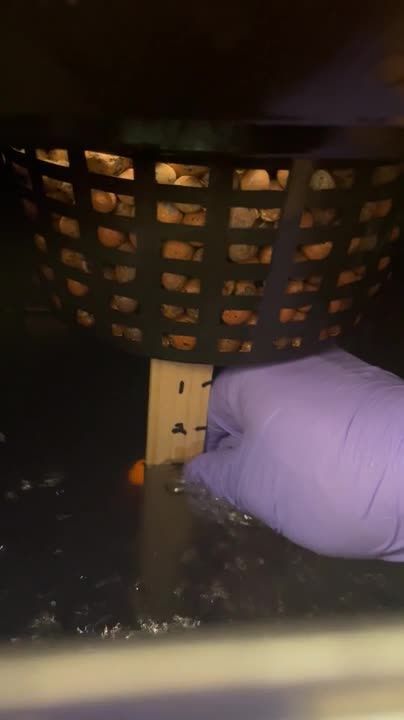
1st Water change Day! Such a special time it is when you remove the little bit of Nutes that you gave them as an appetizer and you give them their first real meal.
Added
39 Gallons of Water to my system
SILICA= .5mil/Gal = 19.5 = 20mil
Root Drip = 1mil/Gal = 39mil
Cal Mag= .25mil/Gal = 9.75 = 10mil
FLoraMicro= 3.0mil/Gal = 114mil
FloraGro = 2.0mil/Gal = 78mil
FloraBloom = 2.0mil/Gal =78mil
ORCA= .5mil/Gal = 19.5 = 20mil
Week 1 Day 2 - 8/13/2023
Everything is looking good the roots are making thier way to the water and the new grow is looking nice and green.
Week 1 Day 3- 8/14/2023
Everything is right on track, they are looking beautiful and in the praying postition all leaves happily lifting towards the light.
Week 1 Day 4- 8/15/2023
Looking beautiful today and looked like she could use her first haircut.. gave her a TOP off. Roots are laying in the water everything is looking right on track..
Week 1 Day 5- 8/16/2023
walked in and the humidity was under 60.... ohh noooooo.. So I added 2 humidifiers to the tent and attached them to my InkBird controller which is set to 62. She had roots nicely in the water.. this grow is on!!!
Week 1 Day 6- 8/17/2023
Humidity was a little low this morning, so I refilled the humidifiers. Other than that, the temp looks great, the PH looks great, the PPM looks good the plant is in the praying position and all damage from the little drowning seems to have been fixed. Happy Happy.
Week 1 Day 7- 8/18/2023
Yay.. week 1 in the books, roots in the water growth has started first hair cut given and both side nodes are growing. Everything is looking good and on track.. A lot better than week one of the last grow when I had them drowning week 1.
Really excited on how this grow is going to come out.
Likes
17
Share


@Hawkbo
Follow
The autos are doing better than they were I got a new bottle of calmag cuz the older one was old. I still could use some warmer temps. I've been turning the exhaust fan down to the lowest level but the RH goes way up. I might move them into the tent with the HPS soon which settles around 82°f but that light makes the RH go way down so this whole thing is just a pain in the nuts.

Likes
42
Share


@Xi_Ve
Follow
Ending week 1 today!
I am satisfied with how the girls are growing.
Quick summary by days:
note: amount of water is on ALL plants, not just 1
13/9 6.5 PH Water Misting (0,2L)
14/9 6.5 PH Water Misting (0,2L)
15/9 6.5 PH Water Misting (0,3L)
16/9 Since I didn't water my soil when I was planting the seeds, I grabbed some more soil, put it on top just to help with stretching, and then I decided to do a full watering just to get the soil wet.
I grabbed my pressure pump, put in 1,5L of 6.5PH water, voodoo juice + piranha 2ml/L and watered all 9 of them with 1.5L (misting with the pressure pump - I think I will continue to do the waterings like this because it's so easy!)
17/9 6.5 PH Water Misting (0,2L)
I've seen a fungus gnat, so I put up more yellow sticky traps.
18/9 6.5 PH Water Misting (0,2L)
19/9 6.5 PH Water Misting (0,2L)
Caught 4 fungus gnats for now, I hope the bastards didn't lay their eggs. Keeping the vents on.
Temperature this weeks was 24-27, moisture 50-70, average 60.
Mimosa #2 a bit yellowish, keeping an eye on her, hope it's nothing serious.
Everything else is fine, going into week 2! I still won't give them any NPK, just voodoo + piranha + b52 in week 2. Maybe i put carboload or bud candy just to feed the bacteria and the fungus in piranha and voodoo juice, any thoughts on that? I think I will introduce Micro+Grow+Bloom 0,5ml/L in the third week.
Also, there are some white spots on the leaves. I think it could be chlorine? Im watering with tap water, letting it sit for around 12 hours before adjusting PH and watering. Maybe I will let it sit for more this week.
See ya in 7 days, if there aren't any more problems meantime haha

Likes
10
Share


@HooYa
Follow
สัปดาห์นี้ มีกลิ่นที่แรงขึ้น และหอมสมุนไพรมาก
ใบเริ่มขาดสารอาหารเนื่องจากผลิตช่อดอก
ใบเริ่มรกทึบ ฉันควรที่จะนำใบออกในสัปดาห์ถัดไป
ไตรโครมปกคุมแน่นขึ้นและเห็นได้อย่างชัดเจน

Likes
Comments
Share


@eldruida_lamota
Follow
Vamos familia, actualizamos la octava semana de floración de estas Sagrada amnesia de Seedstockers, salieron las 5 de 5, 100% ratio éxito.
Aplicamos varios productos de Agrobeta, que son increíbles para aportar una buena alimentación a las plantas.( Justo esta variedad 2 de 3 son bastante sensibles y marcan en las hojas exceso pero no están las puntas quemadas)
Temperatura y humedad dentro de los rangos correctos dentro de la etapa de floración.
La tierra utilizada es al mix top crop, por cambiar.
De 5 ejemplares seleccioné los 3 mejores para completar el indoor y trasplanté directamente a macetas de 7 litros, el fotoperiodo a 12/12, también aplique una buena poda de bajos, se ven bien sanas las plantas, tienen un buen color, ya progresan las flores, llevan ya una tricomada…increíble.
Agrobeta:
https://www.agrobeta.com/agrobetatiendaonline/36-abonos-canamo
Hasta aquí todo, Buenos humos 💨💨.

Likes
Comments
Share


@Cyabro
Follow
Yo wassup guys, starting little bit late the diary but this you cant miss flowering day 19 and they are crazy snow!

Likes
31
Share


@Targona
Follow
10/10/2022 - 64 days since my little girl sprouted from seeds🌱
Fifth week of flowering of my BCN Power Plant 🌴🌴🌻
Nutrients:
Jungle Indabox - this week I keep serving and adding Jungle Indabox Environ X - bud stimulator 🌼🌸🌼
Advanced Nutrients - Big Bud - I canceled the bud stimulator mix and stayed with Jungle Indabox because the girls got a little burnt, the classic brown color appeared on the tips of the leaves 🍃🍂
I stuck with Bud Candy, all my girls need plenty of carbs 🍭🍭
Atami - ATA Calmag - when growing under LED lights it is recommended to use Calmag and Atami is an excellent brand
Training:
I did more defoliation with BCN, I feel that it has too many leaves in the buds, so I pruned it a lot 🍃🍃
Light: Believe - the best light of sponsor Mars Hydro TS 1000 💡💡
In general:
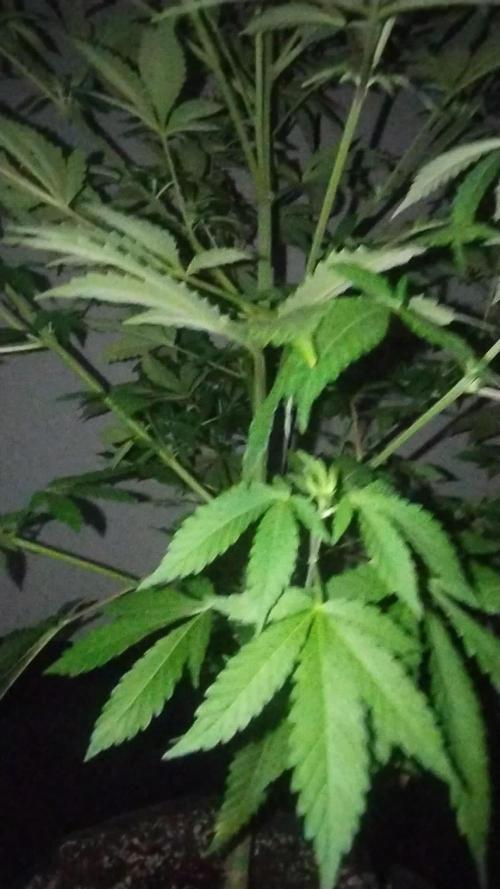
The plant is strong, manages nutrients well, absorbs as needed. The leaves are deep green, you can see that it is a sativa.
As far as flowering is concerned, she is the slowest for now - compared to the other girls in the box. It only has white pistils and the flowers are not yet fully formed 🏵️💮 I think at least in one week.
It smells really wonderful, she revealed her spicy scent 🌶️🌍
Thanks for the likes and you can follow me on Twitter 🐦: @ Targona666
See you soon 😍



Likes
24
Share


@Weedzoks
Follow
La plante est passé en 12/12 pour lancer la floraison des féminisées
Flo 8: Arrosage engrais complets et taille secondaires
Flo 12: Arrosage eau

Likes
22
Share

@Hempcules
Follow
WEEK 6
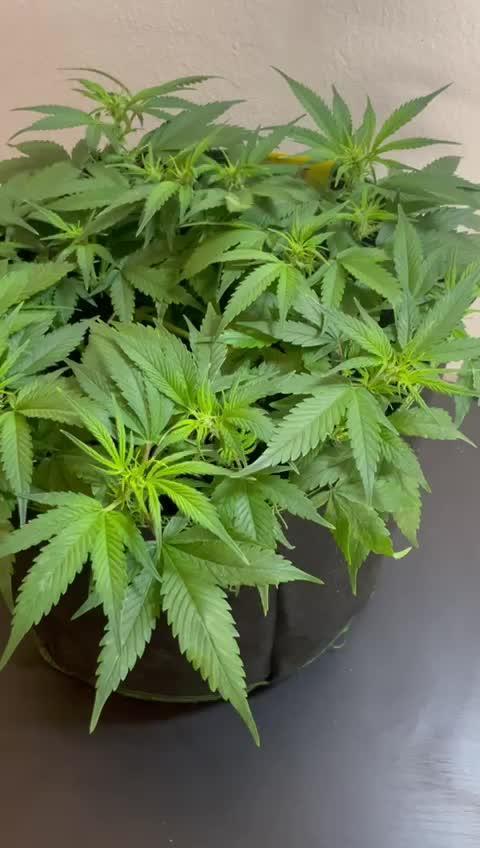
Things are going wonderfully with my plant. Thanks to LST, I’ve managed to create a really nice, even canopy, and the plant is already blooming actively. I expect a solid stretch in the coming weeks, and I’m curious to see how it turns out. If things keep progressing like this, it’s shaping up to be a truly great grow.
Aside from that, I watered once and fed once this week. The plant seems to have responded very well to the switch to Plagron nutrients.
I’ve also set my light to 500 PPFD this week.



Likes
20
Share


@Rubob
Follow
Plant 1 is starting to fatten up nicely , if I had to guess its got about 3-4 weeks left yippee...
Plant 2 is basically almost ready she is eating herself slowly , I'd give her about a week or two will see , all trics are milky so I don't know if I want to do amber as I have never tried a full milky sativa before .. Also plant 2 went much faster than I expected 10 to 12 weeks but now seems like its done... Obviously more of a hybrid pheno then ..the white pistols you see are just new ones that poped up the past couple of days..
Plant 3 is dying off unfortunately have no idea why..
Likes
12
Share


@cheetah844
Follow
Looking healthy, hoping it'll be a girl. I'm ready to get my hands on some Blueberry OG again, I haven't had it in over 2 years. I remember it being a relaxing but still alert & dissipating my daytime migraine.
Likes
6
Share


@Cultivandomedicinanatural
Follow
Esta es la última semana de crecimiento que le doy a las pequeñas, el último día antes de hacer el cambio de horas de luz le hago una pequeña poda de bajos ya que eso le dará más aire a la zona baja y más fuerza a la parte superior de nuestras plantas. En esta semana terminamos con una Ec de 1.6 y un ph de 5.8. Están creciendo muy rápido y con fuerza en los tallos.
Los tamaños de las pequeñas son: las red hot cookies 24 y 34 cm, las tropicanas 27 y 37 cm y la purple puch og 24 cm.
Likes
179
Share


@StarLorr
Follow
Welcome to my Øpium diary.
In this diary:
Seeds: sponsored by Ðivine Șeeds
Media: Promix HP
Nutrients: Advanced Nutrients, Diablo Nutrients.
Light and Weather: Şun☀️and Mother Earth.🌎
___________________________
Feeding:
Tue 23Jul: 4L nutrients pH'd 6.5 and 4L water not pH'd
Wed 24Jul: 10L water not pH'd
Thu 25Jul: 4L water not pH'd
Fri 26Jul: 8L water not pH'd
Sat 27Jul: 4L nutrients pH'd 6.5 and 2L water not pH'd
Sun 28Jul: 10L water not pH'd
Mon 29Jul: 8L water not pH'd
*please note that most water only feedings are 2L at the time throughout the day in bottom saucer*
___________________________
What a beautiful summer that we're having. Just one day last week it was cloudy and colder and got some rain, rest of the week sublime weather.
My Ðivine Ladies are pre flowering and hopefully will be blooming soon, next week update should be FLO fingers crossed😄
______________________________
Øpi was found with a spider mites nest..squished the squatter with my thumb and index... all 3 Ðivine Gals got the spa treatment, soap insecticide
spray 2 litres each soaked them real good, before flowering it was a smart move😉
______________________________
Thanks for stopping by, likes and comments are appreciated!👊🏻😎
Keep on growin!
Keep on tokin!!!
😙💨💨💨💨💨

Likes
15
Share


@NSCanna
Follow
Compost tea turned out well, let it go for 26 hours total and geared it towards fungal. Also took some soil samples several days later around the stalks and found a lot of nematodes and protozoa which is what you want to see. Lots of different types of nematodes so what your looking for are the bacterial feeders (there are charts online that show you how to identify them). Mycorrhizae can be identified by it's dark colour, uniformity and segmented nature. Testate amoebas live in a translucent shell like a snail and are easy to spot but hard to spot moving due to my shitty microscope, but look for the tentacles. Also found some eggs with movement inside, no idea what they are but they have vacuoles and flagella.
She is really getting sticky and smelly now; berries with herb notes. You can see the resin stretching over the trichomes in the last pic.
No signs of senescence yet so I'm not going to feed them, they should have plenty of food anyway as this is a second run of the same soil.

Likes
40
Share


@BLAZED
Follow
Week 16 (Harvest)
1-2 Drying day 1
Temperature: 24.5 to 19.5 degrees
Humidity: 65% to 50%
The girls are ready to be harvested!
Before chopping them down, i took a lot of pictures.
I was able to remove most of the soil from the Biscotti #2 to see the rootball.
I hang the plants as a whole to have a slow dry.
The exhaust fan is on setting 4.
2-2 Drying day 2
Temperature: 19.1 to 17.5 degrees
Humidity: 62% to 57%
I changed the exhaust fan to setting 2 because setting 4 was a bit high in my opinion.
3-2 Drying day 3
Temperature: 19.9 to 18 degrees
Humidity: 62% to 59%
Today i checked up on the drying plants, and i see there are some buds touching other buds, so i chopped the plants in half.
The buds are still to the main stem for a slow dry, but are hanging more spreaded out to prevent any budrot issues.
I changed the exhaust fan to setting 1, as someone told me that it was enough air movement for drying.
4-2 Drying day 4
Temperature: 19.8 to 18.5 degrees
Humidity: 62% to 59%
5-2 Drying day 5
Temperature: 19.9 to 18.8 degrees
Humidity: 62% to 59%
Today i checked on the drying plants and the buds are shrinking a bit, they are getting a little bit crispy on the outside aswell,
I hope they wont dry as fast, and i aim for a 12/14 day dry.
For the next grow i already germinated 2x Chemdog (GreenHouseSeeds) 2x Gorilla Kush (GanjaFarmerSeeds) and 1x Deep Candy CBD (GreenHouseSeeds)
And I have some upgrades planned aswell!
I bought a autopot kit with 4 15L pots, this way the plants will have water and air 24/7 whenever they need it. I have seen alot of great results using autopots so i am very exited to try it out!
And I bought a small camera so i can shoot some weekly timelapses!
Feel free to Follow me if you like to get notified for the upcoming diaries!
Thanks for checking out this diary, peace!
(More harvest updates coming in the next couple of days!)
Huge thank you to Zamnesia for the seeds, and Plagron for the collection of nutrients, and the opportunity to participate in the POWERBUDS contest!
It was a fun and learningful adventure!

Likes
6
Share


@Susquihanna
Follow
Dosido is dancing her way to new heights. She is 14 inches which means she grew 6 inches this week. @RoyalQueenSeeds says, "In the garden, Do-Si-Dos Auto seeds grow into slightly taller plants of around 140cm"--which is 55 inches. Time will tell but we are well on our way to reaching new heights.
Miss Dosido is also dancing her way to a lot of undergrowth. Lots of growth is taking place.
Flowering time is said to be between 7-8 weeks. So we are right on target.
Because it has been so hot in this area, Miss Dosido is getting 1 gallon of nutrients per day. I have a pool umbrella up to protect her from the direct sunlight, but the heat is real here.
Dancing is described as good for the soul so dance on Miss Dodido!
Stay tuned for next week, and feel free to comment:)