





@OrganicJoe
Follow
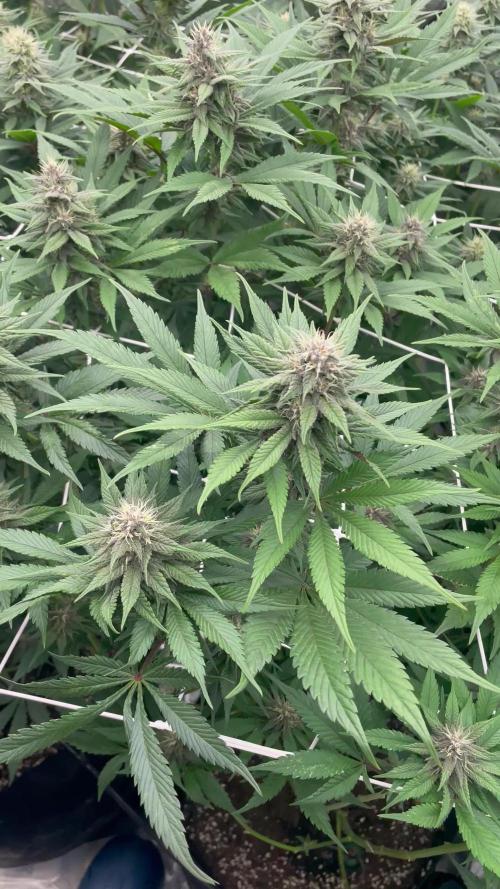
Another week, another bang.
This cycle is honestly stupid easy.
Living soil doing all the work while I just watch.
I Moved the lamp, did the defoliation, that’s it. No feeding, no chasing problems, no stress.
I even left for a business trip and the grow didn’t give a single f**k. Fully automated, zero drama.
What really stands out: the bud development at this early stage is insane compared to my previous grows. The way the buds are stacking and filling out this early is on a completely different level.
Lowkey annoyed I didn’t find this living soil earlier. The other ones I ran were okay at best. This one actually delivers.
Only thing I’m keeping an eye on now is humidity. Not trying to gamble with mold, so a dehumidifier is coming in the next days.
Feels almost illegal how smooth this run is




@Thedibber
Follow
Final few weeks left of the Bubba cheesecakes just tapwater from now on no microben 👌


@Snuffys_garden
Follow
The yield on this plant was excellent. Very happy with end results. She did great with some LST and defoliation. FoxFarm Ocean Forest soil and ph balanced water, no nutes. Will run her again next round.


@SwissKush
Follow
Day 43
Extreme growth, she is expanding all over
I gave her the final 6L of preflowering nutrients, and I think I will be changing over to the full flower blend. I will change and clean the DWC before.
PH solid yellow always, really great smell
Day 44
Expansion everywhere, main grew about 5cm overnight
the stretch is starting, her side limbs are reaching upward
she is growing very well
Day 45
Today she gets a huge haircut, 90% of those lower leafs and little larf branches were removed
Her bud sites are forming very well
She is consuming 3.5 litres a day right now
The foliar health is incredible, you will notice she is at her max for nutrients, 700ppm is the ceiling it looks like
Day 46
extreme expansion overnight after haircut
The resin is already growing on the sugar leafs
Day 47
The smell is so strong, I have never smelled something this strong from an auto in a tent before... smells like a photo grown outside
Flowering is starting very nicely, her bud pistils are shooting out everywhere wanting pollen.. not gonna happen, no pollen anywhere nearby!
PH dead on 6.0, yellow always
The bud sites are stretching, like fastbuds said in their write up, this one takes a bit longer to veg, but is worth it! I can tell because the resin smells like straight diesel fuel
Day 48
she is just exploding all over, her bud sites are doubling in size every day right now
the legs are stretching, its amazing to see, grew 6cm overnight, she is drinking more, almost 5 litres gone in a day
this is the most exciting part of the grow im my opinion, each day you can see real development. The resin is already growing so thick on this one.
Day 49
Whenever Fastbuds gives guidelines on their strains, I make sure to read Sebastian's write up every time, multiple times. They always include beneficial grow tips that are facts. The reason why this plant is growing exceptionally well is because of Fastbuds strain specific advice on the website.
shorts_status_processing


@Mr_Growgreen
Follow
We had a mega load of rain over the last few days and sadly I lost a huge NYD to stem rot. Anyways I new February in Durban was going to be a challenge. The soil doesn't drain very well where I live and unfortunately it just got too wet for too long. All the other plants are looking healthy and I did do treatments around their crowns with some peroxide followed by fungicide (organic oils). The haze x cheese is looking epic this week, buds are getting really big. Spotted some PM on some lower branches so I cleared out some undergrowth and have been pulling the odd leaves I see. Nothing too bad. Humidity has been 100% at points. Getting awesome hints of limone as I walk through the garden. Can't wait!


@Chucky324
Follow
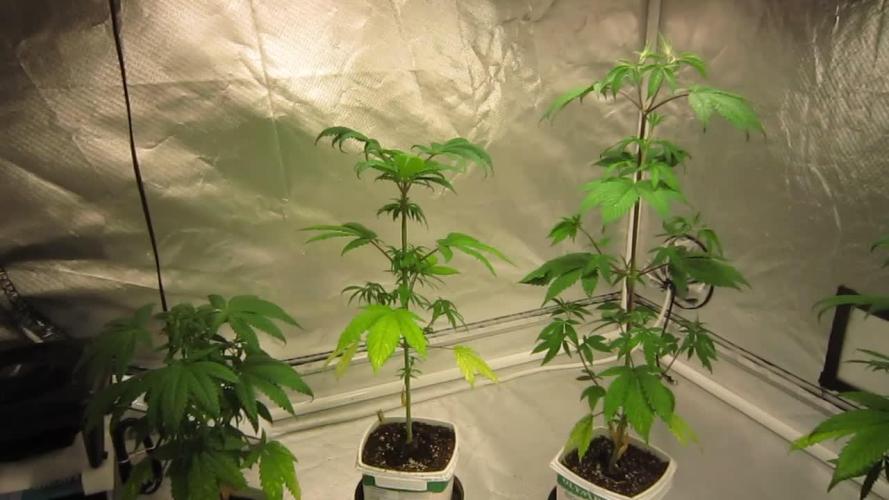
Hello. This is the end of week 4 and the beginning of week 5 of veg.
The plants are growing good, now that they are over their topping and repotting shock.
Man that tallest plant has 5 to 7 inches between leaf sets. That's a lot for indoors. I'll do my best with the training I know to slow here down.
Got for free a 240 insulated wine cabinet. The cooling motor sat up top that's why there's a hole there.
I'll put 3 thermoelectric motors in that area to cool and a small dehumidifier in the bottom to take out the extra moisture. Winter project..
There's a video on You Tube that I'll follow.
I was in the grow store looking for the frequency altered water I use on the powdery mildew... and they were out of it.
The clerk suggested this product saying it's the product all growers have been waiting for.
It's safe to use, and will get rid of all pests and mold and fungus.
So I've been using it this last week and it's working great out in the greenhouse.
The owner of Safer Soap Insecticidal Co sold his Co. and did some research and now has started a new Co with this product.
Check out the web site for more info about it.
I like that they use essential oils.
OK Have Fun. Chuck.


@Abreuvoir
Follow
4 September 2022
Flowering: 42 days - 6 weeks
Tip of foliage showing sign of maybe pH imbalance or too much fertilizer?
Did a small water flush.
The run off water was very acidic, added water until run off was 6 pH
Maybe time for water only now
10-15 more days till harvest??




@Northern_Ent
Follow
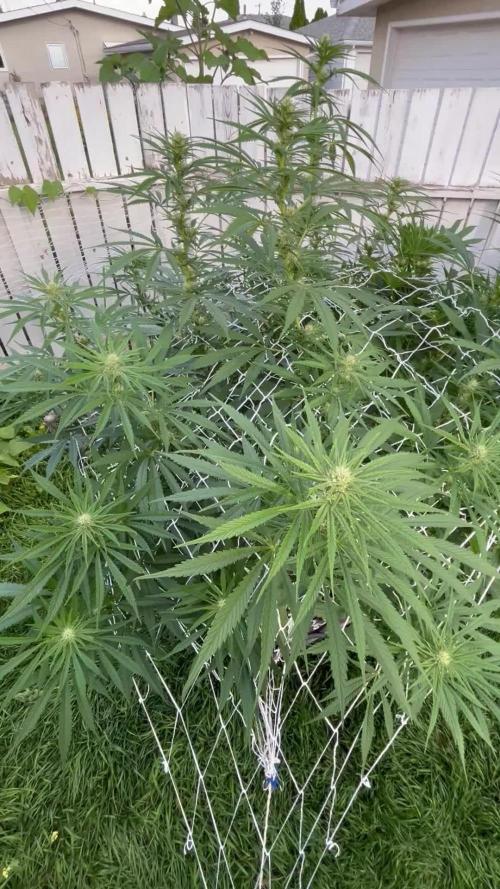
Aug 8: Purple Ghost Candy is looking really good. She is continuing to stretch and lots of buds are forming.
Had the AC Infinity UV lights out for first time today. The strength of natural UV light drops quickly this far north in mid-August. We run out of strong light before it gets too cold here.
Aug 9: added third scrog net and clipped it to the twine. Kludge method but it works so well I don’t know how I’d upgrade it further. Works great and provides strength and flex to the plant.
Unsung heroes include malt vinegar for pH adjustment and Dr Bronners as a wetting agent. The surfactant lowers the surface tension of the water allowing it to penetrate the soil more easily. The smell also helps keeps bug away, it is claimed. Anyway, it works. Peppermint is the usual one for growers but the store was out last time and I’m currently using Lavender.
Aug 11: don’t take flash pics of your photoperiod plants unless you follow up with a red light. I’ve done it this way for years now with no hermies so the red light must help avoid problems somehow. And it is definitely a bloom booster and allows ripening under stronger sunlight. The 730 nm far red light is recommended for several different reasons.


@WestieWeed
Follow
Okay
so we got two plants. The left one is a runt it seems.. same start time same nutes and same watering ect
but the smaller one seems to be ready to harvest 9 which will be pretty small . pistils are all pretty much amber and the trichombs are almost 100 percent cloudy. so we gotta find a little bit of a balance between the two as i need my grow tent to dry and have to do both at the same time.
In short we are days away from harvest . Checking every morning and still just using plain water for the last days.
everything seems to be staying right where it is no change at all to the plants.
Will add pick later today


@BigBadLion
Follow
Happy new year everyone! I hope everyone had some amazing festivities! 😃
Regarding my babies I think I might be underfeeding them and one might be shocked thanks to the heat and the lack of nutrients I gave them, last week's runoff water scared me and the plants might be suffering because of that! Most of the issues starts to get more noticeable later during the week! 😖
I started giving them few nutrients to see how they would react and at the end of the week it's clear that I had to give them waaaaay more 😵 Besides that I also moved them to their final pots and I topped Pistachio, out of the two she's the one that looks the best. I also defoliated them a little. I also believe they didn't get a transplant shock (I mean, they would've been worse if that was the case haha) and I added more mycorrhizas during the transplant (I heard they help a lot with hot climates and I need help with that badly)
Anyway, thanks for reading!
Stay tuned for the next update! 😉


@TiRobotProds
Follow
Forte odeur de fruits exotique se dégage de ces dames, elle sont bien givré etle rinçage a commencé.


@Xquisit
Follow
Today is 12/7/18, day 20 in flower. Today is 12/8.18, day 21 in flower, watered with nutes, picture day. Today is 12/9/18, day 22 in flower, just video of the girls.





@Ultraviolet
Follow
What's in the soil? What's not in the soil would be an easier question to answer. 16-18 DLI @ the minute. +++ as she grows.
Probably not recommended, but to get to where it needs to be, I need to start now.
Vegetative @1400ppm 0.8–1.2 kPa 80–86°F (26.7–30°C) 65–75%, LST Day 10, Fim'd Day 11
CEC (Cation Exchange Capacity):
This is a measure of a soil's ability to hold and exchange positively charged nutrients, like calcium, magnesium, and potassium. Soils with high CEC (more clay and organic matter) have more negative charges that attract and hold these essential nutrients, preventing them from leaching away.
Biochar is highly efficient at increasing cation exchange capacity (CEC) compared to many other amendments. Biochar's high CEC potential stems from its negatively charged functional groups, and studies show it can increase CEC by over 90%. Amendments like compost also increase CEC but are often more prone to rapid biodegradation, which can make biochar's effect more long-lasting. biochar acts as a long-lasting Cation Exchange Capacity (CEC) enhancer because its porous, carbon-rich structure provides sites for nutrients to bind to, effectively improving nutrient retention in soil without relying on the short-term benefits of fresh organic matter like compost or manure. Biochar's stability means these benefits last much longer than those from traditional organic amendments, making it a sustainable way to improve soil fertility, water retention, and structure over time. Needs to be charged first, similar to Coco, or it will immobilize cations, but at a much higher ratio.
a high cation exchange capacity (CEC) results in a high buffer protection, meaning the soil can better resist changes in pH and nutrient availability. This is because a high CEC soil has more negatively charged sites to hold onto essential positively charged nutrients, like calcium and magnesium, and to buffer against acid ions, such as hydrogen.
EC (Electrical Conductivity):
This measures the amount of soluble salts in the soil. High EC levels indicate a high concentration of dissolved salts and can be a sign of potential salinity issues that can harm plants.
The stored cations associated with a medium's cation exchange capacity (CEC) do not directly contribute to a real-time electrical conductivity (EC) reading. A real-time EC measurement reflects only the concentration of free, dissolved salt ions in the water solution within the medium.
98% of a plants nutrients comes directly from the water solution.
2% come directly from soil particles.
CEC is a mediums storage capacity for cations. These stored cations do not contribute to a mediums EC directly.
Electrical Conductivity (EC) does not measure salt ions adsorbed (stored) onto a Cation Exchange Capacity (CEC) site, as EC measures the conductivity of ions in solution within a soil or water sample, not those held on soil particles.
A medium releases stored cations to water by ion exchange, where a new, more desirable ion from the water solution temporarily displaces the stored cation from the medium's surface, a process also seen in plants absorbing nutrients via mass flow. For example, in water softeners, sodium ions are released from resin beads to bond with the medium's surface, displacing calcium and magnesium ions which then enter the water. This same principle applies when plants take up nutrients from the soil solution: the cations are released from the soil particles into the water in response to a concentration equilibrium, and then moved to the root surface via mass flow.
An example of ion exchange within the context of Cation Exchange Capacity (CEC) is a soil particle with a negative charge attracting and holding positively charged nutrient ions, like potassium (K+) or calcium (Ca2+), and then exchanging them for other positive ions present in the soil solution. For instance, a negatively charged clay particle in soil can hold a K+ ion and later release it to a plant's roots when a different cation, such as calcium (Ca2+), is abundant and replaces the potassium. This process of holding and swapping positively charged ions is fundamental to soil fertility, as it provides plants with essential nutrients.
Negative charges on soil particles: Soil particles, particularly clay and organic matter, have negatively charged surfaces due to their chemical structure.
Attraction of cations: These negative charges attract and hold positively charged ions, or cations, such as:
Potassium (K+)
Calcium (Ca2+)
Magnesium (Mg2+)
Sodium (Na+)
Ammonium (NH4+)
Plant roots excrete hydrogen ions (H+) through the action of proton pumps embedded in the root cell membranes, which use ATP (energy) to actively transport H+ ions from inside the root cell into the surrounding soil. This process lowers the pH of the soil, which helps to make certain mineral nutrients, such as iron, more available for uptake by the plant.
Mechanism of H+ Excretion
Proton Pumps: Root cells contain specialized proteins called proton pumps (H+-ATPases) in their cell membranes.
Active Transport: These proton pumps use energy from ATP to actively move H+ ions from the cytoplasm of the root cell into the soil, against their concentration gradient.
Role in pH Regulation: This active excretion of H+ is a major way plants regulate their internal cytoplasmic pH.
Nutrient Availability: The resulting decrease in soil pH makes certain essential mineral nutrients, like iron, more soluble and available for the root cells to absorb.
Ion Exchange: The H+ ions also displace positively charged mineral cations from the soil particles, making them available for uptake.
Iron Uptake: In response to iron deficiency stress, plants enhance H+ excretion and reductant release to lower the pH and convert Fe3+ to the more available form Fe2+. The altered pH can influence the activity and composition of beneficial microbes in the soil. The H+ gradient created by the proton pumps can also be used for other vital cell functions, such as ATP synthesis and the transport of other solutes. The hydrogen ions (H+) excreted during photosynthesis come from the splitting of water molecules. This splitting, called photolysis, occurs in Photosystem II to replace the electrons used in the light-dependent reactions. The released hydrogen ions are then pumped into the thylakoid lumen, creating a proton gradient that drives ATP synthesis.
Plants release hydrogen ions (H+) from their roots into the soil, a process that occurs in conjunction with nutrient uptake and photosynthesis. These H+ ions compete with mineral cations for the negatively charged sites on soil particles, a phenomenon known as cation exchange. By displacing beneficial mineral cations, the excreted H+ ions make these nutrients available for the plant to absorb, which can also lower the soil pH and indirectly affect its Cation Exchange Capacity (CEC) by altering the pool of exchangeable cations in the soil solution.
Plants use proton (H+) exudation, driven by the H+-ATPase enzyme, to release H+ ions into the soil, creating a more acidic rhizosphere, which enhances nutrient availability and influences nutrient cycling processes. This acidification mobilizes insoluble nutrients like iron (Fe) by breaking them down, while also facilitating the activity of beneficial microbes involved in the nutrient cycle. Therefore, H+ exudation is a critical plant strategy for nutrient acquisition and management, allowing plants to improve their access to essential elements from the soil.
A lack of water splitting during photosynthesis can affect iron uptake because the resulting energy imbalance disrupts the plant's ability to produce ATP and NADPH, which are crucial for overall photosynthetic energy conversion and can trigger a deficiency in iron homeostasis pathways. While photosynthesis uses hydrogen ions produced from water splitting for the Calvin cycle, not to create a hydrogen gas deficiency, the overall process is sensitive to nutrient availability, and iron is essential for chloroplast function.
In photosynthesis, water is split to provide electrons to replace those lost in Photosystem II, which is triggered by light absorption. These electrons then travel along a transport chain to generate ATP (energy currency) and NADPH (reducing power). Carbon Fixation: The generated ATP and NADPH are then used to convert carbon dioxide into carbohydrates in the Calvin cycle. Impaired water splitting (via water in or out) breaks the chain reaction of photosynthesis. This leads to an imbalance in ATP and NADPH levels, which disrupts the Calvin cycle and overall energy production in the plant. Plants require a sufficient supply of essential mineral elements like iron for photosynthesis. Iron is vital for chlorophyll formation and plays a crucial role in electron transport within the chloroplasts. The complex relationship between nutrient status and photosynthesis is evident when iron deficiency can be reverted by depleting other micronutrients like manganese. This highlights how nutrient homeostasis influences photosynthetic function. A lack of adequate energy and reducing power from photosynthesis, which is directly linked to water splitting, can trigger complex adaptive responses in the plant's iron uptake and distribution systems.
Plants possess receptors called transceptors that can directly detect specific nutrient concentrations in the soil or within the plant's tissues. These receptors trigger signaling pathways, sometimes involving calcium influx or changes in protein complex activity, that then influence nutrient uptake by the roots. Plants use this information to make long-term adjustments, such as Increasing root biomass to explore more soil for nutrients. Modifying metabolic pathways to make better use of available resources. Adjusting the rate of nutrient transport into the roots. That's why I keep a high EC. Abundance resonates Abundance.


@handsammich
Follow
102.5g dry, top nug 13.3gs dry. Absolute beast of a plant especially as a freebie, had a good bit of fun with this one and it’s nice seeing improvement through each plant.
