The Grow Awards 2026 🏆 







Likes
Comments
Share
@GrowGuy97
Follow
Will definitely be growing this strain again to see if I can get some better results, not exactly sure what stunted the grow this time but overall still pleased with the quality of bud I got! Thanks for following & happy growing friends!🙏🏼✌️🏼🌱


Likes
71
Share
@Roberts
Follow
Quebec Blast has germinated and started to emerge. Everything Is going good so far. Using a 5 gallon New Level Hydro bucket link below. Also a Spider Farmer SE5000. Thank you Quebec Seeds, New Level Hydro, and Spider farmer. 🤜🤛🌱
SE5000
https://amzn.to/3qFpAML
Spider Farmer Official Website Links:
US&Worldwide: https://www.spider-farmer.com
UK: https://spiderfarmer.co.uk
CA: https://spiderfarmer.ca
EU: https://spiderfarmer.eu
AU: https://spiderfarmer.com.au
Coupon Code: saveurcash
Thank you grow diaries community for the likes, follows, comments, and subscriptions on my YouTube channel. 🍻🌱👍 Happy Growing 🌱
https://youtube.com/channel/UCAhN7yRzWLpcaRHhMIQ7X4g
www.newlevelhydro.com

Likes
60
Share
@Cannibalgardens
Follow
She has been amazing to grow super smell, good amount of crystals and very sticky.The humdity has been killing me i had to move her outside , this barely helped and had to cover her outside for light cycle. Ive decided to start the flush process now with flora-kleen and to harvest in the near future. Truly have loved this plant ,my first grow and it feels great to be ready to harvest and enjoy my labour oh and enter a contest too..cheers brothers and sisters

Likes
19
Share
@GERGrowDesigns
Follow
Dear Growers ,
Over the next weeks, we’re excited to share a very special project with you: Sensi Seeds Berliner Automatic 2025 Release
With dedication, knowledge, and hands-on practice, we’ll guide you step by step through the journey—watch with us as growth, development, and small wonders unfold before your eyes.
Whether you're a beginner or an expert, you are warmly invited to join, ask questions, and share your own experiences along the way!
Project Setup & Conditions:
• Brand/Manufacturer: Sensi Seeds
• Tent: 120cmx60cmx80cm
• Light: 2x 200 Watt Full Spectrum
• Humidity: 45%
• Soil: Narcos Organix Mix
• Nutrients: Narcos Products
• pH Value: 5.8
A Special Thanks To
Sensi Seeds
for the amazing collaboration, trust, and generous support in making this project possible. Your contribution is truly appreciated!
Congratulations on Your Own Projects!
We celebrate your growth, your creativity, and the passion you bring to the table. It’s truly inspiring to witness at Each visit .
Stay curious and keep up Growing —we look forward to welcoming you back for the next chapter soon!
Likes
Comments
Share
@eldruida_lamota
Follow
Vamos familia, actualizamos la tercera semana de floración de estas Fruit cake de Seedstockers, salieron las 3 de 3, 100% ratio éxito.
Aplicamos varios productos de Agrobeta, que son increíbles para aportar una buena alimentación a las plantas.
Temperatura y humedad dentro de los rangos correctos dentro de la etapa de floración.
La tierra utilizada es al mix top crop, por cambiar.
De 3 ejemplares seleccioné los 2 mejores para completar el indoor, también cambié el fotoperiodo a 12/12 y apliqué una buena poda de bajos, se ven bien sanas las plantas, tienen un buen color y progresan a muy buen tanto que se me fueron de altura un poco, la solución fue doblar un poco las plantas, también empezaron a formarse las flores.
Agrobeta:
https://www.agrobeta.com/agrobetatiendaonline/36-abonos-canamo
Hasta aquí todo, Buenos humos 💨💨💨

Likes
34
Share
@Roberts
Follow
Auto Moon Rock is growing great. She had a slow start, but is making progress now. She sprouted her first pistils today ot yesterday. She got some lst and selective defoliation done. She is looking good. Thank you Medic Grow, and Divine Seeds. 🤜🏻🤛🏻🌱🌱🌱
Thank you grow diaries community for the 👇likes👇, follows, comments, and subscriptions on my YouTube channel👇. ❄️🌱🍻
Happy Growing 🌱🌱🌱
https://youtube.com/channel/UCAhN7yRzWLpcaRHhMIQ7X4g

Processing
Likes
4
Share
@Grownewgenetics
Follow
We have these week try all ready 3 day's to upload all the diaries, information,videos and pictures, but we decided today to try without the app , also let's hope we get some pictures up these Time and all the Videos and pictures are on all our Media
Likes
84
Share
@Smokwiri
Follow
Buds packing, the buds are quite long, the go to far below the canopy, plant is clearly loving th light.
Do your own Microgrow with the Mars Hydro TS600 big buds for little bucks

Likes
19
Share
@Comfrey
Follow
Tropicana flowers 🌞☀️🌤️🌦️🌧️
Plant is 15 cm high because of low stress training. The length is 31 cm.
Day 36:
Sun is shining, 15-23 degrees, high humidity. Tropicana gets two liters of pure rainwater. Spend the day in my veggie garden working. In the evening I brought some 🐞for Tropicana because I spottet a few lice. My mood changes drastically as I find spider mites eggs, first and second stadium. Don‘t overthink that and decide to defoliate the plant immediately.
I prepare a tee out of the leaves which brings fast relaxation. My mood is much better now.
Day 37
In the morning with better light I find more spider mites and decide to wash the plant with rainwater. Can‘t find after any more of these little killer dwarfs. I decide to bring more beetles and check the leafs more often. Temperature is felling under 20 degrees, it‘s raining and the humidity is 87%.
Day 38
In the early morning I couldn‘t find any mites on Tropicana. Got to continue controlling this in the next weeks regular. I‘m sure they are still there somewhere hidden in a dark spot.
🌦️ 13 - 21 degrees and humidity is around 60-70%.
Day 39
🌦️🌧️ Very rainy day. Just let Tropicana enjoy life and tie down the top one more time. 🐞 stay since some days. One on every plant. I think the mites are a result of their start inside and no hygiene at all. Have the same with my peppers some years.
14 - 21 degrees, humidity around 84%
Day 40
🌧️☁️🌤️☀️15 degrees, humidity 83% We listen to Roots Reggae, Tropicana is happy and quite busy with producing new roots, I guess.
Don‘t understand when to stop low stress training. I think it’s enough now. She needs a rest.
Day 41
🌧️⛈️🌧️🌧️ 15 - 19 degrees, humidity up to 89%
We had rainfall today around 65 liters of water. I collected enough of it for the next weeks.
Day 42
☀️ 6 - 23 degrees. Humidity is falling.
Tropicana enjoys the morning sun while she drinks and drinks and drinks…. Coffee. 😅
Likes
68
Share
@cRypto666
Follow
Freunde der Sonne :) KURZE INFO DER LETZTE EINTRAG HIER IST IMMER DER AKTUELLLSTE NACH DATUM NACH UNTEN SOLLTEN UNTEN SCROLLEN UM ZU VORHIERIGEN EINTR'GE ZU GELANGEN : <3 WEEED
wollte dir ein text drücken :) hab mich vertippt... aö ich bin heute eine Bewustseinsstufe beim Grown aufgestiegen ! Endlich kann man jetzt Täglich meine Real Talk oder Reaktion ViD/PIC anschauen. Absofort werde ich meinen GARTEN anderts wahr nehme wer rein schaut kann Exklusive Tipps für seinen Garten gebrauchen. Gerne bin ich für Fragen offen und ich helfe wenn ich kann fals nicht findet sich in der Gruppe immer jemand.
DER GRUND IST DAMIT ICH NACHVOLLZIEHEN KANN WAS ICH FALSCH GEMACHT HABE BZW UM WISSEN ZU MANIFESTIRE UND GEWISSE GEDANKENVERBINDUNGEN GESACHFFEN SIND. IM GRUNDE MEIN GROWTAGBUCH ICH TEILE MEINE GEDANKEN MIT EUCH GLEICHGESINNTEN UND WÜNSCHE ALLEN EINE ERFOLGREICHEN GROW brO
cRypto666
2 minutes ago
cRypto666
<LIEBE> BRUDER ICH LADE DIE VIDEOS UND BILDER NOCH HOCH UND ICH BIN MIR EIGENTLICH SICHER ES KÖNNTE DIR GEFALLEN VIEL SPAß
AUF QEEN SEED GIBTS WIRKLICH GUTE BLOGS MIT TOURTORIALS FÜR NEULINGE/ANFÄNGER .
Konnte mir so mein Verständnis und Grundlage die fürs grown wichtig ist gut lernen und Aneignen ! WIRKLICH VIELE UND GUTE INFOS !!
https://www.royalqueenseeds.de/blog-cannabis-anbau-c3
https://www.royalqueenseeds.de/blog-die-10-grossten-fehler-von-cannabiszuchtern-n86
es ist soweit heute beginnt Woche 1 ... BEVOR WIR STARTEN, WICHTIG WASCH DIR GRÜNDLICH DIE HÄNDE UND BENUTZE GUMMIHANDSCHUE BEIM ARBEITEN! SEHR WICHTIG!
Ich freue mich das ich heute wieder das Gärtnern begonnen habe und eine Hällfte der Samen in der Erde sind. Kennt ihr das Gefühl der Vollkomenheit wenn man sich im Garten beschäftigt ? Für mich ist das Therapie und für euch?
Ich spiele mit dem Gedanken anstatt Samen zu growen mir einfach eine Mutterpflanze Anschaffe um mir meine Stecklinge zu ziehen ! Dafür brauch ich aber noch ein anderes Zelt und eine Lampe. Die Mütterpflanze kann dann erst mal wachsen und ich kann nebenbei noch mal ein Durchgang mit Autos schaffen bevor die Steckis fertig sind. Wenn es soweit ist gebe ich euch bescheid wenn ich Samen und Setup bei mir stehen.
So jetzt aufs eigentliche zurück. Ich habe heute erst mal mein Setup geprüft und so gut wie möglich desinfiziert. Es ist verdammt wichtig das nach jedem Durchgang sauber gemacht wird also zb Zeltwände, Boden, Topfe, Boxen, Wasserbehälter. Habe ich gemacht und habe meine ersten Samen in Anzucht Erde gesetzt, befeuchtet, markieren und in die Box. Wände und Deckel mit zersteuber befeuchten und ab unter die Lampe. WICHTIG MACH DIE ERDE NICHT SO NASS ! DAS GEFÄLLT IHNEN NICHT SONDERN HALTE SIE AM BESTEN FEUCHT IN DEM DU ABEND / MORGEN EIN BISCHEN WÄSSERST!
ICH STELLE DIE LAMPE AUF CA 40 cm zum Boden ein bzw der Box. Ein gewisser abstand muss sein um die Fläche komplett zu Beleuchten. Da meine Lampe dimmbar ist muss sie nicht ganz oben hängeng sondern Kann näher an die Pflanzen ran und Stelle den Dimmer auf 20 %. Das reicht anfangs in dem Stadium völlig aus, muss aber dann später angepasst bzw hoch geschraubt werden!
Lüfter I läuft 24/7 und sorgt für optimale Bedinungen! WICHTIG
LAMPE 20/4 HELL/DUNKEL (REGLER STEHT AUF 20 % LICHTLEISTUNG)
DANN HABEN WIR ES EIGENTLICH SCHON GESCHAFFT UND ALLES RICHTIG GEMACHT!
Ich versuche schon so viel wie möglich von meiem Wissen an euch weiter zugeben bzw auf Papier zubringen, ist aber NICHT IMMER ZU 100% Möglich, da es einfach zu viele Informationen sind !
Bei fragen einfach fragen und die Comiunity hilft sicher !!!
KOMMT ZEIT KOMMT RAT ... ich hab 2 Monate Infos eingeholt und Produkte verglichen !
Auf Queen Royal Seeds gibt es gute Anfänger Tipps sogar teilweise mit Video. Mir hat das sehr geholfen mein Grundwissen aufzubauen.
BEVOR IHR DAS GÄRTNERN ANFANGEN KÖNNTE MACHT DIR GEDANKEN WO DEINEN GARTEN STEHEN KANN.
#1 AM BESTEN IHR HABT EIN GARTENZIMMER DER NUR ZUM GÄRTNERN BENUTZT WIRD IST DIE BESTE LÖSUNG DA DU DEINE UMGEBUNG VIEL LEICHTER SAUBERHALTEN KANNST
#2 DU KANNST DEIN GARTEN AUCH INS WOHN. BZW SCHLAFZIMMER STELLEN WENN DU KEINE MÖGLICHKEIT HAST EIN GARTENZIMMER ZU MACHEN. DAS IST NICHT DIE PERFEKTE UMGEBUNG ABER WENN DU ABLUFT RAUSLEITEN KANNST DANN MACH ES ! DU KANNST ES AUCH IN DEN RAUM STRÖMEN LASSEN MUSST DIR ABER BEWUST SEIN DAS ES EVTL DAS SCHIMMELN IM RAUM ANFÄNGT! IST MIR SCHON PASSIERT ! LEITE SIE WENN MÖGLICH AM BESTEN RAUS !
ACHTE DAS DARUF DAS DEINE LUFTFEUCHTIGKEIT UND TEMP KONSTANT BLEIBEN UND ES NICHT EINMAL ZU WARM UND EINEMAL ZU KALT... IHR WISST SCHON SORGE FÜR EINEN KONSTANTE UMGEBUNG IN DEINEM GARTEN. DIE WAHL DER SAMEN IST AUCH WICHTIG DA ES SORTEN GIBT DIE EINE WARME UMGEBUNG EINE KONSTANTE ODER EINE EHER KALTE UMGEBUNG. AM BESTEN IHR PASST EURE SAMEN EURER UMGEBUNG AN HEIST DU WOHNST IN EINEN LAND WO ES EHER WARM IST ALSO 25-30 ° C dann WÄHLE AUCH EINE PASSENDE SORTE AUS!
MEHR GIBTS ERST MAL NICHT ! BIS ZUM NÄCHSTEN MAL!

Likes
4
Share
@Dankgrowz786
Follow
Growing OG AUTO in a small 6X4 tent in my spare room, I did a little defoliation on the plant a few weeks ago and im thinking I overdid it? what are you opinions? also, ill attach some pictures but the pistels on the side are taking ages to open and expand.. is this normal? It’s been couple weeks and they are looking unchanged?
Thanks All


Likes
21
Share
@Mr_Motalovah
Follow
Hello Growers and Tokers! 👋 👩🌾 🧑🌾.🔥💨
These pictures were taken on day 27 of flower.
Super stoked with this strain!
I'd say out of all the ladies in the tent she's the one at took the LST training the best, then again when I started training them she was also the most advanced.
So maybe next time i'll wait a bit more before starting LST. My goal is to get all my plants in this shape, that way I can take up all the space in the tent with colas..
She has a GREAT shape, I'm just in love with how it looks like a garden bush. Almost like a rose bush with the colas popping out. (3rd and 4th picture)
Smell is very potent, don't find it fruity or sweet yet but it seems to be heading that way.. I'm a sucker for sweet flavors.
Trichomes are starting to cover up but doesn't seem like she'll be a frosty one. Hope I'm wrong.
Bud have grown a GOOD bit from last week, good to see the defoliation worked.
I'll be adding an organic PK booster for that extra boom in bloom.
That's it for this week, things are looking promising with this lady! 😍
Stay tuned to see how these buds turn out.
Take care!
One love!


Likes
22
Share
@herbalistssword
Follow
First day of week 6, I will be adding content as the week progresses, have a look at week 5 as that is now complete.
Status:
Candy Kush #1 d36 - Looking awesome, some pistils showing. Was too bushy so did some LST and slight defoliation today with supercrop on 1 branch.
Candy Kush #2 d36 - Looks like nitrogen deficiency is sorted, now I have excess? :D see the clawing tips? Gonna stick with the current feed, hopefully she'll overcome otherwise I'll flush her once if things get worse.
Bubble Kush d32 - Amazing, nothing to report, some tucking done
Fastberry d32 - Looking as weird as ever, some tucking done
Sugar Mama d36 - growing and getting really bushy, shame about the mess I did with the roots/stem but she is doing ok now.
----
Fed 2nd day of weeks 6 (day 37), 3ml biogrow 2ml calmag. pH was at 6.5 Ec was at 1.5.
New leaves are really yellow in candy Kush 2, iron deficiency? Not sure what is happening, will be monitoring.
----
Day 38, Removed the yellow leaves and a little defoliation on all the plants
----
Day 39, Raised the shorter plants so they get some more lights. All of them have finished 35 days (5 weeks from seedling today) and are looking great. Feed the same, although they still look very bright, brighter than I am used to.
----
Day 41, Feeding time, started giving them bloom at 5ml/l and the other normal dosages as in diary.
----
Day 42, End of week 6
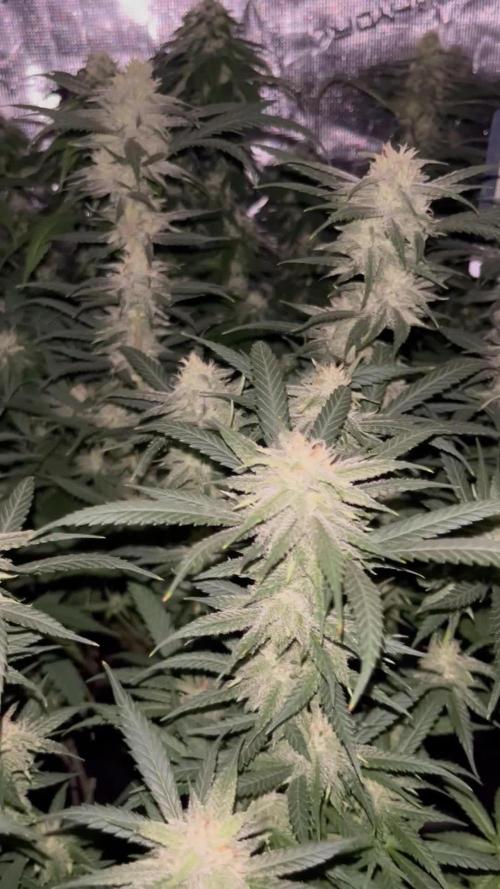
The girls are all looking great, there is is so much hair on the buds, haven't seen so much with outdoor grows. Exciting :D
Sugar mama is way too bushy and not getting taller. The new blades are too thin, maybe I'm overfeeding her (only biogrow+calmag)? defoliated her, lots of fan leaves removes, she is asking for some training, I've ordered plant tie and will do some LST when delivered.
Fastberry also had a couple of leaves removed
All kushs doing great
Thanks for reading and happy growing!




Likes
12
Share
@BrMarijuana
Follow
Ótimas plantas, floração ok, alimentação ok, rega e alimentação todos os dias, plantas satisfeitas, verde bonito, ótimos buds se formando, cheiro doce


