@tokesly
Follow
Ideally you want to drastically up your PK Week 5 of flower. Unfortunately adding PK late last week forced me to ramp up by 2ml/gal every day until 9 ml/gal to avoid shocking the plants. These plants were growing super bushy despite being Sativa dominant. Definitely played it too safe Week 3, gonna go heavy next run.

shorts_status_processing


@MrPurplePinkie
Follow
Colorado Cookie didn’t take the nutes as well as her companion, little burnt tips.
Everything’s ok, I guess, I wish the CC stops growing as she is approaching “danger zone”,
only have a 60x6x120. I guess LTS should have been more then an option.





@Altitonans_Fulmen
Follow
For most crops, a slightly acidic soil pH between 6.0 and 6.8 is ideal because it optimizes nutrient availability. When soil pH rises above 7.0 (alkaline), the concentration of hydrogen ions H+ drops significantly, and they are replaced by calcium, magnesium, or sodium ions on the clay colloid exchange sites. To naturally lower alkaline soil pH, you can add organic matter (carbon-rich materials), which produces weak organic acids as it decomposes. Maintaining this slightly acidic range stimulates a highly active, diverse microbial community; these microbes decompose organic matter and release carbon dioxide CO2, which plants absorb through their roots and leaves to boost photosynthesis and sugar production. Furthermore, the added organic carbon acts like a sponge, drastically improving the soil's water-holding capacity.
While soil biological activity does involve cellular electron transport, electrical conductivity (EC) in soil is actually a measure of dissolved mineral salts, not a voltage carried by individual microbes. Soil microorganisms secrete organic acids and chelate metallic and non-metallic minerals, transforming locked-up inorganic compounds into bioavailable organic complexes. Unlike harsh synthetic fertilizers that can dehydrate soil life in high concentrations, these naturally chelated nutrients safely nourish the plant, creating a thriving, self-sustaining ecosystem where plants can efficiently synthesize their own food.
Metal-based: Could include elements like iron, manganese, copper, or zinc, which are essential nutrients for plants but can exist in forms not readily accessible.
Non-metal-based: Examples like calcium carbonate, phosphate, or sulfur are also important for plant growth and potentially serve as building blocks for the organic salt.
Chelation in a plant medium is a chemical process where a chelating agent, a negatively charged organic compound, binds to positively charged metal ions, like iron, zinc, and manganese. This forms a stable, soluble complex that protects the micronutrient from becoming unavailable to the plant in the soil or solution. The chelate complex is then more easily absorbed by the plant's roots, preventing nutrient deficiency, improving nutrient uptake, and enhancing plant growth. Chelation is similar to how microorganisms create organic salts, as both involve using organic molecules to bind with metal ions, but chelation specifically forms ring-like structures, or chelates, while the "organic salts" of microorganisms primarily refer to metal-complexed low molecular weight organic acids like gluconic acid. Microorganisms use this process to solubilize soil phosphates by chelating cations such as iron (Fe) and calcium (Ca), increasing their availability.
Added sugars stimulate soil microbial activity, but directly applying sugar, especially in viscous form, can be tricky to dilute. Adding to the soil is generally not a beneficial practice for the plant itself and is not a substitute for fertilizer. While beneficial microbes can be encouraged by the sugar, harmful ones may also be stimulated, and the added sugar is a poor source of essential plant nutrients. Sugar in soil acts as a food source for microbes, but its effects on plants vary significantly with the sugar's form and concentration: simple sugars like glucose can quickly boost microbial activity and nutrient release. But scavenge A LOT of oxygen in the process, precious oxygen. Overly high concentrations of any sugar can attract pests, cause root rot by disrupting osmotic balance, and lead to detrimental fungal growth. If you are one who likes warm tropical high rh, dead already. Beneficial, absolutely, but only to those who don't run out of oxygen. Blackstrap is mostly glucose, iirc regular molasses is mostly sucrose. Sugars, especially sucrose, act as signaling molecules that interact with plant hormones and regulate gene expression, which are critical for triggering the floral transition. When sucrose is added to the growth medium significantly influences its effect on floral transition.
Probably wouldn't bother with blackstrap given its higher glucose content. Microbes in the soil consume the sugar and, in the process, draw nitrogen from the soil, which is the same nutrient the plant needs. Glucose is not an oxygen scavenger itself, but it acts as a substrate for the glucose oxidase (GOx) enzyme, effectively removing oxygen from a system. Regular molasses (powdered if you can), as soon as she flips to flower or a week before, the wrong form of sugar can delay flower, or worse. Wrong quantity, not great either. The timing of sucrose application is crucial. It was more complicated than I gave it credit for, that's for sure. When a medium's carbon-to-nitrogen (C:N) ratio reaches 24:1, it signifies an optimal balance for soil microbes to thrive, leading to efficient decomposition and nutrient cycling. At this ratio, soil microorganisms have enough nitrogen for their metabolic needs, allowing them to break down organic matter and release vital nutrients like phosphorus and zinc for plants. Exceeding this ratio results in slower decomposition and nitrogen immobilization, while a ratio below 24:1 leads to faster breakdown and excess nitrogen availability.
Carbon and nitrogen are two elements in soils and are required by most biology for energy. Carbon and nitrogen occur in the soil as both organic and inorganic forms. The inorganic carbon in the soil has minimal effect on soil biochemical activity, whereas the organic forms of carbon are essential for biological activity. Inorganic carbon in the soil is primarily present as carbonates, whereas organic carbon is present in many forms, including live and dead plant materials and microorganisms; some are more labile and therefore can be easily decomposed, such as sugars, amino acids, and root exudates, while others are more recalcitrant, such as lignin, humin, and humic acids. Soil nitrogen is mostly present in organic forms (usually more than 95 % of the total soil nitrogen), but also in inorganic forms, such as nitrate and ammonium. Soil biology prefers a certain ratio of carbon to nitrogen (C:N). Amino acids make up proteins and are one of the nitrogen-containing compounds in the soil that are essential for biological energy. The C:N ratio of soil microbes is about 10:1, whereas the preferred C:N ratio of their food is 24:1 (USDA Natural Resource Conservation Service 2011). Soil bacteria (3-10:1 C:N ratio) generally have a lower C:N ratio than soil fungi (4-18:1 C:N ratio) (Hoorman & Islam 2010; Zhang and Elser 2017). It is also important to mention that the ratio of carbon to other nutrients, such as sulfur (S) and phosphorous (P) also are relevant to determine net mineralization/immobilization. For example, plant material with C:S ratio smaller than 200:1 will promote mineralization of sulfate, while C:S ratio higher than 400:1 will promote immobilization (Scherer 2001).
In soil science and microbiology, the C:S ratio helps determine whether sulfur will be released (mineralized) or tied up (immobilized) by microorganisms.
A carbon-to-sulfur (C:S) ratio smaller than 200:1 promotes the mineralization of sulfate, when the C:S ratio is low, it indicates that the organic matter decomposing in the soil is rich in sulfur relative to carbon. Microorganisms require both carbon and sulfur for their metabolic processes. With an excess of sulfur, microbes take what they need and release the surplus sulfur into the soil as plant-available sulfate
A carbon-to-sulfur (C:S) ratio higher than 400:1 will promote the immobilization of sulfur from the soil. This occurs because when high-carbon, low-sulfur materials (like sawdust) are added to soil, microbes consume the carbon and pull sulfur from the soil to meet their nutritional needs, temporarily making it unavailable to plants.
200:1 C:S 400:1: In this range, both mineralization and immobilization can occur simultaneously, making the net availability of sulfur less predictable.
This dynamic is similar to how the carbon-to-nitrogen (C:N) ratio regulates the availability of nitrogen in soil. Just as microbes need a certain amount of nitrogen to process carbon, they also require a balanced amount of sulfur. Both mineralization and immobilization are driven by the metabolic needs of the soil's microbial population.
Sulfur is crucial for protein synthesis. A balanced ratio is particularly important in relation to nitrogen (N), as plants need adequate sulfur to efficiently use nitrogen. A severely imbalanced C:S ratio can hinder the efficient use of nitrogen, as seen in trials where adding nitrogen without balancing sulfur levels actually lowered crop yields.
Maintaining a balanced carbon-to-sulfur (C:S) ratio is highly beneficial for plant growth, but this happens indirectly by regulating soil microbial activity. Unlike the C:N ratio, which is widely discussed for its direct effect on nutrient availability, the C:S ratio determines whether sulfur in the soil's organic matter is released (mineralized) or temporarily locked up (immobilized).
Glucose will hinder oxygenation more than sucrose in a solution because glucose is consumed faster and has a higher oxygen demand, leading to a more rapid decrease in oxygen levels. When cells respire, they use oxygen to break down glucose, and this process requires more oxygen for glucose than for sucrose because sucrose must first be broken down into glucose and fructose before it can be metabolized.
In a growth medium, glucose is a more immediate and universal signaling molecule for unicellular and multicellular organisms because it is directly used for energy and triggers a rapid gene expression response. In contrast, sucrose primarily acts as a signaling molecule in plants to regulate specific developmental processes by being transported or broken down, which can be a more complex and slower signaling process.
Critical stuff.








@thehood
Follow
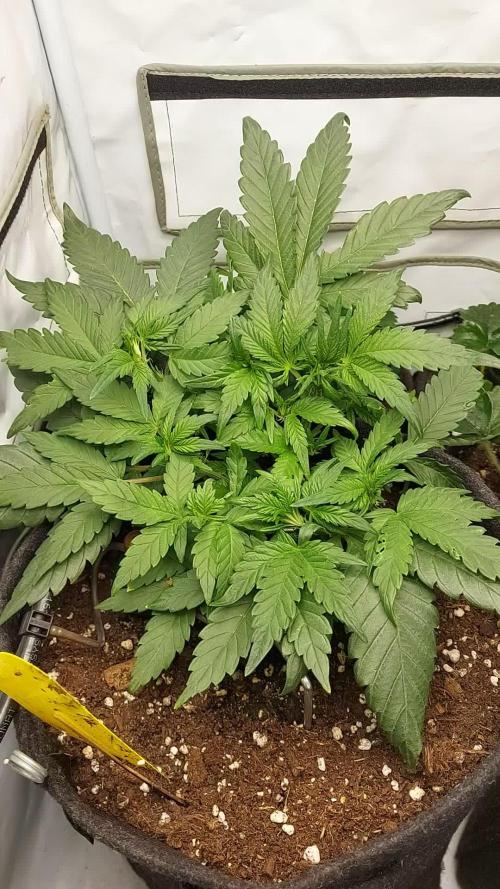
We're in the stretch phase now and you can almost watch the plant grow. I am trying to keep the branches apart and bring them to the same height. I removed overlapping leaves and smaller twigs. The smell is slowly getting stronger.


@Theia
Follow
Hello😀
Week 5 of flower begins as week 4 was. Pretty easy. Did a light defoliation as she was and is got some good leaf on her but I have decided I would go minimalist this round so no training to any plants has been given.
The only issue I had was my run off was coming out slightly higher PH then going in. After some sage advice from @lassos I was advised to remove the golden tree as it is more acidic then I want and I also ran PH lower at 5.8 for most of last week giving 2 feeds a day at an EC of 1.9. 3l morning 3l night. I am happy to say PH has balanced out so thanks again lassos👍.
Not much else to say she is stacking well with a nice looking flower. Smells kinda sweet not much there yet..
I plan to up the biobizz top max a little and maybe see if she wants a bit more bloom.
Temperature has remained fairly consistent with night lows of 20 and I try and keep the flower room at 26c with an RH of 70%. Got a good healthy plant and have some great airflow in there so not overly concerned about the higher RH.
That's all really this week.
Thanks for looking and I update Instagram with pics of all the girls.
Grow well🌱🌿🌱
Stay safe😷


@Yolka
Follow
The seed was immersed for 12 hours in water with three drops of 3% hydrogen peroxide 11.01. Then it was immersed in a peat tablet. After throwing off the helmet, the tablet was placed in a 1 L cloth bag.
Cloth bag about 15 liters
Earth will be used in its own assembly:
sour peat,
sphagnum peat,
Biohumus,
perlite,
vermiculite,
GUANOKALONG,
krill meal,
bone meal,
fish meal,
dolomite flour,
ash,
sapropel,
English salt.
I also use trichoderma, mycorrhiza, some bacteria and organic stimulants Italian company Valagro.
80% is super soil, and 20% on top is soil for seedlings.
The main pot watered Trichoderma lignorum before planting the seedling.
I used the method of sprouting in a peat pad for the first time - did not like it. Better in a napkin. The first cloth pot of 1 liter is also a bad option. Next time I will take a 0.3-0.5 l paper cup for drinks.


@valiotoro
Follow
Nice buds very sticky 💥
The smell its not a cheese in particular its the whooole plate of cheese with the jam & the dried fruits & earthy its delicious!🧀🍇



@PavementPunk
Follow
10/29/26 🍪 Gorilla Cookies — Day 55 Flower (Total Age: 15 Wks 2 Days)
📊 Quick Specs
* Pot: 7.0 Gal Fabric pot
* Light Distance: 16.0 in (MIGRO LED array)
* Schedule: 12h on / 12h off
* Canopy Height: 30.0 in
* Environment: Score: 91
💧 Root Zone & Feed
* Input Volume: 0.7 Gal on Day 55 (2.0 Gal split across the 3 plants), following 1.0 Gal waterings on Days 52, 49, and 48
* Water Specs: pH 6.6 on Day 55 (pH 6.5 on Day 52; pH 6.6 hard dechlorinated water on Day 48)
* Nutrients / Amendments: Plain pH-adjusted water only
* Runoff / Soil Action: Coasting on plain water to finish the run clean as the plants work through remaining soil reserves
👃 Aroma & Terpene Tracker
* Intensity (1–5): 5 (Thick, mature resin rail blanketing the calyxes and sugar leaf margins)
* Primary Notes: Rich earthy cookie dough, warm spicy hash, and heavy diesel funk
* Stem Rub vs. Ambient: Heavy sweet-savory bakery funk in the ambient tent air; sticky, pungent fuel and pine-hash on a direct sugar leaf rub
✂️ Canopy & Plant Training
* Actions Taken: None (cruising through late-flower bulk)
* Canopy State: Center-positioned multi-top canopy with vertical cola spears rising above the trellis rail and bare lower stalks keeping the root zone open
🔍 Flower & Health Observations
* Bud Development: Calyxes are heavily swollen and coated in dense, milky trichomes extending into thick "sugar rails" along the leaf edges. Pistils are predominantly fiery orange and curling in, though the crowns are still stacking and pushing small clusters of fresh white hairs on the side tips.
* Foliage Health: Dark green sugar leaves with deep purple/magenta hues developing at the petioles and leaf margins, alongside minor tip curl on the highest colas.
* Airflow / Microclimate: Upper green oscillating fan sweeping across the top colas while the lower white clip fan circulates air around the fabric pots. Apparently having my light on for 13 hrs is good for early flower but i guess it confused this girl and she has continued to throw out fresh foxtail clusters instead of focusing on wrapping up flowering. She should have finished by now. All good i think im gonna harvest on Tuesday the 3rd. Happy growing friends ✌️


@Tower84
Follow
🌿 Woche 16 – Mentha de Croco 🇩🇪
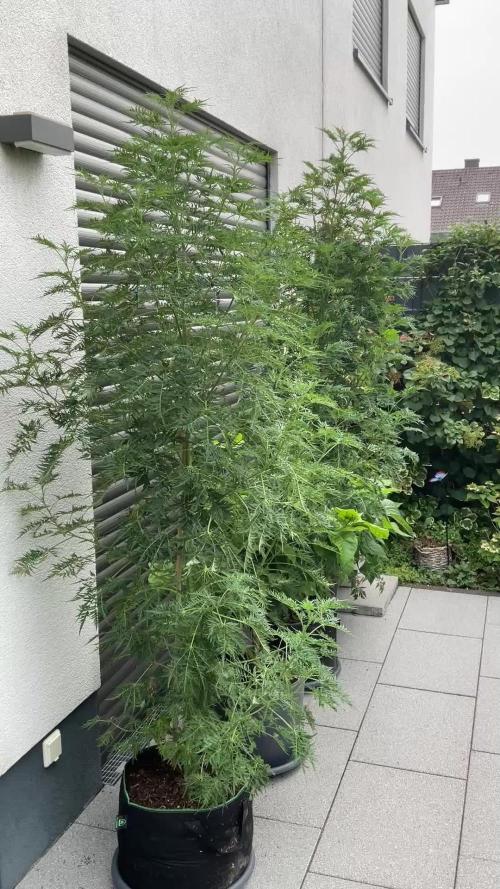
Die beiden Mentha de Croco entwickeln sich weiterhin fantastisch! 💚 Die linke Pflanze hat inzwischen etwa 180 cm, die rechte beeindruckende 193 cm erreicht 🌱. Beide sehen wunderschön aus und wachsen weiterhin extrem säulenförmig nach oben – echte Wolkenkratzer im Garten! 🚀
Leider gab es gestern ein schweres Unwetter mit starken Windböen 🌩️🌬️. Dabei sind beide Pflanzen umgekippt. Durch ihre hohe, schlanke Wuchsform sind sie einfach etwas anfälliger für solche Wetterlagen. Ein schwererer Topf als die 30 Liter hätte hier sicherlich für mehr Standfestigkeit gesorgt.
Zum Glück ist der Schaden überschaubar geblieben. 🙏 Lediglich einige Blätter sind abgebrochen, ansonsten haben beide Pflanzen das Unwetter erstaunlich gut überstanden und wirken weiterhin kerngesund. 💚 Beim Wiederaufstellen konnte ich außerdem sehen, dass die Wurzeln den Topfboden bereits vollständig durchwurzelt haben – ein gutes Zeichen für ein kräftiges Wurzelsystem. 🌱
Morgen gibt es wieder einen frisch angesetzten Komposttee, um das Bodenleben weiter zu fördern und die Pflanzen für die nächste Wachstumsphase optimal zu unterstützen. 🍵 Ich bin gespannt, wann die erste Pflanze die 2-Meter-Marke knackt! 🌿📈
🌿 Week 16 – Mentha de Croco 🇬🇧
Both Mentha de Croco plants continue to perform beautifully! 💚 The left plant has now reached approximately 180 cm, while the right one is an impressive 193 cm tall 🌱. They both look absolutely stunning and keep growing in a very upright, column-like shape—true skyscrapers in the garden! 🚀
Unfortunately, a severe thunderstorm with strong winds hit yesterday 🌩️🌬️, causing both plants to tip over. Their tall, narrow structure makes them naturally more vulnerable to these conditions. A heavier container than the current 30-liter pots would definitely have provided better stability.
Fortunately, the damage was minimal. 🙏 Only a few leaves broke off, and overall both plants came through the storm remarkably well and still look incredibly healthy. 💚 While standing them back up, I also noticed that the roots have already fully colonized the bottom of the pots—a great sign of a strong and healthy root system. 🌱
Tomorrow they’ll receive another freshly brewed compost tea to further support the soil biology and keep them thriving. 🍵 Now it’s only a matter of time before the first plant breaks the 2-meter mark! 🌿


@colla69
Follow
Fun fact : my TDS meter broke down.
I was running an EC of 4.3, needless to say the plant went into super lockout.
I lost a lot of leaves and am trying to get it on the right path again.
I had enough foliage to survive it fortunately
trichomes are still quite empty, most likely it will need another 2 weeks to mature
UPDATE:
Day 67 the plant seems to have finally stabilized again, EC and PH stopped swinging around like crazy


@Portnugs
Follow
Resin is increasing and looks like bud sites are ready to start putting on some bulk. Issue with low ph drift reaching 5.2 so I decreased 50ppm with distilled water without calmag to soften the water and counter the drift.
After decreasing ppm, ph drift continues, so I flushed for 2 days with distilled water and added back nutrients at half strength to increase to 800 ppm over time.


@Constantgardener
Follow
So switched from 24 hour light to 18 this week which was about day 14 after last seed spread his wings also potted up from seed cups to 1.5l pots on same day, used plenty of great white shark when transplanting, roots fully stocked n crisp white, growth seems to have continued as normal. fast!!
So I had to wash the coco from ecothrive after filling each new pot I applied a flush feed at 450ppm! run off was 1500ppm not happy as I thought this product was to be used strait from the bag washed n buffered.
This is what I believe stitched me up in the beginning i should of checked before using it and not assume it’s all good because you’ve bought a premium product
Coco wash washed with ph’ed water 6.0 until ppm was under 50 then used 10 litre of AN’s cal mag at 2ml per litre half was flushed through left for 30 min the other half was flushed though again this was hopefully to buffer the coco in case it wasn’t as this coco is not what it says on the tin so far then flushed 10 litres of just a and b at 350 ppm run off was around 400ppm
I then transplanted
All seems well and happy
Open to others opinions and experience’s with echthrives coco with charge I believe Iv done the right thing because I’m sure those bad leaves are from the Unflushed coco I used in the beginning
Friday update
Feed was every other day this week to allow the pots a little time to dry out before the next feed hoping to get those roots searching the pot
I’ll mention after I transplanted and watered in with feed I placed the pots on a large bath towel for a few hours to draw some of the saturation out it left the pot much lighter then after they where left to drain on there on accord again hoping for root exploration
On Fridays feed I checked the bottom of the pot to see if much had made it down there, I wasn’t really expecting to see anything so soon but every pot had at least a few big old roots poking out and EC 7 was pushing them out am pretty stoked with these results
All in all I think the great white shark along with AN’s piranha, tarantula and voodoo juice
Are doing a smashing job of building root stock
I can’t wait to transplant again and get a good look in!! Also hoping my little efforts to keep the pots a little dryer from the norm are helping stimulate root production along side the additives
Fridays feed was up to 2ml per litre of voodoo piranha and tarantula 👊


@Corwinism
Follow
WEEK 5 (03/28/2021 - 04/03/2021)
Day 38: 03/28/2021
Plants had their first feeding today. It’s been about 3 or 4 weeks giving them tap water only. With my ppm dropping in the soil, I thought now would be a good time. Leaving out the Cal-Mag this feeding.
Nutrient mix: 651ppm, 6.0 pH, 71℉
FF Big Bloom: 5ml/gallon (⅓ strength) = 15ml/3 gallons
FF Grow Big: 5ml/gallon (⅓ strength) = 15ml/3 gallons
ppm/ppm = runoff/soil
JB#1 - 960ppm/309ppm, pH 6.9 JB#2 - 1290ppm/639ppm, pH 6.8
AP#1 - 1400ppm/749ppm, pH 6.8 AP#2 - 1190ppm/539ppm, pH 6.8
GC#1 - 1190ppm/539ppm, pH 7.0 GC#2 - 1350ppm/699ppm, pH 6.8
-------------------------------------------------------------------------------------------------------------------------------------------
Day 41: 03/31/2021
Plants watered around 5:30-6:00 p.m.
ppm/ppm = runoff/soil
JB#1 - 955ppm/653ppm, pH 6.8 JB#2 - 1070ppm/768ppm, pH 7.0
AP#1 - 1470ppm/1168ppm, pH 6.8 AP#2 - 1390ppm/1088ppm, pH 6.8
GC#1 - 1110ppm/808ppm, pH 7.0 GC#2 - 1160ppm/858ppm, pH 6.9
-------------------------------------------------------------------------------------------------------------------------------------------
Day 44: 04/03/2021
Plants watered between 5:30-6:30 p.m. Botanicare Hydroguard was used at half-strength to supplement the roots and as a preventative against rot.
Tap water: 247ppm, pH 9.4, 70℉
Botanicare Hydroguard: 1ml/gallon = 3ml/3 gallons
pH Down: 11.5ml
Mixture: pH 5.6, 285ppm (+43ppm from pH solution)
ppm/ppm = runoff/soil
JB#1 - 858ppm/573ppm, pH 6.8 JB#2 - 857ppm/572ppm, pH 6.8
AP#1 - 984ppm/699ppm, pH 6.8 AP#2 - 1030ppm/745ppm, pH 6.9
GC#1 - 880ppm/595ppm, pH 7.0 GC#2 - 932ppm/647ppm, pH 6.9
-------------------------------------------------------------------------------------------------------------------------------------------
This week has been much more pleasant than the weeks prior. I believe my plants are finally getting acclimated to the medium and recovering from transplant shock. New growth is looking much healthier. Just as a preventative measure, I picked up some Botanicare Hydroguard to use in an attempt to supplement the roots and bring the pH of the soil down to where I want it. Personally, the pH remains just a tad too high for my liking this week. I would like it more in the range of 5.7-6.5 but I'll give it a week or so to see the reaction to the Hydroguard.
I've continued with more LST on all but the Glookies #2. On this plant I simply did a topping. It was a risk, considering the plants isn't vibrantly healthy, but I need to maintain it's height. I also did a second topping to the American Pie #1.
As can be observed from the photos, not all of the plants were shaped the same way. I got creative with the fabric pots and I decided to LST a few plants a little bit differently just to see which technique/style I liked the most. So far, I am digging the way the Jelly Bananen #1/#2 and American Pie #2 are shaping up. They are going to have a beautiful, wide canopy when they head into flower.
I'm considering transplanting into 5 gallon fabric pots within the next week or two so I can flip them to flower two weeks later. My intuition is telling me this has been a pretty lengthy vegetative stage, thus far.
I'm expecting all of my plants to double in size during the flowering stage, which should be anywhere between 65-70 days long. I made sure to select strains with similar flowering times (60-70 days).
Thanks for stopping by this week. Please feel free to leave a comment or any tips/advice! Until next week! 🙏


@Heady_McDank
Follow
This one is the fat lady, and the curtain falls as she stops to sing 😂😂😂
Now I started the flower period from the first hairs I saw, to see how long this one will actually takes to get ready 😁🙄
#GrowersChoice
#WhiteFireOG aka #WIFI
#MyLightIsTheSun
#MillsPaysTheBills
#MillsLightMix
#CNNBS
Enjoint & stay medicated 💚


@MadeInGermany
Follow
Hey everyone ☺️.
It gets more beautiful from week to week 😍👍.
I have them all this week Sprayed again properly with neem oil in the veggie phase ☺️.
There have been no trips for 2 weeks, but prevention is better 😀.
Because of the neem oil, the plants look very dark and shiny, which I really like when they shimmer like that 😝.
I didn't do any training these days, that will be done again the next few days 👌.
it was watered twice this week with around 0.6 l per plant.
The Ph / Ec measuring device was also recalibrated.
Otherwise there is nothing to report for this week and we'll see you again with the next update ☺️👍.
I wish you and your families a Merry Christmas 😊.
Stay healthy and let it grow 🍀
You can buy this Strain at :
https://www.zamnesia.com/de/5165-zamnesia-seeds-kalini-asia-feminisiert.html
Type:
Kalini Asia
☝️🏼
Genetics:
Black Domina x Purple Kush
👍
Vega lamp:
2 x Todogrow Led
Quantum Board 100 W
💡
Bloom Lamp :
2 x Todogrow Led
Cxb 3590 COB 3500 K 205W
💡💡☝️🏼
Soil :
Canna Coco Professional +
☝️🏼
Fertilizer:
Green House Powder Feeding
☝️🏼🌱
Water:
Osmosis water mixed with normal water (24 hours stale that the chlorine evaporates) to 0.2 EC. Add Cal / Mag to 0.4 Ec Ph with Organic Ph - to 5.5 - 5.8 .



@NoProbation4Weed
Follow
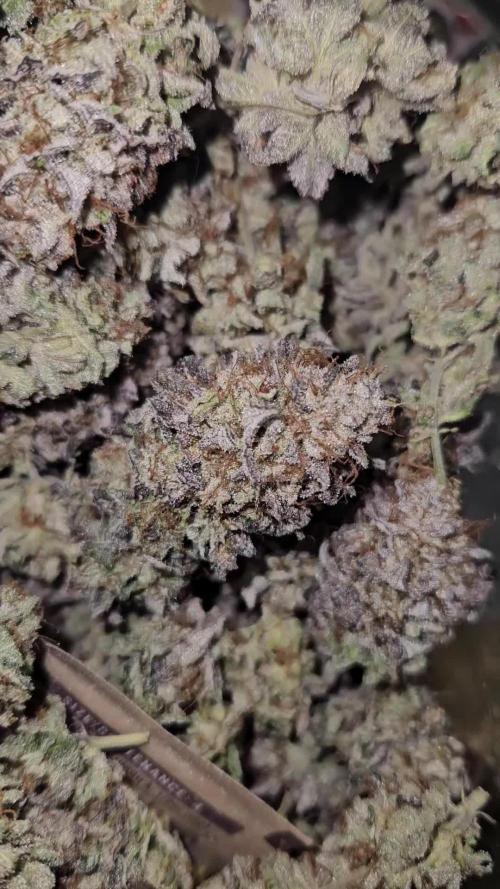
last 3 days no watering and last 48 no light.
drying conditions are RH 50% and temp 14°C.
very intense smell like cookie dough with gassy fruitnotes to it. Not the biggest yielder but definetly loud!



@Pete_vs_Nature
Follow
|
Week 8 is in the books, as is week 9 and 10 to be honest - but I don't have to be, so just week 8. Yap.
Climate management is now the main focus |
Humidity has been out of control as I flip my AC from cooling to drying mode. Which, as you may know, like I do now, just causes a maximally cold jet stream and your dry air goes *poof* outside the building.
So no help there. Ye old SF Dehumidifier is looking at this tent and sweating out what it can, which is not a lot.
The result is a VPD that is way too low for my plants to uptake more nutrients with, and this for almost a week straight.
Cultivars -- are doing just fine to be honest
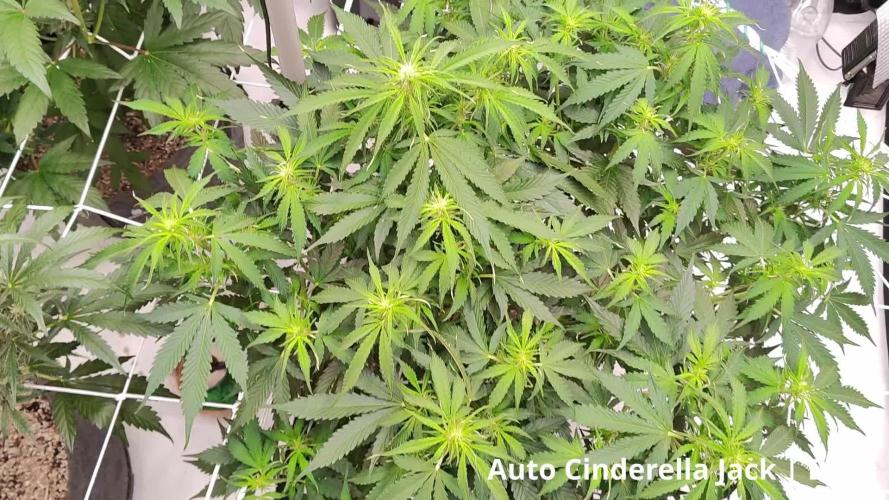
* Auto Cinderella Jack has been recovering from my super-late pruning interventions, so I gave it a last round. She grew out what feels like another smaller Autoflower as she realized what is possible with her new structure. I can't trim another bag of larfy buds for 16 hours straight, so I had to make a choice. The nutrient uptake being impaired by VPD alone (her DLI is a bit too high here as well) means no big buds as the clock is ticking.
* Apollo Haze Auto is just trucking along. I am watching in awe on how big these bud bases are getting. She seems a little advanced for her age,. Stem rub is pure lemon bliss, buds otherwise reek a bit of a healthy musk I would not buy off the shelves for. I am not worried - her trichomes burst out with lemon and sours / bitters when ruptured.
* Super Orange Haze Auto continues to dominate the tent with a sweet and subtle mandarine aura. Her rested state smell is starting to get a bit funky however, sesqueterpenes are accumulating as a dense protective layer. I do not hower fancy a tiny cheesy tingle in that mix :)
Also looking pretty advanced for 8 weeks, I am starting to wonder what caused the racing. It likely is the same cause that spawned nanners (they seem to have stopped spawning).
I attached vids, pics, stats. Hope you find something you enjoy.
Happy growing everyone.
- Pete