


Likes
Comments
Share


@AUTOBUDDHA
Follow
Defoliated this week. Ladies are filling back in nicely.
Tons of bud sites. Very happy with this batch so far! Nutrients every watering this week. These girls will now get one watering of just ph water, then the next watering will be the last watering with nitrogen. After that, we kick the bloom phase into overdrive. They will get micro, bloom, and advanced big bud. Every watering, for the rest of their lives.
Grow-5ml
Micro- 5ml
Bloom- 5ml
Recharge once a week..
What a monster!!! This plant is still young and its just about to start stacking HARD! LOOK OUT FOR NEXT WEEK!

Likes
1
Share

@Space_kydebt
Follow
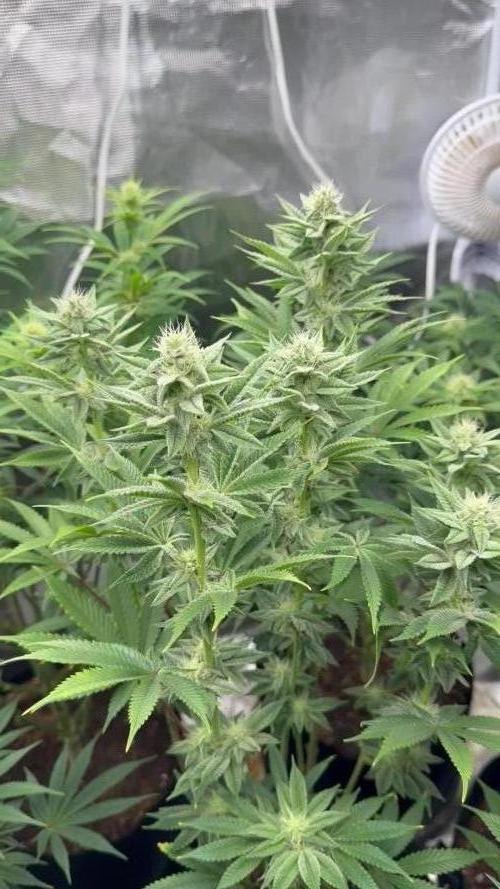
Well I picked off all the fan leave hard defoliation, I don’t know this is new for me but I was wondering and thinking does this really work for me. I really feel for the plant but it’s crazy frosty this is a sativa so it gonna take awhile this is crazy cause they always health . But the other one is really short didn’t get as to tall but she is so icy . I feed very heavily and they love it 1100 ppm with amended soil. Be yeah I’m thinking I’m growing a lot of sativa lol

Likes
4
Share


@milchshake289
Follow
Week 2 day 1
plant is just happy but I would love to see some faster vegging.
Day 2
Fan adjustment today, felt like the plant was getting little windburn ( slight curling on the edge and dry/rough leaves)
Day 3
Added Horn- Bonemeal mix as Top dress today. It’s really fine grained so I hope this is going to help out with N + P in flower stage
Day 4
Plant still not ramping up. My guess is the roots are not developed well enough to get to the edge of the pot where the majority of the pre fertilized soil is at
Day 5
Drained the whole pot with 1l rainwater and tested run off water. It’s at 6.3ph. Hopefully the plant can reach all the nutrients now. I will add compost tea in about 3weeks. I need to wait for the compost to finish first at least partly.
Next grow will be better for sure when I’m more prepared.
Day 7
LST

Likes
118
Share


@SwissKush
Follow
Day 78 - Amazing Buds! WOW!
a. this plant's buds just keep maturing! Pistils are going red/orange/brown
b. the trichome heads are mostly white, not seeing amber yet
c. i cant believe how dense these buds are!
Day 79 - she drinks!
a. she is drinking 4L a day right now, slowing down a little
b. pistils are about 50% colored, and the trichomes are very milky, a few clears
c. she is ripening up nice in this flush, many fan leaves are being disconnected by the plant, she is near the end of her life, I am removing many fan leaves per day without force, they just fall off the bud
d. the effects are really good, I dried a small bud, and the effects are nice
Day 80 - ripening nicely
a. the buds are all maturing, pistils turning brown
b. the resin is building up on all the buds, the trichome heads are mostly milky white
Day 81 - DWC change
a. another change out for fresh water, the flush is making the buds so frosty and smell so good!
b. drinking about 4 litres a day still, 12/12 hours light is working well
Day 82 - real monster plant
a. her buds are as big as my arm, and the smell is so intense!
b. the fresh water flush is the way to go!
Day 83 - trichomes are 90% milky
a. she is ripening very nicely, has about 80% brown pistils
Day 84 - iced out
a. the amount of resin that is being produced is unreal!
b. I dont see any amber trichomes yet, she has some time!


Likes
7
Share


@OwlGang_Uk
Follow
Week 4 - Sometimes You Got To Lose To Gain Phase 2 - I took off the fan leaves so that the plant would redirect its energy into the stem and branches rather than the leaves. I also cut of the top heads so that the energy would go into the development of the 2 heads below.
Likes
16
Share


@oldschoolS2
Follow
First week of flower almost done !
Some white hairs already
humidity has been above 60% all week some night times above 75% ...need to bring it down !
They look happy until now 😎😏
Day 7 all of them showing pre flower!!


Likes
184
Share


@Still_Smoq
Follow
#seedsman420growoff and #SeedsmanSeeds
📆 Germination Week, 20-26 April 2024
20 April - Placed 3 seeds in a cup of RO water, put in seedling grow tent under 24hrs light at 25% power, temp 74 degrees F.
21 April - 2 seeds cracked, roots appeared. Placed into Root Riot starter cubes.
22 April - 3d seed cracked. Placed into wet paper towel.
24 April - 1st seed sprouted from starter cube. Main root exposed, moved to permanent DWC system (see pictures). Filled for first time with solution.
25-26 April - Let seedling grow.
Thank you Seedsman Seeds! I’m very excited to be a sponsored participant and given the opportunity to cultivate during SeedsmanSeeds Growoff this year!
The strain I received was Pineapple OG. This is a new 2024 release from Seedsman Seeds. Its genetics are a hybrid 3 way cross with Pineapple Kush, Pineapple Muffin, and Pineapple Express. This unique fusion results in tall plants boasting remarkable uniformity, and delightful sweet, tropical fruit flavors. It also has notably high THC levels (25-27%), 50% Sativa / 50% Indica, with harvest yielding up to 450g indoor - 750g outdoor /m2, and a flowering time between 56-70 days. I’m anticipating the upcoming weeks with great optimism.
📑 The Plan - use a Deep Water Culture, 3 gal system, as a permanent home. Apply a weekly feeding schedule using time tested blends of Terra Aquatica (formerly General Hydroponics), Botanicare, and Europonics nutrients throughout the cycle. Depending on the speed of the grow, veg the plant for 6-10 weeks using the scrog method of training. Then flip into flower where she will continue for another 8-10 weeks. So my forecast is this grow should be finished around 30 August.
🍶 24 April initial nutrient solution TDS 530, PH 6.1
🍽️ 24 April initial feeding schedule first 2 weeks
💧 Using reverse osmosis water with EC/TDS at 0
🐉 Nutrient Solution EC 1.0 at 63 degree F
🔆 Light power at 50%, DLI 13 canopy coverage at 18hrs
😤 Using General Hydroponics, HGC728040, Dual Diaphragm Air Pump, 320 GPH
That is it for this week. Thanks for the look, read and stopping by.

Likes
15
Share


@SamDo
Follow
Hello, fin de semaine 5, semaine 1 de floraison. Les plantes se portent très bien. Elles ont bien récupérées de la défoliation de la semaine précédente. Je viens de les passer en 12/12. Le stretch se fait bien. Je me rend juste compte que j’ai mit trop de plantes je pense. Elles commencent à être un peu à l’étroit. Mais rien de méchant. Voilà c’est tout pour cette semaine.
Happy grow...😎


Likes
2
Share

@eldruida_lamota
Follow
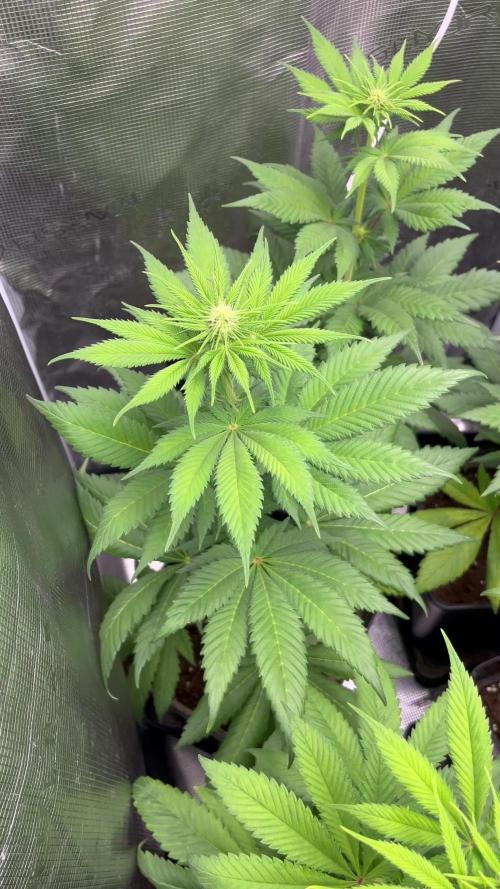
Que pasa familia, vamos con la segunda semana de floración de estas Kiwi x Papaya feminizadas de Mavericks .
Vamos al lío ,se trasplantaron en macetas de 7 litros definitivamente.
El ph se controla en 6.0 , la temperatura la tenemos entre 24/20 grados y la humedad ronda el 50%.
El ciclo de crecimiento puse 12h de luz, el foco está al 50% de potencia.
De momento van creciendo a buen ritmo y tienen un buen color.
Gracias a Agrobeta de nuevo por el kit para esta temporada, unos grandes 🙌.
- os dejo por aquí un CÓDIGO: Eldruida
Descuento para la tienda de MARS HYDRO.
https://www.mars-hydro.com
Hasta aquí todo, Buenos humos 💨💨💨

Processing
Likes
19
Share


@Oldmanbud__50
Follow
So week 4 of veg all going well had to trim a lot of fan leaves off. But have done them the world of good. I have tried my hand at supercroping 1 of them. Learning curve. Taking cuttings tomoz the 1 more week 18.6.then think about flowering..even got myself some tea bags for the little devil's lol
Likes
9
Share


@Chuckwaggon420
Follow
DRY ICE wow has a amazing smell like lemon and poisen like a durban will be interesting ro see how that turna out the buds are purple and o so heavy. They are way cover in resin ever so nicely stacked in there.they have all started to fall over at this point cause they so heavy even with the net. Just about ready for some chop chop time! Starting get

Likes
12
Share


@HandsomeTerpz
Follow
🇬🇧 Week 8
-----------------------------
Blueberry Lime Kush by Terpyz – Outdoor Grow Update
The outdoor grow is progressing slowly but steadily. This week there was a small growth spurt, and new shoots are beginning to form. However, it's clear that the conditions are tough on the plants the fan leaves are very dry and brittle, even tearing in some spots. 😟
So far, none of the plants have revealed their gender. We're still waiting to see whether they'll turn out male or female. Patience is key at this stage fingers crossed for lots of girls!
Here in the region, it's still quite chilly, with lots of wind and low temperatures. Sunlight hours are also still limited. Hopefully, this will change soon as we move toward summer.
Nonetheless, I’ll continue the outdoor grow without major intervention.
🇩🇪 Woche 8
--------------------------------
Blueberry Lime Kush von Terpyz – Outdoor-Grow-Update
Der Outdoor-Grow geht langsam, aber stetig voran. Diese Woche gab es einen kleinen Wachstumsschub, und neue Triebe beginnen sich zu entwickeln.
Allerdings merkt man den Pflanzen die schwierigen Bedingungen deutlich an die Fächerblätter sind sehr trocken, spröde und reißen teilweise. 😟
Bis jetzt hat sich noch keine der Pflanzen zu erkennen gegeben, ob sie männlich oder weiblich ist.
Jetzt heißt es abwarten und hoffen –Daumen drücken für viele Mädels!
Hier in der Region ist es weiterhin sehr frisch, mit viel Wind und Kälte. Auch die Sonnenstunden sind aktuell noch recht gering. Hoffentlich ändert sich das bald, und der Sommer kommt endlich. ☀️
Trotzdem werde ich den Outdoor-Grow weiterhin ohne großen Eingriff durchziehen.

Likes
16
Share


@Mrg7667
Follow
Slight light burn on a couple plants had to raise the LED. On the off week Light seems to be allot more effective at civering the space although the plants did not take well to the spectrum/heat adjustment so the first two days i had to ween the light on a couple hours at a time. I could tell when they needed a break because they woukd physically get droopy once they got over whelmed eventually they got used to it tho!

Likes
12
Share


@Chubbs
Follow
What up fam, weekly update on these gorgeous girls. They're showing preflowers now which I'm definitely happy as that means the stretch is almost over. I did add a 2nd scrog net its 6ft high. Overall, I couldn't be happier with how they've grown. Happy Growing.
Likes
4
Share

@CalGonJim
Follow
7/14 4AM MONDAY MUST DEFOLIATE!!!!! I HAVE 4 INSTEAD OF 2...BECAUSE OF MY LITTLE ACCIDENT EARLY ON.. I WILL TAKE ONE OUT OF FLOWER AND RE-VEG TODAY!!!
7/15 420am They are great cutting I took last month or week is great. Amino and mb today!! 230pm spectacular results today heavy defoliation I removed branches. I prefer a four cola grow in small spaces. It’s just better for airflow better for the plants and they responded so great. It’s like they’re jumping straight up now. I’ve never seen this. They’re just so vibrant that means all the amino’s. Everything is working perfectly. 👍👍👍🚨🚨🚨🌿🌿🌿
7/16 320am 🌿🌿🌿🌿🎊🎊🎊🎊💥💥💥💥👍👍👍👍
7/18 3am NOTICING Elongated Sepals!!!! from Search Ai "Elongated sepals in plants refer to sepals that are longer than average, often appearing narrow and pointed. This characteristic can be a defining feature of certain plant species, such as the long-sepal beardtongue (Penstemon calycosus). The length and shape of sepals can vary significantly between species and even within the same plant, influencing the overall appearance and potentially the function of the flower.
Elongated Sepals: More Details
Definition: Sepals are leaf-like structures that form the outermost whorl of a flower, typically green and protecting the bud. Elongated sepals are simply those that are noticeably longer than the typical sepal length for a given plant or group of plants.
Examples:
Long-sepal beardtongue (Penstemon calycosus): This plant is named for its elongated sepals, which are a key characteristic.
Berberis (Barberry): Some Berberis species exhibit elongated sepals, with variations in shape and length among different sepal types within the same flower.
Significance:
Identification: Sepal shape and length are important features used in plant identification and classification.
Pollination: In some cases, elongated sepals might play a role in attracting pollinators or influencing how they interact with the flower.
Protection: Sepals, even elongated ones, still function to protect the developing flower bud.
Morphogenesis: Studies on Arabidopsis have shown that the shape of sepals, including the presence of elongated tips, can be influenced by mechanical feedback within the plant and the arrangement of microtubules."""🚨.
THIS IS ON 2 OF THEM, SO I MAY HAVE 2 STRONGER THAN AVG. PLANTS. I WONDER IF THE MB, AMINOS ARE HELPING WITH THIS TOO???
7/19 I GOT A MAGNETIC STIR THING. 150pm they didn’t need a lot of attention today. They do need to be trimmed back down to four colas. I’m running out of space they are very perfect and if I had more space the leafs would be bigger, but that’s limited by mine condition so there’s nothing I can do but they are absolutely incredible🎊👍👍
Likes
10
Share

@GERGrowDesigns
Follow
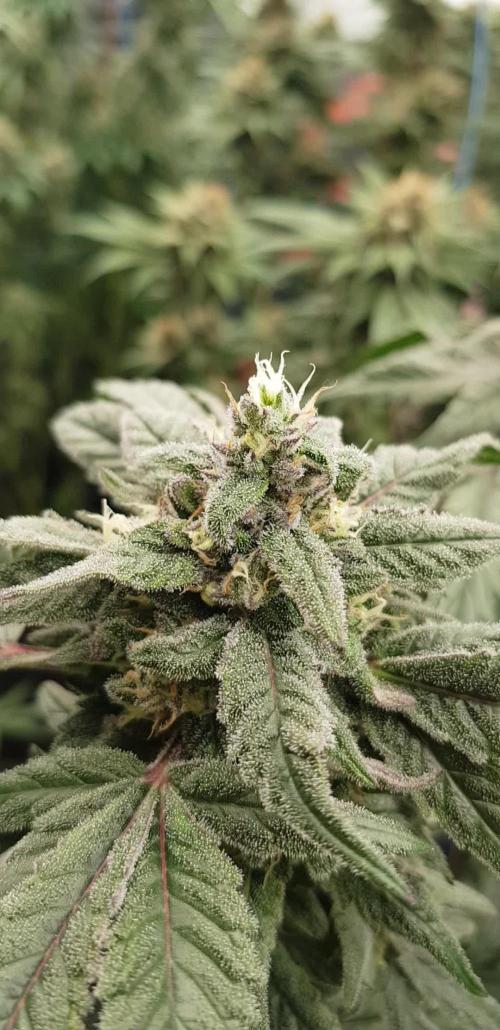
Welcome to Flower Week 7 of Fast Buds Papaya Sherbet
I'm excited to share my grow journey with you from my
FastBuds Project . It's going to be an incredible ride, full of learning, growing, and connecting with fellow growers from all around the world!
For this Project , I’ve chosen the Feminized Photo strain Papaya Sherbet :
Here’s what I’m working with:
• 🌱 Tent: 120x60x80
• 🧑🌾 Breeder Company: Fast buds
• 💧 Humidity Range: 35
• ⏳ Flowering Time: 58 Days
• Strain Info: 30%THC
• 🌡️ Temperature: 26
• 🍵 Pot Size: 16l
• Nutrient Brand: Narcos
• ⚡ Lights : 600W x 2
A huge thank you to Fast Buds for allowing me to try my Best with this amazing collection from Automatic and Photo Strains they managed to Sponsore . Big thanks for supporting the grower community worldwide! Your genetics and passion speak for themselves!
I would truly appreciate every bit of feedback, help, questions, or discussions – and of course, your likes and interactions mean the world to me as I try to stand out in this exciting competition!
Let’s grow together – and don’t forget to stop by again to see the latest updates!
Happy growing!
Stay lifted and stay curious!
Peace & Buds!


Likes
5
Share


@Mr_nugs_lover_David
Follow
Very happy with how this lady has performed, amazing quality buds, very sticky and dense flower with a concrete smell that I love so much, which is that kind of fruity sweet flavor that this lady is able to produce, it's been a beautiful journey, I'm gonna enjoy a lot this flowers. Very recomended guys!

Likes
5
Share


@RoyColt
Follow
Always R.O Water
Watering the plant 3 times for per week
1st Watering with nutriens.
2st Watering with nutriens.
3st Watering with only R.O water & CalMag
