


Likes
Comments
Share


@Snooziecheesecake
Follow
I have decided to chop the most mature plant of the three, even though it could go longer I was originally going to be chopping all three because I am about to leave on a trip, however a friend of mine is able to take care of the other 2 less mature ones. I was planning on just saying fuck it and chop them all but the less mature ones have still mostly white pistils and I can’t bring myself to do it, they started putting more weight on these past few days and I know if they just could get a few more weeks they will really be amazing with a lot of weight. Interesting that one matured faster than the other 2, although I think this corresponds with the size of the buds as the mature plant’s buds are not particularly big, hoping to pull 25 grams at least from it.
The less mature plants are beginning to bulk and as I stated earlier, I just can’t chop them and ruin all their potential yet. The calyxs are swelling a lot and looking super tasty.
Will continue to add updates for the other 2 plants


Likes
2
Share

@BasedBuds_89
Follow
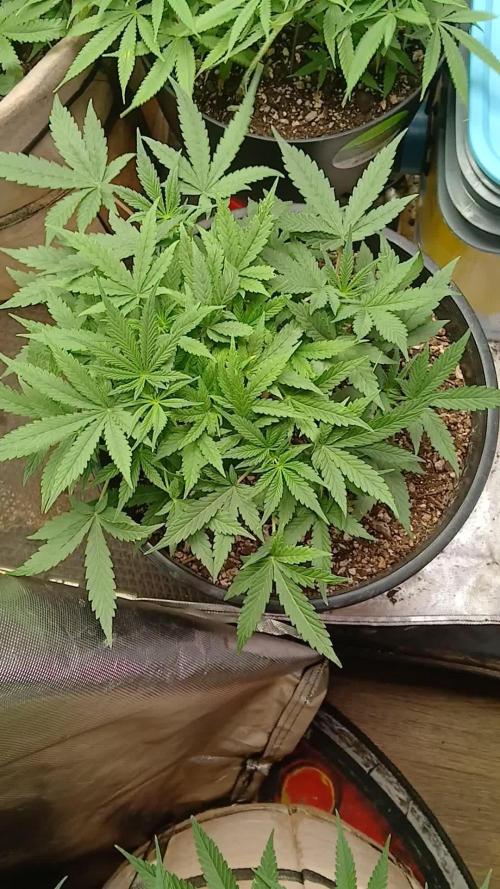
Had a good week, this has been a very easy grow, she's responding really well to the LST and defoliation. I would suggest any new growers try out Red Devil Auto from Weedseedsexpress. They're having some great sales right now!

Likes
73
Share


@Roberts
Follow
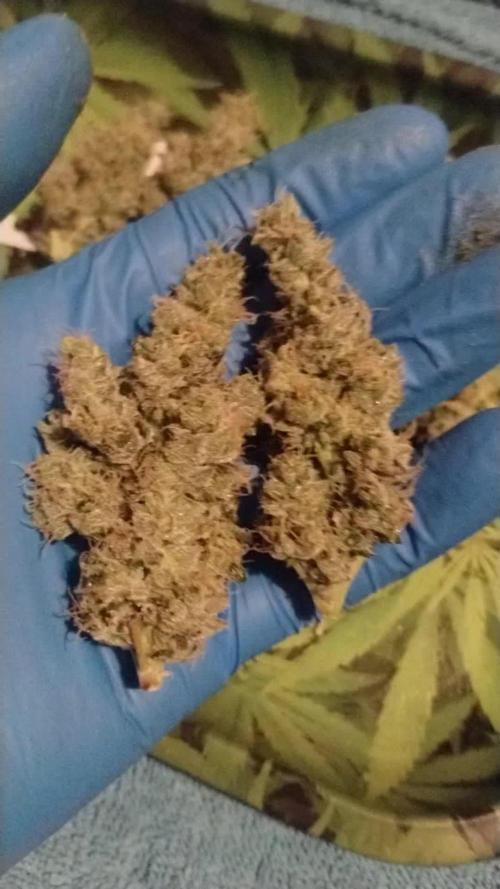
Lilly x White Widow is doing good. She has finished, and is ripening well. I am just a little past when I would like to cut her. I am waiting on space in Cannatrol. So I have to cycle them in to it in 8 day gaps. Her next update will be her Harvest. I did reduce the light strength on the Spider Farmer G5000/UVR40 lights to 60 percent. She is just riding out her time flushing to her cut date. Thank you Spider Farmer, Athena, and Ripper Seeds. 🤜🏻🤛🏻🌱🌱🌱
Thank you grow diaries community for the 👇likes👇, follows, comments, and subscriptions on my YouTube channel👇. ❄️🌱🍻
Happy Growing 🌱🌱🌱
https://youtube.com/channel/UCAhN7yRzWLpcaRHhMIQ7X4g
Spider Farmer Official Website Links:
US&Worldwide: https://www.spider-farmer.com
CA: https://spiderfarmer.ca
UK: https://spiderfarmer.co.uk
EU: https://spiderfarmer.eu
AU: https://spiderfarmer.com.au
G5000 Light Amazon Link:
amzn.to/4643esa
UVR 40:
https://www.amazon.com/dp/B0BR7SGTHS
Discount code: saveurcash (Stackable)



Likes
11
Share

@ShinWeed
Follow
Vorwort:
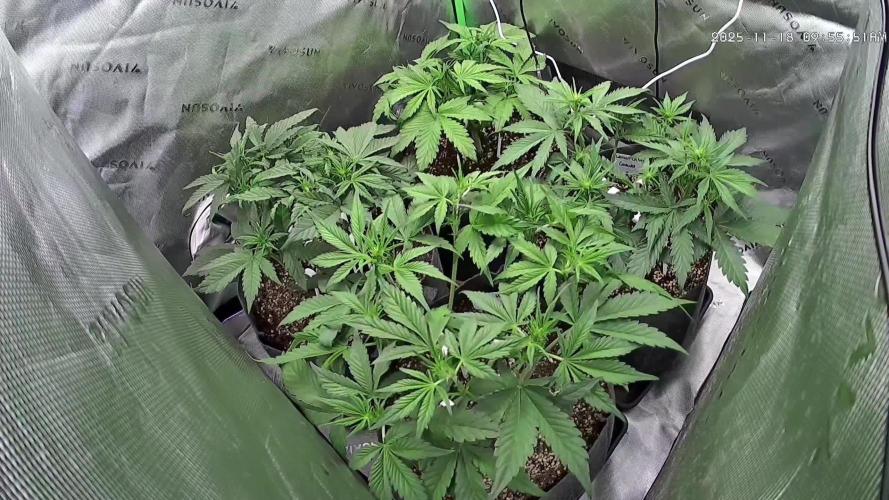
Die Bilder dieser Woche sind leider nichts Besonderes geworden. Hab vergessen während des Gießens vergessen zu knipsen, und die Aufnahmen danach sind sehr schwach. Trotzdem dokumentiere ich sie, was wichtig ist.
🌿 Tag 29-35 - Lichtflut, Höhenflüge und erste süße Düfte
Ich, Banana Purple Punch, bin diese Woche förmlich explodiert. Jeden Morgen war ich ein Stück höher, als hätte mich über Nacht jemand heimlich auseinandergezogen. Das Licht bei 100 Prozent hat mich wachgeküsst und irgendwie konnte ich dann nicht mehr aufhören. Meine Triebe arbeiten hart, meine Energien schießen überall hin. Ich weiß, der Gärtner schaut schon kritisch nach oben. Vielleicht beruhige ich mich bald. Vielleicht auch erst später. 🍌
Ich, Purple Haze, strecke mich nur so weit, wie es Sinn ergibt. Nicht zu viel, nicht zu wenig. Meine Höhe passt, meine Breite trägt mich gut. Keine Rennen, keine Dramen, nur ein ruhiger Übergang. Die Energie fühlt sich stabil an, ausgeglichen. Genau mein Ding.
Wir beiden Lemon Cherry Cookies erleben gerade zwei völlig verschiedene Wochen.
Ich, die Schnellere, fühle mich wie auf einem Marathonstartpunkt. Die Blüten schieben kräftig, weiß und deutlich. Mein Inneres summt, als hätte ich endlich begriffen, wohin die Reise geht. Licht, Wasser und Raum greifen perfekt ineinander.
Und ich, die Gemütlichere, nehme das alles Schritt für Schritt. Warum rennen, wenn man auch sauber arbeiten kann? Meine Spitzen zeigen Blüte, aber ganz kontrolliert. Ich schaue mir alles erst einmal an und wähle meinen eigenen Rhythmus. 🍋🍒
Tag 34: Die ersten Düfte werden spürbar, zart und frisch.
Tag 35: 4 Liter Wasser. Der Boden dankt es, wir auch.
Die Woche war hell, laut und voller Bewegung. Jede von uns reagiert anders, jede setzt ihren eigenen Akzent. Die Blüte hat angefangen zu sprechen, noch leise, aber unverkennbar.

Likes
64
Share


@SmokingTiki
Follow
The plants streched a lot this week! The flowering has started 😎 I made a last defoliation to give some light to the lower buds. I started to give some BioBloom. It's impressive how much these plants must drink, this is the first time I have to water every day!
Plants heights at the end of the week :
-------------------------------------------
Gorilla Cookies : 90cm
Purple Lemonade : 69.5cm
Wedding Cheesecake : 89cm
Likes
23
Share

@Prilyfe13
Follow
07/09/2026
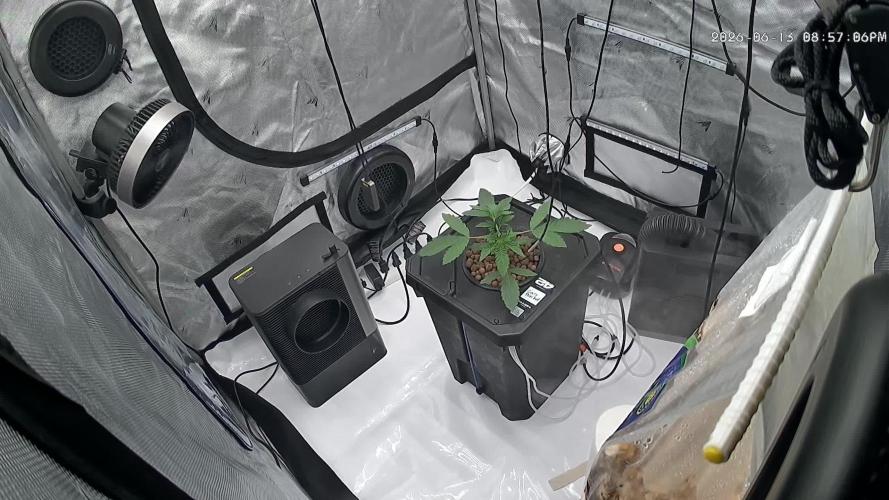
New week folks! This week is kinda busy. I have to either lift the light or drop the intensity. I personally would turn the light up to level 6. For the time being that is. I think I get to use a much higher intensity with the thingy I have. We'll see. It's a 500 watt light, so I have plenty light to work with.
She is growing quite rapidly at least the leVes are all getting bigger.
Readings:
pH: 6.31
EC: 2.21
TDS: 1.57
Evening Readings:
Temp: 68°
I think I'm gonna change the water out instead of mixing a new gallon. I really don't want to though. It's wasting my poor nutrients.
DLI: 42 mol
PPFD: 631 PPFD
09/10/2026
The goal this week is clearing out the big leaves and cover leaves.
Readings:
pH: 6.3 (very steady) but it needs to be closer to 5.8 just don't know how.
EC: 2.18 cU? The thing changed on me.
TDS: 1.55 ppm?
Temp: 70.1° ice bottle added. I'd like to keep it below 70°, like 65° would be good.
Update: I have decided to defoliate my plant today. I've already removed a few branches that just won't reach through the canopy. I'm also taking all the big leaves off. The ones with purple stems seem to be a sign of readiness to me. That was quick. Lol there's a whole bunch. So I've got my work cut out for me.
07/11/2026
Readings:
pH: 6.26
EC: 2.27 ?
TDS: 2.28 ?
Temp: 68.2°
07/12/2026
Readings:
pH: 6.3
EC: 2.19 mS
TDS: 1.6 ppt?
Temp: 69.1° will drop a bit more. With the ice bottle, it'll cool down much faster. Granted it was 70° when I first opened the bucket.
I took some more foliage and a few lower sites and branches that weren't going to make it.
07/13/2026
Readings:
pH: 6.33
EC: 2.44
TDS: 1.74
Temp: 67.5°
Honestly I'm not sure how it changes, but I have people trying to explain. Lol. My meter reads in both ppm and cm. I'm still not seeing how the TDS is higher than the EC. I'm confused.
I've been topping her off with a half mix of nutes for now. Also I also increased the Hydroguard to 5 ml per gallon. I will get this brown stuff somehow.
Hopefully it will clear up before I flip to flower.
But there is so much root mass. I don't think it's getting all the bubbles. I have 3 air stones in there. It can't be oxygen related. Environmental is also out of the question. My system is pretty on point now. The water temp is fine as well. Just around 67°.
I feel like I'm missing something. I'll update if I remember.
07/14/2026
Readings:
pH:
EC:
TDS:
Temp:
She's about a half inch away from the net. She'll definitely be touching the net at some point today or grown over the net. That would be cool. I have a few promising tops. They are a little low, but I'm hoping for the next week and a half to really get some growth. And the trellis is gonna be used hardcore. I'm gonna weave this fucker like a bad sweater maybe. LMAO.
She also looks great! The leaves are still kinda canoeing. Is the light actually that bright?! I need a person here to look at it and say yep or nope. Lol anyway, it looks more like they are opening up them old wrinkles. That has to be it. There's no way a photoperiod takes less than a DLI of 31.2 mol at this age. Nope.
A+ environment. AI is coming through! 76° and 60% humidity.
Readings: After a 1 gallon top off.
pH: 6.26
EC: 2.69
TDS: 1.92
Temp: 67.8°
I think I'm gonna do a plain water bucket with hydroguard for a couple days for the flowering period.
07/15/2026
Readings:
pH: 5.88
EC: 2.41 mS
TDS: 1.84
Temp: 67.5°
Light changes:
I added the light from the net distance.
DLI: 41.2 mol.
PAR: 621 ppfd
Distance:: 24"
07/16/2026
We have touchdown! More like kissed.. Not completely, but there's a few leaves that grew over the net along with a top or two. Still touchdown.
Ice bottle was replaced this morning. I also topped her off about 3/4 gallon. It brought the roots down a bit so they're fully under water. Just below the net pot. I know it should be 1" to 2" inches between the water and the net cup, but the roots are also important. Not to mention how fast she's taking the water down. She'll need another half gallon tomorrow morning. Maybe more.
When I changed the ice bottles out, the roots blocked the bottom of the bucket, so I had to put my ice bottle in the one spot. With roots under it. I might be able to move them. With a paint stick.
Lucky I have 3 air stones in the bucket. The only place it's not bubbling is by the access panel. The rest is a bubbly haven for dirty roots. The only thing is, the roots are officially too big for the bucket. Again. Sweeet. Now I just need a bigger bucket. Lol.
A quick look at the leaves. They look fantastic. Beautiful rich green. Spreading out the wrinkles to make her big and strong.
I had to pull some off as I went looking around at the plant. So far, I don't have any dead or dying leaves. So that's good.
Oh and she SMELLS.iem wow. She smells. Good aroma. Powerful too. And we haven't even hit flower yet. Oh no. Not sure how I'm gonna keep the smell locked in while I'm working on the plant. Lol. No bueno indeed.
Readings:
pH: 6.3
EC: 2.93
TDS: 2.08
Temp: 65.1°
Update:
So I took a decent amount of lowers off today. All the bud sites that will be larf. Still needs to be cleared out. I also took a few leaves off. Everything that was pointing inward. I still have more to go, but I'm gonna wait for next week to pull the rest off.
08/19/2926
I added a time lapse video today. It's a month long instead of the weekly I was considering. You know, for more "meat" as it were.
Likes
22
Share


@Mr420
Follow
Day 106 think its ready so cloudy time to chop maybe in a couple of days want more amber Trichomes.
Day 107 turned heater off night time Temps 65° day time Temps 78° see if we can get so nice color b4 chop.
Day 108 nothing. New
Day 109 tomorrow's the big chop day.
Day 110 plant is ready to chop.
Likes
5
Share


@GaizkaDinafem
Follow
Just a couple of weeks to harvest ✊✊✊!!! The smell is increasingly hypnotic… The genetics are going perfect!! Thank you Dinafem 😍!!

Likes
10
Share


@extraterrestrial1
Follow
-------------------------------------------------
Day 29
Water: N/A
Humidifier: 50% (LOW-MIST)
Fan Speed: High
Light on @ 19:00 (27.5° celsius @ 49% RH)
Light off @ 13:00 (24° celsius @ 50% RH)
-------------------------------------------------
Day 30
Water: 0.5 Gallon TT Water w/ 0.5 TBSP Blkstrp Mlsses 6.1-6.4 pH
Humidifier: 50% (LOW-MIST)
Dehumidifier: On
Fan Speed: High
Light on @ 19:00 (27.7° celsius @ 50% RH)
Light off @ 13:00 (23.5° celsius @ 50% RH)
-------------------------------------------------
Day 31
Water: N/A
Humidifier: 45% (LOW-MIST)
Dehumidifier: On
Fan Speed: High
Light on @ 19:00 (26.5° celsius @ 50% RH)
Light off @ 13:00 (22.7° celsius @ 50% RH)
-------------------------------------------------
Day 32
Water: N/A
Humidifier: 50% (LOW-MIST)
Dehumidifier: On
Fan Speed: High
Light on @ 19:00 (27.3° celsius @ 49% RH)
Light off @ 13:00 (23.5° celsius @ 52% RH)
-------------------------------------------------
Day 33
Water: N/A
Humidifier: 50% (LOW-MIST)
Dehumidifier: On
Fan Speed: High
Light on @ 19:00 (26.5° celsius @ 48% RH)
Light off @ 13:00 (23.5° celsius @ 46% RH)
-------------------------------------------------
Day 34
Water: N/A
Humidifier: 50% (LOW-MIST)
Dehumidifier: On
Fan Speed: High
Light on @ 19:00 (27.0° celsius @ 48% RH)
Light off @ 13:00 (23.3° celsius @ 48% RH)
-------------------------------------------------
Day 35
Water: 0.5 Gallon TT Water w/ 0.5 TBSP Blkstrp Mlsses 6.3-6.6 pH
Humidifier: 50% (LOW-MIST)
Dehumidifier: On
Fan Speed: High
Light on @ 19:00 (27.5° celsius @ 51% RH)
Light off @ 13:00 (23.3° celsius @ 50% RH)
-------------------------------------------------
Likes
3
Share


@Gahskel
Follow
RLF ist immer noch hoch. Lüftung läuft auf 100% und 1 Luftentfeuchter Stein liegt drin.
Tipps wie man es senken kann?

Likes
18
Share


@raulmoat123
Follow
Week 8 and the plants are now starting to get flushed Nd also are giving of a brilliant fade , buds are very dense and purple and red colours are starting to come. Overall really pleased with how everything is going


Likes
3
Share


@GanjaFarmerGrow
Follow
She has gone into flushing...
Very nice recovery...
she has produces some nice skunky smelling buds..
she is very tall and bending over...
hope she goes good untill the end...
fingers crossed..
🙏

Likes
51
Share


@Chumpkilla
Follow
11/26/23 - Day 19 - Today was water change day. By time I got around to looking at the plant I realized that a water change had already taken place. How amazing is that. I had to do nothing. I just wake up everyday to a plant much bigger than the day before. Its too easy!
11/28/23 - Day 21 - Today she is much bushier. It seems like shes is growing a whole leaf node out every 24 hrs. Really impressed with the color and size of this thing. I'm learning to expect great things from this Leaf growing experience.
11/30/23 - Day 23 - She keeps geeting bushier, maybe she has grown by about 2" since the start of the water change. Her color is the same all over, that dark but vibrant green.
Because this is my first time growing an Auto in this box I'm wondering when I should top her. The branches are so close together. The last strain I grew had tons of room. This thing is growing like a bush.
12/1/23 - Day 24 - I did the first topping today. I took a video but its not uploading. Ill need to move it from my phone and upload from the computer.
Likes
1
Share

@Olduffybastard88
Follow
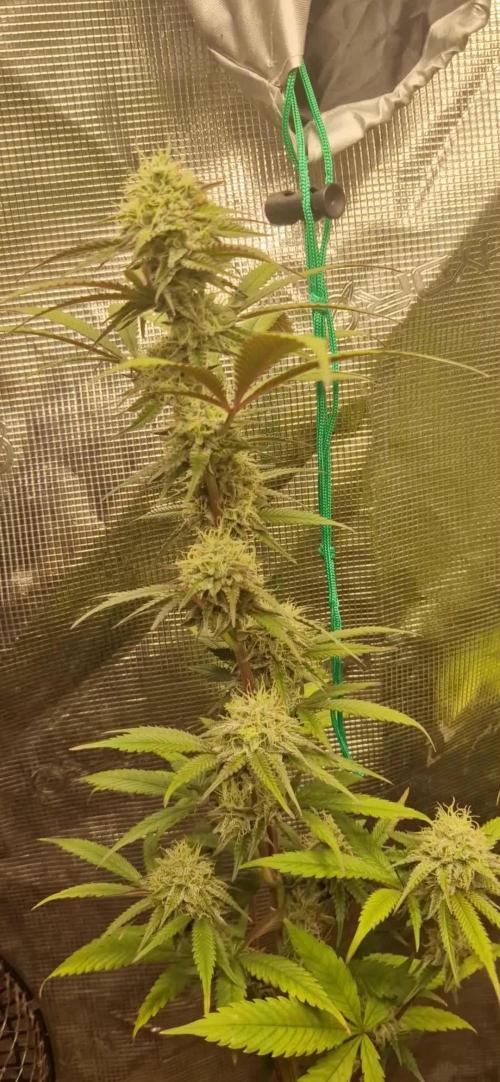
Getting up there with the longest fattest buds ive had on a plant still a long way to go been a breeze to grow no problems or hiccups had the best start to life and the best nuitrents since switching to xpertnuitrents ive seen a massive improvement in my buds quality amd size



Likes
4
Share

@Duke88
Follow
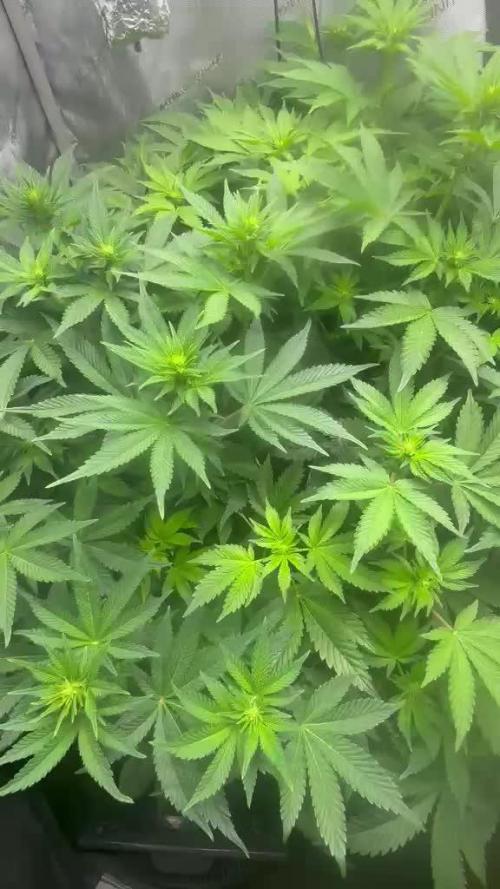
Grow Report – Black Domina | Anfang Woche 3 😂
Die kleine afghanische Diva hat den Stretch größtenteils hinter sich und macht langsam richtig Buds.
Aktueller Stand:
EC 2,3 (die Bitch frisst wie ein Loch)
Drain-pH 6,2 (endlich mal nicht mehr am Durchdrehen)
25°C bei 70% Luftfeuchtigkeit (ja Meister, ich weiß… viel zu feucht)
Ein Würfel wird ständig zu trocken – wahrscheinlich hat er eine Persönlichkeitsstörung
Nächstes Event: Tag 20 großes Lollipopping. Dann fliegen die Blätter und die Buds kommen ans Licht.
Vibe: Von „ich hasse Steinwolle“ zu „okay, vielleicht wird’s doch noch geil“.
Black Domina bleibt eine Drama-Queen, aber langsam wird’s interessant… 🔥

Likes
20
Share


@Ieiogrow94
Follow
Eccoci qui...
Non ho più parole per giudicare questa meraviglia!!!
Strain 1 è la migliore varietà che io abbia mai coltivato, nel processo di maturazione delle cime ho visto qualcosa di assurdo in quanto questa piccola ha una maturazione totalmente diversa rispetto a tutte le altre erbe!!!
Sono davvero soddisfatto, peccato che Strain 2 sia cresciuta storta, ma poco importa anche essa ha cime che sono dure come sassi, e sono solo 4 settimane di’ fioritura, NE VEDREMO DELLE BELLE!!!
Grazie a @KhalifaGenetics e @xpertnutrients per la collab e a tutti per il supporto🔥🌲❤️

Likes
3
Share


@The_Lonely_Farmer
Follow
So we have entered week 3 for these aptus fed girls and I think they had a slow start after transplant but soon perked up
Allthough the growth of branches ere not as quick too develop as I would like but any comments are welcomed
They are healthy just not as explosive with growth so hopefully over the next week they get comfy and take off 🤞
This is my first time using aptus so I expect myself too need too adapt.
I am sure they will be fine, I also have 2 icc from Humboldt which have been late starters so I'll be potting those up this week and they'll join the older girls on the next update 🌱
I'll also be doing some slight lst with the untopped girls too provoke strength and hopefully push them too grow.
Much love and stay blessed 💚

Likes
18
Share


@DeadJoke
Follow
i think pistills are changing more oranger this week..
but i guess buds are not growing fat this week ..
something isn't right...