




Likes
26
Share


@Ukfarmer420
Follow
Hi guys
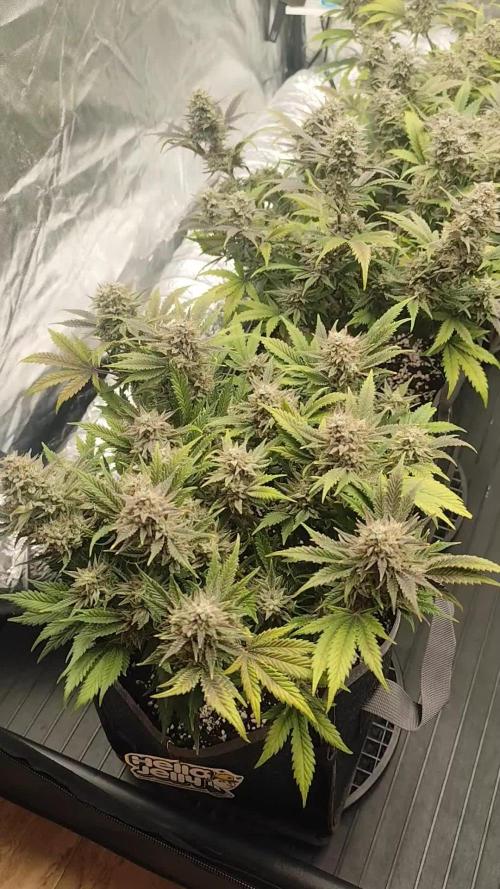
So wer on week 9 of flower and I have just started ripen by general hydroponics GHE, never use this before but herd good things about it, I just want it to get a early fade as I don't want the trichomes degrading.
Pheno 1 is starting to fade natraul and is well on its way, buds are dense sticky and are falling over due to weight.
Pheno 2 has started its fade and buds are just as dense there just bigger and the same with pheno 3 its just lacking the fade to be harvested for my liking.
Humidity and temps are good and all is going well.
I will update in few days once the ripner takes affect 😁
Happy growing guys 👌💪💚
Hi guys just and update....Next Wednesday is chop day! FINALLY chop days come around 🙈🤣🤣🤣 i really can't wait now, buds flopping over here n there, swelling, stinking, stickiness everywhere lol.
Thanks for all your comments and likes 💚💚💚 i cant wait to impress you with my next run and diary, I got something special for you guys, a limited edition, only 500 packs released 😊. Message for more info on my next run. Full nutrient line up, genetics and light and equipment to be confirmed.
Day 59 of flip and day 5 of ripner.
Hi guys the ladys are doing really well as you can see and starting to show me there true colours 💜💚💜💚.
This is not a sponsored grow in anyway, I paid for everything for this set up. I am giving you a personal review as a customer who got these things to use.
I highly recommend everything I used and as a first time photo seed grower and scrogger I have done brilliant and if it wasn't for good quality products I think I would of struggled lol so shout out to @marshydro @acinfinity @biobizz and @simplysouvenirs @ghe
Your products produce good quality and nice environments for growing top quality meds 👌👍

Likes
78
Share


@Basementganja
Follow
Gave her a heavy defoliation! She's growing very strong, and needed a little thinning out!
The defoliation promotes the lower buds growth, by allowing more light penetration!
The defoliation also ensures that airflow throughout the plant is strong!


Likes
8
Share


@RainerWinklerGrow
Follow
Very Beautiful, Purple Buds, nice smell, smooth smoke and good high, can only recommed growing 3 more rn


Likes
9
Share


@vinnyvinnyvichy
Follow
Got some yellowing going on with a few of the fan leaves. Also continuing with the LST.

Likes
7
Share


@HeavyHead
Follow
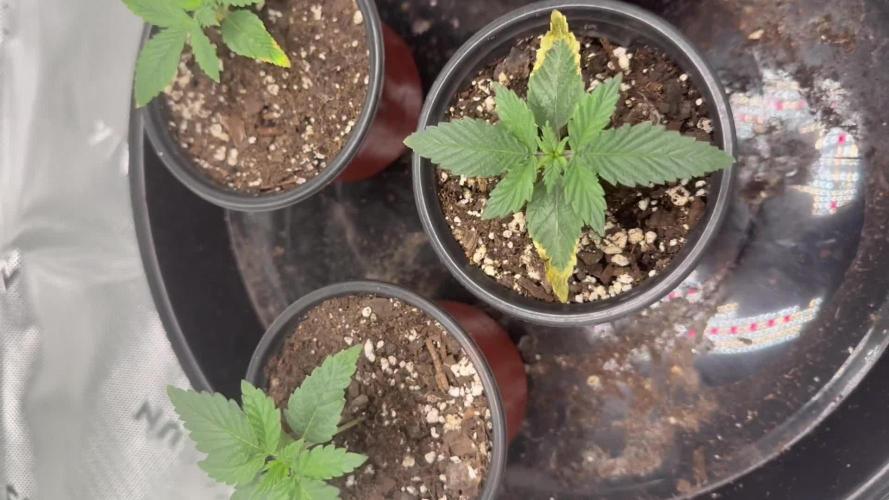
Nutrients and water this week ;p
Starting to really get a sweet berry like smell to the room :)
Will be dropping temps slightly at the end of this week.




Likes
5
Share

@Shivashamboom1
Follow
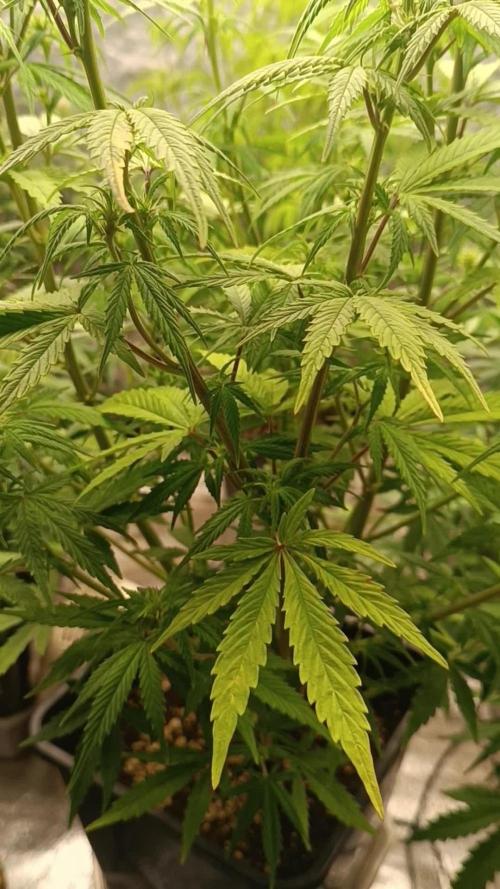
Seconda settimana di fioritura anche questa Bruce banner cresce bene....una di loro è venuta piccolissima..non la conto nemmeno quella😂😂😂😂😂
Likes
2
Share

@1888lol
Follow
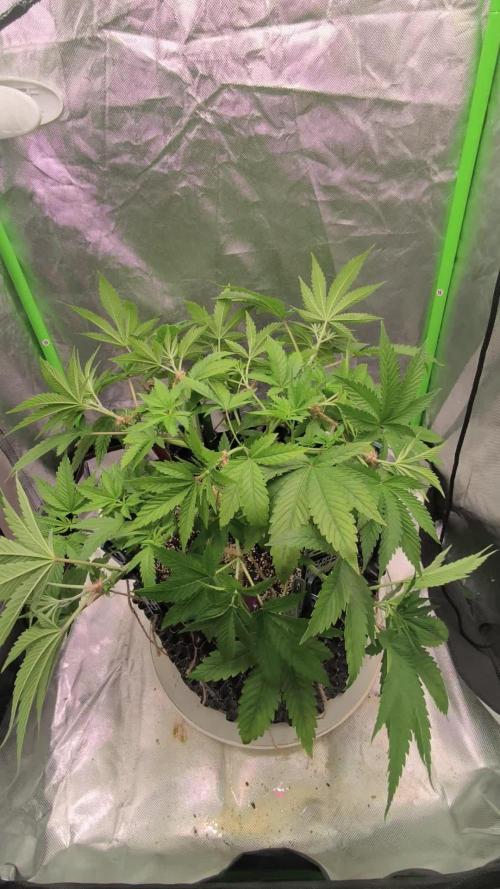
Hi everybody😄. I think we going the last week before changing the light to flower. Try to go this week without cutting leaves. She started drinking more water, light running now at 75% power and she likes it 😁

Likes
11
Share


@SonomaSungrown
Follow
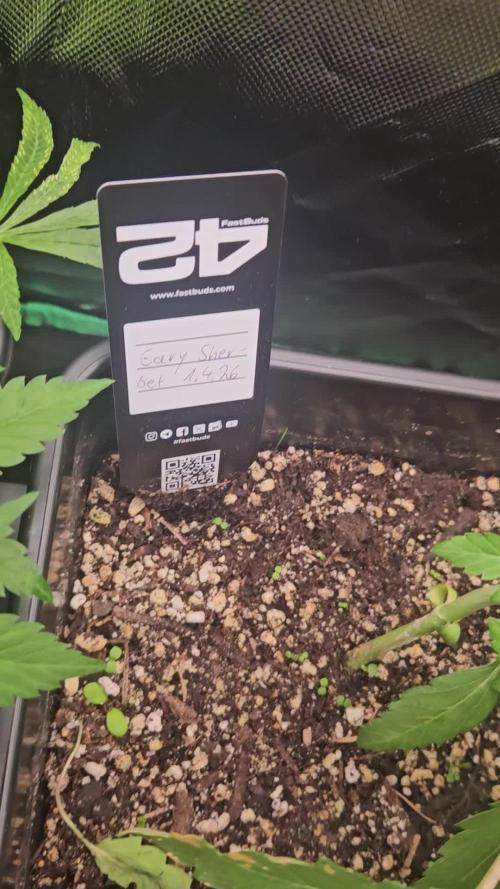
Will report back with a smoke report, but this thing smells incredible and budded extremely well.
Didn't have much of any issues with pests. Got a BIG 4' plant from only super soil in a 5-gallon fabric pot.
Tons of resin.
Very impressed with these automatic genetics from Pride of the Lion Seeds... and I'll definitely be growing another one of them in the spring.
Likes
13
Share


@SmokeableHobby
Follow
5/14 - Day 54/Day 14 Flower
Water uptake is increasing significantly. Been watering about a half gallon to a gallon every 3 days. Stretch has started to begin so I've been starting to get more aggressive with the LST. Darker green color has started to return to the leaves. No signs of deficiencies and my girl looks happy and healthy.

Likes
6
Share


@GuyPablo
Follow
Had concerns over damping off towards start of the week as seedlings tall leggy and leaning over, reduced light height to 8 inches and increased power to 60%. Last time I grew autos the light was a lot lower and whilst good yield nice smoke they were very bushy and short and stocky so experimenting a little with light height this time to increase spacing between nodes, 20 inches was way too far, being careful though as lights 450w, brill light spider farmer but gotta watch power a bit. The drop in light height and introduction of small fan making the plants wobble slightly has dramatically improved their strength and thankfully no damping off. Extraction fan on permanently set to 1 or two so low settings, nice air flow. Also sealed a couple light leaks so plants are getting their restorative darkness for 6 hours a day and overall touch wood looking fit and healthy. Pleased with the amount of growth after two weeks. Very light touch with nutes and watering at mo, .4 litre daily with root juice and bio heaven promote healthy organic soil. Fingers crossed so far so good. Happy growing all. :)
Likes
6
Share


@Chucky324
Follow
Hello. This is the end of week 9 and the beginning of week 10 of veg.
Well they look better than last week. They got a full feeding last week, with some extra Cal-Mag too.
I've got to get in here this week and continue with the training. Another week or 2 before we start flowering.
They will get another full feeding next watering too. They should look much better next week.
I also think I watered with straight tap water somehow. My tap water is 7.5 ph and need to be adjusted each watering.
I'll try to make sure to not do that again...
OK. Hang Loose.
Chuck.

Likes
77
Share

@ZariRat_Grow
Follow
Llegamos a la sexta semana de floración y nuestras tres protagonistas siguen demostrando que el cuento va por muy buen camino. 🍭🌿 Comparándolas con la semana pasada, el cambio vuelve a ser evidente: los cogollos han ganado todavía más volumen, se ven más compactos y la cantidad de resina es espectacular. Los tricomas destacan prácticamente a simple vista y las flores tienen ese aspecto escarchado que ya empieza a ser marca de la casa.
En general, las tres están súper sanas y todo está evolucionando muy bien. La estructura de las plantas está cargada de flores y cada semana se nota más el peso y la madurez de los cogollos. Seis semanas dentro y estas tres no parecen tener ninguna intención de bajar el ritmo. 😏🍬
🌡️ Parámetros de esta semana
- Temperatura: 24 °C
- Humedad: 50 %
- EC: 1.8
- Foco: 70 % a 70 cm
• PK: 0.5
• Calcio + Magnesio: 0.3
• Silicio: 0.1
• Compactador: 0.5
• Sugar: 2
• Plata: 0.3
🍡 Mochi llega a la sexta semana más gorda y resinosa que nunca.
- Comparada con la semana pasada, sus flores han ganado claramente en volumen y densidad.
- La cantidad de resina es brutal, con los cogollos completamente cubiertos de tricomas y un aspecto cada vez más escarchado. ❄️
- Se aprecia una maduración progresiva de las flores y una estructura mucho más contundente que en las primeras semanas.
🖤 Jinx continúa avanzando de forma muy constante y esta semana llega con unos cogollos notablemente más gordos.
- Respecto a la semana anterior, se aprecia claramente cómo las flores han seguido llenándose y compactándose.
- La resina ha aumentado muchísimo, cubriendo las flores con una capa blanca y brillante.
- Mantiene un aspecto general muy sano y equilibrado, con una floración cada vez más avanzada.
🍬 Jellybean tampoco se queda atrás y esta semana presenta una evolución muy bonita.
- Sus flores se ven más grandes, formadas y cargadas de resina que hace apenas una semana.
- Los tricomas son cada vez más visibles y le están dando ese aspecto azucarado que hace que el nombre le venga como anillo al dedo. 🍬
- La estructura de los cogollos continúa ganando densidad y presencia.
- Sigue avanzando a su ritmo, pero lo está haciendo con muy buena salud y cada semana resulta más impresionante verla evolucionar.
⚡ Más gordas. Más compactas. Más resinosas. Esa es probablemente la mejor manera de resumir esta semana.
Las tres siguen súper sanas, con una evolución muy buena y una diferencia enorme respecto a las primeras semanas de floración. Comparadas con la semana 5, el engorde y la cantidad de resina son especialmente evidentes.
Saludos y buenos humos amigos growers 💚🐭

Likes
6
Share


@dfgh95
Follow
I didn't take photos nor videos this week so I uploaded a vid from the new round, I have 2 cutting just growing healthy and some new seeds.
You can check them on my new diary.
The girls in cuestion are really good and finishing their lives, check the next week for mor photos


Likes
35
Share


@XperencdGmanXG
Follow
I can finally get this guy going now that I have space again. Time to use me new found PGR knowledge and see just how fast I can make this girl grow. First off is to get her roots stimulated for fast growth. Watered her in with a new formula banana peel microbe bomb recipe that I brewed out. Looking for some explosive growth in the coming weeks.
Processing
Likes
9
Share


@diamondtrichomes
Follow
Snag a quicker video this week!! Sorry been super busy helping a friend build a greenhouse. Will start posting more when we get big beautiful flowers 😍

Likes
49
Share


@masterofsmeagol
Follow
8/1 Took another video but didn't upload either videos when I was in town. I'll have to upload later. I have a lot going on and I need to consult my diary more often. The Temps dramatically changed. I watered yesterday just a few that were light but then it poured all night. This morning things looked SUBSTANTIALLY better. I think as long as I can get some sunlight the next few days things will be alright. That streak of weather in the 100s really did a number on me and my plants. Everytime I go they seem to be looking better so I hope that they bounce back and I don't lose anything after all this work. Plants seem "strong" though. They appear very healthy. This just seems like a mistake I made that was substantially worsened by severe thunder storms we weren't supposed to get. If they don't come back before rain I may move the plants that haven't recovered yet inside the barn for the night. It really depends. I want them to dry out. I'm thinking of going and putting a fan in the cage on the smart pots. I just need to keep an eye on them.
UPDATE: I was worriedly watching my plants from the cams and got a message from my father saying my plants were "REALLY DROOPY." I got there and noticed they were WAY worse then earlier and it was sunny and 70's. I got my dude on the phone and sent him several pictures. Luckily I had a second opinion also from my father. A 3cu ft bag of 707 is 22 gallons. These pots were light like that. They just have a seven foot plant in them lol. I'm so happy. I was planning on bringing them Inside tonight in case of ANY rain, luckily I was able to ascertain THE REAL problem, consult my diary and askother growers. Things are looking good. I'm so happy I'm not overwatered.
8/2 Thank the Lord! And my father for his constant vigilance and my commercial buddy for always being there for me. I went over this morning and everything is back up. Plants definitely got stressed though. I think I was OVER and UNDER watering during those days where it was 100 degrees. It'd 68 today. I say this because as soon as I watered the plants they started picking right back up. Luckily I had a dry bag of 707 to pick up and compare with my 20 gallon grow bags and had my father check the weight as well. He's a forester and told me the weight was about tge same. I gave the big blue cheese in the back closer to 2 gallons until I saw some water coming out the bottom. The reason I think I may have overwatered is that the water evaporated as i had watered during the day or at night but not the 10% that they needed. I didn't QUITEgive them all their 10% last time more like I split the difference and did a gallon amd half. Some did get two though. I noticed some light yellowing going up one of the plants that I've watered the most. These plants are transitioning fast to flower. I think I've got the watering schedule down better and that's "don't water them on a schedule". I'll have to individually take note of the plants. Also on that plant and a few others I see minor nute deficiencies so as soon as I can feed I'm going too. I'm going to show my buddy all my info and ask his advice before i take the next step though. I can't believe they made it through this. Talk about anxiety. Wow.
UPDATE: Talked to my commercial buddy. He advised to pick off any of the dead leaves, (which I mostly already have there weren't many) and to wait until next water to feed. He broke it all down in a way i could understand. Then he broke the feeding down further for me so I now know where to start. He did say he thinks my only problem this year will be, "finding a place to store it" lol. I thought he was joking but he went out back and brought out five gallon buckets with screw top lids lol. This back and forth dialogue (with a professional) is seriously lowering my anxiety and giving me confidence that im doing the right thing. Hes never led my wrong and hes always been there. So has my dad. He said to take the old man out for coffee because he saved my ass! I opted for the bottle of whiskey instead. I'll be checking them later. I'm waiting to feed until next watering and I'm waiting to apply BT. I don't want to do anything to a plant that has been that stressed. I'm giving them a few days to chill. Then the twenties will get a quart of grow big, big bloom and calmag and I'll convert that measure to the same amount for the 30's, and 50's. I'm not sure EXACTLY how big that tote is but I think it's closet to 30 than to 40. So I've got a solid plan for the week. I think what I'll be looking to do next is get my supports up. The wind has been crazy but these plants (even when stressed) seemed super strong! Still no fungal stuff knock on wood.
UPDATE: Had to take the car to the mechanic and snag my wheeler to make it home. I sefoliated quite a few bog yellow fan leaves and some smaller leaves down low. Plants went through some stress thats for sure. I HAD to leave my phone with the wife as she had a telehealth appointment so I couldn't take pictures. I wish I could've because things are looking great. I can't wait until things dry out a bit and I can feed! I'm STILL in awe of how my plants look RIGHT NOW and how the looked yesterday. Another buddy said If I didn't see it (and I didnt know you) I wouldn't have believed it was even the same garden! I'll check AGAIN later if my car is ready. I'm anxious to feed and get my supports up. Plants are STRONG though.
8/3 Plants looked great this morning. I did notice what looked like nute deficiencies on the plants I've watered most. After speaking with a few local growers I decided to water. I watered everything a gallon. The containers got more. The 10 got less. Then i mixed up a feeding solution of 1 tsp grow big 2 big bloom and .5 calmag and fed the 20s approx 1.5 pints. A little less for the 10 and a little more for the bigger pots. I'm going to go back over and if I see no negative effects from earlier I'll use the rest of the solution. I'm hoping this was the right decision. It hasn't been enough time but the bags were light. Not SUPER light but last time I waited it didn't work out well for me. Two local growers have told me theyve been watering daily and they have plants in raised beds and right in the ground. I want my watering to be in the morning anyway. Hopefully this works out. I'll update.
UPDATE: Went back over and everything was standing up nice. They loved that water and the small dose of nures hasn't burned them so ill be able to use more next time. I used a Gatorade bottle thats 1.25 pints amd went from there. A total of two gallons was used on the garden. Things look amazing. Things are changing on the daily. I'm losing some leaves now. Well they aren't dropping off but I'm plucking them before they yet that far. I need to water in larger volumes I think. Plants are drying out too quick. Others are saying they are watering much more often as well. It really hasn't been raining and these plants are huge. I have lush green leaves but this transition and the added watering I think has leeched a lot of the nutrients from the soil. Since I have the fox farm that's what I'll be using. I still have a couple leaves that are destroyed by a fourkined plant bug. It's very identifiable so theres another I need to find. Also seeing chunks missing from leaves. I need to up my ipm game. I don't want to do more than one thing at a time though so I know what happened if anything goes wrong. Since i did the nutes today the spraying of BT or captain Jack's I'd going to have to wait. Despite losing these old fan leaves my plants are dense. Defoliating really helped with airflow. I also noticed some chlorosis on a few leaves. That's why I'm going to start doing the 10% minimum. I'm waiting until they are real dry then I'll give everyone (but big blue) their 10%. I got run off from big blue just from like a gallon amd a half today. I hope my 2 minute video uploaded. It says it dis but u bet it didn't. I'm trying again and I'm at 12%. Let's see if my patience lasts. Looks like it doesn't want to upload
8/4 Thunderstorms and heavy rain all night. It's supposed to rain steadily all day. Plants werent drooped or blown around looking or anything after this storm and I only have minimal supports up. I defoliated anything that needed it. Just a few yellow leaves on the bottom interior. More like nitrogen deficiency. I am watering to frequently though. Im noticing some chlorosis (minor) on old far leaves. Could just be that the soil is getting depleted but "if the brown surrounds your plant is drowned" and I noticed a few leaves like that. Just a couple bit i know what to look for. I hate to say it but i think ive almost got things dialed in for this grow. I will need to put up further supports. These are some STRONG plants. I shook them all off today. The seemed to love the nutes. Plants looked way better this morning than I was expecting. I need to up my watering volume to 10% everytime. I DID fine more pillar damage when defoliating and a four lined plant bug mark on the purple punch in the ten.
8/5 It's not raining right now but it Rained all day and night. Plants really seemed to likecthise nutes. I'll up it to a quart next feed. I defoliated what needed it. Found my FIRST totally yellow leaf of the season. Big old interior leaf i must've missed earlier. Smell has greatly increased. Seeing that these plants seem to have no ill effect from all this water I feel more confident about my ability to fully water them their 10%. Especially since they are massive plants. I have one daln near 8ft and it's damn near as wide. Real good airflow. I think this is gonna be my year. I certainly hope so. I need to get rid of that fourlined plant big but more importantly I need to deal with pillars proactively so next nice night I'm going to treat with bt. Super proud of myself so far.
8/6 Didn't rain much yesterday. In fact I stepped out my door and the sun was fully visible and bright while rain poured down around me. It wad a cool experience but the plants dodnt get much for water. I checked the weight this morning (heavy) and shook off the plants and did my normal morning inspection. I news to remove a pallet so I have more room. Plants are really trying to flower. Next week I'm gonna yet them with a stronger dose of nutes. Last year this was about the time I lost my crop. Knock on wood but this is the healthiest crop I've ever had. I MAY apply BT tonight. Haven't decided yet. I'll keep the diary updated.
UPDATE: Went over to check the plants that were WET and HEAVY this MORNING because of the windstorm. If dried the bags out completely. Everything but the 10 was drooping right over like before. Good thing I've got some pretty good intuition. I took two videos. I gave everything their 10% 2 gallons each and for each container plant. Plants were back up by the time I was done adding supports.
8/7 Sunny this morning. Plants looked good. Had to defoliate some dead leaves. I can't believe those grow bags dried out so fast yesterday! Its just the wind was so strong! Plants were right sideways! They got some syrong roots thats for sure. One of them (my canary) seemed light this morning! But we are getting an inch and a half of rain starting tonight into tomorrow so im not watering ANYTHING. I'm not sure what I'm going to do IF anything. I added to my supports. I COULD put EVERYTHING in the barn where we put heavy equipment. I'll probably at least bring a couple inside in case something horrible happens. Things arecreally doing good. Flowering up nice. Found a cicada on one yesterday. First time I've ever seen one. I'll update with what I decide to do.
UPDATE. My canary seems a little light and is losing lots more leaves im not sure if it's because of the transition to flower but I assume that has something to do with it. Plants still have MORE than enough leaves. Found a couple pillars and killed them. Took a video. I have one blueberry cheese that I hope doesn't have a fungal infection as it's losing more leaves. But it takes more water and is greener and fuller up top. I think I'm just worried because of last year. I've done what I can gor the storm so let's see what happens if I NOTICE it get too bad I can bring some indoors.
Likes
82
Share


@Bluesbreeder
Follow
well all is going well the buds are developing good and it looks like i'm going to have a good harvest after all.
stopt giving the canna pk13/14 and lowered all the nutrient a little bit.
saw some tips of the leaves a little bit burned.
its my first time under the viparspectra and i'm curious about the outcome.
next week more news....
tried a technique called bud swelling on some stems of my plant.
you cut of the tops from al the buds on your stem and they should get bigger . let's try it on 4 stems and see in a few weeks if this technique makes a difference. i will add a video how i did it and this you need to do with al the buds .
